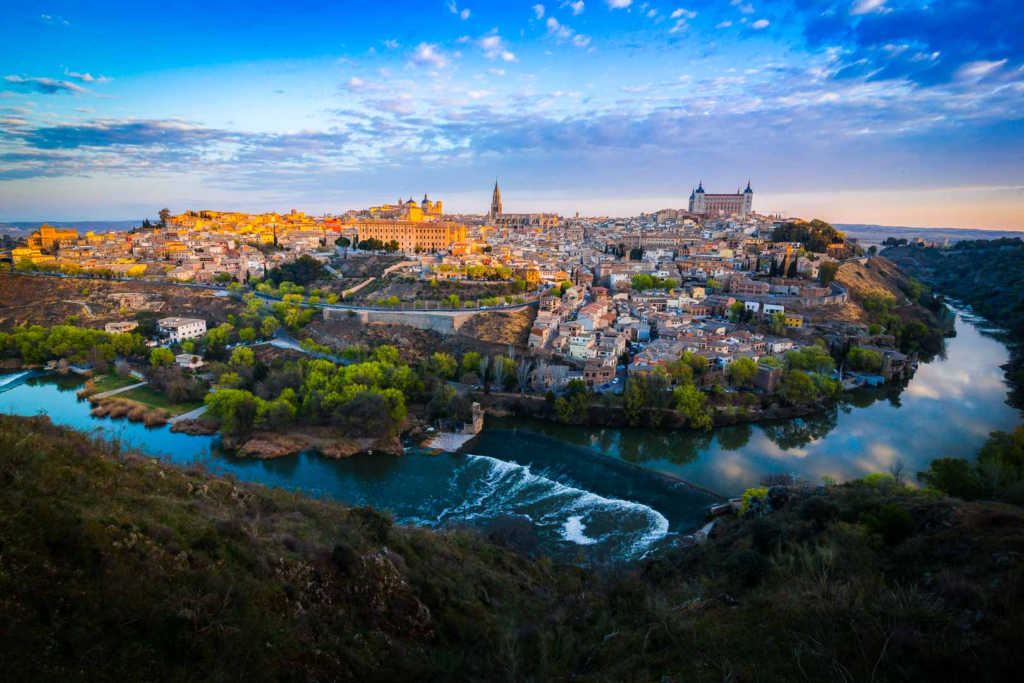

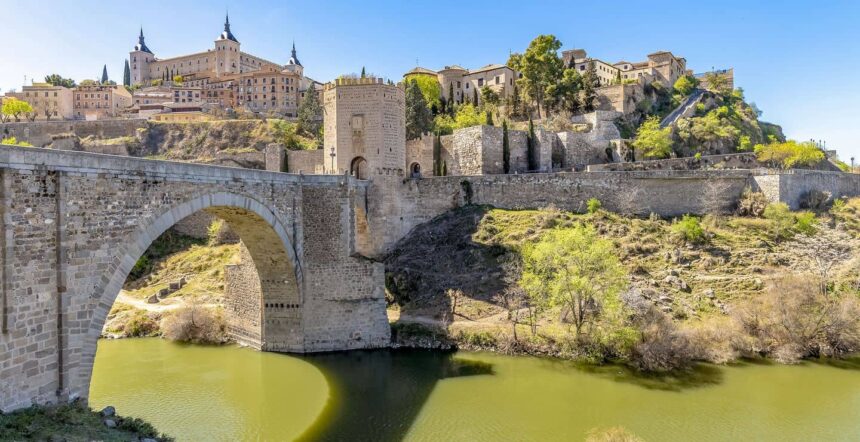
Toledo, perched dramatically on a rugged granite hill encircled on three sides by the rushing waters of the Tagus River, is the historical and spiritual soul of central Spain.
Known as the “Imperial City” for serving as the primary seat of the court of Charles V, the Holy Roman Emperor, Toledo is a sprawling, living open-air museum designated entirely as a UNESCO World Heritage site.
What truly defines Toledo is its unique legacy as the “City of the Three Cultures.” For centuries, Christian, Muslim, and Jewish communities lived side-by-side in relative harmony, co-authoring a brilliant intellectual, artistic, and architectural tapestry.
Here are the top 11 famous places to visit in Toledo and why they are legendary.
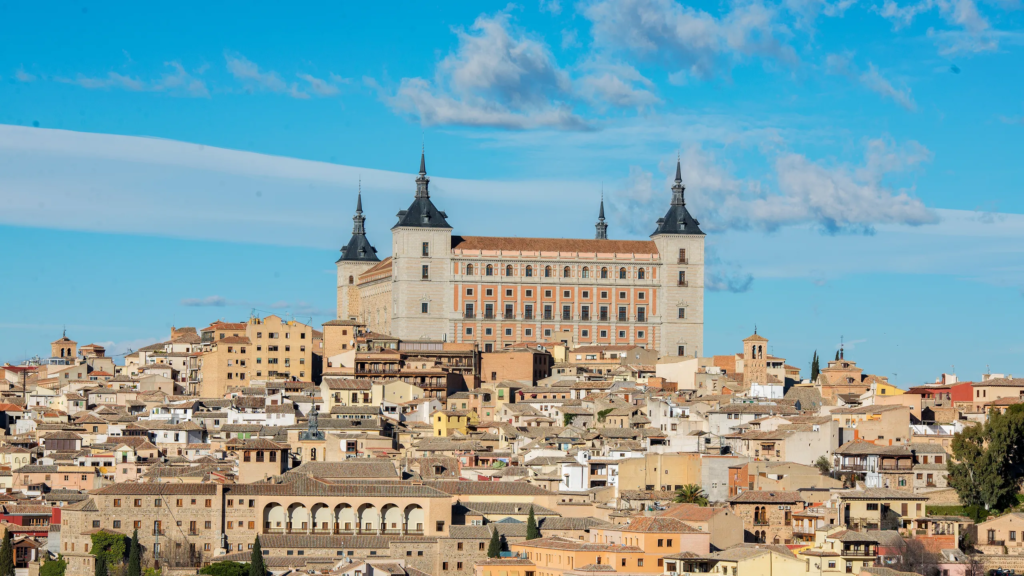
1. The Alcázar of Toledo
The Colossal Stone Guardian of the Imperial Crest
Commanding the highest natural vantage point in the entire city, this massive, square stone fortification dates back to Roman times, but was heavily rebuilt as a grand royal palace by Charles V in the 16th century.
- What it is famous for: Its monumental military history and architecture. Each of its four facades reflects a different historical era, ranging from medieval plateresque to severe Renaissance design. Having survived numerous fires and a legendary, devastating siege during the Spanish Civil War, the fully restored fortress today houses the vast National Military Museum and the beautiful regional library.
2. Santa María la Blanca
The Mudéjar Sanctuary of Jewish Heritage
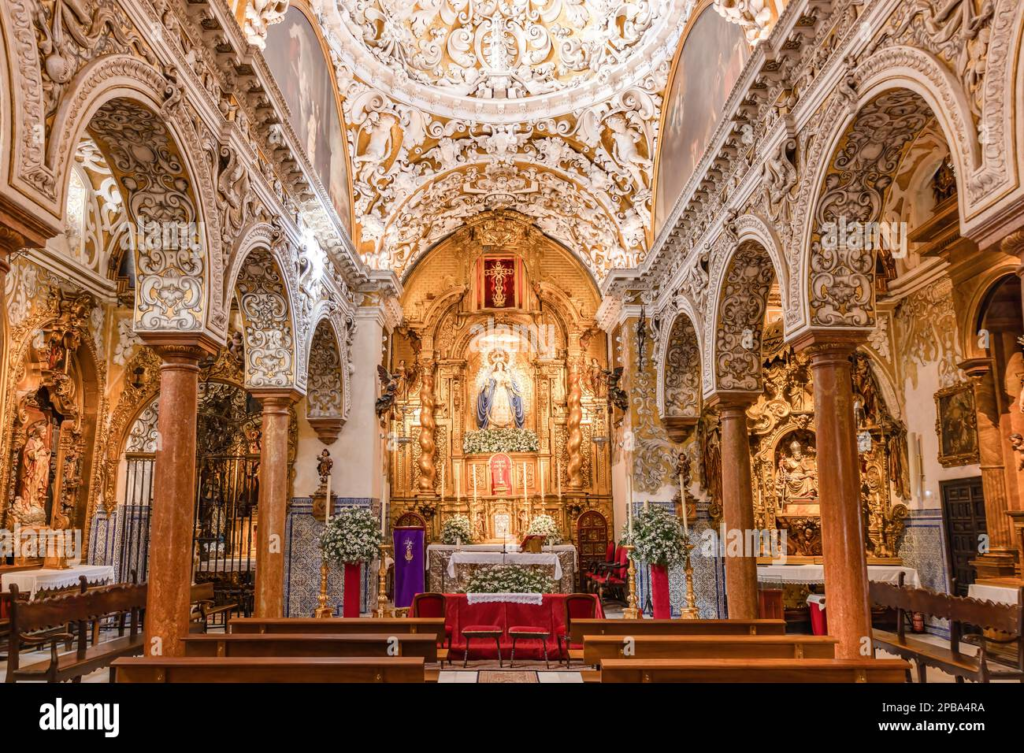
Located in the heart of the historic Jewish Quarter (Judería), this striking 12th-century monument was constructed under the Christian Kingdom of Castile by Islamic architects for Jewish worship, making it a living symbol of the city’s three cultures.
- What it is famous for: Being the oldest intact synagogue building standing in Europe. Though later converted into a church, the interior remains a breathtaking forest of pure white horseshoe arches, ornate geometric brick pillars, and intricate pine-cone capitals carved out of stucco. It is widely considered an absolute masterpiece of Moorish-style architecture adapted for a Jewish sanctuary.
3. Primate Cathedral of Saint Mary of Toledo
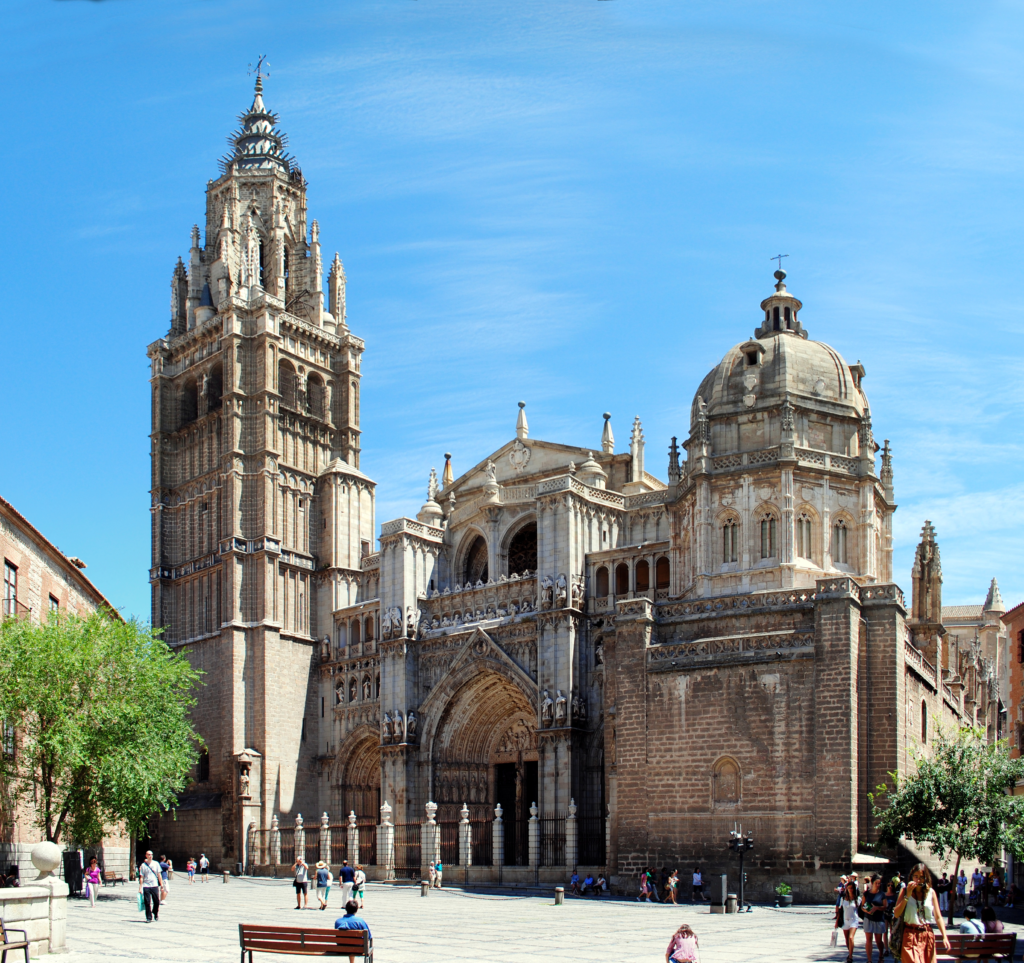
The Magisterial Epicenter of Spanish Gothic Faith
Constructed over a span of 260 years beginning in 1226, Toledo’s grand cathedral was built over the foundations of the city’s central mosque, standing today as the absolute pinnacle of High Gothic architecture in Spain.
- What it is famous for: Its extraordinary art collection and the jaw-dropping Transparente altar. The cathedral’s sacristy functions as a world-class art gallery, holding masterpiece paintings by El Greco, Goya, and Titian. Behind the main altar sits the Transparente, a massive Baroque wall of marble and jasper illuminated spectacularly by a skylight cut directly into the vaulted Gothic ceiling.
4. Monastery of San Juan de los Reyes
The Royal Gothic Monument of Imperial Triumph
Founded by the Catholic Monarchs, Queen Isabella I and King Ferdinand II, in 1476, this spectacular Franciscan monastery was originally intended to serve as their royal mausoleum before they ultimately chose Granada.
- What it is famous for: Its flamboyant Isabelline-Gothic architecture and the iron chains hanging from its exterior walls. The outer granite walls are draped with the actual iron chains freed from Christian captives after the conquest of Granada. Inside, the two-story cloister is a paradise of stone carvings, featuring dynamic crests, gargoyles, and an ornate Mudéjar wooden ceiling.
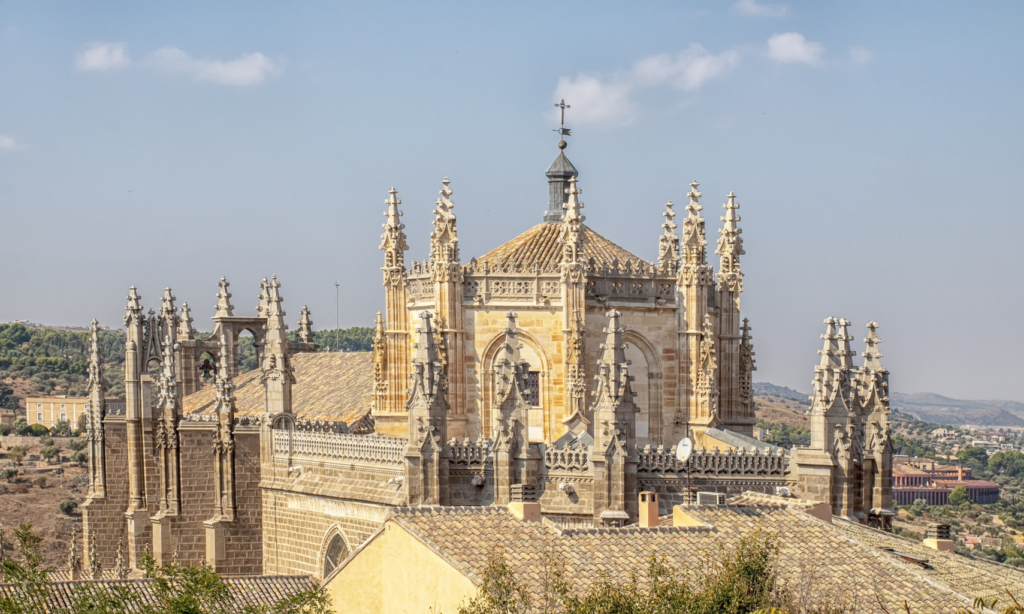
5. Synagogue of El Tránsito & Sephardic Museum
The Opulent Capital of Jewish Castilian History
Commissioned in 1357 by Samuel ha-Levi, the wealthy treasurer to King Peter of Castile, this magnificent building is another exceptional testament to Toledo’s mixed multicultural heritage.
- What it is famous for: Its extraordinarily detailed, carved stucco friezes. Unlike the understated architecture of Santa María la Blanca, El Tránsito features a soaring prayer hall lined with complex plasterwork combining Hebrew inscriptions, Arabic calligraphy, and Castilian coats of arms. Today, it hosts the National Sephardic Museum, preserving the rich history of Spain’s Jewish heritage.
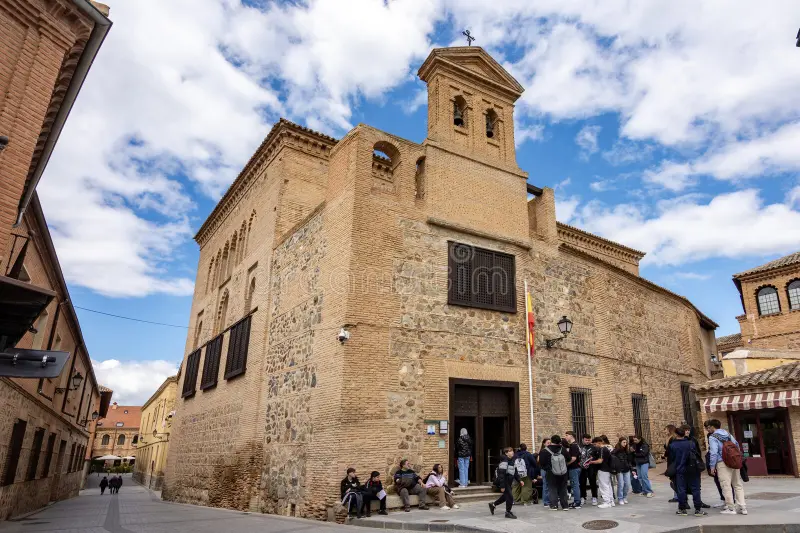
6. Church of Santo Tomé
The Sacred Frame of El Greco’s Definitive Masterpiece
Located just off the main paths of the historic center, this unassuming 14th-century parish church features a beautiful, brick Mudéjar bell tower, but draws global crowds for a singular treasure kept inside.
- What it is famous for: Housing El Greco’s world-famous painting, The Burial of the Count of Orgaz. Painted in 1586 specifically for this church, the massive, two-tiered canvas depicts a local miracle where Saint Stephen and Saint Augustine descend from heaven to bury a pious count. The painting is universally celebrated for its revolutionary division between the earthly and heavenly realms.
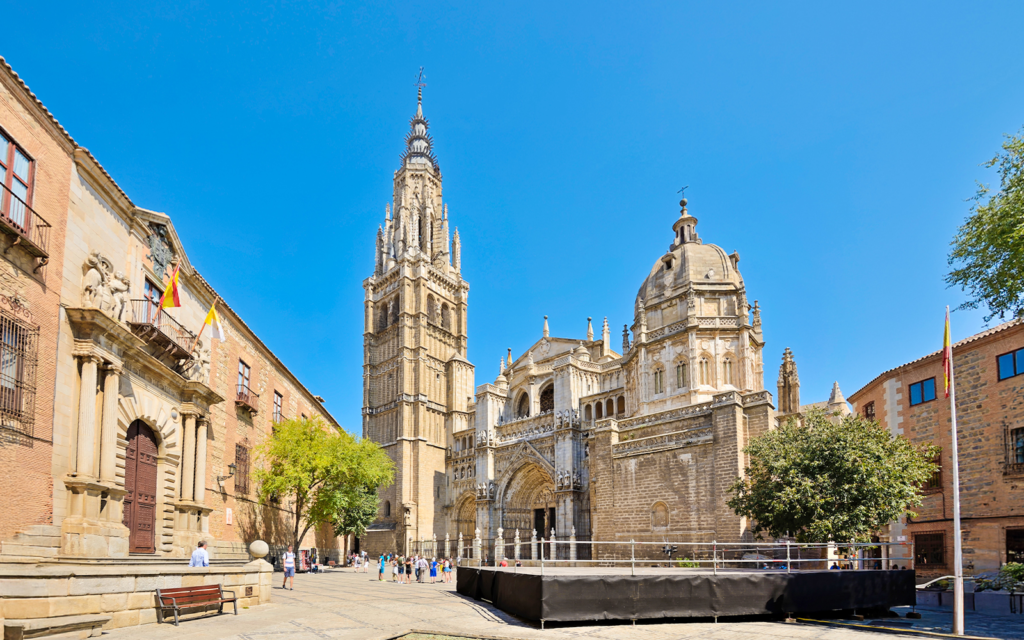
7. Monastery of Santo Domingo el Antiguo
The Historic Cradle of El Greco’s Toledo Legacy
Established in the 11th century, this historic Cistercian convent is one of the oldest monastic complexes in Toledo, playing a foundational role in the city’s artistic history.
- What it is famous for: Being the site of El Greco’s very first commissions upon arriving in Spain in 1577. The church’s main altarpiece features incredible, soaring religious paintings by the master artist. Furthermore, a small crypt inside the quiet convent allows visitors to peer down through a stone opening at the final, humble resting place of El Greco himself.
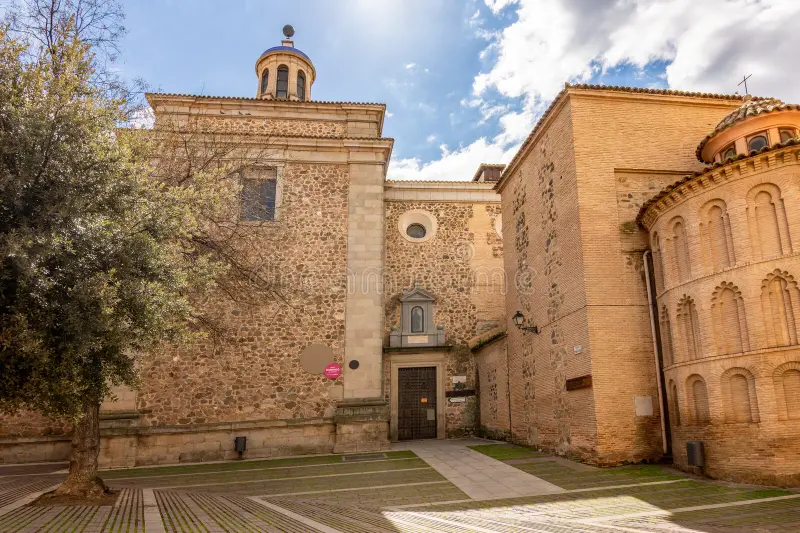
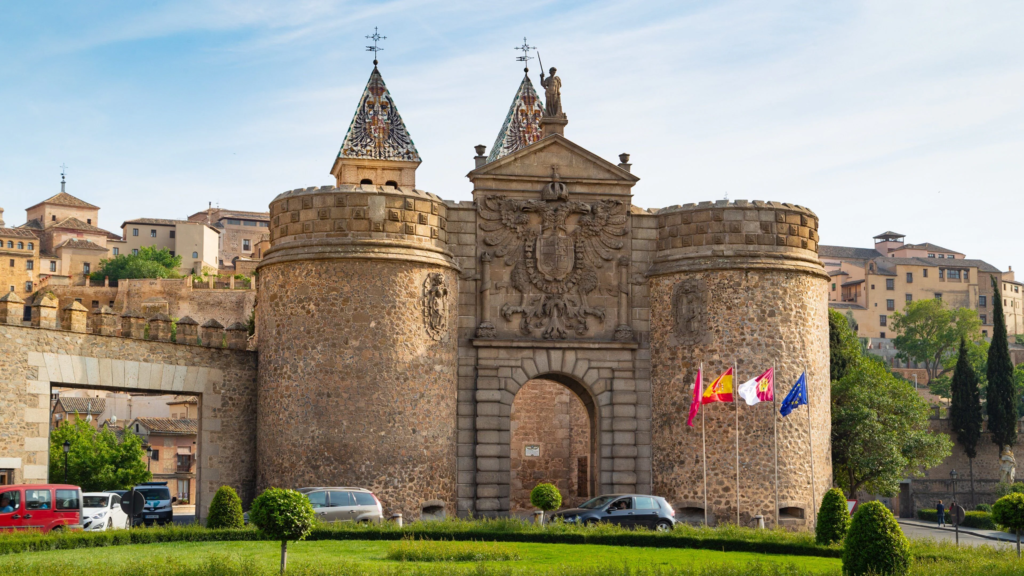
8. Puerta de Bisagra
The Monumental Imperial Gateway to the Kingdom
Serving as the grand primary entrance into the walled city from the northern plains, this imposing, fortified stone gatehouse was completely rebuilt in the mid-16th century by Alonso de Covarrubias.
- What it is famous for: Its massive, twin-towered defensive design and the giant imperial coat of arms. The outer gateway is flanked by two monumental round stone towers, centered on a massive stone relief of the double-headed eagle of Emperor Charles V. Passing through this gate feels like crossing a temporal border from the modern world straight into the Middle Ages.
9. Puente de San Martín
The Dramatic Medieval Arch over the River Gorge
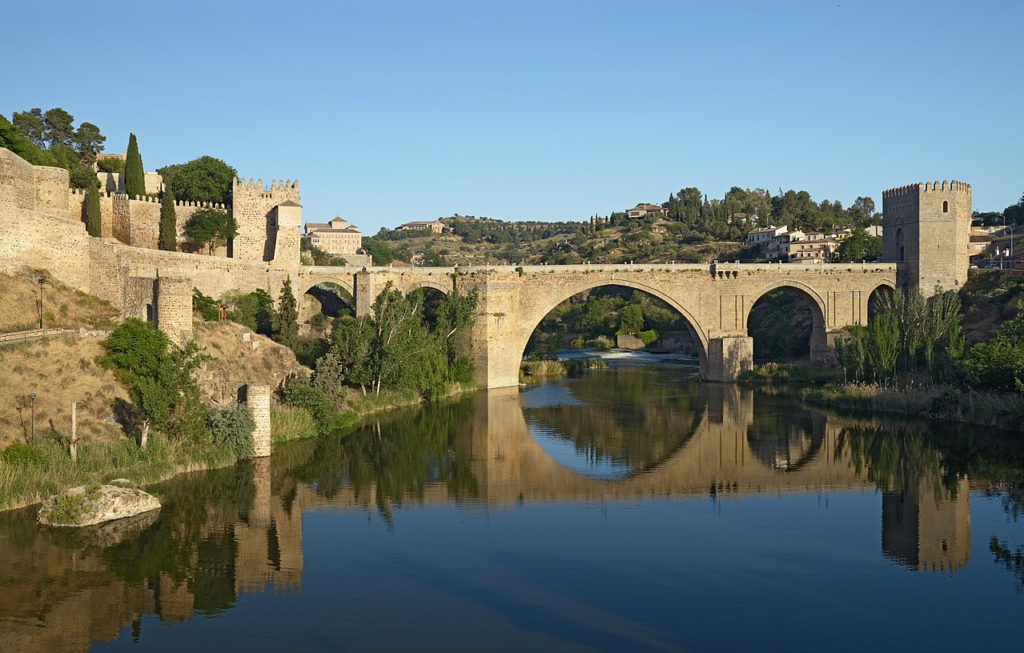
Spanning the deep gorge of the Tagus River on the western edge of the old city, this spectacular fortified stone footbridge was originally constructed in the late 14th century to link the town with the western roads.
- What it is famous for: Its five soaring stone arches and defensive watchtowers. The central span arches beautifully over the rushing river below, flanked on either side by heavy, crenellated stone towers. It is a legendary spot to watch the sunset, offering a dramatic view of the monastery of San Juan de los Reyes rising up along the rocky cliffs.
10. Mezquita de Cristo de la Luz
The Ancient Islamic Jewel of the Caliphate
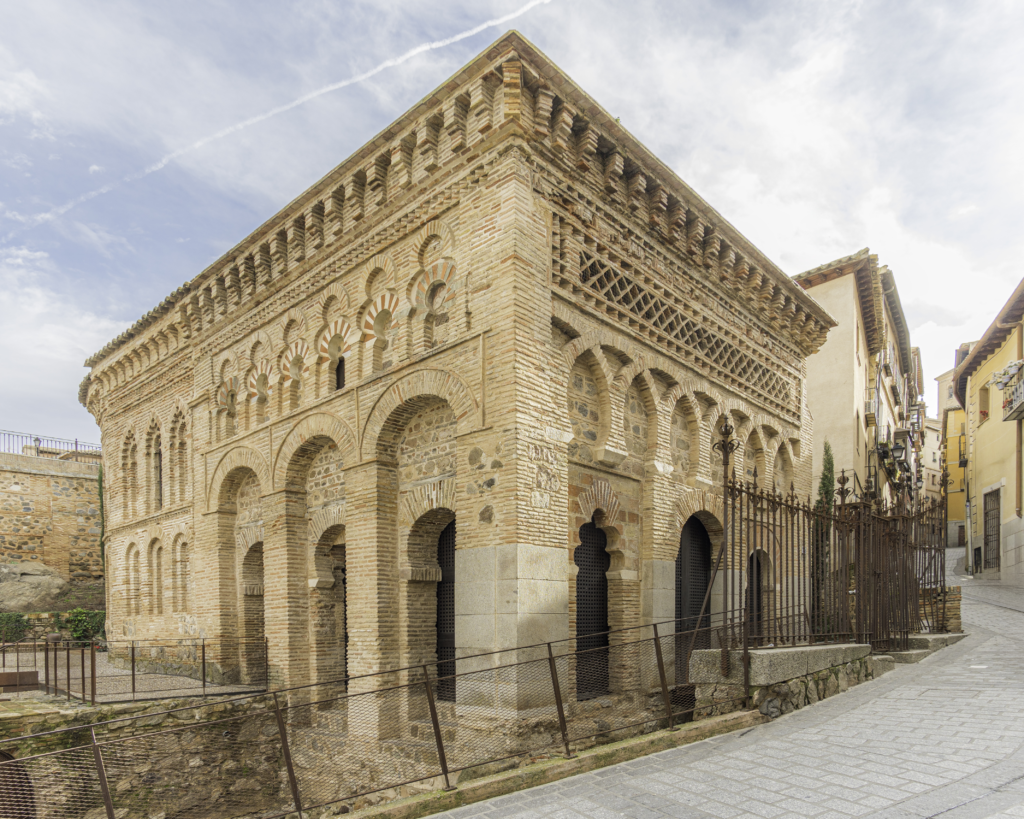
Built in the year 999 during the height of the Caliphate of Córdoba, this incredibly small, perfectly square brick building is the oldest standing, unaltered monument in the city of Toledo.
- What it is famous for: Being a pristine, miniature replica of the Great Mosque of Córdoba. Despite being later converted into a Christian chapel, the original Moorish structure remains completely intact. The interior features four central marble columns that partition the space into nine individual bays, each topped with a uniquely patterned, geometric vaulted dome.
11. Mirador del Valle
The Postcard-Perfect Panorama of the Imperial Realm
Located across the Tagus River along the scenic ring road (Carretera de Circunvalación) that traces the rocky hills directly opposite the historic center.
- What it is famous for: Offering the most legendary, breathtaking panoramic view of Toledo. From this elevated hillside viewpoint, the entire city unfolds like a medieval painting: the loops of the river gorge below, the sprawling maze of stone houses, the soaring tower of the Cathedral, and the massive block silhouette of the Alcázar dominating the horizon.