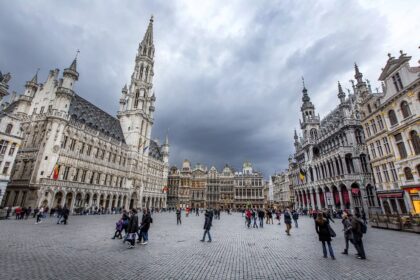


Vianden, anchoring the absolute northeastern mountain frontier of Luxembourg along the rugged, deep-cut aquatic border with Germany, operates on a spectacular vertical urban layout where medieval military power meets dense, primeval river ecology.
Historically originating as a fiercely protected Roman watchtower post that evolved by the 11th century into the ancestral seat of the mighty Counts of Vianden, this northern stronghold stands proud as a masterclass in upland defensive architecture.
Because the municipality aggressively protected its massive medieval perimeter walls, gothic stone gables, and steep cobblestone valleys rather than surrendering them to modern industrial factories, it earned its permanent cultural title as the romantic crown jewel of the Ardennes and the undisputed epicenter of feudal pageantry, literary exile heritage, and deep mountain trail exploration.
Today, Vianden presents an incredible architectural matrix where a towering, ridge-top Romanesque-Gothic palace complex looms majestically directly over narrow 14th-century merchant lanes and active riverside promenades.
The town effortlessly pairs its deep, battle-tested historical pedigree with a progressive passion for eco-tourism, international medieval festivals, and a high-altitude outdoor lifestyle tied closely to the adjacent forested gorges.
1. Vianden Castle (Château de Vianden)
The Spectacular Architectural Sovereign of Ridge-Top Feudal Palaces and Byzantine Hexagonal Choirs
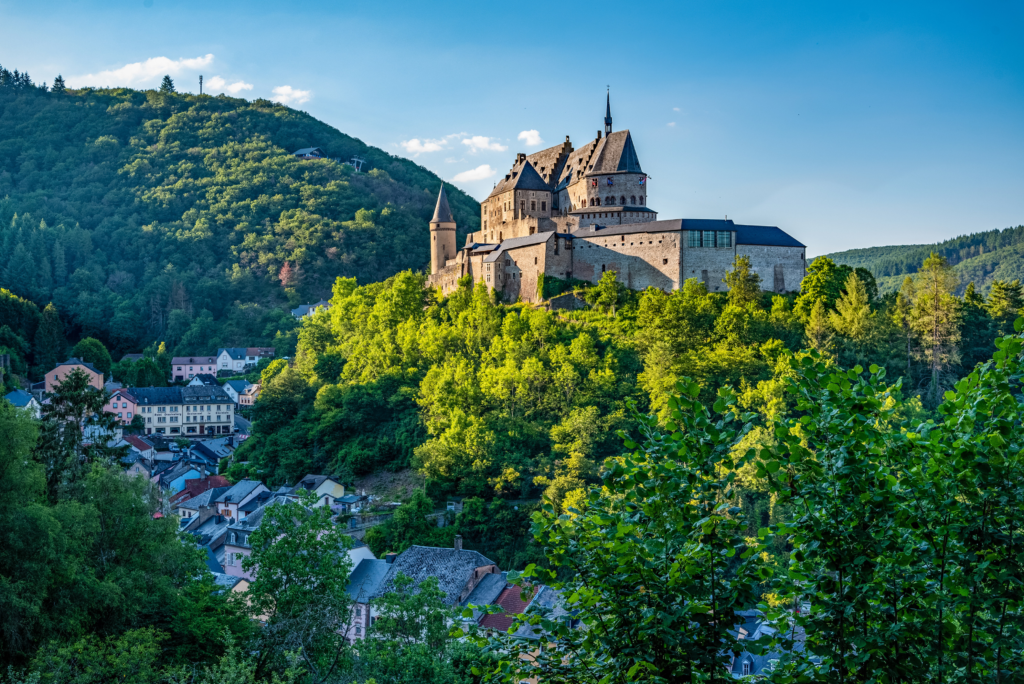
Dominating the absolute physical and visual crown of the entire Our River valley from its sheer sandstone ridge, this colossal fortress stands proud as one of the largest and most magnificent feudal residences of the Romanesque and Gothic periods in Europe.
- What it is famous for: Being the historic ancestral stronghold of the Counts of Vianden, featuring an extraordinary, fully restored interior layout that includes a monumental 100-foot Knights’ Hall and a rare, two-tier hexagonal palace chapel. Built between the 11th and 14th centuries on the foundations of an ancient Roman castellum, the castle survived centuries of noble expansion, a devastating fire, and a period of abandonment before undergoing a meticulous national restoration. Today, travelers walk through its stone-arched galleries, exploring medieval armor vaults and expansive banqueting halls that offer sweeping views over the slate roofs of the town below.
2. The Vianden Chairlift (Sesselbahn)
The Picturesque Walking Runway of Open-Air Cable Spans and Deep River Valley Overlooks
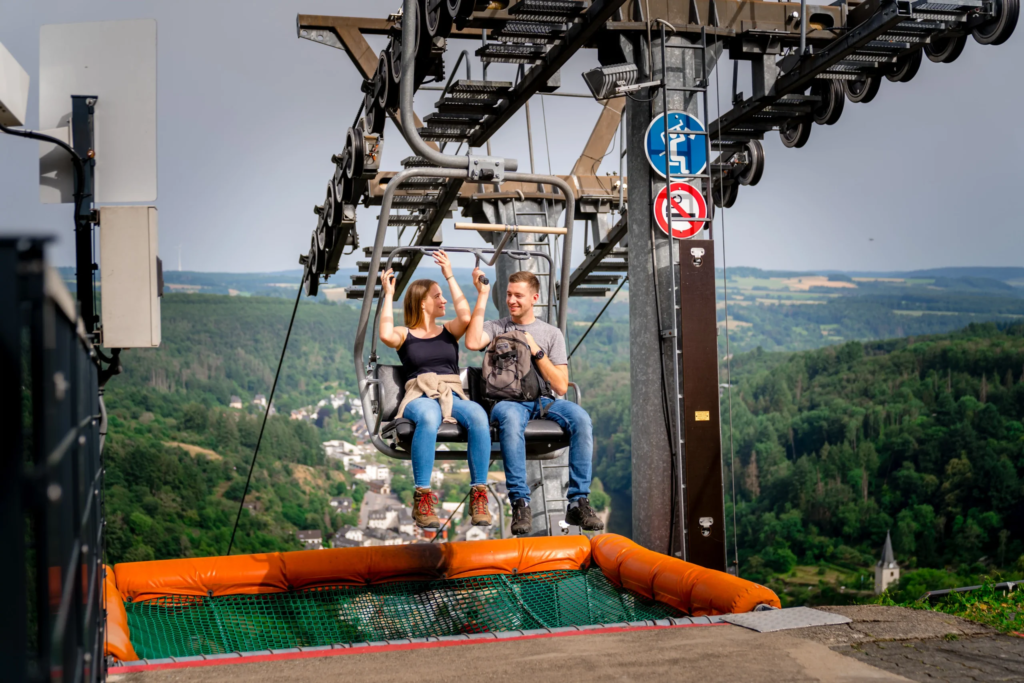
Slicing smoothly from the banks of the Our River directly up to a prominent mountain chalet station 440 meters above sea level, this historic open-air transit system represents the only chairlift in Luxembourg.
- What it is famous for: Its breathtaking, bird’s-eye views that frame the absolute profile of Vianden Castle and the winding river gorge in a single, unobstructed panorama. Operating continuously since the mid-20th century, the single-chair cable ride gently lifts passengers over dense oak woodlands and sheer rocky drops. The summit terminal functions as the ultimate launching pad for high-altitude mountain hiking loops, terrace dining, and panoramic photography paths.
3. Victor Hugo House (Musée Littéraire Victor Hugo)
The Enigmatic Stone Sentinel of Romantic Literary Exiles and Original Manuscript Sagas
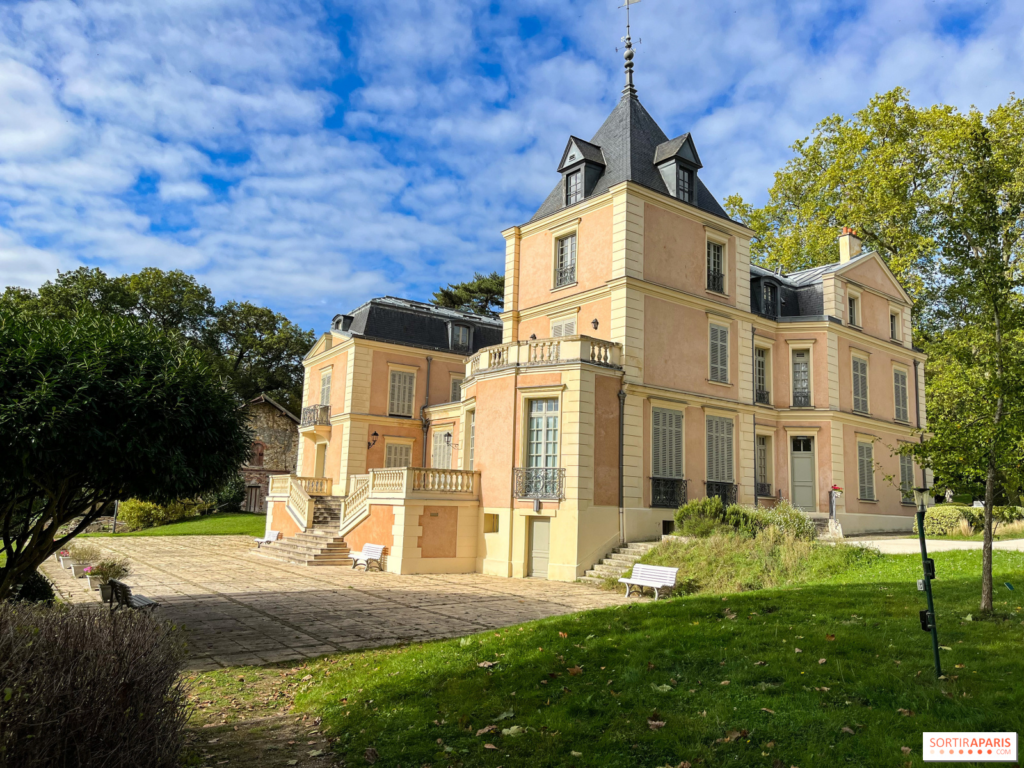
Sited dynamically right at the base of the ancient stone bridge crossing the Our River, this beautifully restored 18th-century merchant house preserves the creative soul of the region.
- What it is famous for: Being the actual historic residence where the legendary French author Victor Hugo lived during his political exile in 1871, now operating as a world-class literary museum. The exhibition rooms display original handwritten letters, personal furniture, and three-dimensional holographic reconstructions of his daily life in Vianden. The museum documents how the dramatic landscape of the Our valley inspired Hugo’s romantic poetry and detailed sketches, forever tying his literary legacy to the identity of the town.
4. The Medieval Town Walls & Watchtowers
The Breathtaking Minimalist Palace of Horseshoe Stone Bastions and Defensive Arrow Loop Trails
Slicing smoothly along the steep western and southern slopes of the valley basin, these rugged fortifications represent one of the most intact medieval urban defense networks in the region.
- What it is famous for: Being a defensive network of 14th-century stone ramparts originally spanning over two kilometers, complete with twenty historic watchtowers built to defend the town’s wealthy merchant guilds. Visitors can trace a dedicated walking trail that snakes beside the massive masonry works, including the iconic, semi-circular Hockelstur watchtower which sits perched on a rocky outcrop. The preserved battlements feature original stone crenellations, strategic arrow loops, and heavy corbels that map the military vulnerability of the historic borderlands.
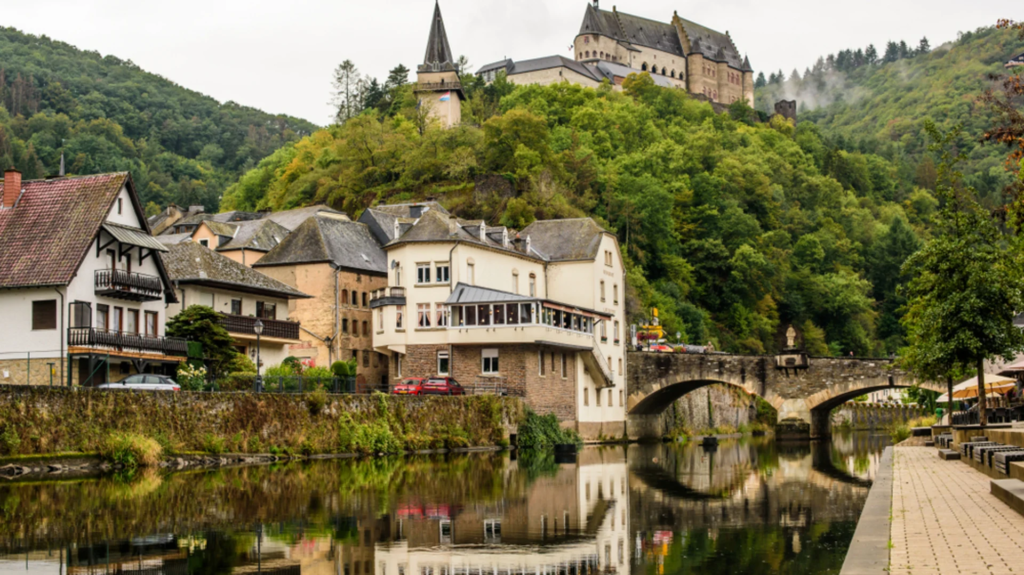
5. The Church of the Trinitarians (Trinitarierkirche)
The Breathtaking Gothic Sovereign of Dual-Nave Vaults and Intricate Rococo Altar Screens
Commanding a majestic stone footprint along the narrow, rising lanes of the upper old town grid, this historic 13th-century church is a masterpiece of early Gothic monastic design.
- What it is famous for: Its extraordinary dual-nave architectural layout, built in 1248 by the Trinitarian monks, featuring an incredibly ornate 18th-century Rococo high altar and a fully intact stone cloister courtyard. The sacred interior houses the monumental tomb of Marie of Mansfeld, decorated with intricate medieval stone effigies. The church’s vaulted aisles deliver exceptional acoustic clarity, making it a premier venue for international organ recitals and sacred choral performances.
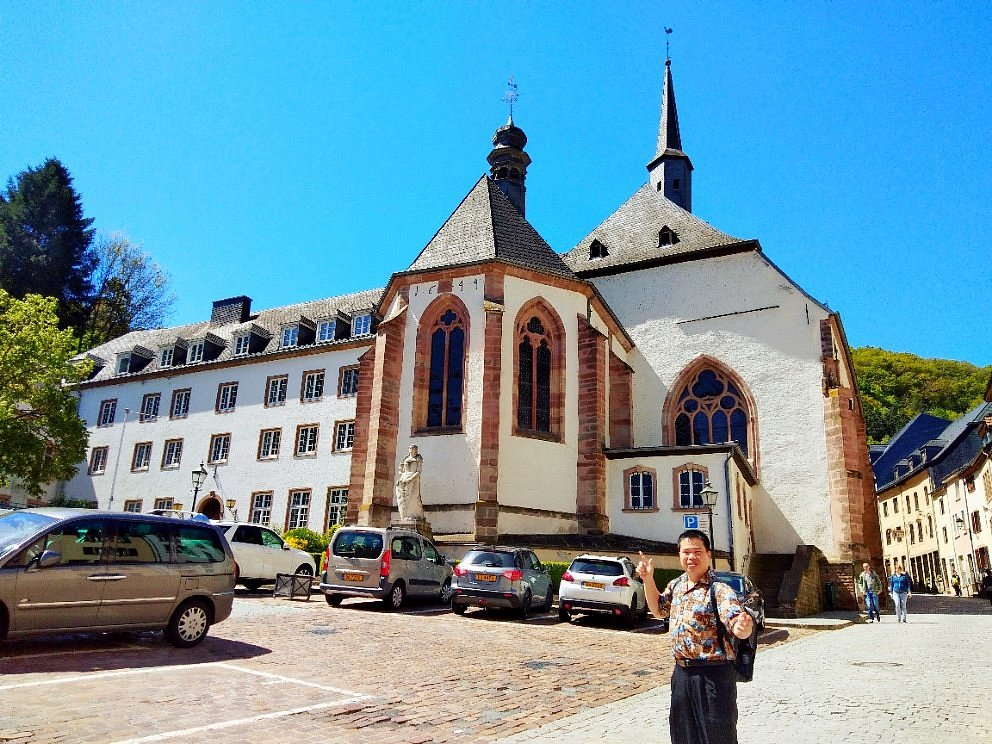
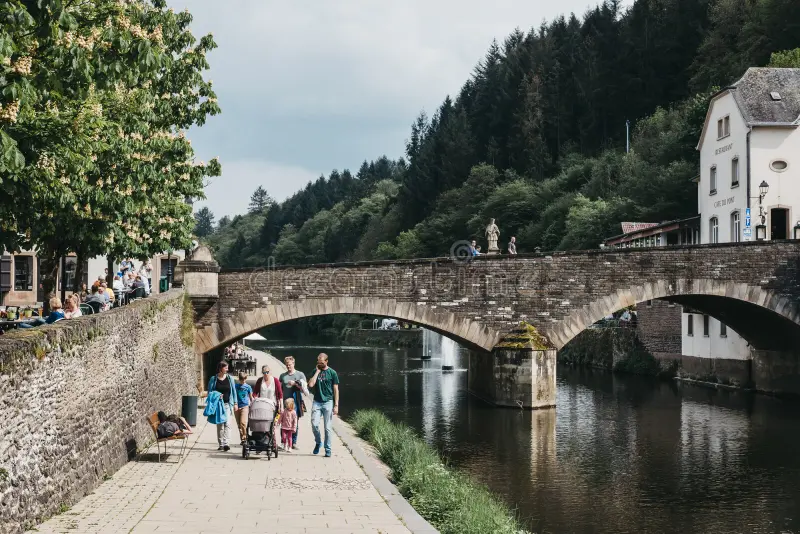
6. Our River Promenade & Old Bridge
The Rowdy Cultural Runway of Waterfront Artisan Cafés and Historic Stone Arch Crossings
Slicing smoothly through the absolute geographic core of the lower valley layout, this vibrant pedestrian boardwalk wraps around the rapid, clear waters of the Our River.
- What it is famous for: Its picturesque rows of pastel-colored hotels, flower-filled balconies, and the historic stone-arch bridge adorned with a bronze statue of Saint John of Nepomuk. The waterfront functions as the social beating heart of the municipality, where locals and travelers gather on open-air terraces to enjoy regional cuisine. The promenade acts as a continuous open-air runway for seasonal arts crafts markets, antique fairs, and riverside folk concerts.
7. The Vianden Walnut Festival (Nëssmoart)
The Savory Cultural Repository of Wood-Fired Pastry Tiers and Heritage Nut-Liqueur Chants
Slicing smoothly through the historic cobblestone avenues of the town core every October, this high-energy gastronomic market is an international autumn phenomenon.
- What it is famous for: Being a historic harvest festival where the entire town transforms into a massive celebration of the region’s ancient walnut groves, drawing tens of thousands of cross-border visitors. Local artisan guilds fill the streets to sell fresh walnut breads, wood-fired pastries, walnut-infused cheeses, and the famous Nëssdrëpp—a potent, traditional green-walnut schnapps brewed using secret ancestral recipes. The acoustic soundscape of traditional brass bands and street chanting creates a high-energy theater of local culinary pride.

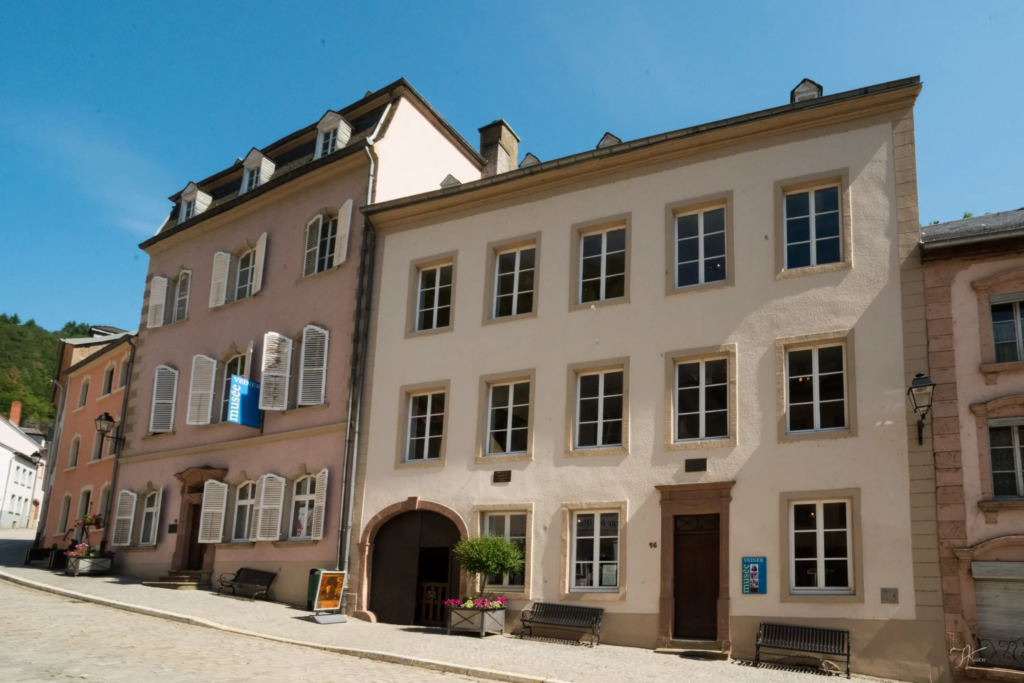
8. City Museum (Musée de la Ville de Vianden)
The Radiant Cultural Repository of Traditional Bakery Vaults and Nineteenth-Century Living Relics
Tucked quietly inside a grandly restored 18th-century patrician mansion on the Grand-Rue, this specialized cultural center preserves the domestic material wealth of the community.
- What it is famous for: Housing an incredibly detailed collection of historic folk art, period costumes, and a fully reconstructed 19th-century traditional bakery and historic grocery store. The museum rooms walk travelers through the daily lives of Vianden’s historic craftspeople, mapping the evolution of the town’s shoemaking, tanning, and milling industries. The exhibition spaces feature authentic open-hearth kitchens, copper baking ovens, and antique tools that showcase the gritty labor history of the valley.
9. Our Hydroelectric Plant (SEO Société Électrique de l’Our)
The Colossal Modern Sovereign of Subterranean Mountain Caverns and High-Tech Turbine Vaults
Sited dynamically inside a massive underground mountain cavern just a brief five-minute drive north of the town center, this engineering wonder is one of the largest pumped-storage power stations in Europe.
- What it is famous for: Its colossal, 300-meter-long underground turbine hall carved entirely into the solid rock mountain, optimized to balance the European power grid by pumping river water to high-altitude reservoirs. A dedicated visitor center offers a high-tech interactive journey through the complex network of pressure shafts, subterranean generators, and massive water basins. It functions as a premier destination for industrial travelers seeking to view the scale of green eco-engineering hidden beneath the peaceful Ardennes forests.

10. Copper Mine Stolzembourg (Musée des Mines)
The Sprawling Eco Matrix of Subterranean Ore Veins and Multi-Sensory Mining Boot Trails
Sited dynamically within a rugged valley side just a short transit ride north of Vianden along the Our river path, this ancient industrial site preserves centuries of geological exploitation.
- What it is famous for: Its historic underground copper tunnels dating back over 500 years, where visitors pull on rubber boots, helmets, and raincoats to descend directly into the wet stone shafts. The specialized mining trail takes adventurous travelers along wooden walkways into the deep, dark galleries to view raw glittering copper ore veins and ancient drainage channels. A modern exhibition center on the surface displays historic mining tools, geological maps, and archaeological artifacts recovered from the deep tunnels.

11. Sanatorium Chapel
The Breathtaking Ancestral Sovereign of Minimalist Concrete Vaults and Modernist Stained-Glass Spans
Dominating a quiet, elevated forest clearing on the southern heights overlooking the town basin, this striking 20th-century religious monument represents a unique era of sacred modernist design.
- What it is famous for: Being designed by the acclaimed avant-garde architect Dominikus Böhm in 1932, featuring an innovative, minimalist concrete structure engineered to maximize natural light for recovering patients. Built to serve the adjacent historic sanatorium complex, the chapel interior features soaring, unadorned concrete arches and a dramatic wall of abstract stained-glass windows that tint the space in deep blues and warm ambers. The architectural showcase stands proud as one of the finest examples of expressionist church design in Northern Europe.