
Brussels, spreading dynamically across the rolling hills of the Zenne River valley in central Belgium, operates on a fascinating dual layout that bridges ancient medieval commerce with hyper-modern global politics.
Historically, it claims a proud legacy as a premier stronghold of the Dukes of Brabant, who laid out its sweeping, palace-lined central squares and fortified its vital trade routes.
Today, Brussels serves as the official administrative capital of the European Union and NATO, effortlessly blending its high-concept diplomatic quarters with a wonderfully quirky, irreverent local identity.
The city seamlessly pairs the romantic charm of cobblestone lanes with a thriving, avant-garde contemporary art scene.
Famous for its decadent, double-fried Belgian fries (frites), rich Trappist beers, world-class praline chocolates, and a breezy, surrealist spirit.
1. The Grand Place (Grote Markt)
The Gilded Masterpiece Theatre of Medieval Trade Guilds
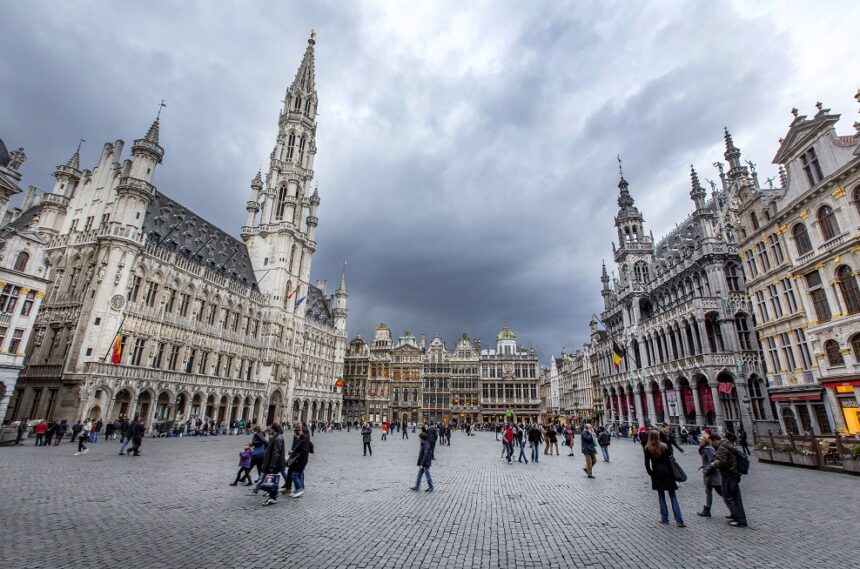
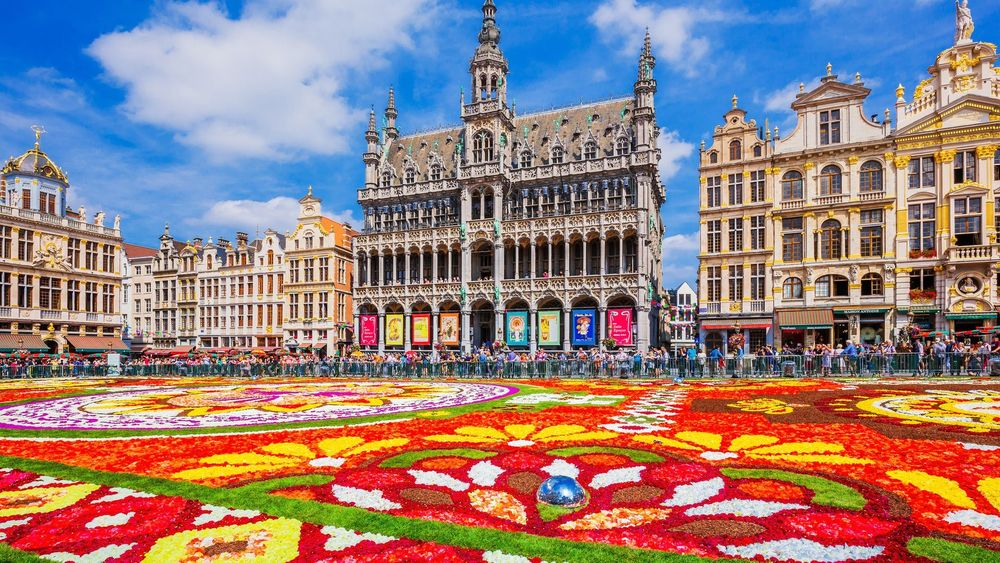
Spreading out as the monumental civic and historic heart of the old town block network, this exceptionally wide, cobblestone market square is globally celebrated as one of the most beautiful public plazas on Earth.
- What it is famous for: Its jaw-dropping, gold-leafed Baroque guildhalls and the asymmetric 15th-century Town Hall. Every square inch of the surrounding facades is a display of opulent imperial wealth, covered in intricate stone carvings, allegorical statues, and shimmering gold trim. Once every two years in August, the entire stone plaza floor is completely blanketed by the Flower Carpet, a colossal, vibrant tapestry woven from over 500,000 fresh begonia blossoms that attracts travelers from across the globe.
2. The Atomium
The Colossal Steel Matrix of Atomic-Age Optimism
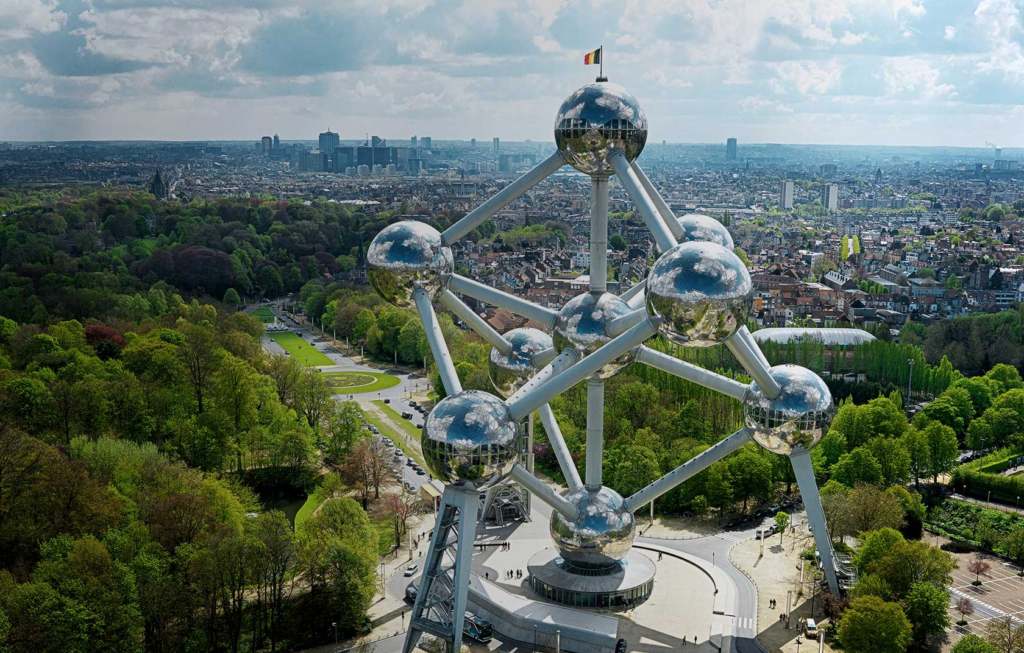
Rising 102 meters straight into the sky within the green corridors of the northern Heysel parklands, this striking, architecturally avant-garde silver megastructure stands as the defining futuristic landmark of the Brussels skyline.
- What it is famous for: Its extraordinary design replicating an iron crystal cell magnified 165 billion times. Engineered by André Waterkeyyn for the 1958 Brussels World’s Fair (Expo 58), the structure consists of nine interconnected stainless-steel spheres linked by massive escalator tubes. Visitors can travel through these cybernetic, light-illuminated tubes to explore history museums inside the spheres and look out from the highest panoramic viewing deck, which offers an unobstructed, birds-eye view across the entire city basin.
3. Manneken Pis
The Irreverent Bronze Sentinel of Folkloric Rebellion
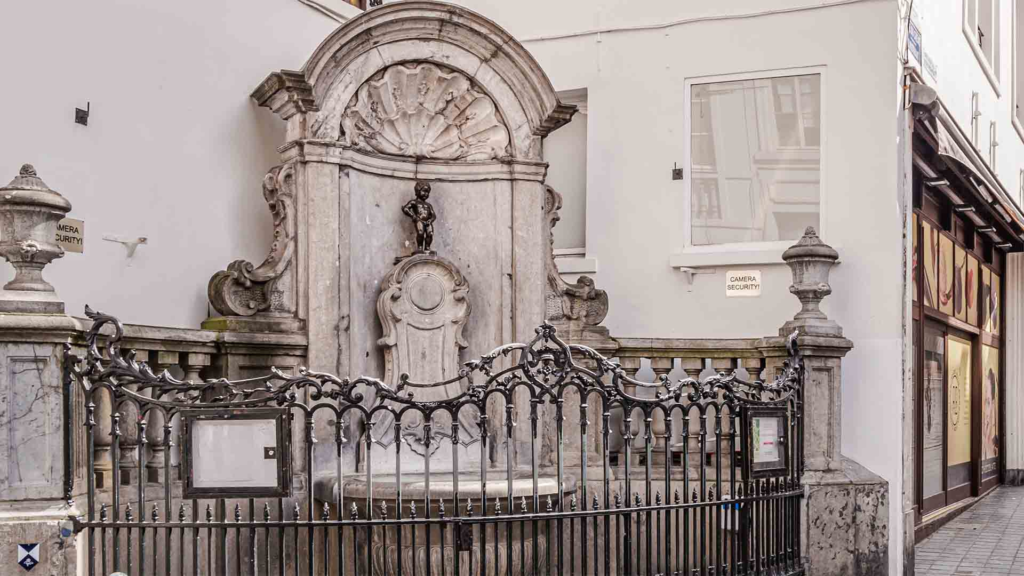
Tucked dynamically into the tight, cobblestone corner intersection of Rue de l’Étuve and Rue du Chêne just a block back from the Grand Place, this tiny, bronze fountain sculpture is the ultimate mascot of Brussels’ unique sense of humor.
- What it is famous for: Its quirky, rebellious spirit and an imperial wardrobe of over 1,000 custom costumes. Dating back to 1619, the statue of a small boy urinating into the fountain basin symbolizes Zwanze—the classic, cheeky Brussels attitude toward authority. The statue is regularly dressed in miniature, custom-tailored outfits donated by global heads of state, Mickey Mouse, or local fire departments, which are preserved inside a dedicated museum nearby.
4. The Royal Gallery of Saint Hubert (Les Galeries Royales Saint-Hubert)
The Belle Époque Glass Runway of Elite Chocolate Masters
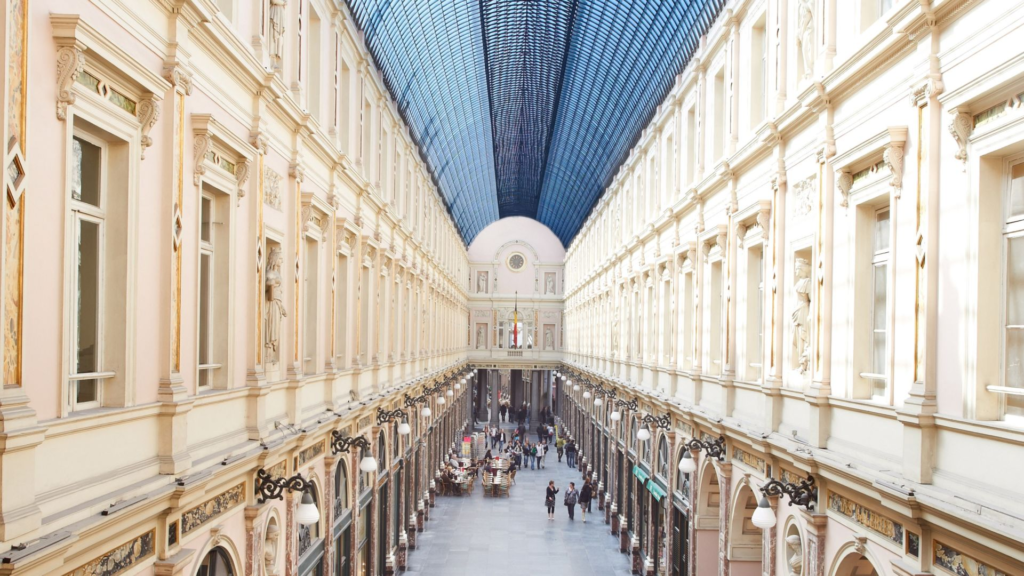
Slicing smoothly through the historic commercial heart of the inner city, this magnificent, 200-meter-long glass-vaulted arcade stands proud as Europe’s very first covered shopping gallery.
- What it is famous for: Its striking, Italianate Renaissance architecture and hosting the cradle of the Belgian praline. Completed in 1847, the arcade is covered by an arched glass-and-iron roof that floods the marble corridors with natural light. The gallery is lined with upscale theaters, historic bookstores, and the flagship boutiques of the world’s most legendary chocolatiers—including Neuhaus, the exact spot where Jean Neuhaus invented the filled chocolate praline in 1912.
5. Les Marolles & The Jeu de Balle Flea Market
The Raw, Working-Class Sanctuary of Antique Treasures
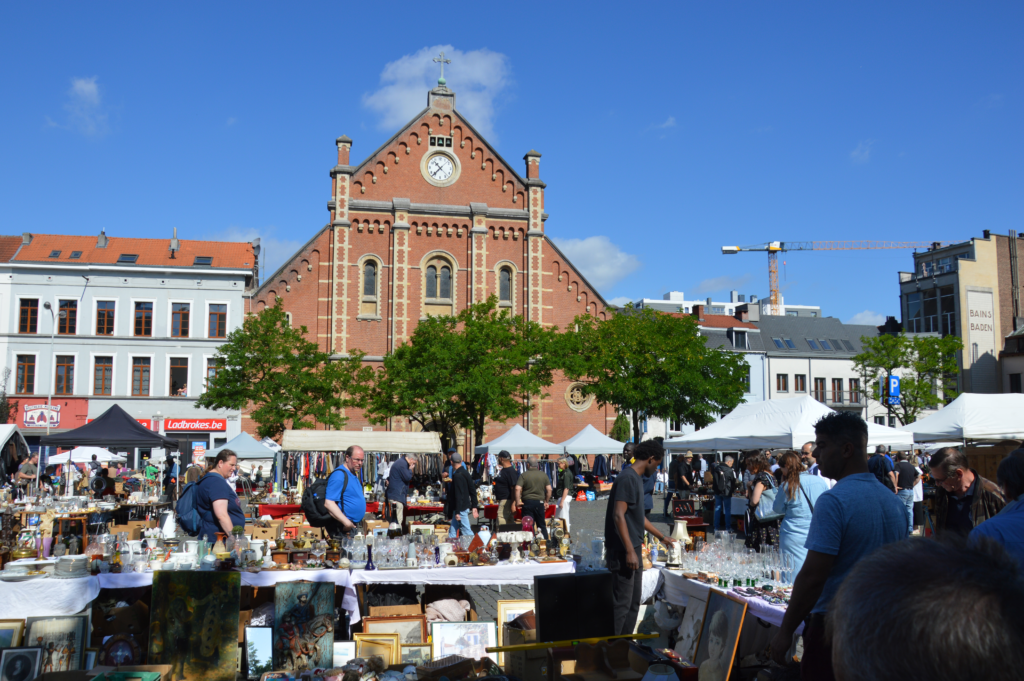
Nestled quietly beneath the shadow of the colossal Palace of Justice, this historic, gritty neighborhood is the oldest traditional working-class quarter of Brussels, where the local Zwane dialect can still be heard.
- What it is famous for: The world-famous daily open-air flea market on the Place du Jeu de Balle. Every single morning of the year, hundreds of eccentric vendors lay out blankets filled with vintage vinyl records, antique brass clocks, old oil paintings, and bizarre historical trinkets. The surrounding lanes are packed with cozy, traditional brown cafes where locals gather to drink sour Gueuze lambic beers and eat hearty bowls of snails in spiced broth.
6. The European Quarter (Schuman District)
The Translucent Glass Vessel of Global Diplomacy
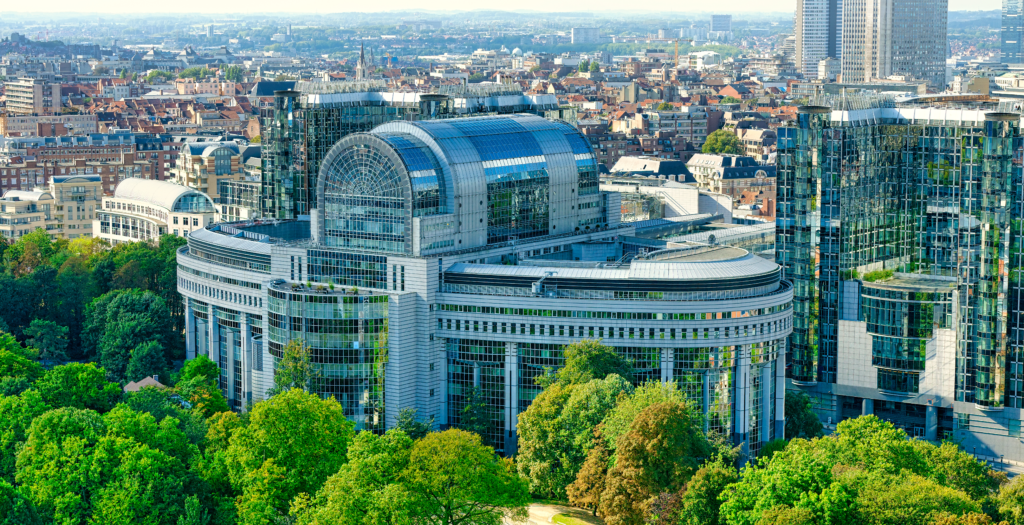
Dominating the sprawling eastern sector of the city, this hyper-modern district of towering glass-and-steel complexes functions as the executive administrative heart of the European Union.
- What it is famous for: The monumental Berlaymont building and the futuristic Europa complex. Walking through these high-energy avenues places you at the center of global decision-making. The district features the striking Berlaymont, the cross-shaped headquarters of the European Commission, and the Europa Building, which houses a massive, lantern-shaped multi-story chamber trapped inside a cube of recycled wooden window frames from across Europe, symbolizing unity in diversity.
7. St. Michael and St. Gudula Cathedral
The Twin-Towers Gothic Sentinel of Brabancon Sovereigns
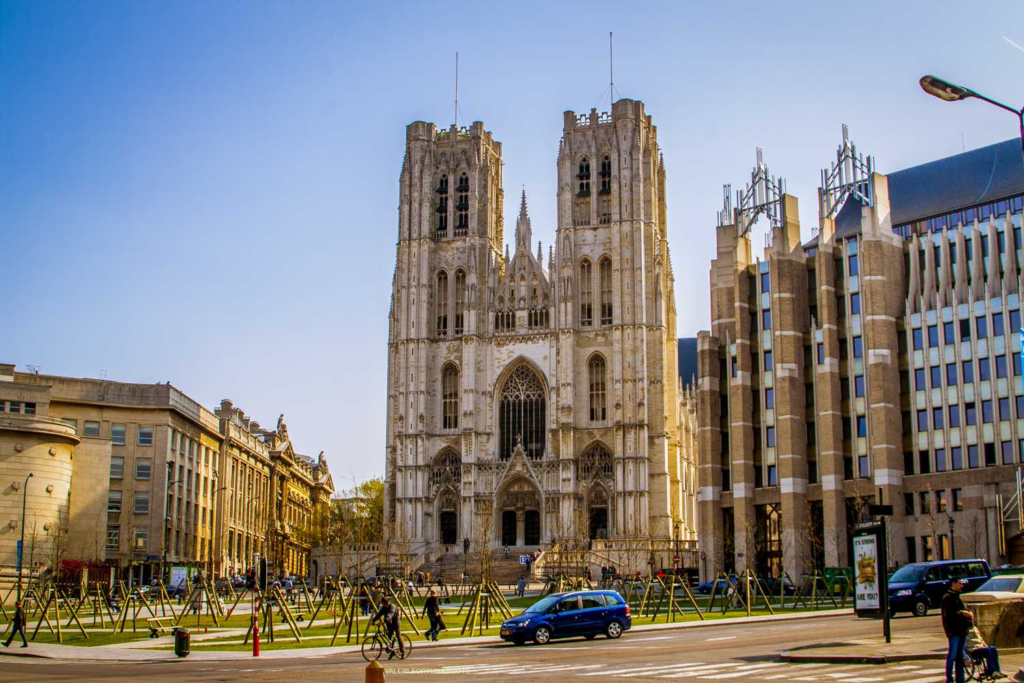
Commanding an elevated hill crest bridging the lower historic merchant core with the upper royal districts, this monumental Gothic hall church took over 300 years to fully complete.
- What it is famous for: Its towering, symmetrical 64-meter-tall twin facades and magnificent Renaissance stained glass. Designed to emulate the grand cathedrals of France but built out of pure, white local stone, this church serves as the official stage for Belgian royal weddings and state funerals. The soaring interior is characterized by massive columns topped with statues of the Twelve Apostles and pristine 16th-century stained-glass window sequences that cast vibrant crimson and emerald light across the royal altars.
8. Parc du Cinquantenaire (Jubelpark)
The Royal Triple-Arched Gateway of Imperial Military History
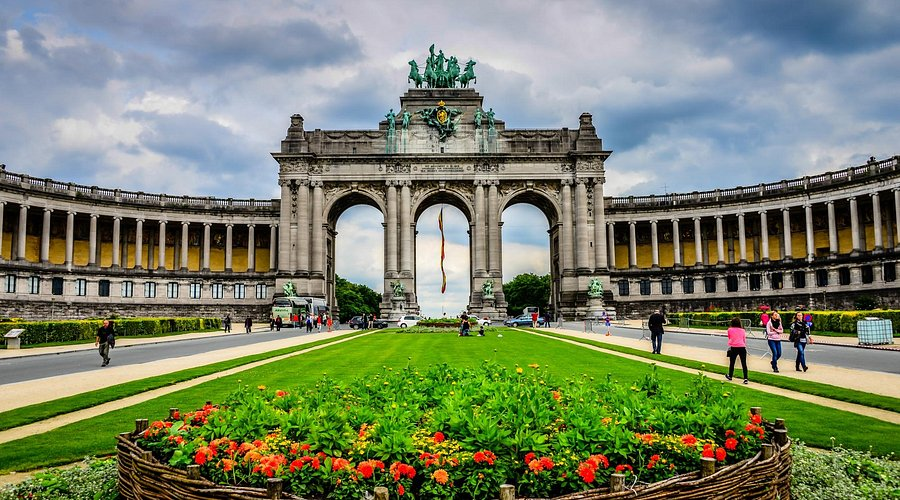
Spreading across a massive, 30-hectare landscape park at the eastern terminus of the Rue de la Loi, this grand public parkland was commissioned by King Leopold II in 1880 to celebrate the golden jubilee of Belgian independence.
- What it is famous for: Its colossal, U-shaped palace complex anchored by a massive triple triumphal arch. The centerpiece of the park is its monumental stone archway, which looks out over wide, formal French-style gardens. The flanking palace wings house a treasure trove of cultural history, including Autoworld—holding a collection of hundreds of vintage motorcars—and the Royal Museum of the Armed Forces, featuring a vast indoor aviation hall packed with historic biplanes and fighter jets.
9. The Comic Strip Route (Parcours BD)
The Open-Air Urban Canvas of Hand-Painted Pop Culture
Weaving its way creatively across the brick and concrete walls of over 60 distinct buildings throughout the city, this unique urban art trail turns Brussels into a living, open-air comic book gallery.
- What it is famous for: Its massive, multi-story murals celebrating Belgium’s comic heritage, including Tintin and the Smurfs. Initiated in the early 1990s to cover unsightly blank walls, the route features hand-painted scenes of iconic characters like Hergé’s Tintin escaping down a fire escape, Asterix attacking a Roman camp, and the Lucky Luke gang riding across building facades, making a casual walk through the old town feel like a playful treasure hunt.
10. The Horta Museum & Saint-Gilles District
The Flowing Iron Matrix of Pure Art Nouveau Perfection
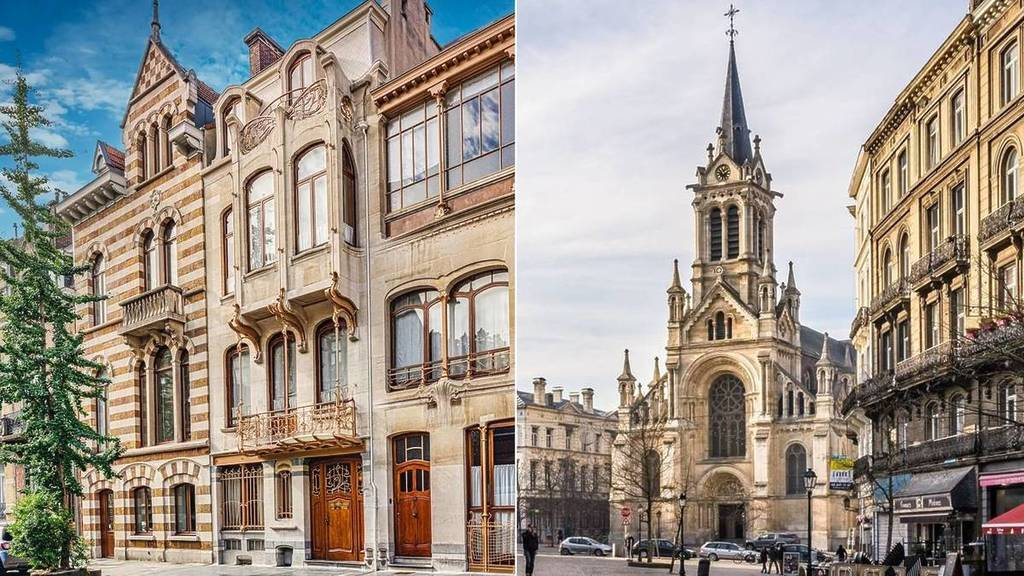
Situated within the trendy, bohemian residential blocks of the southern Saint-Gilles neighborhood, this beautifully preserved townhome was the private studio and residence of master architect Victor Horta.
- What it is famous for: Being the absolute UNESCO-listed epicenter of the Art Nouveau movement. Built between 1898 and 1901, the building represents a total break from historical styles, replacing rigid stone walls with fluid, organic forms. The interior is a display of engineering genius, featuring a central glass-domed staircase where structural iron beams curve like twisting plant tendrils, seamlessly integrating golden timber panels, mosaic tile floors, and custom brass door handles into a single living artwork.
11. Mont des Arts (Kunstberg)
The Panoramic Picture Frame of Symmetrical Gardens and Historic Spires
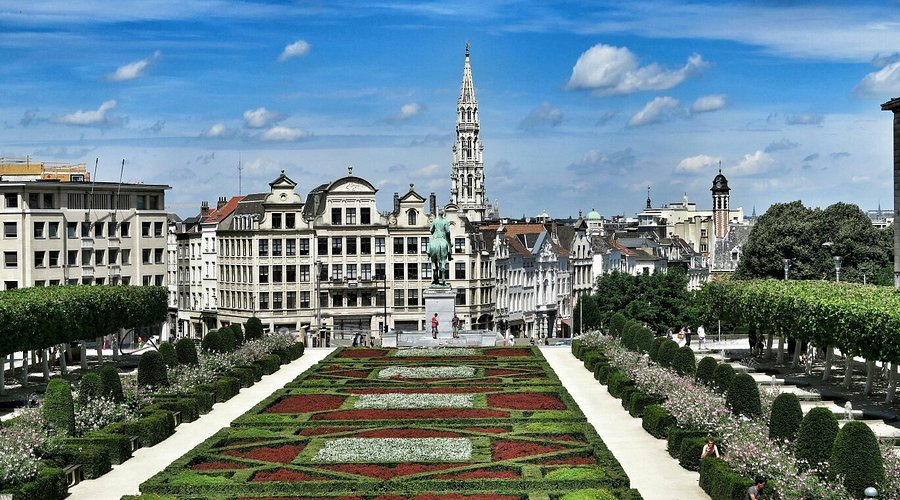
Perched gracefully on a steep slope connecting the lower historic old town to the elevated Royal Palace district, this beautifully manicured urban garden hill functions as Brussels’ primary panoramic viewing platform.
- What it is famous for: Its spectacular, geometric garden layout and its postcard-perfect sunset view of the Town Hall spire. Framed by the grand neoclassical facades of the Royal Library and the National Archives, the central plaza features stepped fountains and rows of geometric hedges. Sitting on the upper stone steps at dusk treats travelers to a breathtaking look as the setting sun silhouettes the distant, lace-like Gothic spire of the Grand Place town hall, creating the most romantic view in the capital.