
Bruges, woven beautifully across the flat, fertile polder plains of northern Belgium, operates on a magnificent, water-defined layout where historic canals meet medieval stone.
Known as the “Venice of the North,” the city gained early global prominence during the 11th to 14th centuries as the chief commercial emporium of Northwestern Europe.
Its deep tidal inlet linked it directly to the North Sea, drawing wealthy merchants from across the continent and turning the city into a roaring trade capital under the sovereign rule of the Counts of Flanders.
When the shipping channels silted up in the 15th century, the city froze in time, locking its medieval architecture away like a time capsule.
Today, the entire historic center is protected as a UNESCO World Heritage site, effortlessly blending its quiet, swan-lined canal banks with a rich legacy of world-class art and craft traditions.
Famous for its delicate handmade lace, decadent chocolate boutiques, crisp Flemish red ales, and its moody, cobblestone-lined romantic mist.
1. The Market Square (Markt) & The Belfry
The Mighty Gothic Sentinel of Roaring Chimes and Guild Pride
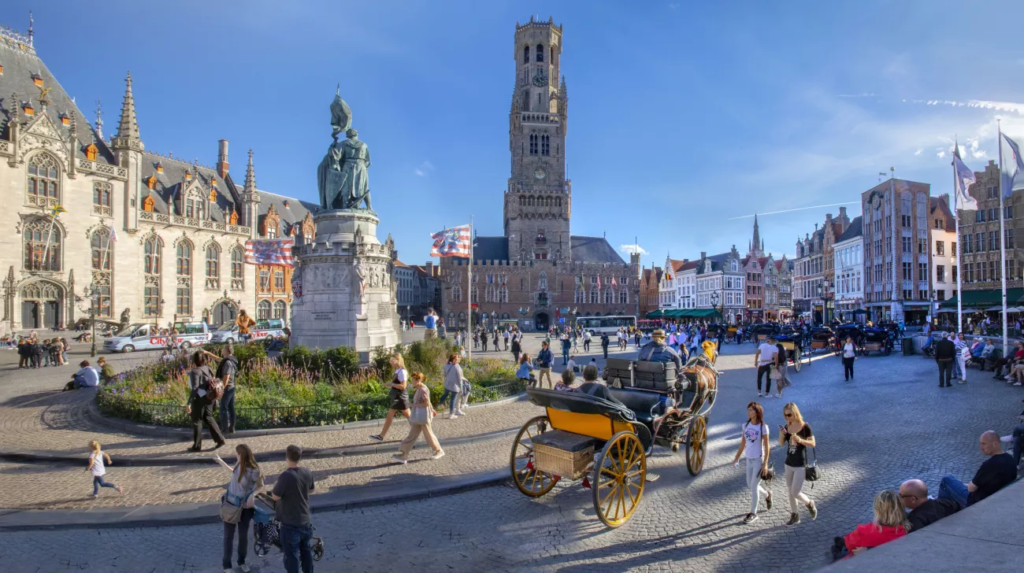
Spreading out as the monumental civic and economic heart of the historic center, this wide, cobblestone plaza has functioned as the central trading stage of Bruges since the year 958.
- What it is famous for: Its iconic, colorful gabled guildhouses and the towering 83-meter-high medieval Belfry. The square is dominated by the Belfry of Bruges (Belfort), a magnificent 13th-century brick tower housing a complex carillon of 47 melodic bells. Energetic travelers can climb the 366 winding stone steps of the interior stairs to the high belfry gallery, which treats visitors to an unobstructed, birds-eye panorama over the historic roof tiles and surrounding Flemish countryside.
2. The Burg Square & Stadhuis
The Palatial Hub of Gilded Gothic Sovereignty and Stone Vaults
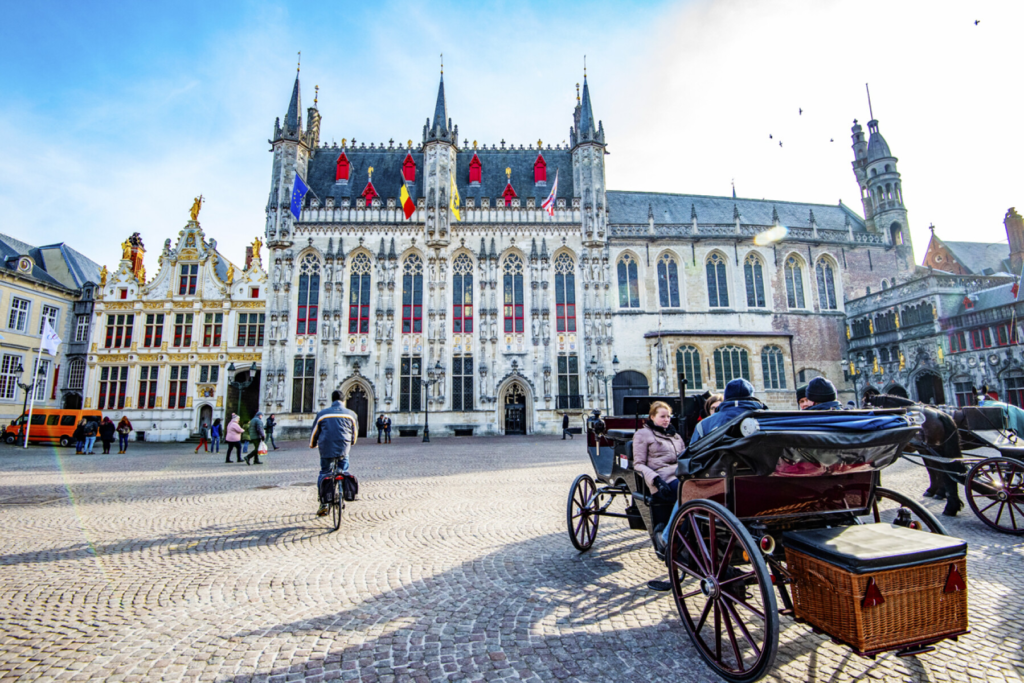
Tucked just a short block east of the main Market Square, this tight, highly historic courtyard plaza served as the fortified seat of the Counts of Flanders for centuries.
- What it is famous for: Its breathtaking 14th-century Gothic Town Hall (Stadhuis) and contrasting architectural styles. The Burg is a living textbook of European design, displaying everything from heavy Romanesque masonry to the ornate, gold-trimmed Renaissance facade of the Old Civil Registry. The absolute crown jewel is the interior Gothic Hall inside the Stadhuis, which features a spectacular, polychrome wooden vault ceiling covered in detailed historical carvings of imperial saints and prophets.
3. The Basilica of the Holy Blood (Heilig-Bloedbasiliek)
The Multi-Tiered Sanctuary of Sacred Imperial Relics
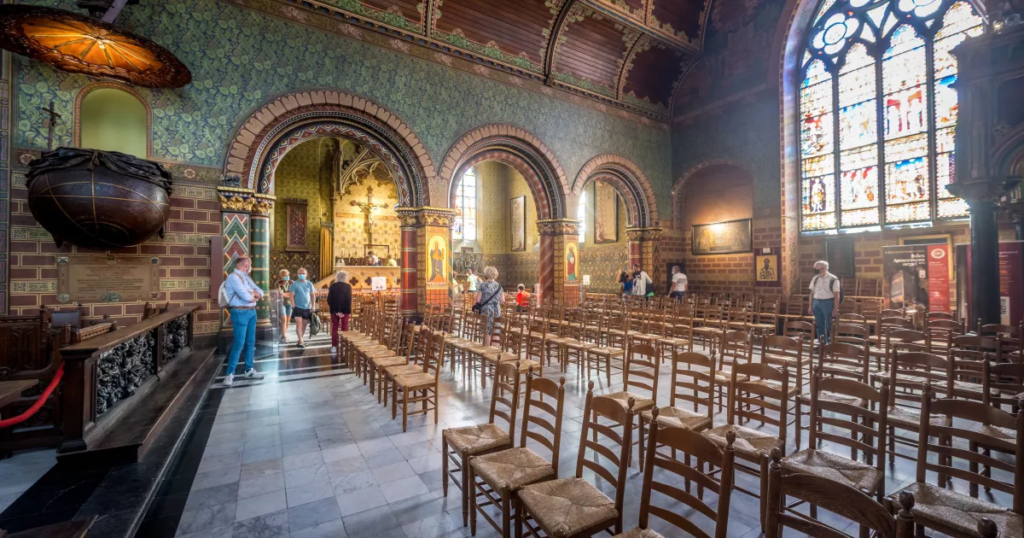
Tucked quietly into a dark corner of the Burg Square, this unique, double-storied chapel complex bridges two completely different architectural eras inside a single structure.
- What it is famous for: Protecting a revered vial containing cloth stained with the Holy Blood of Christ. The lower level is a dark, austere 12th-century Romanesque chapel that has remained virtually untouched for centuries. Stepping up the grand staircase, however, launches visitors into a dazzling, high-Gothic upper chapel blanketed in vibrant wall murals and stained glass, where the sacred relic is brought out for solemn veneration every afternoon.
4. Rozenhoedkaai (Rosary Quay)
The Postcard Mirror of Floating Timber and Churning Canals
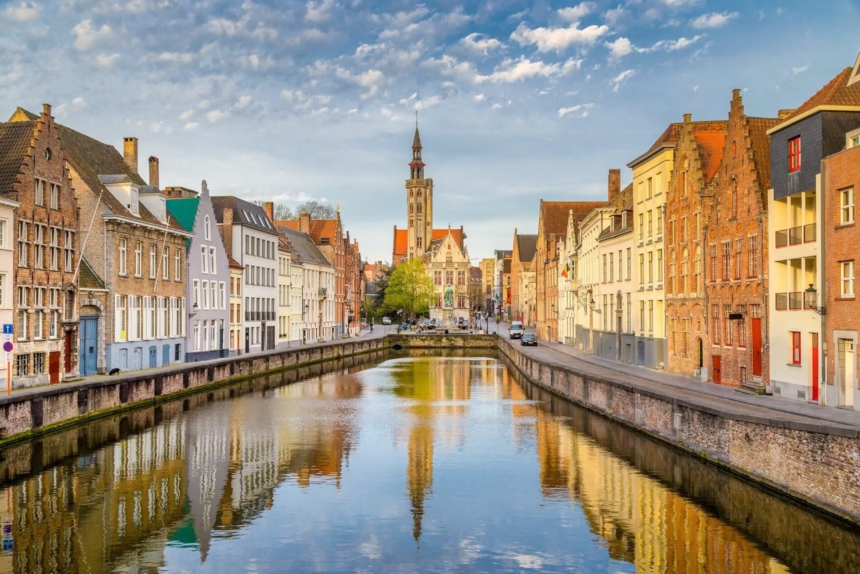
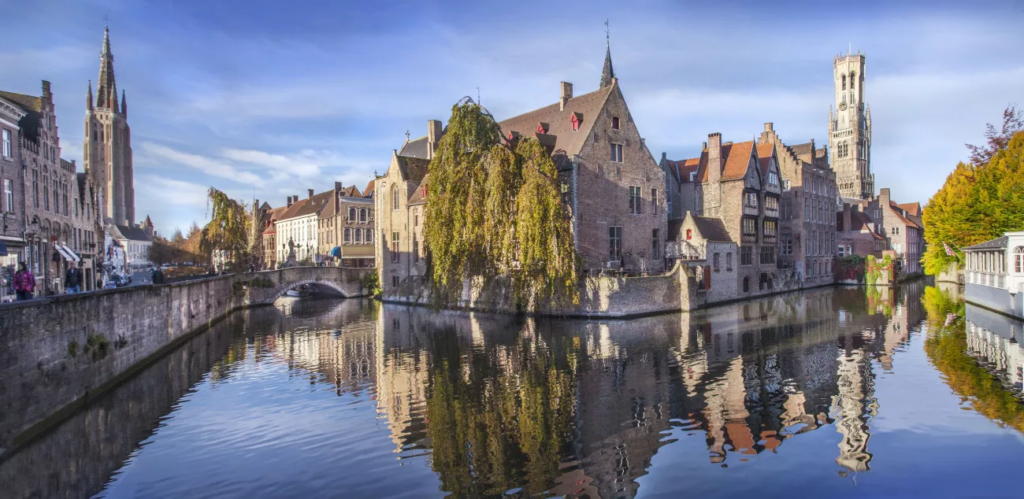
Positioned at the scenic intersection of the Groenerei and Dijver canals, this romantic, water-wrapped corner is widely considered the most photographed viewpoint in all of Belgium.
- What it is famous for: Its postcard-perfect reflection of medieval stone facades and a weeping willow tree dipping into the water. Historically a bustling trading mooring for spice and rosary merchants, the quay offers a timeless look at Bruges’ canal infrastructure. It serves as the primary starting point for open-air canal boat tours, where travelers can glide beneath low brick arches to see the city from the water level.
5. Minnewater (The Lake of Love) & Lovers’ Bridge
The Quiet Swan Sanctuary of Defensive Waterways and Old Castles
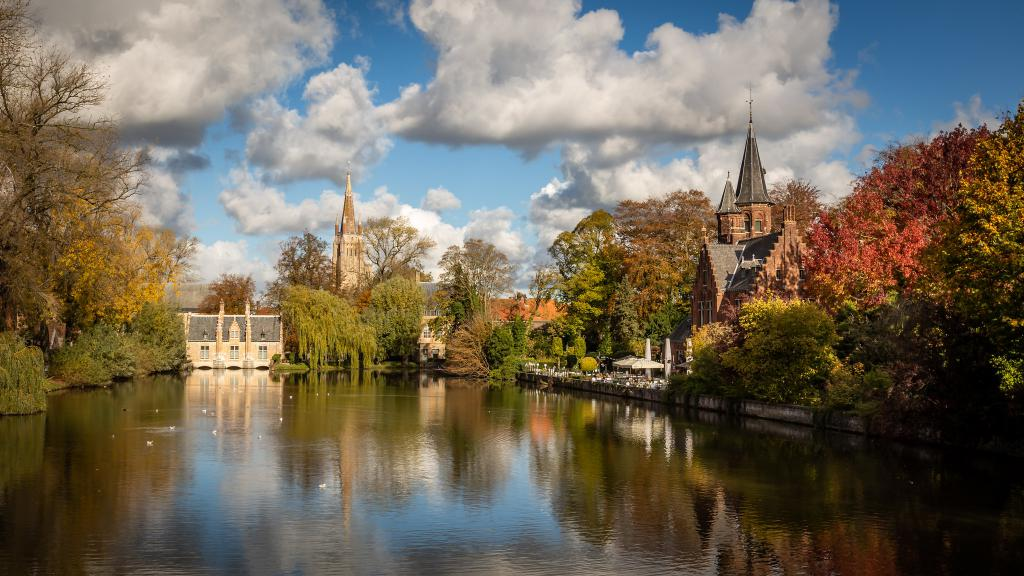
Located on the peaceful southern edges of the city limits, this wide, tranquil lake was originally constructed in the Middle Ages to serve as a massive water reservoir and inner harbor basin.
- What it is famous for: Its romantic local folklore, elegant white swans, and the historic Lake Tower. Legend holds that a young girl named Minna died of a broken heart here, and crossing the stone Lovers’ Bridge ensures eternal love. The banks are lined with weeping willows, manicured lawns, and a fortified 14th-century stone tower (Poertoren), offering a serene, green escape that looks out over the dozens of regal white swans that call the waters home.
6. The Princely Beguinage (Ten Wijngaerde)
The Silent, Whitewashed Matrix of Monastic Poplar Courtyards
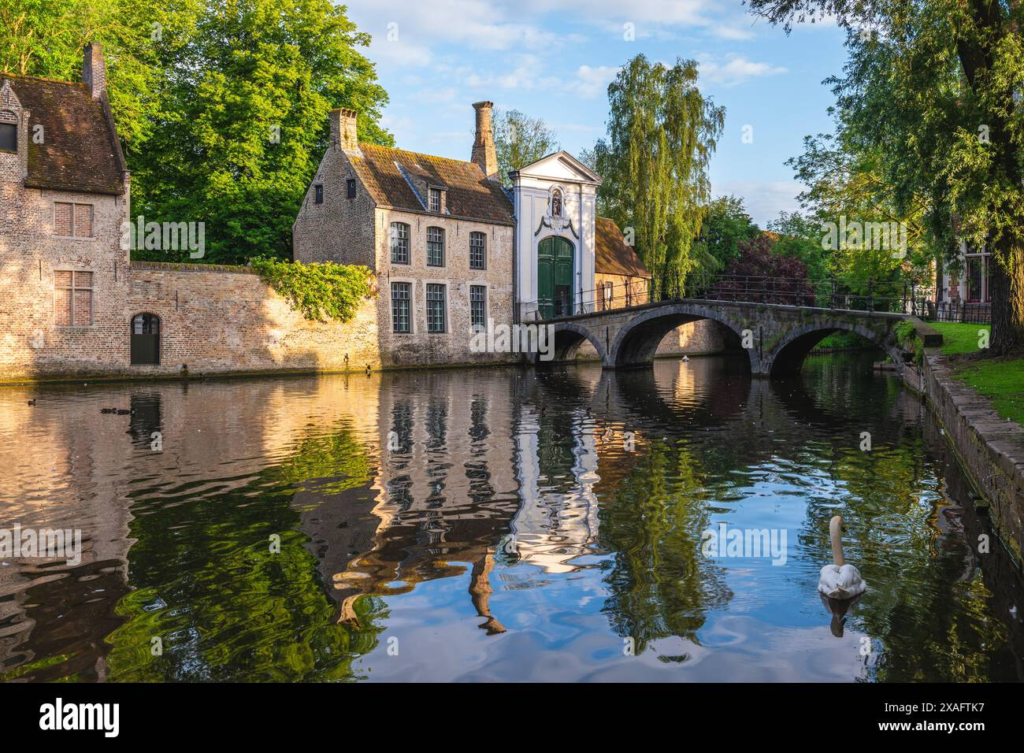
Situated just a short, peaceful stroll from the Lake of Love, this serene, enclosed monastic community was founded in 1245 by Margaret of Constantinople to house devout, unmarried women.
- What it is famous for: Its uniform rows of whitewashed houses surrounding a vast courtyard of tilting poplar trees. Stepping through the grand stone entry gate feels like crossing into another century. The complex requires strict silence, allowing visitors to walk calmly beneath the tall trees, which are carpeted in bright yellow daffodils during the spring, while Benedictine nuns in traditional habits still cross the cobblestones to prayer.
7. Church of Our Lady (Onze-Lieve-Vrouwekerk)
The Brick Titan of Michelangelo’s Marble and Mighty Spires
Rising sharply above the skyline of the historic Dijver canal sector, this colossal, three-aisled brick church is a monumental showcase of high medieval wealth and art patronage.
- What it is famous for: Its 115.5-meter-high brick tower—the second tallest brick tower in the world—and Michelangelo’s Madonna and Child sculpture. The interior holds a treasure trove of art, anchored by the delicate white marble Madonna, the only sculpture by Michelangelo to leave Italy during his lifetime. The church choir also protects the ornate, gilded bronze tombs of Charles the Bold and Mary of Burgundy, showcasing the high imperial status of the city.
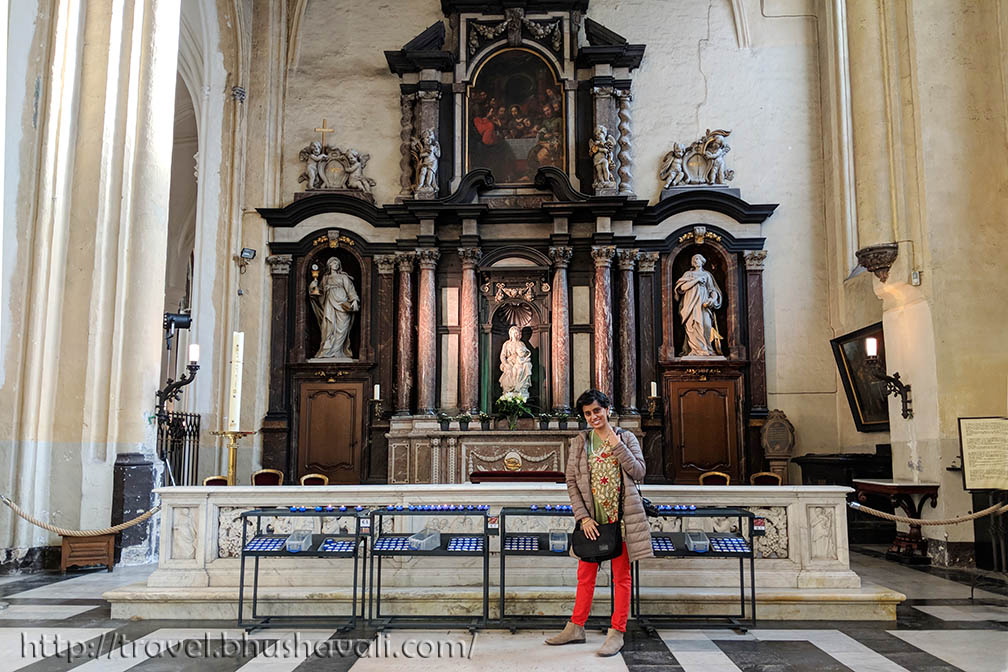
8. The Groeningemuseum
The High-Art Portal of Flemish Primitives and Terrifying Realism
Tucked elegantly into a quiet, leafy park courtyard behind the historic Dijver canal properties, this world-class art gallery is the premier cultural repository of the region.
- What it is famous for: Its unrivaled collection of early Netherlandish (Flemish Primitive) painting masterpieces. The museum tracks the birth of oil painting through the meticulously detailed, hyper-realistic works of Jan van Eyck, Hans Memling, and Gerard David. Visitors can stand inches away from iconic, world-renowned paintings like Van Eyck’s Madonna with Canon van der Paele, marveling at the rich textures, jewels, and deep spiritual symbols painted in the 1430s.
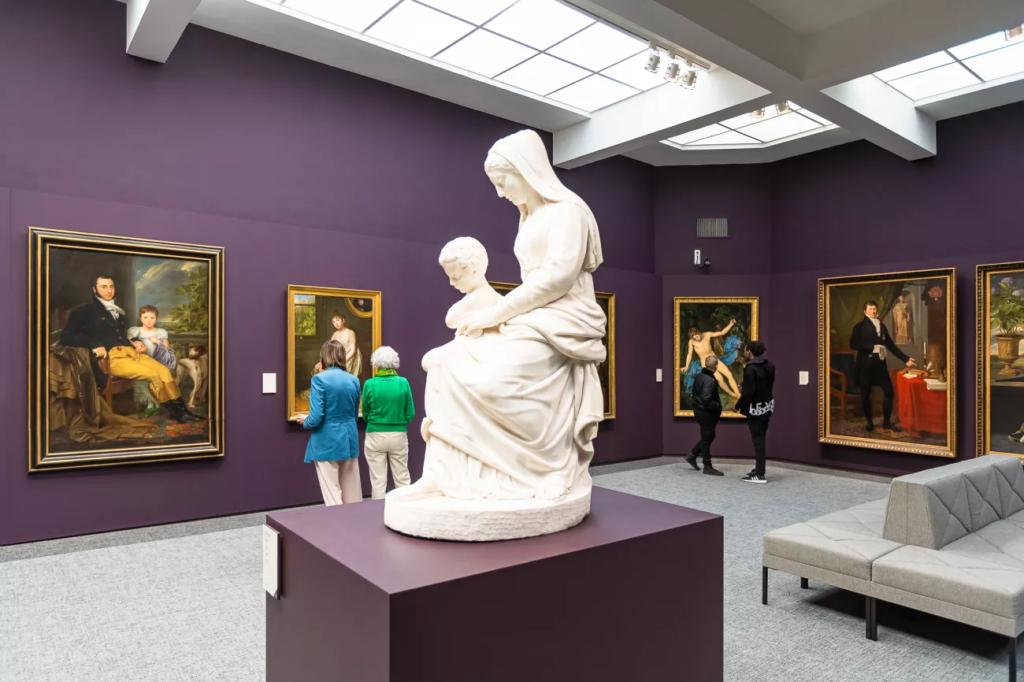
9. The Old St. John’s Hospital (Sint-Janshospitaal)
The Timber-Roof Ward of Medieval Medicine and Altar Arts
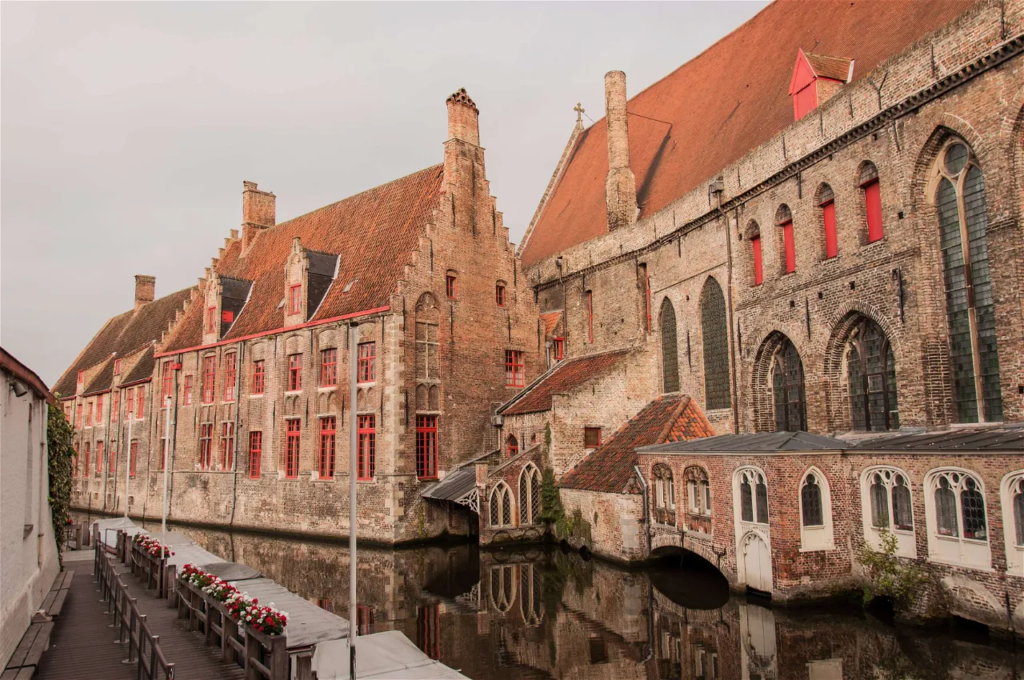
Commanding a vast, historic block directly opposite the Church of Our Lady, this sprawling complex dates back to the mid-12th century, making it one of Europe’s oldest surviving hospital structures.
- What it is famous for: Its magnificent medieval sick wards, historic pharmacy jars, and a dedicated Hans Memling art shrine. For over 800 years, Augustinian nuns and monks cared for sick travelers and pilgrims within these stone halls. Visitors can walk beneath a jaw-dropping, original 13th-century oak timber roof to view early medical instruments and a collection of six intricate panel paintings created by Hans Memling specifically for the hospital.
10. De Halve Maan Brewery
The Family-Owned Copper Fortress of Subterranean Beer Pipelines
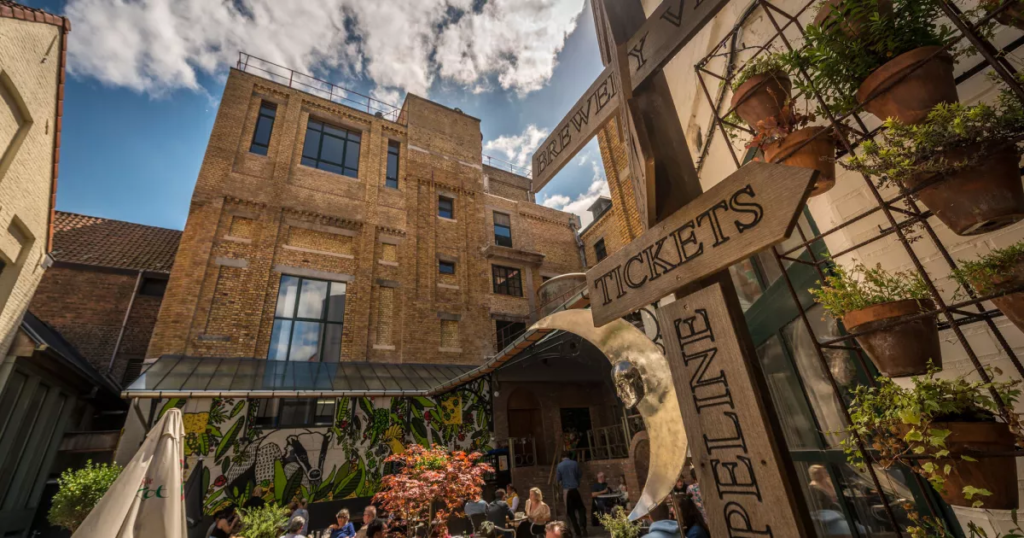
Tucked dynamically into the historic town block grids of the Walplein square, this historic, multi-generational family brewery has been crafting traditional Belgian ales on this exact site since 1856.
- What it is famous for: Its breathtaking rooftop panorama and a unique 3.2-kilometer underground beer pipeline. Famous for brewing the rich Brugse Zot and Straffe Hendrik ales, the brewery combines old copper boiling kettles with modern engineering. To protect the fragile cobblestone streets from heavy delivery trucks, the owners built a high-tech underground pipeline that pumps four million liters of fresh beer beneath the city canals every year to their bottling plant outside town.
11. St. Anna District & The Windmills of Kruisvest
The Sun-Drenched Earthwork Runway of Historic Timber Sails
Tracing the long, green earthen ramparts of the outer medieval city walls along the northern borders of the town limits, this quiet neighborhood is known as the traditional lace-making quarter.
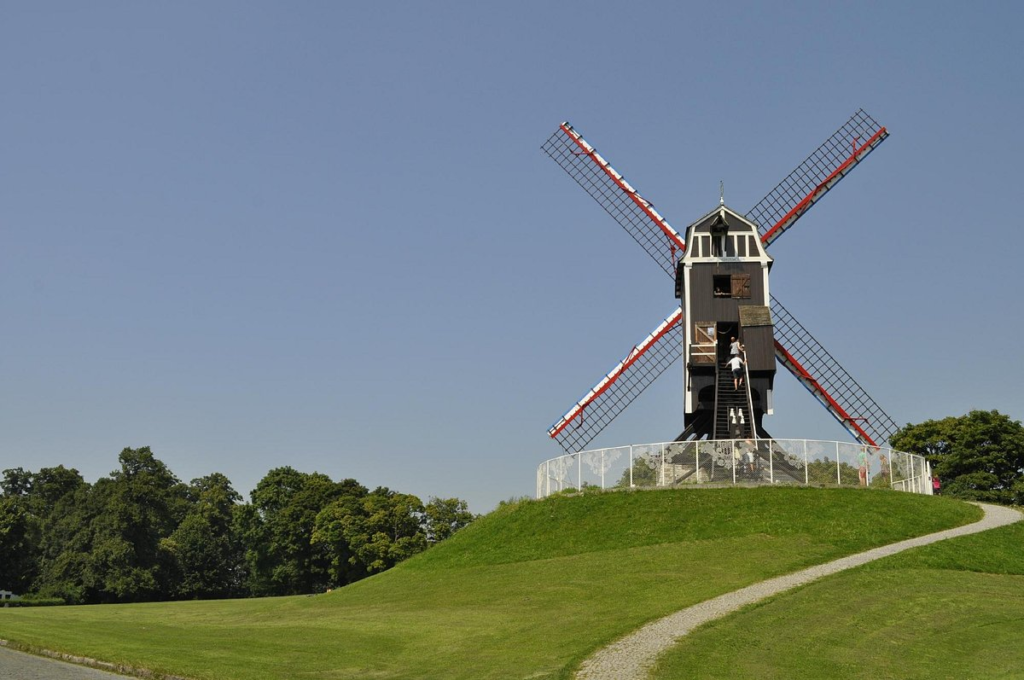
- What it is famous for: The historic, functional wooden windmills standing prominently on grassy hills over the canal ring. While the St. Anna district is famous for its quiet, working-class alleys and traditional lace boutiques, its edge is defined by the Kruisvest parkland. Here, four majestic, 18th-century timber windmills—including the functional Koelewei and Sint-Janshuismolen—still turn their massive white canvas sails in the North Sea breeze, preserving the old agricultural borders of the merchant capital.