
Wels, spreading gracefully across the flat, fertile plains of the Traun River in Upper Austria, operates on a magnificent, historic layout that marks it as one of the country’s deepest urban cradles.
Its strategic river position made it a premier geographic stronghold since antiquity; under Roman Emperor Diocletian, the settlement expanded into Ovilava, a massive, heavily fortified provincial capital of Noricum Mediterraneum.
During the Middle Ages, the city evolved into a roaring trade hub, fortified by the Babenberg and Habsburg dynasties who laid out its sweeping, palace-lined central squares.
Today, Wels is Upper Austria’s second-largest city, effortlessly blending its ancient imperial pedigree with a booming identity as a hyper-modern economic powerhouse.
. Famous for its traditional sweet pastry pockets (Welser Kornradln), hidden late-Gothic arcaded courtyards, and scenic riverbank bicycle trails.
1. Stadtplatz & The Ledererturm
The Elongated Merchant Stage of Pastel Facades and Mighty Gates
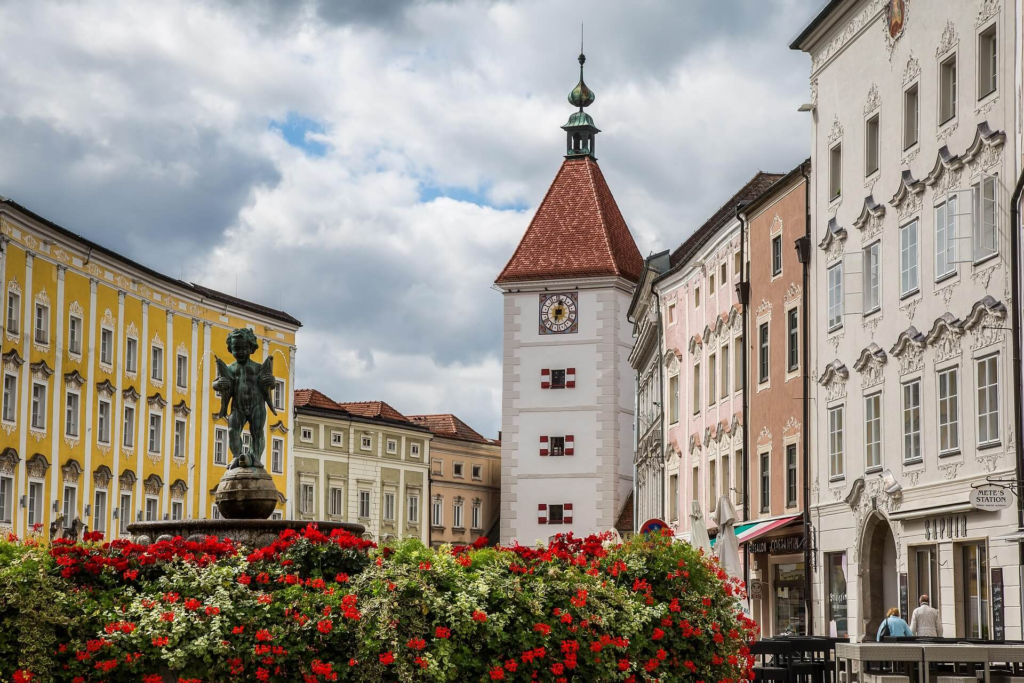
Slicing straight through the historic heart of the city’s medieval block network, this exceptionally wide, 600-meter-long cobblestone plaza functions as the grand civic, commercial, and festive baseline of Wels.
- What it is famous for: Its magnificent, pastel-hued Baroque facades and the towering 13th-century Ledererturm gate. The western exit of the plaza is anchored by the Ledererturm (Tanner’s Tower), a massive, 37-meter-tall medieval stone gate tower featuring a striking, steep hipped roof. The square is lined with historic patrician townhouses that boast hidden, multi-tiered inner arcaded loggias, serving as an open-air arena for weekly farmers’ markets and grand summer festivals.
2. Welios Science Center
The Hyper-Modern Matrix of Interactive Green Energy Exploration
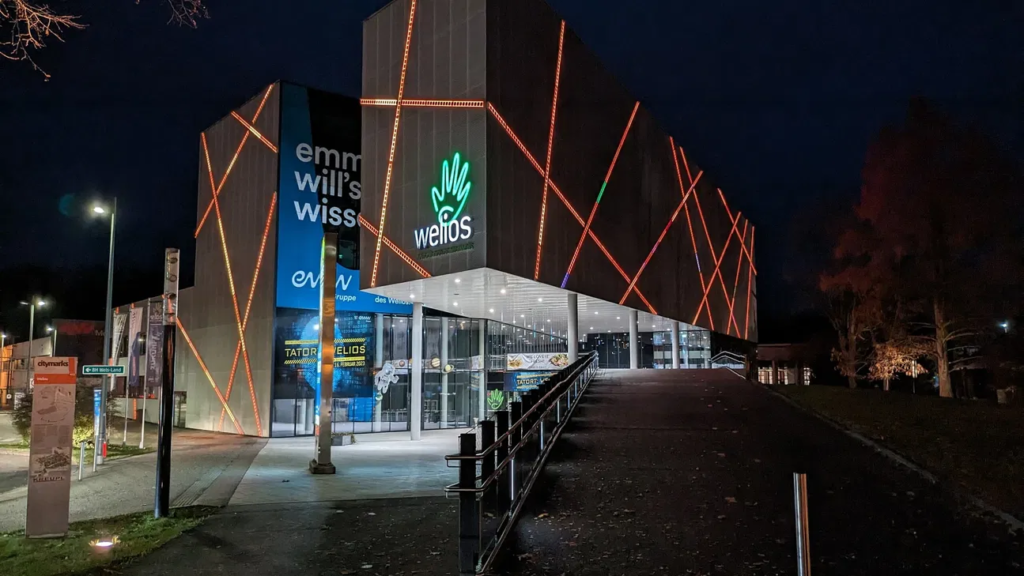
Dominating the modern northern gateway of the city’s parklands, this striking, architecturally avant-garde science museum is an international showcase for future-focused engineering.
- What it is famous for: Being Austria’s premier interactive hands-on museum dedicated entirely to renewable energy. The building itself is an architectural marvel, featuring a sharp, crystalline facade slashed by glowing lines of LED light. Inside, over 2,500 square meters of high-tech exhibition spaces host dozens of interactive stations where visitors can generate electricity via miniature water turbines, manipulate solar arrays, and explore the physics of geothermal power in a playful environment.
3. Burg Wels (Wels Castle)
The Imperial Fortress of Emperor Maximilian’s Last Days
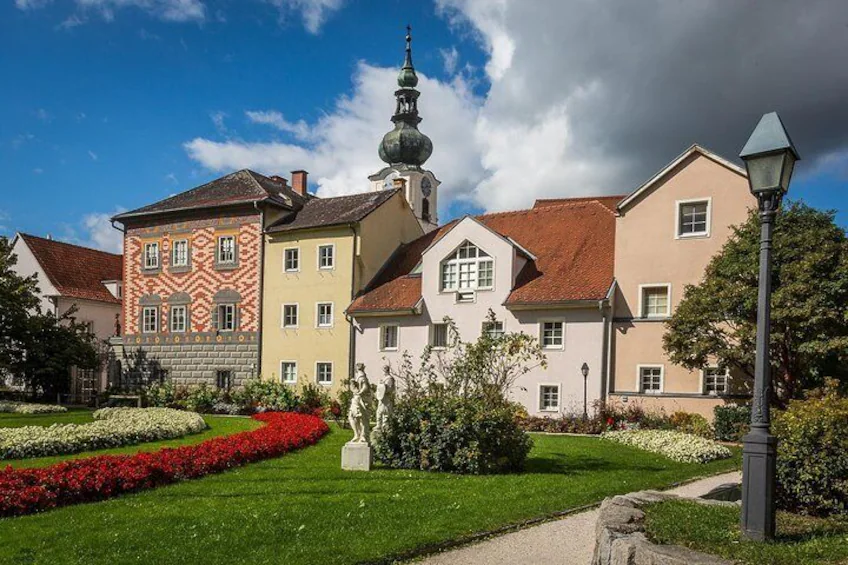
Tucked into the southeastern sector of the old town’s defensive walls, this heavily fortified, multi-winged medieval castle palace dates back to the early 11th century.
- What it is famous for: Being the historic site where Holy Roman Emperor Maximilian I passed away in 1519. Originally a sturdy Babenberg stronghold, the castle was later expanded into a grand late-Gothic residence by the Habsburgs. Today, its historic stone halls, deep timber-beamed rooms, and manicured palace gardens house a rich cultural museum tracking the city’s agricultural traditions, culinary history, and imperial military campaigns.
4. Stadtpfarrkirche (City Parish Church of St. John the Evangelist)
The Romanesque Gothic Sentinel of Detailed Stained Glass Masterpieces
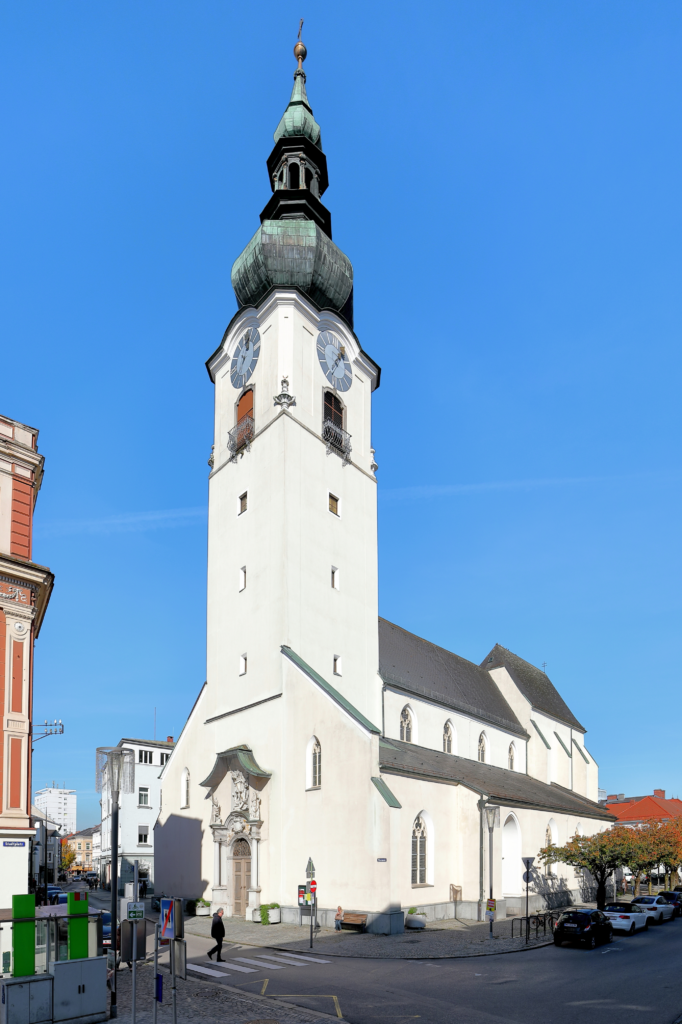
Commanding the eastern end of the historic Stadtplatz blocks, this monumental three-aisled hall church stands proudly over the foundations of an ancient 9th-century house of worship.
- What it is famous for: Its towering, copper-domed bell tower and rare 14th-century Gothic stained-glass window cycles. Stepping across the church threshold reveals a magnificent architectural transition from an early Romanesque core to a soaring Gothic vaulted interior. The choir is globally celebrated for its exceptionally vibrant, original medieval stained glass windows, which cast deep blues, greens, and crimson light across the stone tombs of the ancient Polheim nobility.
5. Minoritenkloster (Minorite Monastery) & Archaeological Museum
The Sacred Gothic Cloister of Ancient Roman Capitals
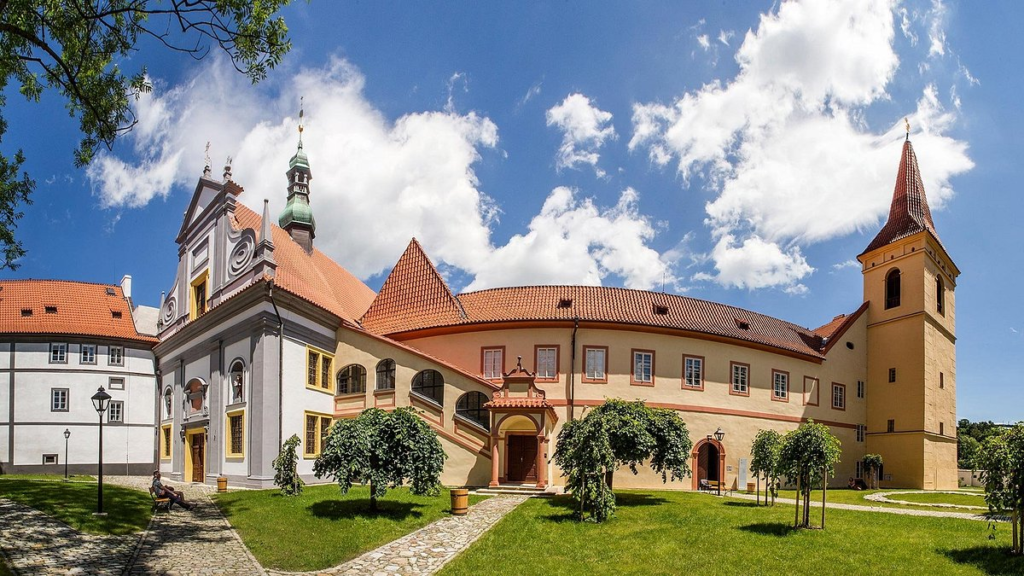
Positioned along the scenic banks of the Traun River, this expansive, late-Gothic former Franciscan monastery complex stands as one of the oldest sacred sites in Upper Austria.
- What it is famous for: Its pristine medieval cloisters and housing the world-class Ovilava Roman collection. After being carefully deconsecrated, the monastery’s vaulted refectories were converted into the city’s primary archaeological research museum. Visitors can walk through illuminated galleries displaying massive Roman stone sarcophagi, intricate mosaic floors, gold coins, and everyday household artifacts unearthed from the ancient provincial capital.
6. The Traun River Promenade & City Park
The Fluid Liquid Runway of Glacial Waters and Shaded Avenues
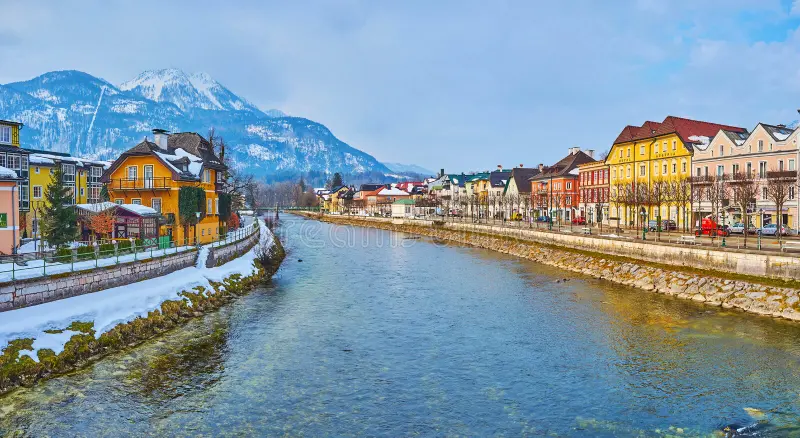
Tracing the wide, emerald-green currents of the Traun River along the southern edge of the historic core, this long, beautifully landscaped parkland functions as Wels’ premier natural retreat.
- What it is famous for: Its scenic, river-framing bicycle highways and historic iron footbridges. The promenade serves as a major node for the regional Traunradweg cycling route. Lined with massive, ancient chestnut trees, manicured flower beds, and modern public art sculptures, the park offers local residents a peaceful, green space for jogging, strolling, and watching the alpine meltwaters rush down towards the Danube.
7. Messe Wels (Wels Exhibition Centre)
The Colossal Subterranean Megastructure of International Trade Fairs
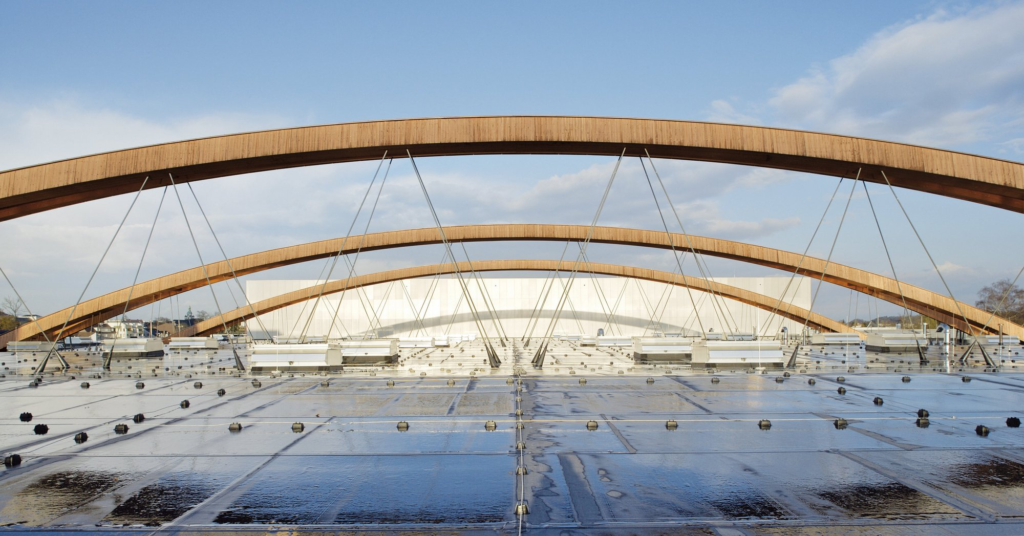
Spreading over a massive, multi-hectare industrial zone just west of the main city parklands, this state-of-the-art convention complex marks Wels as a major European business capital.
- What it is famous for: Hosting Europe’s leading trade fairs for agricultural technology and biomass energy. Composed of 21 highly modern, interconnected exhibition halls that span over 60,000 square meters of indoor space, the complex attracts hundreds of thousands of international buyers annually, transforming the historic town into a high-energy platform for cutting-edge global commerce.
8. Tiergarten Wels (Wels Zoo)
The Historic Botanical Sanctuary of Exotic Waterfowl and Ancient Oaks
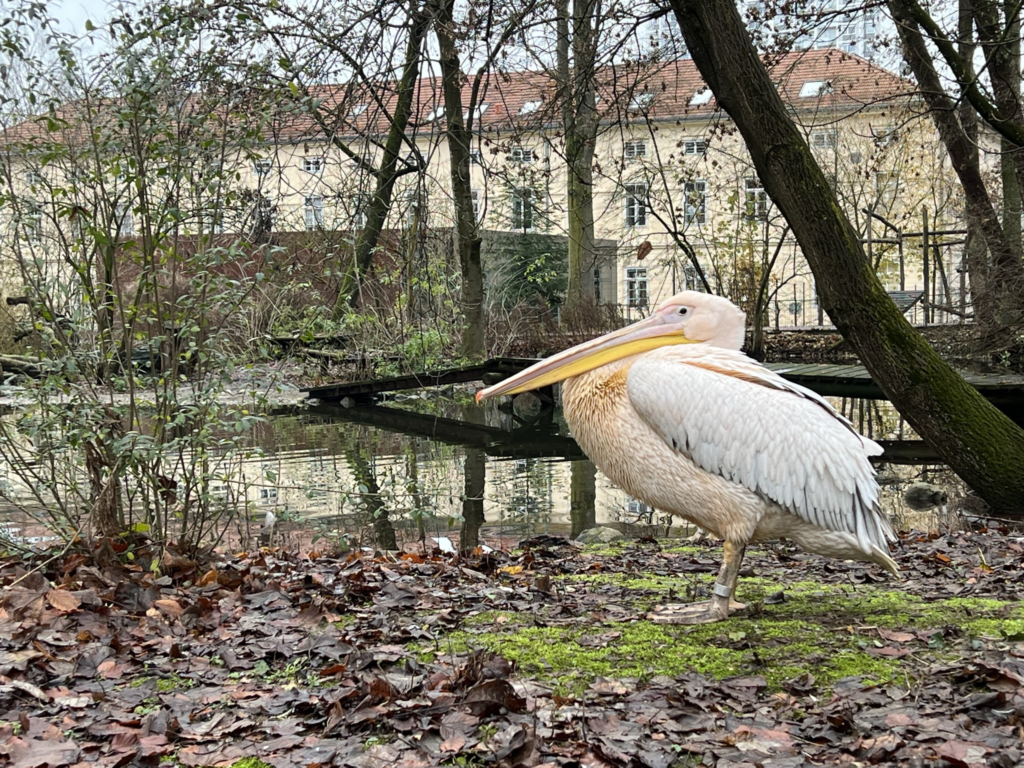
Nestled quietly within the central green belt of the city park corridors, this charming, 2-hectare animal park stands proud as the oldest active public zoo in Upper Austria.
- What it is famous for: Its century-old oak trees and specialized preservation programs for rare birds and monkeys. Established in 1930, the zoo offers an intimate, tranquil layout focused on animal welfare and botanical preservation. Visitors can walk beneath towering forest canopies to view over 100 distinct species of native and exotic animals, including colorful macaws, playful gibbons, and European wildcats.
9. Kremsmünsterer Hof
The Renaissance Courtyard Palace of Imperial Abbots
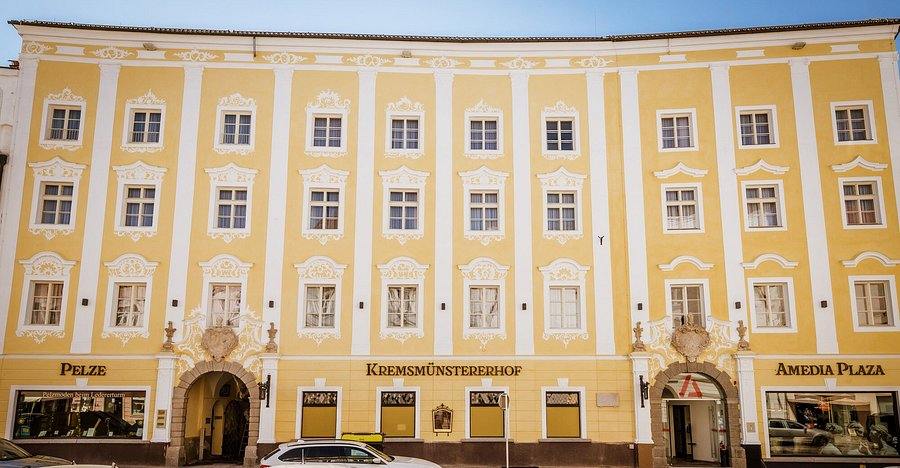
Dominating the northern edge of the historic Stadtplatz, this grand, heavily ornamented multi-story palace townhouse was constructed in the late 16th century.
- What it is famous for: Serving as the opulent urban headquarters for the historic Kremsmünster Abbey. Engineered to house the powerful visiting abbots and monastery dignitaries, the building features an exceptionally rich, cream-and-white Baroque facade. Its massive iron-studded gates open up into a spectacular, hidden inner courtyard bordered by three tiers of perfectly uniform, Italianate arcaded stone loggias.
10. The Hoffmann-Theater (Stadttheater Wels)
The Neoclassical Portal of Elite Musical and Dramatic Arts
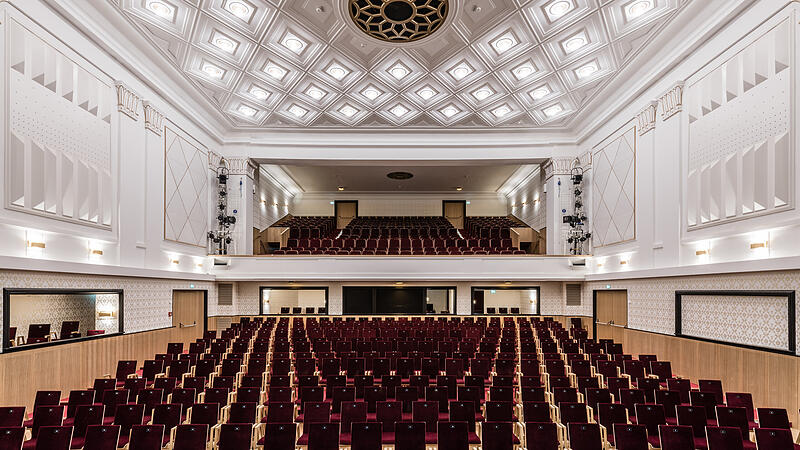
Housed inside the expansive architectural wings of the historic Greif hotel complex along the Rainerstraße avenue, this elegant public theater has been the cultural beating heart of Wels since the 19th century.
- What it is famous for: Its opulent, historicist plush-and-gilt auditorium and world-class acoustics. Designed to emulate the grand court theaters of Vienna, the interior is characterized by soaring painted ceilings, multi-tiered private viewing boxes, and heavy velvet drapery. The venue operates as the city’s premier stage for classical orchestral concerts, touring opera productions, and avant-garde theatrical performances.
11. Marienkirche (Church of the Immaculate Conception)
The Twin-Spired Neo-Gothic Titan of the Outer Ring Boulevards
Rising sharply above the western modern expansion districts of the city center, this monumental red-brick parish church stands as a text-book masterpiece of late 19th-century religious architecture.
- What it is famous for: Its striking, symmetrical 60-meter-tall twin spires and its intricate brick masonry work. Completed in 1905 to accommodate Wels’ rapidly growing industrial population, the church features an exceptionally long central nave and high-vaulted ceilings. The interior is illuminated by a grand collection of towering stained-glass window sequences that cast deep sapphire and amber light patterns across the altars during afternoon services.