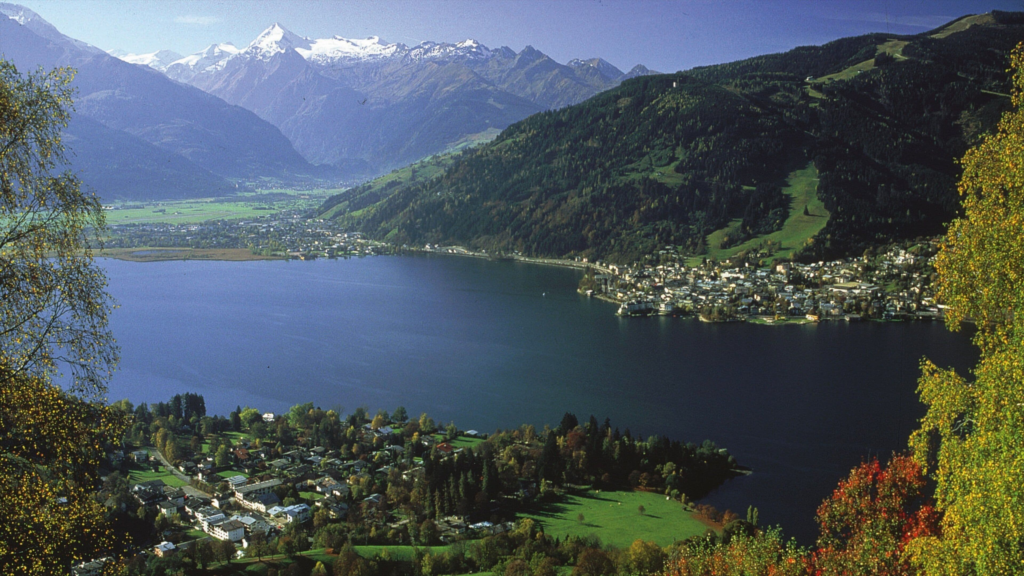


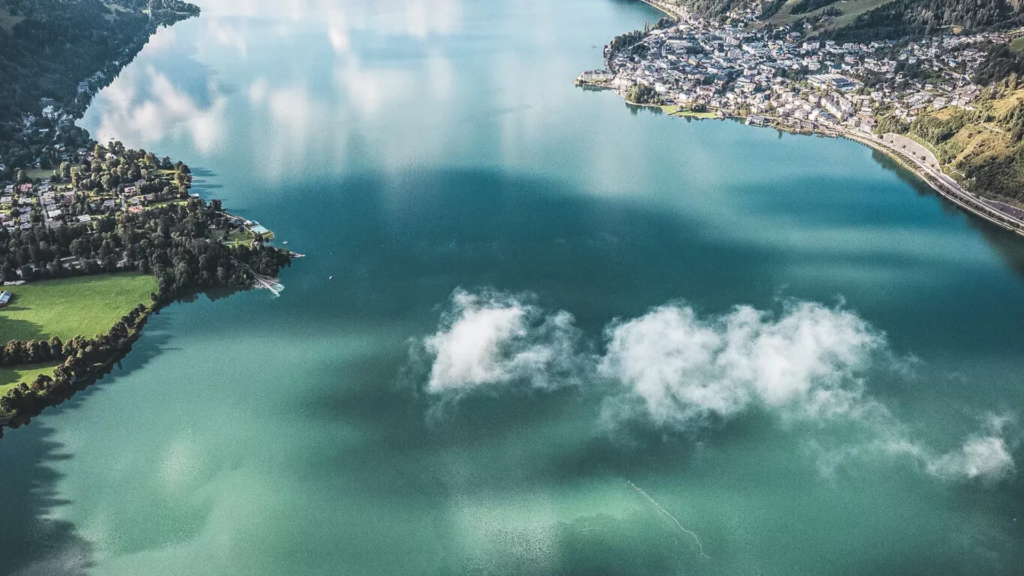
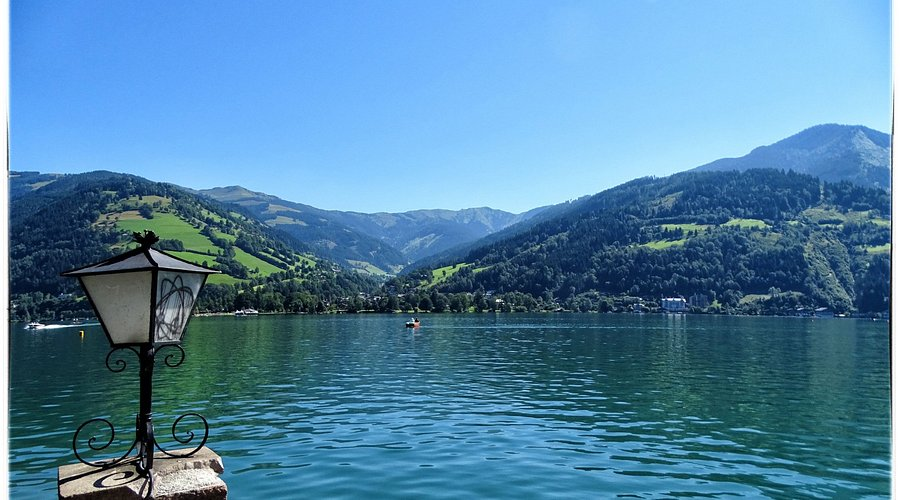
Zell am See, beautifully positioned on a small peninsula jutting into the deep blue waters of Lake Zell (Zeller See) in the Salzburg region, operates on a magnificent natural layout where the water meet the high mountains.
Unlike many seasonal alpine outposts, Zell am See gained early historical prominence as a vital trading hub through the high mountain passes, a legacy anchored by its beautifully preserved medieval center.
Its absolute golden age arrived in 1875 with the completion of the Giselabahn railway line, which transformed the quiet market town into a premier getaway for Vienna’s elite.
Today, Zell am See, alongside its high-alpine partner Kaprun, forms one of Europe’s most complete year-round outdoor sports and relaxation destinations.
Famous for its freshly caught lake whitefish, historic wood-paneled ski huts, and a vibrant dual identity as a sunny summer boating resort and a snow-sure winter sports hub.
1. Lake Zell (Zeller See)
The Crystal-Clear Glacial Mirror of the High Valley
Spreading out over 4.5 square kilometers directly beneath the eastern edge of the historic town streets, this pristine, glacier-fed body of water is the absolute focal point of the region’s geography.
- What it is famous for: Its drinking-water quality and its dramatic reflections of the Hohe Tauern peaks. The water in Lake Zell is so exceptionally clean and clear that it is certified as safe for drinking. In the summer months, the lake acts as a playground for windsurfers, stand-up paddleboarders, and historic electric cruise ships, while the snow-capped crest of the Kitzsteinhorn glacier reflects perfectly across its calm surface.
2. The Grand Hotel Zell am See
The Belle Époque Jewel of the Royal Lakeside Promontory
Occupying a premier, private peninsula that juts prominently out into the northern waters of the lake, this iconic snow-white palatial hotel stands as the definitive architectural landmark of the shoreline.
- What it is famous for: Its opulent, historicist architecture and its long legacy hosting European nobility. Completed in 1894 to cater to the wealthy aristocrats traveling via the new imperial railway lines, the hotel is a display of late 19th-century luxury. Characterized by its classic mansard roofs, uniform rows of green shutters, and expansive lakeside terraces, it remains a symbol of the historic spa culture that put the town on the global map.
3. Schmittenhöhe Mountain
The Panoramic Ridge of the Thirty Peaks
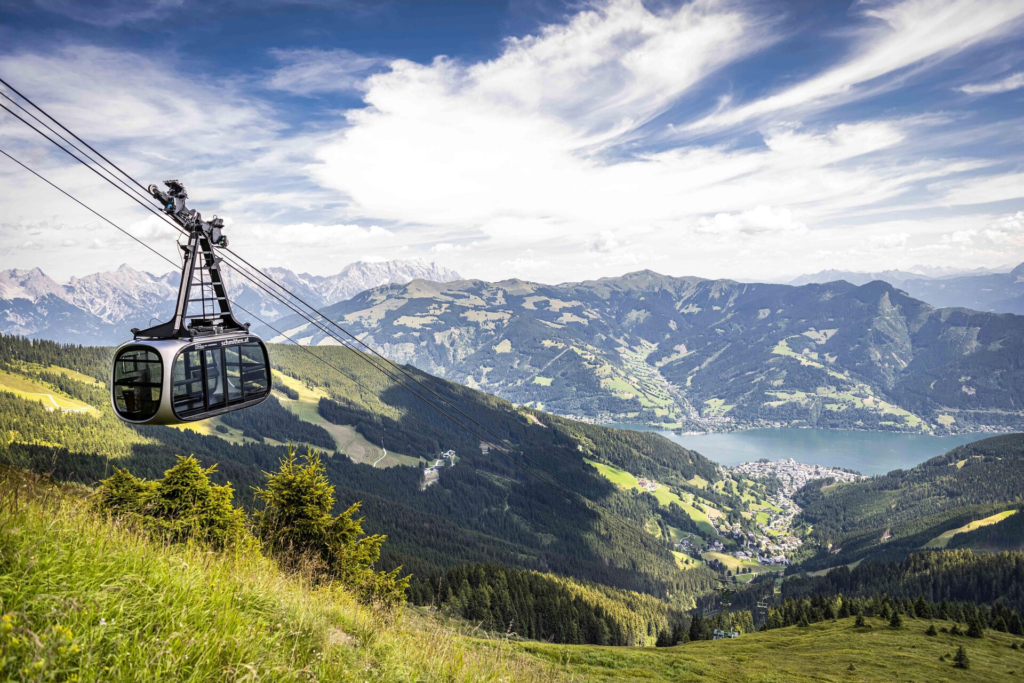
Rising steeply directly behind the historic roof tiles of the old town, this 1,965-meter-high mountain serves as Zell am See’s primary backyard playground for skiing, paragliding, and alpine hiking.
- What it is famous for: Its stunning 360-degree panorama of over thirty distinct 3,000-meter alpine peaks. A state-of-the-art cable car system—featuring sleek, designer cabins engineered by Porsche Design—transports visitors from the valley floor to the summit ridge. Once at the top, platforms like the Kaiserblick platform treat travelers to views across the grossglockner range and the jagged limestone crests of the Northern Calciferous Alps.
4. The Historic Altstadt (Old Town)
The Romanesque Heart of Vaulted Lanes and Frescoed Stone
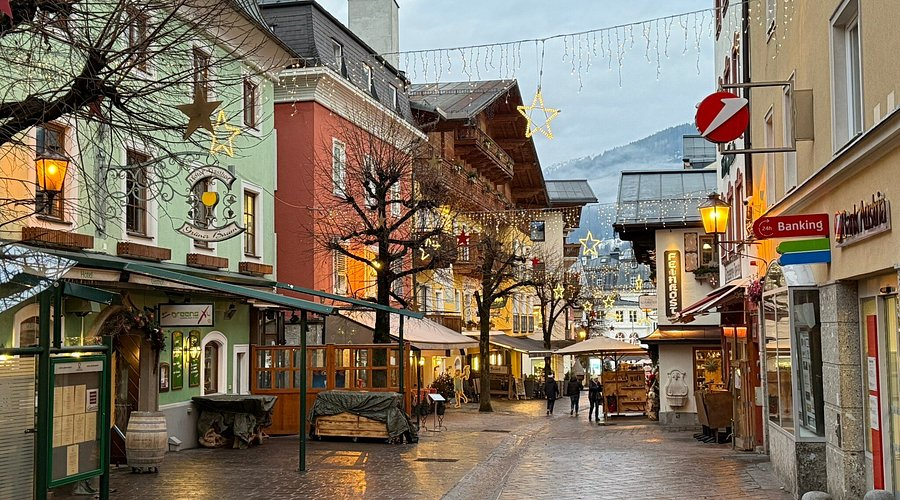
Dating back over 1,200 years to its roots as a monastic settlement founded by monks from Salzburg, the compact historic center of Zell am See is a well-preserved network of tight cobblestone lanes.
- What it is famous for: Its centuries-old merchant houses and the towering, medieval Vogtturm tower. Walking through the car-free historic core feels like stepping into an old alpine trading post. The area is anchored by the Vogtturm (Warden’s Tower), a 1,000-year-old stone residential tower that now houses a rich museum of regional costumes and historic ice-climbing gear, framed by pastel-colored hotels and traditional woodcraft boutiques.
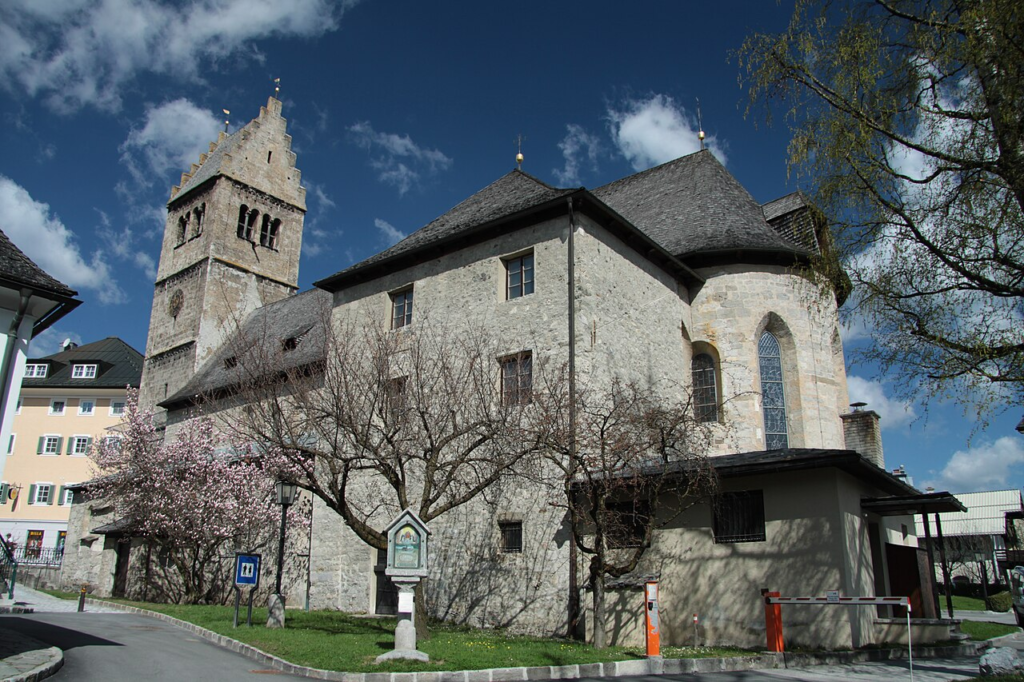
5. St. Hippolyte’s Church (Stadtpfarrkirche)
The Romanesque Sentinel of Stone Galleries and Elevated Spires
Standing proudly in the center of the old town blocks, this ancient parish church, dedicated to Saint Hippolytus, is the oldest architectural structure in the entire Lake Zell basin.
- What it is famous for: Its mighty 15th-century Gothic bell tower and its rare Romanesque stone galleries. While the church’s roots stretch back to the early Romanesque period, it features masterfully executed Gothic additions. The interior is celebrated for its intricate elevated stone choir loft, supported by three arches covered in carved reliefs of saints, knights, and geometric gothic tracery that have survived centuries of regional conflicts and urban fires.
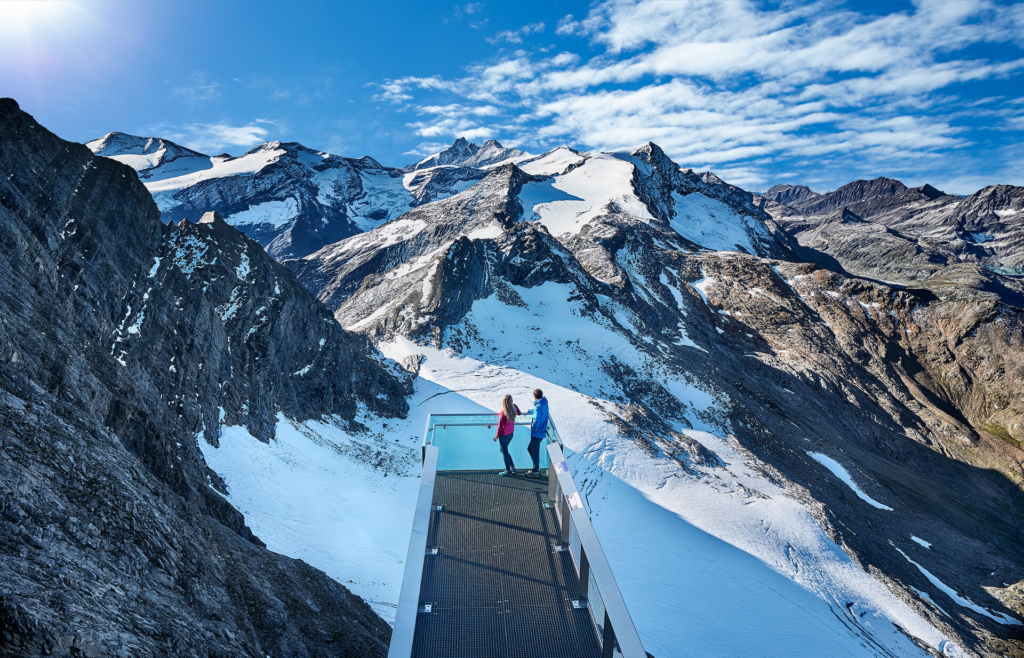
6. Gipfelwelt 3000 & Kitzsteinhorn Glacier
The High-Alpine Ice Kingdom of Borderless Horizons
Located just a short transit ride south in the adjacent Kaprun valley, this massive, snow-sure glacier ski resort reaches an altitude of over 3,000 meters, marking the absolute roof of the Salzburg region.
- What it is famous for: The “Top of Salzburg” viewing platform and year-round glacier snow. Accessible via a sequence of high-performance cable cars, the summit station features a panoramic viewing platform cantilevered over a 600-meter drop. Visitors can walk through a 360-meter-long tunnel cut straight through the limestone core of the mountain to emerge at a spectacular lookout over the pristine wilderness of the Hohe Tauern National Park.
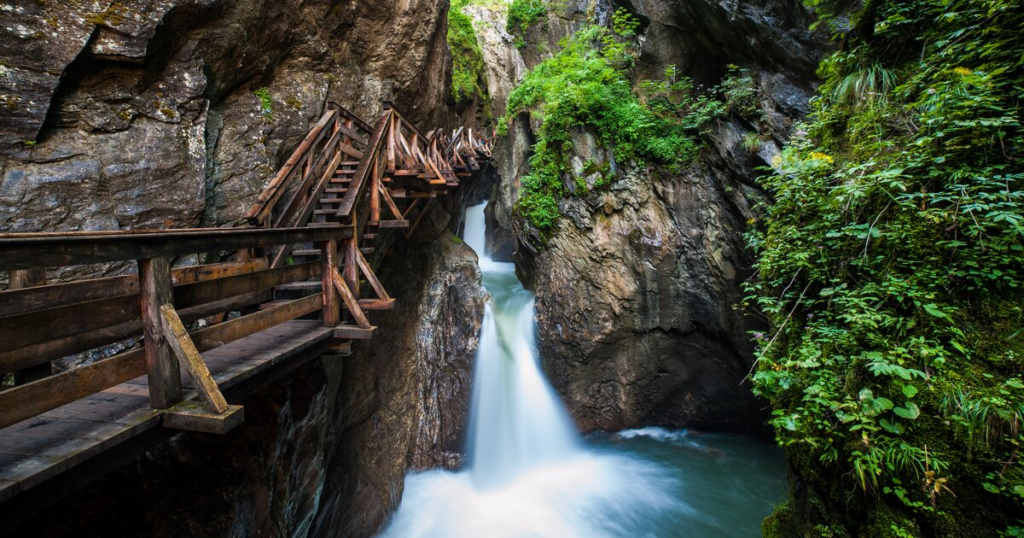
7. Sigmund Thun Gorge (Sigmund-Thun-Klamm)
The Roaring Timber Runway of Churning Glacial Basins
Tucked away at the entrance to the high Kaprun valley, this dramatic, 320-meter-long geological gorge was carved deeply into the solid rock by the rushing meltwaters of the Kapruner Ache river over thousands of years.
- What it is famous for: Its wooden walkway system built directly over the roaring, misty waters. Visitors explore the narrow chasm by walking along an engineering marvel of wooden steps, galleries, and bridges anchored to the vertical rock faces. The roaring river crashes beneath your feet, forming deep pools of turquoise water and mist-filled caverns that are illuminated with multi-colored light installations during summer evening tours.
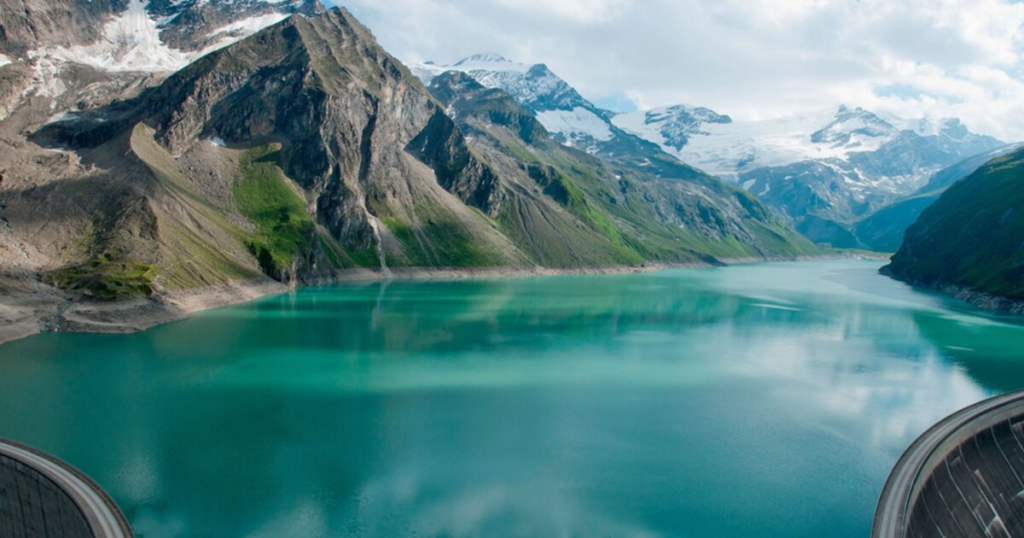
8. Kaprun High Alpine Reservoirs (Hochgebirgsstauseen)
The Fjords of Concrete, Steel, and Water Power
Perched high in the mountains above the Kaprun valley at over 2,000 meters above sea level, these two colossal artificial lakes—Mooserboden and Wasserfallboden—form a monumental hydroelectric power network.
- What it is famous for: Their colossal curved concrete dam walls and fjord-like alpine settings. Built under challenging high-altitude conditions in the post-WWII era, the dams stand over 100 meters tall. Visitors ride a unique open-air diagonal elevator (Lärchwand斜面升降机) up the mountain side to walk across the crown of the massive Mooserboden dam, exploring the interior tunnels and looking out over the turquoise water trapped between the peaks.
9. The Lake Esplanade & Elisabeth Park
The Sisi Promenade of Manicured Lawns and Laser Lights
Tracing the western shoreline of the lake for over a kilometer, this beautifully landscaped waterfront park and promenade links the historic train station plaza directly to the northern residential districts.
- What it is famous for: Its monument to Empress Elisabeth (Sisi) and the synchronized musical water shows. Named in honor of the famous Austrian Empress who loved hiking the surrounding peaks, the park features marble statues and floral displays. Every summer evening, the park becomes a social hub for the Zeller Seezauber (Lake Zell Magic), a spectacular, free public show featuring synchronized water fountains, lasers, and music projected across the bay.
10. Rosenberg Castle (Schloss Rosenberg)
The Bavarian-Style Town Hall of Four Corner Towers
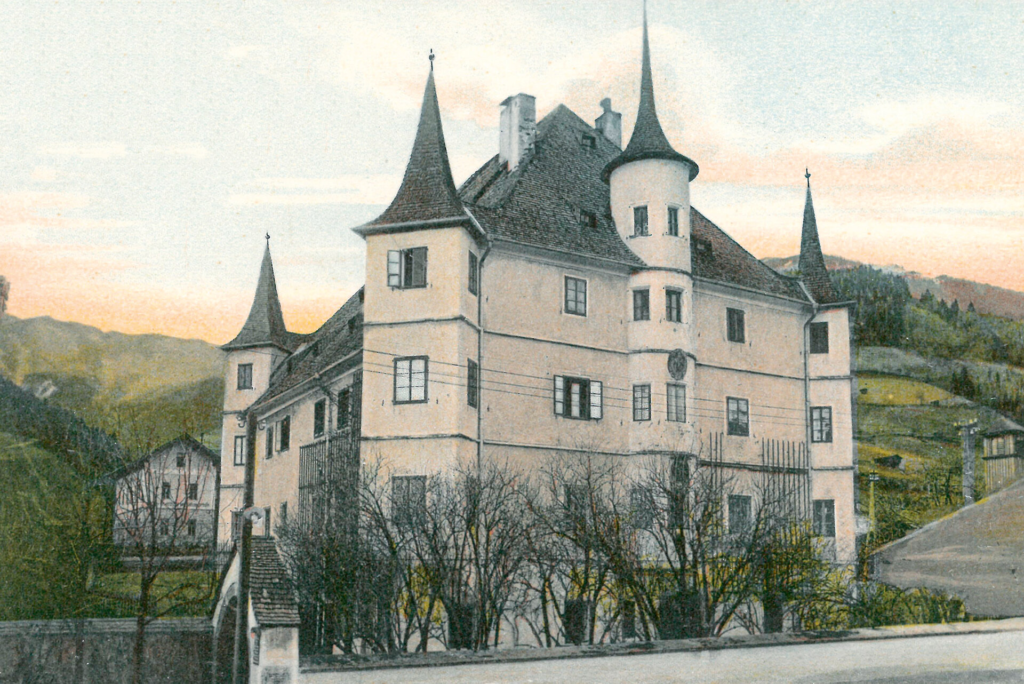
Situated along the southern edge of the historic old town center, this elegant, 16th-century residential palace structure now serves as the official seat of the town hall (Rathaus) and local government offices.
- What it is famous for: Its classic Salzburg-style architecture featuring four symmetrical corner towers. Built by two wealthy local mining brothers, the square, multi-story building features a distinctive pink-and-white facade and a steep gabled roof. Over the centuries, it functioned as a grand family estate, a public brewery, and an imperial forestry school before being purchased by the municipality to preserve its historic stone halls for public administration.
11. Thumersbach District
The Sunny Shoreline of Artist Trails and Forest Villas
Located directly opposite the old town center on the peaceful eastern banks of Lake Zell, this exclusive residential and resort district is known as the “sunny side” of the valley basin.
- What it is famous for: Its superior sunshine hours and the scenic Porsche Artist Trail. Because it faces southwest, Thumersbach enjoys long evening sun when the main town center has already slipped into the shadow of the Schmittenhöhe. The district features grand, historic forest villas built by wealthy 19th-century artists, and a hiking path up the hillside lined with contemporary art sculptures that offers a postcard view of Zell am See’s peninsula across the water.