
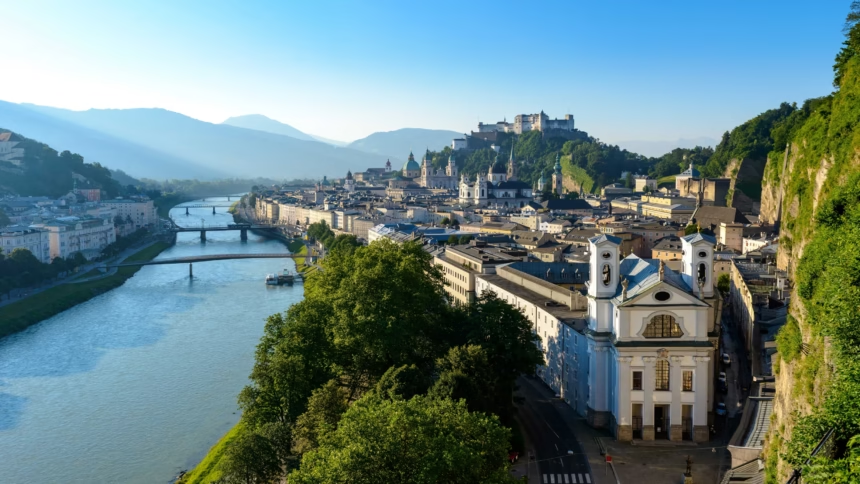
Salzburg, cradled dramatically in a narrow valley where the rushing Salzach River cuts through the northern limestone Alps, is a city built on the grandest cultural foundations.
For centuries, it operated not as a part of Austria, but as an independent, wealthy church-state ruled by powerful Prince-Archbishops.
It is universally celebrated as the birthplace of Wolfgang Amadeus Mozart and the cinematic backdrop for The Sound of Music.
This UNESCO World Heritage city perfectly balances its deep, aristocratic high art traditions with a fresh, crisp alpine soul. Famous for its heavy, dark Salzburger beers, intricate wrought-iron shop signs, and sweet, pillowy Salzburger Nockerl soufflés.
1. Hohensalzburg Fortress (Festung Hohensalzburg)
The Mighty White Monolith of the Alpine Ridge
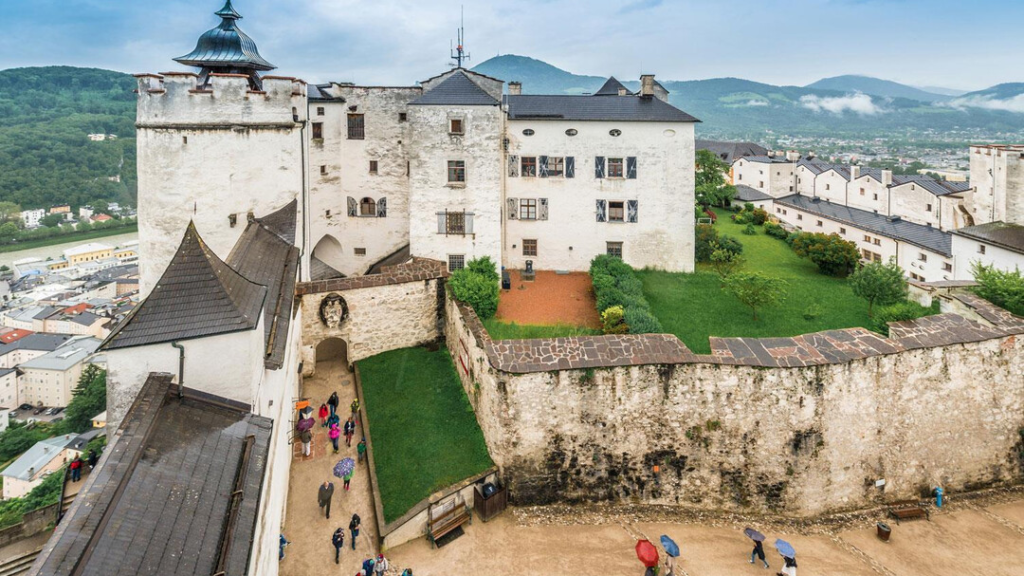
Crowning the steep, rocky precipice of the Festungsberg high above the historic old town, this colossal 11th-century stronghold is one of the largest and most completely preserved medieval castle complexes in Europe.
- What it is famous for: Its impenetrable defensive history and opulent royal chambers. Having never been captured by foreign enemies, the fortress remains a pristine time capsule. Visitors can ride the vintage funicular railway up the mountain cliff to explore the castle’s interior, including the magnificent Golden Hall, which features a starry ceiling of gilded wooden knobs, and the deep, historic torture chambers. The ramparts offer a breathtaking, panoramic look at the city spire layout below and the jagged Alps to the south.
2. Mirabell Palace and Gardens (Schloss Mirabell)
The Baroque Botanical Stage of Hollywood and Royalty
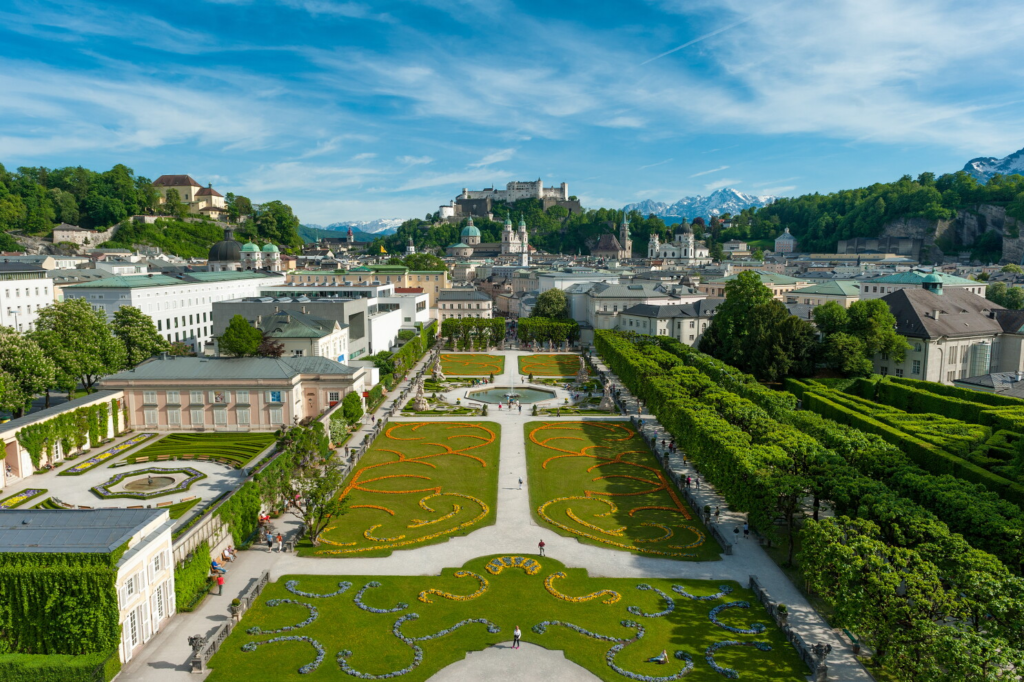
Commissioned in 1606 by Prince-Archbishop Wolf Dietrich for his beloved mistress, this grand palace complex was later redesigned in a spectacular, symmetrical Baroque style by master architect Lukas von Hildebrandt.
- What it is famous for: Its meticulously manicured geometric gardens and unforgettable role in The Sound of Music. The gardens are a living symphony of colors, featuring grand marble statues of mythological figures, a hedge theater, and the iconic Pegasus Fountain where Maria and the von Trapp children danced while singing “Do-Re-Mi.” Inside the palace, visitors can walk up the sweeping, cherub-adorned Marble Staircase to the Marble Hall, a venue widely considered one of the most beautiful wedding and concert halls in the world.
3. Salzburg Cathedral (Salzburger Dom)
The Resilient, Multi-Domed Cathedral of Italianate Splendor
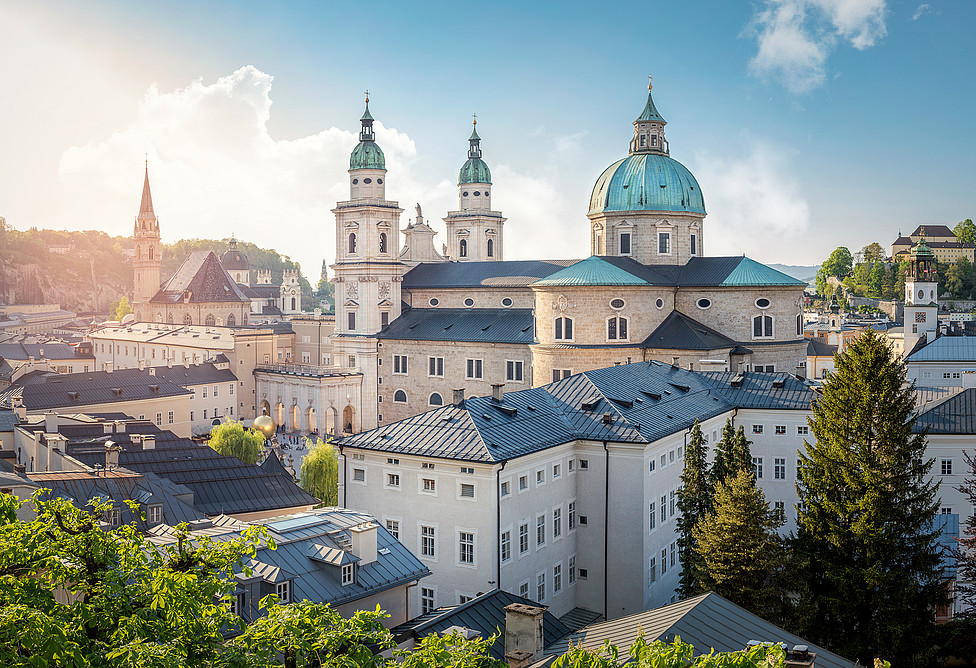
Dominating the monumental stone expanse of the Domplatz in the heart of the city, this magnificent 17th-century cathedral stands as the absolute pinnacle of early Baroque architecture north of the Alps.
- What it is famous for: Its striking twin-towered marble facade and deep musical legacy. Built out of local dark stone and white marble, the cathedral features a massive, sweeping dome that was completely rebuilt after sustaining bomb damage in World War II. The interior holds the historic Romanesque bronze font where Wolfgang Amadeus Mozart was baptized, and the church is world-famous for its unique layout of five independent organ pillars, which fill the vast stone nave with unparalleled acoustic power during the annual Salzburg Festival.
4. Mozart’s Birthplace (Mozarts Geburtshaus)
The Vibrant Yellow Sanctuary of Classical Music History
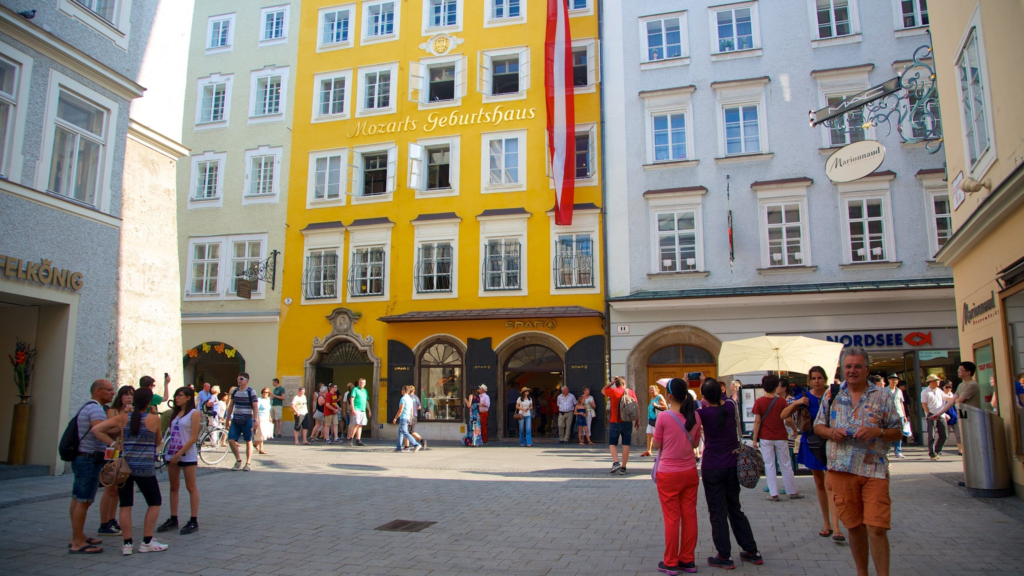
Located at Number 9 Getreidegasse, this striking, bright saffron-yellow apartment building is where Wolfgang Amadeus Mozart was born on January 27, 1756, and where he composed many of his brilliant youthful masterpieces.
- What it is famous for: Being one of the most visited cultural museums in the world. The third-floor apartment has been meticulously preserved to show how the Mozart family lived. Inside, visitors can gaze at rare, priceless personal relics, including the maestro’s actual childhood violin, his concert violin, his clavichord, and intimate family letters. The rooms paint a vivid picture of 18th-century bourgeois life, tracing the meteoric rise of the world’s greatest musical prodigy.
5. Getreidegasse
The Wrought-Iron Runway of Medieval Trade
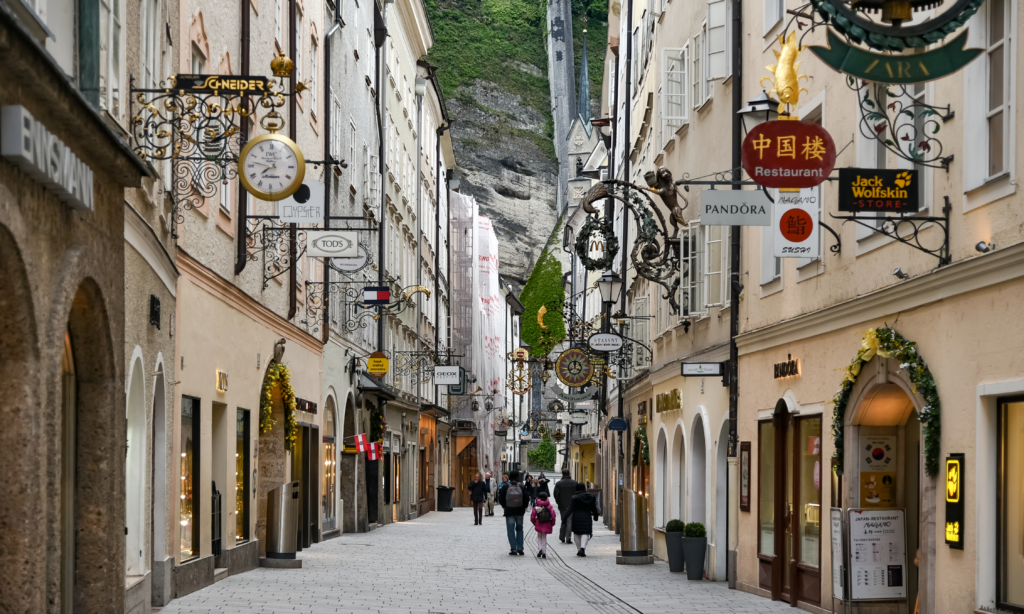
This narrow, gently curving pedestrian thoroughfare is the historic heartbeat of Salzburg’s old town, lined with tall, tightly packed historic townhouses that feature beautiful inner courtyards.
- What it is famous for: Its extraordinary collection of uniform, handcrafted guild signs. By historic law, every store along the street—even modern luxury fashion houses and fast-food chains—must display their name on an ornate, intricately twisted black iron bracket hanging over the pavement. Walking down the bustling cobblestone street feels like stepping straight back into a medieval marketplace, with its hidden, romantic passageways (Durchhäuser) packed with artisan chocolate shops and boutiques.
6. Hellbrunn Palace (Schloss Hellbrunn)
The Playful Renaissance Estate of Liquid Surprises
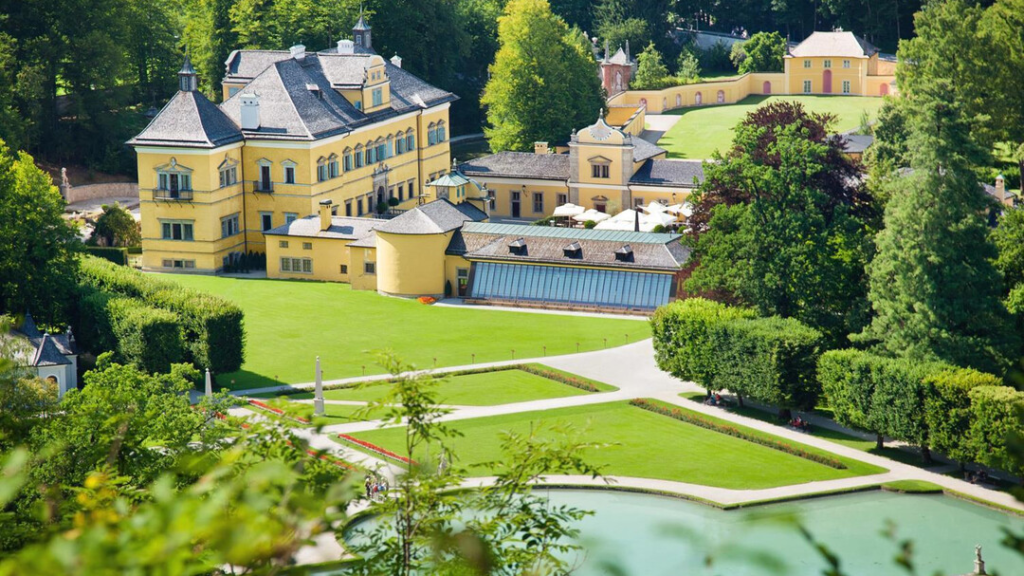
Located a short, tree-lined bicycle ride south of the city center, this beautiful early 17th-century villa was built by Prince-Archbishop Markus Sittikus as a summer day-palace of pure leisure, entertainment, and relaxation.
- What it is famous for: Its ingenious, hidden Trick Fountains (Wasserspiele). Sittikus, known for his eccentric sense of humor, engineered a sprawling parkland filled with hidden stone jets, water-powered automated theater figures, and a mechanical stone dining table that suddenly squirts water from the seats to surprise unsuspecting guests. The palace grounds also house the romantic, glass-paneled gazebo used for the filming of the famous song “Sixteen Going on Seventeen” in The Sound of Music.
7. The Residenz and Residenzplatz
The Grand Royal Stage of Archbishops and Fountains
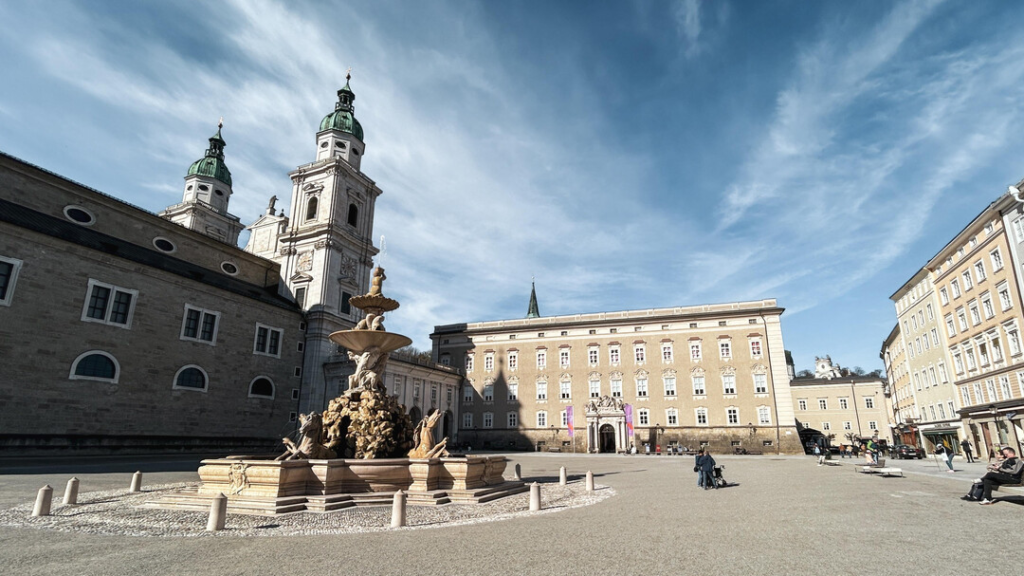
Sprawling across the western edge of the old town, this massive palace complex served as the official urban seat of government and primary residence for Salzburg’s absolute rulers for hundreds of years.
- What it is famous for: Its sumptuous state rooms and the monumental Baroque horse fountain. The palace contains the magnificent Prunkräume (State Rooms), where a young Mozart regularly performed concerts for the royal court. The palace exterior opens onto the grand Residenzplatz, a vast public square centered on the Residenzbrunnen—a colossal 15-meter-tall marble fountain featuring charging sea horses and athletic giants, carved entirely out of local Untersberg marble.
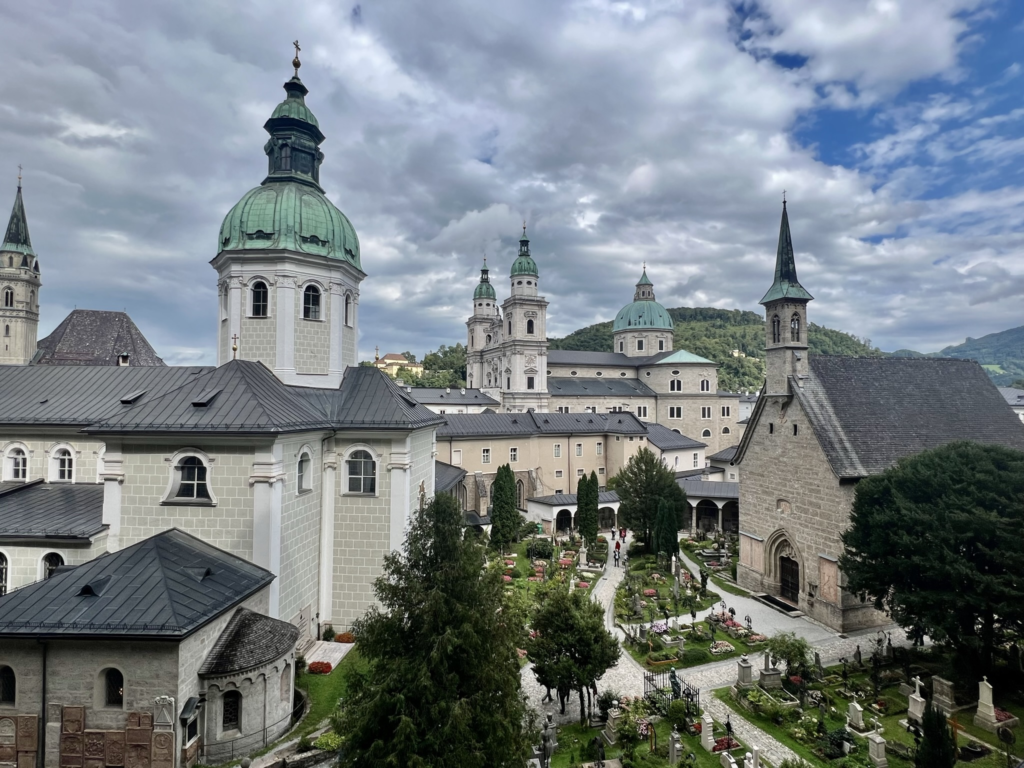
8. St. Peter’s Abbey & Cemetery (Stift St. Peter)
The Mystic Monastic Cradle of the City
Nestled tightly against the sheer vertical rock wall of the Mönchsberg mountain, this Benedictine monastery was founded in 696 AD, making it the oldest continuously active monastery in the German-speaking world.
- What it is famous for: Its cinematic, flower-filled cemetery and ancient mountain catacombs. The exceptionally picturesque graveyard is lined with intricate, hand-forged iron grave markers and flanked by historic stone vaults that directly inspired the dramatic escape scenes in The Sound of Music. Visitors can climb stone steps cut directly into the vertical cliff face to explore early Christian catacombs and the tiny, mystical St. Gertrude’s Chapel carved out of the raw mountain rock.
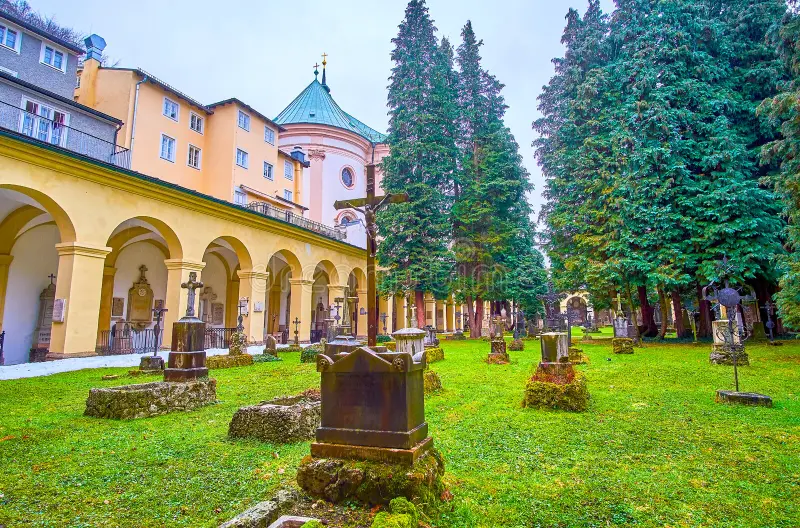
9. St. Sebastian’s Cemetery (Sebastiansfriedhof)
The Italianate Cloister of Alchemists and Masters
Located on the right bank of the river just off the Linzergasse, this striking historic cemetery was laid out in the late 16th century, modeled explicitly after the classic, grand Campo Santo burial grounds of Italy.
- What it is famous for: Its peaceful columned arcades and the resting places of historical legends. The cemetery is a hauntingly beautiful sanctuary of quiet, surrounded by elegant stone porticos. At the absolute center of the lawn stands the magnificent, tiled Gabriel Chapel, a grand mausoleum built for the powerful Prince-Archbishop Wolf Dietrich. The historic arcades also guard the final resting places of Mozart’s wife, Constanze, and the legendary Renaissance alchemist and physician Paracelsus.
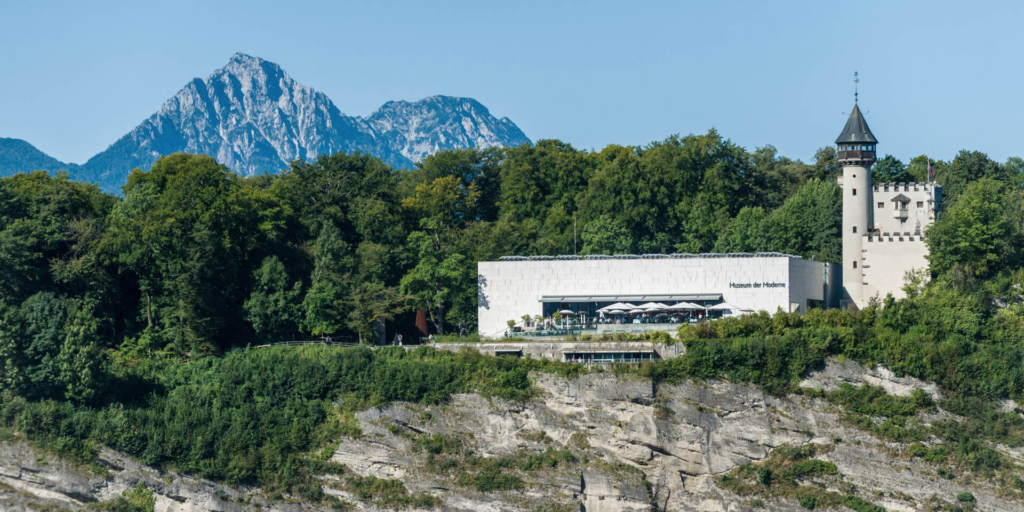
10. Mönchsberg & The Museum of Modern Art
The High Green Ridge of Contemporary Vision
This elongated, green-wooded mountain ridge runs parallel to the Salzach River, serving as a dramatic natural wall that sharply bounds the western edge of Salzburg’s historic old town.
- What it is famous for: Its spectacular panoramic walking paths and striking contemporary design museum. A high-speed elevator inside the mountain transports visitors to the summit, where the sleek, minimalist marble structure of the Museum of Modern Art sits in sharp contrast to the medieval castle across the valley. Walking the ridge trails takes travelers past old defensive bastions, historic villas, and hidden viewpoints that look out over the city domes and the mountain peaks beyond.
11. Augustiner Bräustübl (Müllner Bräu)
The Cavernous, Century-Old Cathedral of Salzburg Beer Culture
Located in the northern Mülln district at the base of the Mönchsberg, this monumental, sprawling tavern complex has been operating inside a historic Augustinian monastery since 1621.
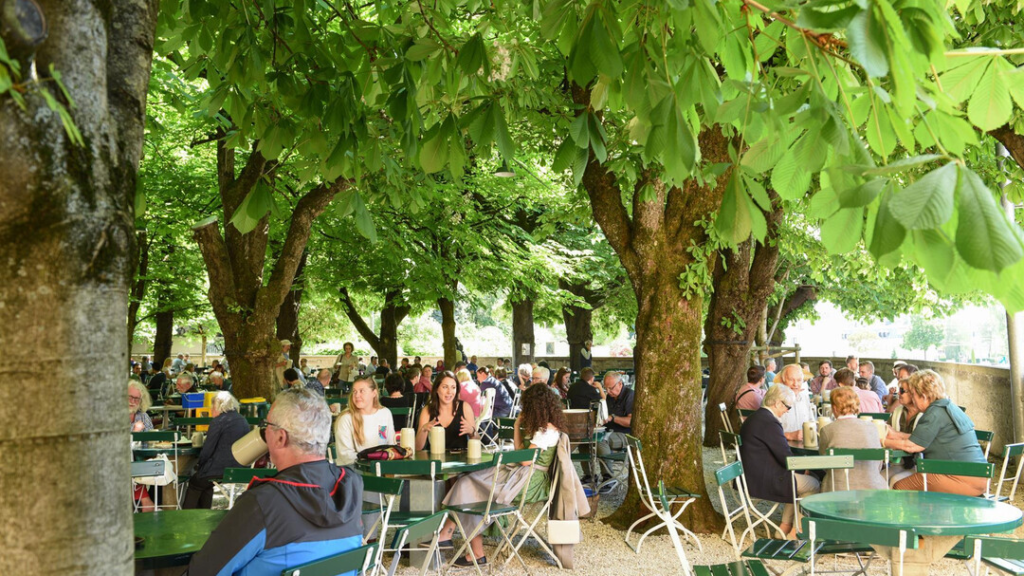
- What it is famous for: Being Austria’s largest beer tavern, operating on ancient monastic traditions. The venue features cavernous, wood-paneled indoor beer halls and a massive, chestnut-shaded outdoor beer garden. The drinking ritual here is legendary: visitors pay a cashier, take a heavy stone mug from a wooden shelf, rinse it themselves at an old marble fountain with cold spring water, and watch a tapman fill it straight from massive oak barrels, pairing the brew with traditional snacks from an indoor marketplace arcade.