
Nuremberg (Nürnberg), the second-largest city in Bavaria, is a place where layers of powerful history run incredibly deep.
In the Middle Ages, it stood as the unofficial capital of the Holy Roman Empire, growing into a glittering center for Renaissance art, early science, and international trade.
In the 20th century, the city became the focal stage for some of modern history’s darkest moments and its most significant steps toward global justice.
Here are the top 11 famous places to visit in Nuremberg and why they belong on your itinerary.
1. Imperial Castle of Nuremberg (Kaiserburg)
The Soaring Citadel of Emperors
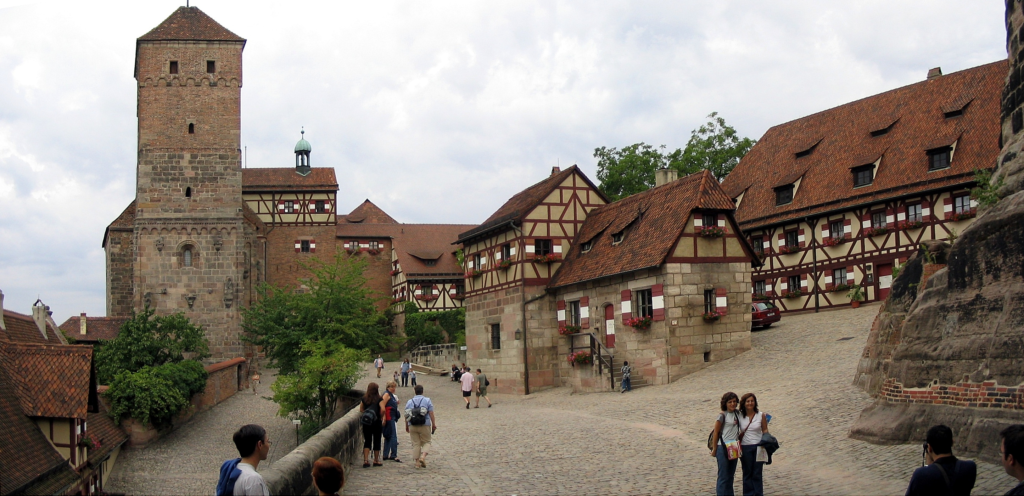
Perched proudly on a high sandstone ridge overlooking the northern edge of the Old Town, the Kaiserburg is one of the most important surviving medieval military fortresses in all of Europe.
- What it is famous for: Hosting every single Holy Roman Emperor between 1050 and 1571. Visitors can climb the iconic, circular Sinwell Tower for an absolute classic panoramic view over the city’s sea of red roofs, peer into the 50-meter-deep castle well, and explore the imperial living quarters and double chapel.
2. Hauptmarkt & Frauenkirche
The Living Core of Bavarian Tradition
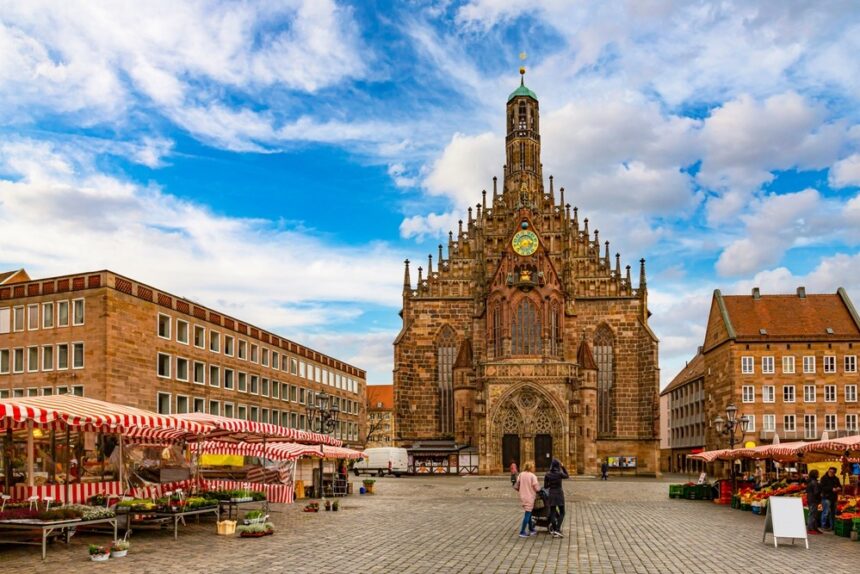
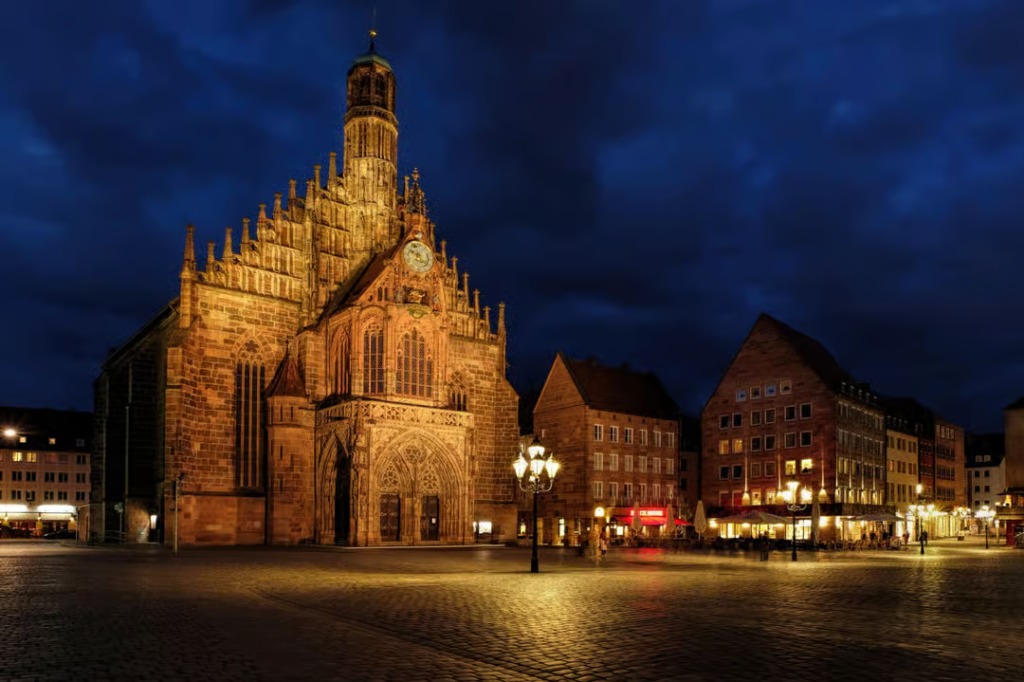
The Hauptmarkt is Nuremberg’s vast central market square. It serves as the daily home for bustling open-air produce stalls and acts as the magical stage for the world-famous Christkindlesmarkt (Christmas Market) every winter.
- What it is famous for: The striking Gothic Frauenkirche (Church of Our Lady) and its mechanical Männleinlaufen clock, which delights crowds at noon with moving figures honoring the Emperor. The square is also home to the Schöner Brunnen (Beautiful Fountain), a 19-meter ornate spire featuring a seamless brass ring; legend says spinning the ring brings good fortune.
3. Albrecht Dürer’s House
The Sanctuary of Germany’s Renaissance Genius
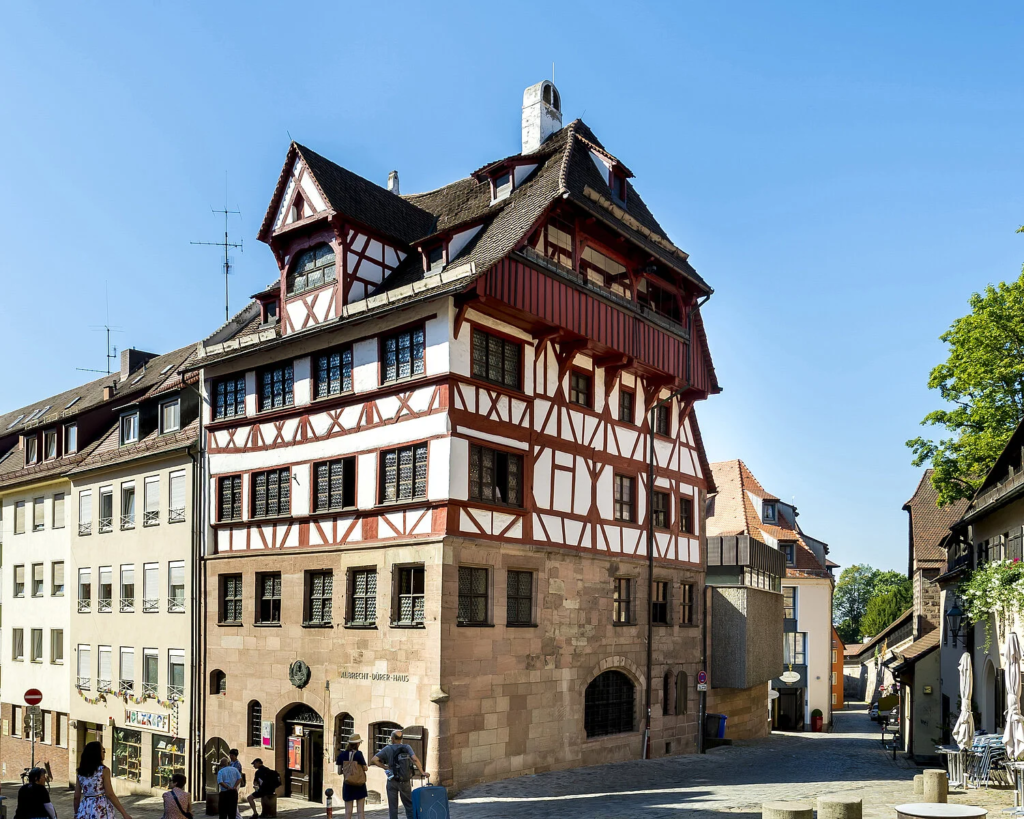
Situated right at the base of the castle walls on the picturesque Tiergärtnerplatz, this striking, four-story timber-framed building is where Germany’s most celebrated artist lived and worked from 1509 until his death in 1528.
- What it is famous for: Being the only surviving 15th-century artist’s residence in Northern Europe. Today, it stands as a dedicated museum showcasing authentic period furnishings, an operational printing press demonstration using Dürer’s techniques, and rotating historical copies of his revolutionary woodcuts and engravings.
4. Documentation Center Nazi Party Rally Grounds
Confronting the Architecture of Propaganda
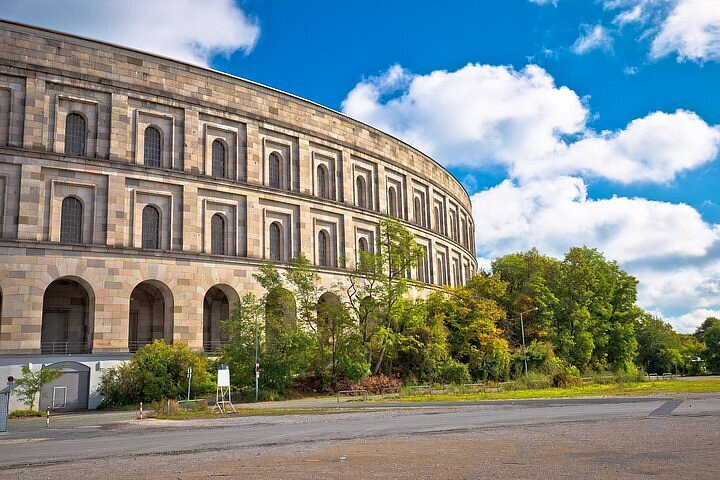
Spread across a massive, eleven-square-kilometer area in the southeast of the city, these sprawling grounds are where the Third Reich staged its monumental, highly choreographed propaganda rallies between 1933 and 1938.
- What it is famous for: The colossal Congress Hall, an unfinished, fan-shaped arena designed to hold 50,000 people, inspired by the Roman Colosseum. The north wing houses a world-class museum featuring the intense exhibition Fascination and Terror, which masterfully deconstructs the rise, mechanics, and devastating consequences of the Nazi regime.
5. Memorium Nuremberg Trials (Courtroom 600)
The Birthplace of Modern International Law
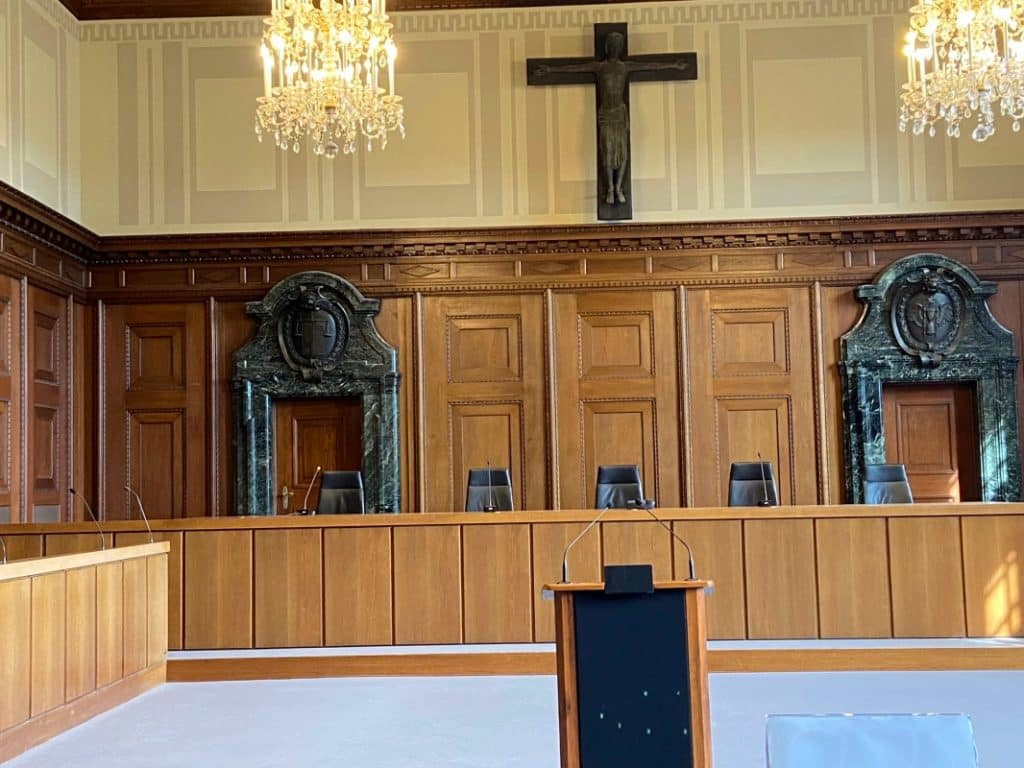
Located inside the operational Palace of Justice complex on Fürther Straße, Courtroom 600 is one of the most historically significant courtrooms on earth.
- What it is famous for: Hosting the Nuremberg Trials from 1945 to 1946, where surviving top leaders of the Nazi regime were put on trial before an International Military Tribunal. Visitors can stand inside the historic courtroom when it is not in session and explore an excellent permanent museum upstairs detailing the trials’ impact on modern international criminal justice.
6. German National Museum (Germanisches Nationalmuseum)
The Ultimate Treasury of Germanic Culture
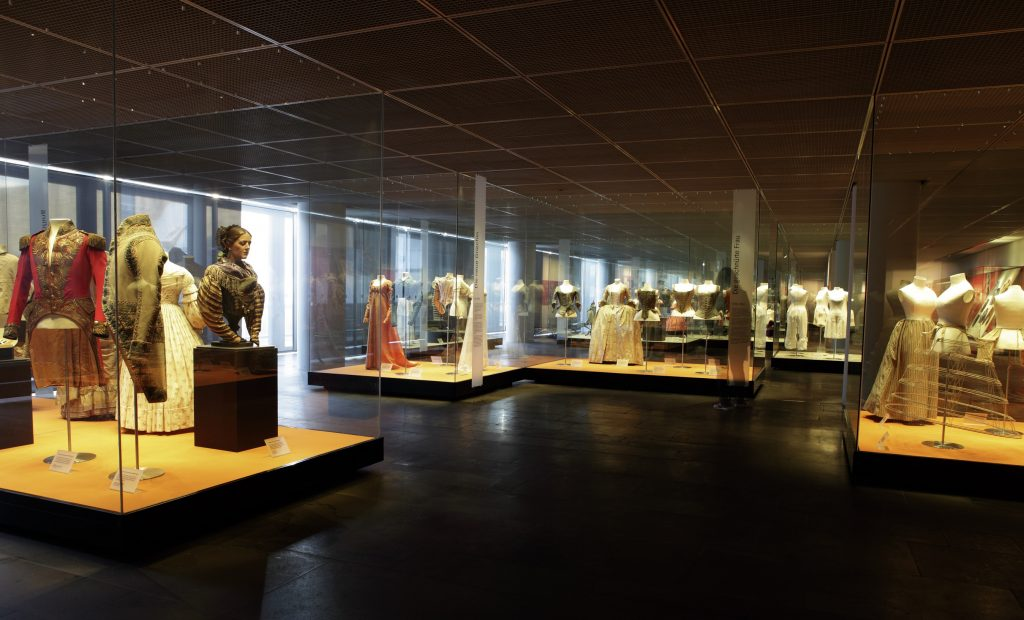
Founded in 1852, this sprawling museum complex is the largest museum of cultural history in the German-speaking world, protecting roughly 1.3 million objects spanning from prehistoric times to the modern era.
- What it is famous for: Housing the Erdapfel, the world’s oldest surviving terrestrial globe, created by Martin Behaim in 1892. The collection also features original masterworks by Albrecht Dürer and Rembrandt, a vast historic instrument collection, and a stunning collection of early pocket watches.
7. St. Lorenz Church (Lorenzkirche)
A Soaring Masterclass in Gothic Architecture
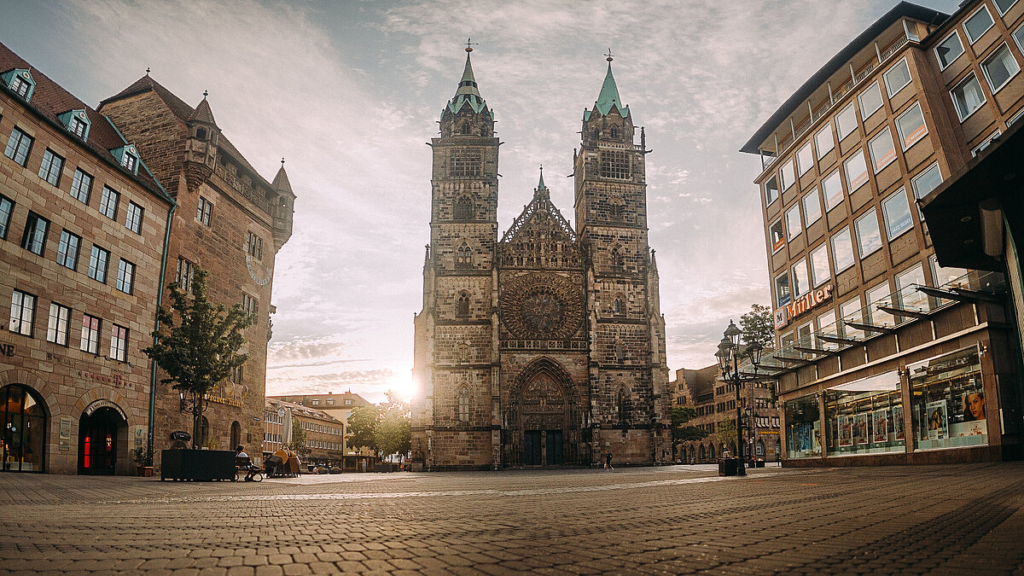
Rising beautifully over the pedestrian zone of the southern Old Town, this twin-towered, 13th-century Gothic basilica is one of Nuremberg’s most prominent architectural anchors.
- What it is famous for: Its breathtaking medieval interior art treasures. The sanctuary houses the Angelic Salutation, a monumental wood carving by Veit Stoss hanging gracefully suspended above the choir, alongside an intricate, 20-meter-tall stone tabernacle masterfully sculpted by Adam Kraft.
8. Way of Human Rights (Straße der Menschenrechte)
A Monumental Path of Memory and Peace
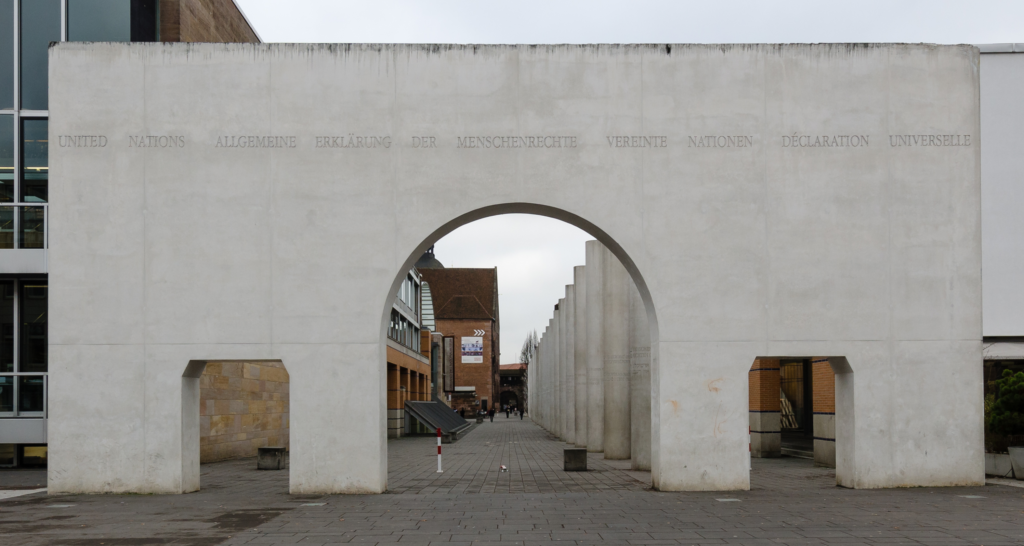
Stretched beautifully out directly between the German National Museum and the city’s historic medieval walls, this striking, open-air art installation was created by Israeli artist Dani Karavan in 1993.
- What it is famous for: A powerful row of 30 massive white concrete pillars, each engraved with an article of the Universal Declaration of Human Rights in German and another world language. The installation stands as a public statement, declaring the city’s modern transformation into an international capital of human rights.
9. St. Sebald Church (Sebalduskirche)
The Oldest Parish Church in Nuremberg
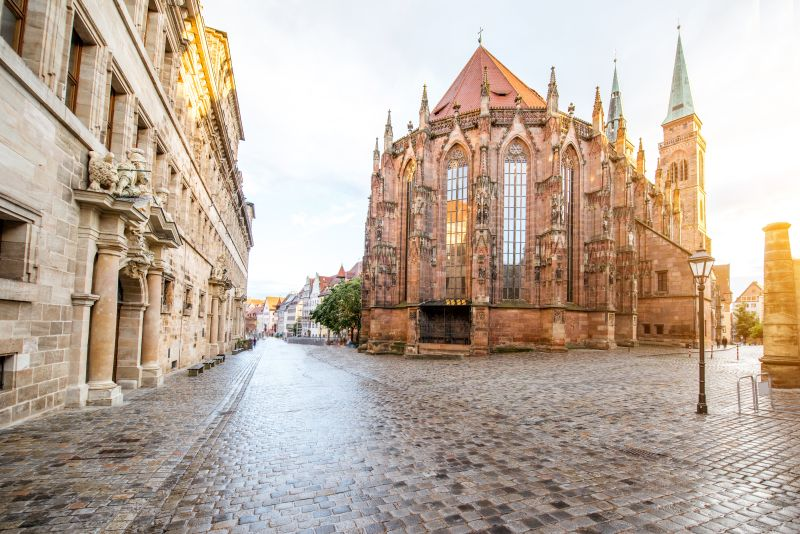
Located just north of the Pegnitz River beneath the shadow of the Imperial Castle, this grand 13th-century church represents the beautiful transition from late Romanesque to high Gothic architecture.
- What it is famous for: The magnificent Shrine of St. Sebald, a monumental bronze casting created by Peter Vischer and his sons over 11 years, which contains the relics of Nuremberg’s patron saint. The church also features stunning medieval stained-glass windows that survived the war intact due to early removal.
10. Handwerkerhof (Handicrafts Courtyard)
Stepping Back into a Medieval Market
Tucked snugly inside the heavy stone walls right across from the central train station, the Handwerkerhof is a charming, pocket-sized village that recreates the lively atmosphere of an old medieval trading post.
- What it is famous for: Its cozy, half-timbered artisan workshops and traditional taverns. Visitors can watch pewter smiths, leather crafters, and glassblowers practice traditional trades before ducking into a rustic tavern to feast on original Nürnberger Rostbratwurst—tiny, beechwood-grilled sausages spiced with fresh marjoram.
11. Weißgerbergasse
The Most Picturesque Street in the City
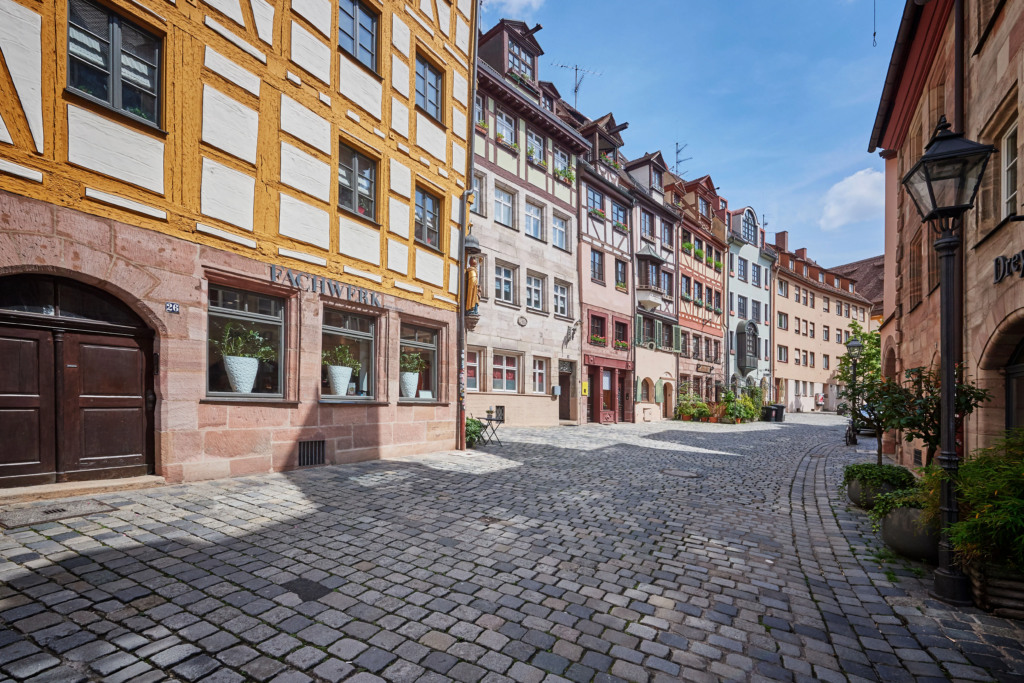
Located in the historic St. Sebald quarter near the Pegnitz River, the Weißgerbergasse (Tanners’ Lane) is widely considered the most beautiful and colorful street in Nuremberg.
- What it is famous for: Surviving the war with over twenty historic, half-timbered artisan houses intact. Historically occupied by prosperous leather tanners who required access to the river water, these beautifully restored, pastel-colored facades are now home to independent boutiques, small cafes, and hidden courtyard bars.