
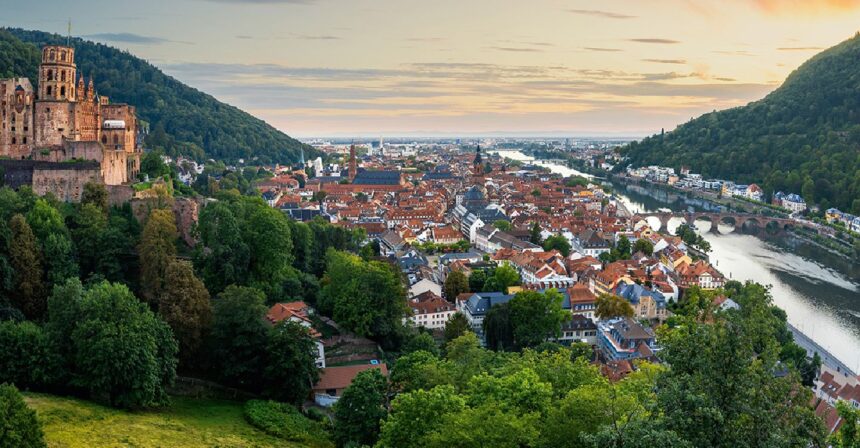
Heidelberg is a city straight out of a storybook. Nestled snugly in the steep, densely forested valley of the Neckar River, this picturesque destination is globally celebrated as the crown jewel of German Romanticism.
Because it miraculously escaped heavy bombing during World War II, Heidelberg retains its completely authentic, late-medieval and Baroque urban plan. It is a city of intellectual titans—home to Germany’s oldest university—where grand, brooding castle ruins look down upon centuries-old stone bridges and lively student taverns. Here are the top 11 famous places to visit in Heidelberg, what they are known for, and why they capture the hearts of travelers worldwide.
1. Heidelberg Castle (Heidelberger Schloss)
The Majestic Epicenter of Romantic Ruins
Perched high on the northern slopes of the Königstuhl hill, the red-sandstone ruins of Heidelberg Castle dominate the landscape. A striking mix of Gothic and Renaissance styles, this former fortress served as the seat of the Electors of the Palatinate.
- What it is famous for: Its poetic, partially ruined architecture that inspired generations of Romantic painters and poets, including Mark Twain. Deep inside its cellars, visitors flock to see the Heidelberg Tun (Großes Fass), an unimaginably massive 18th-century wine barrel built from 130 oak trees that can hold over 219,000 liters of wine.

2. The Old Bridge (Alte Brücke)
A Masterpiece of Classical Stone Engineering
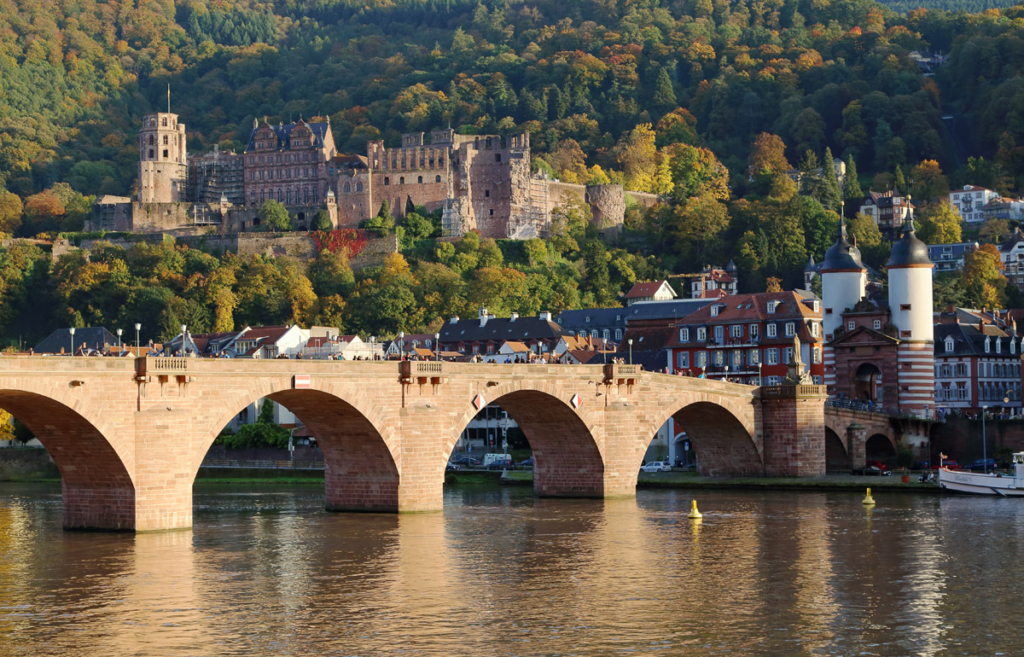
Officially named the Karl Theodor Bridge, this magnificent nine-arched stone bridge has spanned the Neckar River since 1788, linking the historic old town with the steep residential cliffs on the northern bank.
- What it is famous for: Its striking, twin-towered medieval stone gate on the town side and the whimsical bronze Bridge Monkey (Brückenaffe) sculpture. Touching the monkey’s mirror is locally said to bring good financial fortune, while pointing its fingers toward passersby is an old gesture meant to ward off evil.
3. The Old Town (Altstadt)
A Baroque Maze of Cobblestone and Culture
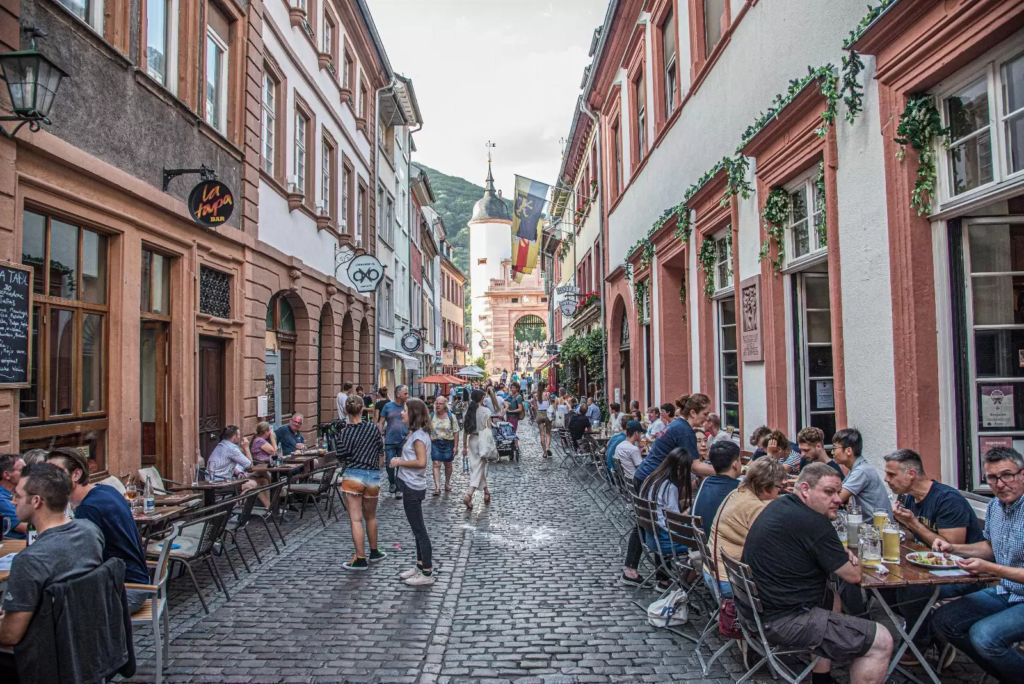
Stretching tightly along the riverbank at the base of the castle hill, Heidelberg’s Altstadt is a flawlessly preserved wonderland of historic architecture, bustling plazas, and hidden residential courtyards.
- What it is famous for: Housing the Hauptstraße, which, at 1.6 kilometers, is one of the longest and most vibrant pedestrian shopping avenues in Europe. The old town center opens up into the historic Marktplatz (Market Square), anchored by the grand Church of the Holy Ghost and surrounded by colorful Baroque townhouses packed with open-air cafes.
4. Philosophers’ Walk (Philosophenweg)
The Path of Academic Inspiration
Located directly across the river from the castle, this scenic, unpaved pathway winds gently along the sunny, terraced hillsides of the Heiligenberg mountain.
- What it is famous for: Its unparalleled, postcard-perfect views of the old town and castle, and its historic connection to academic brilliance. Renowned philosophers, professors, and poets associated with the university walked this path for centuries to clear their minds, drawing inspiration from the uniquely warm microclimate filled with wild Mediterranean plants and blooming almonds.

5. Heidelberg University (Ruprecht-Karls-Universität)
The Cradle of German Intellectualism
Founded in 1386 by Elector Rupert I, Heidelberg University is the oldest university in modern Germany and stands proud as one of the most prestigious research institutions in the world.
- What it is famous for: Its rich academic legacy, boasting connections to over 30 Nobel Laureates. Visitors flock to University Square (Universitätsplatz) to explore the wood-paneled Old Aula ceremonial hall and the fascinating Student Prison (Studentenkarzer), where unruly students were locked up for minor offenses between 1778 and 1914, covering the brick walls in colorful graffiti and self-portraits.

6. Church of the Holy Ghost (Heiliggeistkirche)
The Gothic Sentinel of the Marketplace
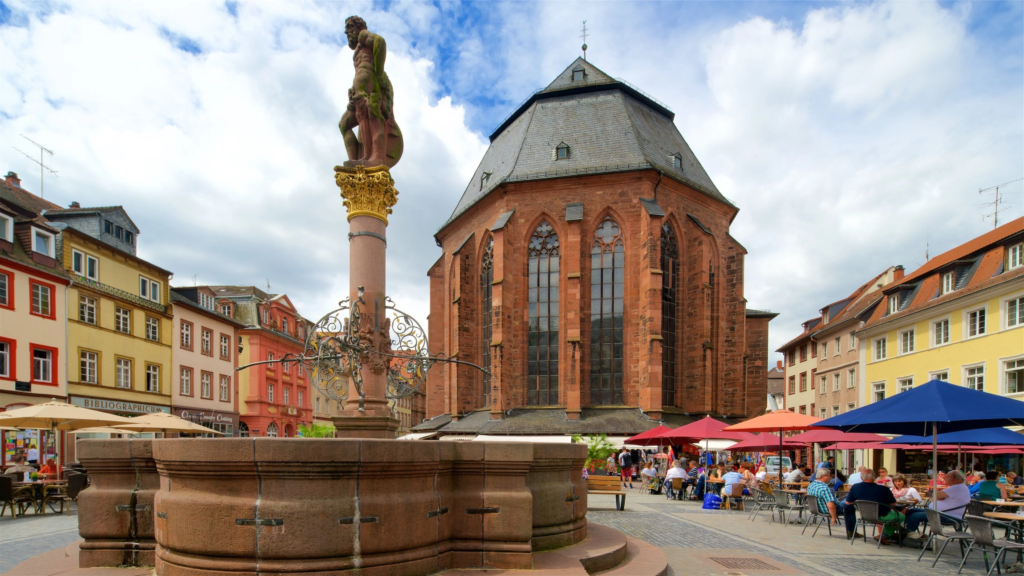
Rising high above the bustling market stalls, this monumental late-Gothic hall church is the largest and most architecturally significant house of worship in the city, constructed over a period of 150 years.
- What it is famous for: Its turbulent religious history and unique interior galleries. Historically, the church housed the priceless Bibliotheca Palatina—the most important library of the German Renaissance—before it was looted during the Thirty Years’ War. Today, energetic travelers can climb its towering spire for a direct, bird’s-eye view over the old town rooftops.
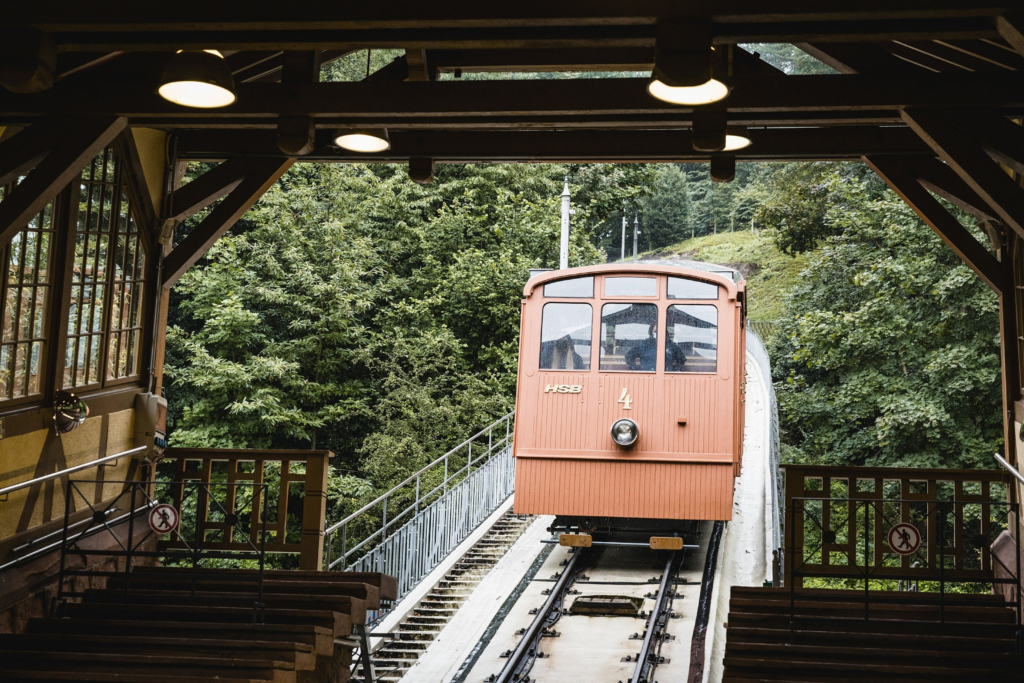
7. The Königstuhl Funicular Railway (Bergbahn)
A Historic Ascent to the Mountain Peaks
In operation for more than a century, this two-stage funicular railway line gracefully transports passengers from the edge of the historic old town all the way to the top of the city’s highest hill.
- What it is famous for: Using historic, beautifully maintained wooden cable cars on its upper mountain section. The railway provides a scenic, effortless journey that stops directly at the castle grounds before climbing further up to the 567-meter summit of the Königstuhl (King’s Seat) for sweeping views over the entire Rhine-Neckar valley region.
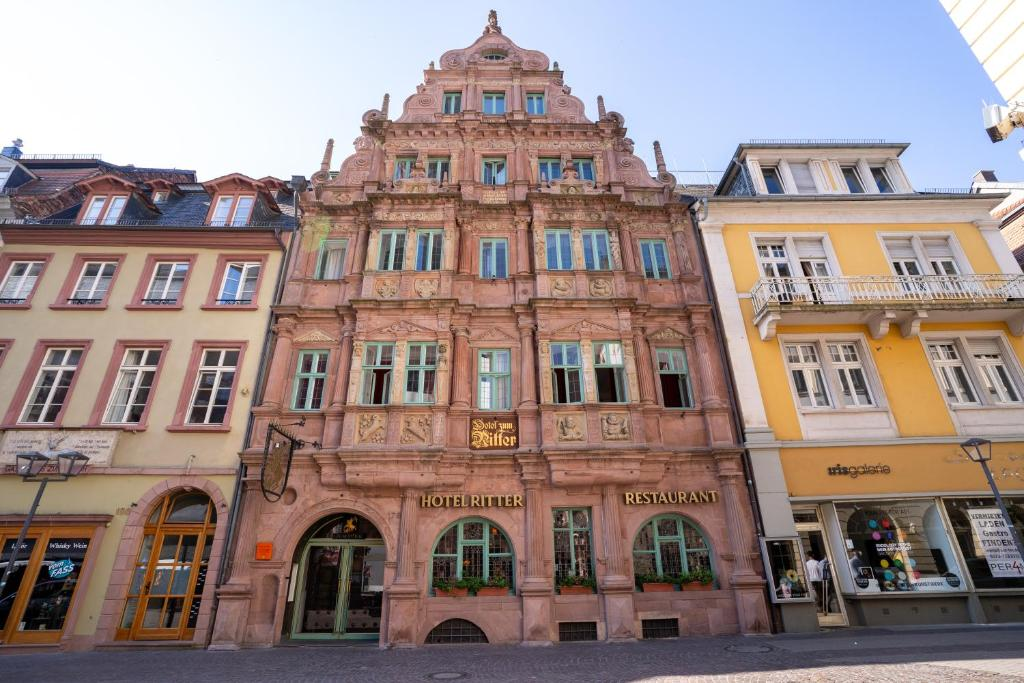
8. Hotel Zum Ritter Sankt Georg
A Renaissance Masterpiece Left Standing
Located directly on the Hauptstraße across from the market square, this breath-dropping mansion is the oldest surviving burgher house in Heidelberg, built in 1592 by a wealthy French merchant.
- What it is famous for: Being the only major grand residential structure to survive the devastating fires of the War of the Palatinate Succession in 1689 and 1693. Its elaborate, late-Renaissance facade is sculpted entirely of rich red sandstone and topped by a gold statue of St. George slaying a dragon.
9. Thingstätte
An Imposing Open-Air Relic of Midnight Myth
Tucked deep into the dense forests near the summit of the Heiligenberg, this massive, crescent-shaped open-air amphitheater was constructed in 1935 by the Nazi regime as part of the Thingspiel propaganda movement.
- What it is famous for: Its monumental, classical Greek-style stone architecture and incredible scale. Designed to accommodate up to 20,000 spectators, the site was quickly abandoned after its completion due to poor acoustics for speeches. It now stands as a quiet, atmospheric historic ruin that draws hikers exploring the surrounding mountain trails.

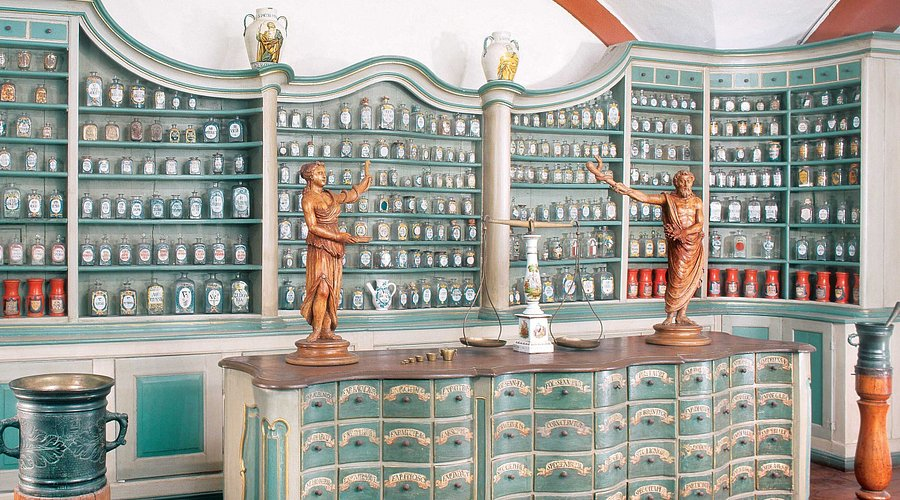
10. The German Pharmacy Museum (Deutsches Apotheken-Museum)
The Strange History of Potions and Cures
Located directly inside the lower stone vaults of Heidelberg Castle, this unique museum tracks the fascinating evolution of the pharmaceutical arts across Europe from antiquity to the 20th century.
- What it is famous for: Its perfectly reconstructed historic pharmacy interiors. Visitors can marvel at complete Baroque and Biedermeier-era apothecary shops, rows of hand-blown glass jars, rare cabinets of curiosities containing historical remedies like ground mummy powder and unicorn horn, and complex early chemical distillation laboratories.
11. Neckarwiese
The Vibrant Riverside Playground of the City
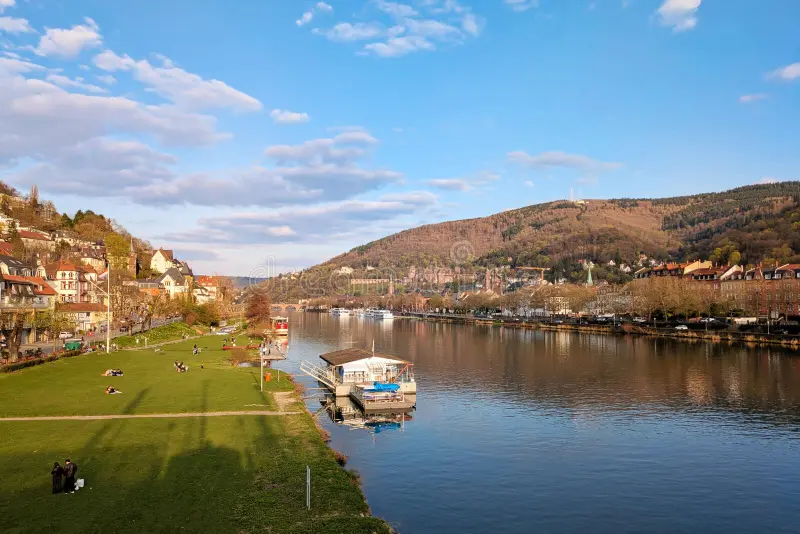
Spanning along the northern bank of the Neckar River in the affluent Neuenheim district, the Neckarwiese is a massive, miles-long public green parkland that acts as the ultimate outdoor oasis for locals.
- What it is famous for: Offering a relaxing escape right along the water with front-row views of the castle. On any warm evening, these expansive lawns fill up with university students, families, and travelers barbecuing, playing volleyball, paddling kayaks, or simply lounging on the grass as the sun dips below the hills of the old town.