
Düsseldorf, the sleek capital of North Rhine-Westphalia, is a dynamic city where high-end luxury fashion seamlessly collides with a fiercely proud, traditional Rhenish lifestyle.
Situated elegantly along the broad curves of the Rhine River, this economic powerhouse has earned a global reputation as Germany’s capital of style, modern architecture, and contemporary art.
Yet, for all its runway-ready glitz, Düsseldorf is incredibly grounded. Its historic center is home to a world-famous tavern culture, and the city boasts the largest, most authentic Japanese community in Germany.
Vibrant, cosmopolitan, and highly walkable, it offers a fascinating study in modern European urban refinement.
Here are the top 11 famous places to visit in Düsseldorf and what makes them special.
1. Altstadt (The Old Town)
The Legendary “Longest Bar in the World”
Düsseldorf’s historic Altstadt is a bustling, compact labyrinth of cobblestone streets packed into less than half a square kilometer along the Rhine. While heavily damaged in the war, it was rebuilt strictly according to historic plans to preserve its traditional charm.
- What it is famous for: Earning the playful title of “The Longest Bar in the World” (Längste Theke der Welt). The area packs over 260 traditional pubs, cocktail lounges, and historic microbreweries side-by-side. It is the ultimate place to drink Altbier—the city’s signature copper-colored, top-fermented ale—traditionally served by brusque, blue-aproned waiters called Köbes.
2. Königsallee
Germany’s Premier Luxury Fashion Boulevard
Affectionately known to locals simply as the “Kö,” this breathtaking, tree-lined avenue is widely celebrated as the absolute epicenter of Germany’s high-fashion industry and luxury shopping scene.
- What it is famous for: Its spectacular, historic central canal flanked by majestic 100-year-old chestnut trees. The western bank is occupied by prestigious banks and luxury hotels, while the eastern bank is a glittering runway of flagship boutiques from the world’s finest haute couture houses, attracting fashionistas from around the globe.

3. MedienHafen (Media Harbor)
An Architectural Playground of Global Masters
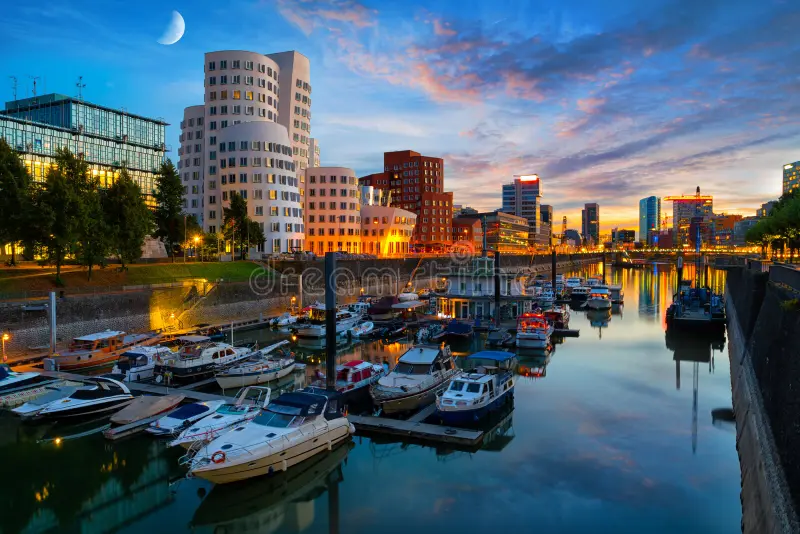
Once a gritty, industrial river port filled with gray warehouses, the MedienHafen has undergone a spectacular transformation over recent decades into a thriving, ultra-modern waterfront district for creative industries.
- What it is famous for: The striking Der Neue Zollhof buildings designed by starchitect Frank Gehry. These three gravity-defying, distorted tower blocks feature undulating facades made of white plaster, red brick, and shimmering stainless steel that dynamically reflect the harbor water, making it a masterclass in postmodern architecture.
4. Rheinturm (Rhine Tower)
The Soaring Aerial Beacon of the Skyline
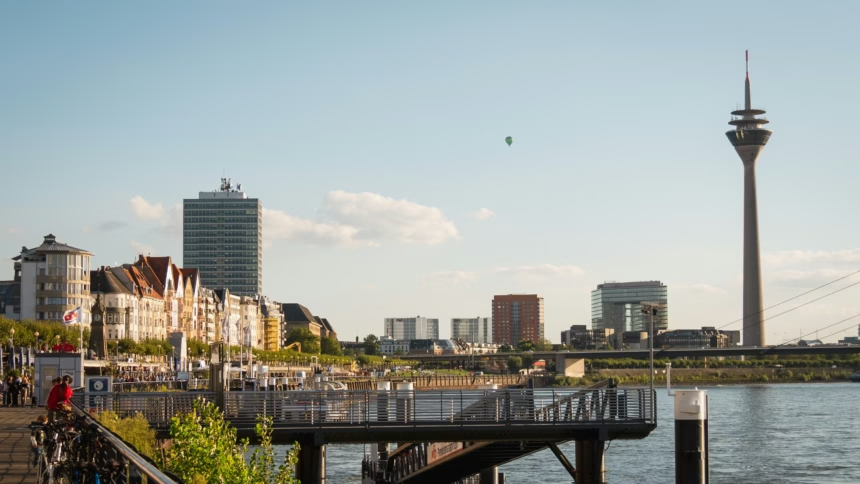
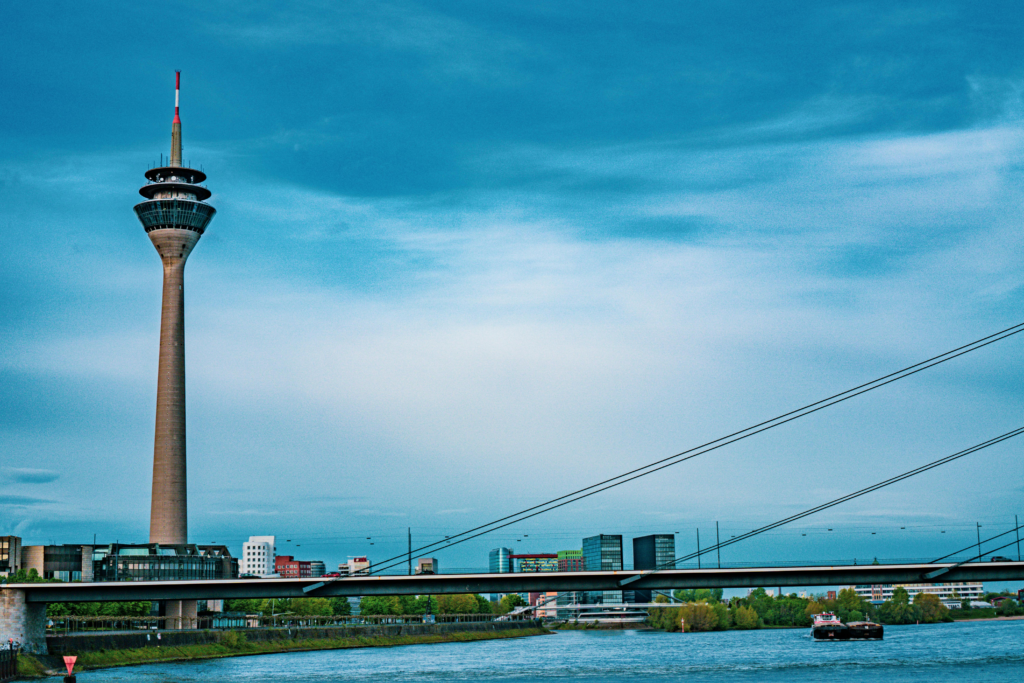
Rising majestically directly on the edge of the government district next to the Rhine, this concrete telecommunications tower stands 240.5 meters high and is the tallest structure in the city.
- What it is famous for: Its high-speed elevator that sweeps visitors up to a revolving observation deck and restaurant for unmatched panoramic views. The tower’s stem features a unique, vertical light installation designed by Horst H. Baumann that functions as the world’s largest digital decimal clock, lighting up the night sky.
5. Rheinuferpromenade (Rhine Embankment Promenade)
The Scenic Outdoor Living Room of the City
Constructed in the 1990s by cleverly burying a multi-lane highway completely underground, this award-winning, pedestrian-only promenade curves cleanly along the riverbank to connect the Altstadt with the modern Media Harbor.
- What it is famous for: Being the ultimate community hub for open-air relaxation. Lined with rows of elegant plane trees, pop-up cafes, and wide stone steps (Burgplatz-Treppen), it is the premier spot for locals to jog, drink wine at sunset, play boule, or simply watch massive cargo ships glide down the Rhine.

6. Little Tokyo (Immermannstraße)
Europe’s Premier Hub of Authentic Japanese Culture
Centered heavily around Immermannstraße and Klosterstraße, this vibrant neighborhood is home to the third-largest Japanese population in Europe, establishing a thriving, authentic cultural enclave.
- What it is famous for: Its world-class, authentic culinary scene, traditional supermarkets, and specialized bookshops. Food lovers line up daily outside legendary, non-pretentious noodle bars to feast on steaming bowls of authentic ramen, pristine sashimi, and traditional matcha pastries made by expatriate masters.
7. Schloss Benrath (Benrath Palace)
A Pastel Pink Masterpiece of Rococo Elegance
Located in the southern district of Benrath, this gorgeous, mid-18th-century maison de plaisance (pleasure palace) was constructed for the Elector Palatine Charles Theodore and his wife.
- What it is famous for: Its striking, pastel-pink Rococo exterior and perfectly symmetrical lake reflections. The interior is a beautifully preserved example of late Baroque design blending seamlessly into early Classicism, all wrapped inside 150 acres of formal hunting forests and manicured French-style gardens that stretch down toward the banks of the Rhine.

8. Kunstsammlung Nordrhein-Westfalen (K20 & K21)
A Two-Part Titan of 20th-Century Art
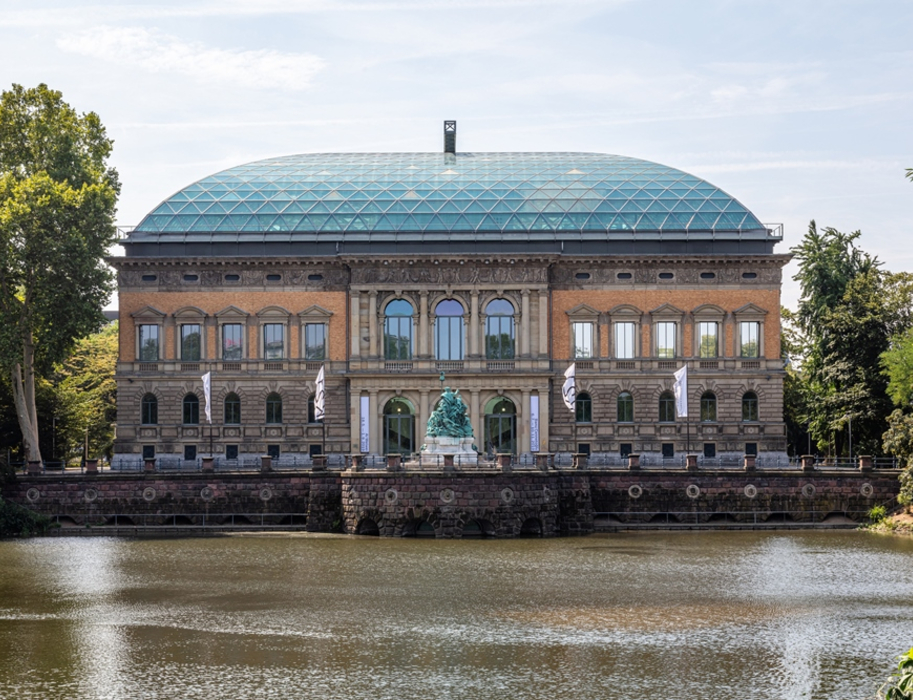
This world-renowned state art museum is split across two architecturally distinct, monumental venues located roughly three kilometers apart: K20 on Grabbeplatz and K21 inside the historic Ständehaus building.
- What it is famous for: Holding an extraordinary, pioneering collection of modern and contemporary masterpieces. K20 features a massive, wavy black granite facade holding seminal works by Paul Klee, Picasso, and Jackson Pollock, while K21 focuses on cutting-edge contemporary installations under a massive, spectacular glass dome.
9. Hofgarten
Germany’s Oldest Public Municipal Park
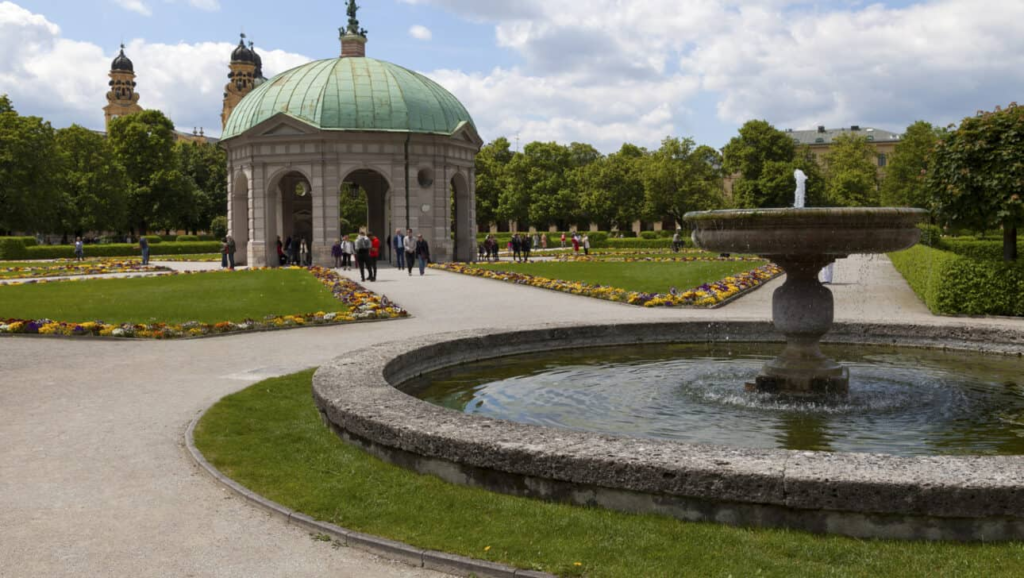
Dating all the way back to 1769, the Hofgarten is a historic green oasis spreading cleanly across the center of the city, originally designed in the formal style of an English landscape park.
- What it is famous for: Bringing a peaceful, historic wilderness straight into a bustling commercial center. The park features sweeping lawns, historic monuments, and scenic lakes home to numerous swans, acting as a vital ecological lung and a peaceful escape for shoppers and office workers.
10. Nordpark & Japanese Garden
A Harmonious Blend of Greenery and Zen
Situated in the northern Stockum district near the grand exhibition grounds, the Nordpark is an expansive, 90-acre public park featuring large fountains, themed flower beds, and wide, tree-lined walking avenues.
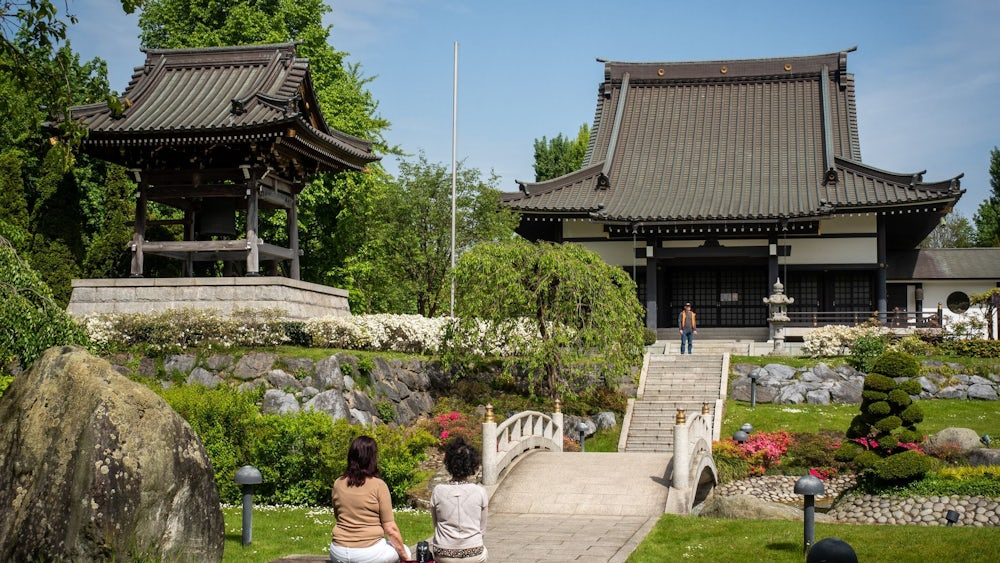
- What it is famous for: The “Garden of Reflection,” an authentic, 1.2-acre Japanese garden gifted to the city by Düsseldorf’s Japanese community. Designed by master landscape architects, it features perfectly pruned pines, traditional stone lanterns, and a tranquil pond, offering a masterclass in traditional Zen design.

11. Kaiserpfalz Kaiserswerth
The Ancient Riverside Stronghold of Barbarossa
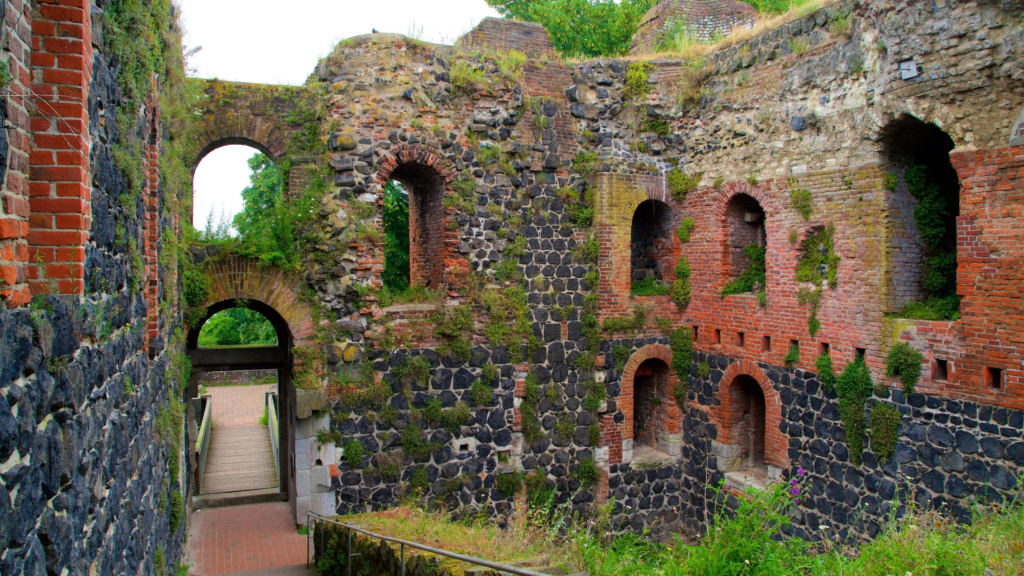
Located in the historic, affluent northern neighborhood of Kaiserswerth, these open-air, dark stone ruins sit beautifully positioned right along a scenic stretch of the Rhine River.
- What it is famous for: Being the remains of a colossal, 12th-century imperial castle built by Holy Roman Emperor Frederick I (Barbarossa). Visitors can wander completely free of charge through the massive, thick basalt stone walls that once controlled river trade tolls, before enjoying a drink in the adjacent, traditional beer gardens overlooking the water.