
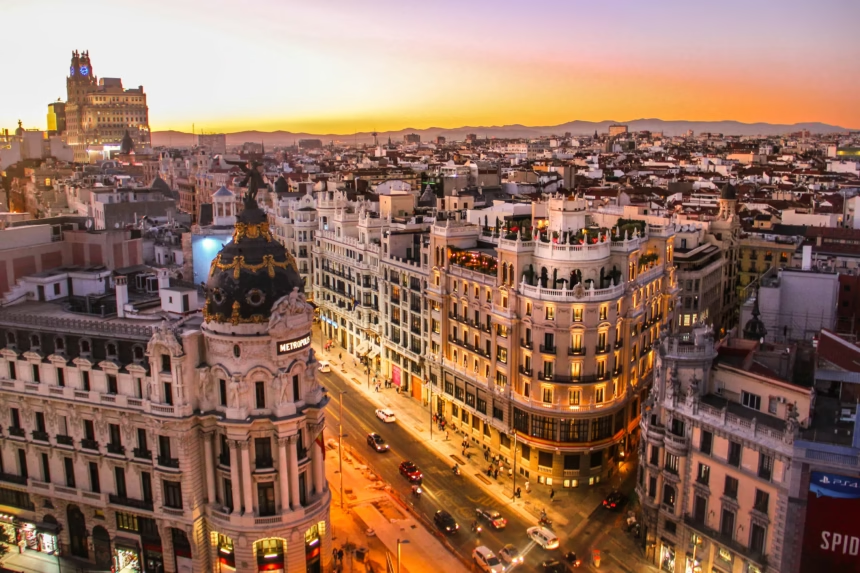
Madrid, Spain’s high-altitude capital, is a sun-drenched metropolis defined by an infectious, open-air energy and a profound love for the good life.
Perched in the geographic center of the Iberian Peninsula, this historic seat of the Spanish Empire has evolved into one of Europe’s most vibrant capitals of culture, gastronomy, and late-night revelry.
While it holds all the architectural prestige of a royal capital—boasting sweeping Bourbon palaces and sprawling plazas—Madrid’s true soul is found in its neighborhood street life.
It is a city that doesn’t sleep, where world-class art collections share the stage with century-old tapas bars, bustling markets, and beautifully manicured green corridors. Vibrant, intensely social, and filled with a warmth that locals call madrileño hospitality.
here are the top 11 famous places to visit in Madrid and why they belong on your travel list.
1. Royal Palace of Madrid (Palacio Real)
The Monumental Crown of European Monarchies
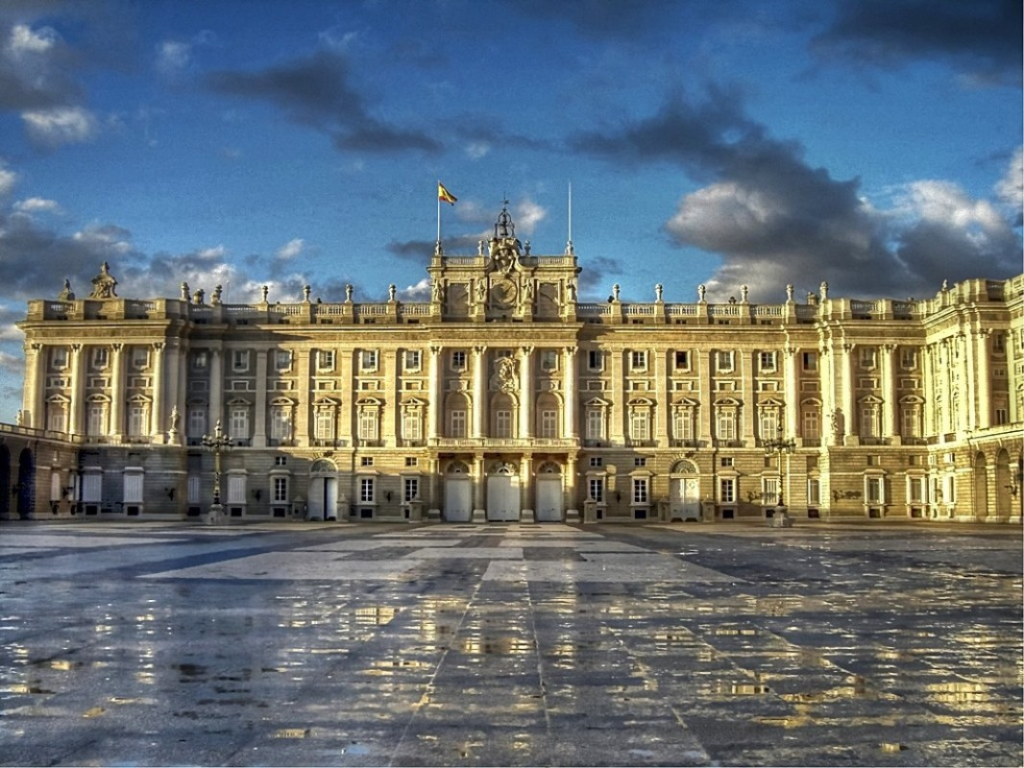
Spreading across an astonishing 135,000 square meters of floor space, the Palacio Real is the largest functioning royal palace in Western Europe, rising majestically over the steep banks of the Manzanares River valley.
- What it is famous for: Its sheer size and staggering late-Baroque opulence. While it serves as the official residence of the Spanish Royal Family, it is now used exclusively for state ceremonies. Visitors can wander through a breathtaking labyrinth of 3,418 rooms, marvel at frescoed ceilings painted by Tiepolo, gaze at original string instruments crafted by Stradivarius, and explore the historic Royal Armoury.
2. Plaza Mayor
The Grand Renaissance Stage of Madrid History
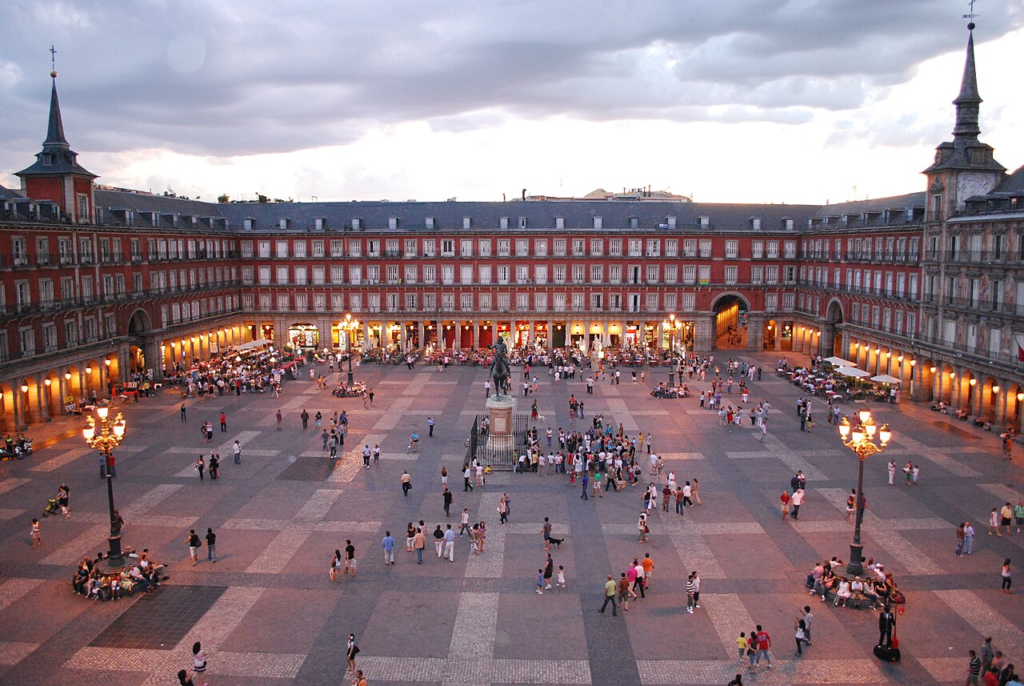
Completed in 1619 under the reign of Philip III, this massive, symmetrical rectangular plaza is wrapped seamlessly by uniform, three-story residential buildings boasting 237 elegant iron balconies.
- What it is famous for: Being the historic, theatrical heart of Imperial Madrid. Over the centuries, this grand cobblestone square has hosted royal coronations, public executions, dramatic bullfights, and trials during the Spanish Inquisition. Today, framed by its famous vaulted porticoes, it is an ideal spot to sit outside and enjoy a traditional bocadillo de calamares (fried squid sandwich).
3. Puerta del Sol
The Bustling Kilometer Zero of Spain
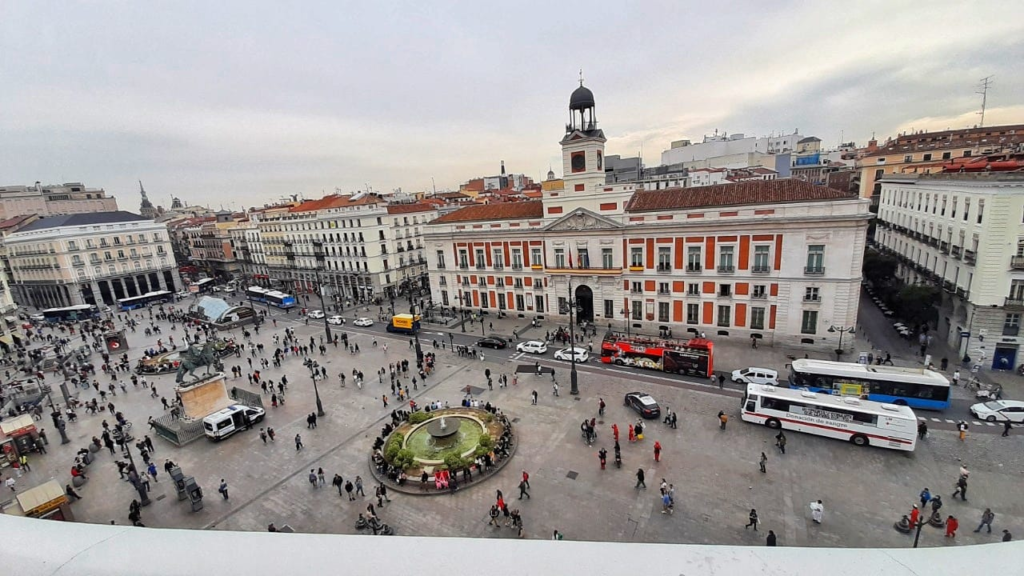
Serving as the absolute symbolic and literal center of the nation, the Puerta del Sol (Gate of the Sun) is a lively, semi-circular public square that acts as Madrid’s primary crossroads for commuters and visitors alike.
- What it is famous for: Housing the Kilometer Zero stone plaque, from which all six of Spain’s major radial roads are measured. The square is anchored by the historic Real Casa de Postas clock tower—famous for ringing in the Spanish New Year—and the iconic Statue of the Bear and the Strawberry Tree (El Oso y el Madroño), the beloved official heraldic symbol of Madrid.
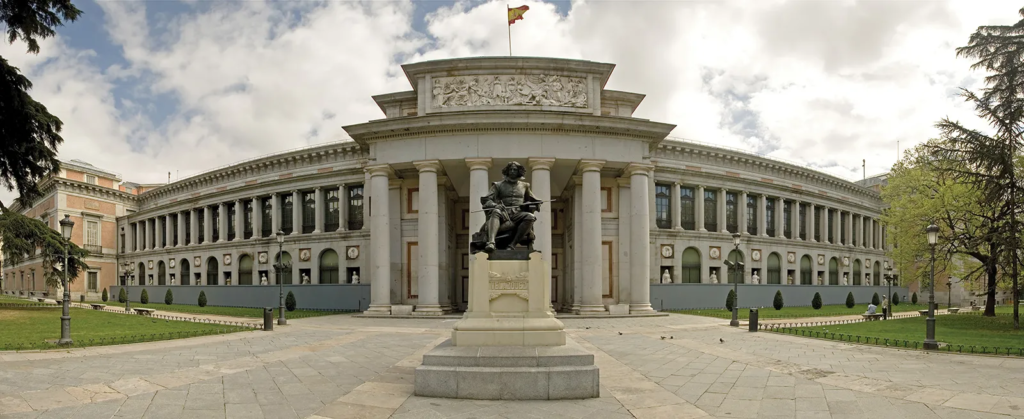
4. The Prado Museum (Museo Nacional del Prado)
The Ultimate Pantheon of European Masters
Forming the anchor of Madrid’s prestigious Golden Triangle of Art, the Prado Museum is universally celebrated as holding one of the finest, most cohesive collections of European paintings on earth, spanning from the 12th to the early 19th centuries.
- What it is famous for: Being the definitive home of Spanish masters Francisco de Goya and Diego Velázquez. Art lovers flock to its neoclassical galleries to stand before Velázquez’s mysterious masterpiece Las Meninas, Goya’s harrowing Black Paintings, and Hieronymus Bosch’s surreal triptych The Garden of Earthly Delights.
5. El Retiro Park (Parque del Buen Retiro)
A Royal Green Sanctuary of Peace
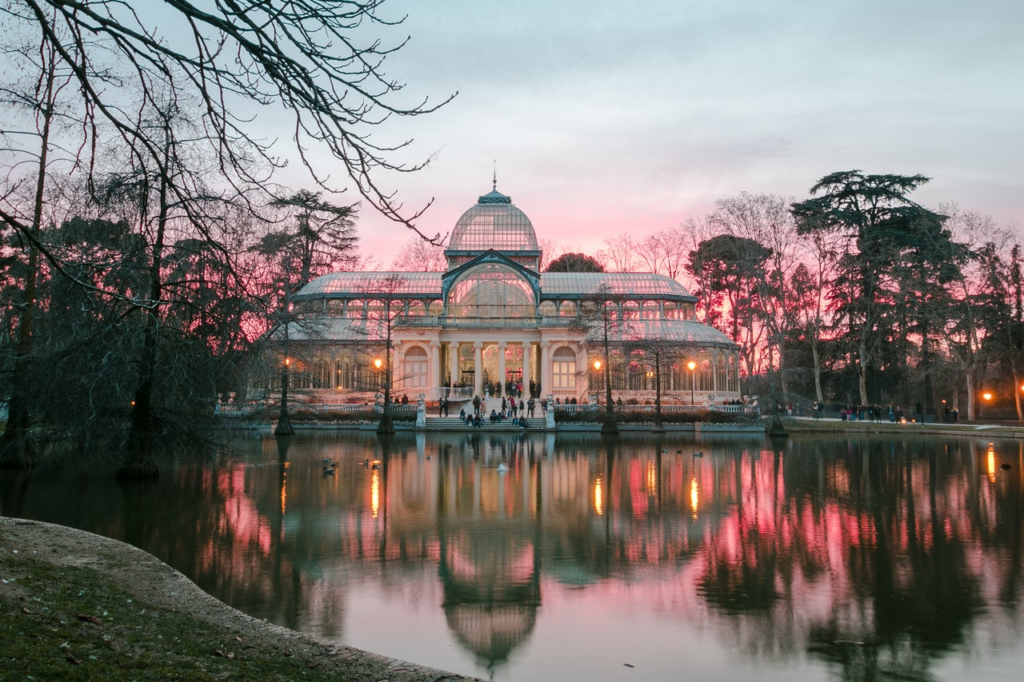
Once a private, 350-acre royal retreat for King Philip IV in the 17th century, this magnificent UNESCO World Heritage green space opened fully to the public in the late 19th century, serving as the city’s green lung.
- What it is famous for: Its grand artificial lake and the stunning Glass Palace (Palacio de Cristal). Visitors can rent wooden rowboats on the central lake beneath the towering monument to Alfonso XII, or stroll down tree-lined avenues to visit the translucent, iron-and-glass conservatory designed to exhibit exotic tropical plants.
6. Gran Vía
The Electric “Spanish Broadway”
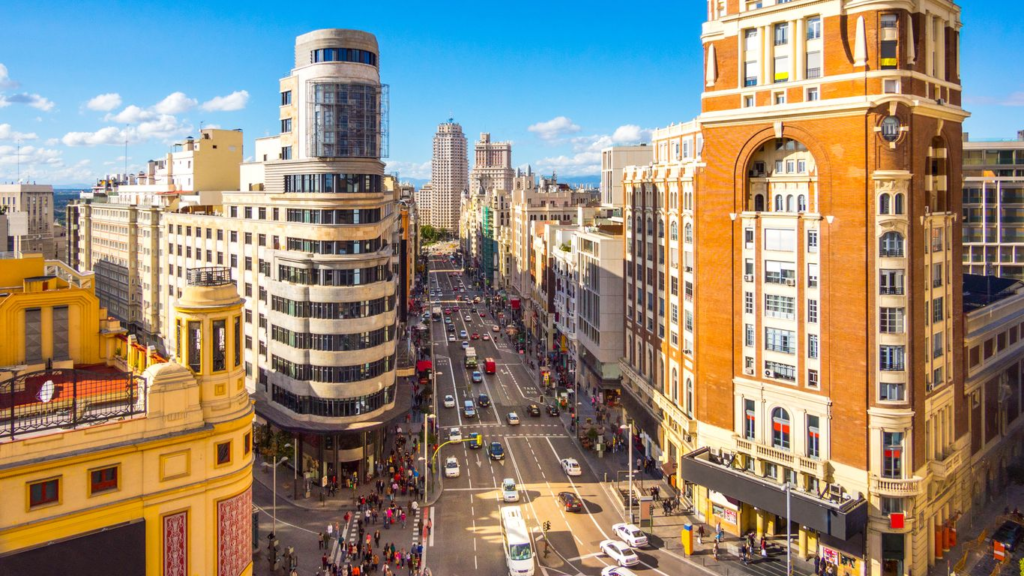
Carved daringly straight through the dense historic center in the early 20th century, the Gran Vía is Madrid’s most famous commercial avenue, connecting the upscale Salamanca district with the western plazas.
- What it is famous for: Its spectacular display of early 20th-century revivalist architecture, including Art Deco and Vienna Secession styles. Anchored by the iconic, rounded Metropolis Building and the historic Telefonica building, this high-energy boulevard is packed with flagship stores, grand cinemas, and theaters hosting premier musical theater productions.
7. Reina Sofía Museum (Museo Nacional Centro de Arte Reina Sofía)
The Epicenter of Vanguard and Modern Art
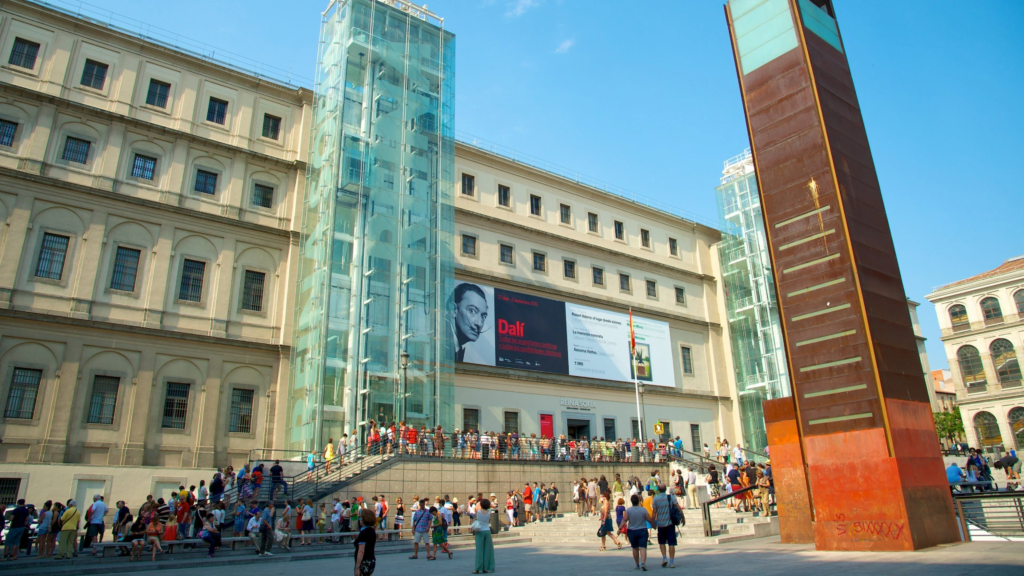
Housed primarily inside a monumental, 18th-century former hospital building expanded with a striking modern wing, this world-class institution serves as Spain’s official national museum for 20th-century art.
- What it is famous for: Housing Pablo Picasso’s monumental anti-war masterpiece, Guernica. The museum offers an intense journey through the heights of the European avant-garde, featuring extensive, deeply moving collections of surrealist works by Salvador Dalí and Joan Miró.
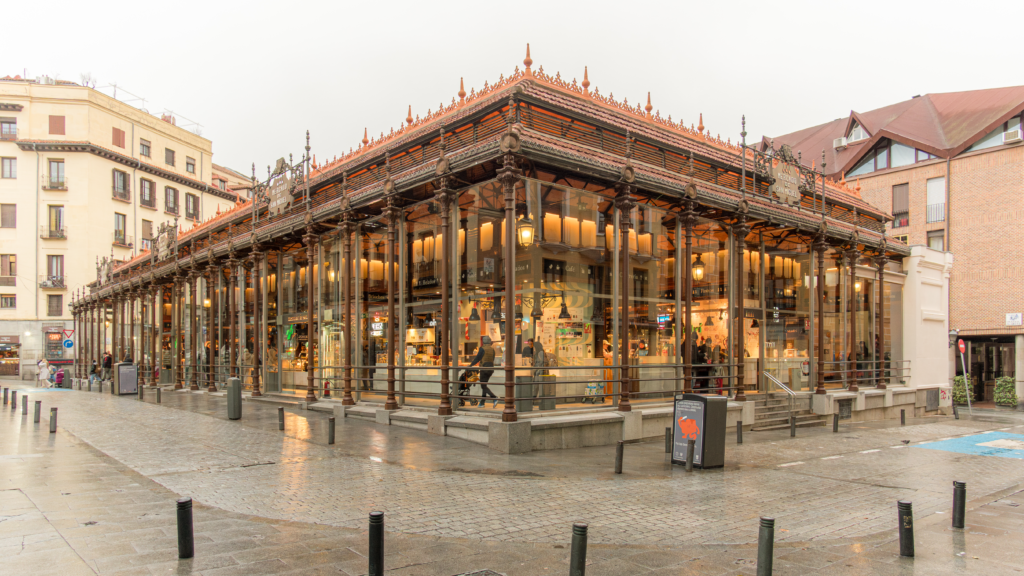
8. Mercado de San Miguel
A Historic Cast-Iron Temple of Gastronomy
Located just steps from the Plaza Mayor, this gorgeous, turn-of-the-20th-century market is the last remaining cast-iron market hall structure in Madrid, beautifully reimagined as a gourmet food sanctuary.
- What it is famous for: Offering a high-end, curated culinary tour of Spain under a single roof. Foodies gather along its packed, glass-walled counters to sample premium Iberian acorn-fed ham (Jamón Ibérico), fresh Galician oysters, local cheeses, and gourmet tapas crafted by Michelin-starred chefs, all paired with fine regional wines.
9. Temple of Debod (Templo de Debod)
An Authentic Gift of Ancient Egyptian History
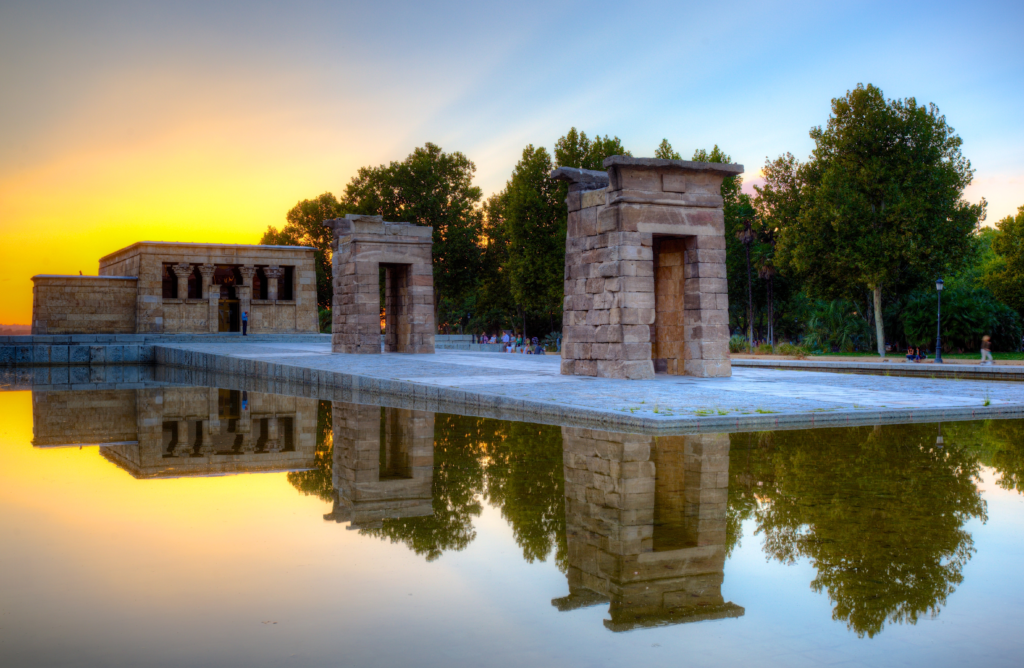
Perched beautifully on a high ridge inside the Cuartel de la Montaña Park near the Royal Palace, this striking monument is an authentic, 2nd-century BC Egyptian temple rebuilt brick-by-brick in Madrid.
- What it is famous for: Being a historic gift from Egypt to Spain in 1968 as a thank-you for Spanish help in saving the Abu Simbel temples from floodwaters. The stone gateways are positioned over a reflective pool, creating a highly popular public space to watch spectacular, fiery sunsets overlooking the western forests of Casa de Campo.
10. La Latina & El Rastro
The Vibrant Pulse of Tapas and Flea Markets
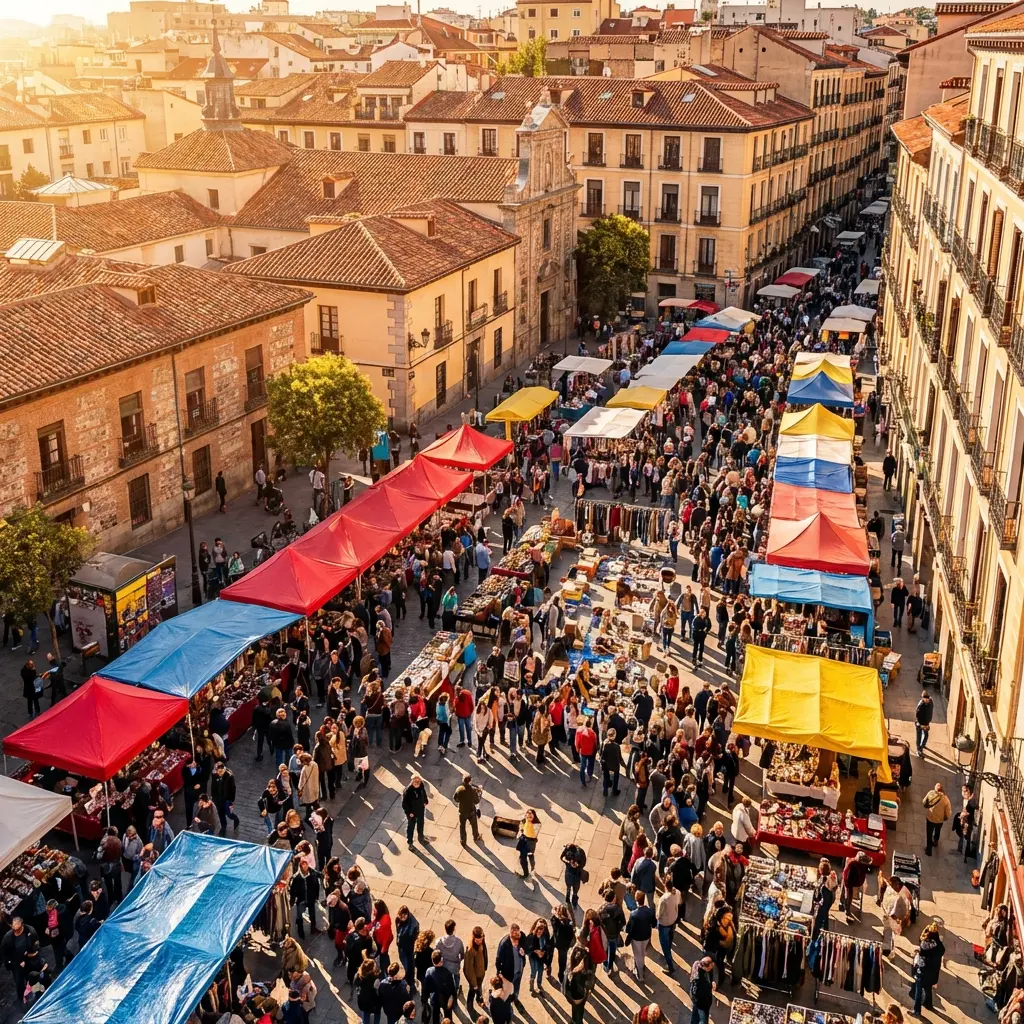
La Latina is one of Madrid’s oldest and most charismatic neighborhoods, defined by a maze of narrow, medieval streets that open into small, lively squares filled with traditional taverns.
- What it is famous for: Hosting El Rastro, Europe’s largest open-air flea market, which takes over the neighborhood every single Sunday. Thousands of locals and travelers fill the streets to browse antique stalls and vintage clothing racks before heading into the crowded bars of Calle Cava Baja for a traditional Sunday afternoon tapeo (tapas crawl).
11. Santiago Bernabéu Stadium
The Modern Colosseum of Football Royalty
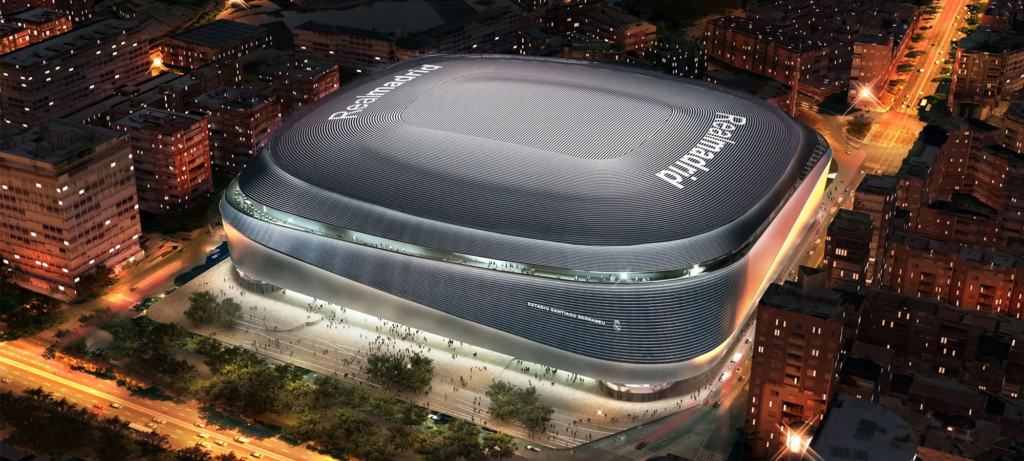
Located along the grand Paseo de la Castellana in the northern Chamartín district, this legendary stadium is the home ground of Real Madrid CF, one of the most successful football clubs in sporting history.
- What it is famous for: Its cutting-edge architectural redesign, featuring a futuristic steel wrap and a retractable roof. Fans from across the globe visit to tour the state-of-the-art interactive museum displaying a record-breaking collection of European Cup trophies, stand pitch-side, and experience the immense sporting history of the club.