
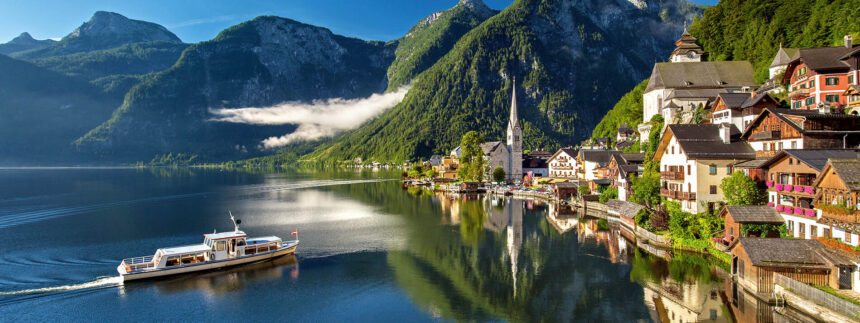
Hallstatt, clinging precariously to a narrow ledge of rock between the sheer limestone walls of the Dachstein Alps and the mirror-like expanse of the Hallstätter See, is a village operating on a breathtakingly compact layout.
Its geographic isolation was so absolute that until the late 19th century, it could only be reached by boat or by navigating treacherous mountain trails.
To walk through Hallstatt today is to experience an alpine fairy tale stitched together with pure vertical drama.
Because horizontal space is almost nonexistent, 16th-century timber and stone houses stack tightly above one another, their balconies overflowing with pink geraniums, while ancient pear trees are trained flat against the stone walls.
Recognized globally as a UNESCO World Heritage landscape, this small village balances its massive archaeological importance with serene, mist-covered lake vistas. Famous for its traditional wooden flat-bottomed boats (Fuhr), freshly caught lake trout (Reinanke), and ancient salt rituals.
1. The Classic Hallstatt Viewpoint (Postcard Angle)
The Photographic Horizon of Global Alpine Fascination
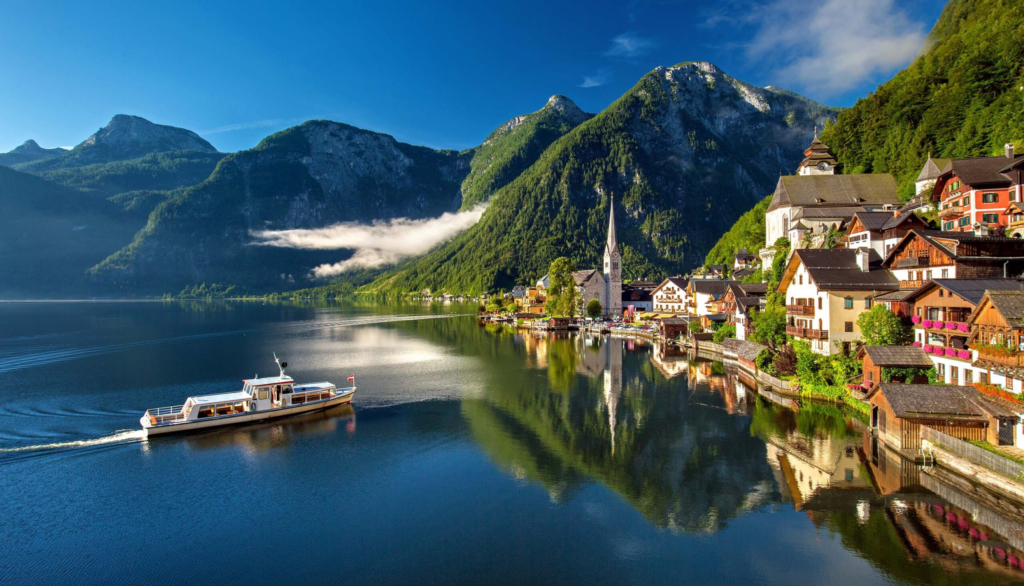
Located a short, gentle walk north from the historic market square along the narrow lane of Römerstadt, this simple bend in the road is the source of one of the most famous and universally recognized travel images on earth.
- What it is famous for: Its perfectly balanced composition of architecture, water, and mountains. From this exact angle, the slender, elegant silhouette of the 19th-century Evangelical Church spire pierces the sky, framed by historic multi-story wooden houses stacked like steps up the green mountain cliff. Behind the village, the dark, monumental walls of the Dachstein range plunge straight into the glassy, reflective surface of the lake, creating a scene so visually mesmerizing that an exact architectural replica of the entire village was constructed in Guangdong, China.
2. The Hallstatt Charnel House (Beinhaus) & Michaelskapelle
The Mystic Sanctuary of Painted Ancestorial Skulls
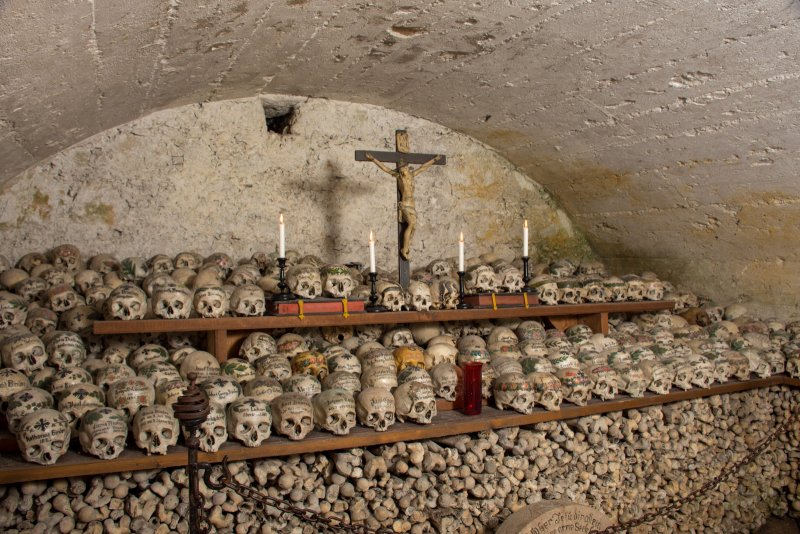
Tucked into the terraced rock of the mountain slope just behind the Catholic Parish Church, this tiny 12th-century Gothic chapel houses an extraordinary, hauntingly beautiful collection of human history.
- What it is famous for: Its collection of over 600 artistically hand-painted human skulls. Because the village graveyard is so incredibly small, graves could historically only occupy the ground for 10 to 15 years. Families would then exhume the bones, bleach them in the sun, and artistically paint the skulls with symbolic decorative wreaths—ivy for life, laurel for victory, and roses for love—complete with the family name, transforming a practical lack of space into a deeply respectful art form.
3. Hallstatt Salt Mine (Salzwelten Hallstatt)
The Prehistoric Subterranean Citadel of the “White Gold”
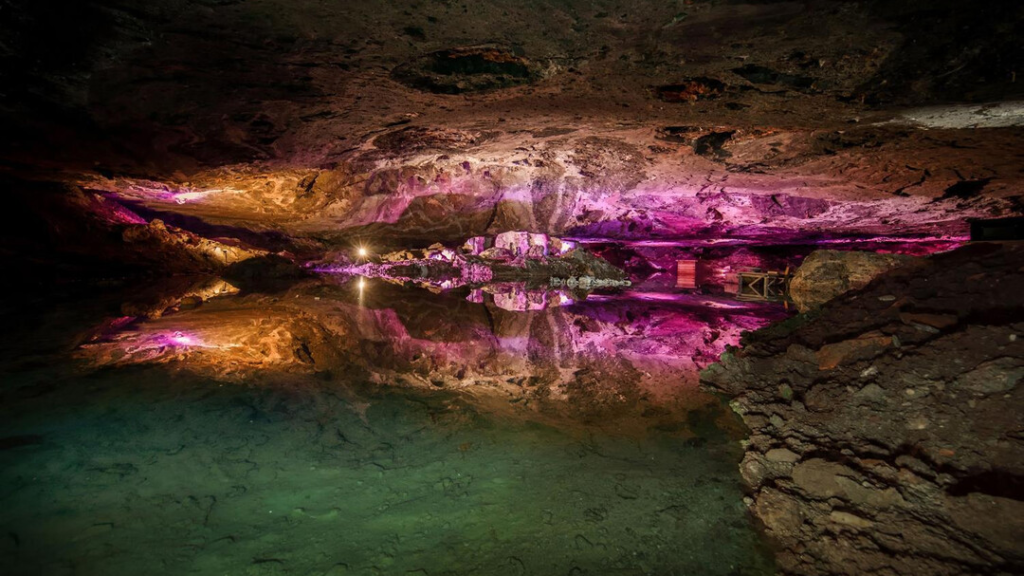
Deep inside the dark tunnels of the Salzberg (Salt Mountain) rising high above the village roof tiles, this ancient mining complex has been actively extracting pure mineral salt for over 7,000 years.
- What it is famous for: Being the oldest active salt mine in the world and home to the prehistoric wooden staircase. Visitors ride a panoramic funicular railway up the cliff before donning protective miners’ clothing to venture deep into the mountain. The underground tour features a high-speed slide down two traditional 64-meter-long wooden miners’ slides, an underground salt lake show, and a look at Europe’s oldest preserved wooden staircase, discovered intact deep in the prehistoric shafts because of the natural preservative power of the salt environment.
4. The Skywalk “World Heritage View”
The Suspended Steel Arrow of the Alpine Abyss
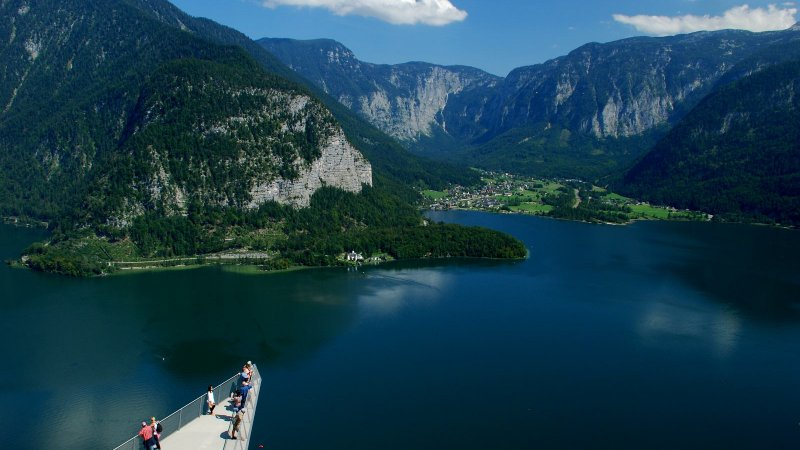
Cantilevered boldly out from the historic salt mountain high valley, directly beneath the historic Rudolfsturm tower, this high-altitude viewing platform juts out into open space 360 meters above the village streets.
- What it is famous for: Its vertiginous, panoramic birds-eye view over the entire Hallstätter See basin. The triangular steel platform points like an arrowhead out into the alpine valley. Walking out to the absolute tip allows visitors to stand suspended over the drop, looking down at the miniature rooftops of the village below and directly across the fjord-like waters to the surrounding peaks of the Salzkammergut region.
5. Marktplatz (Central Square)
The Sun-Drenched Baroque Center of Village Commerce
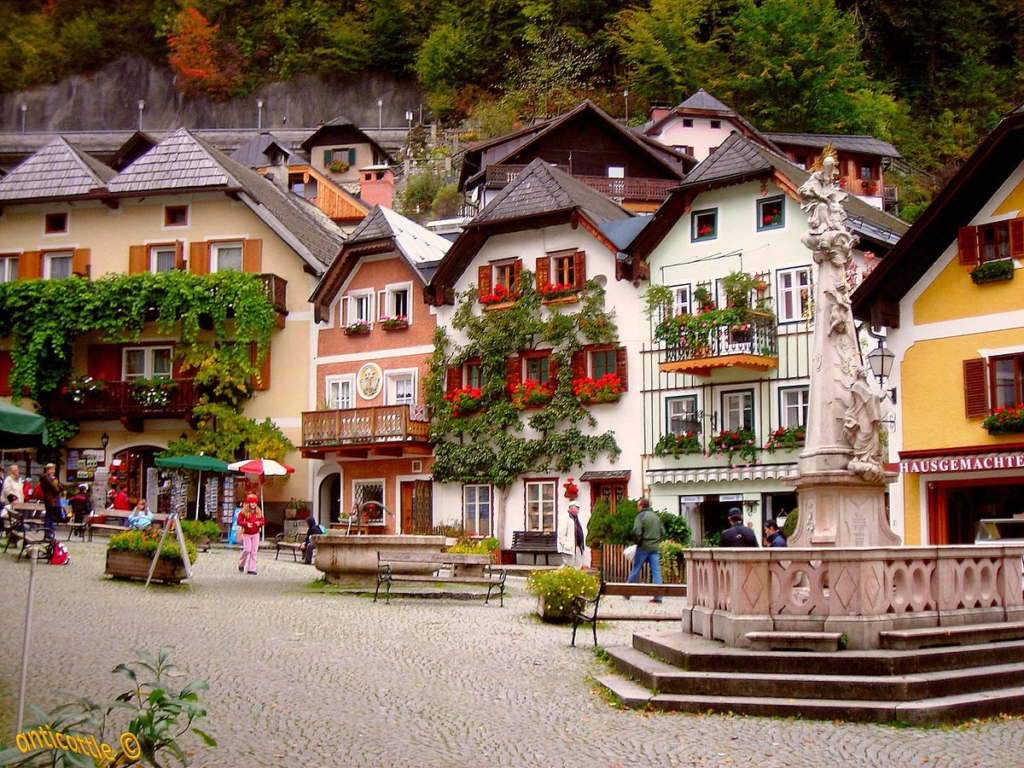
Serving as the social and commercial beating heart of the village since it was granted market rights in the 14th century, this charming cobblestone square is tightly enclosed by a ring of historic buildings.
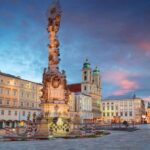
- What it is famous for: Its vibrantly painted, ivy-draped Baroque facades and the central Holy Trinity Column. The square is anchored by an ornate stone monument erected in 1743 by local salt merchants. The surrounding multi-tiered houses are characterized by bright pastel colors and balconies overflowing with blossoms. In the summer, the square is a car-free zone filled with open-air cafes, traditional brass bands, and acoustic folk music performances.
6. Catholic Parish Church of Our Lady (Pfarrkirche Mariä Himmelfahrt)
The High Gothic Fortress of Altars and Anchored Cliffs
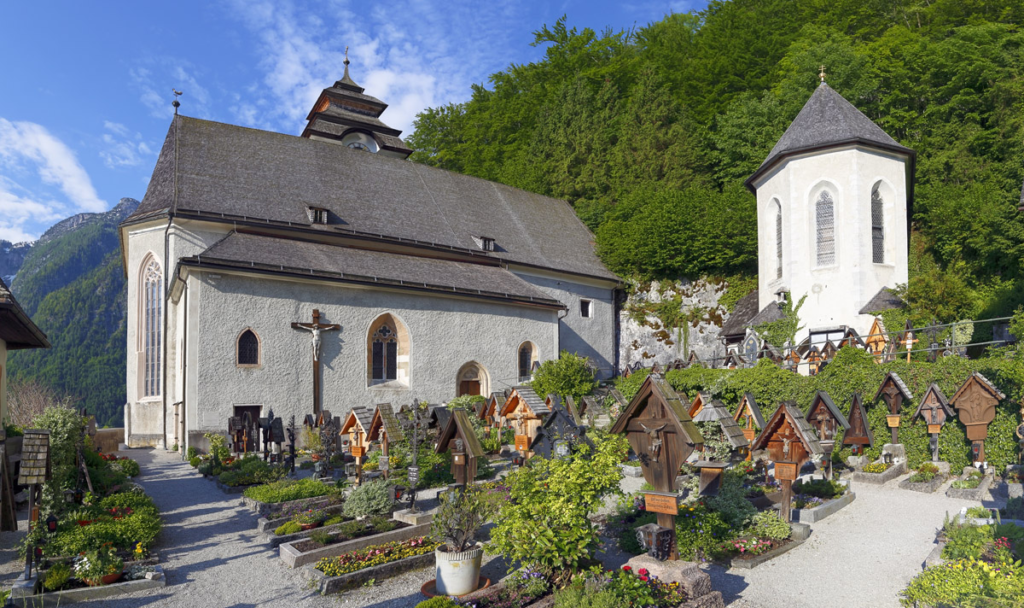
Clinging to a steep rocky terrace high above the lake level, this twin-aisled late Gothic church, completed in 1505, stands over the ancient foundations of older medieval watchtowers.
- What it is famous for: The magnificent double-sided Knotted Altar carved by master builder Lienhart Astl. This stunning 15th-century carved wooden masterpiece features moveable wings depicting scenes from the life of Mary. The church is surrounded by a tiny, beautifully manicured historic graveyard that features graves adorned with intricate, hand-wrought iron crucifixes, all looking out over the water below.
7. The Rudolfsturm (Rudolf’s Tower)
The Medieval Defensive Outpost turned Alpine Refectory
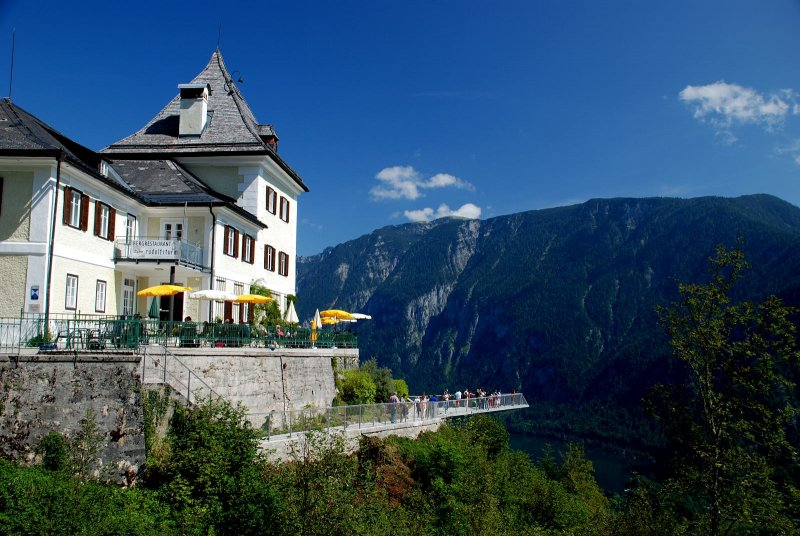
Perched on a strategic rocky promontory at the entrance to the high salt mining valley, this sturdy stone defensive tower was constructed between 1284 and 1292 by Duke Rudolf I of Habsburg.
- What it is famous for: Its military history protecting salt workers from rival bishops, today operating as a scenic restaurant. For centuries, the tower served as the heavily fortified residence of the salt mine managers. Today, the historic building features an open-air panoramic dining terrace where travelers can eat traditional Austrian dumplings while enjoying a commanding view of the lake layout.
8. Waldbachstrub Waterfall & The Echerntal Valley
The Roaring Glacial Cascades of Romantic Inspiration
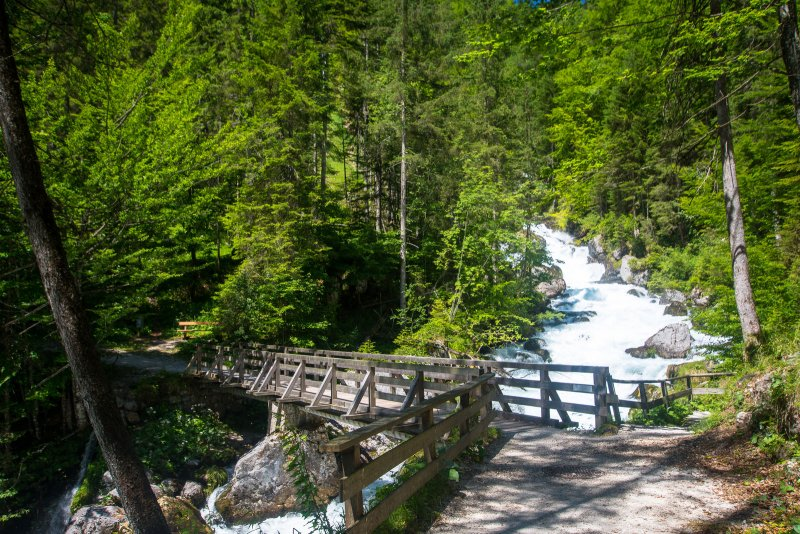
Located at the end of a scenic, deep-wooded walking trail that heads west from the village center, the Echerntal Valley is a quiet nature park dominated by a dramatic, three-tiered 90-meter waterfall.
- What it is famous for: Its raw geological formations and its historical role inspiring 19th-century landscape painters. The roaring waterfall cuts through a deep limestone gorge, creating a mist-filled basin of turquoise glacial water. During the Biedermeier art period, famous romantic painters like Adalbert Stifter and Ferdinand Georg Waldmüller walked these mountain paths, drawing global attention to Hallstatt’s untouched wilderness before the advent of modern tourism.
9. Welterbemuseum Hallstatt (World Heritage Museum)
The High-Tech Portal Through Seven Millennia of Human Craft
Located right in the center of the village, this modern cultural museum uses cutting-edge display technology to exhibit the unparalleled historical collections gathered from the surrounding mountainsides.
- What it is famous for: Its staggering collection of Iron Age treasures and interactive digital time travel. The museum tracks 7,000 years of local history, displaying prehistoric bronze swords, intact leather backpacks used by ancient miners, and golden ornaments excavated from the nearby royal burial grounds. Visitors walk through illuminated tunnels and use virtual reality goggles to experience what daily life was like for the ancient miners.

10. Lake Hallstatt Waterfront Promenade (Seepromenade)
The Romantic Wooden Runway of Watercraft Traditions
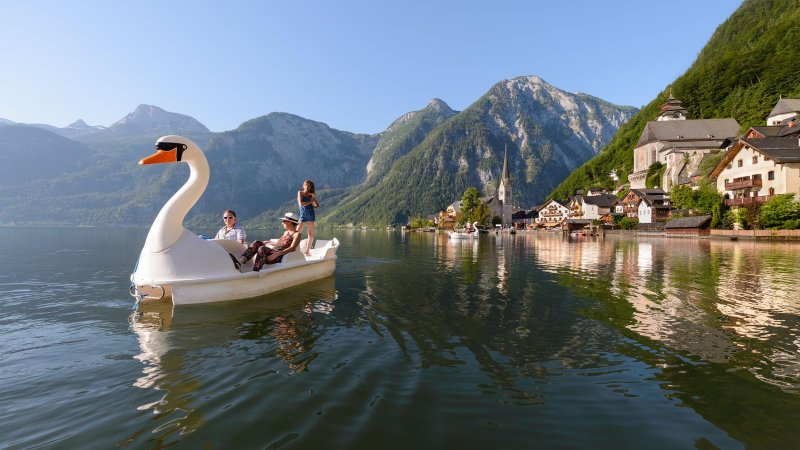
Running the full length of the village shore along the edge of the dark, deep waters, this scenic stone and timber walkway links the southern Lahn district to the northern historic core.
- What it is famous for: Its breathtaking boathouses and traditional flat-bottomed wooden boats. The shoreline is lined with historic wooden boathouses built directly on stilts over the water, designed to protect the Plätten and Fuhren—traditional, hand-carved wooden boats propelled by a single oar that have functioned as the primary water taxis of the lake for centuries. Walking the promenade at sunrise treats pedestrians to a view of the mountains reflecting perfectly in the still water.
11. Hallstatt Lahn & The Badeinsel
The Green Recreational Meadow of Glacial Waters
Positioned at the flatter southern expansion of the village area where the clear waters of the Waldbach stream feed into the main lake basin, this green park zone functions as Hallstatt’s premier leisure district.
- What it is famous for: Its artificial bathing island and panoramic mountain swimming beaches. Constructed using material excavated during the building of the local mountain highway tunnel in the 1960s, the Badeinsel (Bathing Island) features a sweeping green lawn, timber sunbathing decks, and child play areas. It stands as a popular spot for brave swimmers to plunge into the crisp, refreshing, glacier-fed waters of the lake, entirely surrounded by the towering green walls of the Dachstein Alps.