
Ibiza (Eivissa), floating like a jagged pine-covered emerald in the sun-drenched Balearic Sea, is an island of wild contradictions.
First settled by the Phoenicians in 654 BC, this magnetic island has served as a sanctuary for Carthaginian merchants, Barbary pirates, 1960s hippies, and avant-garde artists.
The island’s distinct identity thrives in its luminous, whitewashed rural villages, hidden rocky coves (calas) with electric-turquoise water, and majestic renaissance battlements.
Recognized globally as a UNESCO World Heritage treasure for its exceptional biodiversity and culture, Ibiza pairs rustic Mediterranean tranquility with sophisticated coastal luxury.
1. Dalt Vila (Ibiza Old Town)
The Towering Renaissance Citadel of the Mediterranean
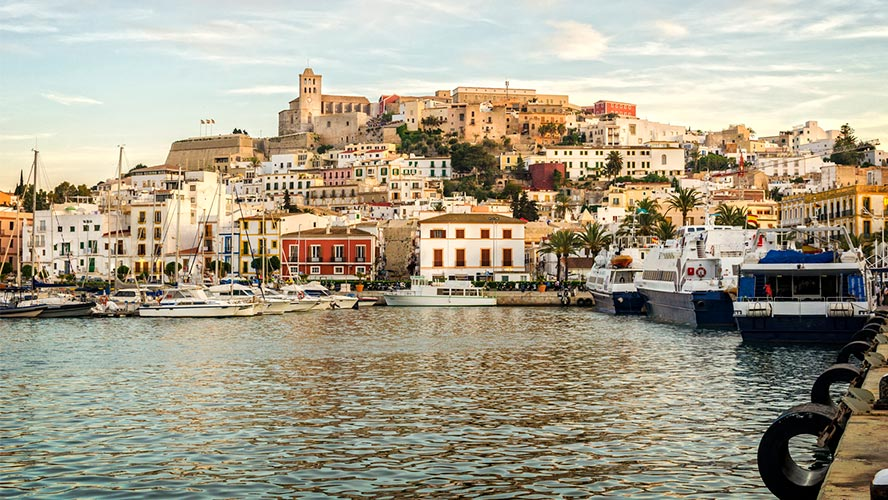
Crowning a high rocky hill overlooking the capital’s natural harbor, Dalt Vila (literally “Upper Town”) is a monumental, fortified acropolis wrapped in massive defensive stone walls commissioned by King Charles V in the 16th century.
- What it is famous for: Its immaculately preserved Renaissance military architecture and steep cobblestone alleys. Visitors pass through grand stone portals to explore a maze of whitewashed residential courtyards draped in purple bougainvillea. At the very peak stands the 13th-century Cathedral of Our Lady of the Snows, offering breathtaking panoramic views across the historic tile roofs, the luxury marina, and the open sea out to Formentera.
2. Es Vedrà
The Mystical, Magnetizing Limestone Monolith
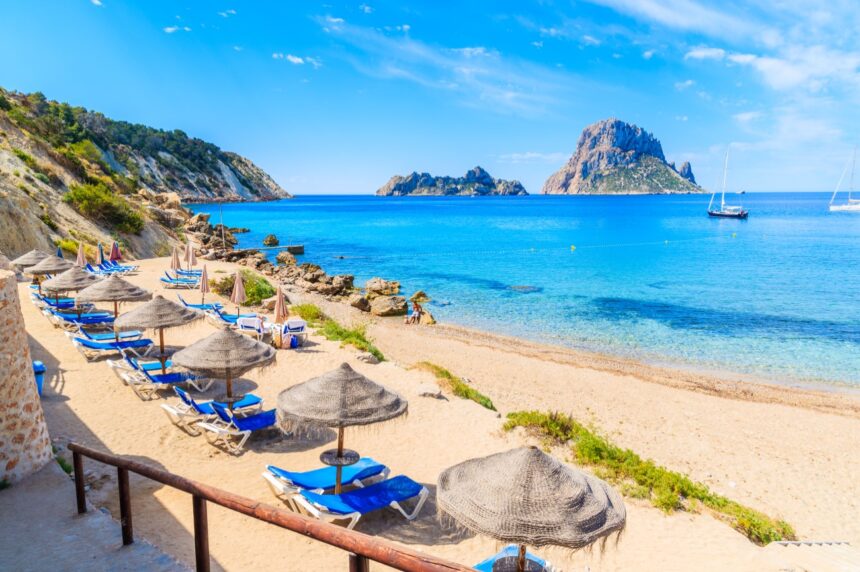
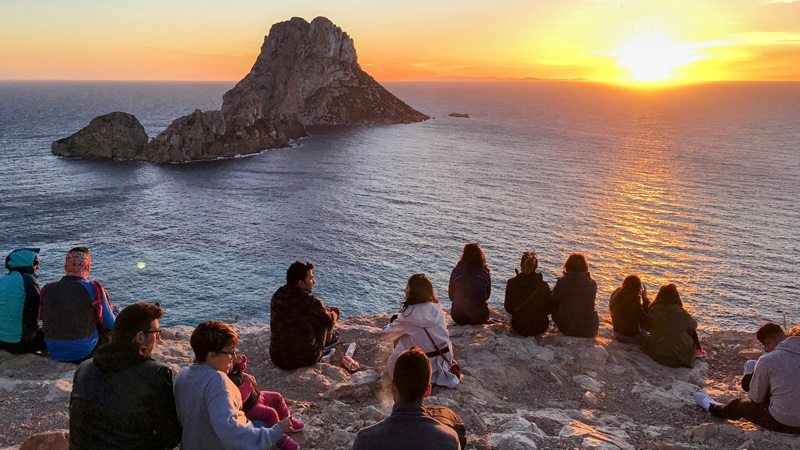
Rising dramatically nearly 400 meters straight out of the sea just off the southwestern coast of Cala d’Hort, Es Vedrà is a sheer, uninhabited limestone rock island shrouded in local lore and cosmic mystery.
- What it is famous for: Its magnetic pull, breathtaking sunset views, and legendary myths. Local folklore claims it is the third most magnetic spot on Earth, the birthplace of the Carthaginian goddess Tanit, and the home of the sirens who tried to shipwreck Odysseus. Crowds gather along the rugged cliffs of the mainland every evening to watch the sun sink directly behind the monolithic rock, painting the sky in deep shades of gold and violet.
3. Cala Salada & Cala Saladeta
The Sylvan Coves of Liquid Turquoise
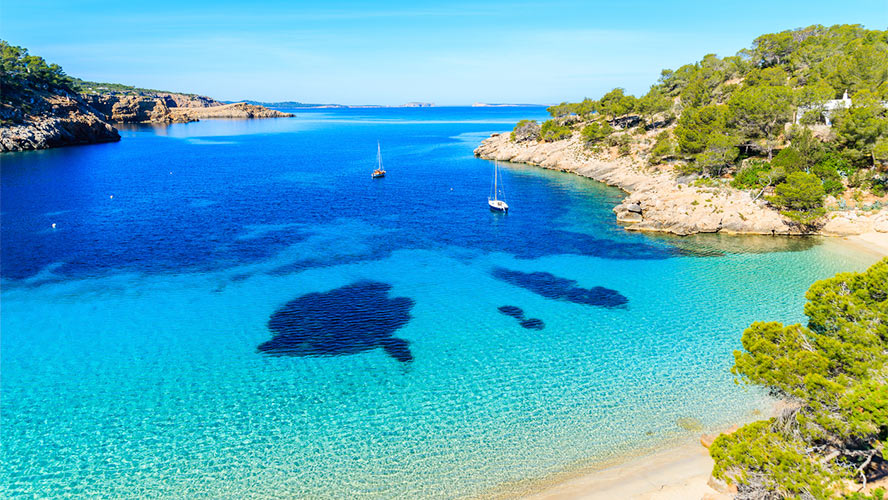
Tucked away at the base of steep hills covered in dense pine forests north of San Antonio, these twin pristine coves are widely celebrated as the visual epitome of Ibiza’s raw coastal beauty.
- What it is famous for: Its unbelievably transparent, neon-turquoise water and rustic fisherman shacks. While Cala Salada features coarse golden sand and a traditional beachside restaurant, a rocky path around the headland leads to the smaller, softer sands of Cala Saladeta. The water here is so still and clear it resembles a giant, natural swimming pool, bordered by weathered wooden boat ramps carved into the red clay cliffs.
4. Las Dalias Hippy Market
The Living Heart of Ibiza’s Bohemian Soul
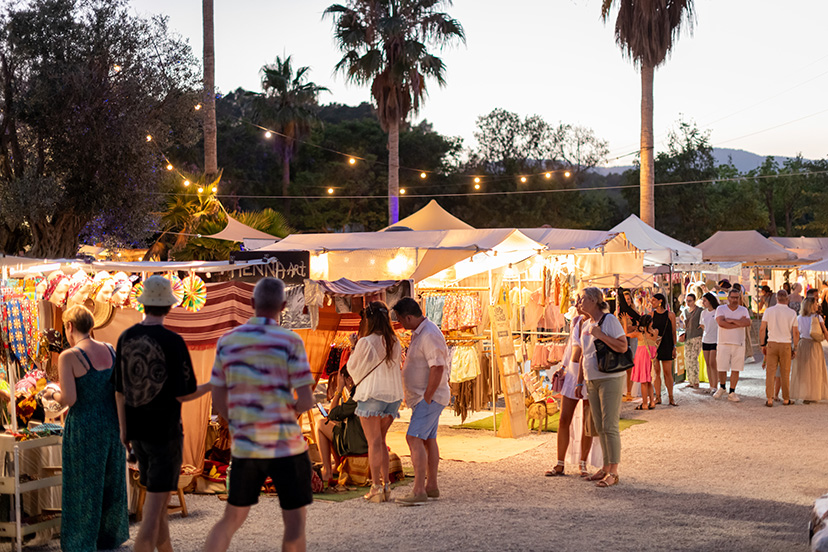
Located in the sleepy northern village of San Carlos, Las Dalias started as a humble roadside bar in 1954 before evolving into the world’s most iconic, permanent bohemian market during the peace-and-love movement of the 1960s and 70s.
- What it is famous for: Its vibrant counter-culture marketplace, hand-crafted fashion, and artistic energy. Under a canopy of trailing vines and colored fabrics, over 200 stalls showcase handmade leather goods, exotic incense, custom jewelry, and flowing white Ibiza fashion (Moda Adlib). It functions as a sensory, community hub complete with live sitar music, organic tea tents, and street performers that channel the original free spirit of the island.
5. Ses Salines National Park (Parque Natural de Ses Salines)
The Shimmering Salt Flats of Phoenician Heritage
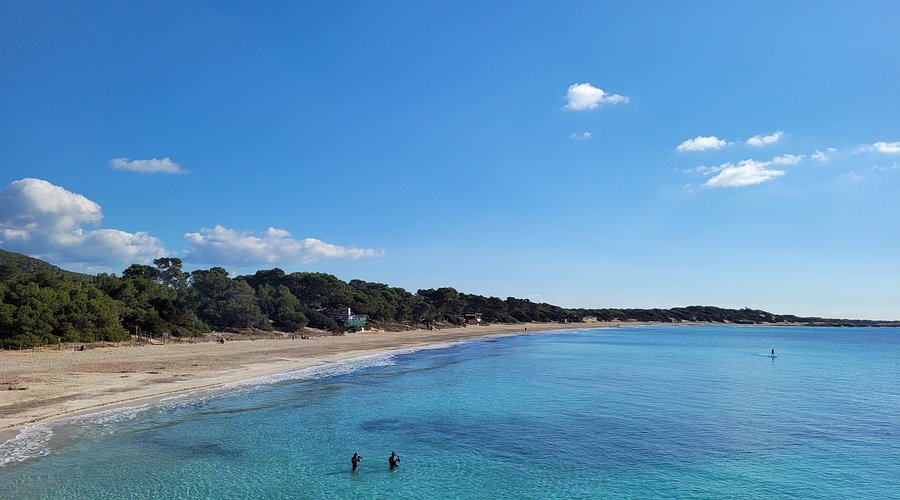
Stretching across the southernmost tip of Ibiza and extending over the sea channel to neighboring Formentera, this vast marine and terrestrial nature reserve protects a fragile ecosystem of ancient salt flats and sand dunes.
- What it is famous for: Its centuries-old pink salt harvest pans and migratory flamingo populations. Exploited for salt since Phoenician times, the shallow wetland pans dry out in late summer, creating a dazzling white and pink landscape of crystallized minerals. The park is also famous for sheltering pristine, white-sand beaches like Playa de ses Salines, backed by ancient sand dunes and emerald pine trees.
6. Café del Mar & The San Antonio Sunset Strip
The Sonic Birthplace of Ambient Chill-Out Culture
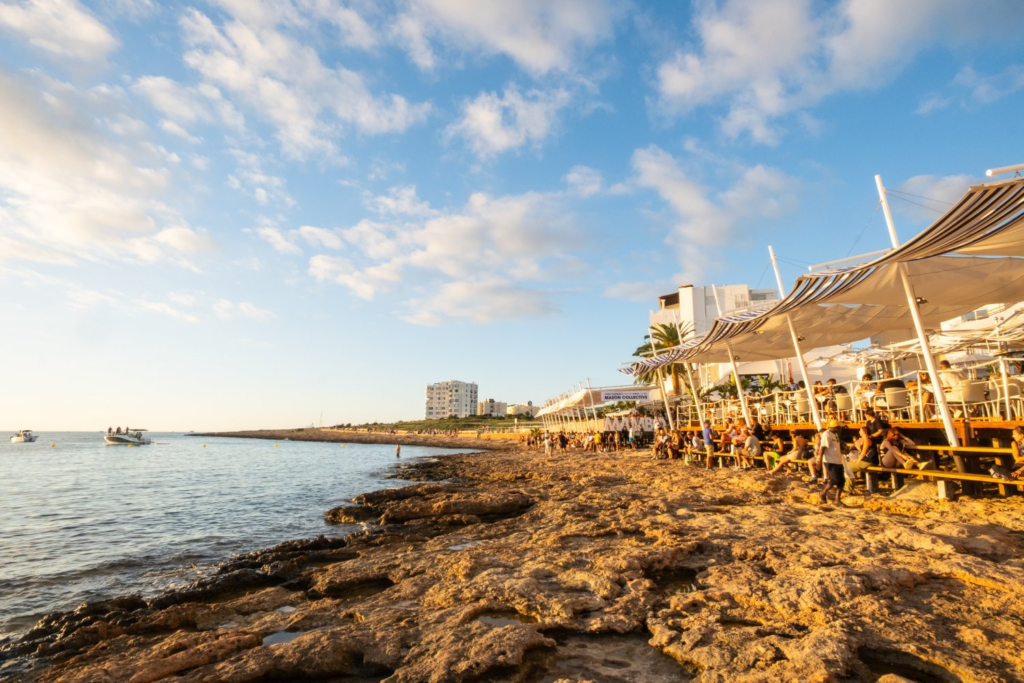
Running along the rocky western waterfront of San Antonio town, this pedestrian promenade is globally recognized as the birthplace of the modern sunset pre-party ritual.
- What it is famous for: Its iconic architectural design by Lluís Güell and the legendary chill-out soundtracks. Since opening in 1980, Café del Mar synchronized Balearic ambient music to the exact moment the sun hits the ocean horizon. Today, thousands of people crowd the rocky shoreline and open-air terraces every night, clapping as the sun disappears to the beat of world-class electronic DJs.
7. Benirràs Beach
The Tribal Drumming Bay of the Hippie Sunset
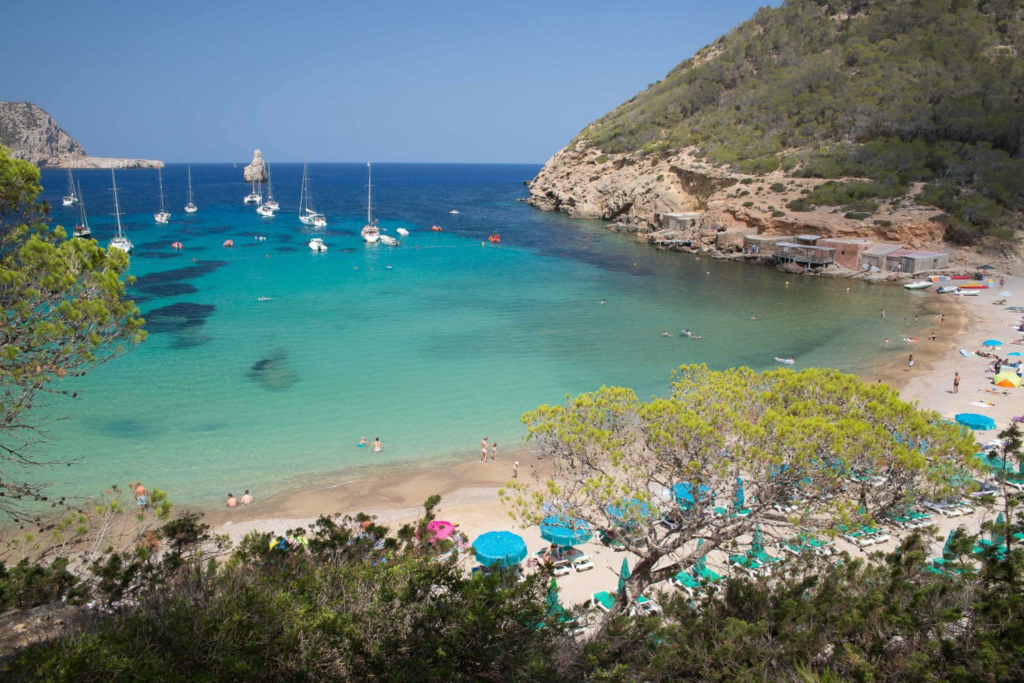
Nestled deep in the rugged northern reaches of the island near San Juan, Benirràs is a sheltered, pebbly beach framed by high protective cliffs and centered on a striking rock formation known as Es Cap Bernat.
- What it is famous for: The legendary Sunday Sunset Drumming Ritual. Originating as a spontaneous gathering of hippies protesting the Gulf War in 1991, the event has become a cultural institution. Every Sunday evening, dozens of tribal drummers, fire dancers, and free spirits line the sand, creating an intense, rhythmic drum circle that echoes across the bay as the sun goes down.
8. Phoenician Settlement of Sa Caleta
The Archeological Cradle of Island Civilization
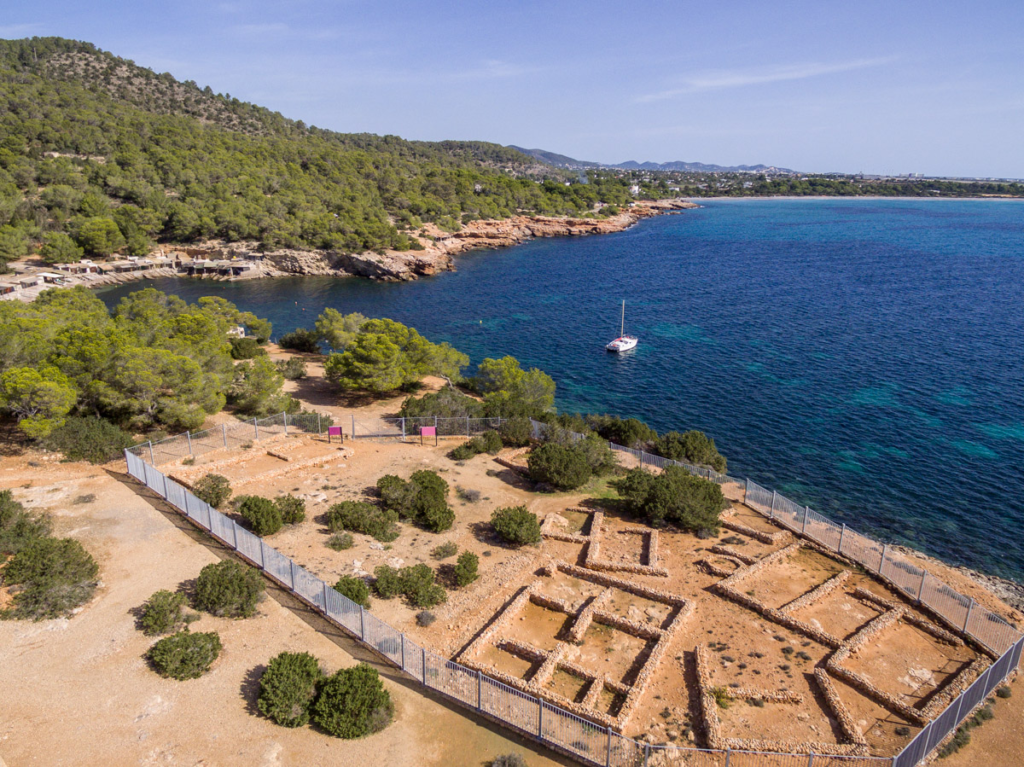
Perched precariously on a rocky, red-soiled cliffside overlooking a narrow horse-shoe bay on the southern coast, this archaeological site preserves the footprint of the very first urban settlement founded on Ibiza in the 7th century BC.
- What it is famous for: Being a UNESCO-protected cradle of Ibizan history. The excavated stone foundations reveal a complex layout of communal kitchens, metal-working furnaces, and tight residential quarters built by the original Phoenician settlers before they abandoned the site to build a larger city at present-day Ibiza Town. It provides an austere, quiet look at the maritime roots of the island.
9. Santa Eulària des Riu & Puig de Missa
The Fortified Sanctuary of the Sacred River
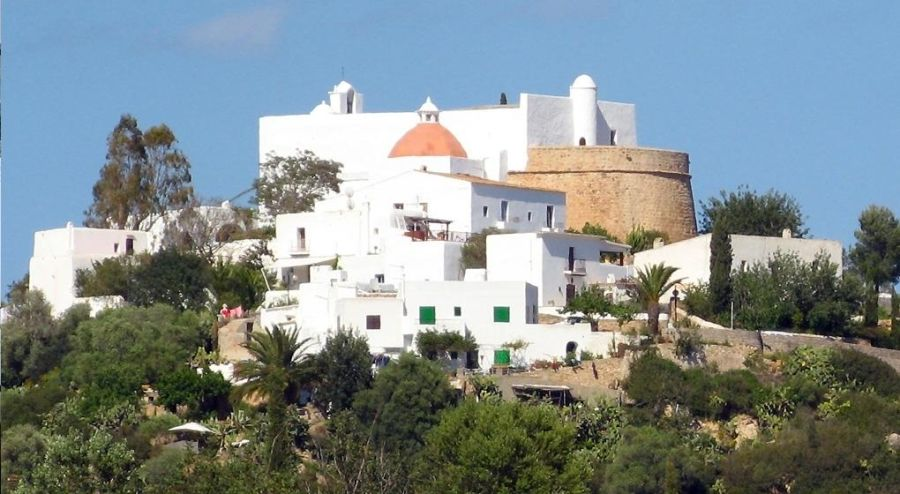
Dominating the skyline of the eastern coastal town of Santa Eulària, the Puig de Missa is a dramatic, whitewashed 16th-century church complex sitting 52 meters above sea level on a steep rocky hill.
- What it is famous for: Its heavy architectural role as a fortified church against pirate raids. To protect the local population from Barbary corsairs, the church was built with thick stone walls and a heavy defensive tower. The surrounding hill is a beautiful display of traditional rural architecture, featuring a labyrinth of quiet white houses, a historic flour mill, and an ethnographic museum celebrating rural Ibizan life.
10. Es Vedrà Viewpoint & Torre des Savinar
The High Pirate Watchtower of the Western Cliffs
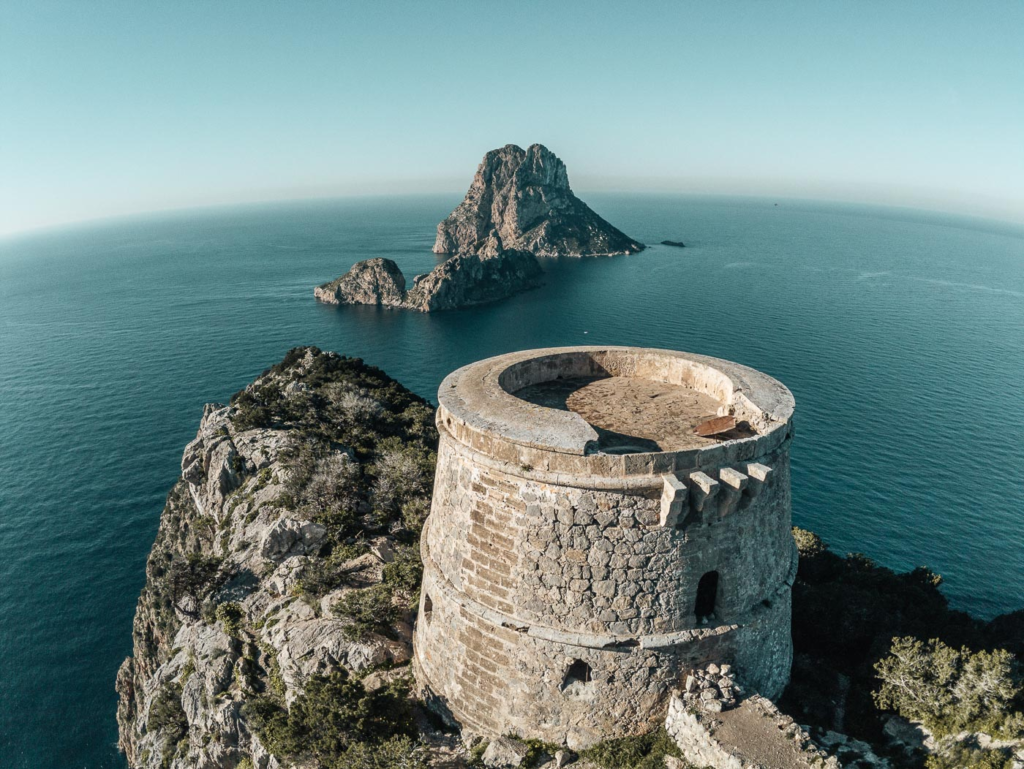
Perched dramatically on the absolute edge of a sheer cliff face directly opposite Es Vedrà, the Torre des Savinar is the highest defensive watchtower on the island, constructed in 1756.
- What it is famous for: Its vertiginous heights and cinematic coastal vistas. Known locally as the “Pirate’s Tower,” it was built to spot incoming enemy fleets. Reaching the tower requires a scenic trek through pine-scented mountain paths, rewarding hikers with a jaw-dropping look straight down into the crashing sea and an unobstructed, legendary perspective of Es Vedrà.
11. San Miguel & The Can Marçà Caves
The Hidden Smugglers’ Lair of the Northern Cliffs
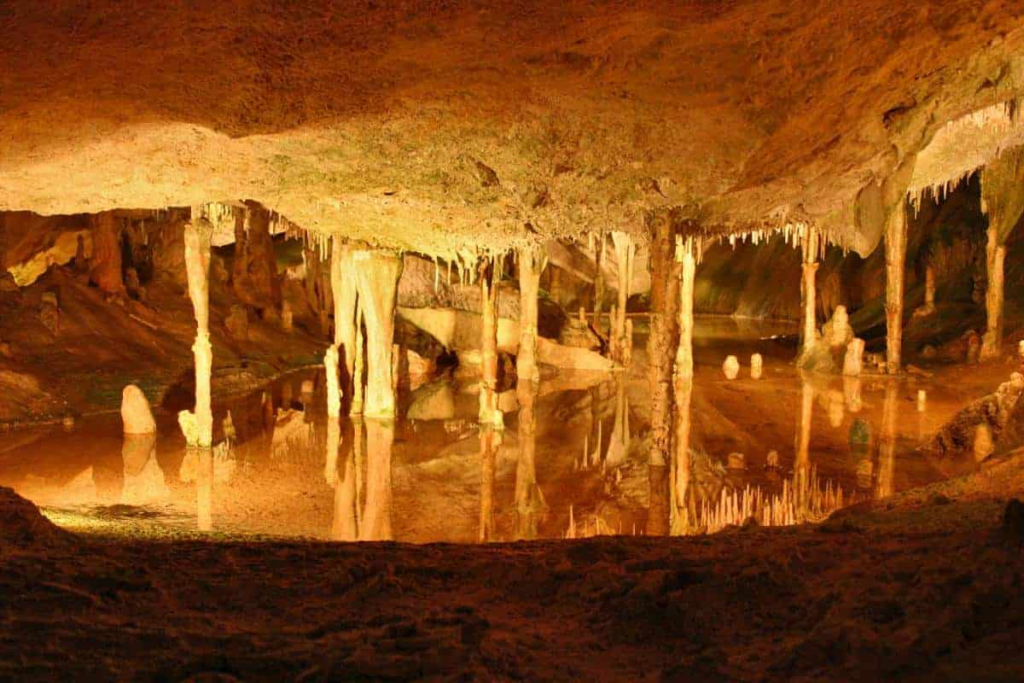
Located inside the rugged cliffs of Port de Sant Miquel in the north, these ancient natural caves are over 100,000 years old, carved out of the rock by heavy subterranean water torrents.
- What it is famous for: Its history as a secret storage base for contraband smugglers and fossilized formations. Visitors can still see the original black and yellow paint markings used by smugglers to guide their path in the dark. A steep path cut into the outer cliff face offers sweeping sea views before leading into subterranean chambers filled with stalactites, stalagmites, and an underground waterfall illuminated by a light and sound show.