
Valencia, Spain’s third-largest city, is a luminous coastal gem where ancient history and breathtaking, futuristic design live in absolute harmony.
Situated along Spain’s eastern dynamic coastline where the Turia River meets the Mediterranean Sea, this thriving metropolis has earned global acclaim as a hotbed of cutting-edge architecture, design innovation, and world-class gastronomy.
As the historical birthplace of paella, Valencia celebrates its culinary abundance with a fierce local pride, sustained by the surrounding huerta fertile agricultural plains dripping with orange groves.
The city’s historic center hums with the legacy of a wealthy Golden Age trade hub, while its grand, dried-up riverbed has been brilliantly reimagined as an expansive urban park. Sunny, forward-thinking, and deeply relaxed.
Here are the top 11 famous places to visit in Valencia and why they are legendary.
1. City of Arts and Sciences (Ciudad de las Artes y las Ciencias)
The Sci-Fi Architectural Masterpiece of the Future
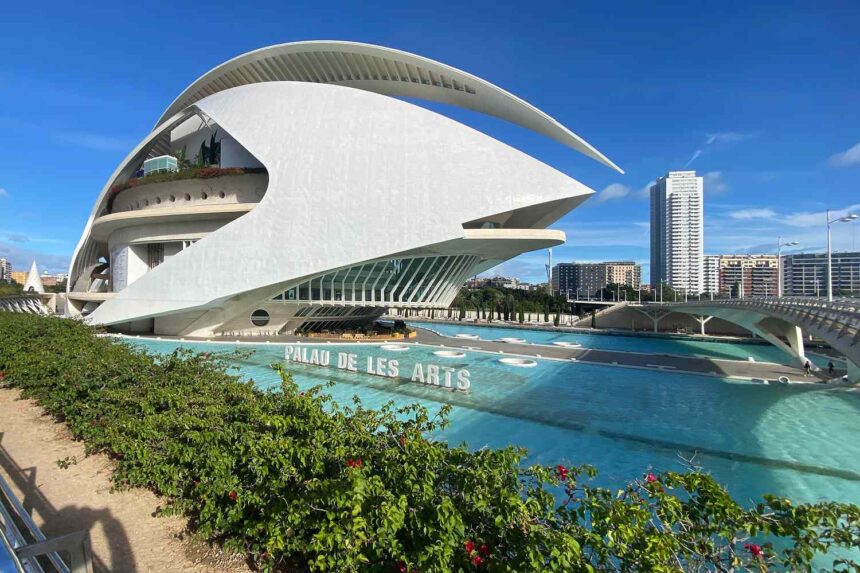
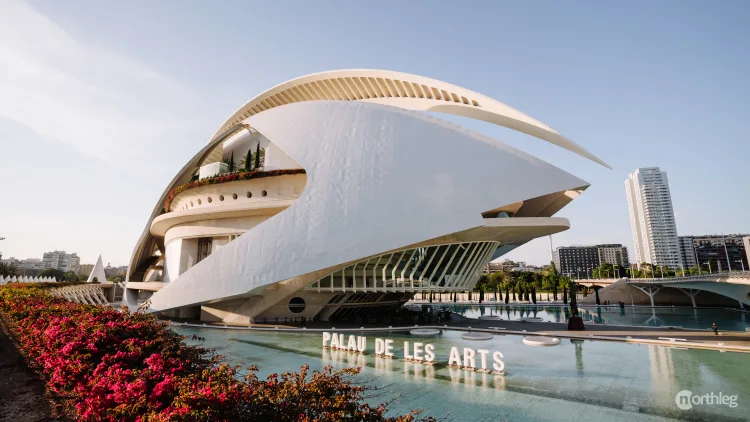
Spreading spectacularly across two kilometers of the former Turia riverbed, this ultra-futuristic, white-concrete-and-glass complex was designed by world-renowned local starchitect Santiago Calatrava and Felix Candela.
- What it is famous for: Its groundbreaking, bio-mimetic architecture resembling colossal skeletons and giant eyes. The sprawling complex holds several distinct marvels: L’Hemisfèric (an IMAX theater shaped like a blinking human eye), El Museu de les Ciències (an interactive science museum shaped like a whale skeleton), and L’Oceanogràfic—Europe’s largest, most spectacular marine complex housing over 500 species.
2. Central Market (Mercat Central)
A Modernist Cathedral of Gastronomic Abundance
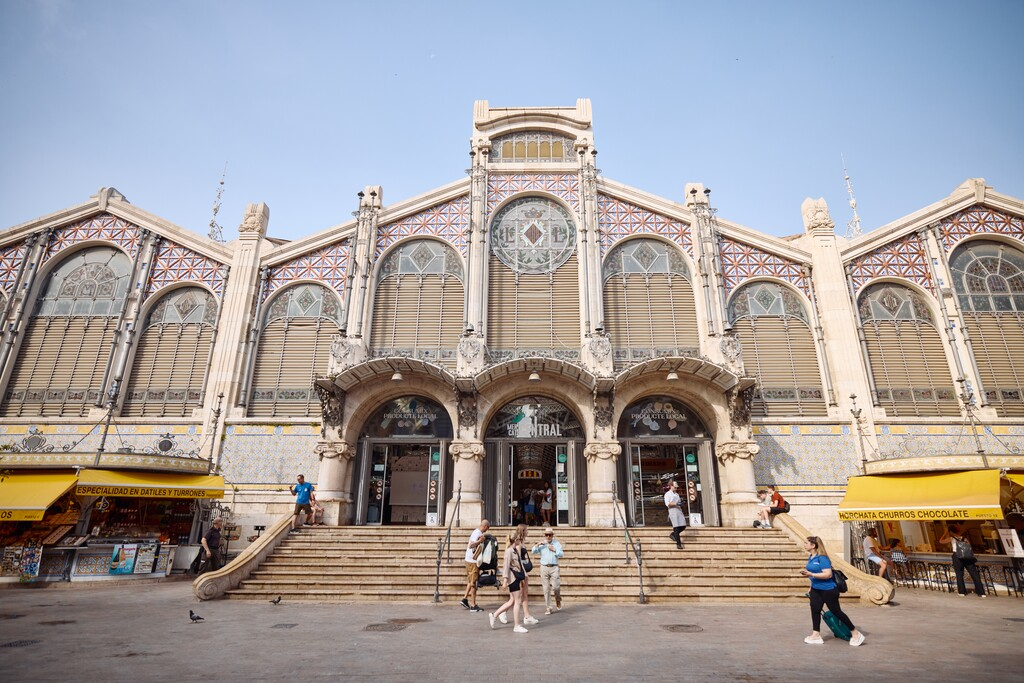
Covering over 8,000 square meters, Valencia’s Mercat Central is one of the oldest, largest, and most architecturally stunning continuously operating fresh food markets in Europe.
- What it is famous for: Its breathtaking Valencian Art Nouveau architecture and fresh regional bounty. Built in the 1910s, the market features spectacular iron beams, colorful tile mosaics, and a soaring 30-meter-high central dome adorned with stained glass. Inside, over 1,000 bustling stalls create a paradise of colors and smells, offering fresh saffron, local tomatoes, daily catches, and rows of Iberian ham.
3. La Lonja de la Seda (The Silk Exchange)
The Secular Gothic Temple of Golden Age Commerce
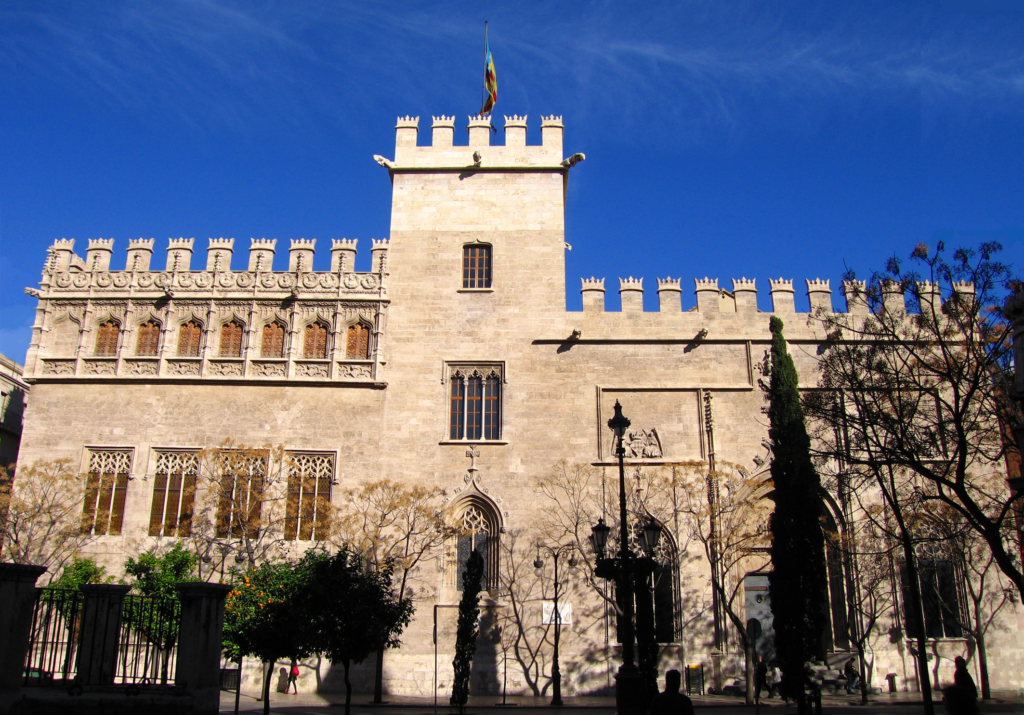
Located directly opposite the Central Market, this spectacular, fortified complex was built between 1482 and 1533, standing as a triumphant UNESCO World Heritage masterpiece of Late Gothic civic architecture.
- What it is famous for: Its jaw-dropping Hall of Columns (Sala de Contratación). The main trading hall features sixteen magnificent, spiral stone columns that soar upward like stone palm trees to form a vaulted stone canopy. This room was the powerhouse of the European medieval silk trade, reflecting the immense wealth and commercial prestige of Golden Age Valencia.
4. Valencia Cathedral & El Micalet
The Sacred Home of the Holy Grail
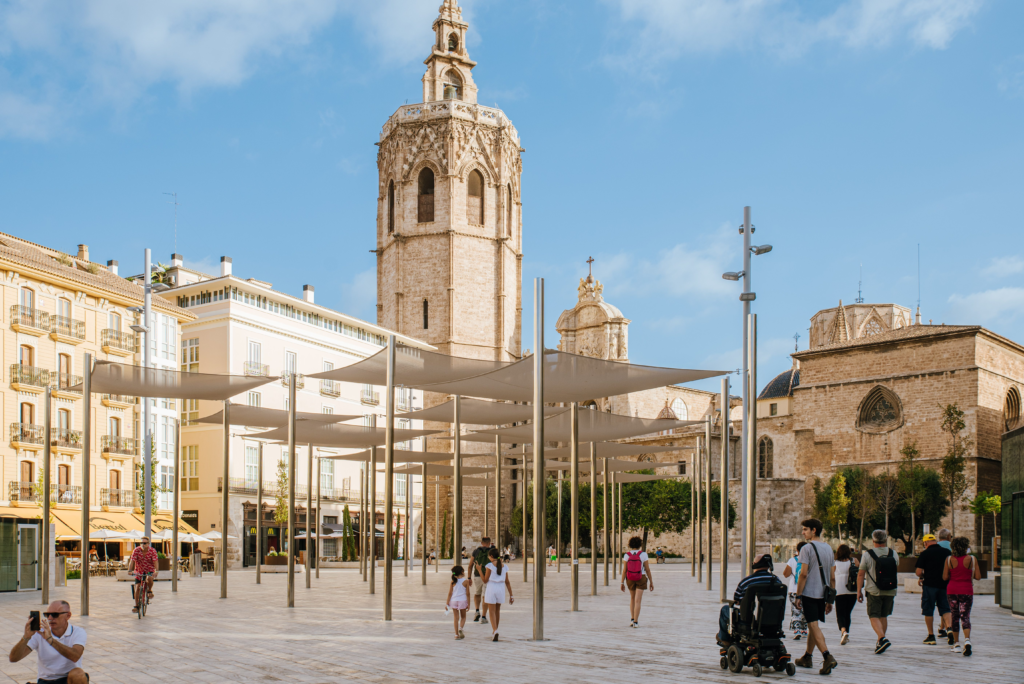
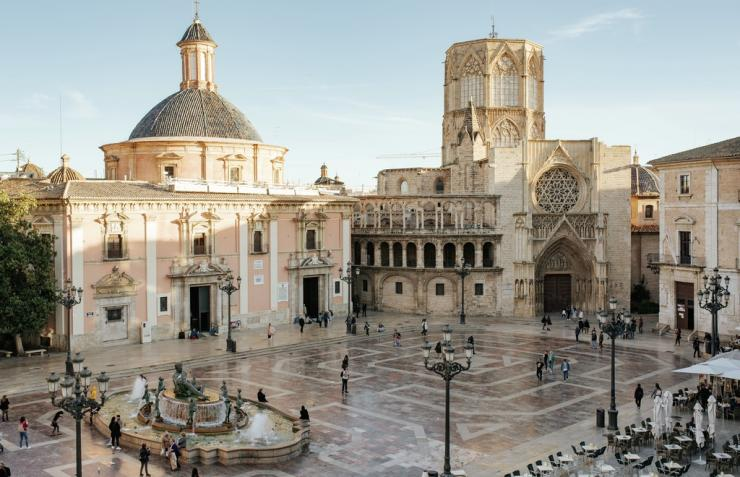
Rising proudly over the historic Plaza de la Reina, this monumental cathedral was constructed primarily between the 13th and 15th centuries over the remains of an ancient Roman temple and a Moorish mosque.
- What it is famous for: Preserving the officially recognized Holy Chalice (The Holy Grail) within its Gothic side chapel. The cathedral is an architectural jigsaw puzzle blending Romanesque, Gothic, and Baroque styles. Visitors can explore the interior before climbing the 207 stone steps of the iconic, octagonal El Micalet bell tower for unparalleled, 360-degree views of the historic tiled roofs.
5. Turia Gardens (Jardín del Turia)
The Sun-Drenched Green Ribbon of the City
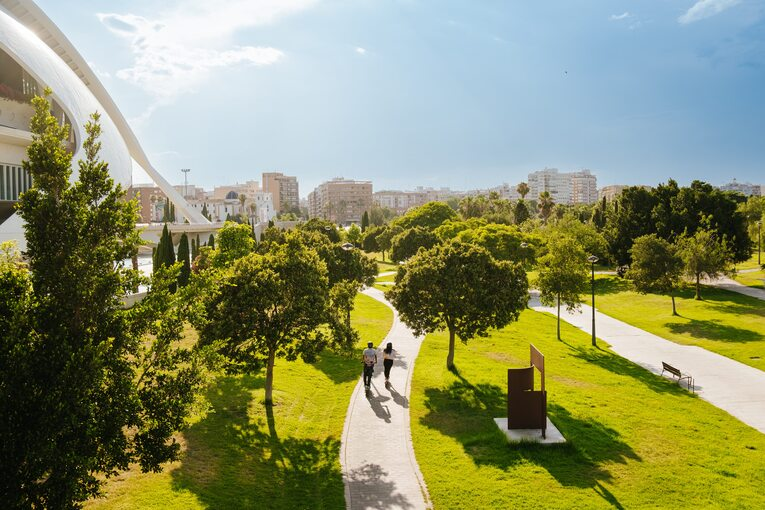
Following a catastrophic river flood in 1957, Valencia courageously diverted the entire Turia River completely south of the city, transforming the original, nine-kilometer winding riverbed into a massive, lush urban park.
- What it is famous for: Being Spain’s largest, most unique linear public park. This vibrant green spine winds cleanly through the city center, packed with palm trees, orange groves, footbridges, sports fields, and cycling tracks. It is a beloved community living room, featuring the giant Gulliver Park (a massive playground where children climb a 70-meter scale model of Lemuel Gulliver) and connecting old town history with modern design.
6. Barrio del Carmen
The Edgy, Artistic Labyrinth of the Old Town
Tucked tightly inside the historic medieval walls of the Ciutat Vella district, El Carmen is a charismatic, centuries-old neighborhood that functions as the bohemian heartbeat of Valencia.
- What it is famous for: Its winding, cobblestone alleys packed with explosive street art and vibrant nightlife. During the day, visitors can wander past historic plazas, hidden residential courtyards, and trendy indie boutiques. At night, the neighborhood transforms completely, with locals filling traditional taverns and bars to sip Agua de València—a potent, refreshing local cocktail crafted from fresh orange juice, cava, gin, and vodka.
7. The Torres de Serranos & Torres de Quart
The Colossal Stone Guardians of the Medieval Realm
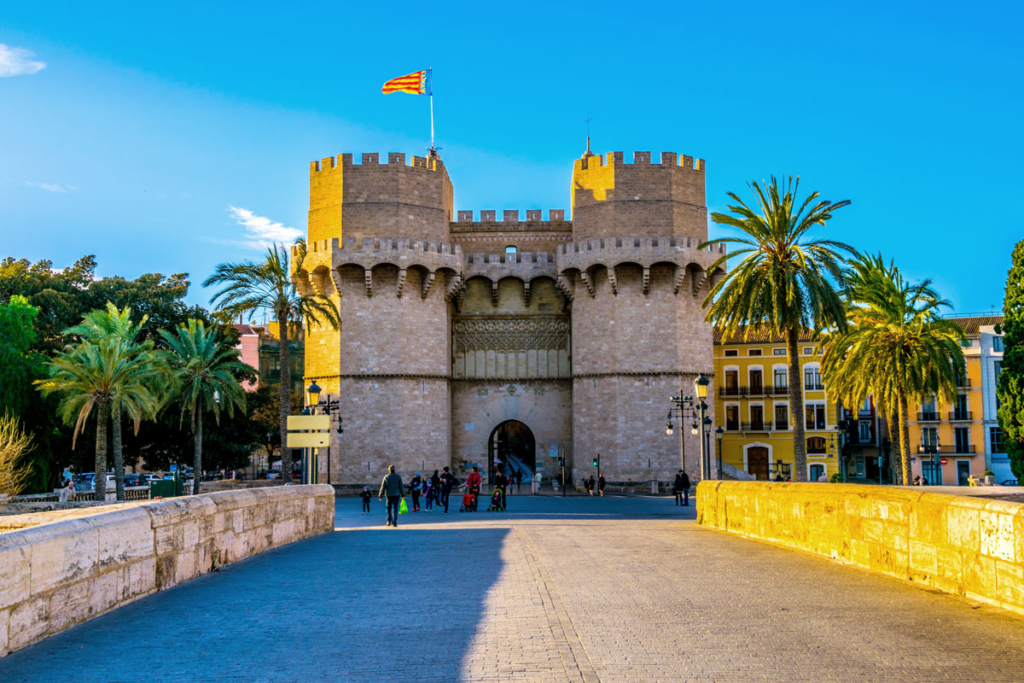
These two sets of monumental, twin stone defensive towers stand positioned on opposite edges of the historic old quarter, surviving as the only remaining entry gateways of Valencia’s ancient 14th-century defensive city walls.
- What it is famous for: Being exceptional, imposing examples of medieval military architecture. The Torres de Serranos, facing north, feature grand polygonal towers and elaborate Gothic decorations once used to welcome royal processions. Visitors can climb straight up the rear stone terraces of both structures to stand where medieval sentries guarded the kingdom from invasion.
8. El Cabanyal & Malvarrosa Beach
The Colorful Maritime Cradle of Sun and Seafood
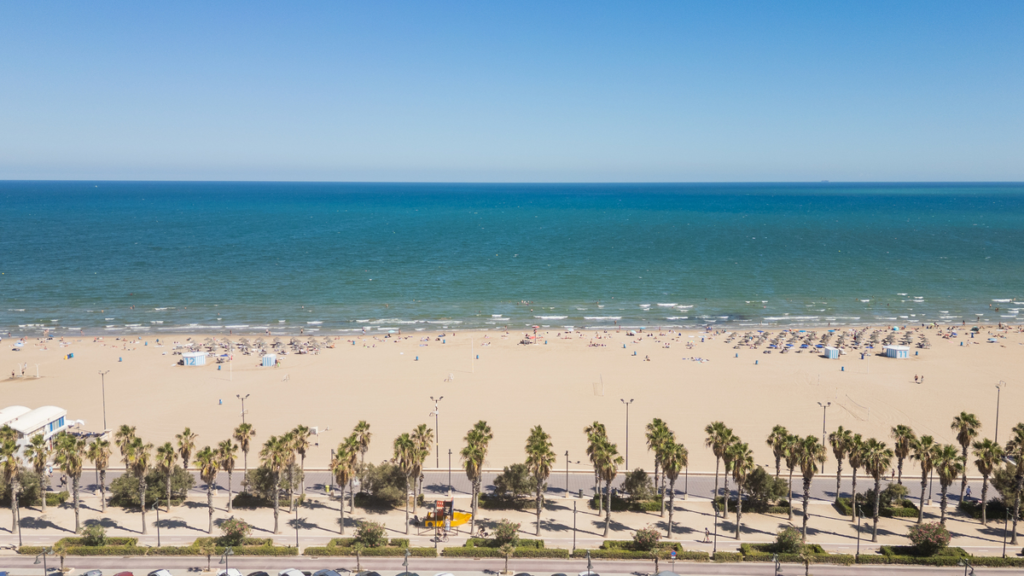
Located just a short tram ride east of the city center, La Malvarrosa is Valencia’s primary, expansive urban beach, bordered cleanly by El Cabanyal—the city’s historic, traditional fishermen’s quarter.
- What it is famous for: Its gorgeous, tile-clad fisher cottages and authentic beachside paella. El Cabanyal features a unique grid layout of narrow streets lined with low-rise houses boasting spectacular, brightly colored tiled facades. The adjacent wide golden sand beach is bordered by a lively promenade holding legendary, historic restaurants like La Pepica, where patrons feast on authentic wood-fired Valencian paella.
9. Albufera Natural Park (Parque Natural de l’Albufera)
The Serene Wetland Birthplace of Paella
Located just 10 kilometers south of the city center, this expansive ecological sanctuary is home to Spain’s largest freshwater lake, surrounded by vast, emerald-green rice fields.
- What it is famous for: Producing the essential, short-grain Bomba rice that anchors paella culture. Visitors can explore the traditional thatched-roof fishermen’s cabins called barracas, or board a traditional wooden boat to glide across the glassy lagoon waters at sunset. The surrounding village of El Palmar is universally regarded as the ultimate pilgrimage site to eat authentic paella in its ancestral home.

10. Plaza del Ayuntamiento
The Grand, Marble-Paved Heart of Civic Pride
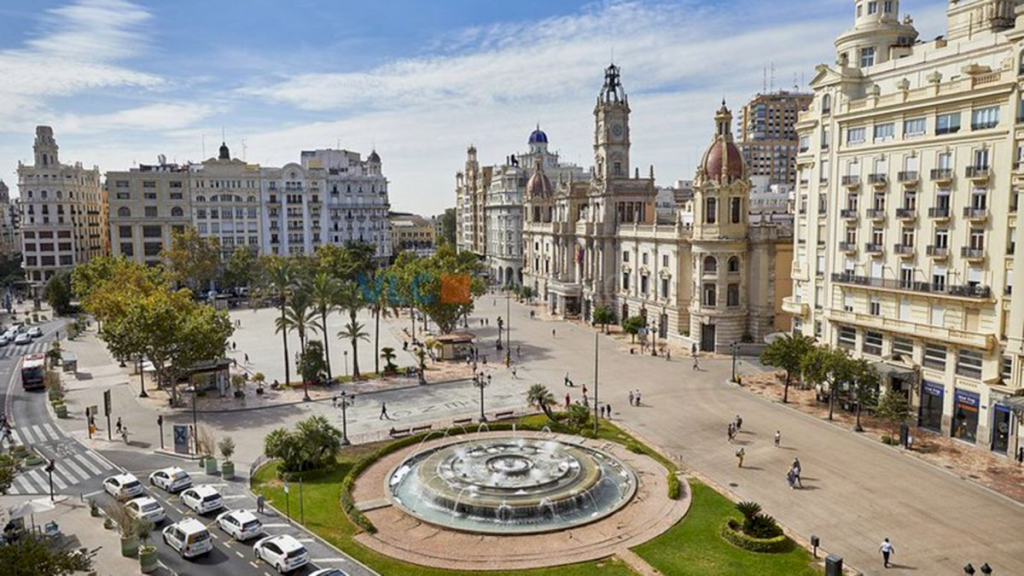
Serving as Valencia’s primary, high-energy civic square, this massive, triangular plaza in the city center is wrapped seamlessly by monumental, neoclassical white buildings.
- What it is famous for: Being the explosive epicenter of the world-famous Las Fallas festival. The plaza is anchored by the grand, symmetrical City Hall (Ayuntamiento) and the historic, ornate Central Post Office. Every March, this sweeping space hosts the thunderous Mascletà—a coordinated, earth-shaking daily display of rhythmic fireworks and gunpowder acoustics that draws hundreds of thousands of spectators.
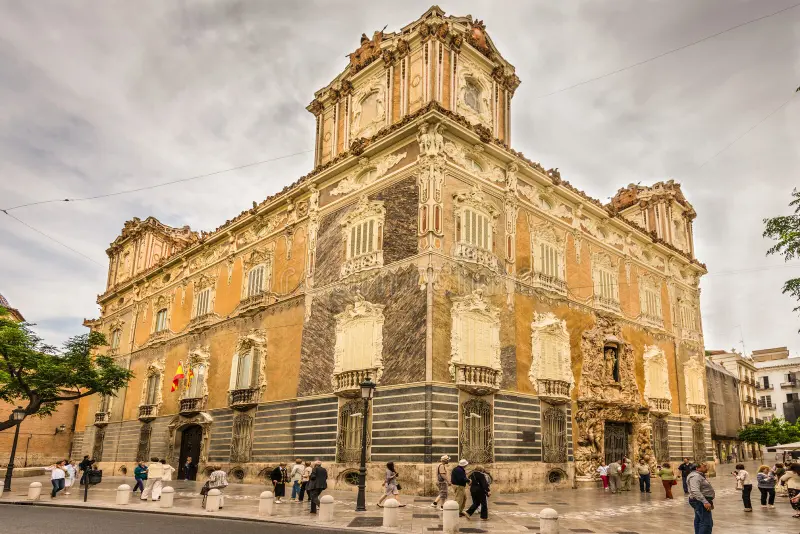
11. National Museum of Ceramics (Palacio del Marqués de Dos Aguas)
A Riotous Masterclass in Alabaster and Porcelain
Housed inside the jaw-dropping, mid-18th-century palace of the Marqués de Dos Aguas, this spectacular building boasts what is widely considered the most dazzling, extravagant Baroque facade in Spain.
- What it is famous for: Its mind-boggling, ornate alabaster portal carved by Ignacio Vergara. The entrance features a dramatic, flowing sculpture of rivers and figures that looks like liquid stone. Inside, the palace is preserved with opulent, silk-lined rooms and frescoed ceilings, housing an extraordinary national collection of historic ceramics, ranging from ancient Greek pottery to traditional Valencian tiles and original works by Picasso.