
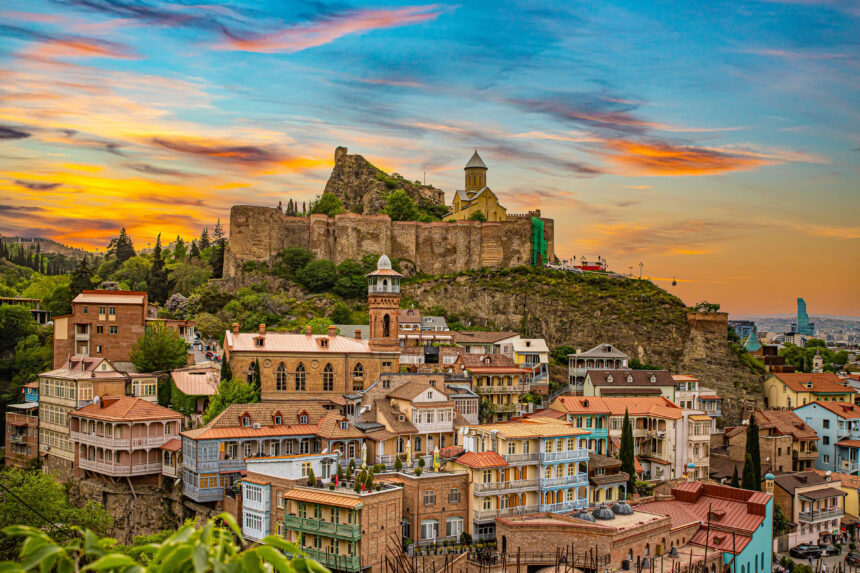
Tbilisi, carving dramatically through the deep, rocky gorge of the Kura (Mtkvari) River in eastern Georgia, operates on a magnificent, canyon-hugging layout shaped by natural defenses and hot thermal springs.
Founded in the 5th century by King Vakhtang Gorgasali, its strategic position on the Silk Road made it a coveted crossroads where the empires of Europe, Persia, Russia, and Byzantium clashed.
This volatile history forged a resilient city that was destroyed and rebuilt 29 times, leaving behind a unique architectural matrix where different cultures melt into the cliffs.
Today, Tbilisi is Georgia’s pulsing capital, effortlessly matching its ancient stone cathedrals with a daring, hyper-futuristic design wave and a world-renowned techno nightlife scene.
1. Old Town (Kala) & Narikala Fortress
The Cliffside Stone Sentinel of Carved Wooden Balconies
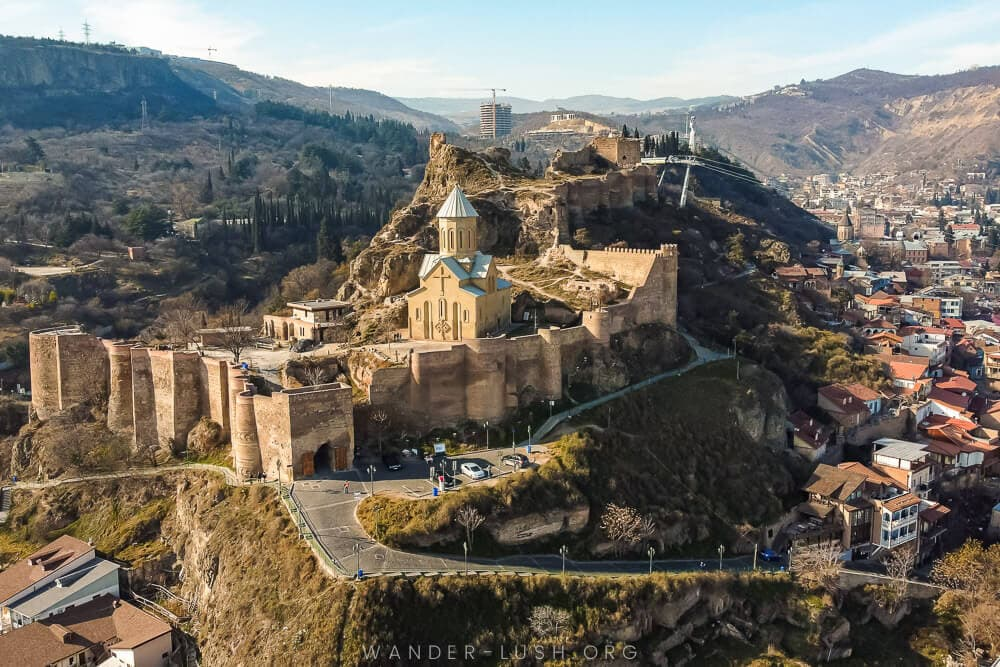
Clinging to the sheer rocky bluffs beneath a massive citadel ridge, this labyrinth of winding, cobblestone alleys forms the ancient, romantic core of historic Tbilisi.
- What it is famous for: Its signature pastel-colored houses with intricately carved wooden balconies and the 4th-century Narikala fortress ruins. The neighborhood showcases a unique layout where homes cascade down the hillside, their shared courtyards serving as lively community spaces. Visitors can take a panoramic cable car from Rike Park straight over the river to the fortress ramparts, which treat travelers to an unobstructed view of the historic district below.
2. Abanotubani (The Sulfur Bath District)
The Subterranean Brick Matrix of Healing Thermal Waters
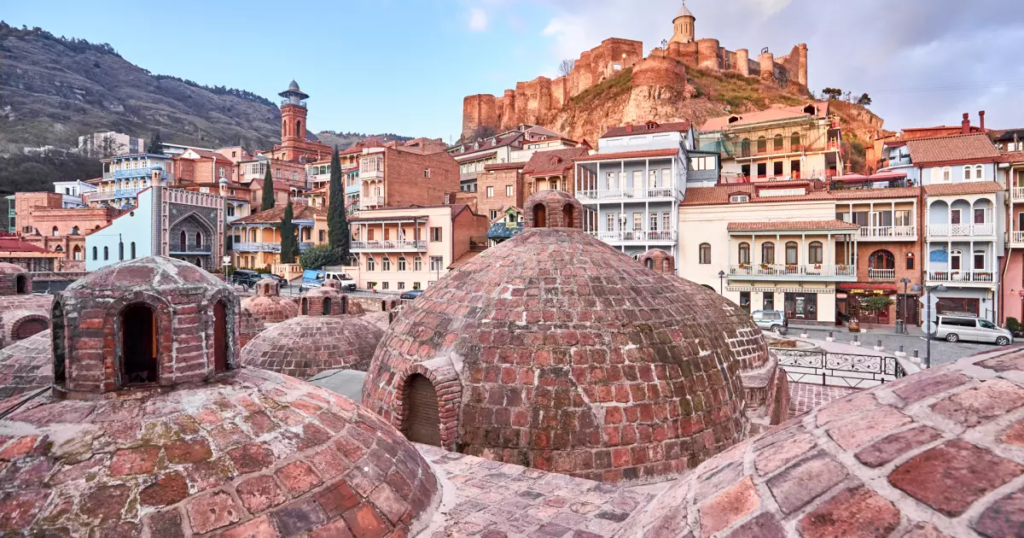
Tucked into the mouth of the Tsavkisistskali glen where the city was first founded, this historic quarter is instantly recognizable by its unique ground-level architectural profile.
- What it is famous for: Its cluster of subterranean hot-spring bathhouses topped with beehive-like brick domes. For centuries, travelers along the Silk Road—including Alexandre Dumas and Alexander Pushkin—stopped here to soak in the therapeutic, hot sulfur waters that bubble naturally from the earth at 40°C. The crown jewel of the district’s facade is the Orbeliani Bathhouse, which stands out with a striking blue-mosaic portal designed to mimic an elegant Persian Islamic madrasa.
3. Holy Trinity Cathedral of Tbilisi (Sameba)
The Monumental Golden Titan of the Trans-Kura Sky
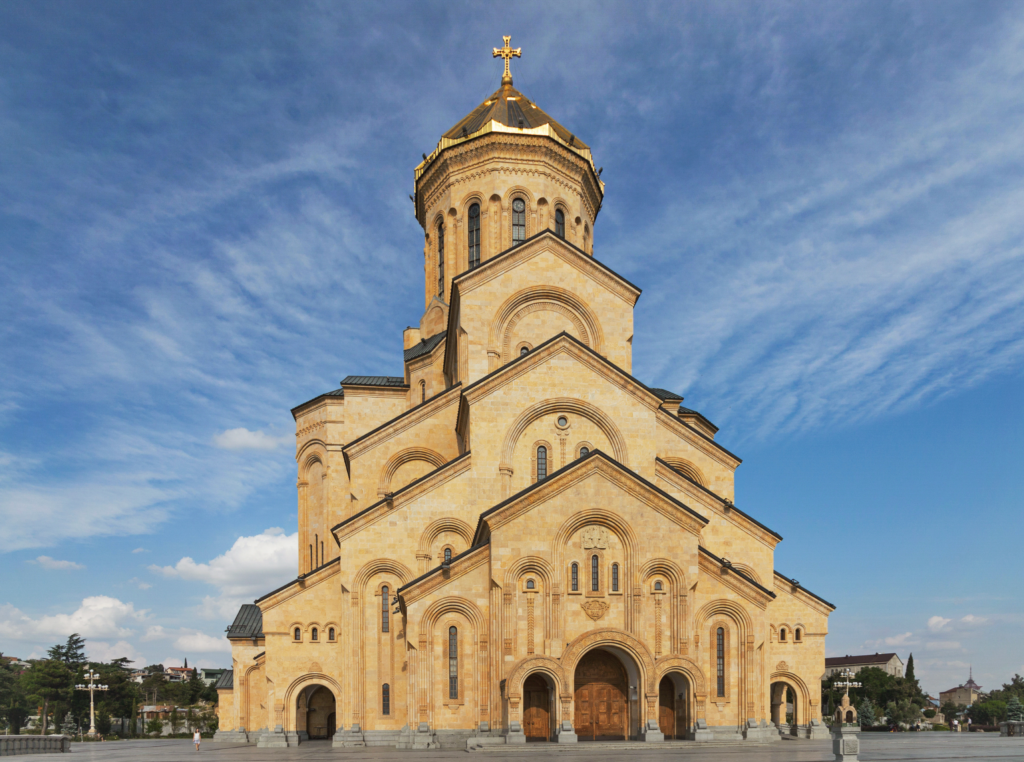
Dominating the Elia Hill on the eastern banks of the Kura River, this colossal ecclesiastical complex stands as the largest and grandest religious monument in the South Caucasus.
- What it is famous for: Its massive, gold-leafed dome rising 84 meters into the air and its masterfully integrated Georgian ecclesiastical styles. Completed in 2004 to celebrate 2,000 years of Christianity, Sameba is a towering architectural achievement visible from almost every corner of the city. The massive interior holds nine sub-chapels hidden beneath its stone marble floors, illuminated by towering candle chandeliers and filled with rich, hand-painted icons.
4. The Bridge of Peace
The Sinuous Glass Canopy of Intercontinental Harmony
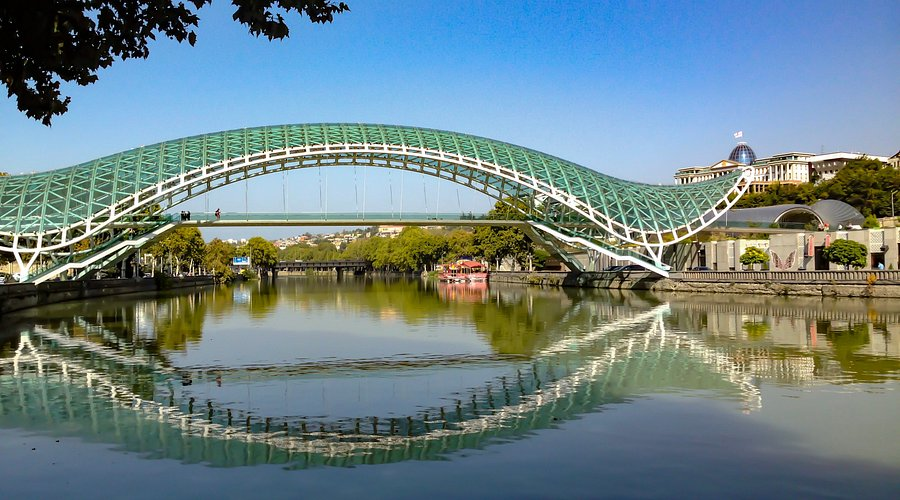
Spanning the Kura River to connect the old historic lanes of Kala with the modern, open lawns of Rike Park, this striking pedestrian footbridge is a bold statement of 21st-century engineering.
- What it is famous for: Its bow-shaped contemporary glass-and-steel canopy fitted with thousands of smart LED lights. Designed by Italian architect Michele De Lucchi, the 150-meter-long bridge represents a fluid structural transition from the city’s ancient stone past to its forward-looking present. At dusk, the canopy pulses with an interactive light show that displays the chemical elements of the human body and the flags of nations, symbolizing universal peace.
5. Rustaveli Avenue & Freedom Square
The Neoclassical Runway of Imperial Empires and Civic Revolutions
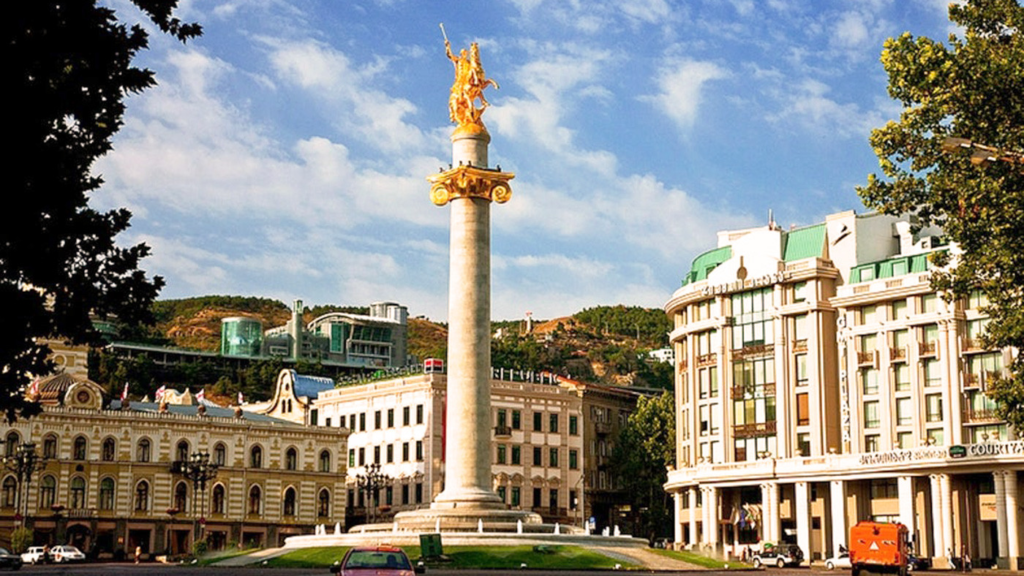
Slicing for 1.5 kilometers through the political heart of the city, this wide, plane-tree-lined boulevard functions as Tbilisi’s premier civic and commercial avenue.
- What it is famous for: Its grand neoclassical public palaces and its history as the stage for national demonstrations. Anchored at its southern tip by the monumental Freedom Square and its golden statue of St. George, the avenue is lined with the city’s most important institutions. Visitors walk past the imposing Soviet-era Parliament Building, the Moorish-style Opera and Ballet Theatre, and upscale galleries, catching the high-energy pulse of Georgian political life.
6. The Chronicle of Georgia
The Stonehenge of the South Caucasus
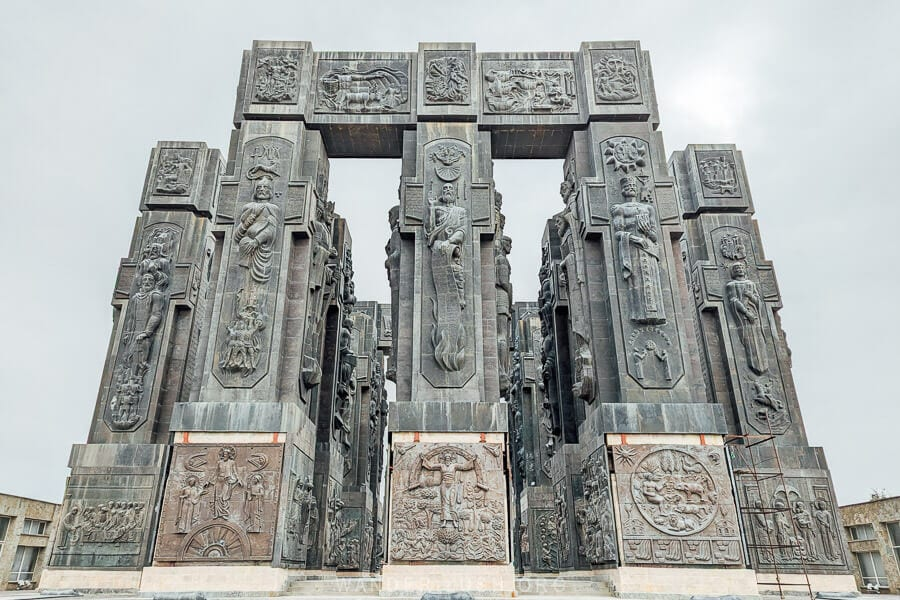
Perched on a quiet, windswept hill crest overlooking the massive, turquoise waters of the Tbilisi Sea reservoir on the northern edge of the city limits, this colossal monument is a hidden masterpiece of modernist art.
- What it is famous for: Its sixteen massive, 35-meter-tall dark bronze and copper pillars carved with historical narratives. Created by legendary sculptor Zurab Tsereteli in 1985, the monument tracks the complete history of Georgia. The bottom sections depict scenes from the life of Christ, the middle tier showcases Georgia’s kings, queens, and saintly enlighteners (like Saint Nino), while the top bands illustrate everyday agricultural and folk celebrations.
7. Mtatsminda Park & The Funicular
The High-Altitude Fairground of Ferris Wheels and Pastry Castles
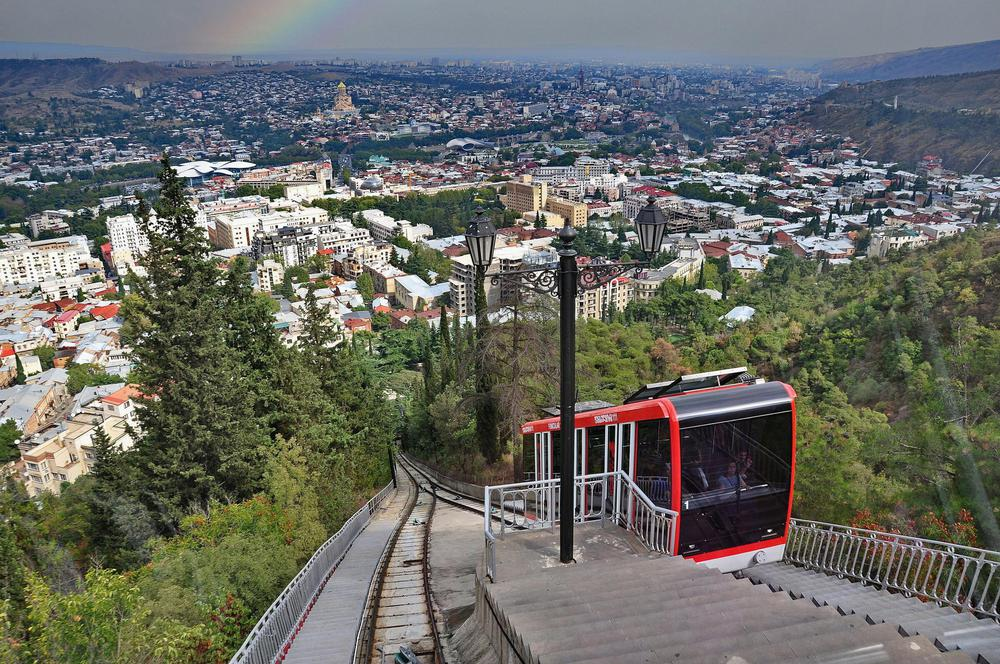
Perched on the flat plateau of Mtatsminda (Holy Mountain) rising 770 meters directly over the old town roofs, this expansive landscape park is Tbilisi’s highest recreational escape.
- What it is famous for: Its historic 1905 cliff-climbing funicular railway and panoramic sunset vistas. The journey up the mountain is an adventure in itself, using a high-tech cable funicular that scales a near-vertical cliff face. At the top, visitors can explore a whimsical amusement park featuring a giant Ferris wheel, walk through pine forests, or dine at the historic Funicular Restaurant complex, famous for serving light, cream-filled pastries (Pontshiki) paired with local tarragon sodas.
8. The Clock Tower of Gabriadze Theatre
The Surrealist Fairy-Tale Pillar of Wooden Asymmetry
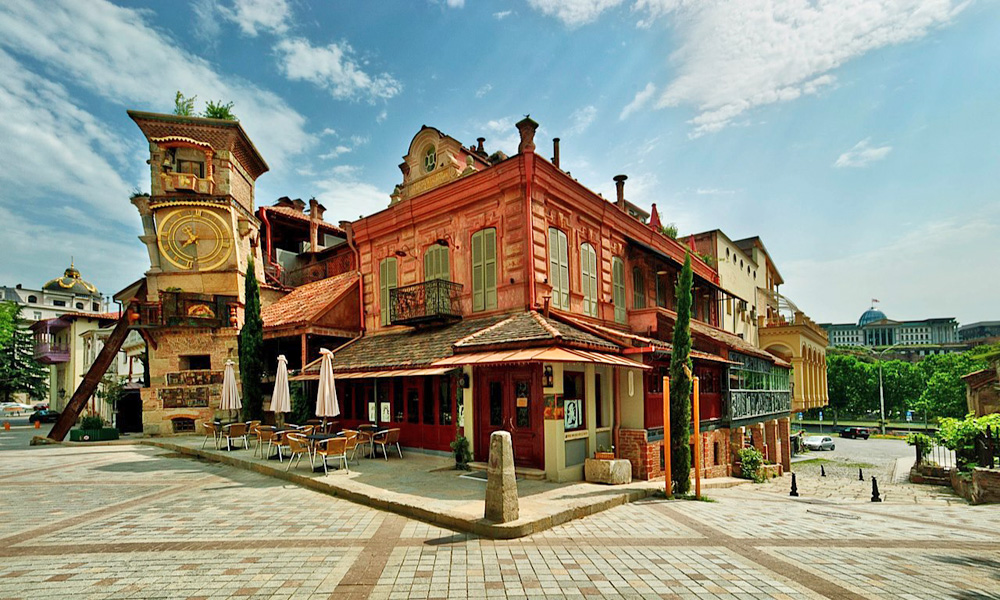
Tucked into a tight, cobblestone bend of Shavteli Street next to the city’s oldest surviving church, this wonderfully bizarre, leaning tower looks like something straight out of a storybook.
- What it is famous for: Its deliberately chaotic architectural assembly and its mechanical angel puppet show. Handcrafted by master puppeteer Rezo Gabriadze in 2010 out of hundreds of pieces of found stone and scrap wood, the tower features a tiny golden-winged angel that emerges from a window at the strike of every hour to ring a brass bell. Twice a day at noon and 7 PM, a small mechanical puppet theater opens at the base to show a brief, touching cycle titled “The Circle of Life.”
9. Dry Bridge Flea Market
The Open-Air Urban Bazaar of Soviet Relics and Antique Assets
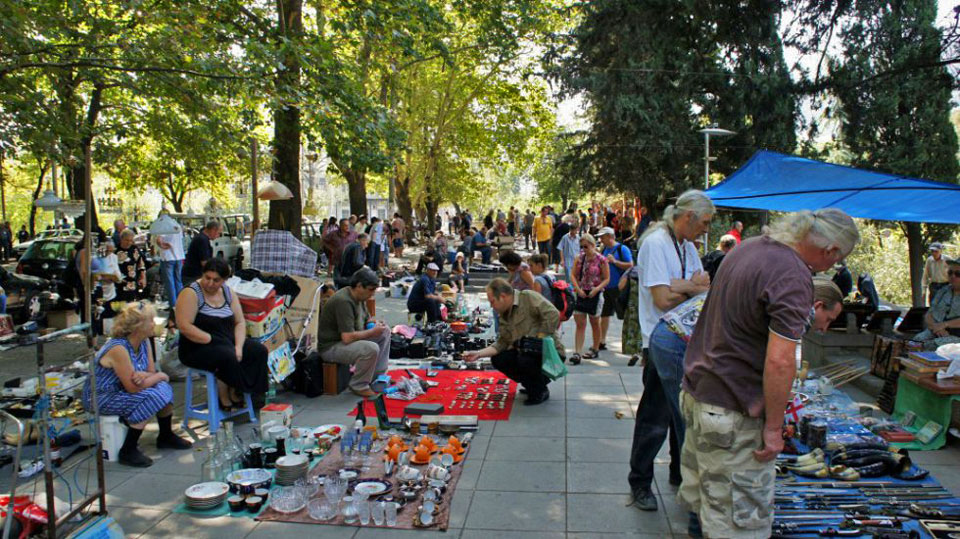
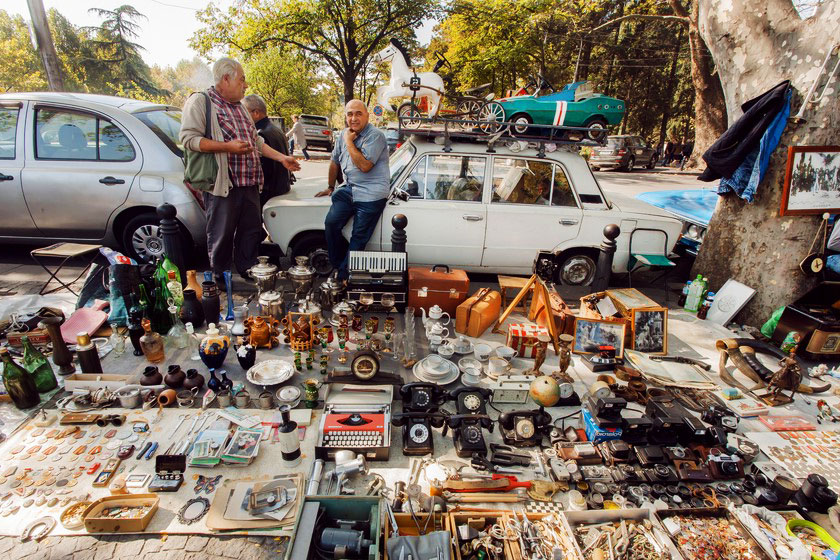
Spreading across the tree-shaded paths and concrete walkways of a 19th-century river bridge block, this daily open-air market is a paradise for vintage collectors and history buffs.
- What it is famous for: Its vast, sprawling display of authentic Soviet memorabilia, antique daggers, and vintage cameras. Born in the economic hardships of the early 1990s when locals sold family heirlooms to survive, the market has evolved into a thriving cultural hub. Vendors lay out blankets on the ground displaying everything from old brass samovars and military medals to vintage vinyl records, handmade jewelry, and classic Soviet propaganda posters.
10. Anchiskhati Basilica
The Sixth-Century Limestone Vault of Ancient Chants
Nestled quietly behind a simple stone wall on the historic thoroughfare of Shavteli Street, this modest, three-aisled hall church is the oldest surviving house of worship in Tbilisi.
- What it is famous for: Its fourteen centuries of untouched limestone masonry and rare early medieval frescoes. Built by King Dachi of Iberia around 522 AD after he made Tbilisi his capital, the church features massive, weathered stone blocks that have survived centuries of Persian and Ottoman invasions. The dark, intimate interior is highly revered for its acoustics, where visitors can listen to the ancient polyphonic choir chants that form the bedrock of Georgia’s musical heritage.
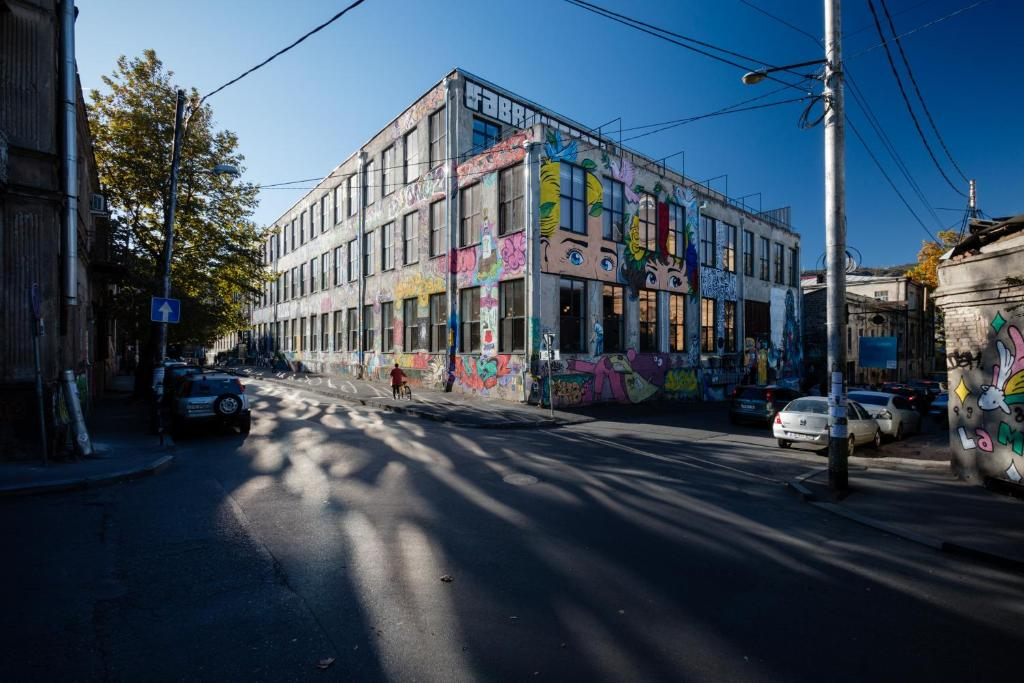
11. Fabrika
The Industrial Concrete Matrix of Alternative Youth Culture
Occupying a massive, repurposed Soviet-era sewing factory block within the historic Marjanishvili neighborhood on the left bank of the river, this high-concept urban space is the hub of creative youth.
- What it is famous for: Being the premier creative co-working and social ecosystem of alternative Tbilisi. The brutalist concrete structure has been transformed into a vibrant cultural center, its raw walls covered in large street-art murals and graffiti tags. The sprawling open-air inner courtyard is lined with independent clothing boutiques, artisanal burger bars, vinyl record stores, and alternative cafes, making it the perfect spot to mingle with local designers and artists.