
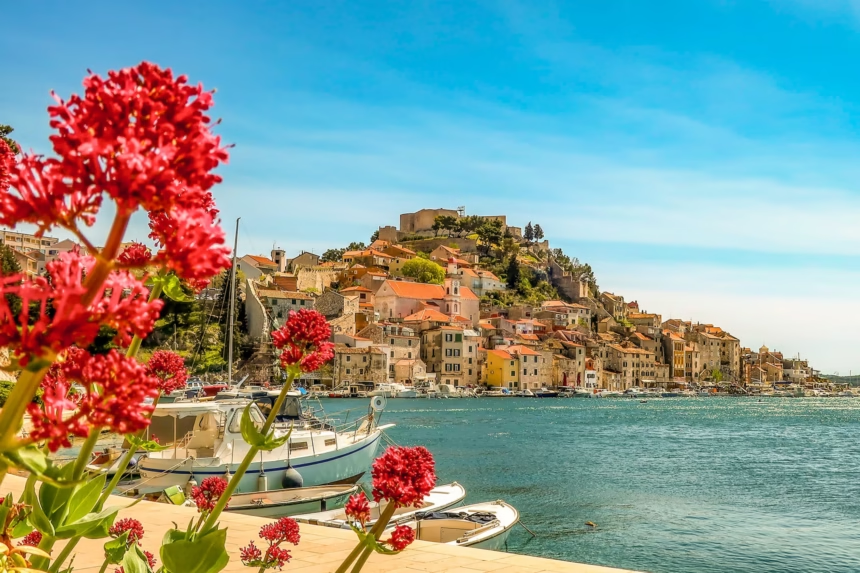
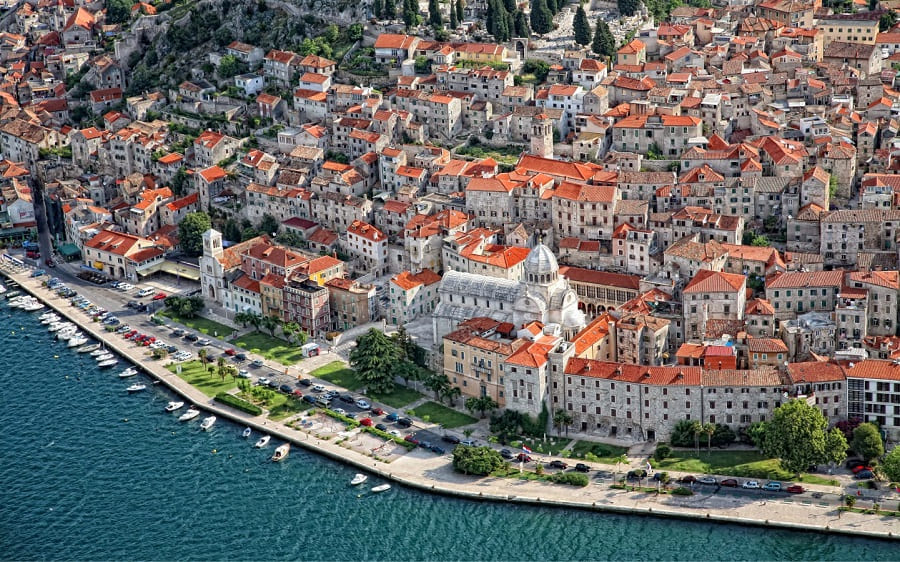
Šibenik, sweeping grandly down the rugged, sun-drenched limestone slopes of northern Dalmatia into the protected waters of the Krka River estuary, operates on a magnificent, water-facing layout that distinguishes it from almost every other major city on the Adriatic coast.
Unlike Zadar, Split, or Pula, which began their urban lives as planned Roman settlements, Šibenik stands proud as the oldest native Slavic-founded town on the Adriatic shores, originally mentioned in 1066 by the Croatian King Petar Krešimir IV.
Today, Šibenik presents a striking urban layout where a vertical labyrinth of narrow, stone-paved alleys and over 2,800 historic stone stairways cascade down toward a sleek, palm-fringed seaside promenade.
Because the city was heavily fortified by Venetian engineers to withstand repeated, brutal Ottoman military sieges, it boasts an unmatched defensive ring of four separate hilltop castles.
Famous for its slow-braised veal clay-pot dishes, baked Adriatic mussels harvested directly from local estuary shelves, sharp regional Babić red wines, and a proud, stone-carved maritime lifestyle.
1. Cathedral of St. James (Katedrala Sv. Jakova)
The Monumental White Stone Sovereign of Interlocking Vaults and Sculpted Heads
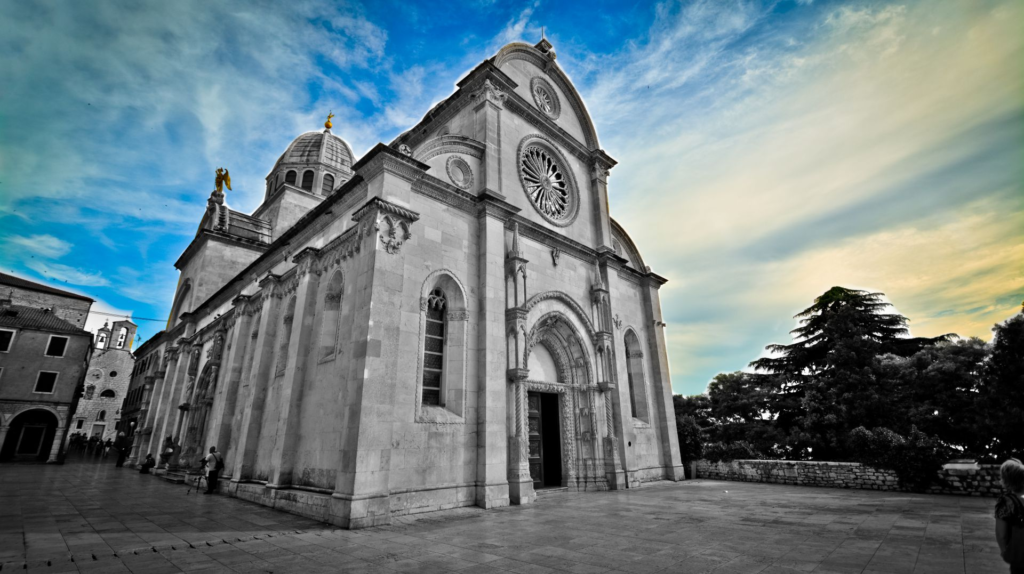
Dominating the absolute physical and architectural center of Šibenik’s waterfront plaza, this towering, 15th-century Renaissance cathedral stands proud as one of the most brilliant and innovative structural engineering triumphs in Europe.
- What it is famous for: Being a protected UNESCO World Heritage site constructed entirely of interlocking stone slabs without a single piece of wood or brick mortar. Designed by visionary master builders Juraj Dalmatinac (Giorgio da Sebenico) and Nikola Firentinac, the church features a unique dome assembly system using grooved stone panels that slide together like puzzle pieces. The exterior is globally legendary for its remarkable frieze of 71 sculpted stone heads, each capturing the highly expressive, hyper-realistic facial features of anonymous 15th-century local citizens, fishermen, and peasants.
2. St. Michael’s Fortress (Tvrđava Sv. Mihovila)
The Towering Limestone Cradle of Panoramic Cliff-Top Open-Air Stages
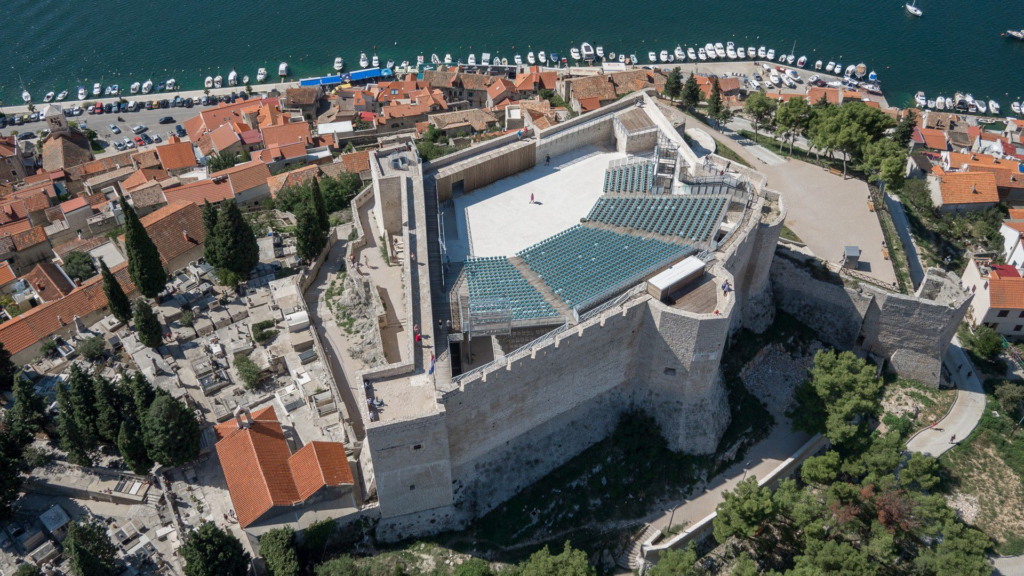
Perched dramatically on a sheer, 70-meter-high rocky hill spine rising directly out of the immediate center of the old town’s vertical stone labyrinth, this medieval castle is the literal birthplace of Šibenik.
- What it is famous for: Its intact, 13th-century defensive stone walls and its modern transformation into one of the most spectacular open-air concert arenas in Europe. Originally established as a royal citadel to shield the early Croatian kingdom from naval raids, the fortress features a rugged, crenellated stone profile. Today, its inner courtyard has been outfitted with an award-winning 1,000-seat amphitheater stage, allowing travelers to sit beneath the stars to watch global music acts while taking in a breathtaking look across the estuary.
3. St. Nicholas Fortress (Tvrđava Sv. Nikole)
The Arrowhead Island Sentinel of the St. Anthony Channel Checkpoints
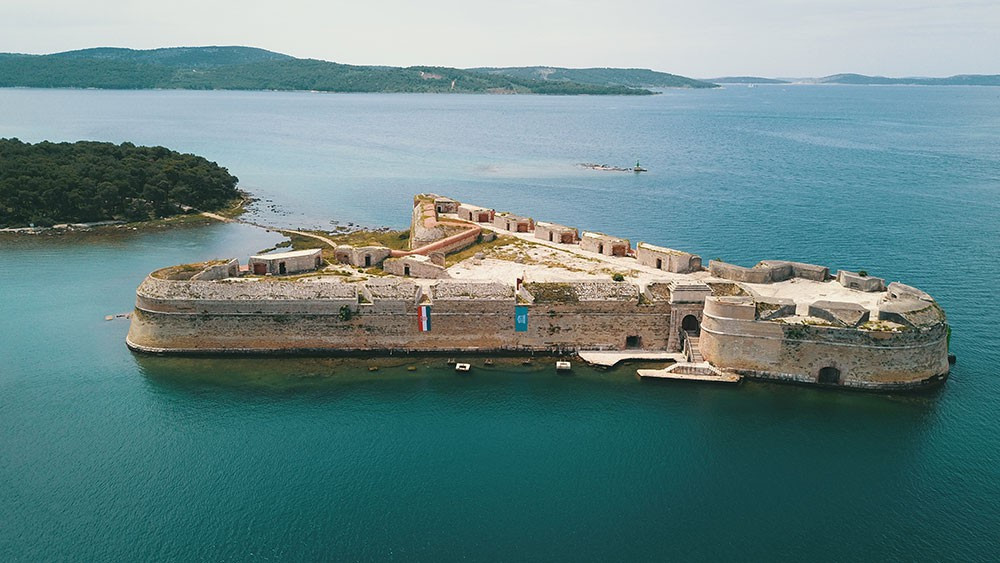
Guarding the narrow, rocky mouth of the St. Anthony Channel roughly 4 kilometers west of the downtown core, this unique, isolated marine castle sits completely surrounded by water.
- What it is famous for: Its extraordinary, triangular arrowhead defensive layout and its status as a UNESCO-protected Venetian fortification masterpiece. Built in the 16th century by the famous military engineer Giangirolamo Sanmicheli to defend Šibenik’s wealthy port from Ottoman naval attacks, the fort was constructed out of brick and stone to withstand heavy heavy cannon fire. The fort proved so visually terrifying and formidable that enemy fleets never dared to test its harbor defenses. Visitors can access its stone vaults via organized tourist boat excursions navigating the channel.
4. Barone Fortress (Tvrđava Barone)
The Bastion Outpost of Augmented Reality Siege Battles and Valley Views
Perched elegantly on a high hill ridge elevated directly behind the old town streets, this compact, 17th-century star-shaped fortification represents a triumph of emergency civil engineering.
- What it is famous for: Its history as a critical defense line during the Cretan War and its cutting-edge use of digital augmented reality storytelling. When an overwhelming Ottoman army approached the city in 1646, the citizens of Šibenik constructed this bastion out of solid stone in less than two months, naming it after the German baron who led the defenses. Today, visitors can walk the high grass-and-stone ramparts using special smart-glasses to experience a high-tech digital re-enactment of the historic 1647 siege sweeping across the modern valleys below.
5. St. John’s Fortress (Tvrđava Sv. Ivana / Tanaja)
The Star-Shaped High-Mountain Citadel of Hollywood Cinematic Backdrops
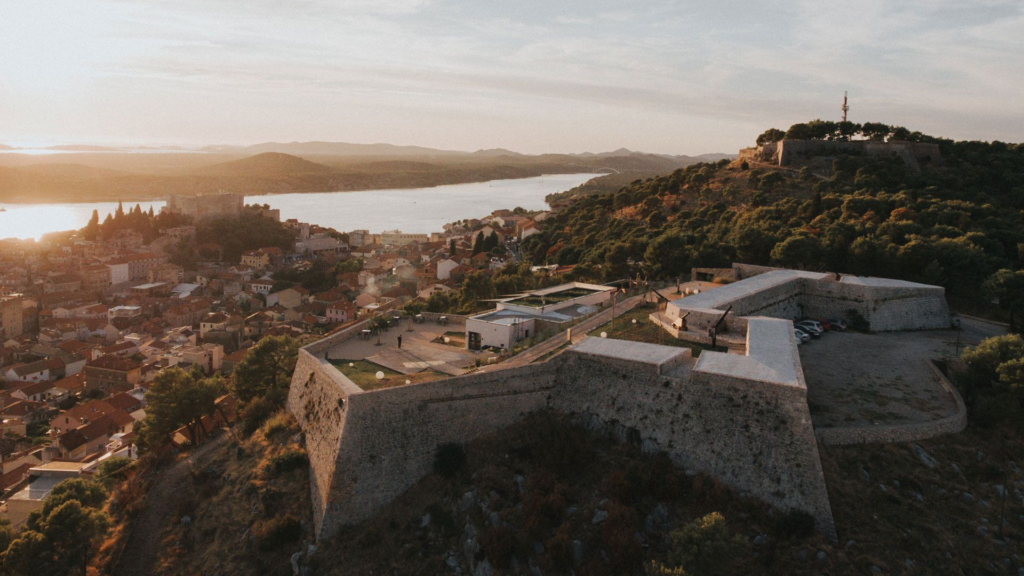
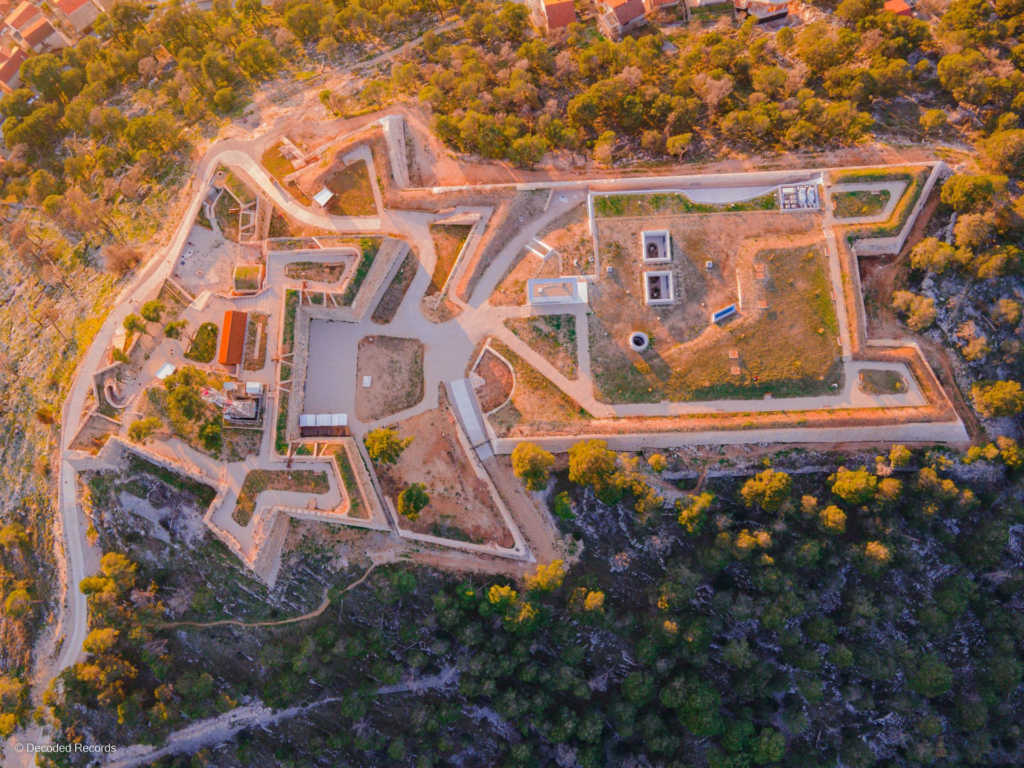
Commanding the absolute highest mountain peak overlooking the city’s complex multi-fortress defensive ring, this massive, 115-meter-high star-shaped stone outpost dominates the skyline.
- What it is famous for: Being the largest fortress in Šibenik, a critical shield that broke the back of historical Ottoman armies, and a filming location for Game of Thrones. Constructed simultaneously with Barone Fortress in 1646 by desperate locals, its complex star-shaped northern walls were built to absorb direct, heavy bombardments. Fully restored after decades of neglect, the sprawling stone complex now serves as a high-end educational campus and historical viewing deck, known globally by fantasy fans as the fighting pits of Meereen.
6. The Civic Loggia & Town Hall
The Venetian Renaissance Palace of Balanced Columns and Open-Air Cafes
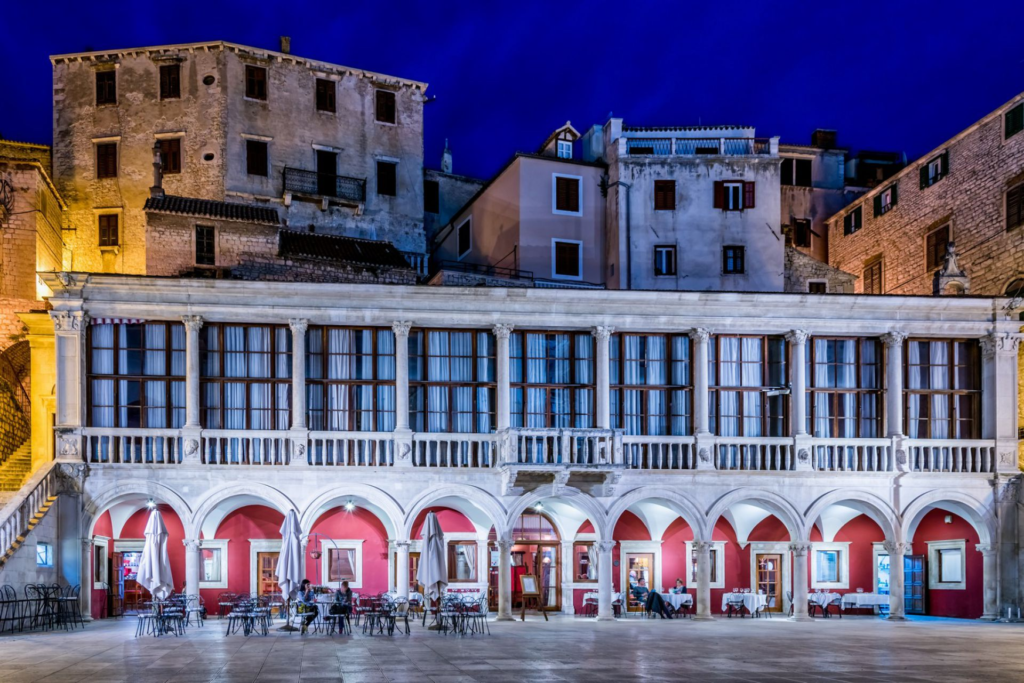
Commanding a prominent civic location directly across the stone-paved main square from the northern facade of St. James Cathedral, this elegant, two-story building is a monument to Venetian administrative design.
- What it is famous for: Its gorgeous ground-floor open portico featuring nine classical arches supported by slender stone columns. Built between 1533 and 1546 by Sanmicheli, the loggia functioned as the administrative heart of the city where local magistrates met to discuss state business. Although completely destroyed during an air raid in World War II, it was meticulously rebuilt stone-by-stone using original drawings, capturing the refined Renaissance elegance of the historic square.
7. Krka National Park
The Emerald Travertine Waterway of Seven Cascades and Floating Walkways
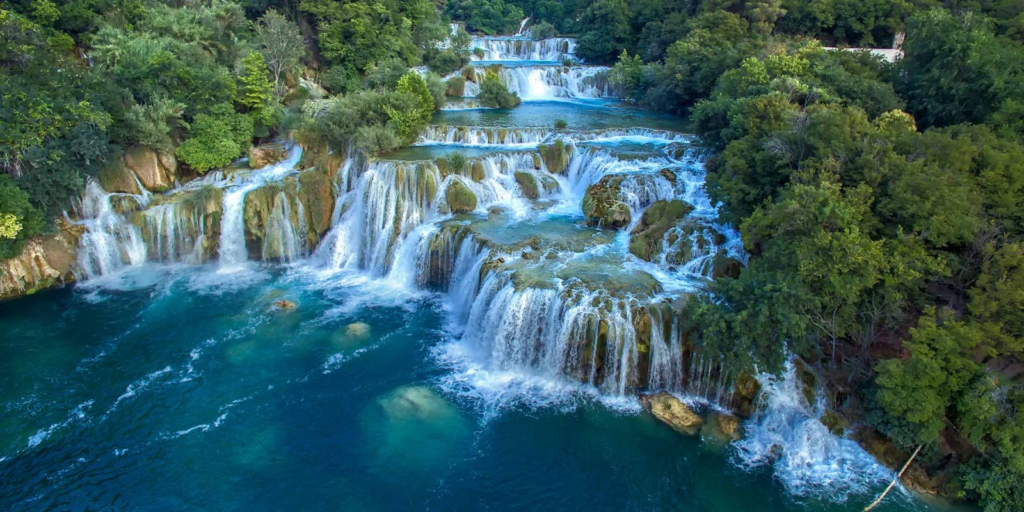
Situated just 10 kilometers north of the city where the Krka River carves a spectacular path through deep limestone canyons, this vast, 109-square-kilometer reserve is a natural paradise.
- What it is famous for: Its series of seven massive, roaring travertine limestone waterfalls and its network of wooden boardwalk trails. The jewel of the park is Skradinski Buk, a massive natural pool where the river cascades down a series of 17 separate stone shelves over a total drop of 45 meters. Visitors can walk the shade of old watermills, explore dense oak forests, and take boat tours up the turquoise river channels to visit the peaceful Visovac Monastic Island tucked into the canyon lakes.
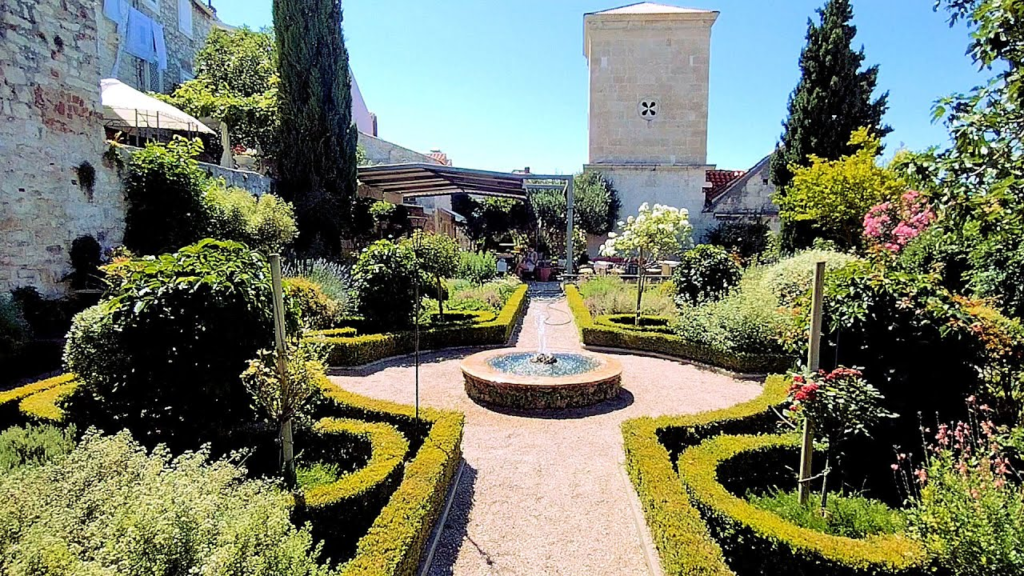
8. St. Lawrence Monastery Mediterranean Garden (Sv. Lovre)
The Secret Cloister Sanctuary of Healing Thyme and Ancient Fig Trees
Tucked quietly away within the dense, vertical matrix of residential stone buildings along the steep path leading up to St. Michael’s Fortress, this hidden oasis is a horticultural gem.
- What it is famous for: Being a rare, masterfully restored medieval monastery garden following the strict geometric layouts of traditional Franciscan herbology. Abandoned for almost a century, the garden was completely revitalized in 2007 by renowned landscape architect Dragutin Kiš. The tranquil inner courtyard features a classic central stone fountain surrounded by four symmetrical quadrants growing medicinal wild sage, rosemary, and thyme, offering a breezy, quiet escape filled with the scent of Mediterranean herbs.
9. The Channel of St. Anthony (Kanal Sv. Ante)
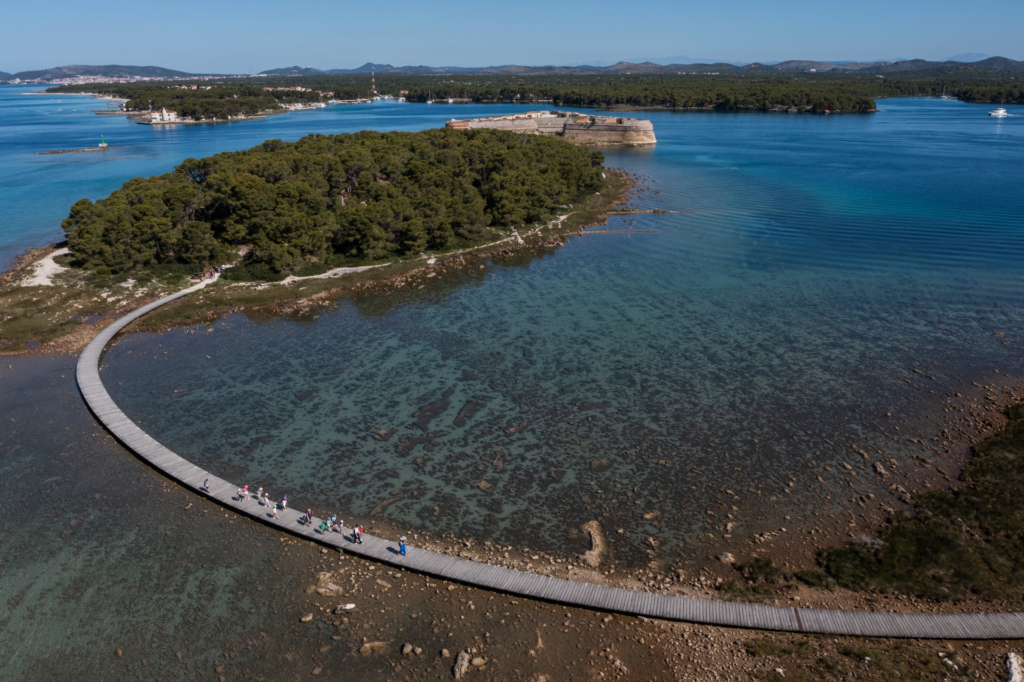
The Craggy Karst Sea-Gate of Hidden Marine Caves and Boardwalk Trails
Forming the dramatic, 2.5-kilometer-long natural water corridor that connects Šibenik’s landlocked inner harbor basin directly with the open waters of the Adriatic Sea, this rocky channel is an outdoor adventure hub.
- What it is famous for: Its sheer limestone canyon walls, its modern pine-shaded coastal wooden boardwalk, and a hidden submarine cave. The channel functions as a scenic recreational zone lined with running paths and lookouts. A highlight along the trail is the St. Anthony Cave, a natural rocky fissure that once housed medieval hermit monks, and the nearby “Hitler’s Eyes”—a pair of dramatic subterranean naval tunnel bunker openings carved out during World War II to hide warships.
10. The Medieval Medulić Square
The Charming Stone Pocket of Venetian Wells and Artisan Workrooms
Tucked into a cozy, stone-walled pocket just a short walk inland from the primary seaside promenade avenues, this intimate, multi-level public square derives its name from local Renaissance painter Andrija Medulić.
- What it is famous for: Its two beautifully carved historic stone well heads and its lively, artistic atmosphere. During the golden age of Venetian trade, this square functioned as a bustling marketplace and a center for master stone carvers and silversmiths. Today, the commercial markets have been replaced by a sophisticated European atmosphere where travelers sit at open-air wine bars and outdoor cafes, listening to traditional a cappella klapa singers performing beneath the old stone windows.
11. St. John’s Church (Crkva Sv. Ivana)
The Gothic-Renaissance Bell Tower Matrix of Mechanical Mechanical Clock Faces
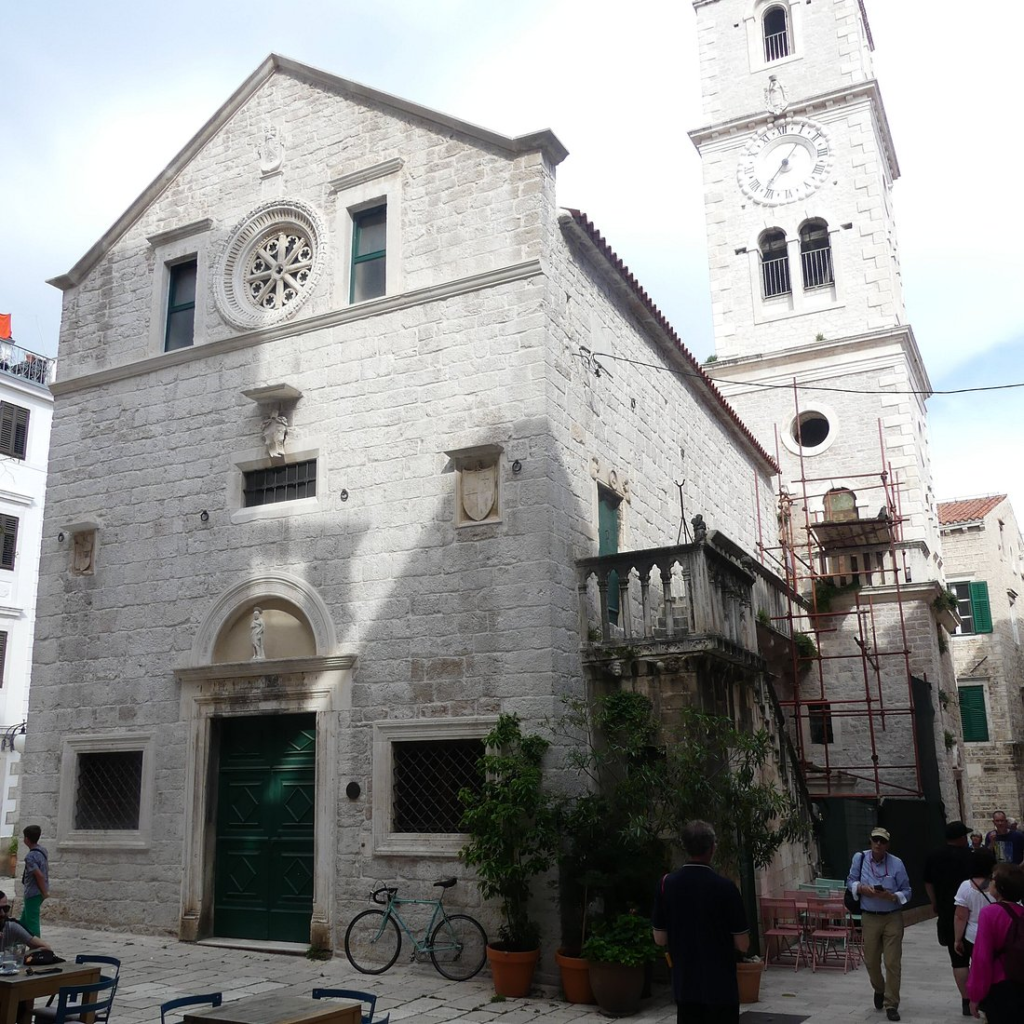
Commanding a beautiful location at the intersection of two major historic walking streets in the heart of the old craft quarter, this unique, 15th-century stone church is a monument to local artistry.
- What it is famous for: Its monumental exterior stone staircase designed by Juraj Dalmatinac and its historic mechanical clock face. Built by combining Gothic elements with refined Renaissance carvings, the church features a relief of a lamb on its rear wall. A highlight of the structure is its soaring stone bell tower, which features an eccentric, 16th-century mechanical relief clock face imported from Venice that operates on a unique 24-hour cycle rather than 12, adding a distinct historical flair to the old neighborhood.