
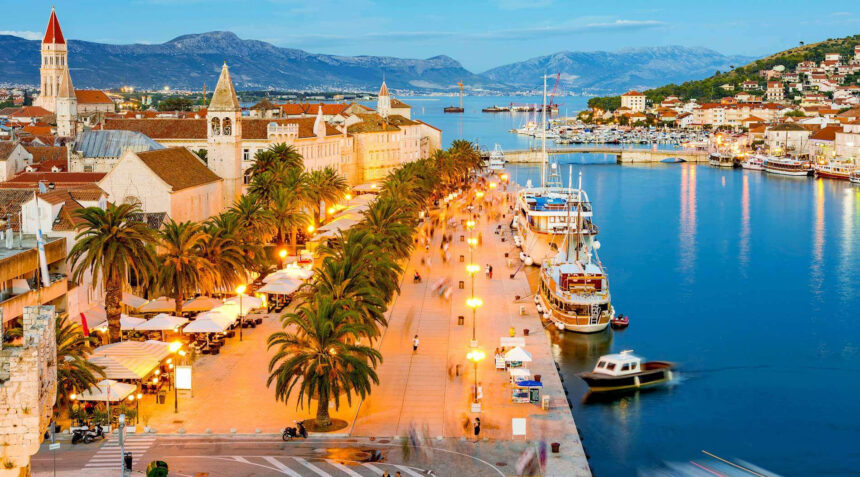
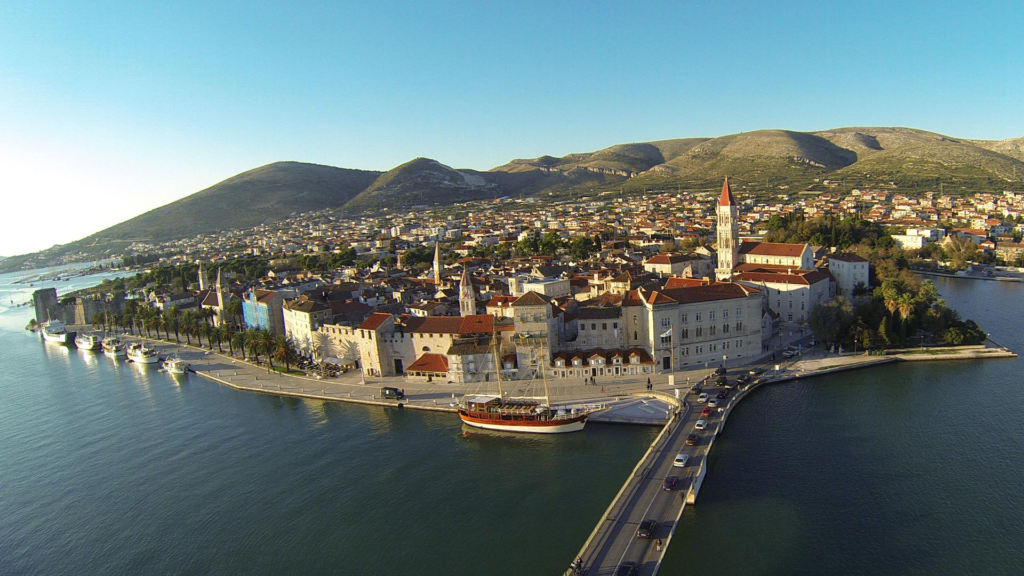
Trogir, resting spectacularly on a tiny, fortified limestone island wedged tightly into the narrow sea channel between the Croatian mainland and the larger island of Čiovo, operates on a magnificent, water-locked layout that marks it as a literal outdoor museum.
For over two millennia, it flourished under the shifting rules of Roman emperors, Croatian kings, and Hungarian sovereigns before experiencing an architectural golden age under the lengthy administrative rule of the Venetian Republic.
Today, Trogir presents a striking urban matrix where an intensely dense, unbroken grid of Romanesque, Gothic, Renaissance, and Baroque buildings is squeezed completely onto an island just 250 meters wide.
Because the town escaped major destruction over the centuries, it stands proud as the most perfectly preserved Romanesque-Gothic urban complex in all of Central Europe, earning it full protection as a UNESCO World Heritage site.
Famous for its slow-baked almond ravioli pastries (Trogirski rafioli), olive-oil-drizzled octopus salads, crisp glasses of regional Pošip white wine, and a relaxed, yachtsman lifestyle.
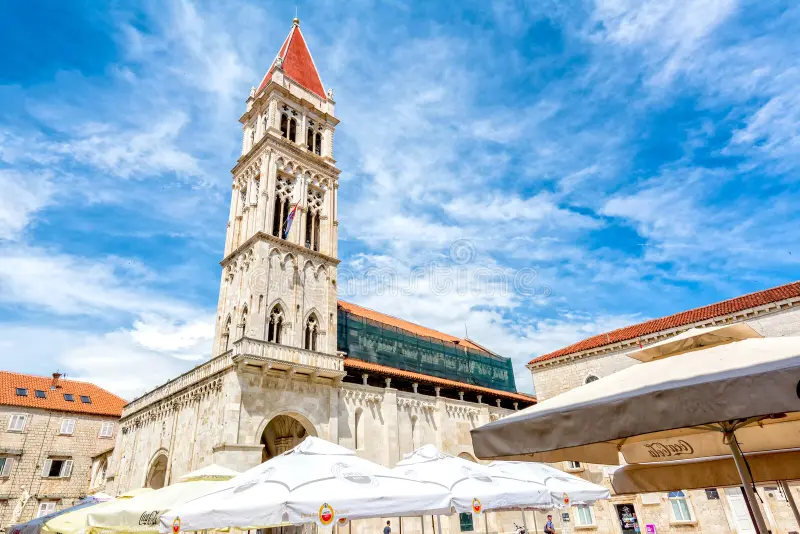
1. Cathedral of St. Lawrence (Katedrala Sv. Lovre)
The Towering Romanesque Sovereign of Master Radovan’s Lions and Soaring Bell Towers
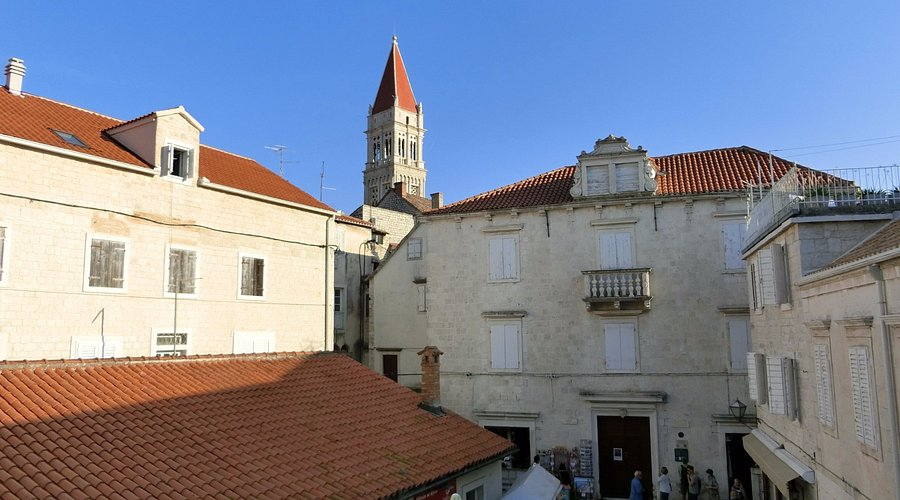
Dominating the absolute physical and architectural center of Trogir’s central stone plaza, this monumental, three-aisled basilica stands proud as the definitive architectural icon of the city.
- What it is famous for: Its extraordinary, 13th-century stone Romanesque portal sculpted by Master Radovan and its multi-century Bell Tower. The main entry portal is widely considered the greatest masterpiece of medieval stone carving in Croatia, featuring highly detailed reliefs of Adam and Eve standing on the backs of crouching stone lions. Visitors can walk the interior to admire the spectacular Chapel of Blessed John of Trogir before climbing the 47-meter-tall bell tower, which displays a fascinating layer-cake design where each floor was built in a different architectural style (Gothic, Renaissance, and Baroque).
2. Kamerlengo Castle (Kaštel Kamerlengo)
The Angular Waterfront Bastion of Venetian Cannon Promenades and Starlit Concerts
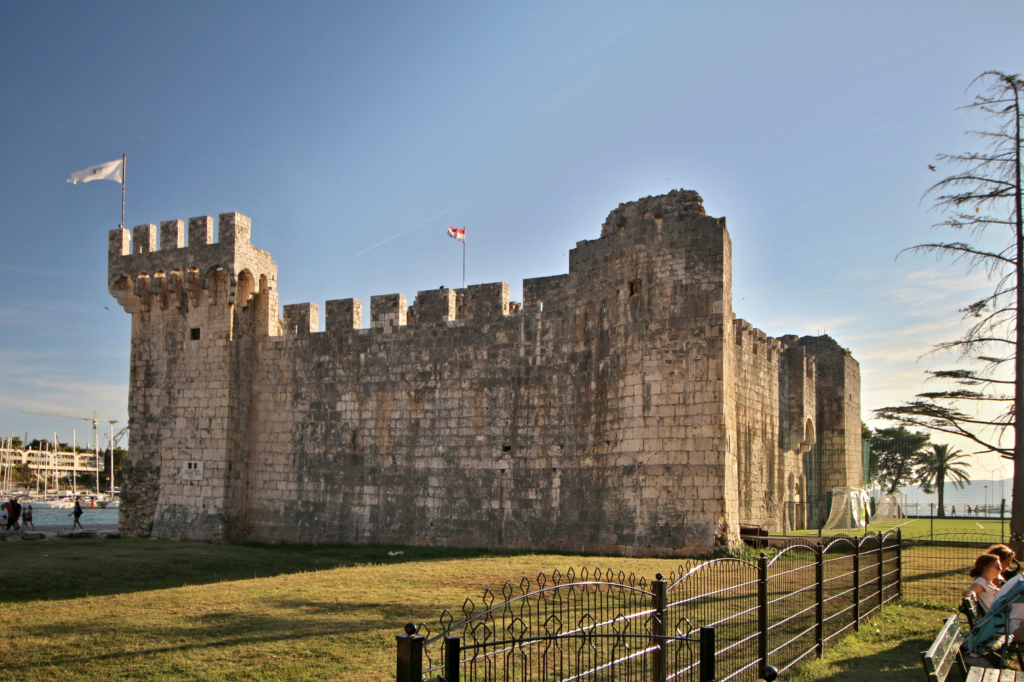
Commanding the absolute southwestern point of the island’s fortified layout, this rugged, irregular stone fortress looks out over the shipping channels and the palm-fringed waterfront.
- What it is famous for: Its intact, 15th-century high curtain walls, a polygonal watchtower, and its modern role as a dramatic open-air cinema and concert arena. Built by the Venetian Republic immediately after they purchased Trogir in 1420, the fortress functioned as a secure naval base to house the Venetian military governor (Kamerlengo). Visitors can climb the steep stone steps to the top of the ramparts to view original iron cannon placements and take in an unobstructed look over the harbor.
3. The Trogir Riva
The Marble-Paved Shipping Runway of Luxury Yachts and Palm-Fringed Walks
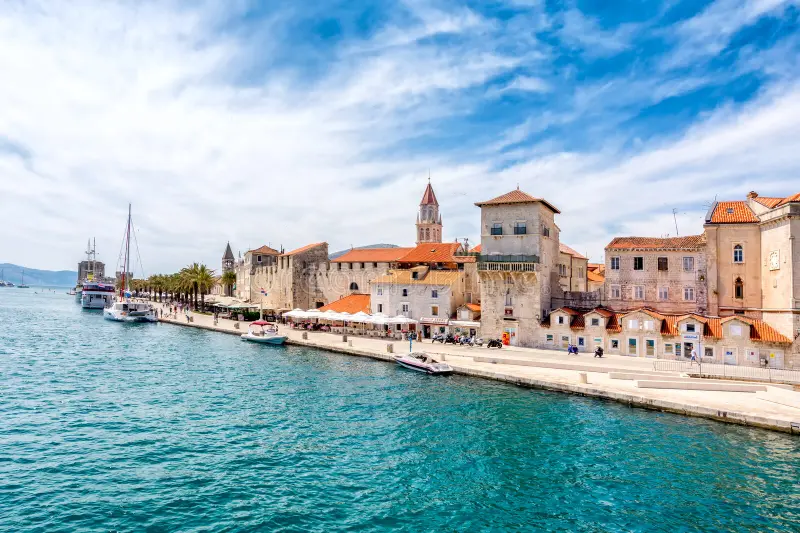
Stretching smoothly along the entire southern waterfront wall of the island, this wide, stone-paved pedestrian avenue serves as the definitive living room and social runway of Trogir.
- What it is famous for: Its sea of sleek mega-yachts, towering palm trees, and being the ultimate local venue for the art of pomalo (unhurried relaxation). Completely closed to automobile traffic, the Riva is lined on one side by the island’s old medieval stone walls and on the other by a floating dock system packed with international sailing vessels. Travelers and locals gather here by the thousands to sit at open-air cocktail terraces, dine on fresh seafood at outdoor taverns, and enjoy the coastal breeze at sunset.
4. The Grand Cipiko Palace
The Ornate Venetian Gothic Mansion of Triple-Triforim Windows and Carved Angels
Positioned gracefully directly across the stone-paved main square from the main entrance of St. Lawrence Cathedral, this large, interconnected block of historic stone buildings is an architectural gem.
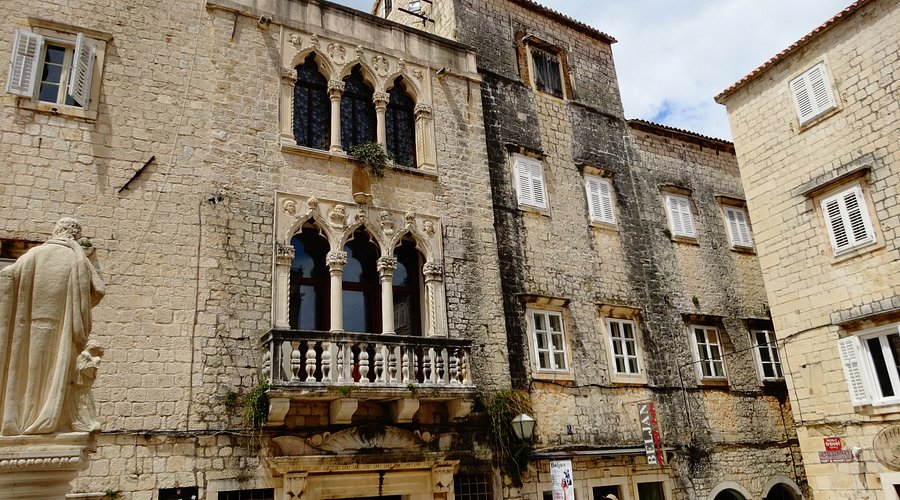
- What it is famous for: Its spectacular Venetian-Gothic triforium (three-light) windows and its collection of historical family artifacts. Created by the wealthy, noble Cipiko family during the 15th century by linking several older medieval houses together, the palace features a front facade designed by famous local masters like Koriolan Cipiko. The stone windows are decorated with finely carved angels, family crests, and floral motifs, reflecting the immense wealth of Trogir’s golden merchant era.
5. The Civic Loggia & Clock Tower
The Open-Air Renaissance Palace of Judicial Reliefs and Red-Domed Timepieces
Commanding a prominent civic location on the southern edge of the main town square, this elegant, column-fronted structure has functioned as the civic heart of Trogir since the 14th century.
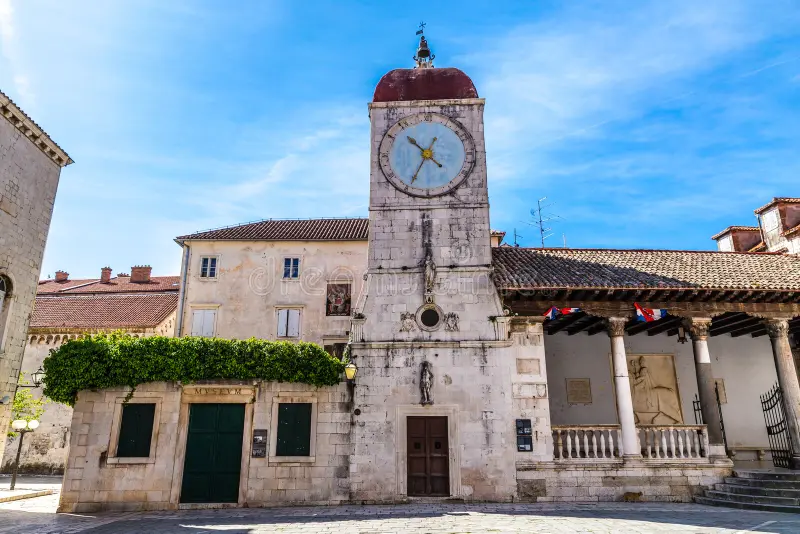
- What it is famous for: Its collection of Renaissance stone reliefs by Nikola Firentinac and its attached, red-domed City Clock Tower. Supported by six classical columns recycled from ancient Roman ruins, the open-air Loggia functioned as a medieval courtroom where judges handed down sentences. The back wall features a famous stone relief of justice alongside a monument to local ban Petar Berislavić, while the neighboring clock tower stands proud with its vibrant, Mediterranean-style red tiled dome.
6. St. Mark’s Tower (Kula Sv. Marka)
The Circular Renaissance Cannon Shield of Waterfront Fortifications
Occupying the absolute northwestern tip of the island’s old defensive ring, this stocky, circular stone fortress tower stands right at the edge of the pedestrian walkways.
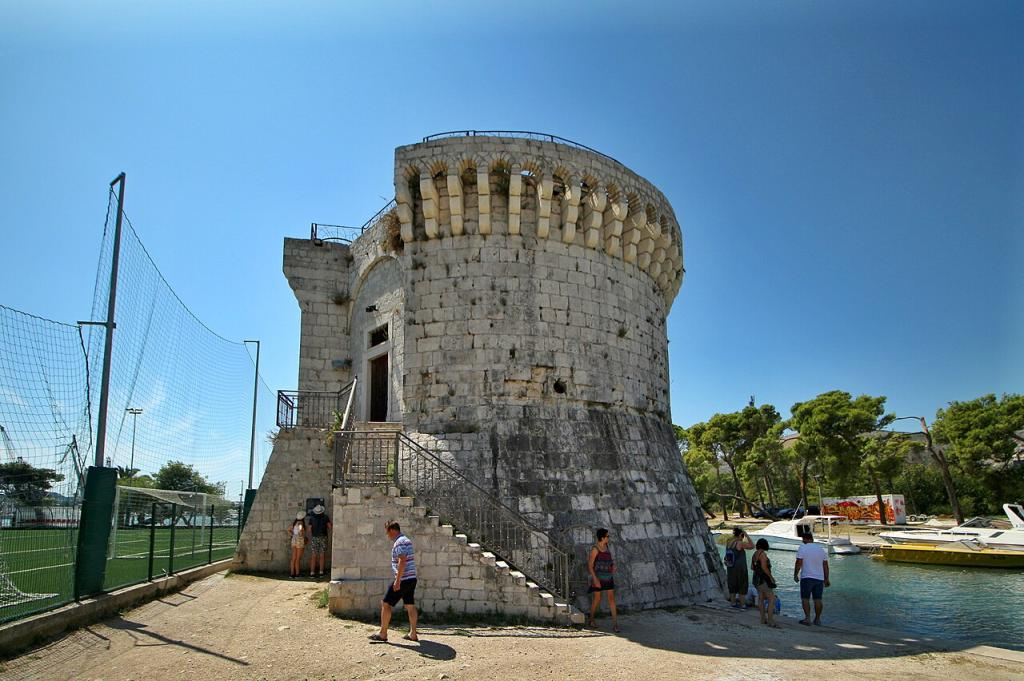
- What it is famous for: Its massive, circular defensive walls designed specifically to absorb and repel heavy heavy cannon bombardments. Constructed in the late 15th century during the height of the Venetian-Ottoman conflicts, the tower was built to bridge the gap between Kamerlengo Castle and the mainland entry gates. Today, the roof of the tower has been converted into a unique open-air stage, and its rugged stone profile provides a picturesque backdrop for the public parklands that run along the northern channel shores.
7. The Town Gate & City Walls
The Classical Limestone Gate-Sentinels of Historic Moat Crossings
Tracing the northern and southern bottleneck entries where bridges connect the island citadel to the mainland and Čiovo, these historic portals protect Trogir’s old borders.
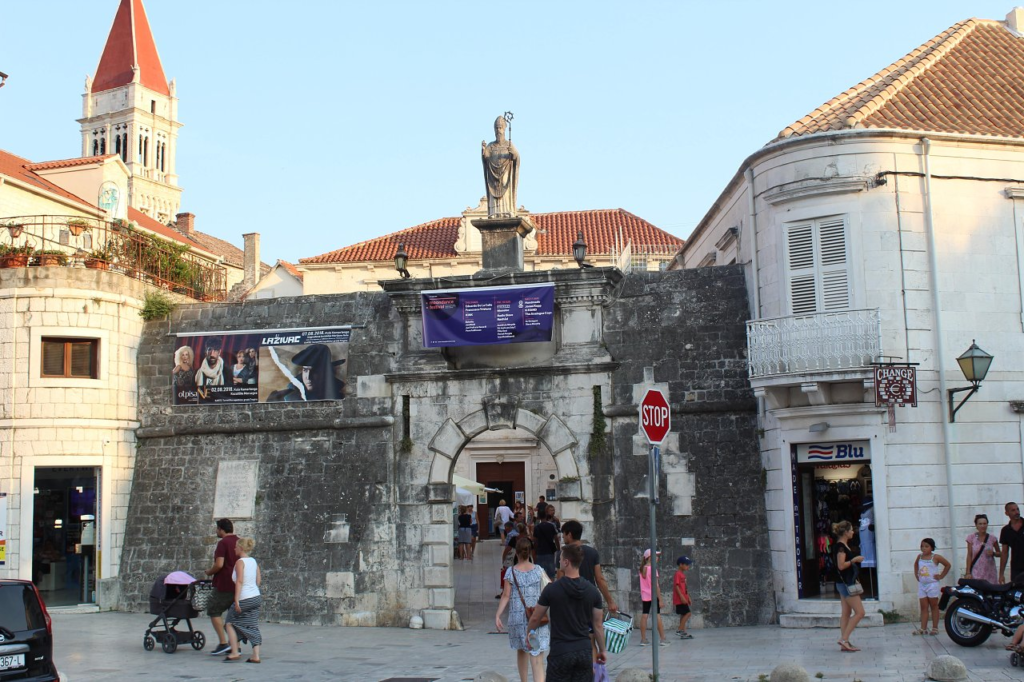
- What it is famous for: Its intact Renaissance Land Gate (Kopnena Vrata) topped with a stone statue of Blessed John, the city’s patron saint. Built in the 17th century, the Land Gate once featured a wooden drawbridge spanning a deep defensive marine moat. On the opposite side of the island sits the Sea Gate, a classical stone archway featuring its original wooden doors reinforced with heavy iron studs, located right next to an open stone loggia where sailors were forced to sleep if they arrived after the city doors were locked at night.
8. Monastery of St. Nicholas (Samostan Sv. Nikole)
The Silent Benedictine Sanctuary of Ancient Greek Kairos Reliefs
Tucked quietly into the narrow, shadow-filled stone alleys of the southeastern corner of the island grid, this historic Benedictine nunnery has operated continuously since its founding in 1064.
- What it is famous for: Housing the world-famous Kairos Relief, a precious 3rd-century BC orange-marble carving of the ancient Greek god of opportunity. Discovered inside a local kitchen in the 1920s, the rare Hellenistic relief depicts Kairos, the god of the “fleeting moment,” who must be caught by his long front hair lock before he slips away on his winged feet. The monastery’s secure Treasury also preserves a rich collection of gold reliquaries, historic paintings, and illuminated manuscripts protected by the cloistered sisters.
9. Town Museum (Muzej Grada Trogira)
The Baroque Garagnin-Fanfogna Palace of Aristocratic Libraries and Lapidaries
Housed inside the sprawling, multi-block rooms of the historic Garagnin-Fanfogna Palace layout immediately next to the main Land Gate entrance, this institution is a true cultural repository.
- What it is famous for: Its masterfully preserved 18th-century aristocratic library and its open-air lapidary gallery of ancient Roman inscriptions. The museum tracks the complete evolution of Trogir from its prehistoric Greek roots through its modern era. Visitors can walk the elegant Baroque salons to view period costume collections, old weapons, and original furniture, or explore the palace’s private library, which holds over 5,500 historic books and rare scientific manuscripts collected by local noblemen.
10. Church of St. Peter (Crkva Sv. Petra)
The Baroque Sanctuary of Gilded Wooden Angels and Statued Cornices
Tucked quietly behind a simple stone facade along one of the primary east-west pedestrian lanes of the old town quarter, this 14th-century church is a monument to interior Baroque art.
- What it is famous for: Its spectacular, heavily gilded Baroque wooden ceiling and its life-sized stone apostles guarding the entrance. Originally built as part of a prominent medieval monastery, the church’s interior underwent a dramatic redesign during the 1700s. Visitors can step inside to view an explosion of intricate wood carvings, golden cherubs, and detailed oil paintings, topped by an elegant stone bust of St. Peter looking down from the front doorway cornice.
11. Čiovo Island Beaches & Okrug Gornji
The Sun-Drenched Sandy Crescent of the Traditional Dalmatian Coastline
Accessed via a modern public drawbridge leading directly across the narrow sea channel from Trogir’s southern Riva, this large, Mediterranean island functions as the city’s playground.
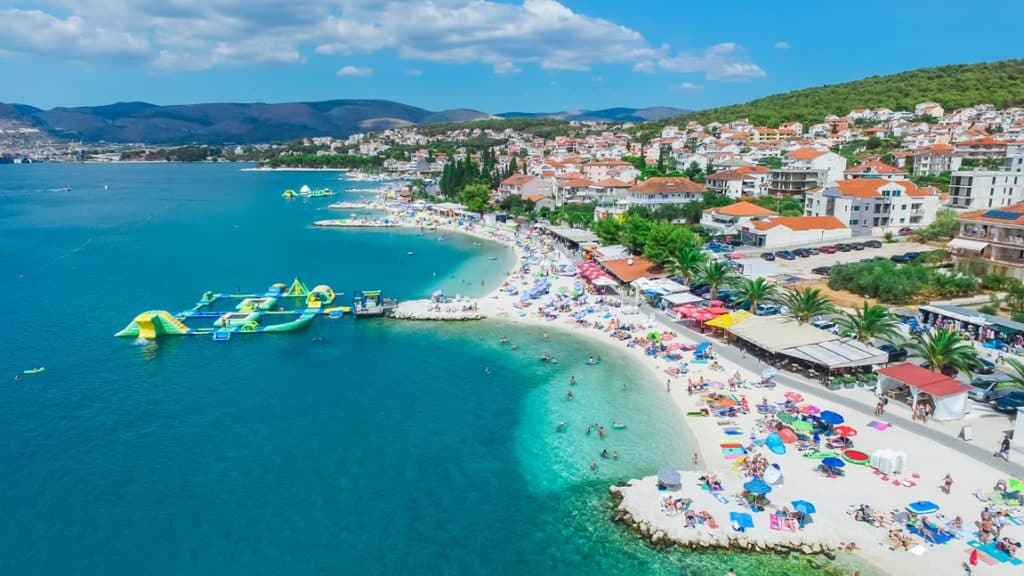
- What it is famous for: Its miles of pebbled white beaches, hidden pine-shaded coves, and its vibrant summer lifestyle scene. The jewel of the island is the 2-kilometer-long Copacabana Beach in Okrug Gornji, a bustling crescent of white pebbles packed with open-air beach clubs, pizzerias, and water sport docks. The island offers a breezy, natural escape from the dense stone architecture of the old citadel, allowing travelers to swim in the crystal-clear waters of the Adriatic after a day of historical exploring.