
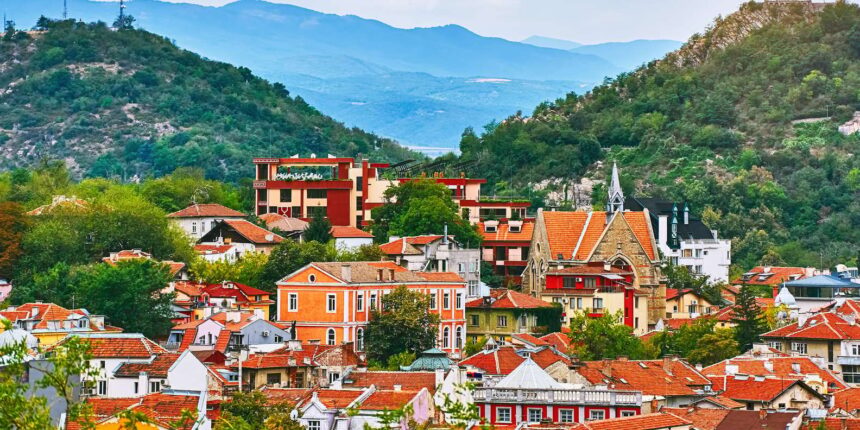
Plovdiv, sprawling smoothly across the fertile banks of the Maritsa River in southern Bulgaria, operates on a highly unique, hill-anchored layout that marks it as the oldest continuously inhabited city in Europe.
Settled more than 8,000 years ago by the Thracians, the city grew into the grand Roman metropolis of Trimontium (“The Three Hills”).
Because it occupies a vital, natural gateway slice of the Balkan Peninsula, it evolved into a highly strategic prize contested by Byzantine warriors, medieval Bulgarian tsars, and Ottoman pashas before serving as the intellectual heart of the Bulgarian National Revival.
Today, guided by its evocative modern motto, “Ancient and Eternal,” Plovdiv presents a striking urban grid where open-air Roman chariot stadiums slice directly beneath the modern pedestrian high streets.
Famous for its slow-braised pork pots (Kavarma), crispy flat sausages (Lukanka), deep regional Mavrud red wines, and the local art of Ailyak—a specific philosophy of unhurried, mindful relaxation.
1. Ancient Theatre of Philippopolis
The High-Cliff Marble Arena of Imperial Roman Grandeur
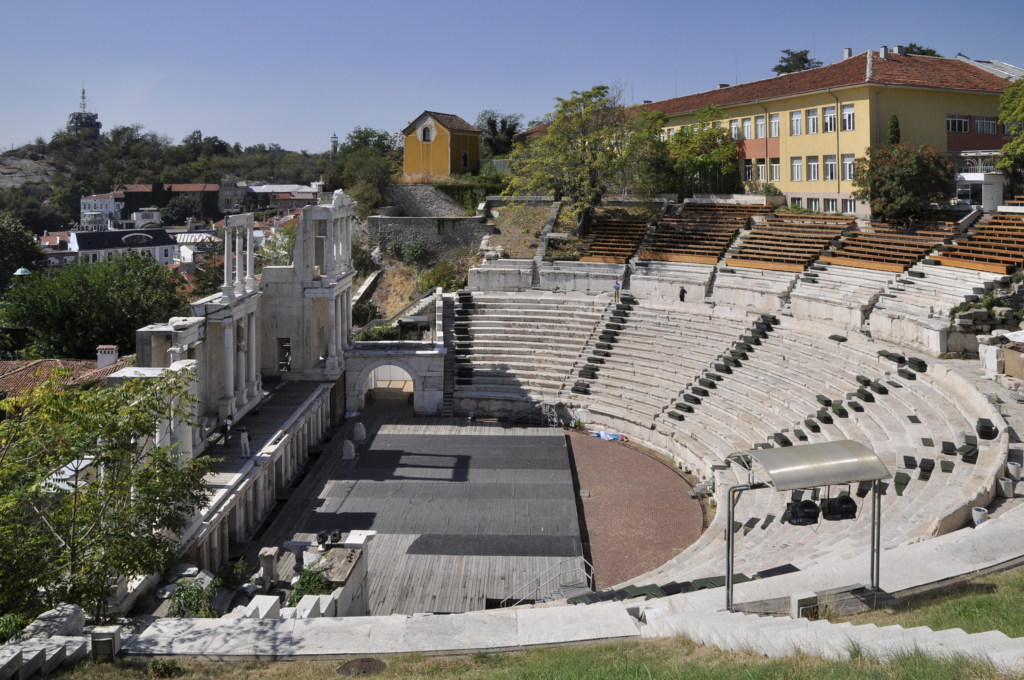
Perched spectacularly in a natural saddle between two of Plovdiv’s historic hills, this magnificent 2nd-century AD marble amphitheater stands as one of the most perfectly preserved ancient stages in the world.
- What it is famous for: Its two-story ionic columns, beautiful statues, and functioning as a spectacular active open-air performance venue. Built during the reign of Emperor Trajan, the theater could originally hold up to 7,000 spectators for theatrical plays and gladiatorial matches. Buried for centuries following an invasion, it was uncovered during a major landslide in the 1970s. Today, it serves as the ultimate crown jewel of Plovdiv, hosting world-class operas, rock concerts, and plays beneath the stars.
2. Plovdiv Old Town Architectural Reserve
The Cobblestone Labyrinth of Asymmetrical National Revival Mansions
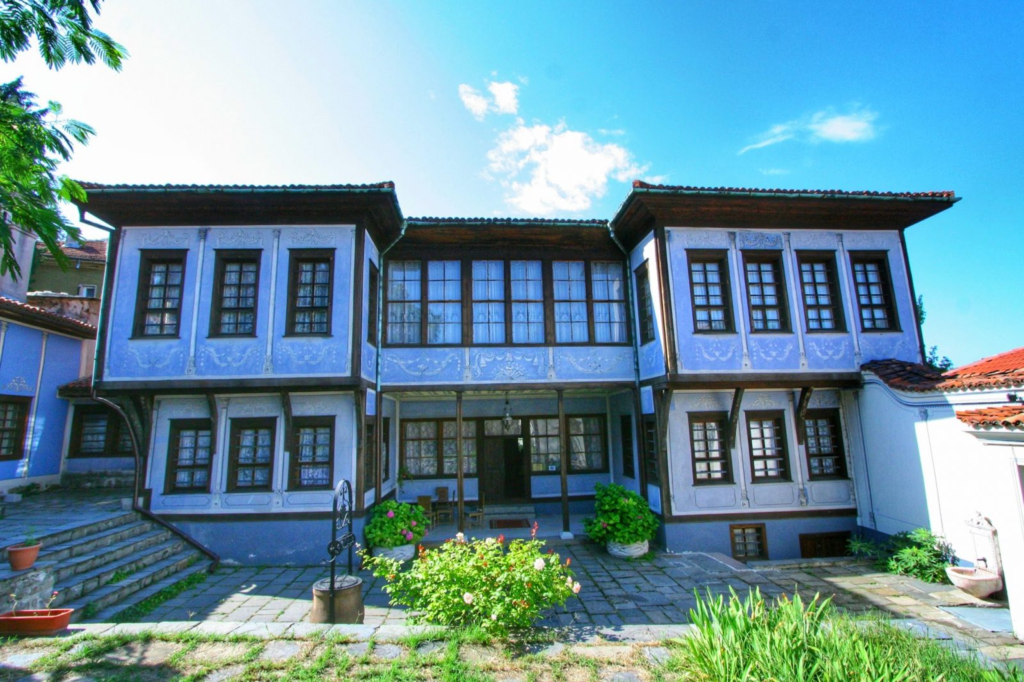
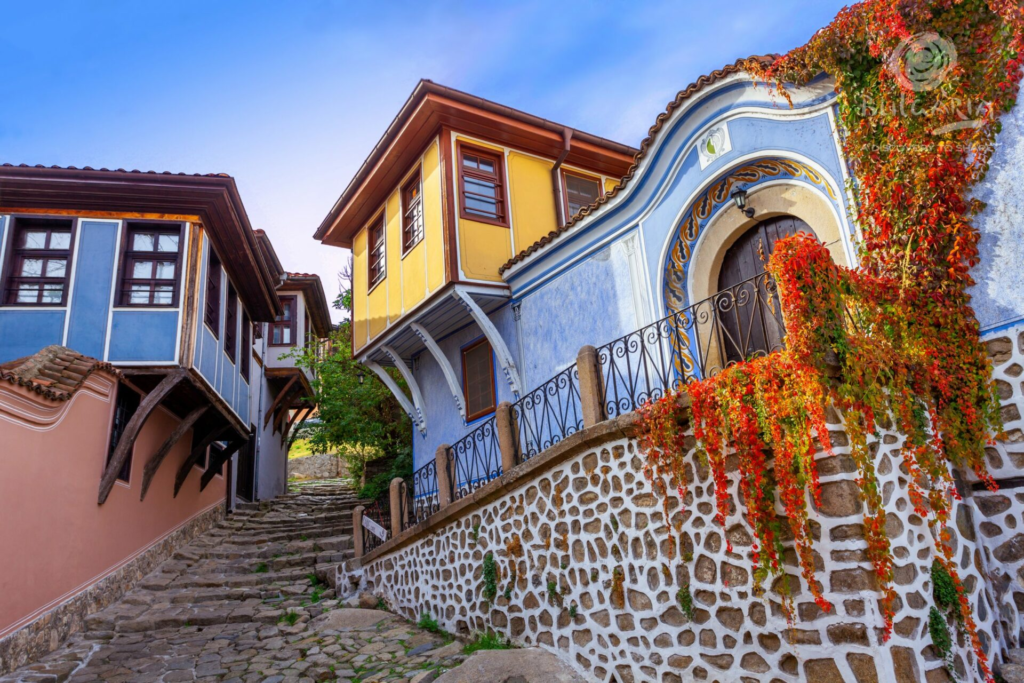
Cascading elegantly across the steep, rocky crests of Nebet Tepe, Dzhambaz Tepe, and Taxim Tepe, this historic neighborhood is a living open-air museum of 19th-century Balkan architecture.
- What it is famous for: Its winding syenite-stone streets and its massive, brightly colored wood-and-masonry merchant mansions. During the Bulgarian National Revival, wealthy local traders built grand, expressive homes painted in deep ochres, royal blues, and rich crimsons. These houses feature a unique design layout where the upper floors jut outwards over the narrow streets to maximize space, decorated with intricate hand-carved wooden ceilings, lush courtyard gardens, and hand-painted wall murals.
3. Kapana (The Trap) Creative District
The Pedestrian Labyrinth of Artisan Studios and Festive Bunting
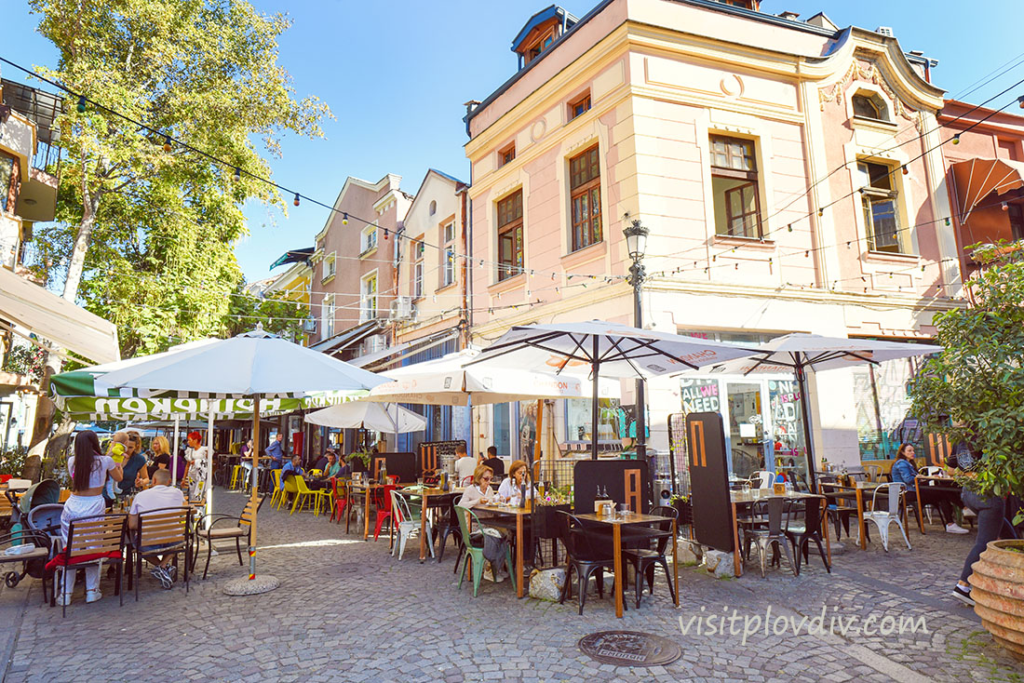
Situated just a short walk from the central civic plazas, this compact, grid-like network of narrow pedestrian lanes was originally built five centuries ago as a bustling Ottoman craftsman bazaar.
- What it is famous for: Transforming from a ruined urban zone into Bulgaria’s premier contemporary art, culinary, and bohemian lifestyle quarter. Named “The Trap” because its tight, winding streets look like a maze, Kapana is lined with independent fashion ateliers, microbreweries, specialty coffee roasters, and trendy wine bars. The streets are permanently covered in colorful hanging flags and festive bunting, creating a vibrant, high-energy open-air gallery that serves as the epicenter of Plovdiv’s youth culture.
4. Roman Stadium of Philippopolis
The Subterranean Chariot Runway Beneath the Shopping Promenades
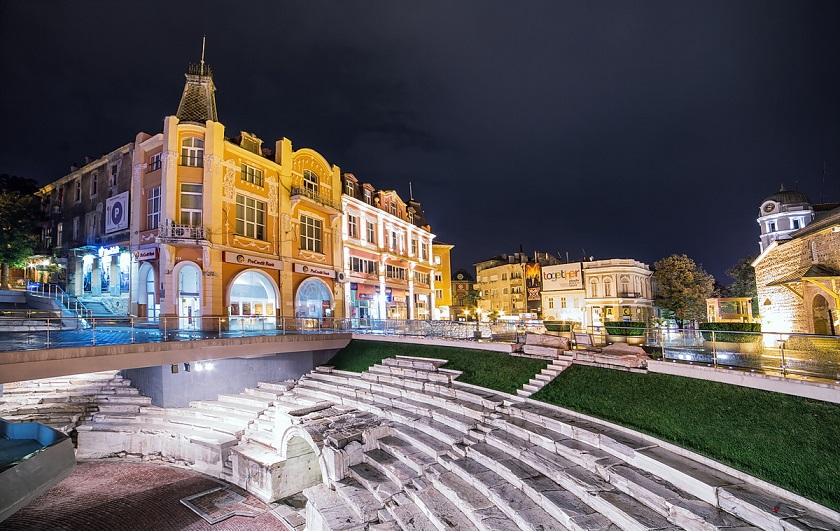
Embedded seamlessly beneath the bustling concrete foundations of Plovdiv’s primary pedestrian retail street, this colossal 2nd-century AD athletic arena is an engineering marvel.
- What it is famous for: Its intact marble spectator tiers that sit directly beneath modern glass floors and street-level plazas. Modeled after the ancient stadium of Delphi, this massive 240-meter-long sports arena was built under Emperor Hadrian to hold 30,000 citizens for high-stakes chariot races, athletic games, and wrestling matches. Today, visitors can walk down beneath the modern street level to explore the original brick vaulted entrance arches and sit on the ancient marble seats.
5. Regional Ethnographic Museum (Kuyumdzhiev House)
The Baroque Masterpiece of Wave-Curved Wood and Cultural Treasures
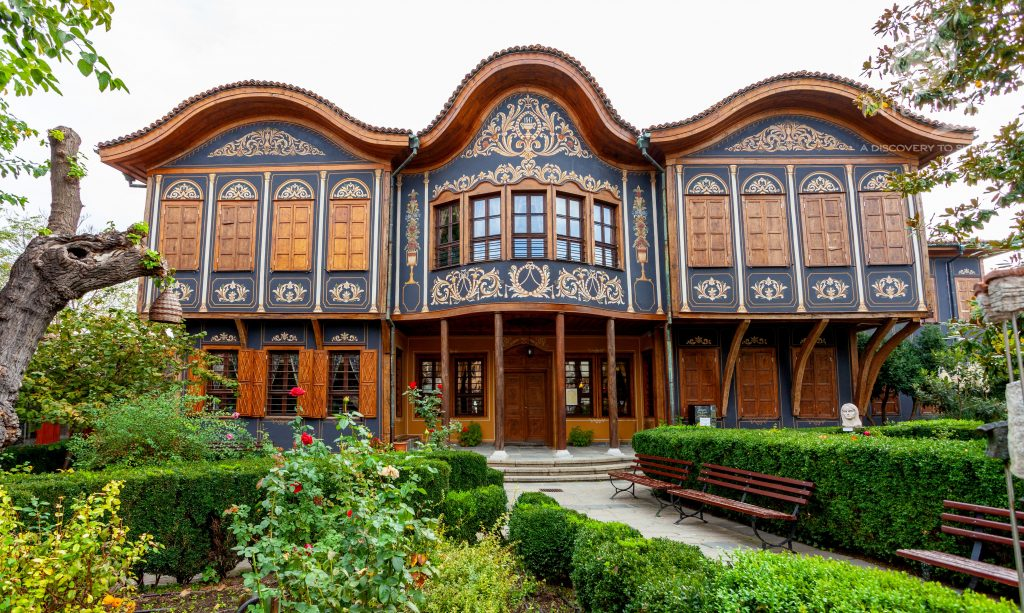
Commanding a prominent, stone-walled courtyard location near the historic Eastern Gate of the Old Town, this spectacular 1847 mansion is a true masterpiece of the Baroque style.
- What it is famous for: Its dramatic, wave-curved wooden facade painted in deep black and gold, and its 40,000 historical artifacts. Originally constructed for a wealthy merchant, the building features 130 windows and a grand central hall centered around a hand-carved wooden ceiling rosette. Inside, the museum’s galleries guide visitors through centuries of regional life, displaying traditional folk costumes, antique copper workshops, historic wine-making tools, and fine period furniture.
6. Nebet Tepe
The Wind-Swept Stone Birthplace of Thracian Fortresses
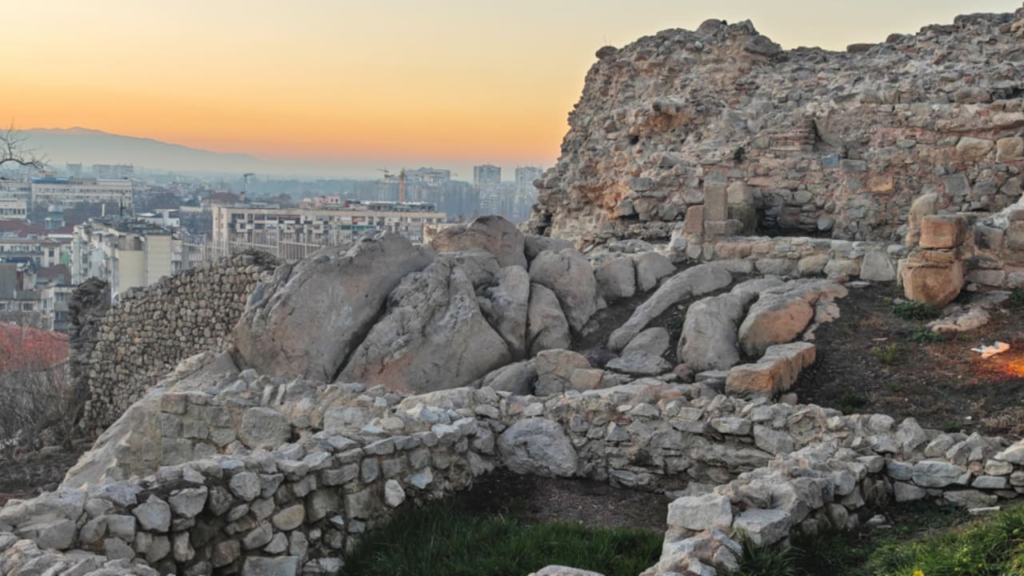
Forming the highest physical and historical peak of the Old Town’s three central hills, this rugged, boulder-strewn archaeological hill crest overlooks the Maritsa River loops.
- What it is famous for: Holding the original, 5,000 BC stone foundations of the ancient Thracian fortress settlement of Eumolpias. As the exact physical birthplace of Plovdiv, the hill contains layers of history, including massive prehistoric stone walls, secret Roman tunnels, and medieval water cisterns. Free from modern buildings, it functions as a favored local park where people gather every evening to sit on the sun-warmed fortress ruins and take in panoramic views of the city.
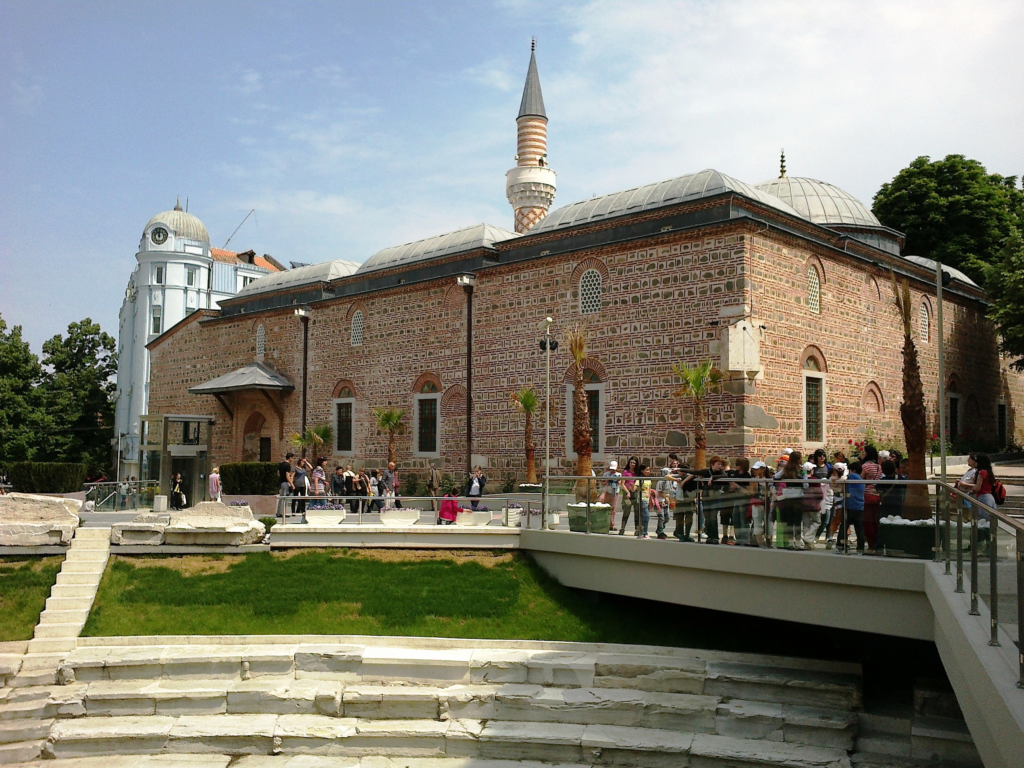
7. Dzhumaya Mosque
The Multi-Domed Ottoman Sentinel of Gilded Calligraphy Fountains
Dominating the central intersection where the Roman Stadium meets the modern pedestrian walkways, this imposing 14th-century temple stands as one of the oldest Islamic houses of worship in the Balkans.
- What it is famous for: Its nine large lead-covered domes, its distinctive diagonal red-brick minaret, and its stunning interior calligraphy. Built by Ottoman builders on the site of an earlier Christian cathedral, the mosque displays a unique architectural style. The bright, open interior is decorated with intricate floral patterns and large, gilded wall inscriptions of Quranic verses, centered around a small indoor water fountain fountain used for traditional ablutions.
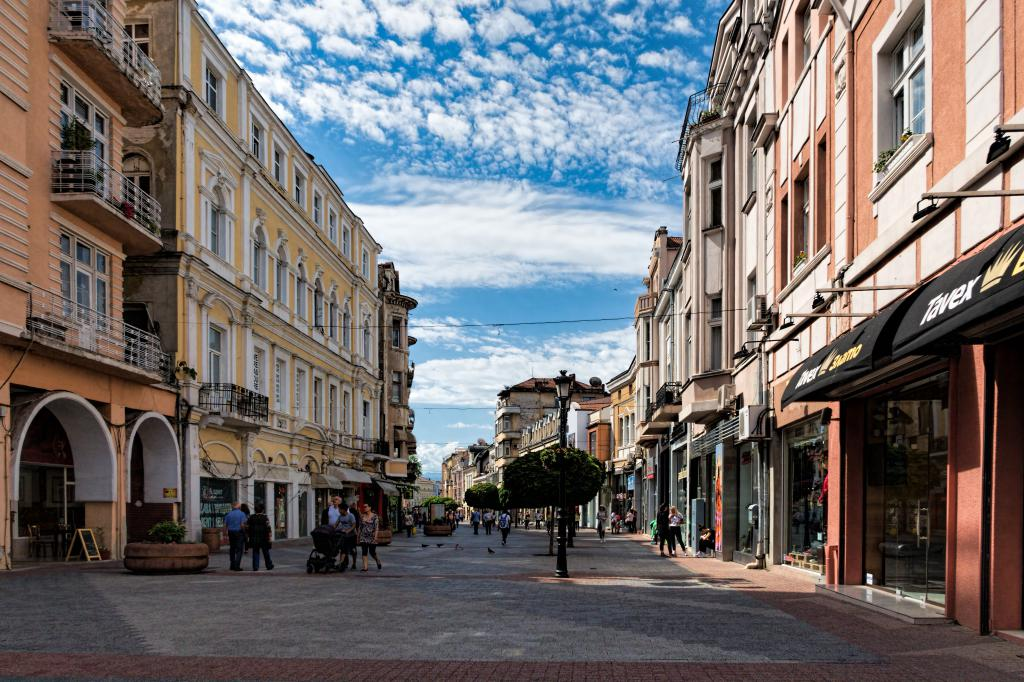
8. Knyaz Alexander I Street (The Main Pedestrian Street)
The European Promenade of Pastel Secession Facades
Slicing smoothly north to south through the heart of the city’s commercial core, this wide, stone-paved avenue stands proud as one of the longest continuous pedestrian shopping streets in Europe.
- What it is famous for: Its gorgeous 19th-century Neo-Baroque and Art Nouveau architectural facades. Closed entirely to automobile traffic, this bustling promenade is framed by elegant pastel-colored buildings featuring ornate balconies, classic columns, and detailed stucco work. The street is the ultimate staging ground for the local art of Gulyay (strolling), packed with open-air cafes, performing street artists, fountains, and historical monuments.
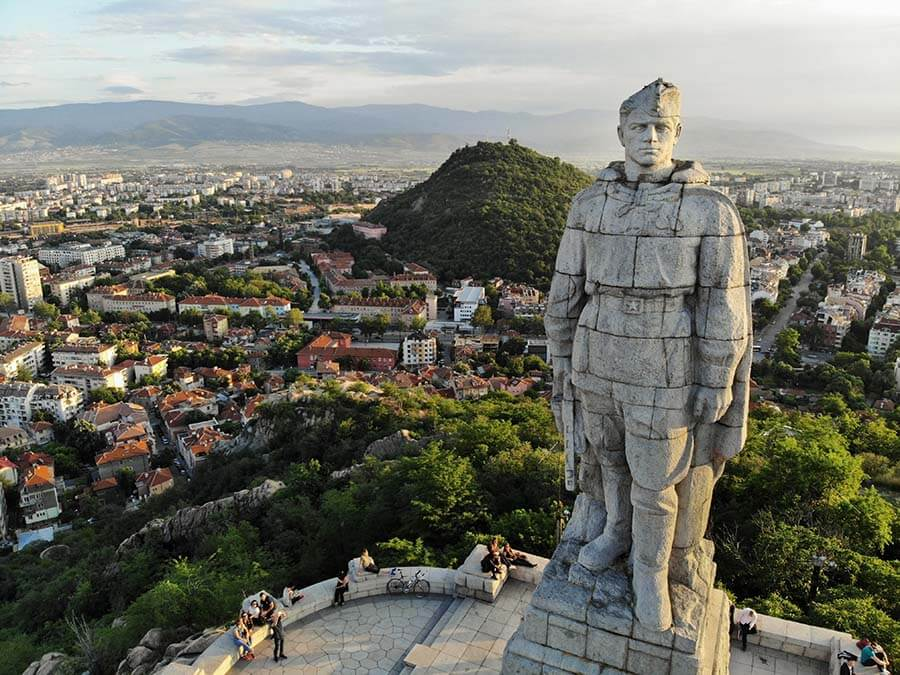
9. Alyosha Monument & Bunardzhik Hill
The Granite Colossus of Panoramic Ridge Looks
Rising sharply from the summit of Bunardzhik Hill (also known as the Hill of the Liberators) west of the city center, this monumental granite sculpture dominates the regional skyline.
- What it is famous for: Its 11-meter-tall granite statue of a Soviet soldier looking out over the city. Erected in 1957 to commemorate the Soviet Army’s entry into Bulgaria during World War II, the monument is accessed via a series of stone staircases winding through a dense, forested park hill. While its political history remains a topic of local debate, the high stone platform at Alyosha’s feet is universally loved for offering an unobstructed look across all seven of Plovdiv’s hills.
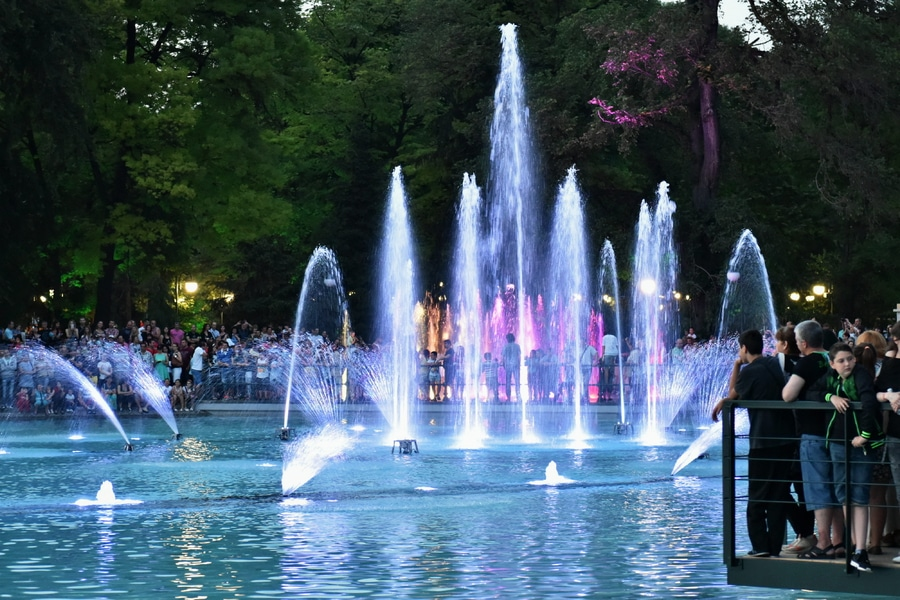
10. Tsar Simeon Garden
The Singing Fountain Sanctuary of Leafy Chestnut Avenues
Anchoring the southwestern anchor of the pedestrian downtown grid, this grand public parkland was designed in 1892 by the renowned Swiss landscape architect Lucien Chevalas.
- What it is famous for: Its spectacular Singing Fountains and its peaceful, centuries-old tree avenues. Serving as the green lungs of the city center, the park features classic white pavilions, children’s playgrounds, and quiet reading benches shaded by massive chestnut trees. Every summer weekend evening, thousands of locals gather around the large central lake to watch a synchronized multi-colored light, music, and water fountain show that shoots water columns high into the air.
11. Hindliyan House
The Wealthy Merchant Palace of Rose-Water Fountains and Global Landscapes
Tucked into a quiet cobblestone lane directly adjacent to the Balabanov House in the deep heart of the Old Town, this pristine 1828 residence is an exceptional example of symmetrical architecture.
- What it is famous for: Its intricate interior wall frescoes depicting global cities and its unique indoor rose-water fountain system. Built for a prominent Armenian merchant who traded across the Mediterranean, each room is painted with detailed, lifelike landscapes of places he visited, including Alexandria, Venice, and Constantinople. The grand second-floor hall features a built-in marble fountain that once circulated fresh rose water to cool the air and fill the home with a pleasant aroma.