
Milan, anchoring the absolute geographic and economic core of the Lombardy region along the flat, fertile plains of the Po Valley, operates on a spectacular concentric urban layout where high-finance power meets world-class contemporary design and historic architectural marvels.
Historically originating as a vital Celtic settlement named Mediolanum that evolved into a powerful capital of the Western Roman Empire and a sovereign Renaissance duchy ruled by the Visconti and Sforza dynasties, this northern stronghold stands proud as a masterclass in resilient, forward-facing heritage.
Because the municipality aggressively leveraged its historic status as a cross-border trade gateway to become Italy’s undisputed engine of industry, fashion, and banking, it earned its permanent cultural title as the country’s “Moral Capital” and a global epicenter of avant-garde style, lyric opera heritage, and dynamic urban trail exploration.
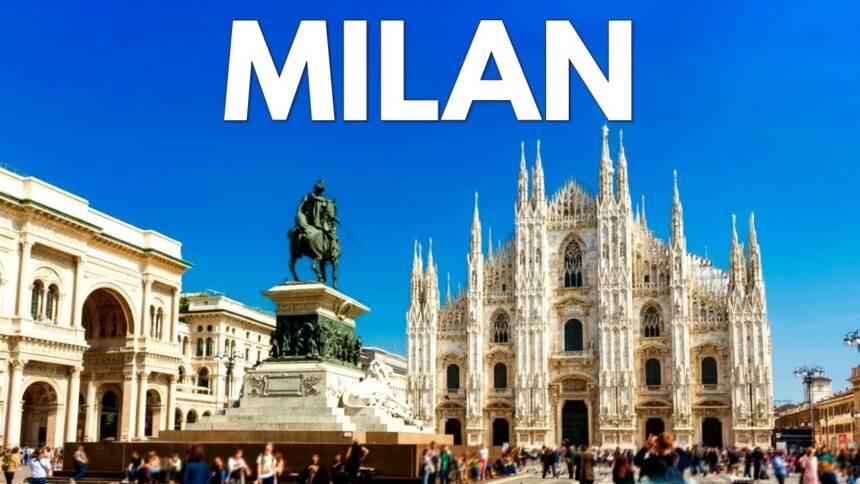
Today, Milan presents an incredible architectural matrix where a towering, pink-veined white marble gothic cathedral stands directly beside a glass-domed 19th-century shopping arcade, futuristic skyscrapers, and historic industrial design studios.
The metropolis effortlessly pairs its deep, conflict-tested historical pedigree having rebuilt itself into a modern powerhouse after extensive wartime damage with a progressive passion for cutting-edge culinary trends, global fashion weeks, and a high-energy, walking-centered lifestyle tied to its historic neighborhoods.
1. Milan Cathedral (Duomo di Milano)
The Spectacular Architectural Sovereign of Pink-Veined Gothic Spires and Sky-High Marble Terraces
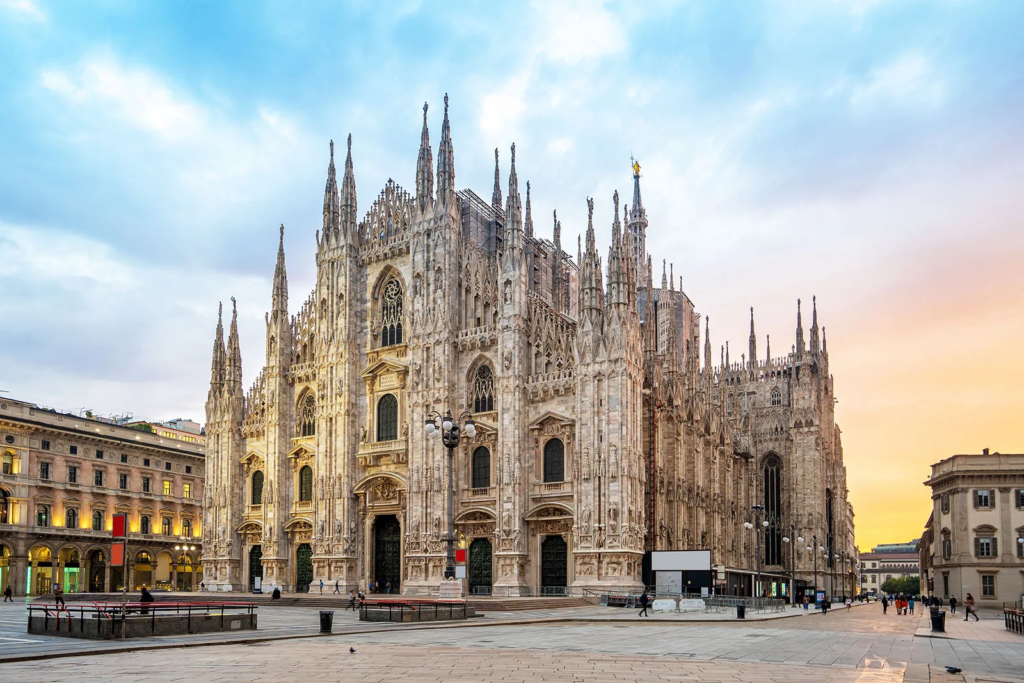
Dominating the absolute physical, geometric, and emotional heart of the entire metropolis, this colossal cathedral stands proud as the ultimate global icon of Italian Gothic architecture.
- What it is famous for: Being the largest church in Italy, wrapped in an extraordinary exterior matrix of 135 delicate stone spires, 3,400 intricate statues, and a world-famous rooftop walking terrace. Constructed over a span of nearly six centuries using premium pink-veined Candoglia marble, the building culminates at its highest peak with the glistening golden statue of the Madonnina. Travelers walk through the vast, dimly lit interior nave before ascending to the open-air marble roof terraces, where they can walk directly among the flying buttresses and enjoy panoramic views stretching to the snow-capped Alps.
2. Santa Maria delle Grazie & “The Last Supper”
The Enigmatic Stone Sentinel of Renaissance Refectory Walls and Leonardo’s Masterwork Fresco Sagas
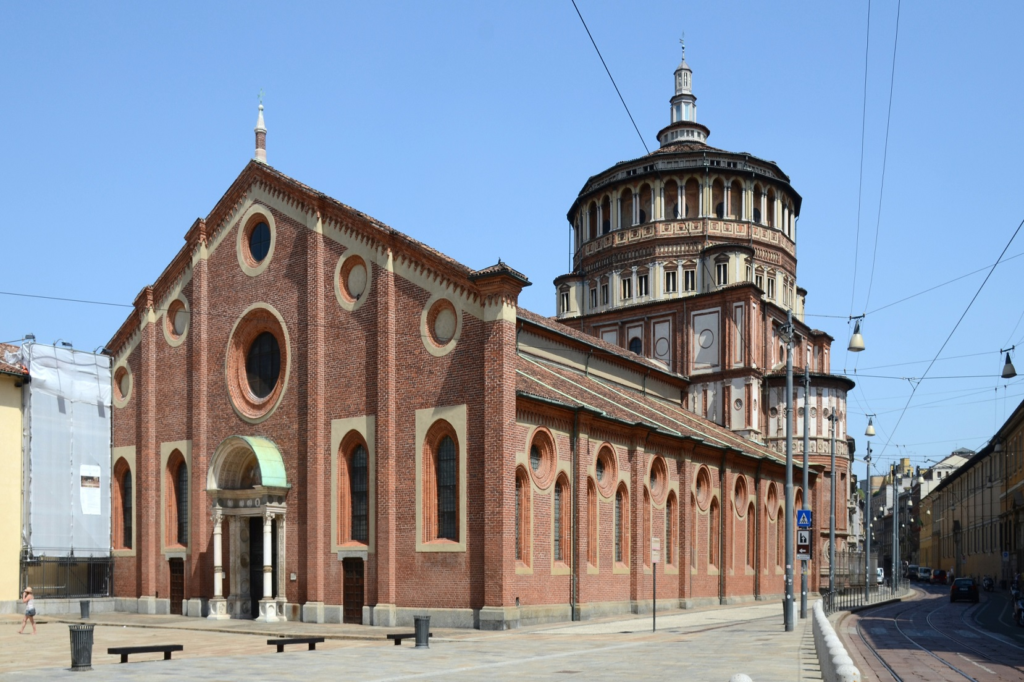
Nestled quietly within an elegant, historic residential quarter west of the city center, this magnificent 15th-century convent complex holds the absolute pinnacle of high-Renaissance humanism.
- What it is famous for: Housing Leonardo da Vinci’s world-famous mural painting, The Last Supper (Il Cenacolo), commissioned by Duke Ludovico Sforza and painted directly onto the dining hall wall of the convent refectory between 1495 and 1498. The architectural complex itself features a breathtaking, wide-domed Renaissance tribune designed by Donato Bramante. The specialized, climate-controlled museum gallery requires advanced reservations, allowing small groups of travelers to study Leonardo’s revolutionary use of perspective, emotional psychology, and narrative drama in continuous, reverent silence.
3. Galleria Vittorio Emanuele II
The Picturesque Walking Runway of Glass-Domed Iron Vaults and High-Energy Luxury Mosaic Arenas
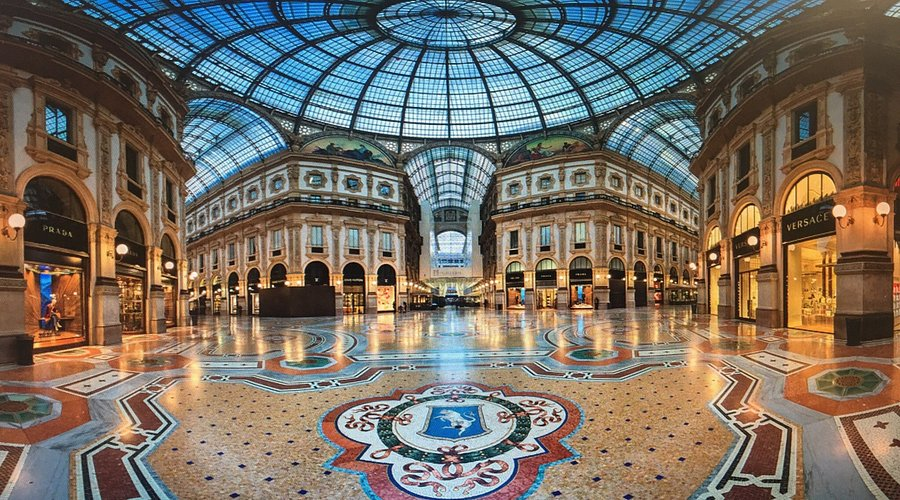
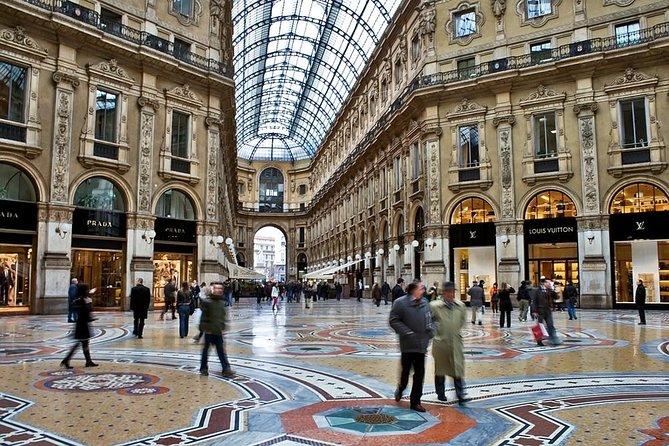
Slicing smoothly between the Duomo square and the legendary La Scala opera house, this monumental 19th-century shopping arcade stands proud as the historic “Drawing Room of Milan.”
- What it is famous for: Its breathtaking neo-classical design featuring twin intersecting avenues covered by a colossal glass-and-iron barrel vault and a spectacular, 154-foot-high central glass dome. Engineered by Giuseppe Mengoni and opened in 1867, this architectural masterpiece operates as one of the world’s oldest functional shopping malls. The polished marble floor features intricate mosaics depicting the coat of arms of United Italy’s capital cities, where travelers gather beneath the flagship storefronts of historic fashion houses like Prada and Louis Vuitton.
4. Sforza Castle (Castello Sforzesco)
The Monumental Public Sovereign of Red-Brick Defensive Bastions and Ducal Art Collection Vaults
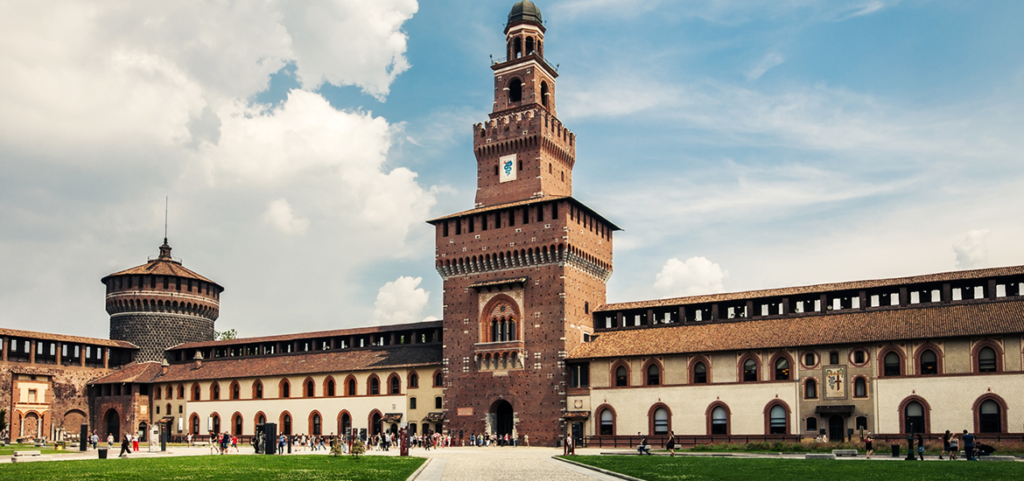
Commanding a majestic, sprawling presence along the northern edge of the historic old town center, this immense red-brick fortress represents the historic military and political soul of the duchy.
- What it is famous for: Being the grand 15th-century residential seat of the ruling Sforza dukes, which survived centuries of foreign sieges to become a massive public museum complex holding Michelangelo’s unfinished Rondanini Pietà. The fortress layout features a soaring central clock tower, vast stone courtyards, and deep defensive moats originally engineered with the help of Leonardo da Vinci. Today, the castle’s internal residential wings house specialized civic museums dedicated to ancient art, historic musical instruments, and rare Egyptian antiquities.
5. Teatro alla Scala
The Colossal Modern Sovereign of Gilded Lyric Opera Tiers and Fire-Tested Acoustic Performance Arenas
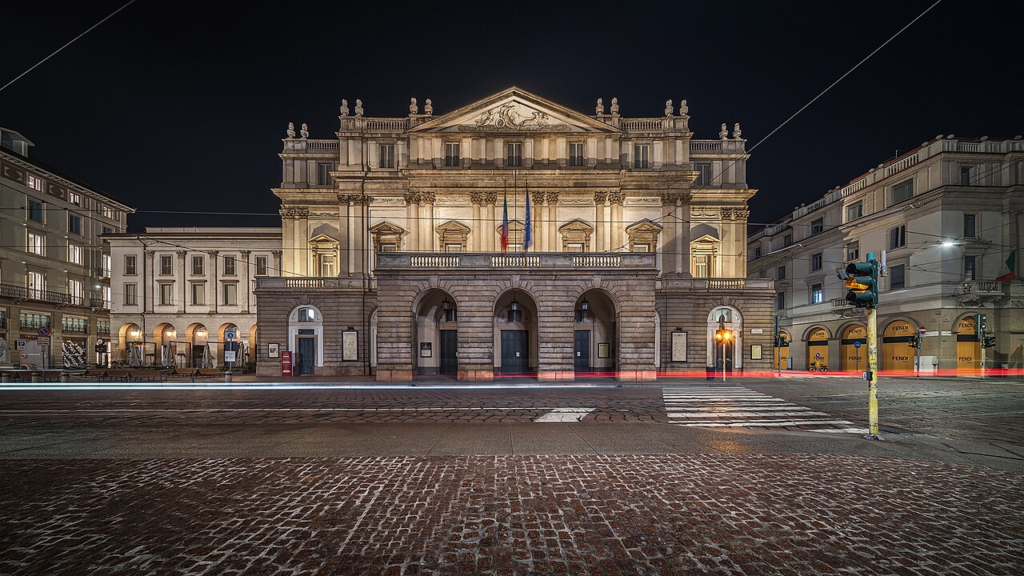
Commanding a understated, classical stone facade overlooking a bustling public square, this world-renowned theater stands proud as the absolute global capital of lyric opera.
- What it is famous for: Being the historic 18th-century opera house that staged the world premieres of masterworks by Verdi, Puccini, and Rossini, celebrated for possessing the most demanding operatic audience in the world. Designed by Giuseppe Piermarini and opened in 1778, the theater features a horseshoe-shaped auditorium decorated in rich red velvet, gold leaf, and a massive crystal chandelier. The adjacent museum offers travelers a look into the historic backstage mechanical works, historic stage costumes, and rare musical manuscripts.
6. Pinacoteca di Brera
The Radiant Cultural Repository of Napoleonic Courtyard Galleries and High-Renaissance Oil Masterpieces
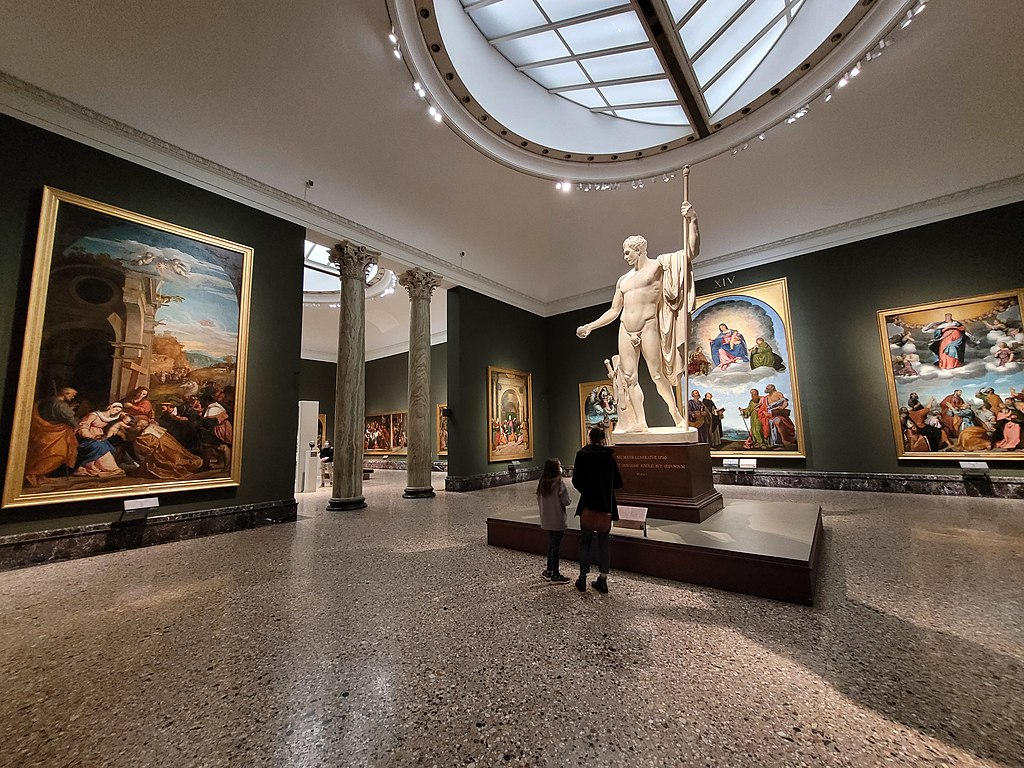
Tucked quietly inside an imposing, 17th-century Jesuit palace within the bohemian Brera arts district, this national museum holds the absolute fine arts crown of Northern Italy.
- What it is famous for: Its extraordinary collection of Renaissance oil paintings, highlighted by Raphael’s The Marriage of the Virgin, Mantegna’s Lamentation over the Dead Christ, and Hayez’s romantic masterpiece, The Kiss. Established as a public gallery by Napoleon Bonaparte in 1809, the museum wraps around a magnificent double-tiered arcaded courtyard anchored by a bronze statue of the emperor. The exhibition rooms feature glass-walled restoration labs, letting travelers watch modern conservators handle rare, centuries-old canvases.
7. The Navigli District
The Savory Cultural Repository of Historic Waterway Canals and High-Energy Aperitivo Tavern Loops
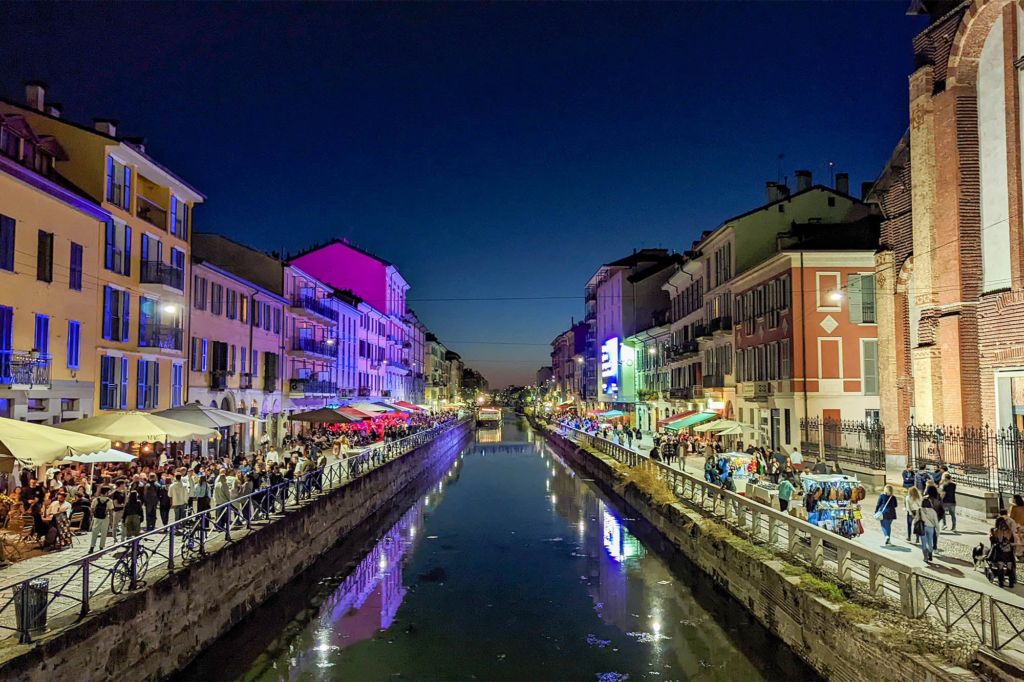
Slicing smoothly through the southwestern quarter of the urban grid, this historic, atmospheric neighborhood preserves the ancient riverine and trading soul of Milan.
- What it is famous for: Its enchanting network of navigable water canals specifically the Naviglio Grande and Naviglio Pavese lined with rows of colorful workers’ cottages, independent art galleries, and vintage outdoor markets. The canal system, which historically used a complex lock system designed by Leonardo da Vinci to transport the heavy marble blocks used to build the Duomo, transforms every evening into a high-energy nightlife destination where locals assemble for traditional Lombard appetizers and craft cocktails.
8. Quadrilatero della Moda (The Fashion Quadrilateral)
The Rowdy Cultural Runway of Haute Couture Flagship Boutiques and Sleek Palatine Design Horizons
Slicing smoothly through an elegant grid of historic streets centered around Via Monte Napoleone, this ultra-exclusive neighborhood serves as the global epicenter of haute couture.
- What it is famous for: Being the most prestigious fashion district in the world, holding the global flagship boutiques, design headquarters, and private showrooms of elite houses like Armani, Versace, and Gucci. The quiet, cobblestone streets are lined with stately neo-classical palazzos, secret courtyard gardens, and sleek, minimalist window displays that set global luxury retail trends. The neighborhood functions as a high-energy urban runway for international models, designers, and fashion photography during the city’s seasonal fashion weeks.
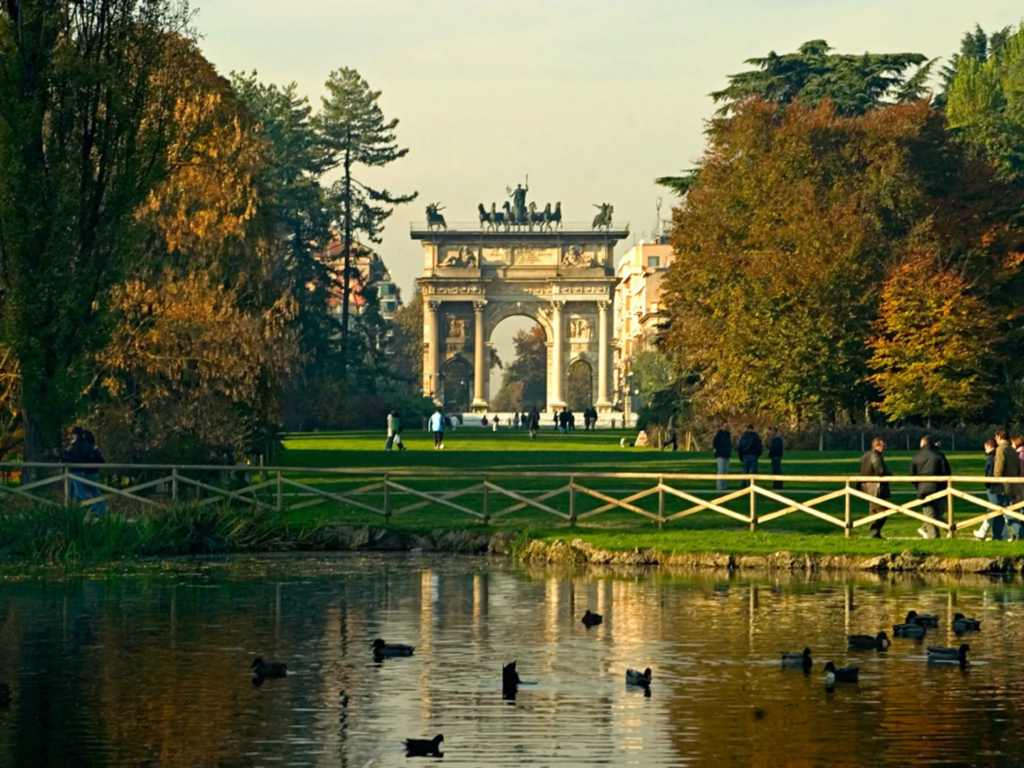
9. Sempione Park (Parco Sempione)
The Breathtaking Minimalist Palace of Emerald English Lawn Loops and Triumphal Arch Overlooks
Perched majestically directly behind the rear courtyards of the Sforza Castle, this sprawling, 95-acre English-style landscape park serves as the primary green sanctuary for city dwellers.
- What it is famous for: Its beautiful landscape layout featuring a tranquil rowing lake, winding footpaths, and the monumental Arco della Pace (Arch of Peace)—a triumphal marble arch commissioned by Napoleon. Constructed in the late 19th century on the site of the castle’s old military parade grounds, the parkland blends natural woodland beauty with iconic cultural milestones, including the historic Triennale design museum and a steel viewing tower. The emerald lawns function as a massive social playground for weekend runners, outdoor art exhibits, and relaxed picnics.
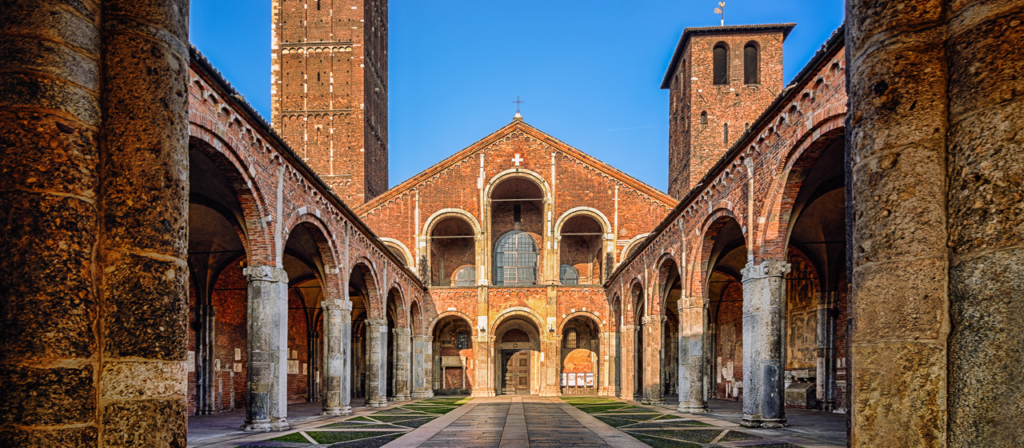
10. Basilica of Sant’Ambrogio
The Breathtaking Ancestral Sovereign of Lombard Romanesque Atriums and Golden Altarpiece Crypts
Commanding a historic, low-slung brick presence southwest of the city center, this ancient decanal church stands proud as one of the oldest and most historically influential houses of worship in Milan.
- What it is famous for: Its definitive, 11th-century Lombard Romanesque architecture featuring a magnificent open-air arcaded atrium, twin brick bell towers, and a stunning 9th-century golden high altar. Founded originally in 379 AD by Saint Ambrose, the patron saint of the city, the church serves as the structural prototype for medieval architecture across Northern Italy. The subterranean crypt houses the skeletal remains of Saint Ambrose dressed in full bishop’s robes, maintaining a profound historical reverence that draws pilgrims from around the world.
11. Porta Nuova & Piazza Gae Aulenti
The Sprawling Eco Matrix of Futuristic Sky-Scraper Clusters and Award-Winning Vertical Forest Horizons
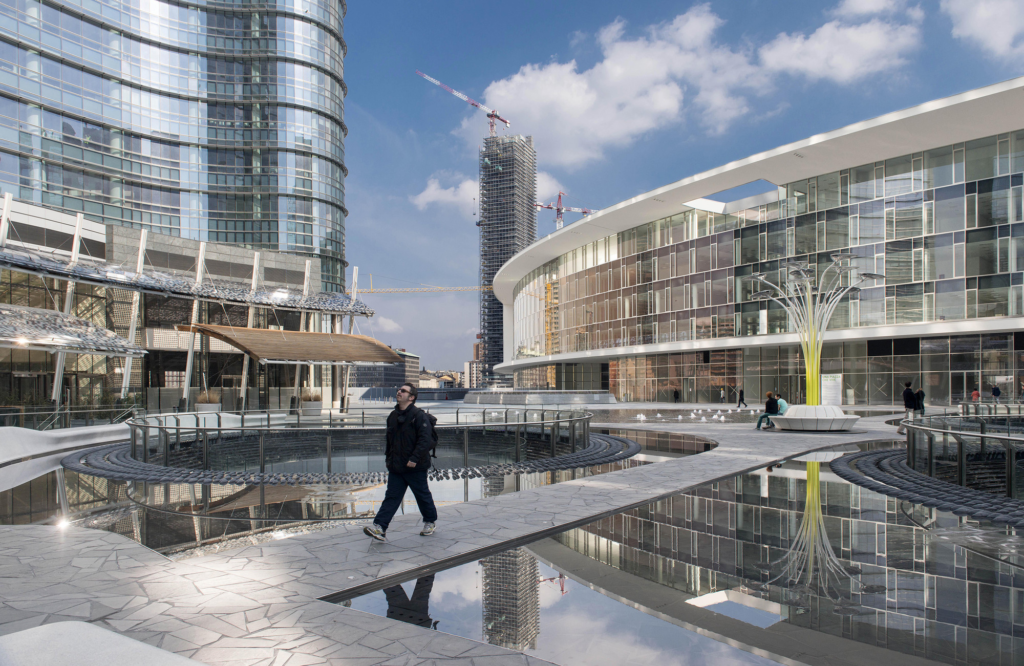
Sited dynamically just north of the city’s historic core, this ultra-modern, hyper-connected architectural zone represents the progressive, 21st-century future of Milan.
- What it is famous for: Hosting the award-winning Bosco Verticale (Vertical Forest) residential skyscrapers, which feature over 900 living trees planted across their structural concrete balconies to create a sustainable urban ecosystem. The district centers around Piazza Gae Aulenti, a striking, elevated circular pedestrian plaza framed by sleek glass skyscrapers, solar-powered fountains, and the soaring Unicredit Tower. It functions as a high-energy hub where business executives, architectural travelers, and tech innovators gather within a futuristic city landscape.