
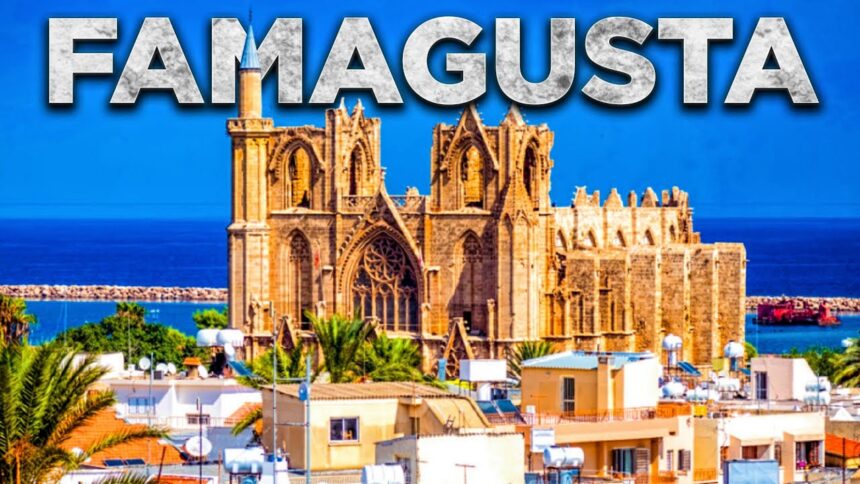
Famagusta (Gazimağusa), anchoring the deep, sweepingly curved eastern bay of Cyprus, operates on a highly dramatic coastal layout where monumental medieval defenses guard an incredibly complex historical grid.
Possessing the deepest natural harbor on the island, the city’s strategic marine positioning transformed it into the wealthiest commercial marketplace of the medieval Levant.
Under the rule of the French Lusignan crusaders, it grew into a legendary metropolis of extreme wealth, allegedly hosting one church for every single day of the year, before evolving into a heavily armored naval bastion under Venetian engineers and a strategic administrative stronghold for Ottoman pashas.
Today, Famagusta presents a striking architectural contrast where ancient, cannon-battered limestone ramparts directly border a sprawling modern university town.
Slicing through its outer urban grid is a heavy geopolitical reality the city sits immediately adjacent to the fenced-off, abandoned seaside district of Varosha, creating a profound visual dialogue between medieval preservation and modern history.
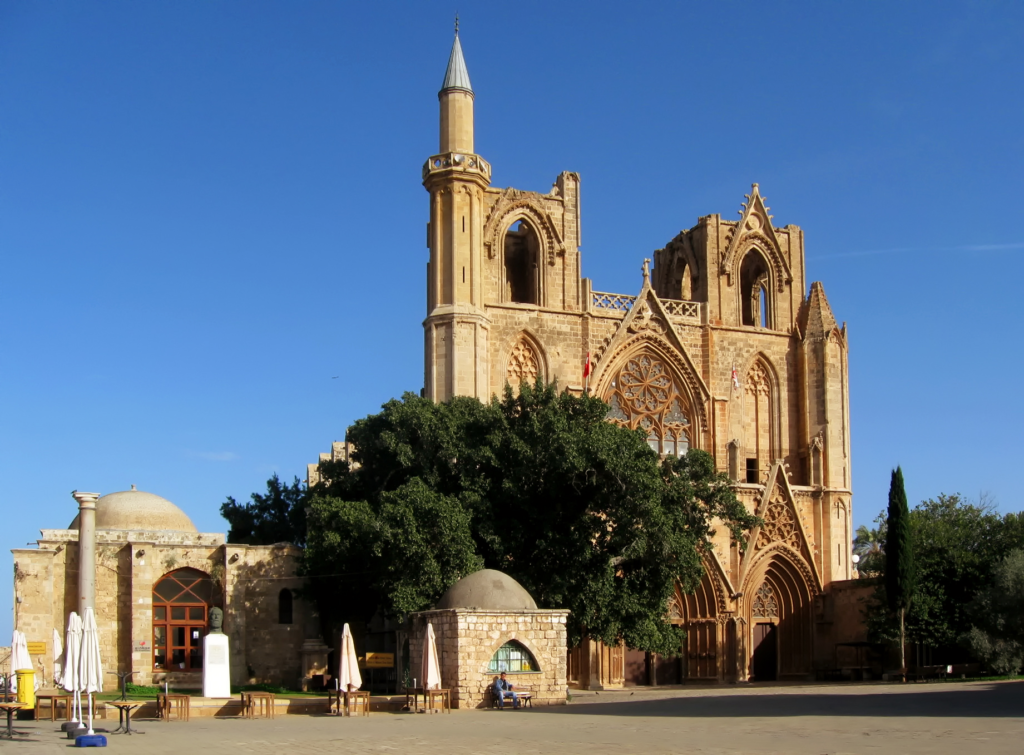
1. Lala Mustafa Pasha Mosque (St. Nicholas Cathedral)
The Monumental French Gothic Masterwork of Soaring Rose Windows and Minaret Horizoneers
Dominating the absolute visual and historical center of the fortified old city plaza, this magnificent 14th-century cathedral stands proud as the ultimate architectural icon of Famagusta.
- What it is famous for: Being a flawless replica of France’s Reims Cathedral where the Crusader Kings of Cyprus were officially crowned Kings of Jerusalem. Following the Ottoman siege of 1571, this towering limestone masterpiece was converted into a grand mosque. Its highly detailed, soaring Gothic portal arches and massive central rose window remain perfectly intact, while its twin towers were topped with a sleek stone minaret, creating a visually striking architectural fusion of Western European Christendom and Eastern Islamic heritage.
2. Othello Castle (Othello Tower)
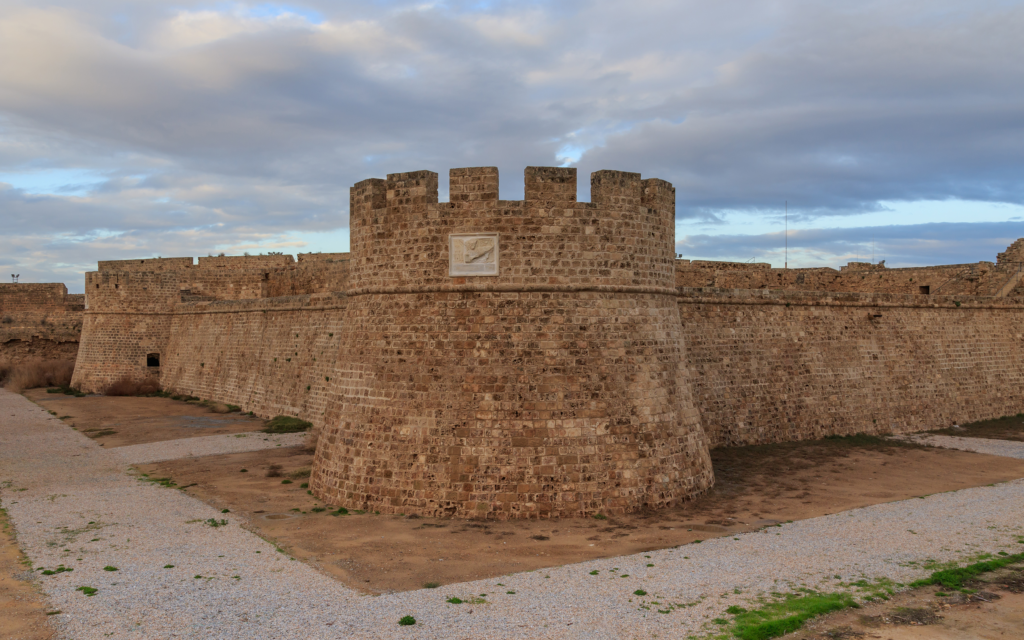
The Heavy Venetian Sea Fortress of Lion-Carved Lintels and Shakespearean Tragedies
Guarding the northeastern corner of the city’s massive defensive ring walls, this stocky, deep-moated stone citadel looks directly out over the old merchant harbor basin.
- What it is famous for: Being the historical setting that inspired William Shakespeare’s famous tragic play, Othello. Originally built by the Lusignans and later completely remodeled by Venetian governor Nicolò Foscari in 1492 into a thick-walled artillery bastion, the fortress gate features a beautifully carved stone relief of the Winged Lion of St. Mark. Visitors can cross its ancient stone moat to explore a grand vaulted refectory hall and climb the battlements for an unobstructed look across the active commercial shipping docks.
3. The Ghost Town of Varosha (Maraş)
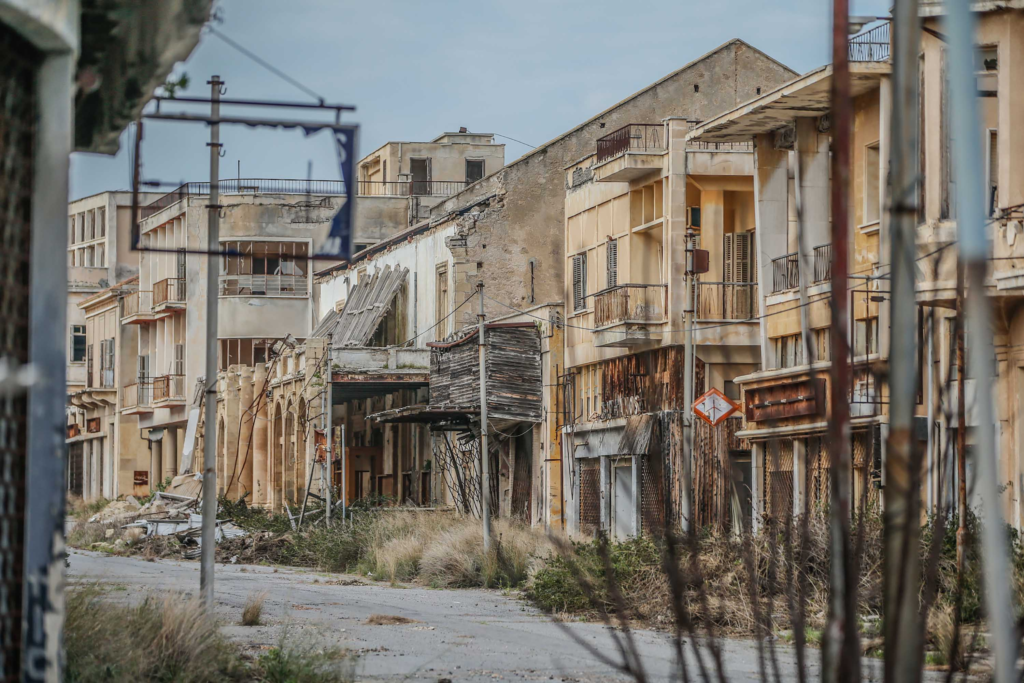
The Surreal Coastal Matrix of Abandoned High-Rises and Fenced-Off Golden Strands
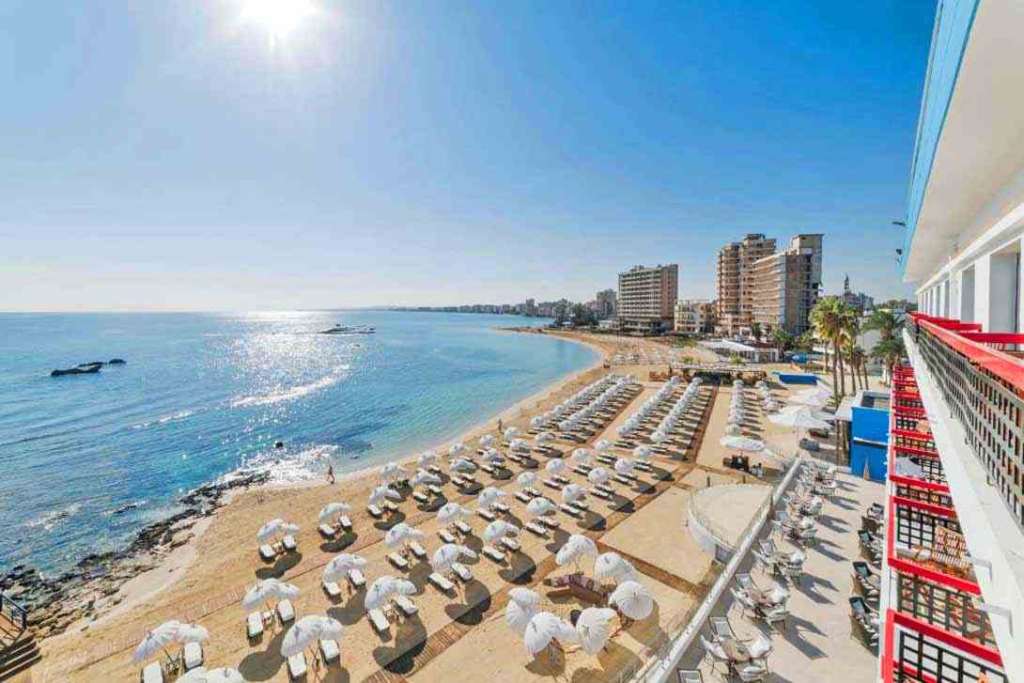
Stretching along the sweeping southern beachfront limits of the city, this vast, frozen-in-time resort district serves as one of the world’s most compelling modern historical sites.
- What it is famous for: Being a glamorous, celebrity-frequented 1970s resort strip left completely abandoned and sealed off by the military for nearly fifty years. Once known as the “French Riviera of Cyprus” and hosted by icons like Brigitte Bardot, Varosha was completely deserted during the 1974 conflict. Reopened partially to dark-tourism pedestrians, visitors can rent bicycles to ride past decaying luxury hotels, abandoned car dealerships, and overgrown cafes, offering a striking, apocalyptic look at modern history resting right next to a turquoise sea.
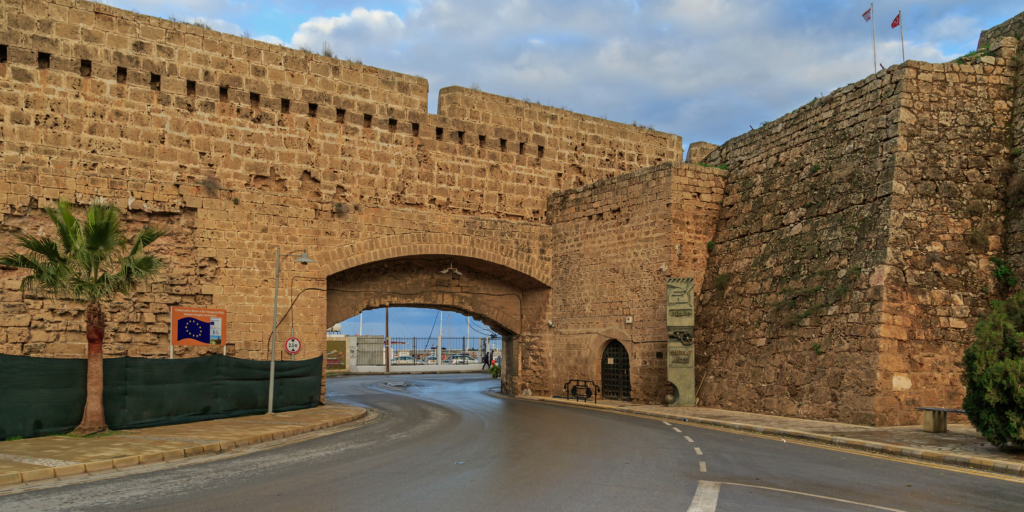
4. The Venetian City Walls
The Colossal Earth-and-Limestone Ring of Deep Rock Moats and Cannon-Scared Bastions
Enclosing the entire historic old town core in a massive, unbroken two-mile loop, these monumental defensive walls are considered some of the finest surviving examples of Renaissance military engineering.
- What it is famous for: Their colossal thickness of up to 8 meters, engineered to withstand the invention of heavy gunpowder artillery. Designed by elite Venetian architects to turn the city into an impregnable fortress against the Ottoman Empire, the walls feature massive sea-facing gates and towering bastions, like the famous Martinengo Bastion. Visitors can walk along the wide, stone-paved top of the ramparts, peering down into the massive, dry rock-cut ditch moats below while exploring old gun chambers and cannon ports.
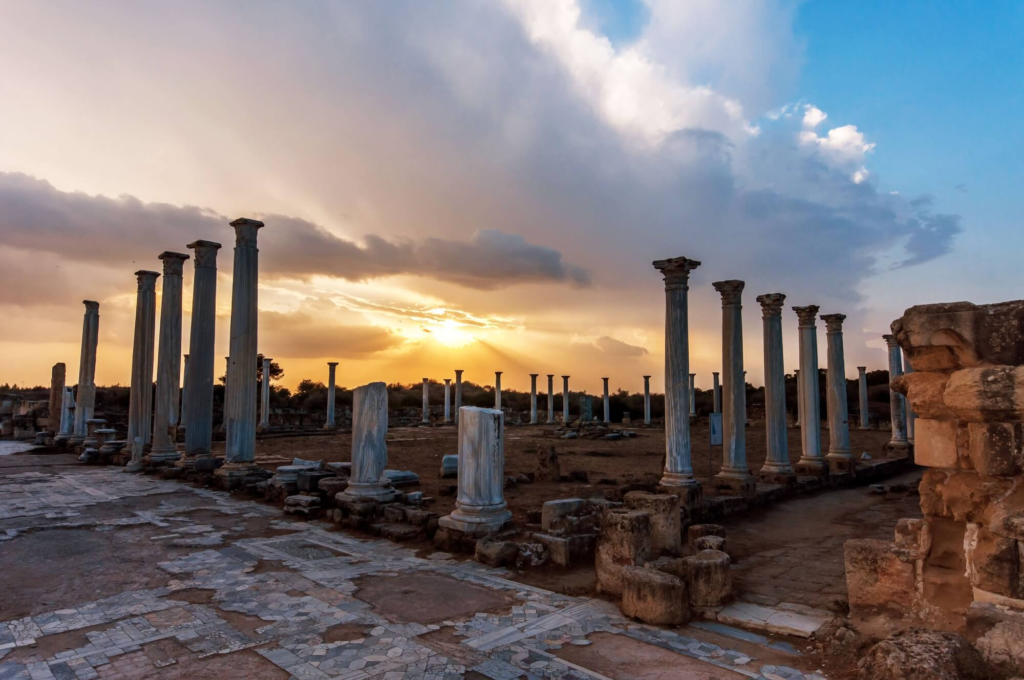
5. Ancient Salamis
The Sprawling Shoreline Kingdom of Marble-Columned Gymnasiums and Roman Amphitheaters
Perched dramatically along a wild, pine-fringed coastal shelf roughly 6 kilometers north of Famagusta’s modern city center, this massive archaeological park preserves the island’s grandest ancient cradle.
- What it is famous for: Being the legendary capital city-kingdom of ancient Cyprus, founded by Teucer after the Trojan War. The sprawling site features a masterfully restored Roman gymnasium complex lined with massive marble columns, a grand 15,000-seat outdoor amphitheater, and complex thermal bath chambers adorned with geometric mosaics. Visitors can wander through the coastal sand dunes to trace the footprints of an empire that once served as a primary trading hub of the classical Greco-Roman world.
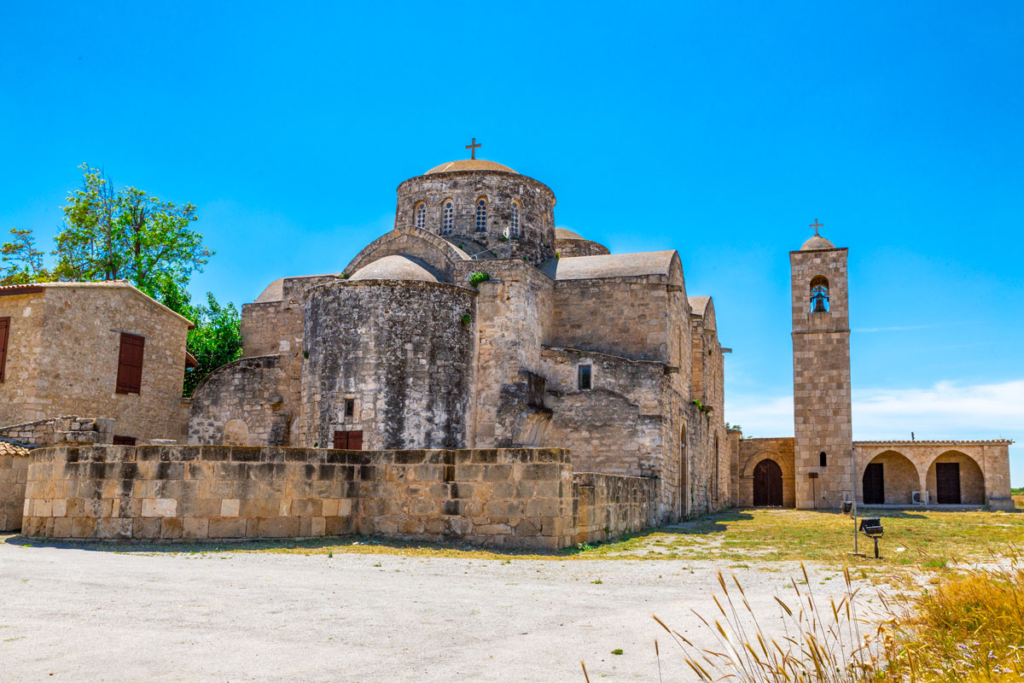
6. St. Barnabas Monastery & Icon Museum
The Peaceful Cloistered Sanctuary of Sacred Tomb Vaults and Byzantine Artistry
Nestled quietly into a wide, sun-bleached plain on the western outskirts of the Salamis archaeological zone, this elegant 18th-century monastic complex holds deep spiritual weight.
- What it is famous for: Housing the sacred tomb of Saint Barnabas, the patron saint of Cyprus who co-founded the Cypriot Orthodox Church. The monastery features an authentic, white-domed Byzantine church that has been beautifully converted into a rich icon museum displaying rare, gilded 18th-century religious paintings. Just a short walk across the olive-shaded courtyard sits a small stone chapel built directly over the deep, rock-cut tomb cave where the saint’s remains were miraculously discovered holding a handwritten Gospel of Matthew.
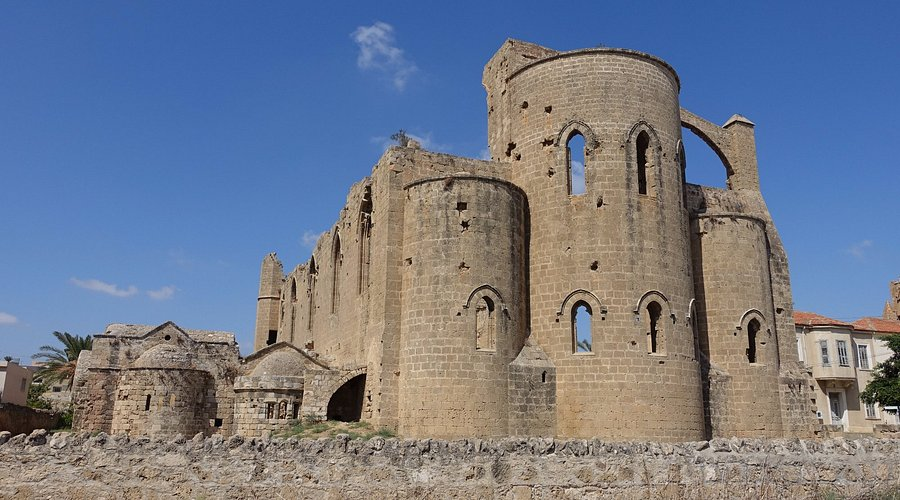
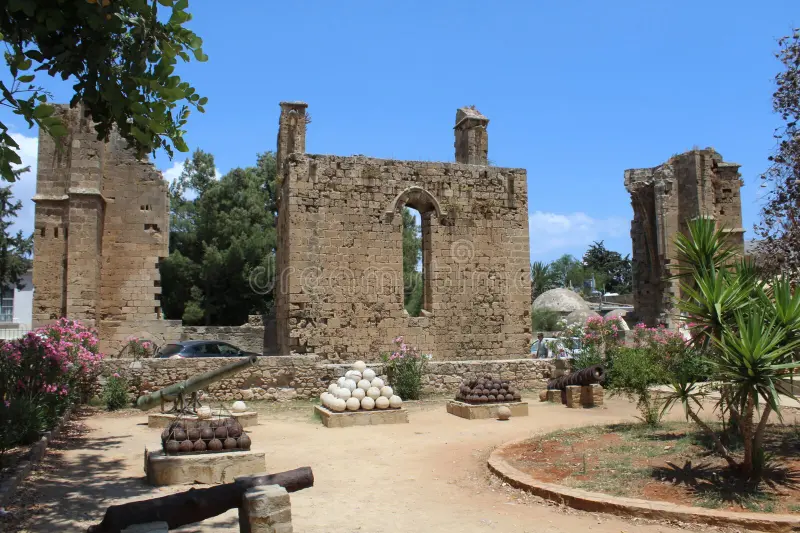
7. Church of the Kleftiko (St. George of the Greeks)
The Skeletal Limestone Cathedral of Shell-Shocked Arches and Crusader Frescoes
Tucked into the southeastern sector of the old walled city, this massive, semi-ruined stone basilica stands as a poignant monument to the intensity of medieval warfare.
- What it is famous for: Its colossal, shell-shocked limestone arches and walls riddle-marked with hundreds of actual iron cannonball impacts from the 1571 siege. Once serving as the grand, wealthy cathedral for the city’s Greek Orthodox population, the structure beautifully blended Byzantine architecture with high French Gothic style. Today, its roofless nave stands open to the blue sky, allowing visitors to walk beneath towering, isolated stone pillars to view faint, fragile fragments of medieval saint frescoes still clinging to the weathered interior walls.
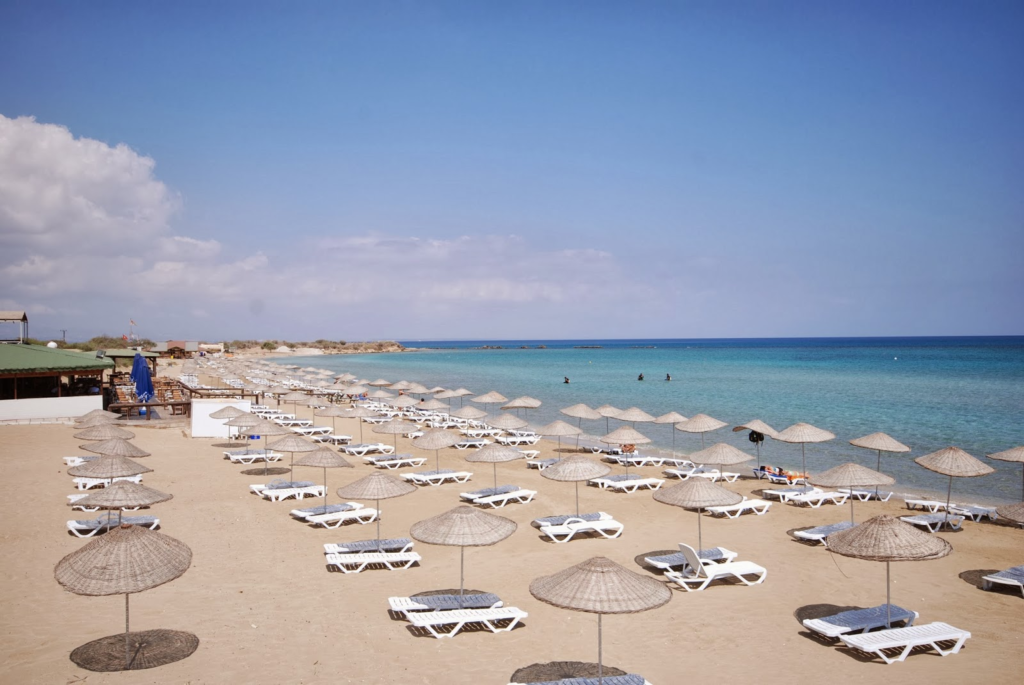
8. Glapsides Beach
The Sun-Drenched Sand Crescent of Shallow Turquoise Surf and Beachfront Havens
Sweeping along the northern coastal road just before the ancient ruins of Salamis, this wide, fine-sand urban strand is Famagusta’s premier destination for coastal relaxation.
- What it is famous for: Its exceptionally shallow, crystal-clear turquoise waters that stretch out for hundreds of meters from the shore beach lines. Because the bay is naturally shielded from heavy open-ocean swells, it functions as a giant, safe saltwater swimming pool, making it a favorite spot for local families and university students. The long golden strand is lined with lively sunbed strips and open-air wooden beach bars, offering a classic, laid-back Mediterranean resort atmosphere.
9. Venetian Palace (Palazzo del Proveditore)
The Grand Renaissance Archways of Royal Crusader Courtyards and Granite Columns
Commanding a massive public footprint directly across the main cobblestone square from the Lala Mustafa Pasha Mosque, this ruined complex was the civic heart of Venetian rule.
- What it is famous for: Its majestic triple-arched Renaissance facade built using heavy granite columns pulled from the nearby ancient ruins of Salamis. Originally constructed by the Lusignans as a grand royal palace where kings lived, the Venetians heavily remodeled the site into an elite governor’s mansion. Visitors can walk through the monumental stone arches to explore a large, open-air inner grass courtyard that later functioned as an Ottoman military prison, famously housing the celebrated Turkish poet Namık Kemal.
10. Sea Gate (Porta del Mare)
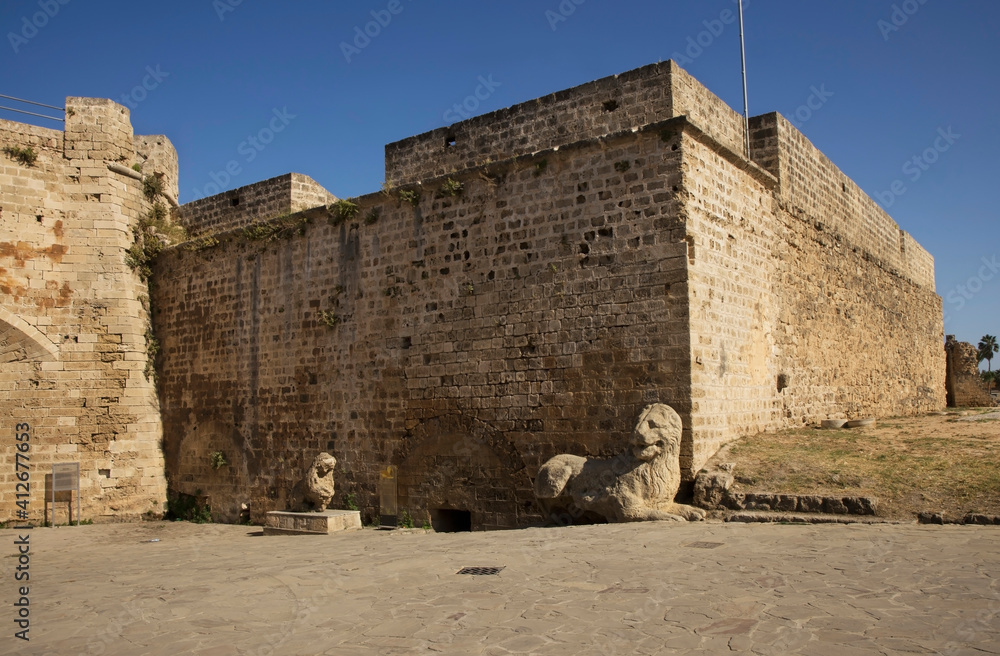
The Sculpted Limestone Marine Portal of Iron Portcullis Gates and Lion Sentinels
Guarding the direct physical entrance linking the old fortified town center with the crashing waves of the inner commercial shipping harbor, this elegant structure is a masterpiece of Renaissance design.
- What it is famous for: Its spectacular, heavy iron-plated wooden portcullis gate and an internal barrel-vaulted tunnel carved out of solid limestone. Engineered in 1492 by Captain Nicolò Priuli, the sea-facing facade features a beautifully sculpted marble block depicting the classic Venetian lion. The gate beautifully combined high-end Renaissance architectural styling with heavy military security, serving for centuries as the single, tightly guarded entry point for all wealthy merchants arriving via global spice ships.
11. Palm Beach
The Unique Coastal Strip of Golden Sands and High-Rise Ghost Town Overlooks
Sited dynamically right at the absolute edge of the modern city limits where the urban grid connects with the fenced southern border lines, this beach offers a visually striking destination.
- What it is famous for: Providing a pristine swimming beach that sits directly flush against the fenced, abandoned high-rise hotels of the Varosha ghost town. The unique layout allows beachgoers to swim in warm, glass-clear Mediterranean waters and relax on fine golden sands, while looking directly up at the frozen-in-time, empty luxury towers of a bygone era. It serves as a fascinating spot that captures the complex, layered modern history of Famagusta in a single visual panorama.