
Egilsstaðir, anchoring the absolute eastern interior frontier of Iceland along the sweeping, fertile banks of the glacial Lagarfljót River, operates on a spectacular, low-rise crossroads layout that acts as the primary service capital of the Icelandic East.
Historically developing rapidly after the construction of the first monumental regional bridge across the river in 1947, this inland territory evolved from a historic family farm into the largest commercial, educational, and logistical center in the Eastfjords.
Because it uniquely occupies a wide, low-lying river valley sheltered by towering mountain ranges, it enjoys a remarkably pleasant, warm summer microclimate, earning its permanent cultural title as the premier gateway to the wilderness trails, hidden fjords, and deepest forests of the country.
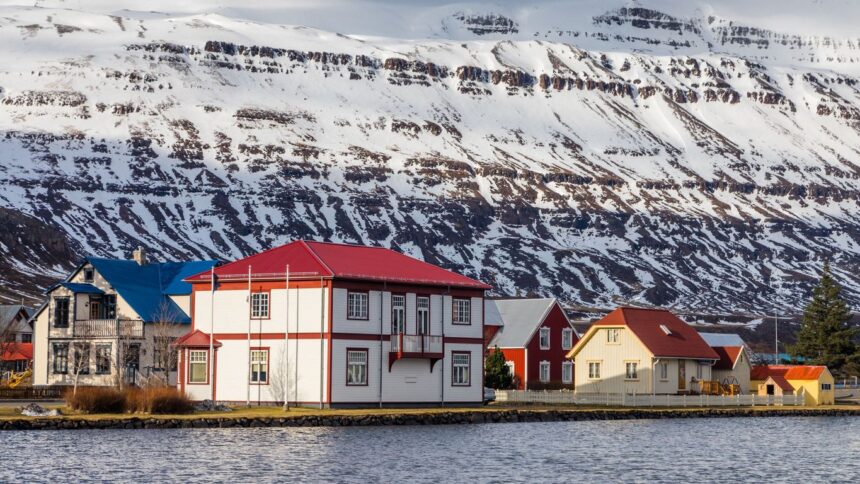
Today, Egilsstaðir presents a striking urban matrix where modern, clean-lined municipal structures and cozy timber-clad homes open directly onto expansive birch forests, active sheep pastures, and steaming geothermal lake shores.
The city effortlessly pairs its deep agricultural and trading pedigree with a rich folkloric legacy, serving as the spiritual home of the country’s most famous lake-monster legend.
1. Vök Baths
The Breathtaking Geothermal Oasis of Floating Geothermal Pools and Clean Lake Horizons
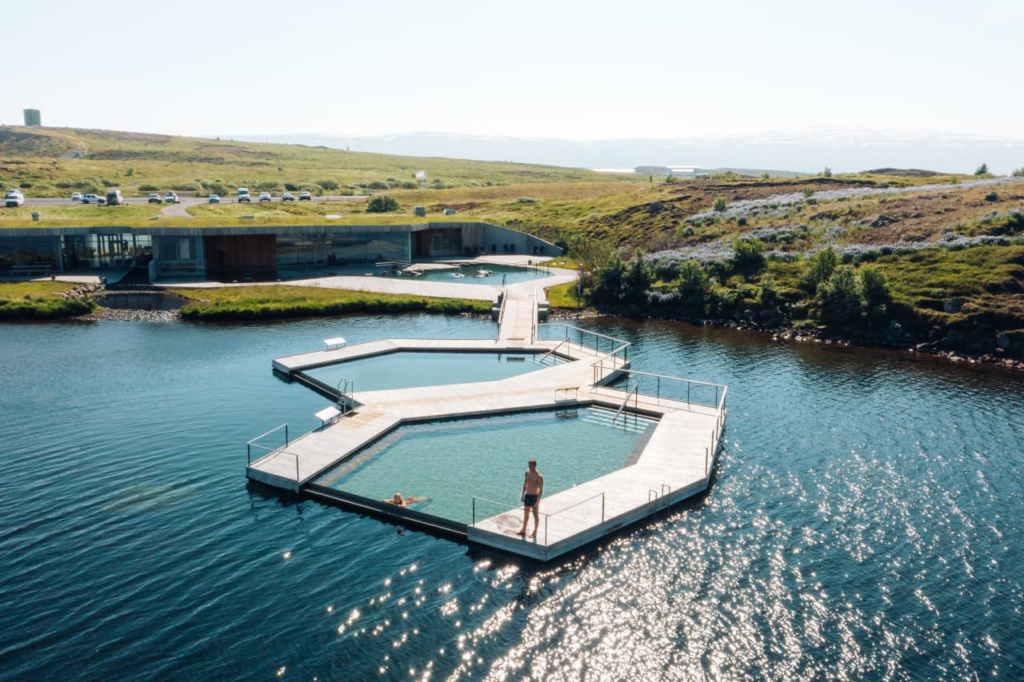
Sited dramatically on the pristine, crystalline waters of Lake Urriðavatn just a short five-minute drive northwest of the Egilsstaðir town center, this luxury eco-spa is a modern wellness masterpiece.
- What it is famous for: Being the only certified organic geothermal spa in Iceland, featuring spectacular, geometric hot pools that float directly on the surface of a cold lake. Discovered natively when locals noticed that winter lake ice consistently melted in specific, perfectly formed holes, the natural, ultra-pure hot springs are clean enough to be drank as herbal tea. Bathers can soak in the steaming 40°C mineral waters while looking out over the endless lake horizon, alternating with a high-energy plunge into the crisp, refreshing arctic lake waters.
2. Hallormsstaðaskógur National Forest
The Sprawling Botanical Sovereign of Rare Conifer Canopies and Glacial River Trails
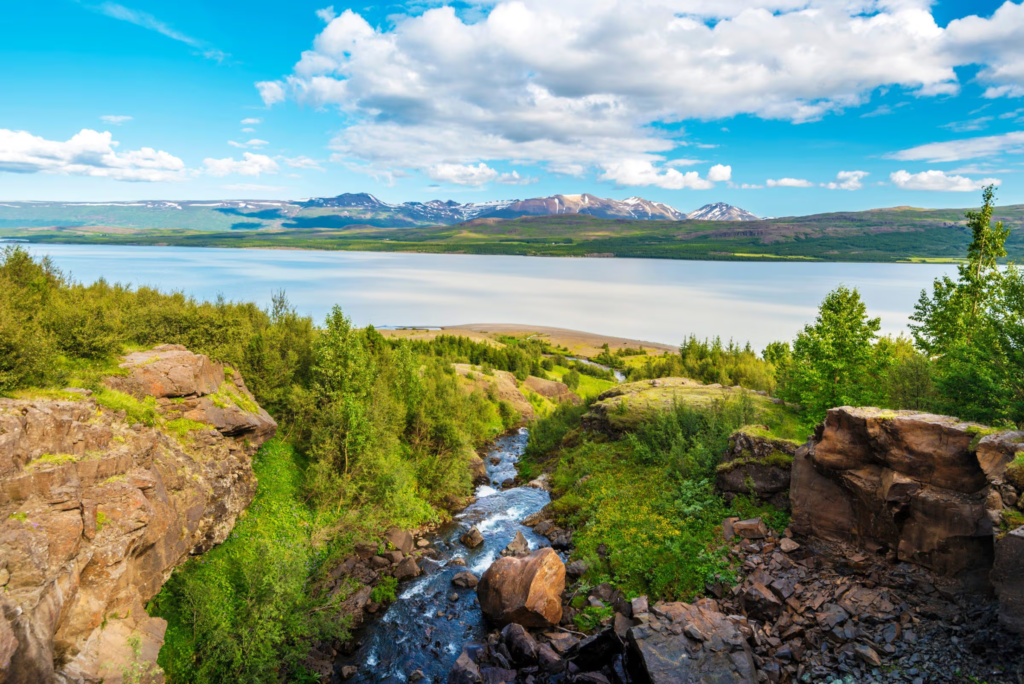
Spreading grandly across more than 740 hectares along the scenic eastern shores of the Lagarfljót River, this massive reserve stands proud as the absolute largest forest in Iceland.
- What it is famous for: Being a miraculous botanical achievement where over 80 distinct tree species from across the globe have been successfully engineered to thrive within the subarctic tundra. While Iceland is famously treeless, this lush national forest features a dense network of forty miles of maintained hiking paths winding through ancient native birch woods, giant Siberian larches, and towering Alaskan spruces. The park operates as the ultimate summer playground for the region, packed with hidden campsites, wild edible mushroom trails, and panoramic river view platforms.
3. Lake Lagarfljót (Lögurinn)
The Monumental Horizon Basin of Milky Glacial Rushes and Ancient Lake Monster Sagas
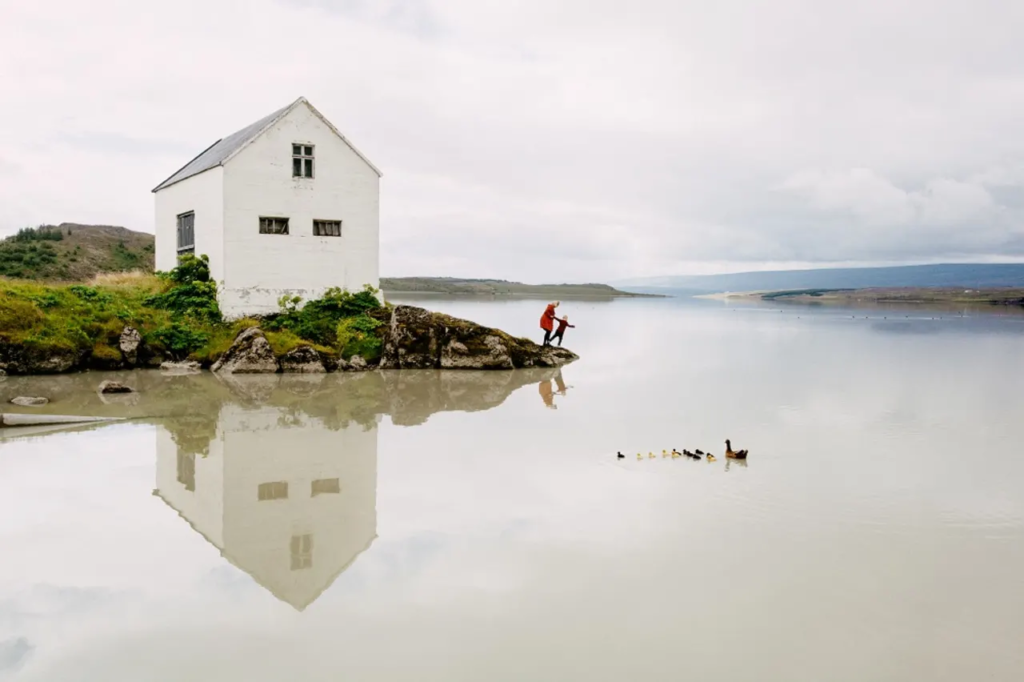
Forming the absolute geographical and environmental spine of the Egilsstaðir region, this massive, 53-square-kilometer glacial lake dominates the inland landscape.
- What it is famous for: Being the legendary home of the Lagarfljótsormurinn (The Lagarfljót Worm), a massive, mythical serpent monster that predates the Loch Ness legend. The lake’s deep, opaque waters are heavily fed by glacial melt runoffs, creating a distinct, milk-white appearance that fuels the local mystery. Visitors gather along the rocky, pine-fringed shorelines to hike and scan the water surface, hoping to catch a glimpse of the giant humped beast, which was captured on a world-famous viral video recording by a local farmer.
4. Hengifoss Waterfall
The Colossal Panoramic Cascade of Red Clay Strata Tiers and Basalt Canyon Horizons
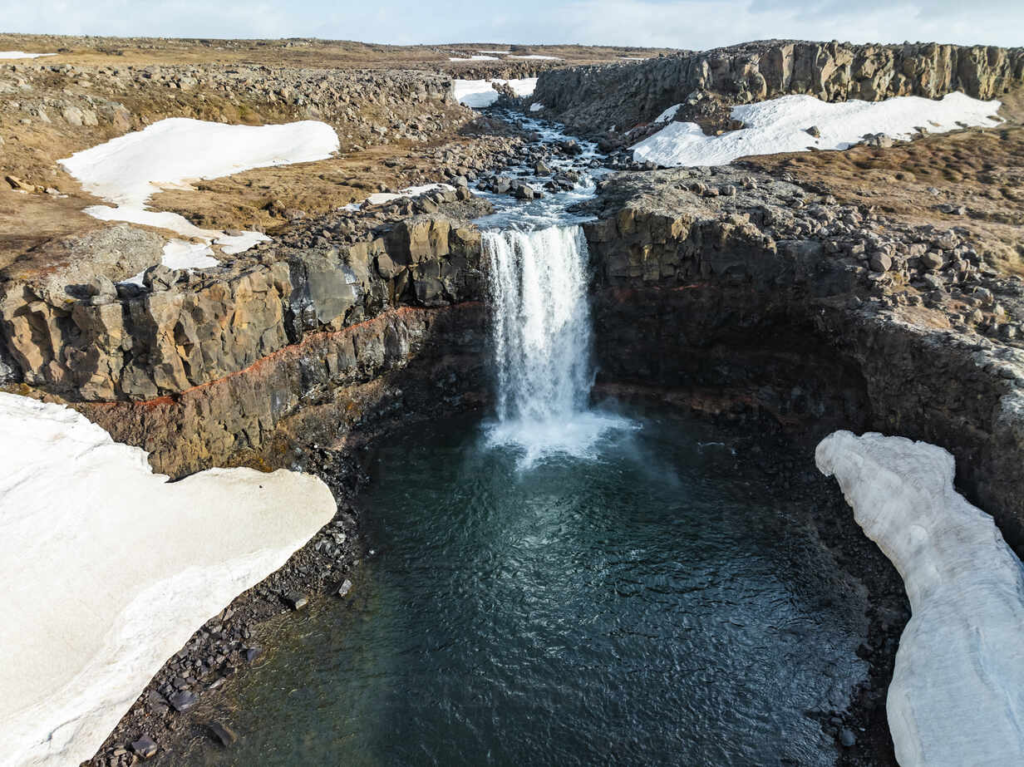
Sited dynamically at the far southwestern tip of the river basin, roughly a thirty-minute drive from the municipal core, this towering waterfall is an environmental masterpiece.
- What it is famous for: Being the third highest waterfall in Iceland, cascading 128 meters down a majestic cliff face defined by alternating stripes of black basalt and bright crimson clay layers. A beautiful, moderately challenging trail leads hikers up a deep volcanic canyon, passing Litlanesfoss—a spectacular secondary waterfall framed by towering, twisting hexagonal basalt columns. The main gorge functions as a giant geological time capsule, clearly showing dozens of ancient volcanic eruptions and fossilized prehistoric tree trunks frozen in the rock layers.
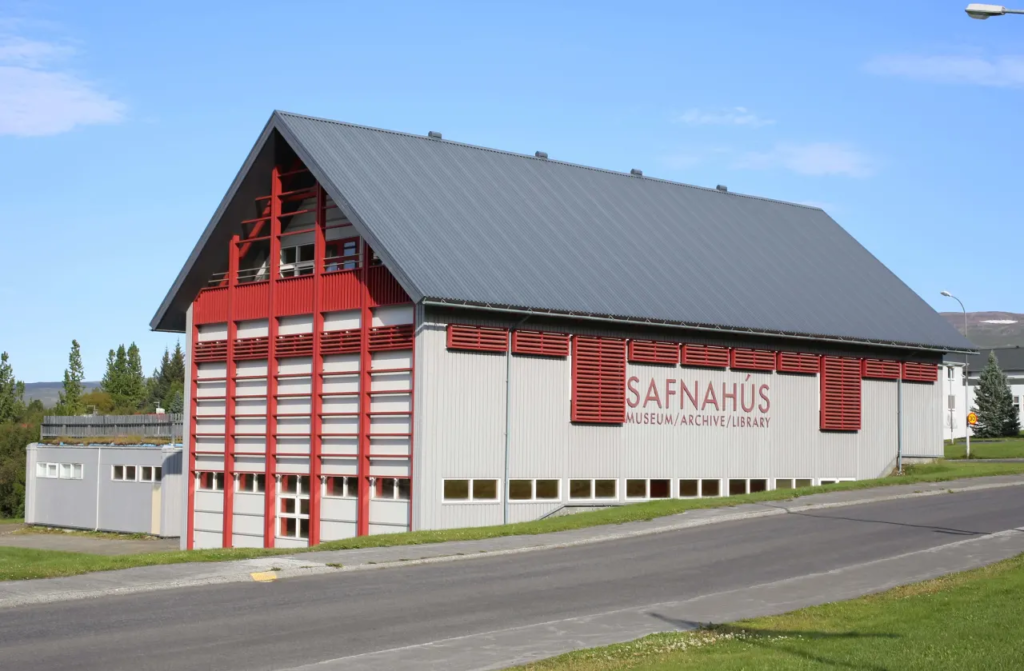
5. The East Iceland Heritage Museum (Minjasafn Austurlands)
The Stately Cultural Repository of Wild Reindeer Sagas and Historic Turf Farmsteads
Housed inside a sleek, modern cultural complex right in the vibrant heart of the town center, this institutional museum holds the absolute historical memory of the Eastfjords.
- What it is famous for: Hosting the premier exhibition dedicated entirely to the survival, history, and ecology of the wild reindeer population of Iceland, which lives exclusively in the East. The interactive galleries showcase how these majestic arctic animals were brought from Norway in the 18th century and became a vital resource for rural survival. The museum also contains a flawlessly reconstructed, late-19th-century timber and turf farmhouse interior, complete with authentic spinning wheels, traditional wool garments, and old agricultural diaries.
6. Fardagafoss Waterfall
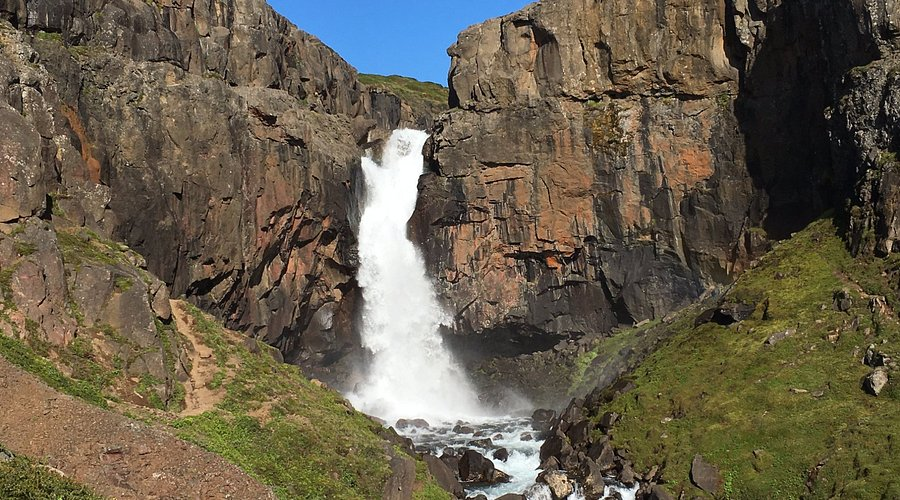
The Rugged Geological Fissure of Whispering Rock Vaults and Hidden Elf-Gold Caves
Commanding a majestic, steep-sided position on the mountain slopes directly above the eastern approaches to Egilsstaðir, this beautiful waterfall holds deep folkloric value.
- What it is famous for: Its breathtaking mountain position where the Miðhúsaá River plunges down a rocky shelf into a deep gorge, featuring a historic hidden cave directly behind the water veil. According to local folk legends, the cave was once the absolute home of a wealthy mountain troll or elf who hid a massive chest of pure gold behind the roaring waters. A well-marked hiking trail follows the rushing stream up the hillside, rewarding hikers with a panoramic bird’s-eye view stretching across the entire Egilsstaðir valley grid.
7. Atlavík Bay
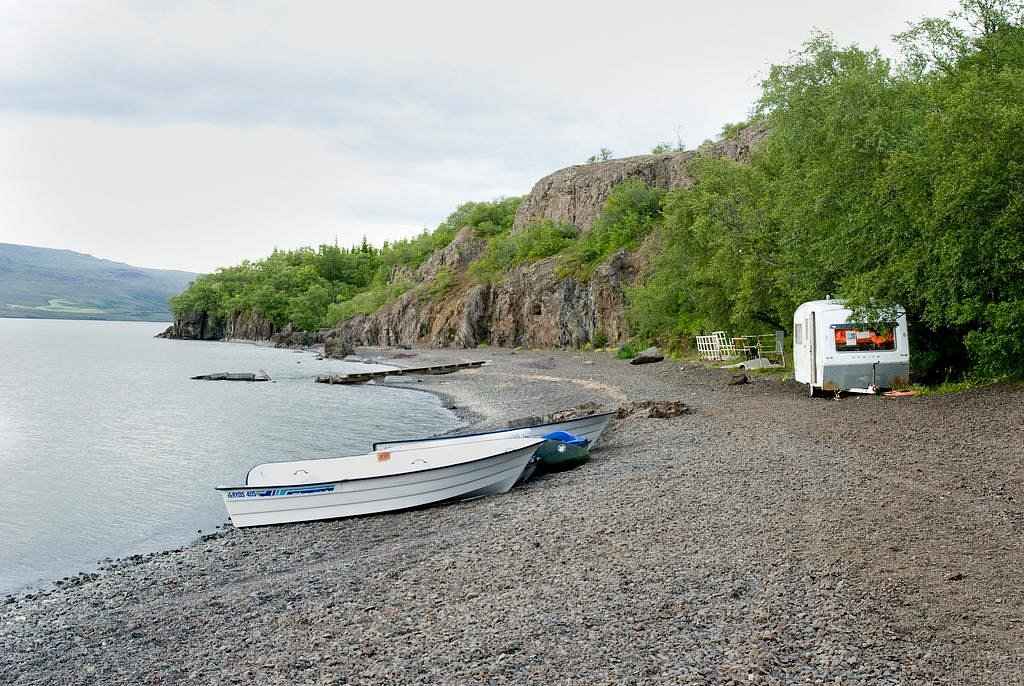
The Peaceful Botanical Sanctuary of Birch-Fringed Inlets and Historic Midsummer Festival Lawns
Nestled quietly into a sheltered, horseshoe-shaped cove within the southern loops of the Hallormsstaðaskógur National Forest, this picturesque shoreline is a beloved local hideaway.
- What it is famous for: Being the historic home of Iceland’s premier outdoor midsummer music and camping festivals, celebrated for its uniquely calm, wind-free microclimate. The bay features soft, pebble-strewn beaches bordered directly by dense, overhanging green birch canopies that meet the milk-blue waters of the lake. It operates as a peaceful, car-free paradise where travelers can rent kayaks, barbecue under the midnight sun, and explore miles of gentle woodland walking paths.
8. Sænautasel Turf House
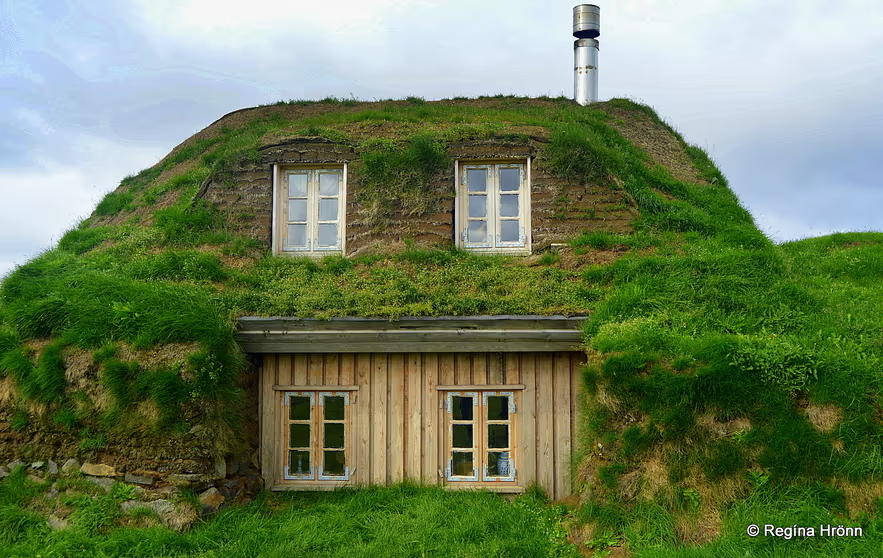
The Enigmatic Highland Sanctuary of Peat-Walled Croft Houses and Slow-Simmered Dandelion Teas
Sited dramatically on the vast, desolate volcanic plateau of Jökuldalsheiði, roughly an hour’s adventure drive northwest of Egilsstaðir, this historic croft is an authentic time capsule.
- What it is famous for: Being a remote, authentic 1843 highland turf farmstead that inspired Nobel Prize-winning author Halldór Laxner’s legendary novel Independent People. Abandoned following a catastrophic volcanic eruption in 1875, the low-built, sod-roofed stone structures have been masterfully restored to show the extreme isolation of old highland shepherds. Today, local caretakers dressed in historic woolen sweaters welcome travelers inside the candlelit, turf-walled kitchen to sample fresh, traditional Icelandic pancakes and hot tea.
9. Seyðisfjörður Mountain Pass (Fjarðarheiði)
The Colossal Tectonic Matrix of Winter Snow Walls, Frozen Waterfalls, and High-Altitude Horizons
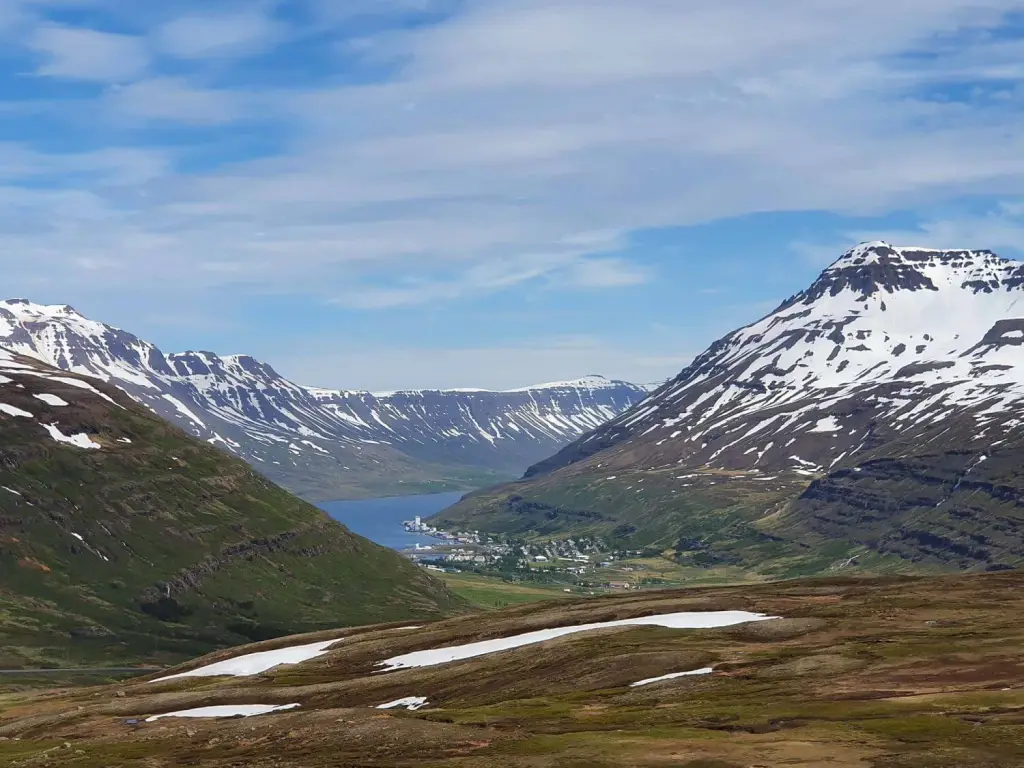
Slicing directly through the colossal, cloud-capped basalt mountain range rising immediately east of Egilsstaðir, this high-altitude highway pass is world-famous.
- What it is famous for: Being one of the most dramatic, visually spectacular mountain driving routes in Iceland, connecting the inland plains to the historic art town of Seyðisfjörður. Rising over 600 meters above sea level, the winding road cuts through an alpine landscape packed with melting snowfields, rushing mountain rivers, and gushing seasonal waterfalls. Driving this high pass offers a visceral, cinematic rush as you crest the mountain plateau and descend down steep hairpins into a deep ocean fjord.
10. Gufu Waterfalls (Gufufoss)
The Elegant Architectural Sentinel of Thick Mist Veils and Old Wilderness Telegraph Trails
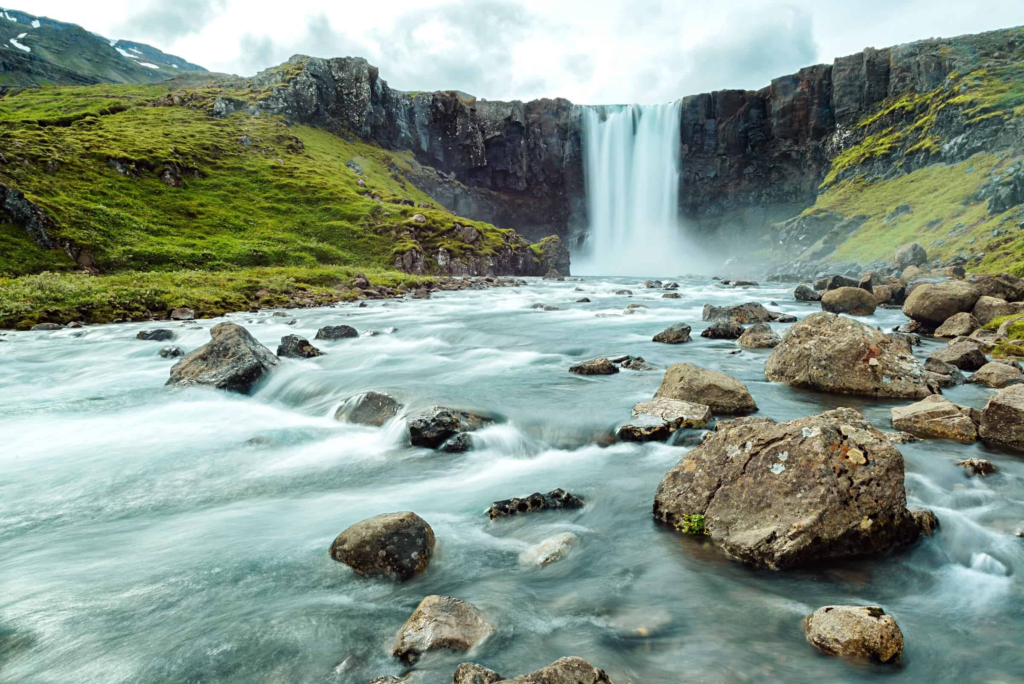
Sited right along the winding mountain pass highway just a short twenty-minute drive from Egilsstaðir, this monumental waterfall is a major visual landmark.
- What it is famous for: Its perfectly uniform, block-shaped design that resembles a smaller version of the famous Skógafoss, earning its name ‘Steam Waterfall’ due to its immense mist output. The falling waters create a constant, dense cloud of subarctic spray that produces brilliant rainbows during sunny summer afternoons. The site sits directly adjacent to the historic route of the country’s first international underwater telegraph cable, which was brought inland from the coast over these rugged mountains.
11. Skriðuklaustur Cultural Centre
The Bold Architectural Sentinel of Basalt Manor Monasteries and Avant-Garde Literary Vaults
Dominating a massive, grass-fringed historic estate located deep within the southern valleys of the Fljótsdalur district, this striking mansion holds world-class cultural status.
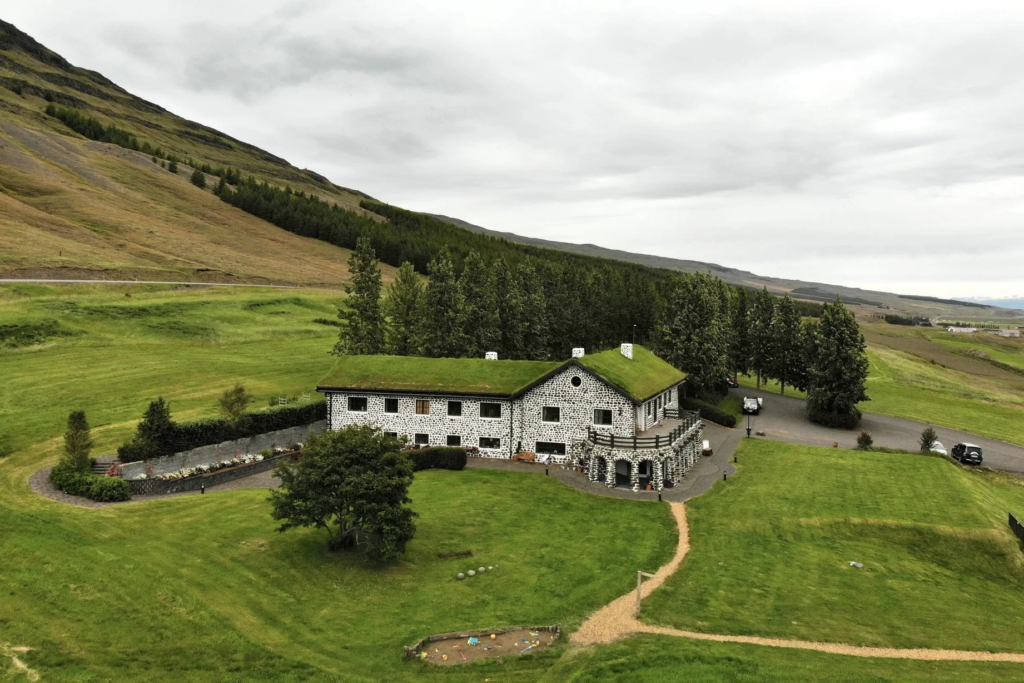
- What it is famous for: Being the majestic, turf-roofed stone manor house built in 1939 by celebrated Icelandic author Gunnar Gunnarsson, featuring the excavated ruins of a 16th-century Catholic monastery. Designed by master German architect Fritz Höger using rough local basalt stones and white-trimmed windows, the building is an architectural marvel. Today, it operates as a vibrant cultural center and writer’s retreat, housing interactive literary museums and a highly praised restaurant famous for its gourmet local game buffets.