
Florence, anchoring the absolute geographic and historic core of the Tuscany region along the wide, scenic path of the Arno River, operates on a spectacular flat-bottomed valley layout wrapped tightly by dramatic, olive-grove-lined geological ridges.
Historically originating as a strategic Roman military settlement that evolved by the 14th century into a global banking powerhouse and the undisputed birthplace of the Italian Renaissance, this northern stronghold stands proud as a masterclass in intellectual and artistic heritage.
Because the municipality aggressively protected its massive medieval stone towers, red-tiled monastic rooftops, and historic river crossings rather than sacrificing them to modern factory sprawls, it earned its permanent cultural status as the “Cradle of the Renaissance” and the undisputed national epicenter of fine arts heritage, humanist philosophy, and active Tuscan hill exploration.
Today, Florence presents a striking architectural matrix where ancient 13th-century stone palaces and towering cathedral domes stand directly beside cutting-edge contemporary fashion archives and vibrant public plazas.
The city effortlessly pairs its deep, conflict-tested historical pedigree with a progressive passion for world-class culinary crafts, traditional historical soccer matches, and a relaxed, walking-centered lifestyle.
1. Florence Cathedral & Brunelleschi’s Dome (Cattedrale di Santa Maria del Fiore)
The Spectacular Architectural Sovereign of Red Terracotta Vaults and Massive Gothic Marble Facades
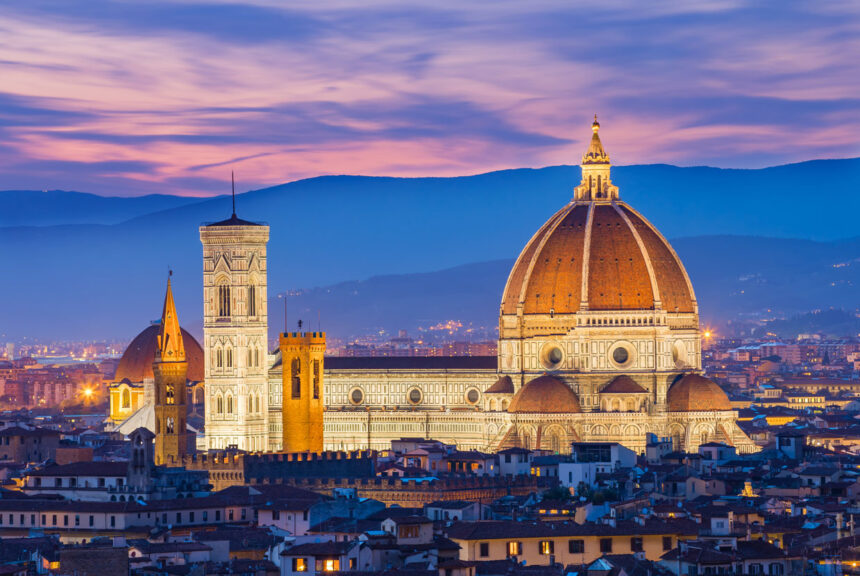
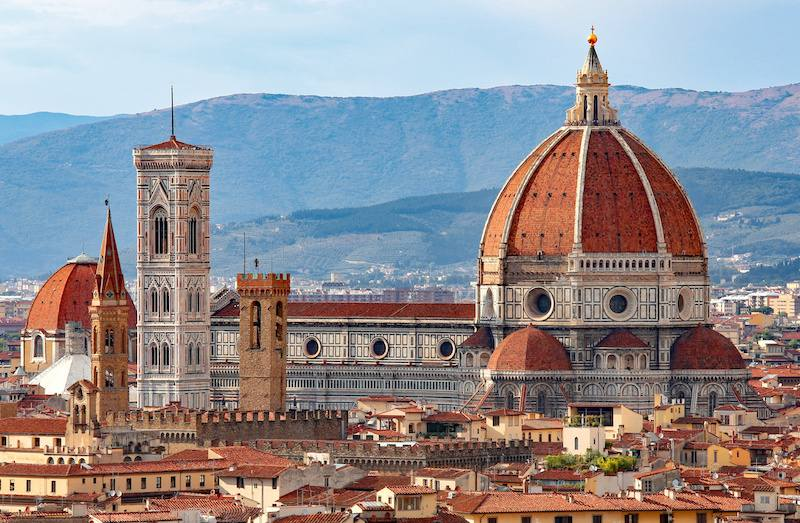
Dominating the absolute physical, visual, and historic center of the entire city grid, this monumental cathedral complex stands proud as the definitive architectural sovereign of Florence.
- What it is famous for: Holding the world’s largest brick and mortar dome, a colossal 150-foot-wide double-walled engineering masterpiece designed by Filippo Brunelleschi without the use of temporary scaffolding. Consecrated in 1436, the cathedral exterior is wrapped in a breathtaking pattern of green, pink, and white Tuscan marble. Visitors climb 463 narrow stone steps past Giorgio Vasari’s massive fresco of The Last Judgment to reach the panoramic lantern balcony, which offers a bird’s-eye view looking across the sea of red-tiled city roofs.
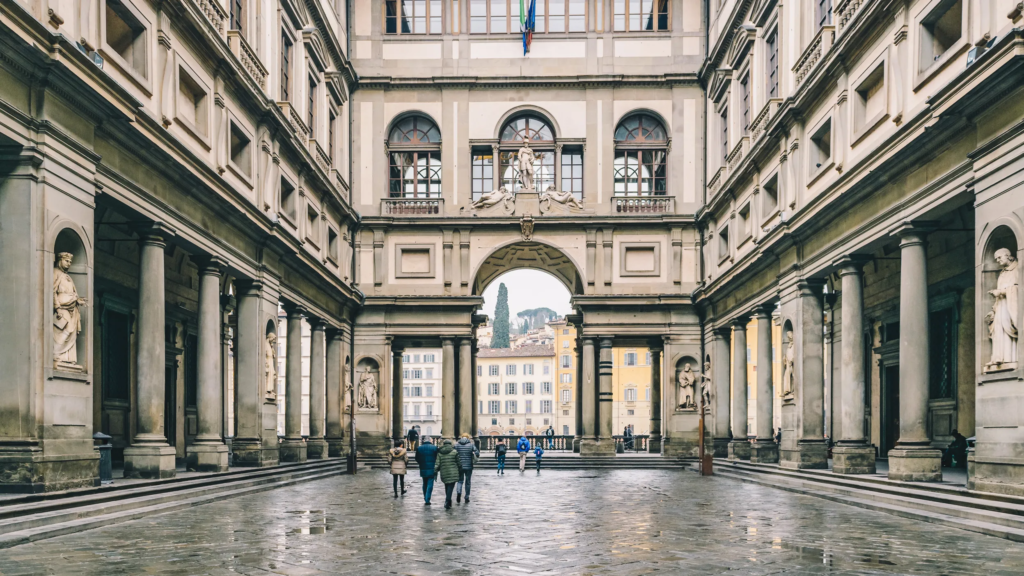
2. The Uffizi Gallery (Galleria degli Uffizi)
The Enigmatic Stone Sentinel of Medici Administrative Halls and High-Renaissance Painting Sagas
Sited dynamically along the north bank of the Arno River, this immense U-shaped palace complex preserves the most comprehensive archive of Renaissance art in human history.
- What it is famous for: Housing unparalleled masterworks from the golden age of Italian art, including Sandro Botticelli’s iconic The Birth of Venus, Leonardo da Vinci’s early canvases, and Michelangelo’s Doni Tondo. Originally constructed in 1560 by Giorgio Vasari to serve as the administrative offices (uffizi) for the Medici grand duchy, the palace features a grand, top-floor loggia illuminated by natural light. The gallery tracks the complete evolutionary trajectory of Western painting from stiff medieval altarpieces to fluid, perspective-driven Renaissance humanism.
3. Galleria dell’Accademia
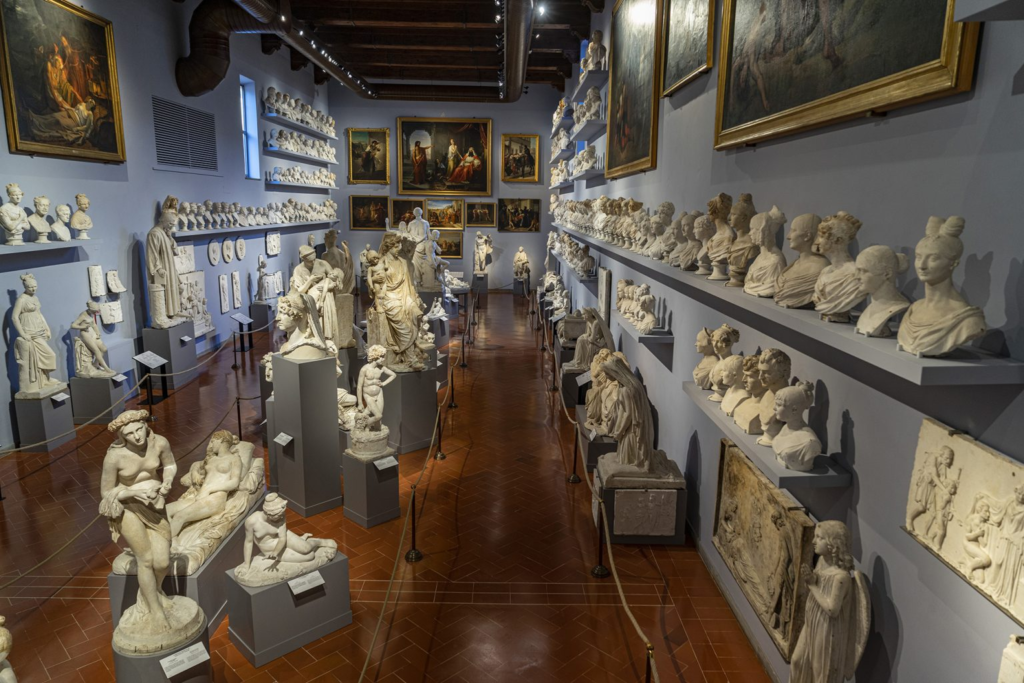
The Radiant Cultural Repository of Monolithic Marble Blocks and Michelangelo’s David Masterpieces
Nestled quietly within a historic monastic complex along the Via Ricasoli, this specialized national museum holds the absolute sculptural pinnacle of the high Renaissance.
- What it is famous for: Being the permanent home of Michelangelo’s original David statue, a colossal, 17-foot-tall marble masterpiece carved from a single block of flawed Carrara stone between 1501 and 1504. Standing beneath a custom-designed, natural-light glass rotunda, the statue represents the ultimate symbol of Florentine civic liberty and artistic perfection. The museum gallery leading up to the monument is lined with Michelangelo’s raw, unfinished Slaves sculptures, providing an intimate, look into the master’s technical carving process.
4. Ponte Vecchio
The Picturesque Walking Runway of Overhanging Goldsmith Shops and Secret Aerial Corridor Loops
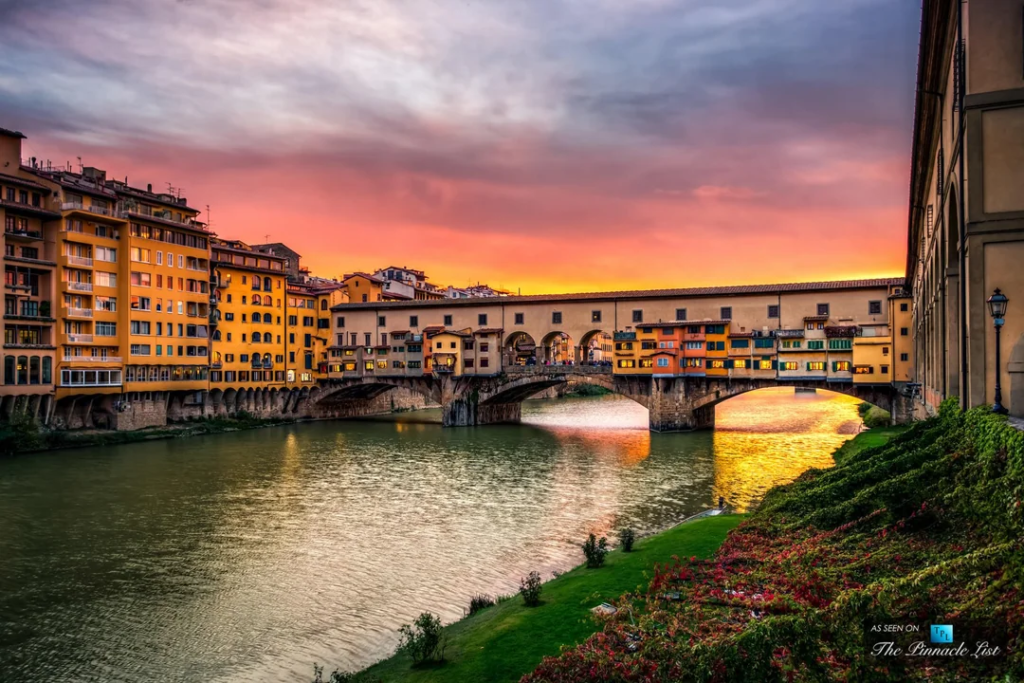
Slicing smoothly over the narrowest historical bend of the Arno River, this iconic, three-arch stone bridge stands proud as the oldest and most resilient water crossing in the city.
- What it is famous for: Its extraordinary design featuring rows of historic, brightly painted wooden shops that overhang the water, traditionally occupied by elite goldsmiths and jewelers since 1593. Built in 1345, the bridge was the only Florentine river crossing to survive destruction by retreating German forces during World War II. Running directly above the bustling jewelry shops is the hidden Vasari Corridor, a private, kilometer-long aerial stone walkway built to let the Medici dukes travel securely from government palaces to private residential gardens.
5. Palazzo Vecchio & Piazza della Signoria
The Monumental Public Sovereign of Crenellated Fortified Towers and Open-Air Sculpture Arenas
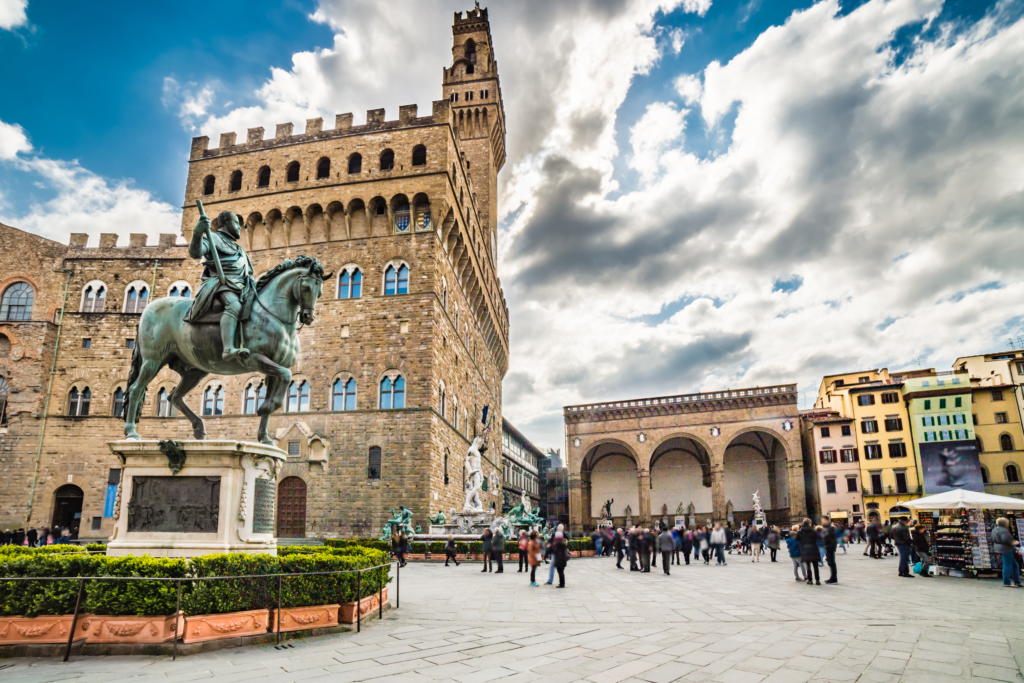
Slicing smoothly through the absolute political core of the old city grid, this massive, fortress-like town hall and its surrounding public plaza function as the historic civic stage of Florence.
- What it is famous for: Its towering, 311-foot-high asymmetric crenellated bell tower and the adjacent Loggia dei Lanzi—an open-air stone gallery holding world-famous bronze and marble sculptures. Built at the turn of the 14th century, the palace features rugged rusticated stonework designed to withstand civic riots. The open-air plaza out front functions as a high-energy civic theater, marked by a stone plaque detailing the execution of Savonarola and anchored by the colossal Neptune Fountain.
6. Piazzale Michelangelo
The Breathtaking Minimalist Palace of Panoramic Sunset Terraces and Tuscan Hillside Overlooks
Perched majestically on a high, wooded ridge overlooking the entire river basin from the southern hills, this grand, 19th-century panoramic terrace is a favorite destination for travelers.
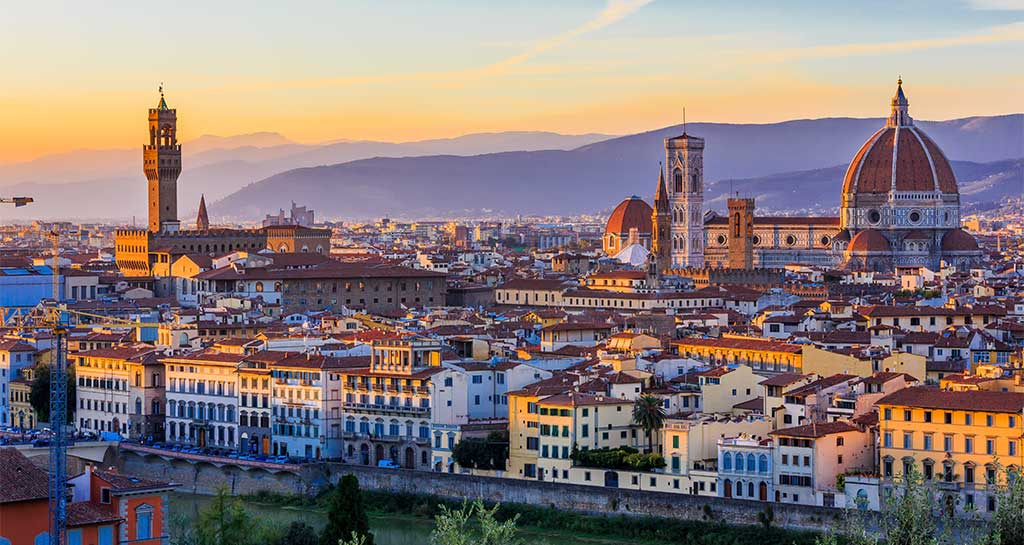
- What it is famous for: Offering the definitive, postcard-perfect panoramic view of the complete Florentine skyline, capturing the Duomo, Palazzo Vecchio, and Ponte Vecchio framed by the distant Apennine mountains. Engineered by Giuseppe Poggi in 1869 during the modernization of the city’s walls, the terrace features bronze replicas of Michelangelo’s greatest sculptures. The public terrace functions as a high-energy evening gathering place, where musicians perform as sunset paints the Arno River in shades of gold.
7. Pitti Palace & Boboli Gardens (Palazzo Pitti)
The Sprawling Eco Matrix of Grand Ducal Stone Facades and Formal Italian Renaissance Amphitheaters
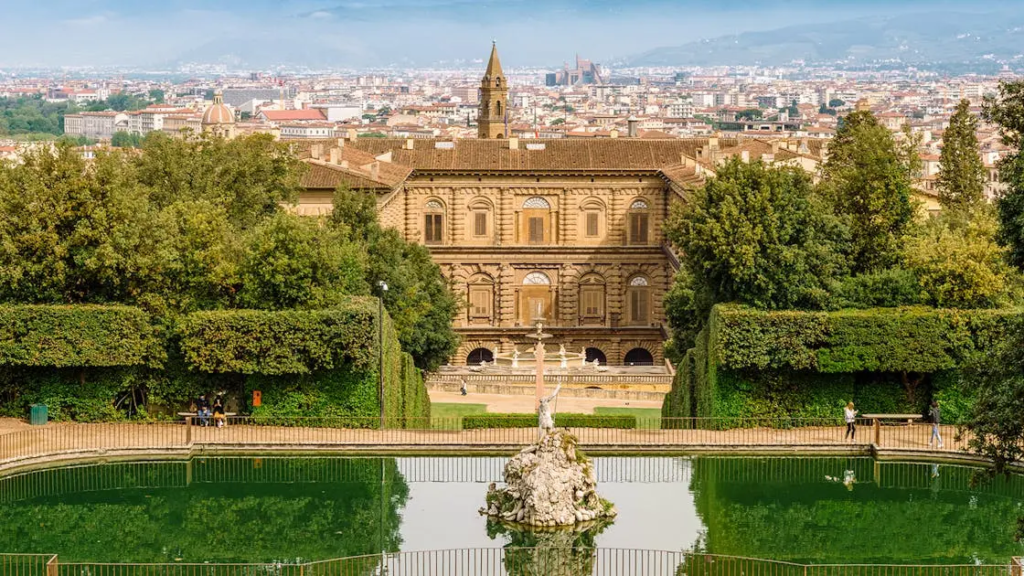
Commanding a majestic, rough-hewn stone presence directly across the southern banks of the Arno River, this colossal palace complex represents the ultimate royal residence of Florence.
- What it is famous for: Being the massive, rusticated stone palace of the Medici grand dukes, opening directly onto the Boboli Gardens—the definitive model for formal, geometric European landscape architecture. The vast estate features a network of palatine galleries filled with masterworks by Raphael and Titian. Behind the stone palace wings, the sprawling, 111-acre gardens feature grand cypress avenues, hidden grottos, and a monumental stone amphitheater carved directly into the hillside slopes.
8. Basilica of Santa Croce
The Breathtaking Ancestral Sovereign of Franciscan Gothic Naves and Masterwork Pantheons
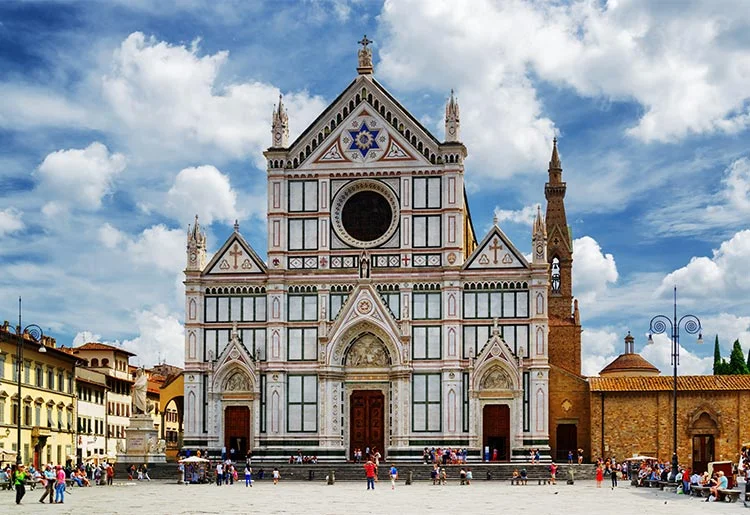
Commanding a majestic, high-profile presence along the eastern edge of the historic old town core, this monumental Franciscan basilica dominates the civic memory of the nation.
- What it is famous for: Being the final resting place and mausoleum of Italy’s most legendary minds, housing the elaborate stone tombs of Michelangelo, Galileo Galilei, Niccolò Machiavelli, and Gioachino Rossini. Known as the Temple of Italian Glories, the 13th-century gothic church features a wide nave decorated with historic frescoes by Giotto and a revolutionary, minimalist courtyard chapel designed by Brunelleschi. The monument retains a profound historical reverence, serving as a structural bridge between medieval faith and Renaissance science.
9. The Medici Chapels (Cappelle Medicee)
The Savory Cultural Repository of Semi-Precious Stone Tombs and Michelangelo’s Allegorical Vaults
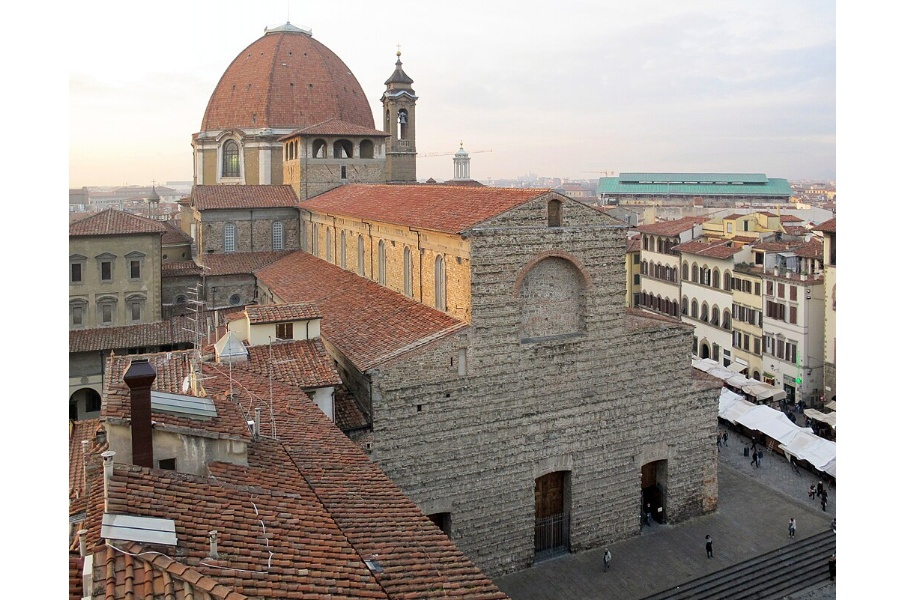
Tucked quietly behind the historic Basilica of San Lorenzo, this monumental, domed mausoleum complex preserves the absolute dynastic wealth of the family that funded the Renaissance.
- What it is famous for: Housing the spectacular Chapel of the Princes, a massive octagonal hall lined entirely with rare semi-precious stones, and Michelangelo’s celebrated New Sacristy sculptural tomb designs. The soaring, marble-lined chambers feature Michelangelo’s legendary allegorical sculptures of Night and Day and Dawn and Dusk, carved to decorate the stone sarcophagi of the Medici rulers. The complex tracks the family’s transformation from simple merchant bankers to sovereign, absolute monarchs of the Tuscan state.
10. Bargello National Museum (Museo Nazionale del Bargello)
The Colossal Modern Sovereign of Medieval Fortress Courtyards and Early Renaissance Bronze Masters
Dominating a prominent public corner within the old town center grid, this imposing, 13th-century fortified prison building stands proud as the premiere sculpture museum of the city.
- What it is famous for: Its exceptional collection of early Renaissance masterwork sculptures, featuring Donatello’s famous, provocative bronze David and his marble St. George. Originally constructed as the city’s police headquarters and dark prison fortress, the building features an atmospheric, arcaded stone courtyard covered in historic coats of arms. The collection displays rare medieval ivories, Islamic metalwork, and the historic bronze relief plaques created by Brunelleschi and Ghiberti for the famous baptistery door competition.
11. San Miniato al Monte
The Breathtaking Ancestral Sovereign of Green-and-White Romanesque Facades and Golden Apse Chants
Sited majestically on an even higher hill ridge directly above Piazzale Michelangelo, this ancient Benedictine basilica stands proud as one of the oldest churches in Florence.
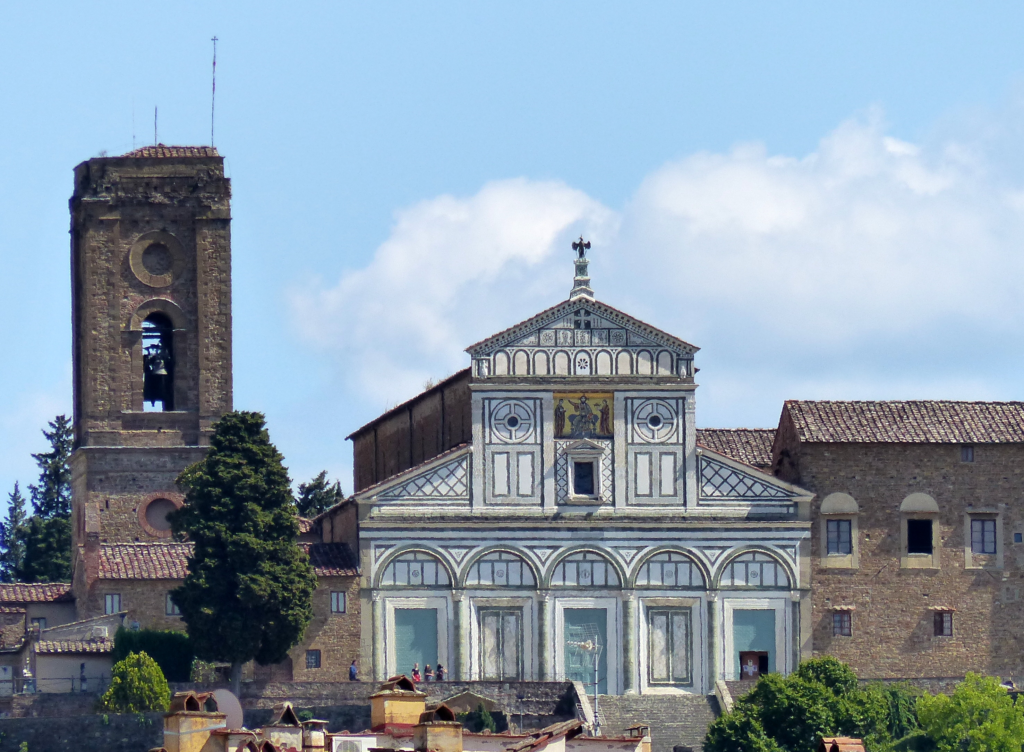
- What it is famous for: Its exquisite 12th-century geometric green-and-white marble Romanesque facade and its spectacular, shimmering golden mosaic depicting Christ between the Virgin and San Miniato. The interior features an elevated choir built over a historic 11th-century columned crypt, where Benedictine monks continue to sing traditional Gregorian chants every evening. The quiet, high-altitude churchyard offers a peaceful escape, providing panoramic views across the city valley below.