
Venice, anchoring the absolute geographic and historic center of the Venetian Lagoon along the crescent-shaped maritime frontier of northern Italy, operates on a spectacular aquatic layout where urban life floats entirely on a network of 118 small islands.
Historically originating in the 5th century as a muddy marsh sanctuary for refugees escaping barbarian invasions, this seafaring stronghold evolved by the 10th century into a dominant merchant empire and the undisputed naval superpower of the Mediterranean.
Because the republic aggressively engineered its stone foundations over millions of wooden piles driven deep into the lagoon mud rather than converting its spaces into modern vehicular roads, it earned its permanent cultural title as the “Serenissima” and the world’s premier capital of maritime architecture, romantic water stagecraft, and historic canal-side trail exploration.
Today, Venice presents an incredible architectural matrix where monumental 14th-century Venetian Gothic palaces and soaring Byzantine domes stand directly beside historic stone footbridges, modern contemporary art pavilions, and vibrant open-air plazas.
The city effortlessly pairs its deep, trade-tested historical pedigree with a progressive passion for world-class contemporary art biennales, traditional carnival mask festivals, and a completely vehicle-free walking lifestyle tied to the water.
1. St. Mark’s Basilica (Basilica di San Marco)
The Spectacular Architectural Sovereign of Golden Byzantine Mosaics and Domed Italo-Islamic Vaults
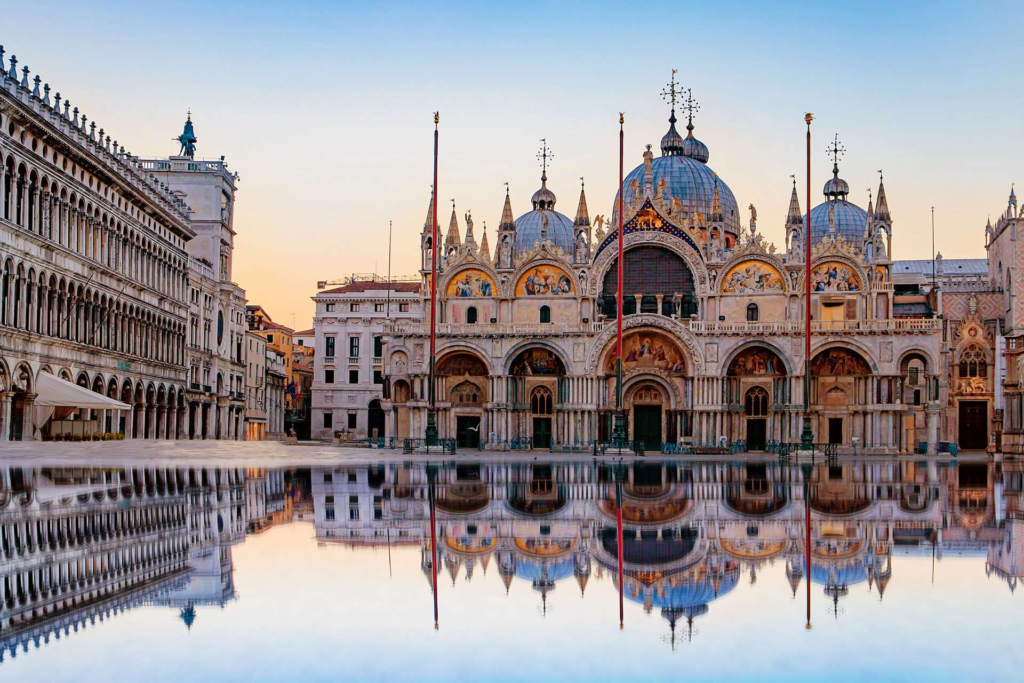
Dominating the absolute physical and spiritual profile of the city’s main eastern plaza, this monumental cathedral stands proud as the definitive architectural jewel of Venice.
- What it is famous for: Its extraordinary Italo-Byzantine architecture featuring five colossal onion domes and over 85,000 square feet of shimmering, 24-karat gold leaf interior mosaics. Consecrated in the 11th century to house the stolen relics of Saint Mark the Evangelist, the basilica was historically dubbed the Chiesa d’Oro (Church of Gold) to project the immense wealth of the Venetian Republic. Visitors walk past columns of rare eastern marble, porphyry, and the legendary bronze Horses of Saint Mark, exploring an acoustic sanctuary where Western and Eastern design styles collide.
2. The Doge’s Palace (Palazzo Ducale)
The Breathtaking Gothic Sovereign of Pink Verona Marble Arcades and Secret Council Vaults
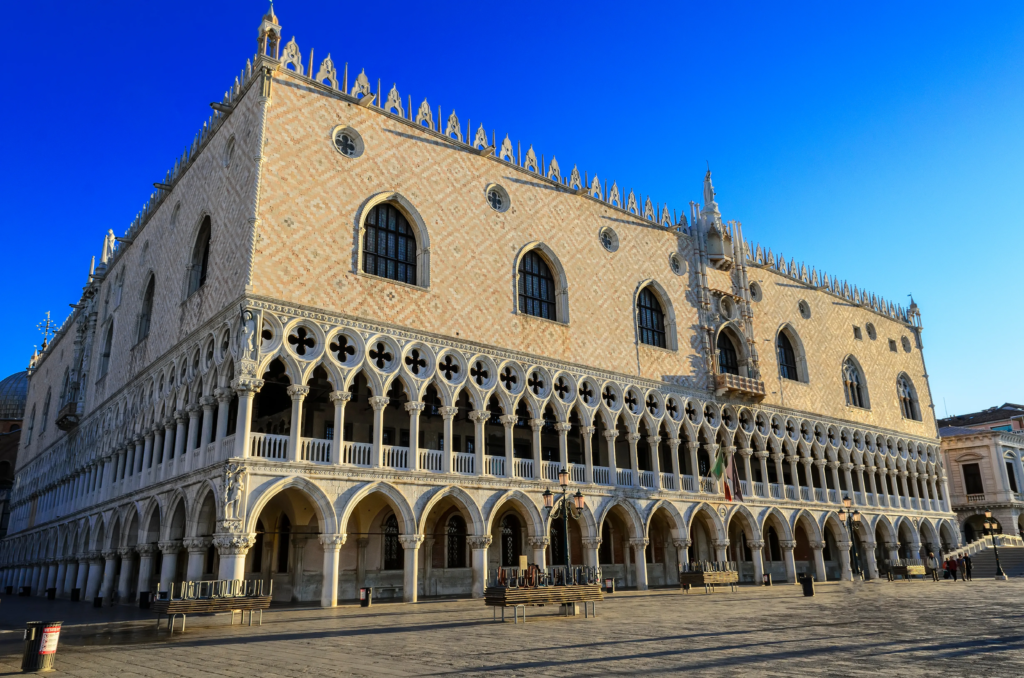
Commanding a majestic, high-profile waterfront presence directly beside the St. Mark’s basin, this grand white-and-pink stone palace represents the historic administrative soul of the maritime republic.
- What it is famous for: Being the absolute masterpiece of Venetian Gothic secular architecture, serving for centuries as the residence of the Doge, the supreme seat of government, and the courthouse. The building features a unique design where massive, delicate open-air loggias sit structurally beneath heavy, intricately patterned upper walls. Inside, the monumental institutional chambers are covered in masterwork canvases by Tintoretto and Veronese, leading down to the historic dark stone wells where political prisoners were historically cast.
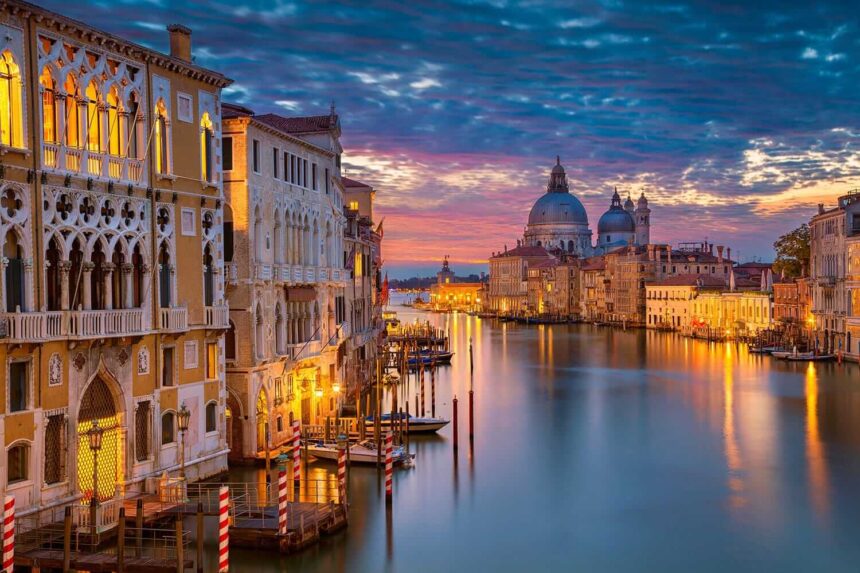
3. The Grand Canal (Canal Grande)
The Enigmatic Water Sentinel of Liquid Noble Boulevards and Sinuous Fluvial Palace Sagas
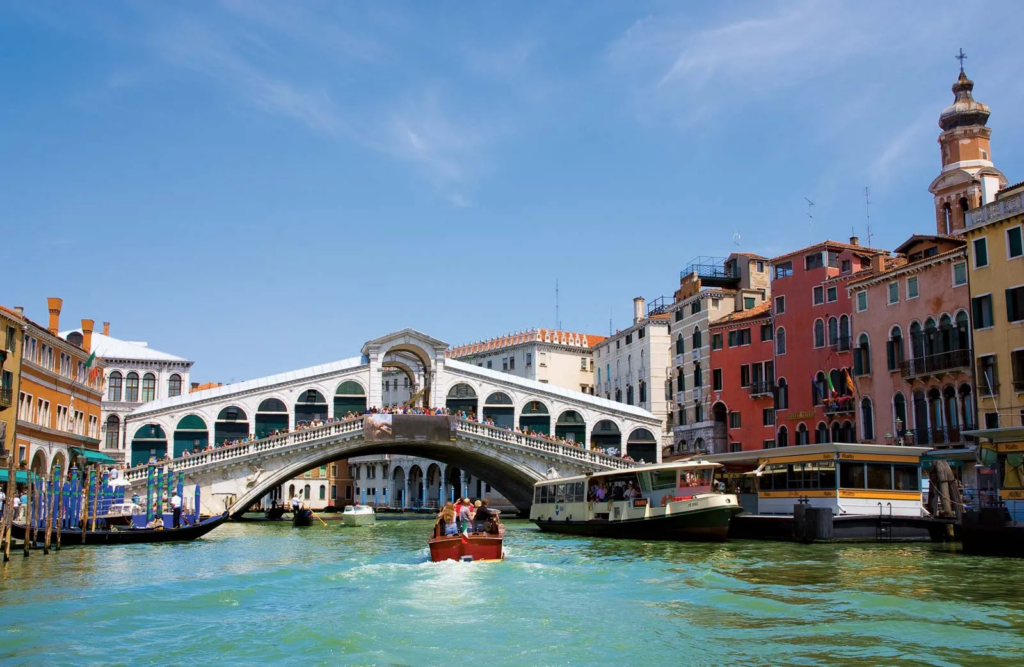
Slicing smoothly through the absolute geographic core of the city in a massive, four-kilometer-long S-shaped curve, this aquatic highway functions as the primary shipping and transit artery of Venice.
- What it is famous for: Being the most beautiful water boulevard in the world, lined continuously with over 170 monumental palaces built from the 13th to the 18th centuries by Venice’s elite patrician families. The grand channel acts as a living chronological museum of architectural evolution, showcasing Byzantine, Gothic, Renaissance, and Baroque facades that drop directly into the churning green waters. The liquid avenue functions as a high-energy stage for public water-buses, classic wooden water-taxis, and traditional gondolas mapping the city’s daily life.
4. Rialto Bridge (Ponte di Rialto)
The Picturesque Walking Runway of Istrian Stone Arch Spans and High Energy Market Horizons
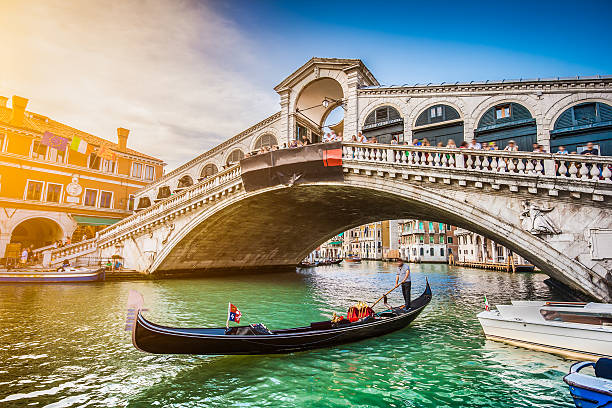
Slicing smoothly over the narrowest and most historic economic bend of the Grand Canal, this colossal stone bridge stands proud as an engineering marvel of the Renaissance.
- What it is famous for: Its bold, single-span stone design engineered by Antonio da Ponte in 1591, supporting two busy rows of elevated luxury boutiques beneath a series of elegant central arches. Built to replace an ancient wooden drawbridge that had collapsed under the weight of crowds, the Istrian limestone structure successfully defied contemporary critics who predicted its structural failure. The bridge functions as a vibrant urban runway connecting the commercial old town core directly to the historic open-air Rialto fish and produce markets.
5. The Bridge of Sighs (Ponte dei Sospiri)
The Sprawling Eco Matrix of Enclosed Baroque Tiers and Subterranean Prison Pathway Loops
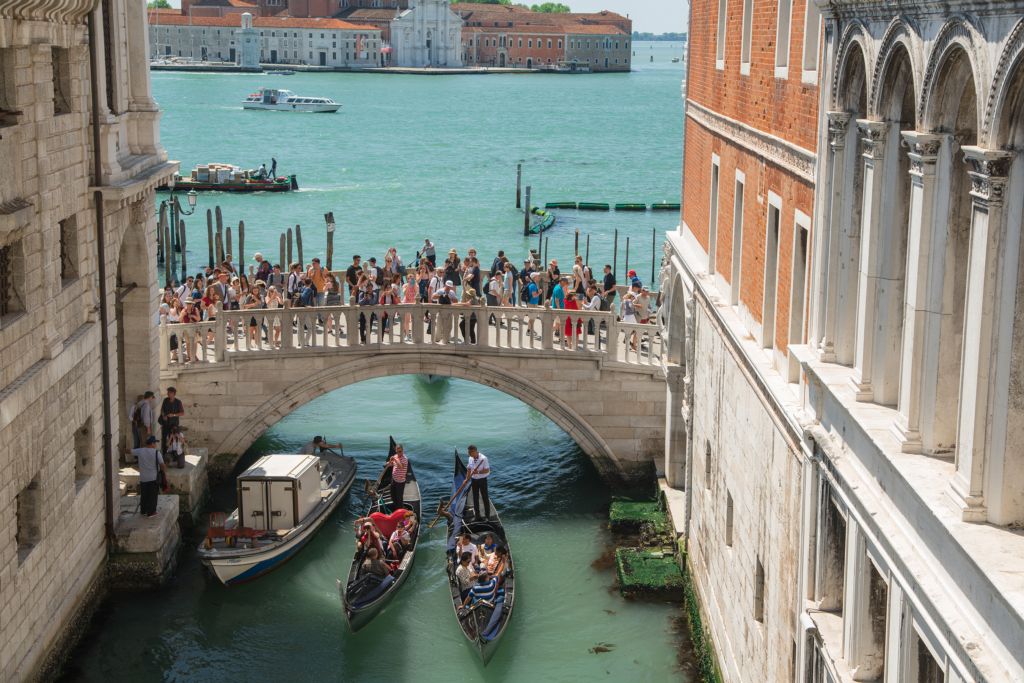
Slicing smoothly across the narrow Rio di Palazzo canal at an elevated height, this intimate, highly ornamental white limestone bridge connects the Doge’s Palace to the New Prisons.
- What it is famous for: Its beautiful baroque design featuring delicate stone-grilled windows, famous in romantic folklore as the final spot where convicts caught their last view of Venice before being locked away. Designed by Antonio Contin in 1600, the bridge earned its legendary name from Lord Byron’s romantic poetry, which imagined the heavy sighs of prisoners walking across its enclosed corridor. The monument operates as a primary visual destination for travelers, who gather in gondolas below to frame its white, arching profile.
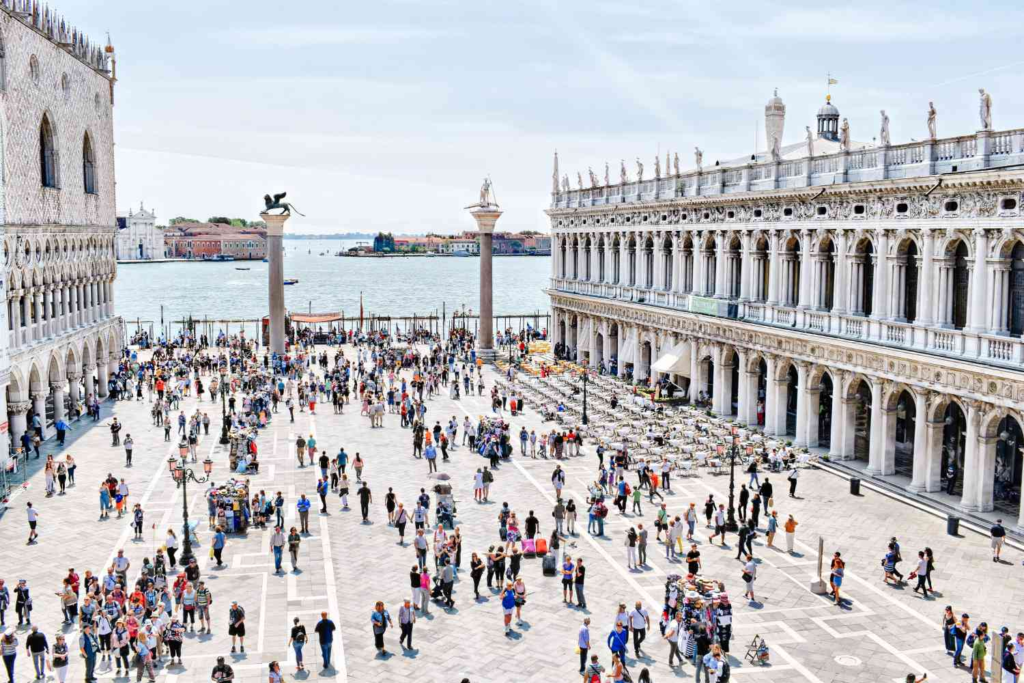
6. St. Mark’s Square (Piazza San Marco)
The Radiant Cultural Repository of Monumental Bell Towers and High-Energy Venetian Café Arenas
Occupying a vast, trapezoidal marble footprint facing the open lagoon, this magnificent public square stands proud as the definitive civic and social stage of the metropolis.
- What it is famous for: Being the only official “piazza” in Venice—dubbed by Napoleon as the “drawing room of Europe”—flanked by the stately arcades of the Procuratie and the iconic 323-foot-high Campanile bell tower. The public square is world-famous for its high-energy historical cafés, including Caffè Florian, where live string orchestras perform for outdoor patrons. The plaza serves as the absolute epicenter for the spectacular parades of the Venetian Carnival and the high-tide Acqua Alta seasonal lake floods.
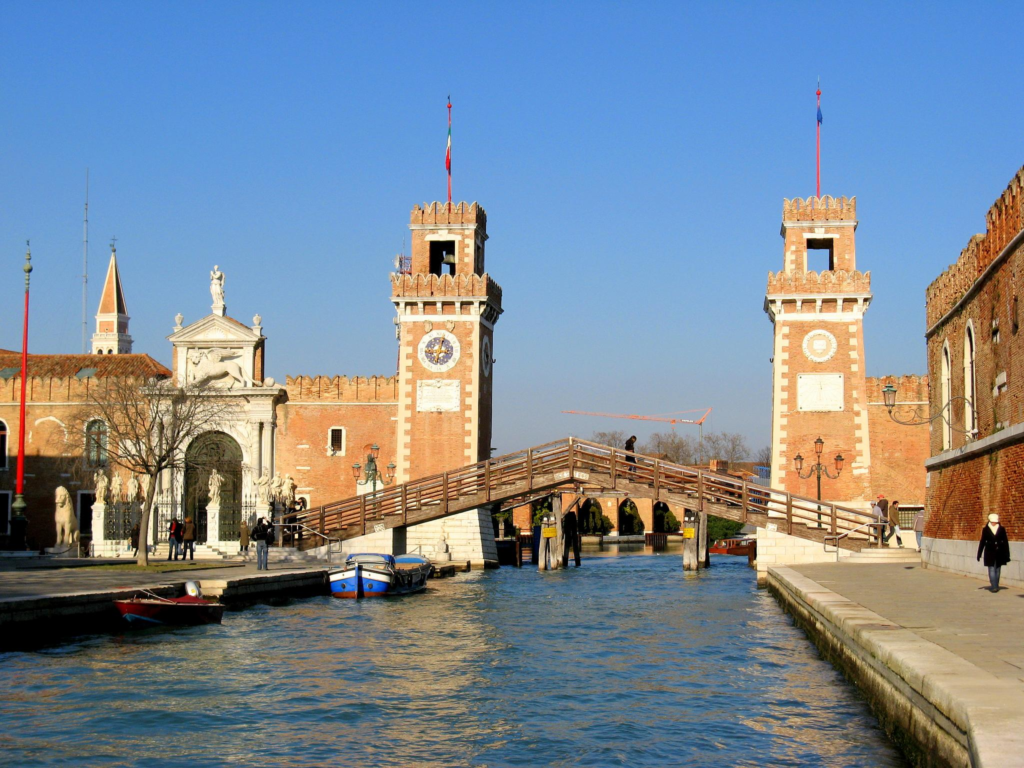
7. The Venetian Arsenal (Arsenale di Venezia)
The Monumental Public Sovereign of Twin Renaissance Watchtowers and Mass Production Shipyards
Slicing smoothly through a massive, secure complex in the eastern Castello district, this historic fortified shipyard represents the absolute foundation of Venice’s ancient naval power.
- What it is famous for: Being the premier military-industrial complex of the pre-modern world, capable of assembling an entire fully armed galley warship in a single day using an early form of assembly-line mass production. Founded in 1104, the Arsenal was surrounded by two miles of crenellated brick walls and guarded by two majestic Renaissance lion gate towers. Today, while remaining an active naval base, its massive, cavernous rope-making halls and drydocks serve as industrial-chic exhibition spaces for the international Venice Biennale art festival.
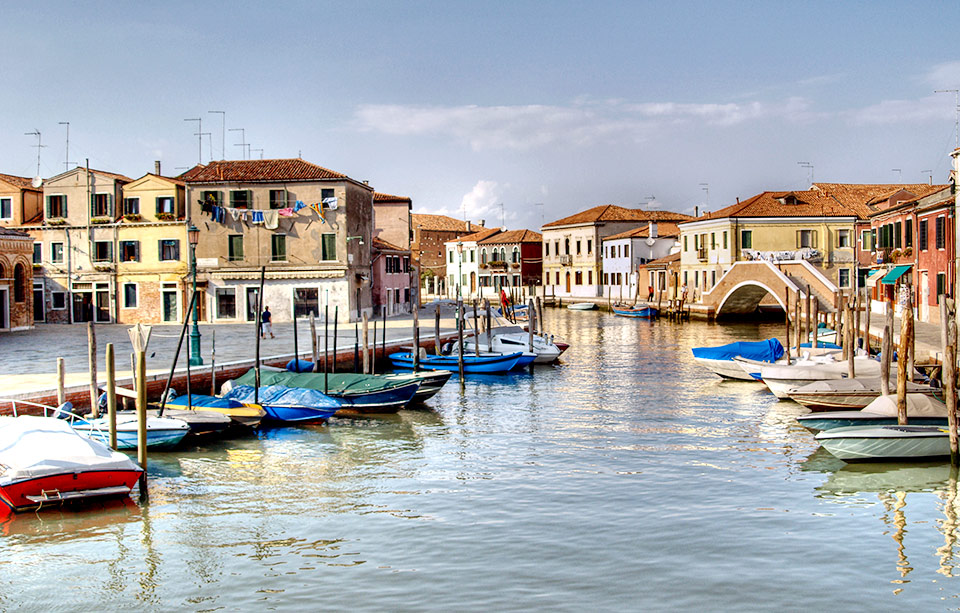
8. Murano Island
The Rowdy Cultural Runway of Glass-Blowing Furnace Fire Vaults and Artisan Sculpture Inlets
Sited dynamically within the northern open waters of the lagoon just a brief water-bus transit ride from the city core, this cluster of seven islands is a paradise of fire and sand.
- What it is famous for: Being the world’s historic capital of premium art glass production since 1291, when the Venetian Republic forced all glassmakers to move their furnaces to the island to protect Venice from city fires. The island became legendary for inventing crystal-clear glass, enameled glass, and massive glass chandeliers. Today, visitors walk along its quiet canal banks to enter active factory furnaces, watching master artisans hand-sculpt molten glass before exploring galleries filled with cutting-edge glass art sculpture.
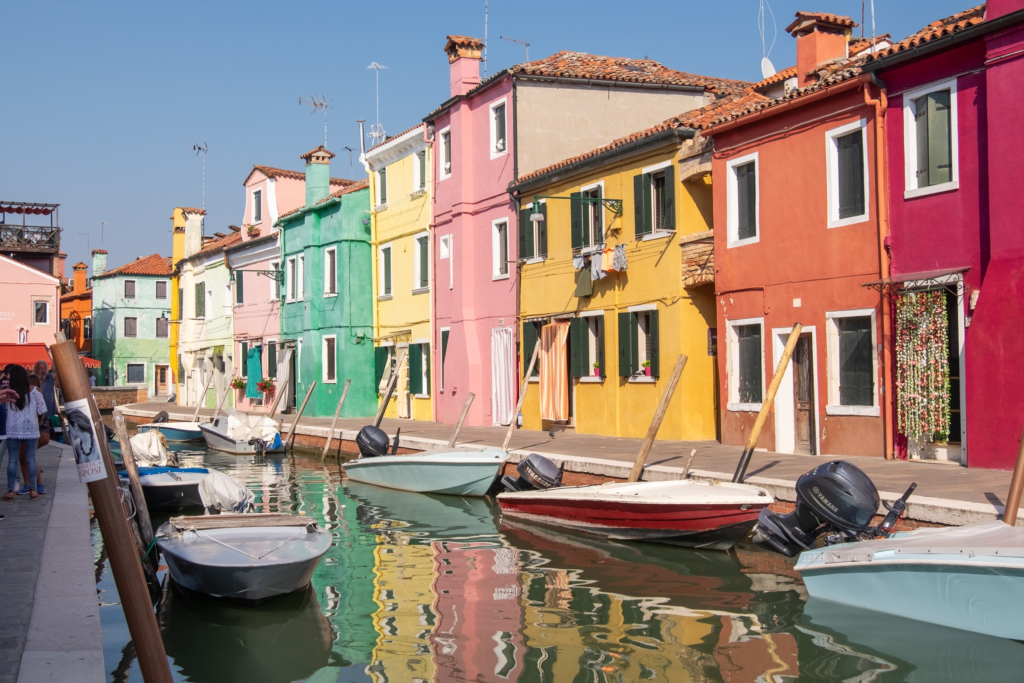
9. Burano Island
The Breathtaking Minimalist Palace of Neon-Painted Fishermen Gables and Intricate Lace Needle Trails
Perched majestically within the northern reaches of the lagoon landscape, this vibrant, island village offers a visually striking contrast to the stone palazzos of central Venice.
- What it is famous for: Its enchanting rows of hyper-vibrant, neon-painted fishermen’s cottages and its centuries-old tradition of creating exquisite, hand-needle-crafted Venetian lace. Local legends state the houses were painted in distinct, bright color schemes so fishermen could identify their homes through the thick winter lagoon fogs. The car-free island functions as a living canvas for color photography, where travelers explore lace-making schools, independent boutiques, and traditional seafood trattorias serving local lagoon risotto.
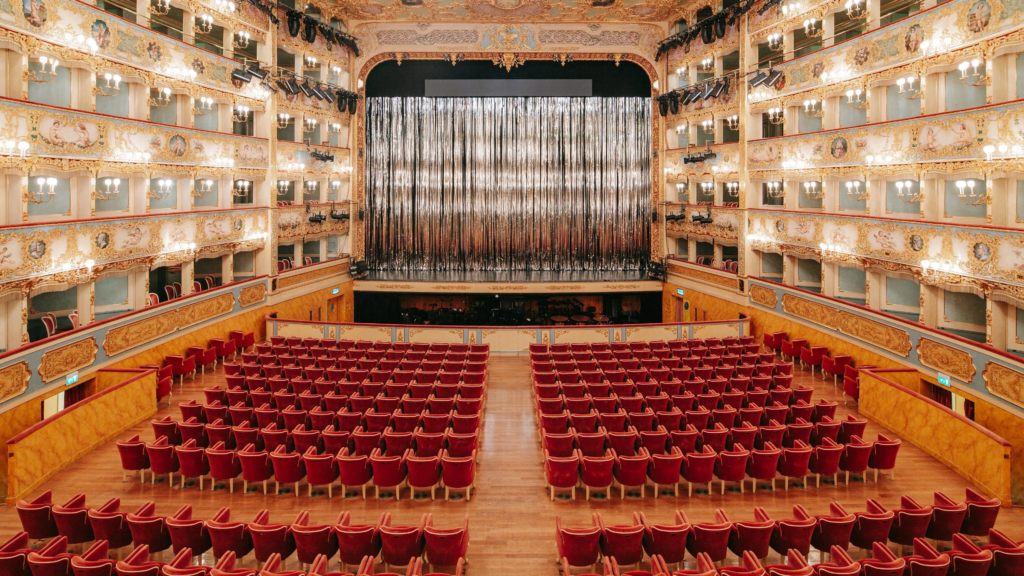
10. Teatro La Fenice
The Colossal Modern Sovereign of Gilded Opera Tiers and Fire-Tested Neo-Classical Performance Vaults
Commanding a majestic, high-profile presence within a quiet public square in the San Marco district, this legendary opera house dominates the musical history of Europe.
- What it is famous for: Being one of the most famous theaters in the history of opera, serving as the stage for the world premieres of masterworks by Verdi, Rossini, and Bellini. True to its name—La Fenice (The Phoenix)—the theater has spectacularly risen from its ashes three separate times following devastating fires, most recently being meticulously rebuilt in 2003 in its original 18th-century neo-classical and rococo design. The interior features five tiers of gold-leaf boxes, crystal chandeliers, and an acoustic resonance celebrated by the world’s elite classical musicians.
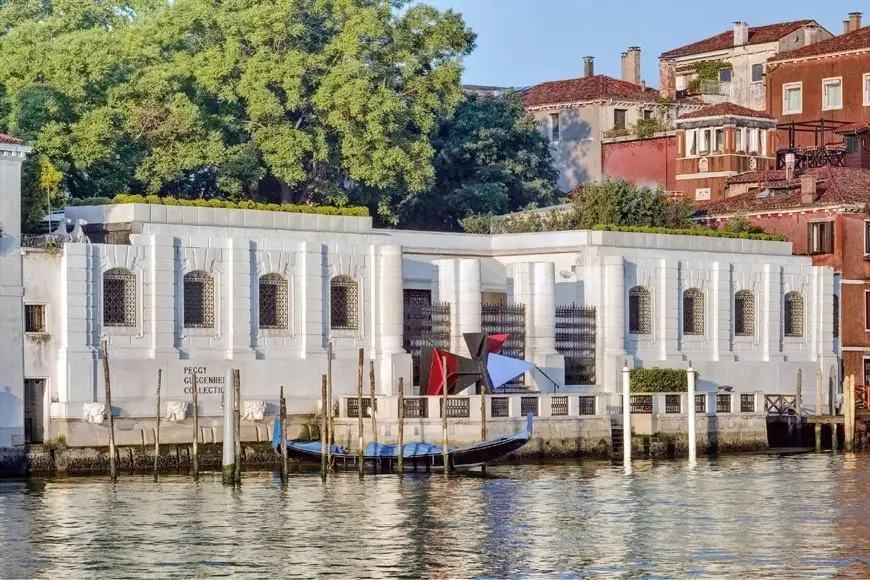
11. Peggy Guggenheim Collection
The Savory Cultural Repository of Low-Slung Marble Palazzos and Avant-Garde Modern Art Vectors
Tucked quietly along the southern banks of the Grand Canal within the artistic Dorsoduro district, this unique museum complex holds the modern visual soul of the city.
- What it is famous for: Housing one of the world’s premier collections of 20th-century modern art, located inside the Palazzo Venier dei Leoni—the unfinished, single-story white marble palace that was Guggenheim’s personal home. The museum displays masterworks of Cubism, Surrealism, and Abstract Expressionism, featuring pieces by Picasso, Pollock, Dalí, and Kandinsky. The palazzo features an outdoor sculpture garden and a low-slung waterfront terrace that offers a serene, modern viewpoint looking across the historic passing gondolas of the Grand Canal.