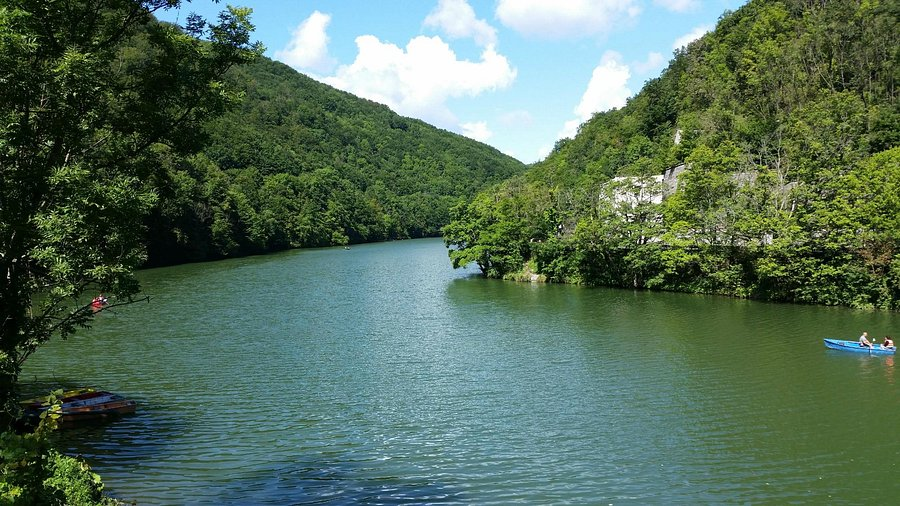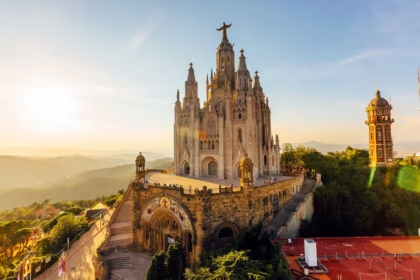

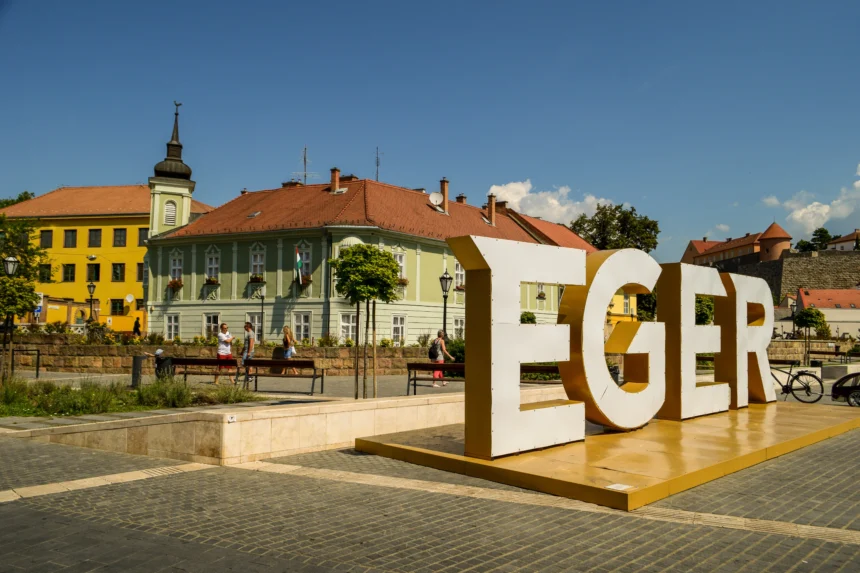
Eger, anchoring the picturesque northern frontier of Hungary tucked neatly between the rolling, vine-covered foothills of the Mátra and Bükk mountains, operates on a spectacular, tightly woven urban layout steeped in military legend and imperial opulence.
Most famous for the monumental 1552 Siege of Eger where a vastly outnumbered band of Hungarian defenders miraculously repelled the advancing Ottoman army the city’s historic core stands as a primary monument to national resilience.
Following its eventual Baroque rebirth under wealthy prince-bishops, Eger evolved from a critical border fortification into a premier intellectual, architectural, and viticultural capital.
Today, Eger presents a striking urban matrix where heavy medieval stone ramparts overlook an old town packed with pastel-hued Baroque facades and a solitary, sky-piercing Islamic minaret.
The city effortlessly pairs its deep religious pedigree housing Hungary’s second-largest basilica with a vibrant, wine-driven lifestyle centered around subterranean cellars carved directly into local volcanic tufa stone.
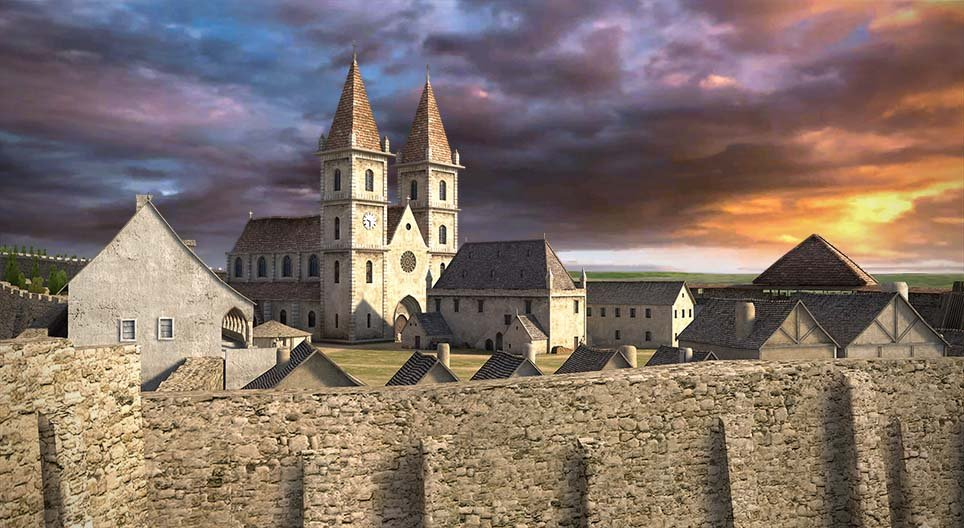
1. Eger Castle (Egri Vár)
The Monumental Hilltop Sovereign of Medieval Bastions, Underground Tunnels, and Heroic Legends
Commanding a sharp, strategic limestone plateau that rises abruptly over the absolute center of the old town, this sprawling fortification complex dominates the local skyline.
- What it is famous for: Being the legendary fortress where István Dobó led 2,000 Hungarian soldiers to a miraculous victory against 40,000 Ottoman invaders in 1552. Visitors can explore the vast stone ramparts, walk through the intricate network of underground tunnels (kazamaták) carved deep into the rock, and visit the tomb of Dobó. The castle grounds also house the István Dobó Castle Museum, which chronicles the siege that permanently cemented Eger into European military history.
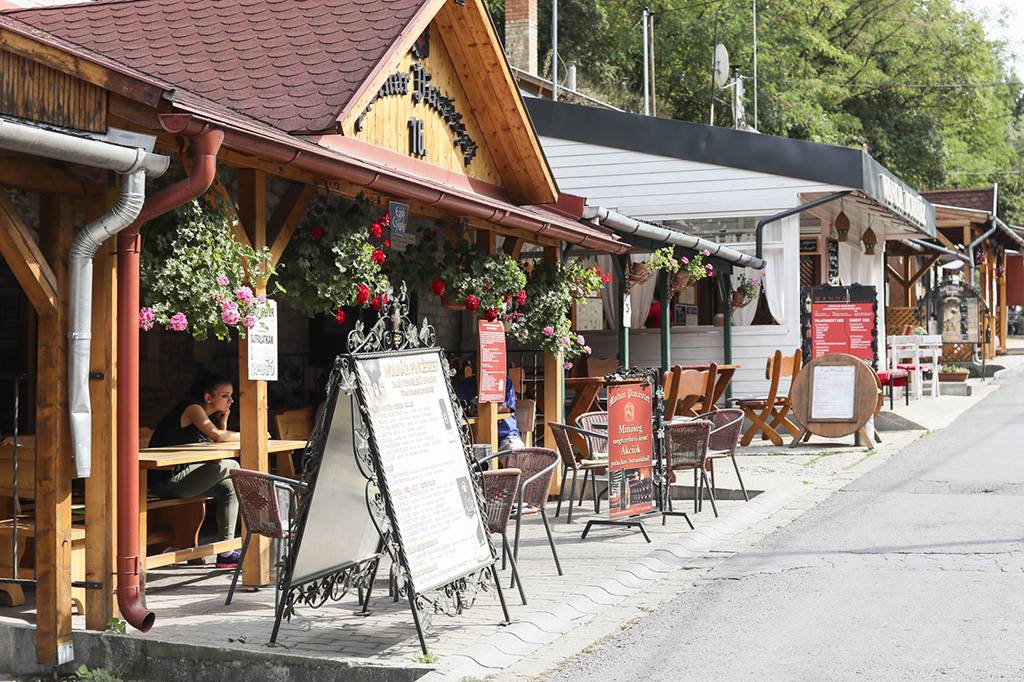
2. The Valley of the Beautiful Woman (Szépasszony-völgy)
The Subterranean Matrix of Volcanic Tufa Wine Cellars and Crimson Bull’s Blood Taps
Nestled into a lush, green valley basin located just a short 2-kilometer walk southwest of the central city grid, this unique neighborhood is a paradise for wine lovers.
- What it is famous for: Its extraordinary network of over 200 wine cellars carved by hand directly into living volcanic tufa stone, offering world-class local tastings. The unique microclimate inside these moss-lined stone vaults keeps temperatures perfectly stable for aging Eger’s signature wines. Visitors can hop from cellar to cellar to sample Egri Bikavér (Bull’s Blood) and the crisp white Egri Csillag (Star of Eger) poured straight from glass pipettes by local winemakers.
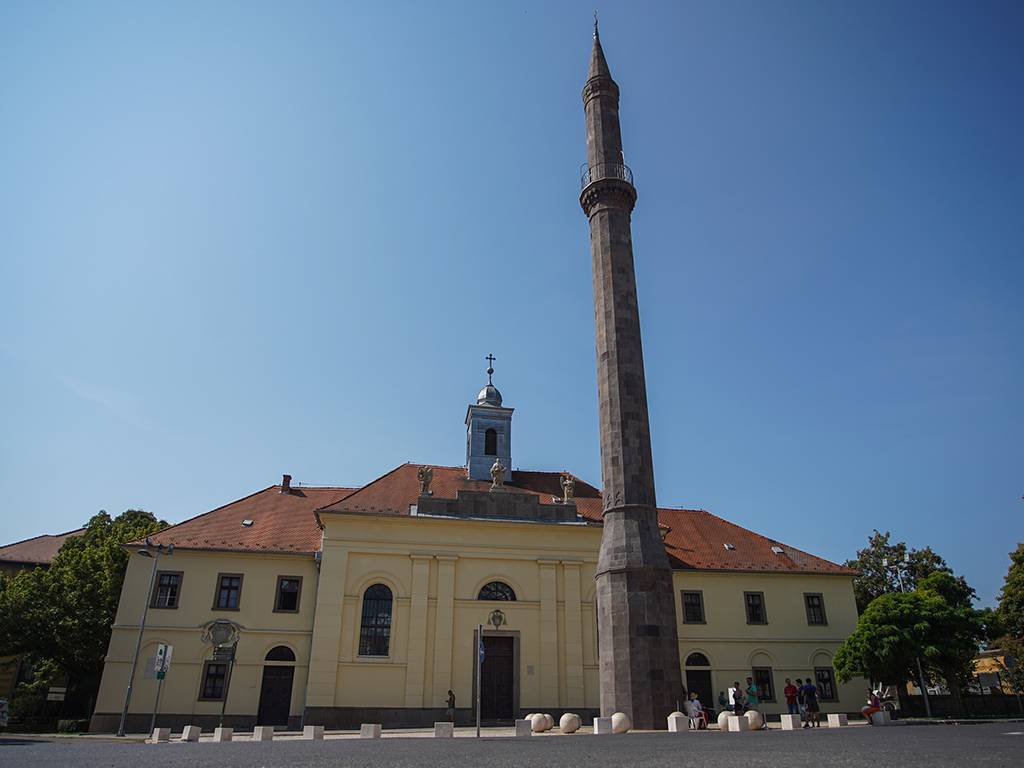
3. Eger Minaret
The Striking Islamic Needle of Fourteen-Sided Limestone Blocks and Panoramic Balconies
Standing proud on a quiet street corner just a short walk north of the central pedestrian square, this lonely stone tower represents a unique historical survival.
- What it is famous for: Being the northernmost historic Ottoman minaret remaining in Europe, featuring a 40-meter-high fourteen-sided limestone tower. Built in the early 17th century during the period of Turkish rule, the tower survived the Christian reconquest when locals tried to tear it down with 40 oxen (the tower stood firm, so they topped it with a cross instead). Brave travelers can climb up 97 narrow, winding spiral stone steps inside to reach the outdoor balcony for a bird’s-eye panorama over Eger’s red-tiled roofs.
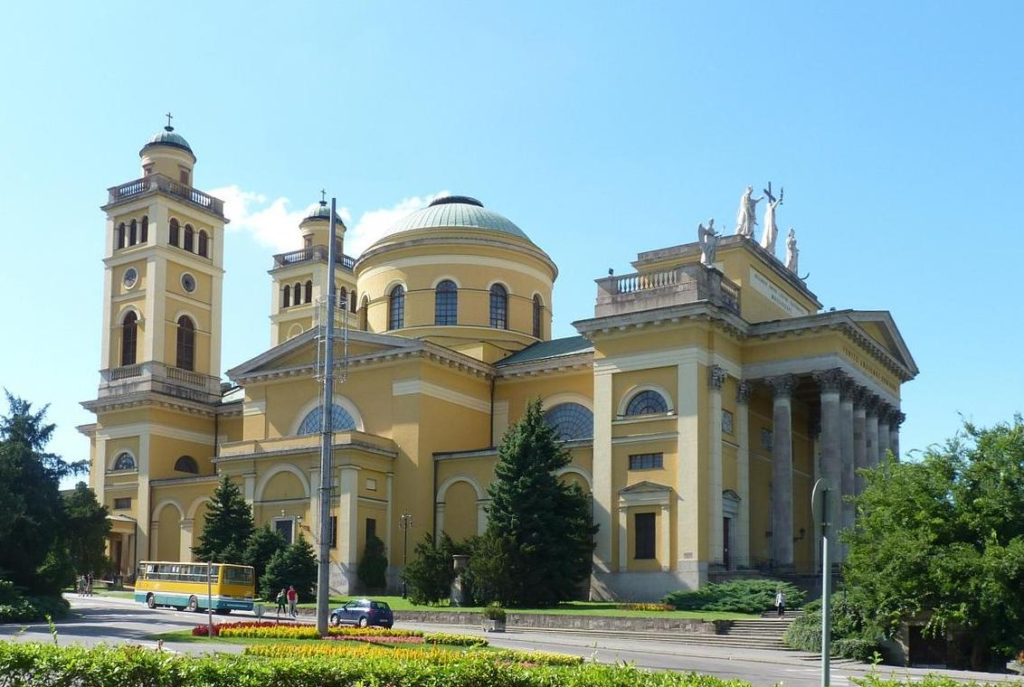
4. Cathedral Basilica of St. John the Apostle (Eger Basilica)
The Colossal Neo-Classical Sovereign of Corinthian Pillars and Soaring Celestial Domes
Dominating a grand, elevated stone plaza directly opposite the Lyceum building, this monumental cathedral stands proud as the second-largest church building in Hungary.
- What it is famous for: Its magnificent Neo-Classical design featuring massive 17-meter-high Corinthian pillars, monumental marble statues, and giant, frescoed domes. Completed in 1836 by master architect József Hild, the basilica’s interior is an explosion of light and gold, containing Hungary’s largest historic pipe organ. Throughout the summer months, the cathedral hosts daily concerts where the immense acoustic volume of the organ music fills the cavernous nave.
5. The Lyceum & Magic Tower
The Regal Baroque Palace of Frescoed Diocesan Libraries and Historic Camera Obscuras
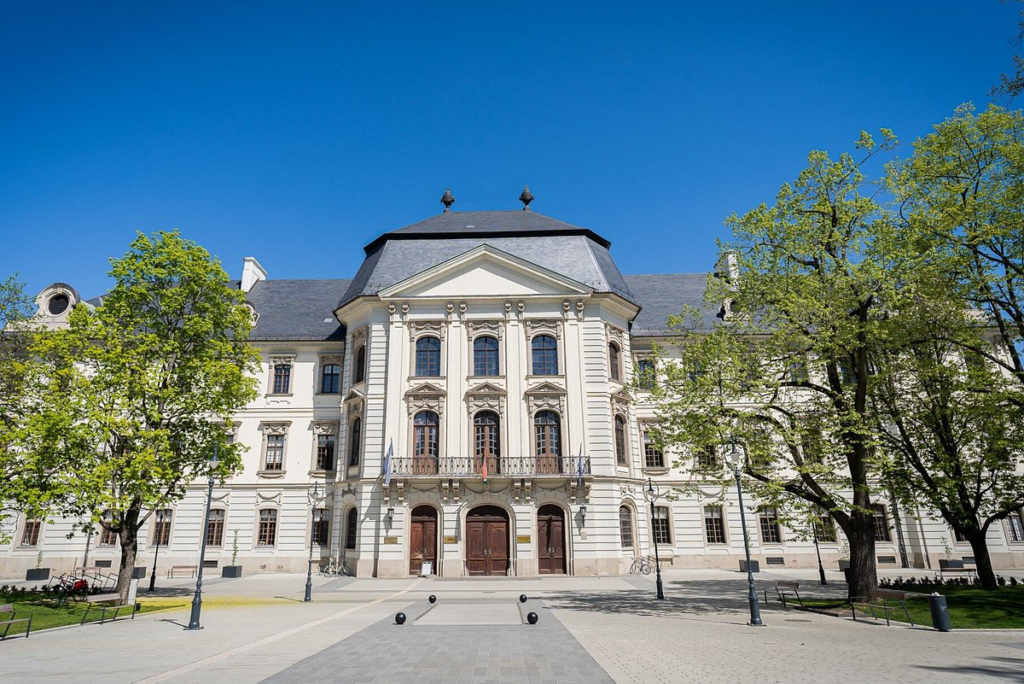
Commanding a massive, uniform urban block directly across from the Basilica, this grand, golden-yellow palace represents the absolute height of 18th-century educational enlightenment.
- What it is famous for: Housing the breathtaking, wood-carved Archdiocese Library with its massive ceiling fresco and a 53-meter-high astronomical observatory tower. Founded by Bishop Károly Eszterházy, the building features an extraordinary library filled with rare medieval manuscripts. The top of the tower houses the “Magic Tower,” which features an authentic 1776 Camera Obscura periscope project that mirrors real-time, moving images of the city streets onto a white table below.
6. Dobó István Square
The Wide Pedestrian Runway of Equestrian Monuments and Vibrant Café Terraces
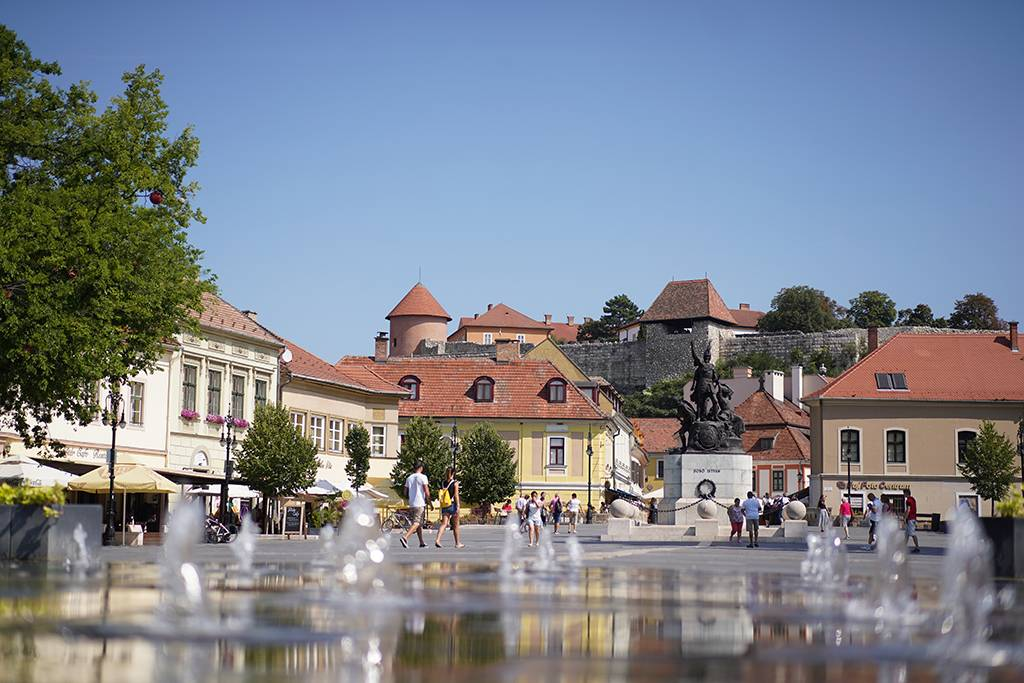
Forming the absolute cultural, administrative, and social heart of the municipality, this expansive, baroque public plaza functions as the main civic living room of Eger.
- What it is famous for: Its spectacular, dynamic bronze monuments honoring Captain István Dobó and the Eger Castle warriors, bordered by the winding Eger stream. Completely free from car traffic, the square is lined with beautifully restored Minorite buildings, outdoor dining terraces, and interactive fountains. It serves as the primary host venue for the city’s legendary food festivals, wine celebrations, and historical re-enactment events.
7. Minorite Church of St. Anthony of Padua
The Radiant Baroque Monument of Curved Limestone Facades and Gilded Altars
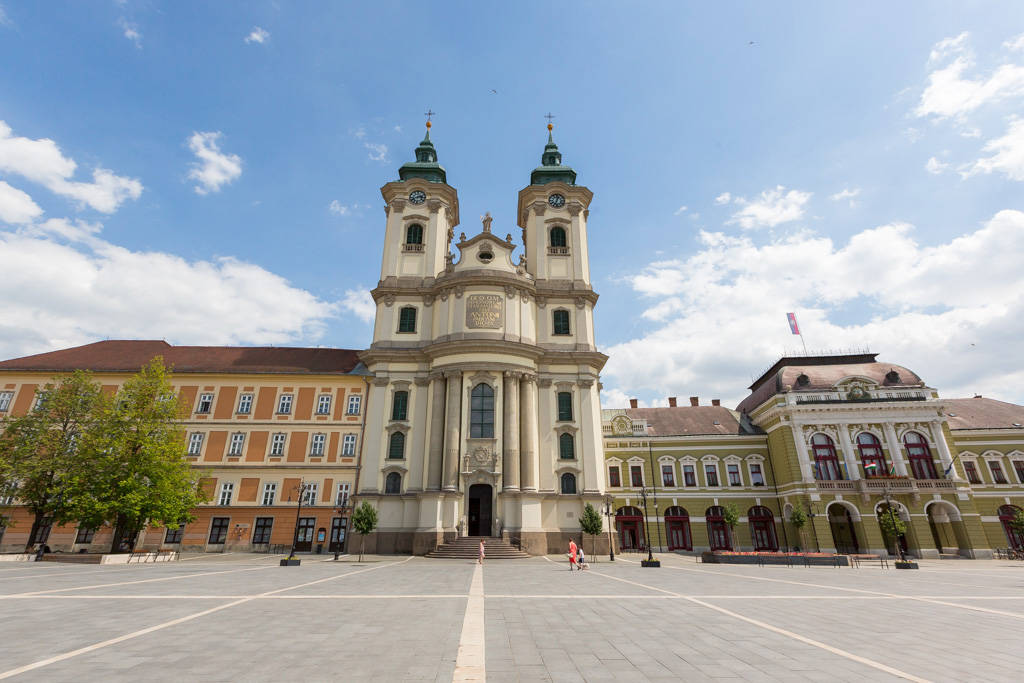
Dominating the entire eastern flank of Dobó Square with its grand, twin-towered symmetrical layout, this church stands as one of the finest Baroque houses of worship in Central Europe.
- What it is famous for: Its striking, unique convex curved front facade and an interior filled with hyper-detailed paintings by master Kracker. Completed in 1771 by the Franciscan Minorite monks, the church features a beautiful architectural rhythm designed to draw the eye upward. The interior features a grand main altar framed by massive marble columns and intricate wood carvings that capture the layered spiritual wealth of Eger’s golden age.
8. Eger Thermal Bath & Turkish Bath (Török Fürdő)
The Neo-Renaissance and Ottoman Temple of Healing Radon Springs and Golden Domes
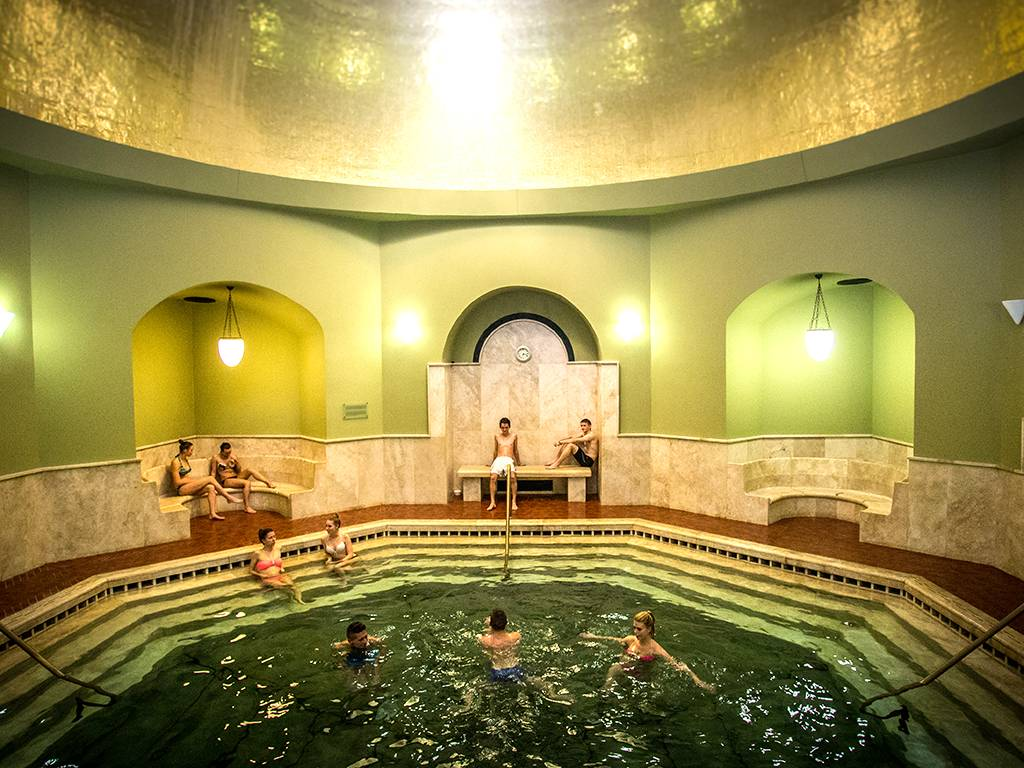
Sited dynamically within a lush, 5-hectare public park zone immediately adjacent to the old quarter, this thermal wellness center has been a healing haven for centuries.
- What it is famous for: Its authentic, historic 17th-century Turkish pool room covered by a spectacular dome of 200,000 gold-plated mosaic tiles. Fed by natural, subterranean springs rich in healing radon and sulfur, the pool floor is covered in natural gravel where the mineral-rich waters bubble directly up into the basin. The attached modern thermal park features outdoor pools and wellness zones, masterfully pairing Ottoman relaxation with modern hydrotherapy.
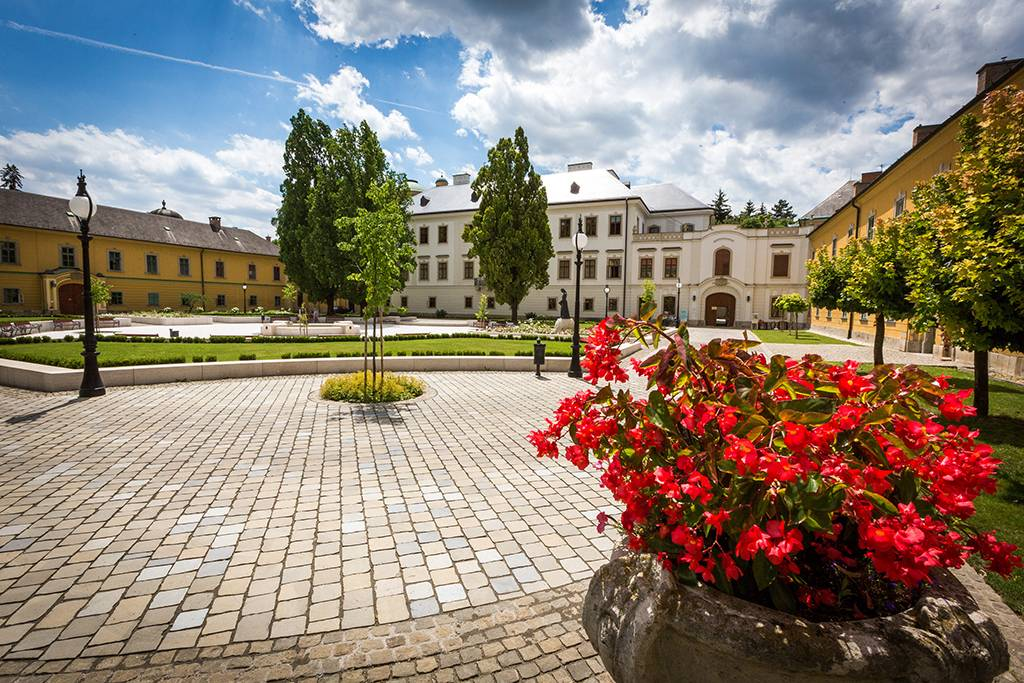
9. Archbishop’s Palace Cultural Center
The Regal Gilded Palace of Waxwork Bishops and Imperial Bird-Cage Rooms
Tucked quietly behind a long, elegant stone wall running down the historic Széchenyi Street commercial avenue, this massive U-shaped palace tracks the princely power of Eger’s bishops.
- What it is famous for: Being the continuous historic residence of the Bishops of Eger since the 18th century, featuring a stunning “Bird-Cage” wrought-iron balcony. The palace has been converted into an interactive museum displaying rare ecclesiastical garments, gold-threaded textiles, and historical rooms filled with period furniture. Visitors can walk through the grand staterooms and view waxwork displays that detail the everyday lives of the city’s powerful rulers.
10. Kopcsik Marzipan Museum (Bellisima)
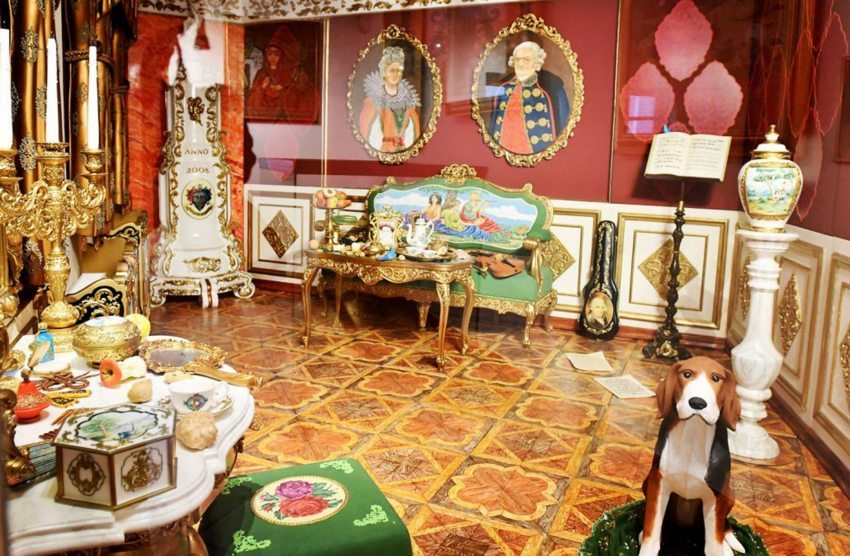
The Quirky Baroque Repository of Pure Sugar Art and Edible Wallpaper Walls
Occupying a tiny, charming historic outbuilding located just a few short steps away from the base of the Eger Minaret, this specialized museum is a visual treat.
- What it is famous for: Housing the jaw-dropping, hyper-detailed sweet confections of master decorator Lajos Kopcsik, crafted entirely out of pure marzipan and sugar icing. The museum displays over 120 sugar art masterpieces, including a massive, life-sized Baroque room where the wallpaper, floor tiles, picture frames, and even the fireplace are made of marzipan. It also features a stunning, sweet replica of the Great Church and intricate portraits of local heroes.
11. Bükk National Park (Eger Gate Province)
The Sprawling Mountain Wilderness Matrix of Limestone Caves and Beech Forests
Spreading grandly into the mountainous horizons starting just on the absolute northern outskirts of the Eger municipal boundary, this vast national park is a nature haven.
- What it is famous for: Being Hungary’s largest mountainous national park, featuring thousands of unique limestone caves and dense, prehistoric beech forests. The park serves as a refreshing mountain getaway packed with deep karstic sinkholes, scenic mountain viewpoints, and miles of hiking trails. Visitors can explore the nearby Szv injustice valley waterfall streams or take scenic mountain bikes up into the high-plateau meadows, offering a peaceful look at wild flora just minutes from the city’s historic streets.