
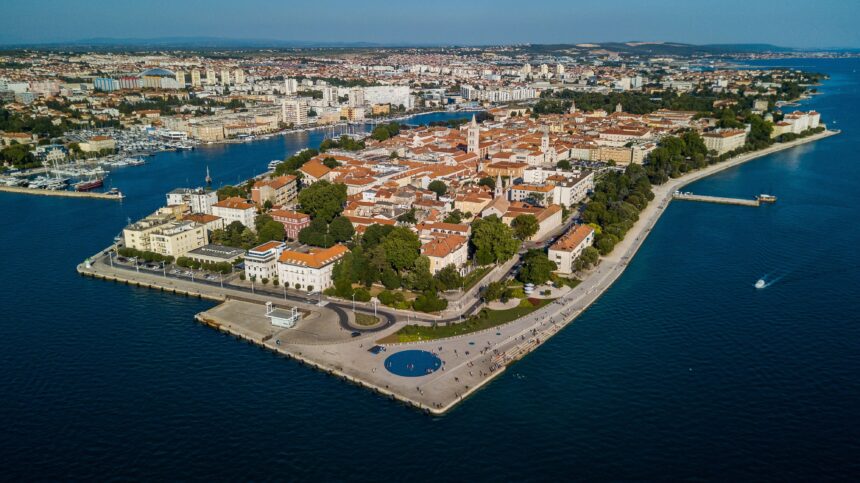
Zadar, stretching elegantly across a narrow, fortified limestone peninsula on Croatia’s northern Dalmatian coast, operates on a highly unique layout where ancient Roman urban templates fuse with modern architectural illusions.
Established as Iader by ancient Illyrian tribes before transforming into a bustling Roman colonia, the city’s geographical positioning across a sheltered natural channel made it a coveted maritime prize.
Today, Zadar presents a striking urban grid where a grid of ancient stone pavements sits safely enclosed behind UNESCO-listed defensive walls.
The city is globally legendary for reinventing its war-torn modern history by turning its waterfront into a canvas for world-class, interactive public art.
Famous for its slow-distilled Maraschino cherry liqueurs, salt-pan lamb roasts, sharp Pag island cheeses (Paški sir), and a laid-back, sea-facing lifestyle.
1. The Sea Organ (Morske Orgulje)
The Experimental Architectural Runway of Wave-Driven Harmonies
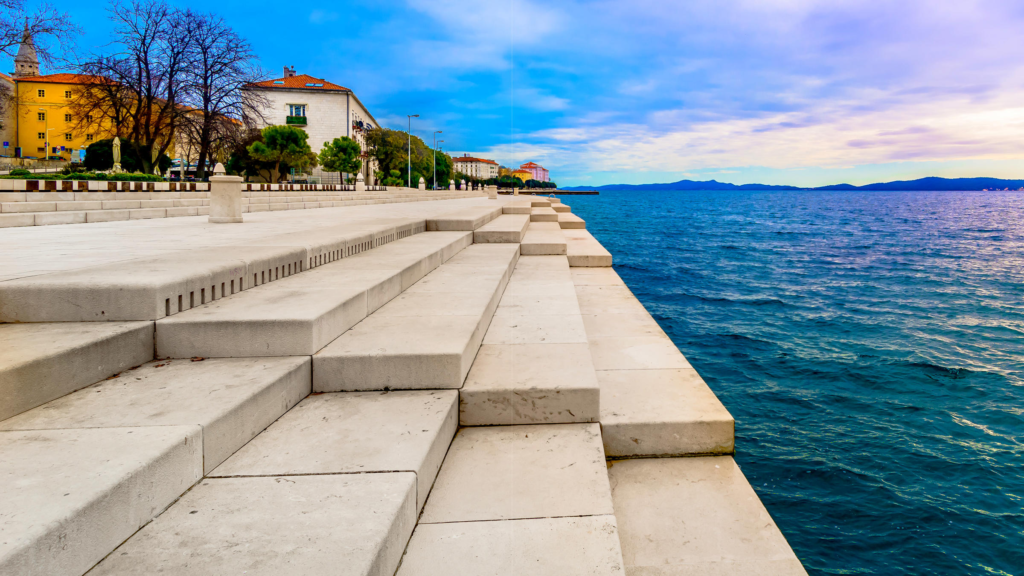
Carved directly into the clean white marble steps of the northwestern tip of the city’s coastal promenade (Istarska Obala), this world-famous sound art installation is an engineering marvel.
- What it is famous for: Transforming the raw energy of breaking waves into a continuous, hauntingly beautiful musical symphony. Designed by visionary architect Nikola Bašić and opened in 2005, the installation hides a complex matrix of 35 polyethylene tubes and resonant whistles beneath the stone steps. As the tides push air through the tubes, they sound a series of shifting chords that match the speed of the water. Travelers gather on the terraced steps by the thousands to sit, watch the sunset, and listen to the sea play its own music.
2. Church of St. Donatus
The Circular Pre-Romanesque Sovereign of Recycled Imperial Foundations
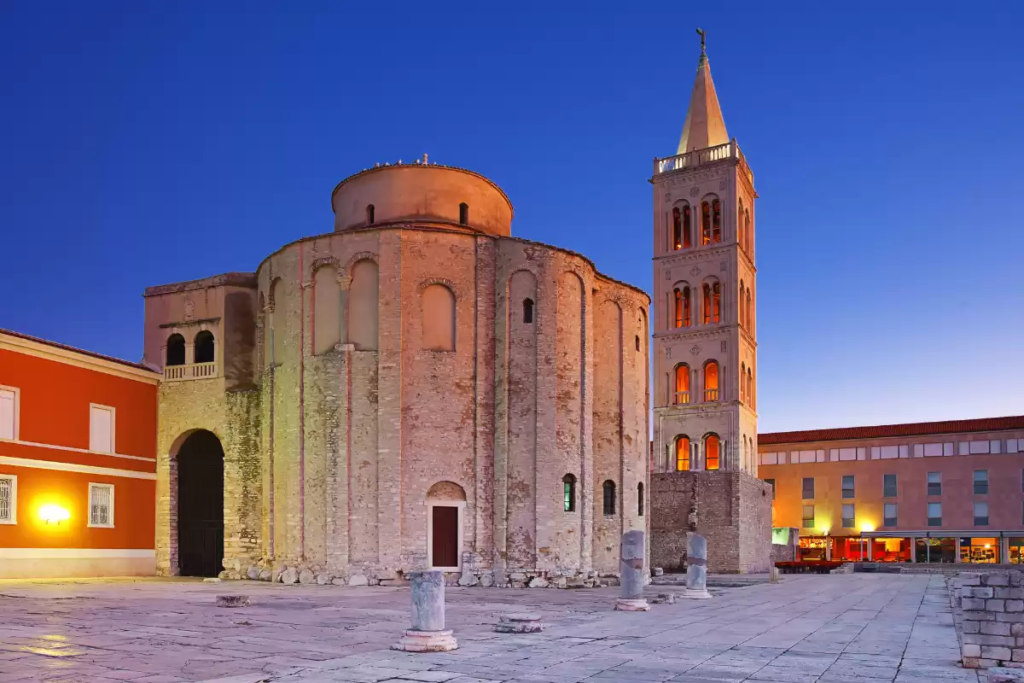
Dominating the sprawling, stone-paved central plain of the old Roman plaza, this monumental, 9th-century circular basilica stands proud as the definitive architectural icon of Zadar.
- What it is famous for: Its unique, towering cylindrical design and its ingenious reuse of ancient pagan Roman pillars. Built under the direction of Bishop Donatus during the early Byzantine era, this massive stone structure is a triumph of pre-Romanesque architecture. The builders cleared parts of the nearby ruined Roman forum, recycling its massive stone columns and decorated architraves directly into the church’s interior foundations. Because of its cavernous space and bare stone walls, the church boasts exceptional acoustic qualities, hosting international renaissance and medieval music festivals inside its echoing vaults.
3. The Roman Forum
The Sprawling Stone Matrix of Emperor Pillars and Sacrificial Altars
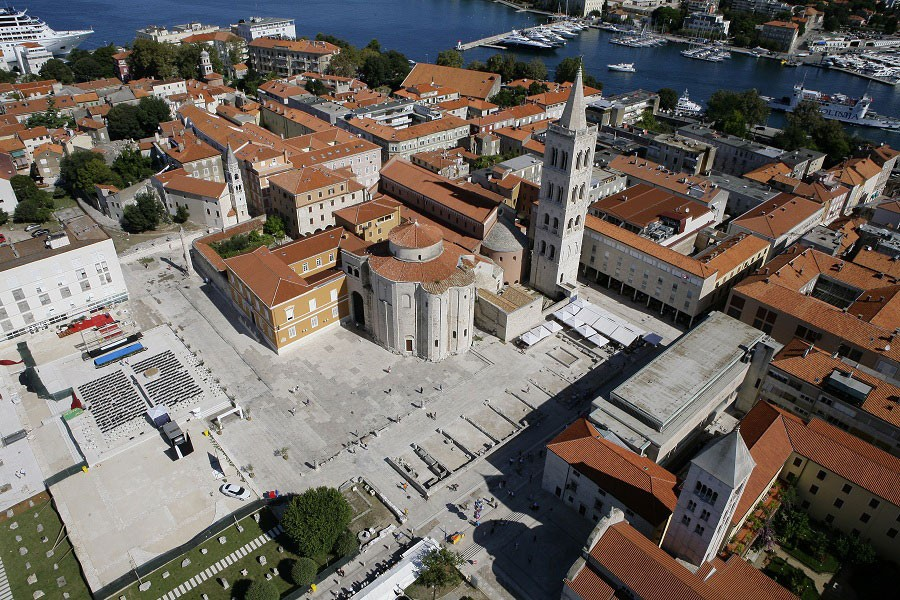
Spreading out across a wide public square right at the absolute physical center of the old peninsula town, this open-air archaeological park is the largest ancient forum on the eastern Adriatic coast.
- What it is famous for: Its collection of intact columns, stone pavements, and defensive towers built by Emperor Augustus. Commissioned between the 1st century BC and the 3rd century AD, the forum functioned as the administrative and religious heart of Roman Zadar. Today, visitors can walk freely among the scattered remnants of ancient temples, shops, and stone carvings. A highlight is the standing 14-meter-high Roman pillar, known as the “Pillar of Shame,” which was used during the medieval era as a public pillory where criminals were chained and humiliated.
4. The Sun Salutation (Pozdrav Suncu)
The Circular Kinetic Matrix of Solar Light Shards
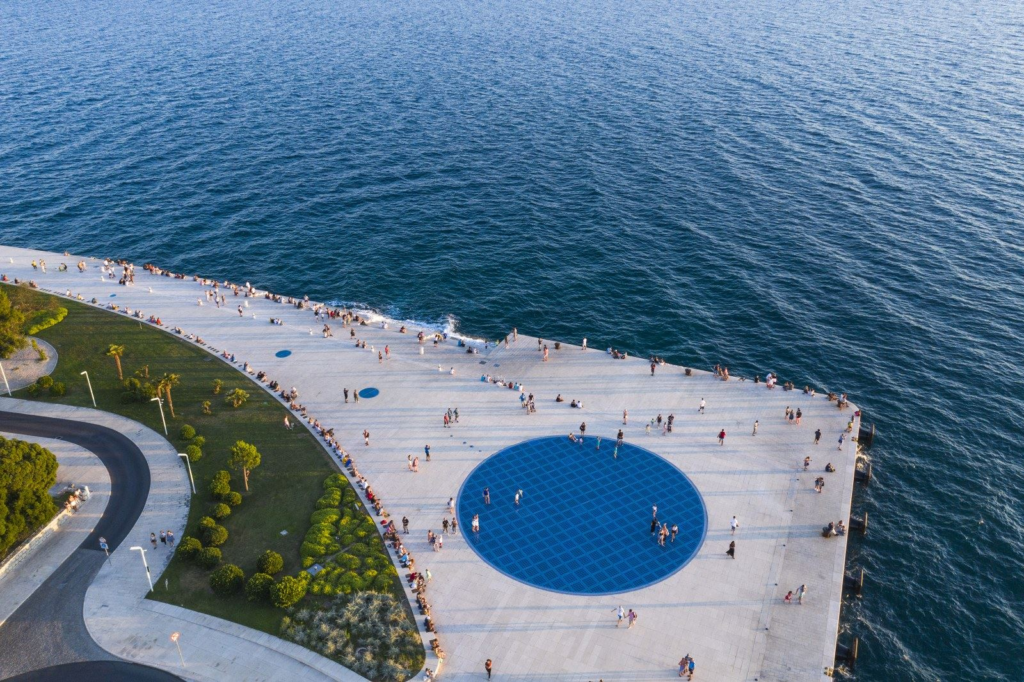
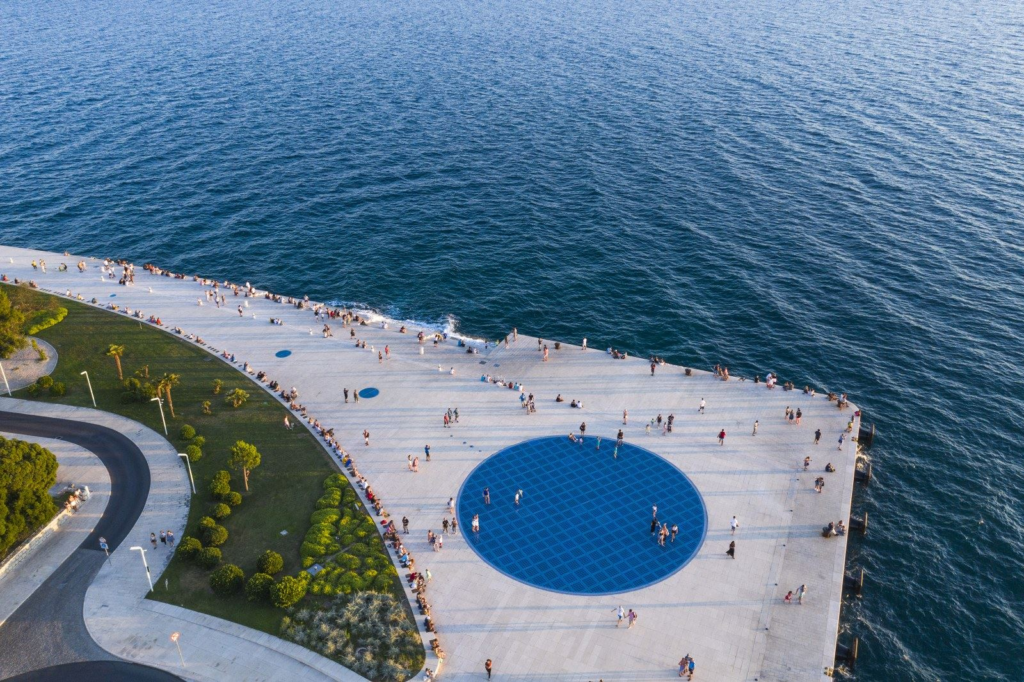
Positioned just a few stone steps directly past the Sea Organ on the outermost stone point of the peninsula promenade, this high-tech companion installation is a visual masterpiece.
- What it is famous for: Its 22-meter-tall circular glass disk that generates a dramatic, multi-colored light show driven entirely by solar power. Designed by Nikola Bašić as a visual match to the Sea Organ’s sound, the installation consists of 300 multi-layered glass plates hiding solar modules beneath. During the day, the disks absorb sunlight; at dusk—the moment Alfred Hitchcock famously declared to be the most beautiful sunset in the world—the circle activates, throwing a series of animated light patterns that mimic the motion of the solar system.
5. Cathedral of St. Anastasia (Sv. Stošija)
The Ornate Romanesque Basilica of Blind Arches and Bell Tower Horizons
Commanding a majestic presence just a short walk north of the Roman Forum along the main walking streets, this grand three-aisled church stands as the largest cathedral in Dalmatia.
- What it is famous for: Its spectacular Romanesque front facade featuring detailed stone wheel windows and its towering open-work Bell Tower. Built in the 12th and 13th centuries over an early Christian basilica, the cathedral features an exterior decorated with rows of blind arches. Inside, the church preserves precious stone sarcophagi and early Christian frescoes. Visitors can pay a small entry fee to climb the winding steps of the bell tower to take in an unobstructed view across Zadar’s terracotta rooftops, the Velebit mountains, and the offshore islands.
6. The Land Gate (Kopnena Vrata)
The Triumphal Renaissance Sentinal of Venetian Winged Lions
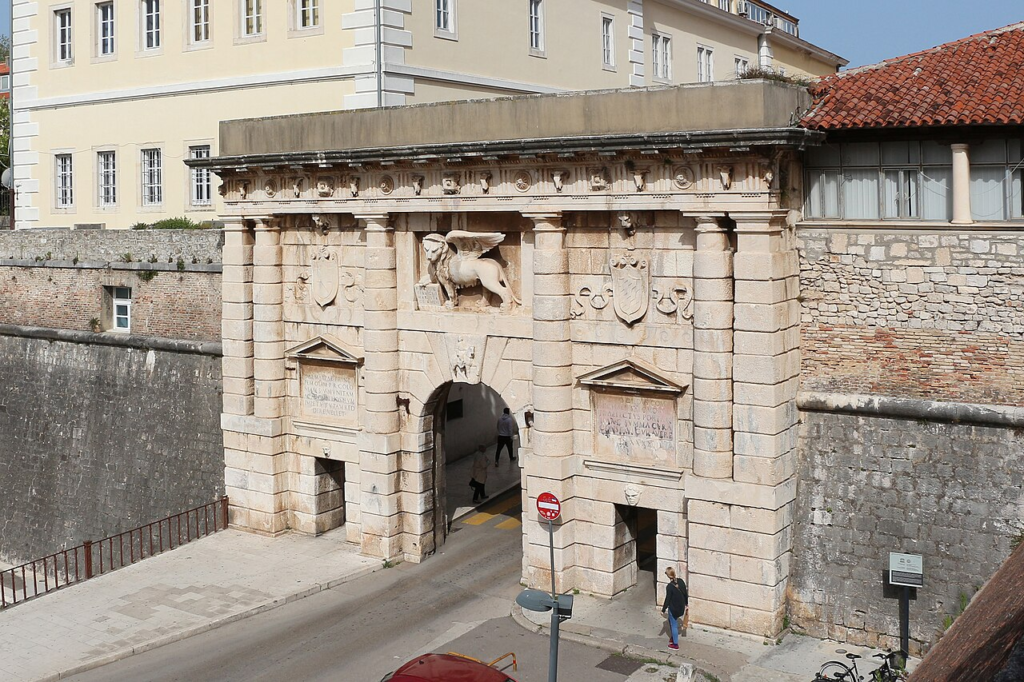
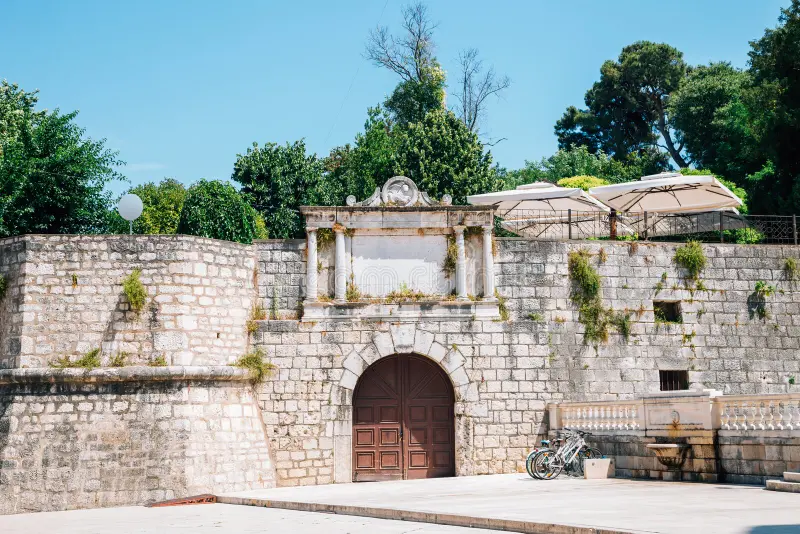
Guarding the historic eastern bottleneck entrance where the peninsula joins the mainland by the picturesque Foša harbor, this monumental stone gate is a masterpiece of late Renaissance military defense.
- What it is famous for: Its triumphal archway design featuring a massive, finely carved stone relief of the Winged Lion of Saint Mark. Designed in 1543 by the renowned Venetian architect Michele Sanmicheli, the gate functioned as the main entry checkpoint through the city’s thick defensive walls. The structure features a classic triple-arch layout decorated with classical columns and carvings of Zadar’s patron saint, St. Chrysogonus, reflecting the peak of Venetian maritime power in the Adriatic.
7. Five Wells Square (Trg Pet Bunara)
The Linear Industrial Matrix of Fortified Renaissance Cisterns
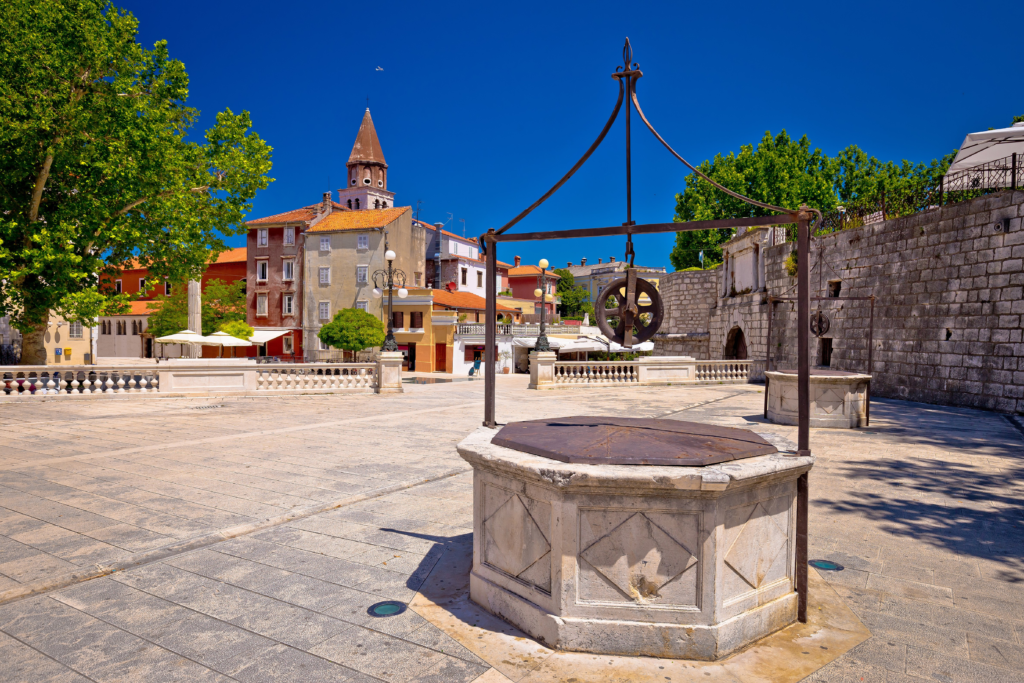
Tucked into a unique, stone-walled plaza layout positioned on the high defensive grounds between the old town streets and the medieval Queen Jelena Madije Park, this historic square is an engineering triumph.
- What it is famous for: Its row of five identical, stone-carved well heads built by Venetian engineers to survive Ottoman military sieges. Constructed in 1574 over a defensive ditch, the square hides a massive underground rainwater cistern system designed to guarantee a secure water supply for the walled city. Directly behind the wells rises the high, pentagonal Captain’s Tower, a rugged medieval watchtower that now hosts art exhibitions and lookouts.
8. Kalelarga (Široka Ulica)
The Vibrant Polished Spine of Open-Air Cafes and Daily Strolls
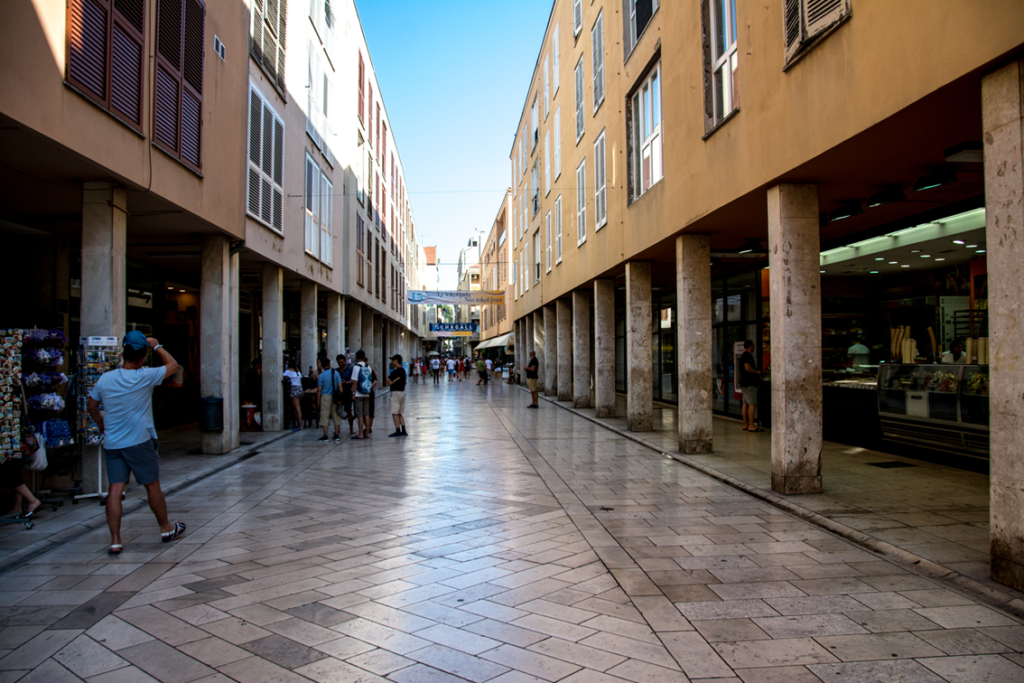
Slicing smoothly east to west directly through the heart of the peninsula grid to connect the main city gates with the Roman Forum, this wide, stone-paved avenue is the legendary main street of Zadar.
- What it is famous for: Being the historic social artery of the city, proudly celebrated in local songs as older than the town itself. Followed along the exact line of the original Roman Decumanus Maxima, Kalelarga was entirely rebuilt with modern white stone and clean apartments following heavy destruction in World War II. Closed completely to automobile traffic, it is packed with outdoor cafe terraces, ice cream parlors, and boutique shops, acting as the primary route for the đir (the traditional evening stroll).
9. Queen Jelena Madije Park
The High-Bastion Emerald Oasis of English Garden Promenades
Perched elegantly on the high stone ramparts of the old Grimani bastion overlooking Five Wells Square, this peaceful, 1-hectare public parkland holds an important spot in national landscaping history.
- What it is famous for: Being the very first public park built in Dalmatia, designed in 1829 by an Austrian military commander. Created by converting an active military defensive bastion into a public garden, the park features winding pathways, rows of old pine trees, and classical stone fountains. Because it sits elevated high on top of the old stone city fortifications, it treats walkers to a cool escape filled with shade and views out over the Land Gate and the sea channels.
10. The Gold and Silver of Zadar
The Heavily Guarded Baroque Convent Treasure of Imperial Reliquaries
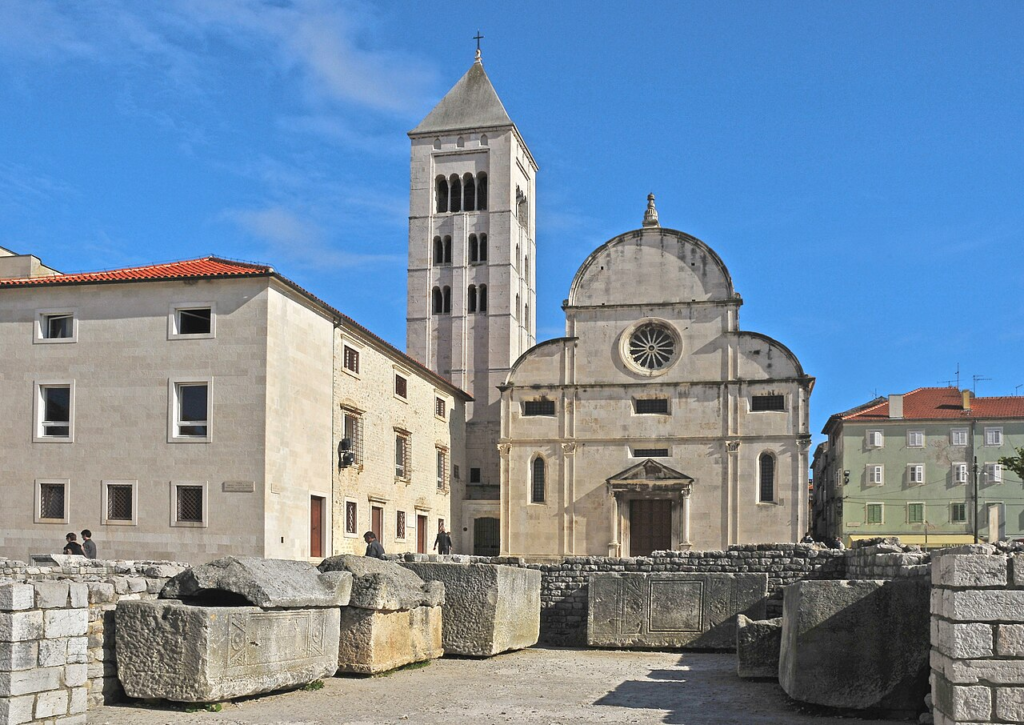
Housed inside the secure, stone-vaulted galleries of the Benedictine Convent of St. Mary on the eastern edge of the Roman Forum square, this world-class cultural exhibition is a treasure chest of sacred art.
- What it is famous for: Its priceless collection of gold and silver reliquaries painstakingly hidden and protected by local nuns during wartime. Formed over centuries through donations from medieval Croatian kings and Byzantine rulers, the collection contains intricately worked silver crowns, gold-plated crosses, and jewel-encrusted boxes containing sacred relics. The exhibition stands as a testament to Zadar’s golden medieval wealth and the dedication of the Benedictine sisters who hid the treasure underground during heavy bombing campaigns.
11. Foša Harbor & The City Walls
The Chic Defensive Moat of Seafood Taverns and Floating Docks
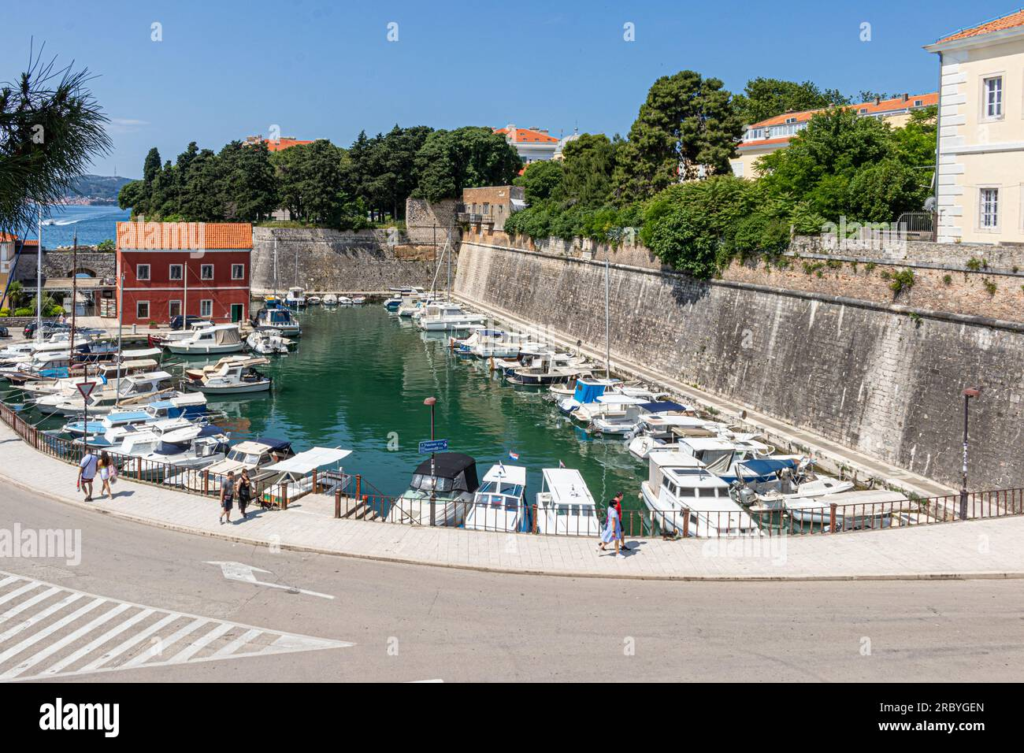
Tracing the deep-water southern defensive canal where the peninsula meets the mainland, this compact, picturesque harbor cove operates as a breezy lifestyle venue.
- What it is famous for: Its scenic row of traditional small wooden fishing boats set against a backdrop of towering Venetian defensive stone walls. The harbor is bordered by Zadar’s famous limestone ramparts, which are protected as part of a trans-national UNESCO World Heritage site celebrating Venetian defense works. At dusk, the entire stone waterfront lights up, drawing crowds to its famous open-air seafood restaurants and romantic paths to watch the water turn gold.