
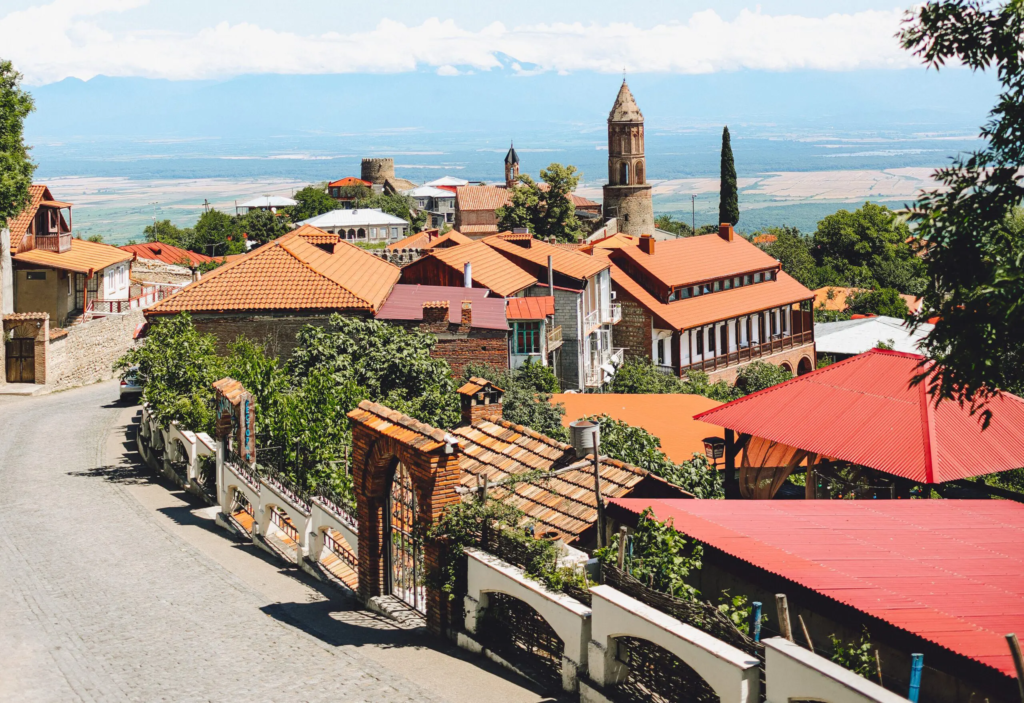
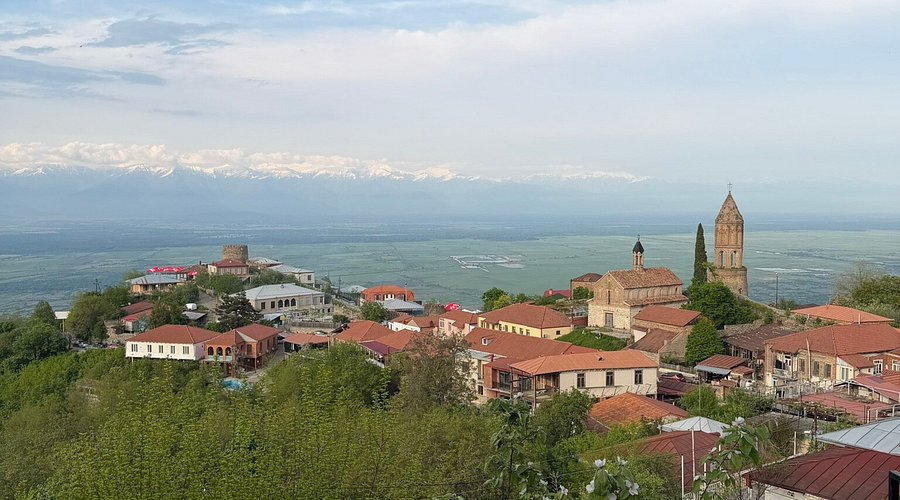
Sighnaghi, perched dramatically on a high, wind-swept mountain ridge in the easternmost corner of the Kakheti province, operates on a sweeping, topography-hugging layout that marks it as the ultimate citadel guardian of Georgia’s wine country.
Developed extensively in the 18th century by King Heraclius II, the town was specifically engineered as a fortified refuge to shield local populations from devastating North Caucasian raids.
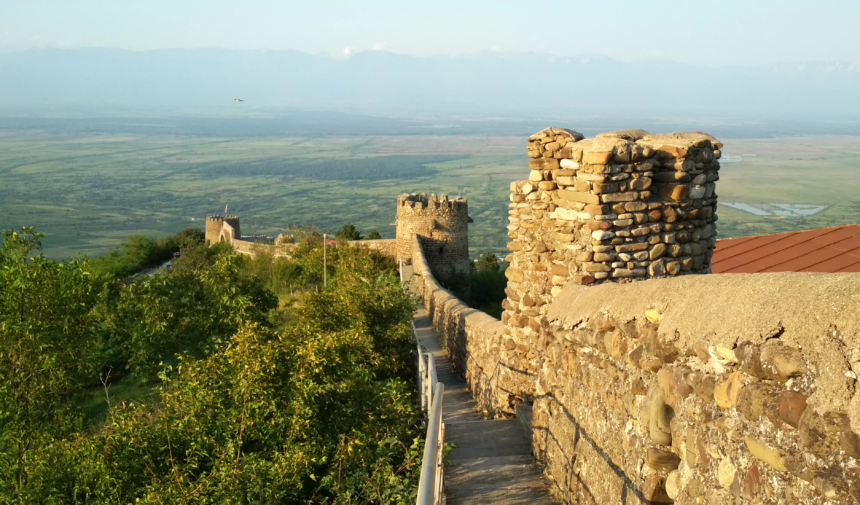
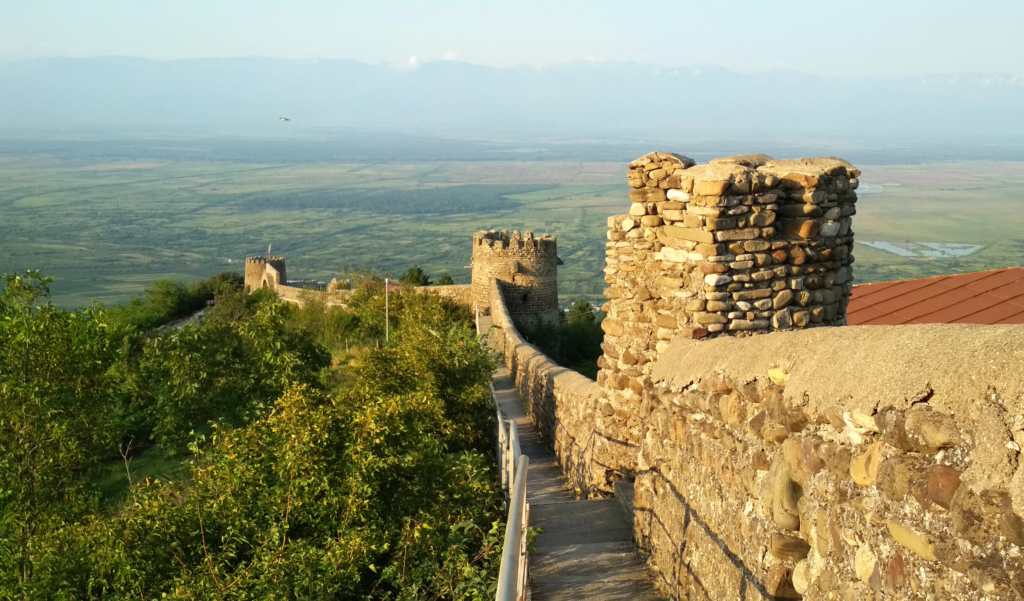
To achieve this, it was wrapped in a monumental stone barrier wall that follows the natural, roller-coaster contours of the mountain slopes, framing views over the endless, grape-rich Alazani Valley below.
Today, heavily restored to preserve its distinct Southern European flair, Sighnaghi is universally celebrated as Georgia’s “City of Love.”
The town seamlessly matches its Italianate red-tile roofs with pastel-colored 19th-century houses, winding cobblestone streets, and a famous 24/7 wedding chapel.
1. The Sighnaghi City Wall
The Mountain-Hugging Stone Great Wall of the Alazani Valley
Wrapping completely around the northern and eastern ridges of the old town zone, this colossal 18th-century stone defense system stands proud as one of the largest intact fortress networks in the South Caucasus.
- What it is famous for: Its 4.5 kilometers of snaking stone ramparts punctuated by 23 defensive watchtowers and 5 secure entry gates. Built under the direction of King Heraclius II, each watchtower was strategically named after a surrounding Kakhetian village so that local families knew exactly where to assemble during an enemy siege. Today, travelers can walk directly along the wide, stone-planked ramparts of the open fortress sections, getting panoramic views across the valley floor to the sharp, snow-capped peaks of the Greater Caucasus range.
2. Bodbe Monastery
The Forested Cypress Sanctuary of Saint Nino’s Holy Tomb
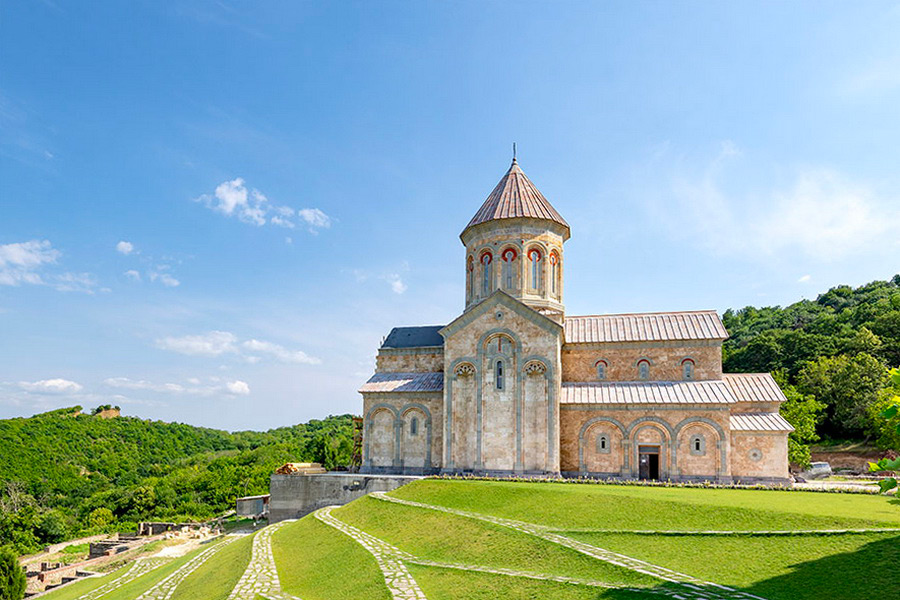
Tucked quietly into a dense, beautifully manicured grove of towering cypress trees just 2 kilometers south of the central town square, this historic monastic complex is one of Georgia’s premier spiritual sanctuaries.
- What it is famous for: Holding the sacred tomb and relics of Saint Nino, the 4th-century female enlightener of Georgia. Following her historic conversion of the royal court at Mtskheta, Saint Nino withdrew to this isolated Kakhetian ridge to spend her final years in prayer. The complex features a grand, sand-colored 9th-century basilica, a striking contemporary cathedral, and a holy spring located down a long path in the ravine below, where pilgrims gather daily to submerge themselves in the therapeutic mountain waters.
3. The Old Town Core & Lado Asatiani Street
The Pastel Labyrinth of Filigree Wood Balconies and Cobblestones
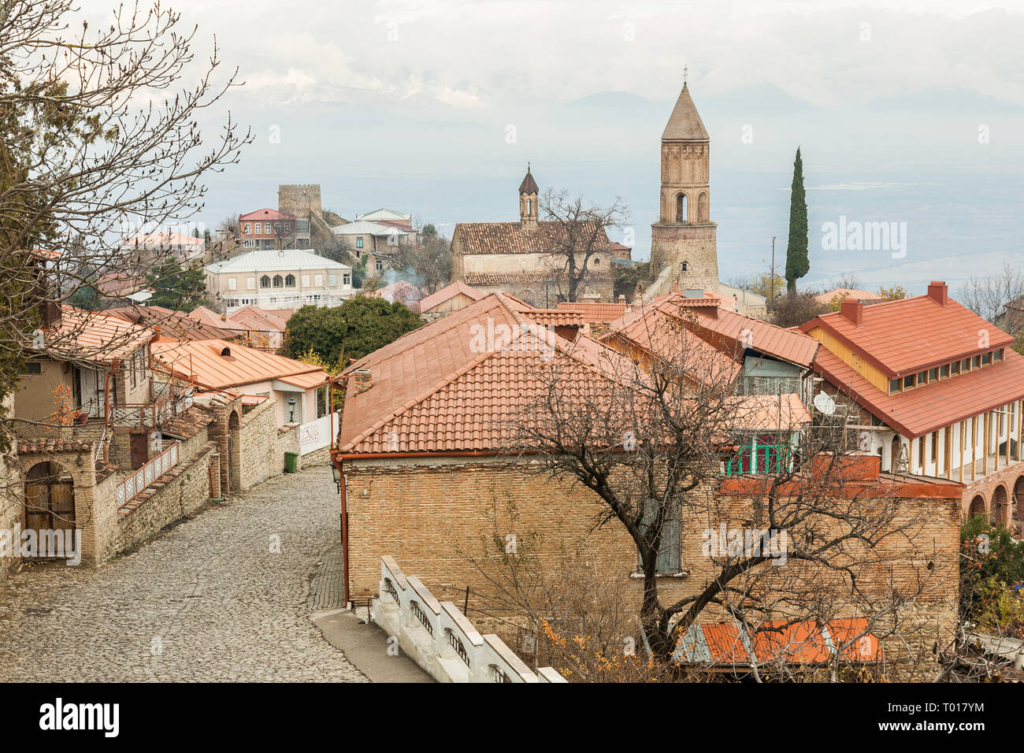
Slicing through the high, rolling residential heart of the town, this network of steep, winding streets forms the romantic architectural soul of Sighnaghi.
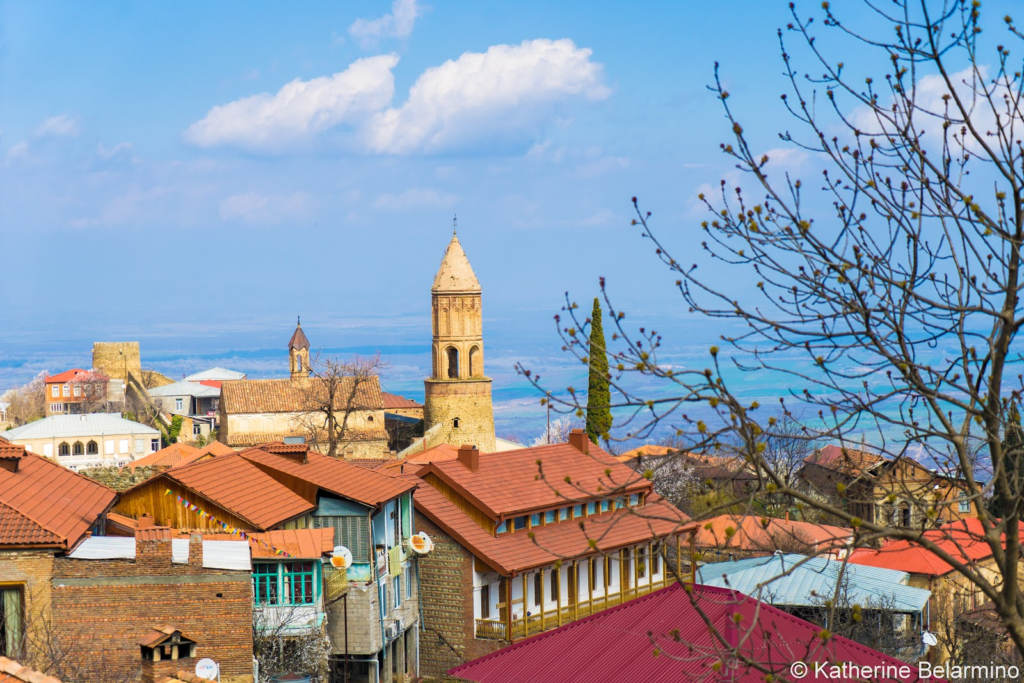
- What it is famous for: Its meticulously restored 19th-century brick houses decorated with ornate, hand-carved wooden balconies. Unlike the heavy stone architecture of northern Georgia, Sighnaghi’s homes display an elegant mix of local Georgian woodwork and classical Italian design trends. Walking the steep, cobblestone bends reveals shared inner courtyards overflowing with wild grapevines, pomegranate trees, and local families selling handmade wool rugs and warm socks.
4. The Sighnaghi Wedding House
The 24-Hour Non-Stop Sanctuary of Spontaneous Marriages
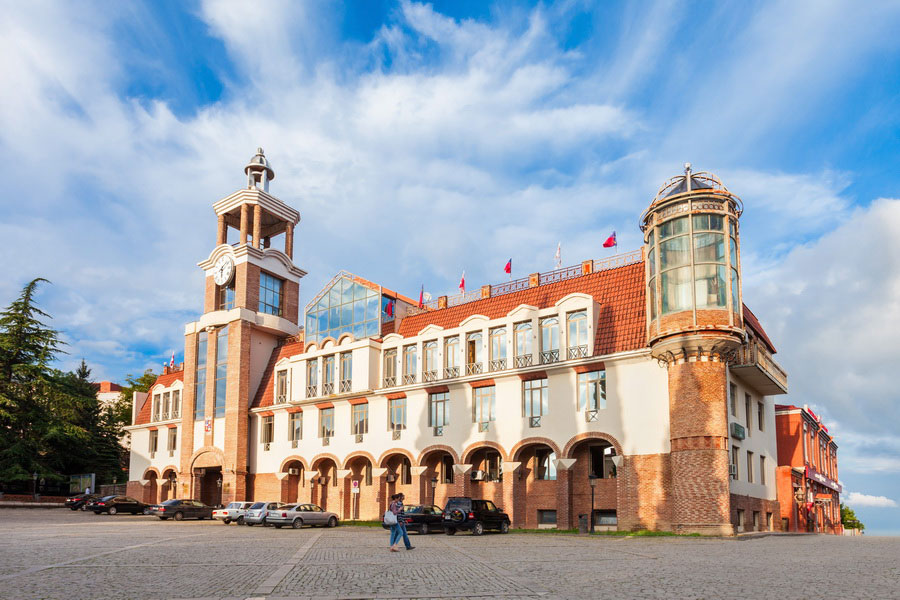
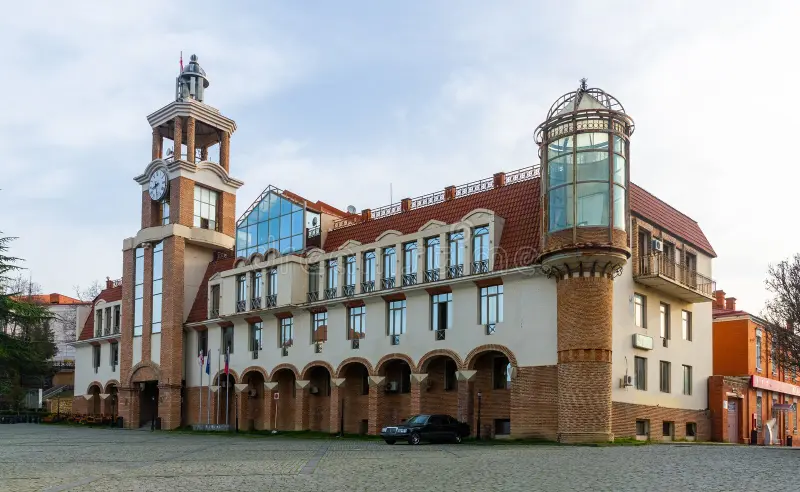
Commanding a prominent, elegant corner spot on the main municipal square, this sleek, two-story pastel palace is the primary reason Sighnaghi earned its romantic moniker.
- What it is famous for: Being a completely legal, state-run marriage chapel that operates 24 hours a day, 7 days a week. Inspired by the round-the-clock wedding chapels of Las Vegas but executed with traditional Georgian flair, couples can arrive at any hour of the night—without prior registration—to legally register their marriage. The chapel features grand balconies looking out over the town plazas, making it a hotspot for international couples seeking a scenic, hassle-free union.
5. Sighnaghi National Museum
The Glass Showcase Matrix of Pirosmani Masterpieces and Antique Weapons
Occupying a grand, modern stone building overlooking the lower tier of Solomon Dodashvili Square, this world-class regional museum is a branch of the National Museum of Georgia.
- What it is famous for: Housing the premier permanent collection of original paintings by legendary naive artist Niko Pirosmani. Born in the nearby Kakhetian village of Mirzaani, Pirosmani’s self-taught, emotionally raw masterpieces are national treasures. The museum’s upper galleries protect 16 of his finest canvas and oil-cloth works, while the lower stone chambers display archaeological finds from the deep Alazani basin, including 2,500-year-old bronze daggers, Roman coins, and antique qvevri wine vessels.
6. Saint Stephen’s Church (Sint-Stefanus)
The Watchtower Bell-Sanctuary of High Ridge Viewpoints
Perched on the highest physical geographic point within the city center, this unique church structure is built directly into the thick masonry of one of the main fortress watchtowers.
- What it is famous for: Its bizarre structural layout where a church nave sits nestled inside an ancient defensive bastion. To save space and maximize defense along the high ridge lines, 18th-century builders integrated the brick-domed church straight into the fortifications. Visitors can climb a narrow, steep stone staircase built inside the tower walls to reach a high bell-ringing platform, which offers an unobstructed look straight down onto the red-tile roofs of the town blocks.
7. Pheasant’s Tears Winery
The High-Concept Gastronomic Sanctuary of Amber Qvevri Traditions
Tucked into a historic brick residential block on the winding thoroughfare of Baratashvili Street, this world-renowned boutique winery is an epicenter of natural winemaking.
- What it is famous for: Pioneering the global revival of ancient, natural amber wines fermented inside underground clay pots. Founded by an American artist and a local Kakhetian winemaker, the tavern produces artisanal wines using 8,000-year-old Georgian methods. Grapes are crushed and buried underground in massive clay qvevri jars with skin and stems kept intact for months. Visitors can participate in structured tasting flights paired with seasonal, organic Imeretian and Kakhetian farm-to-table dishes.
8. Solomon Dodashvili Square & The Central Park
The High-Energy Civic Hub of Wine Terraces and Artisan Stalls
Serving as the bustling lower terminal point of Sighnaghi’s urban transit grid, this wide, crescent-shaped public square is lined with grand 19th-century brick administrative complexes.
- What it is famous for: Being the premier gathering hub for local wine tours, open-air craft markets, and street food vendors. The square and its neighboring parkland are packed with local artisans displaying handmade Kakhetian ceramics, felt carpets, and decorative drinking horns (Kantsi). The perimeter is lined with panoramic restaurant terraces where travelers sit to sip local Tsinandali and Saperavi wines while listening to traditional folk music players.
9. The Memorial to the Fallen (Sighnaghi Fountain)
The Monumental Brick Arc of Etched Names and Royal Statues
Set against a sheer rock wall separating the upper and lower public squares of the town, this unique, multi-tiered brick memorial honors the region’s deep historical sacrifices.
- What it is famous for: Its massive, curving brick monument wall etched with thousands of names of local soldiers lost in World War II. Designed to mimic the town’s historic fortress architecture, the monument is topped by a bronze equestrian statue of King Heraclius II, the founder of the city’s modern layout. The base features a multi-tiered water fountain system that cools the square during the hot Kakhetian summer months.
10. Saint George’s Church
The Armenian-Built Brick Sentinel of the Lower Ridge Lines
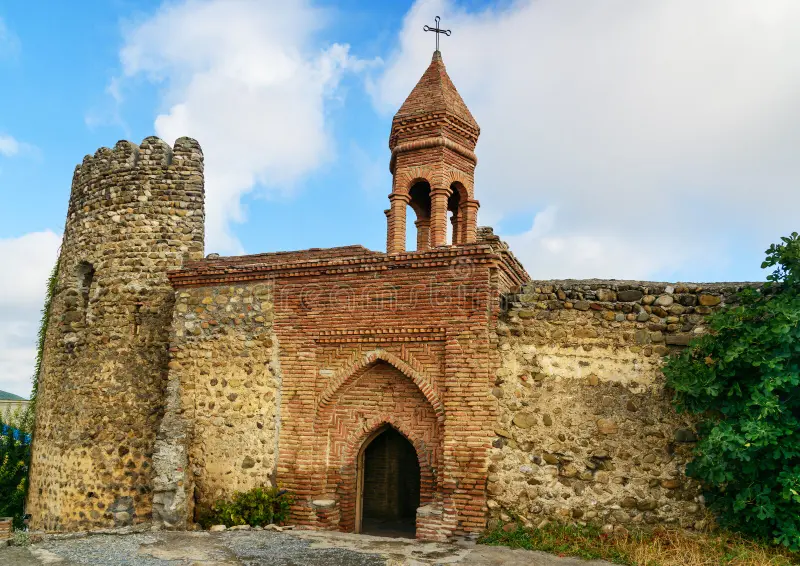
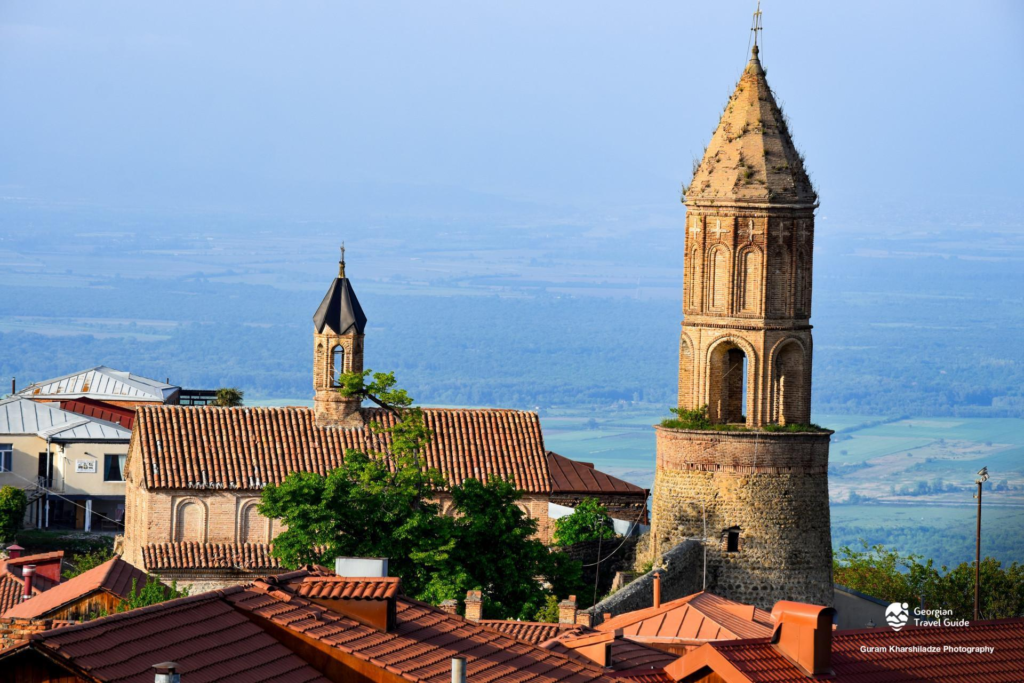
Commanding a low, projecting ridge spur on the northeastern edge of the old residential quarters, this large, 18th-century brick church features a classic Caucasian ecclesiastical profile.
- What it is famous for: Its high brick bell tower and its history as an important spiritual hub for the town’s historic merchant class. Built primarily out of thin, flat Georgian bricks by the town’s thriving Armenian trade community in 1793, the church features thick walls and a clean, unadorned interior designed to withstand earthquakes. Its prominent position against the hillside makes it one of the most photographed structures along the old fortress wall horizons.
11. David Agmashenebeli Square
The Elegant Upper Civic Arena of Grand Clock Towers and Fountains
Serving as the formal, upper political and cultural anchor of the city’s central street grid, this wide, limestone-paved plaza is framed by grand, European-style municipal buildings.
- What it is famous for: Its ornate, central stone fountain and its grand Neo-Classical town hall clock tower. The square functions as a major civic theater, hosting regional wine festivals, harvest celebrations (Rtveli), and cultural performances. Bounded by grand arches and beautiful balcony facades, it acts as the starting point for travelers exploring the upper fortress lanes, offering a clean, stately contrast to the rustic cobblestone alleyways that drop down into the valleys below.