
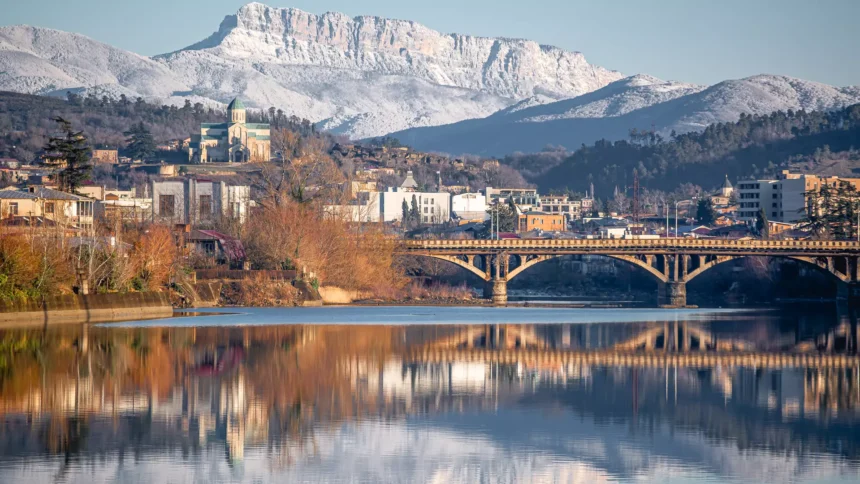
Kutaisi, sprawling elegantly across the rugged banks of the rushing Rioni River in western Georgia, operates on a deeply historic, canyon-riven layout that marks it as one of the oldest continuously inhabited cities on Earth.
Serving as the ancient capital of the legendary Kingdom of Colchis during the Bronze Age, its river basins are woven into global mythology as the destination where Jason and the Argonauts sailed to steal the fabled Golden Fleece.
Over the millennia, it functioned as the political spine of united Georgia, a royal stronghold during the Golden Age, and a primary engine of regional Soviet industrialization.
Today, Kutaisi is the vibrant capital of the Imereti region, seamlessly matching its monumental medieval stone monasteries with dramatic limestone karst formations, underground rivers, and a nostalgic, laid back local charm.
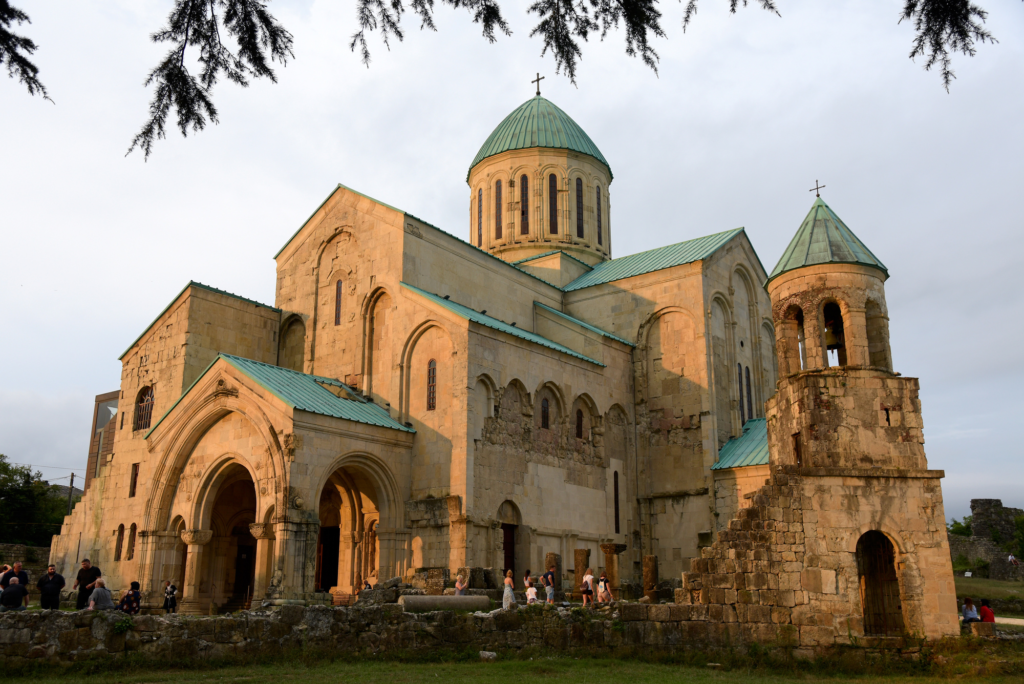
1. Bagrati Cathedral
The Hilltop Stone Titan of United Golden Age Sovereignty
Perched majestically on the rocky crest of Ukimerioni Hill directly overlooking the sweeping bends of the Rioni River, this monumental 11th-century cathedral dominates the city’s skyline.
- What it is famous for: Being the absolute masterwork of medieval Georgian architecture and a powerful symbol of national unification. Commissioned by King Bagrat III in 1003, this grand house of worship was built to celebrate the merging of Georgia’s fractured regional kingdoms. Though heavily damaged by an Ottoman explosion in 1692, its controversial and dramatic modern restoration has returned its iconic turquoise dome to the horizon, offering a panoramic lookout across the terracotta roofs of the city below.
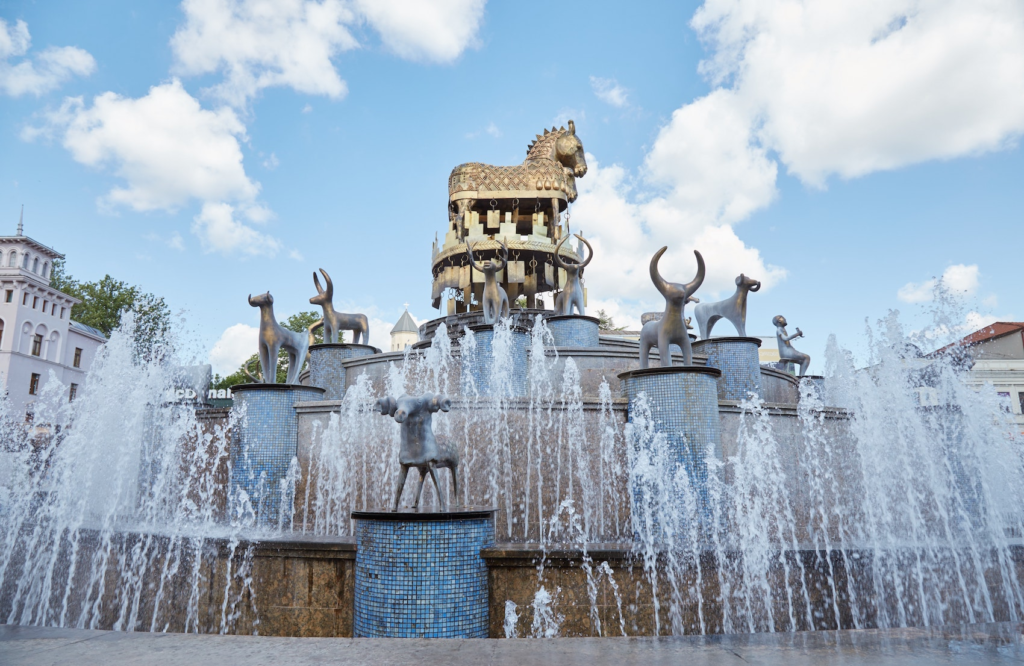
2. Colchis Fountain
The Gilded Architectural Runway of Mythic Bronze Age Masterpieces
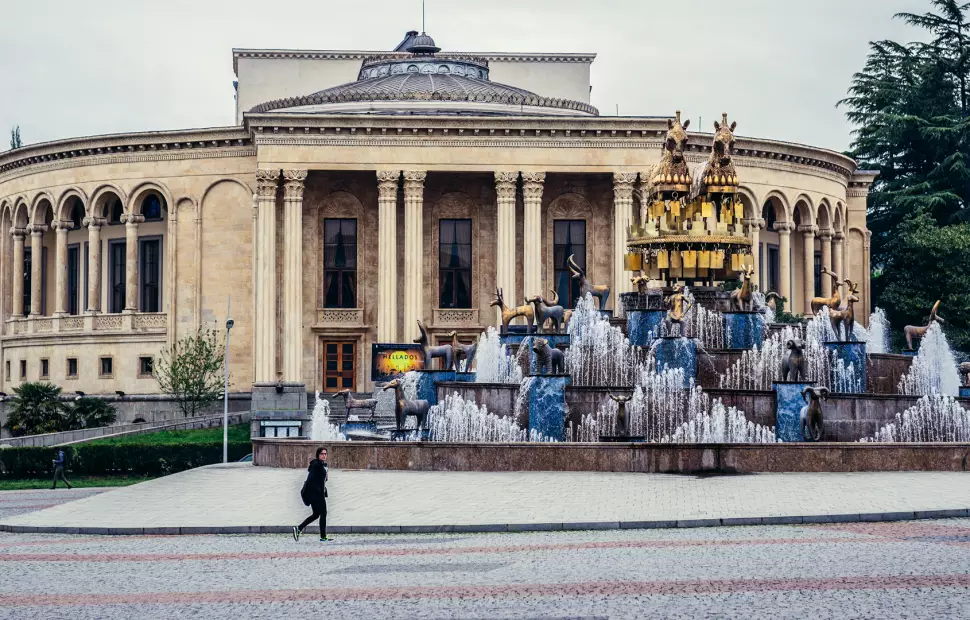
Dominating the bustling civic heart of David Agmashenebeli Square, this massive, multi-tiered circular fountain acts as the natural centerpiece of Kutaisi’s central urban grid.
- What it is famous for: Its dozens of enlarged golden statues modeled after ancient Bronze Age Colchian jewelry and artifacts. Built in 2011, the fountain features multi-level stone platforms decorated with blue mosaics, supporting bronze and gold-leafed replicas of stags, lions, rams, and chariots discovered during archaeological digs in the region. At night, the fountain is brilliantly illuminated, creating a shimmering tribute to the city’s ancient status as the mythic land of the Golden Fleece.
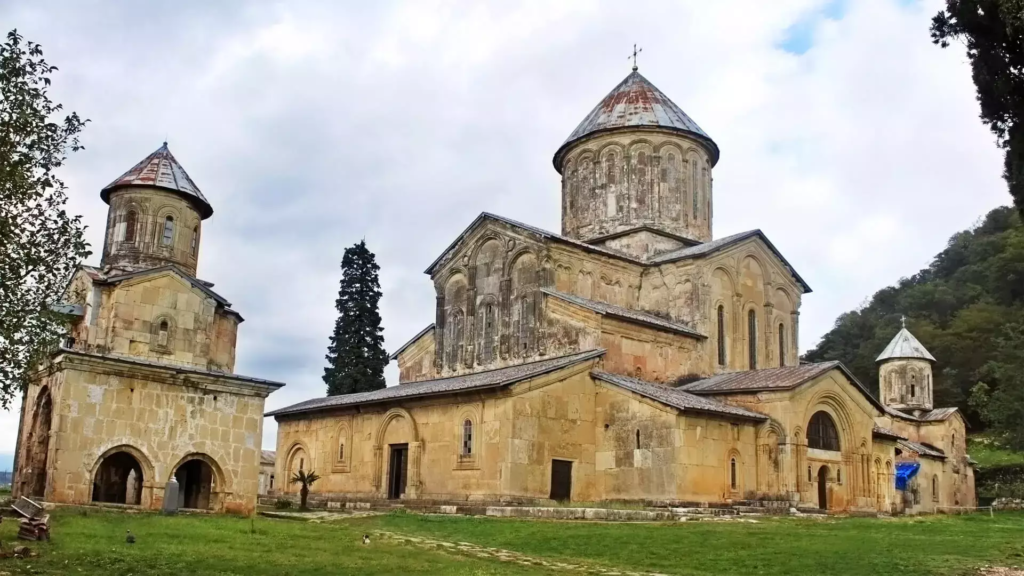
3. Gelati Monastery & Academy
The Royal Intellectual Sanctuary of Golden Mosaics and Learned Kings
Tucked away into a quiet, forested hillside glen roughly 9 kilometers northeast of the city center, this sprawling 12th-century monastic complex stands proud as a UNESCO World Heritage site.
- What it is famous for: Its unrivaled interior Byzantine mosaics, vibrant frescoes, and hosting the premier medieval academy of science. Founded in 1106 by King David IV (David the Builder) during Georgia’s golden age, Gelati functioned as the cultural and intellectual epicenter of Christian Caucasia. The primary Cathedral of the Virgin houses a breathtaking mosaic composed of millions of tiny glass stones, and the complex serves as the final resting place of King David himself, buried beneath a flat stone at the monastery gates.
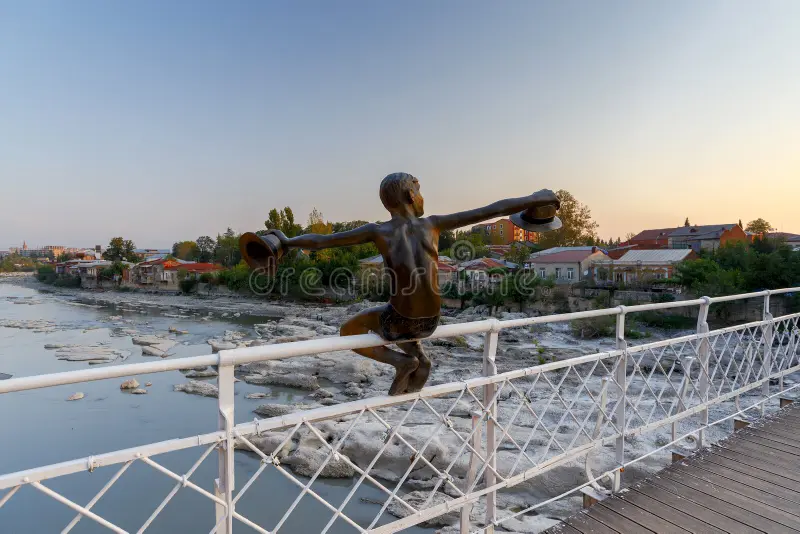
4. The White Bridge (Tetri Khidi)
The Historic Timber-Plank Promenade of Love-Struck High Divers
Arching gracefully across a dramatic, boulder-filled gorge of the roaring Rioni River, this elegant 19th-century iron pedestrian bridge is an iconic symbol of local life.
- What it is famous for: Its romantic local legends, wooden plank floor walkways, and the whimsical “Picasso’s Boy” bronze statue. Built by French engineers in 1872, the bridge is traditionally celebrated as a premier meeting spot for young lovers. According to local folklore, young men would prove their eternal devotion to their sweethearts by jumping from the high iron railings directly into the swirling white waters below. Today, the bridge holds a bronze sculpture of a boy holding two hats, inspired by a scene from a classic Georgian film.
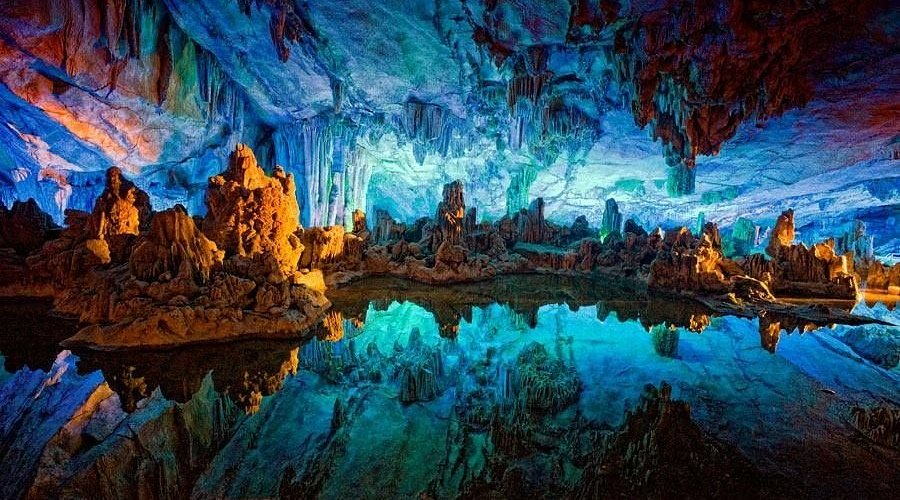
5. Prometheus Cave (Kumistavi)
The Subterranean Neon Matrix of Millions-Year-Old Karst Wonders
Situated roughly 20 kilometers northwest of the city limits near the therapeutic town of Tskaltubo, this colossal underground karst cave network is one of Georgia’s premier natural wonders.
- What it is famous for: Its 1.8-kilometer-long illuminated trail winding through six massive stalactite-and-stalagmite caverns. Discovered in 1984 and named after the mythic Greek Titan Prometheus—who local lore says was chained to the nearby Caucasus cliffs—the cave plunges 40 meters below sea level. Visitors walk beneath jaw-dropping geological formations highlighted by artistic neon light schemes and classical music soundtracks, culminating in an underground boat ride along a subterranean river.
6. Motsameta Monastery
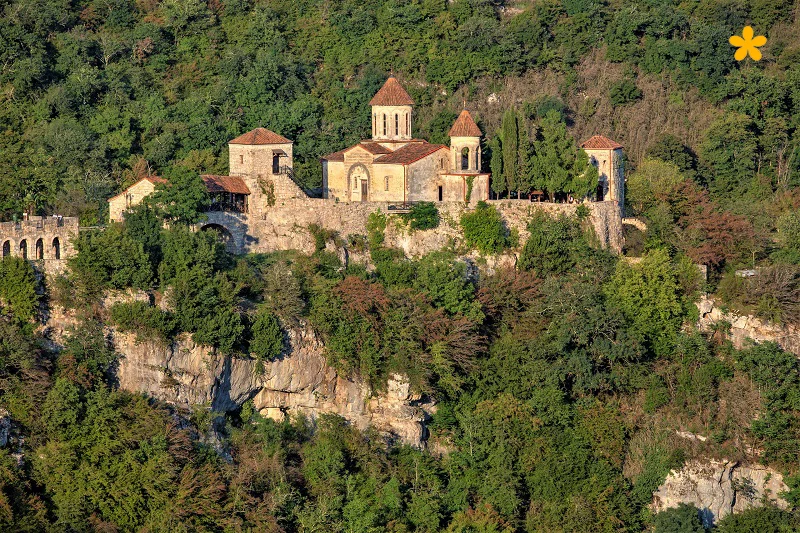
The Cliffside Stone Cloister of Isolated Canyons and Royal Martyrs
Perched spectacularly on a sheer, crescent-shaped rocky promontory overlooking the deep, emerald loops of the Tskaltsitela (Red Water) River canyon, this small monastery is a hidden gem.
- What it is famous for: Its breathtaking cliff-edge location and holding the sacred relics of the martyr princes David and Constantine. Rebuilt in the 11th century by King Bagrat III, the monastery’s name translates to “The Place of Martyrs.” The small, dome-capped stone church is surrounded by thick stone walls and sheer drops into the canyon below, offering a serene, wind-swept sanctuary. Travelers follow a local tradition of crawling three times beneath the wooden ark containing the princes’ relics to make a wish.
7. The Kutaisi Cable Car & Gora Park
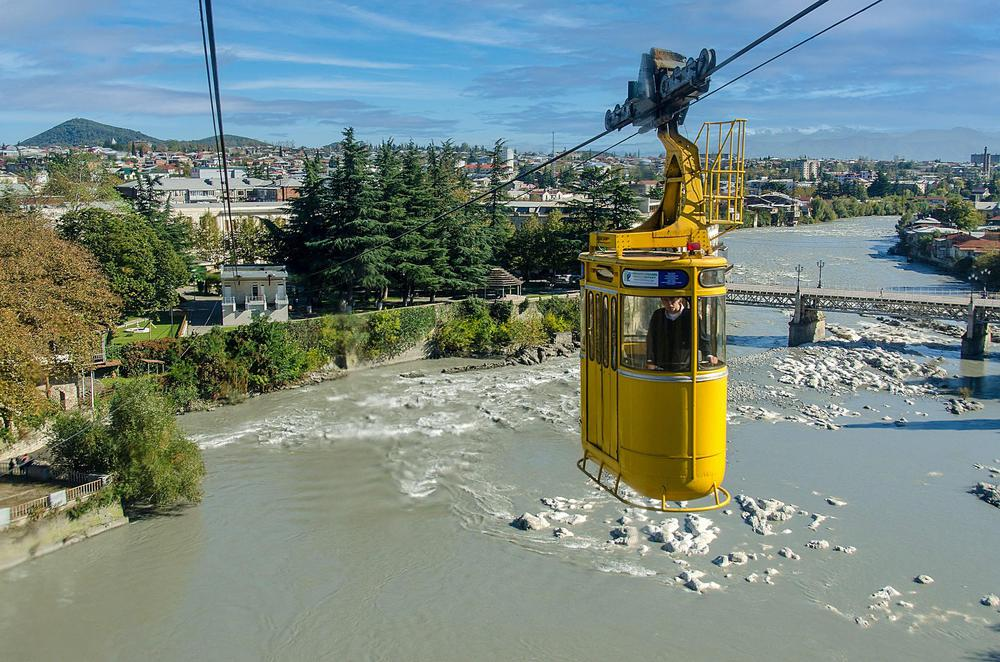
The Vintage Soviet Skyway Over Terracotta Roof Tiles
Launching from a historic terminal block near the banks of the White Bridge, this classic aerial tramway has been operational since 1961, preserving a nostalgic slice of urban transit history.
- What it is famous for: Its vintage, single-cabin design that transports passengers directly across the Rioni River gorge. The fun, nostalgic cable car spans the wide river basin to drop visitors off at the summit of Gora Hill. At the top sits Gora Park, an old-school amusement park featuring a large Ferris wheel, offering a relaxing, tree-shaded escape with unobstructed panoramic views over the old town blocks and the white limestone boulders below.
8. The Central Green Bazaar (Kutaisi Market)
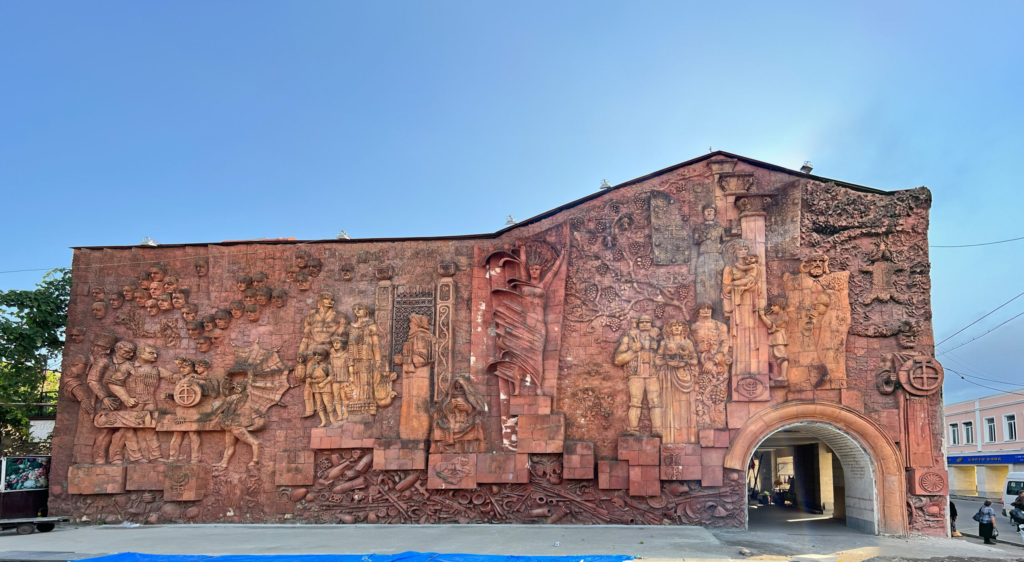
The Sensory Kaleidoscope of Imeretian Cheeses and Churchkhela Tapestries
Occupying a massive, historic town block along the bustling retail grid of Paliashvili Street, this grand covered market is the ultimate epicenter of authentic western Georgian commerce.
- What it is famous for: Its imposing bas-relief stone entrance facade and towering rows of fresh local produce, spices, and homemade wines. Walking inside treats the senses to a vibrant display of traditional agricultural wealth. The market is packed with vendors selling huge wheels of salty Imeretian cheese, aromatic mountain herbs, jars of local honey, and endless hanging rows of Churchkhela—the iconic Georgian candle-shaped candy made of walnuts strung on thread and dipped in thick, boiled grape juice.
9. Sataplia Nature Reserve
The Prehistoric Forest Sanctuary of Karst Caverns and Dinosaur Footprints
Located just 9 kilometers west of the city center on the slopes of an extinct volcano, this dense, sub-tropical conservation forest offers a unique journey back in time.
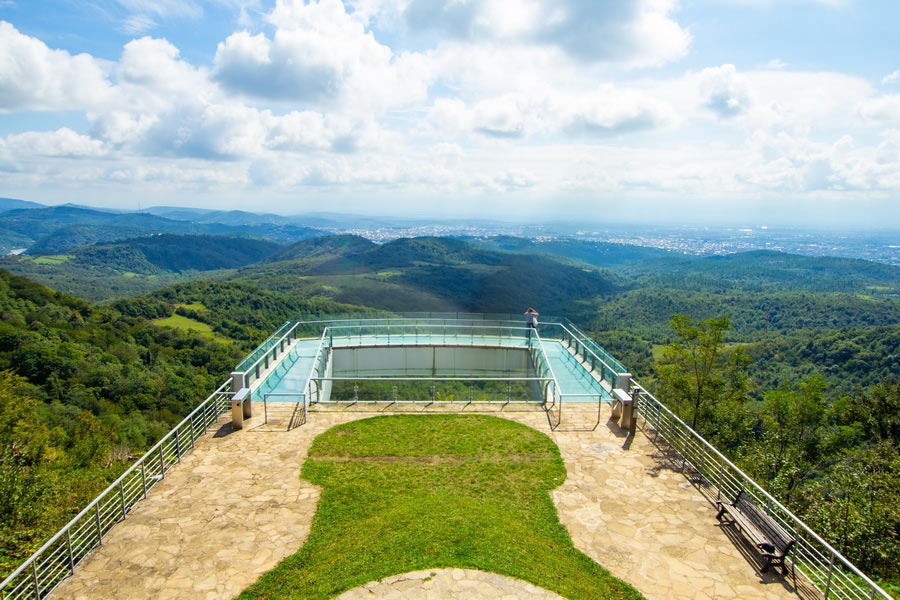
- What it is famous for: Protecting dozens of authentic, fossilized dinosaur footprints dating back to the Cretaceous period. Discovered in the 1920s, the reserve features a climate-controlled exhibition hall built directly over a limestone slab showing the clear tracks of both herbivorous and carnivorous dinosaurs. The park also features a 900-meter karst cave packed with stalactites, a lush Colchian boxwood forest, and a glass-bottomed panoramic viewing platform that juts out over a cliff face.
10. Lado Meskhishvili State Drama Theatre
The Neoclassical Renaissance Palace of Dramatic Arts and Corinthian Pillars
Commanding the western flank of the main central square network, this grand civic palace stands proud as one of the oldest and most important dramatic theater halls in the nation.
- What it is famous for: Its monumental, columned Renaissance-style facade decorated with large arched windows and intricate bas-reliefs. Opened originally in 1861, the current majestic gray-stone structure was expanded in the mid-20th century, blending traditional classical symmetry with Soviet imperial scale. The theater roof is lined with dramatic allegorical statues, and its massive main hall remains the beating heart of Kutaisi’s deep-rooted literary and performance culture.
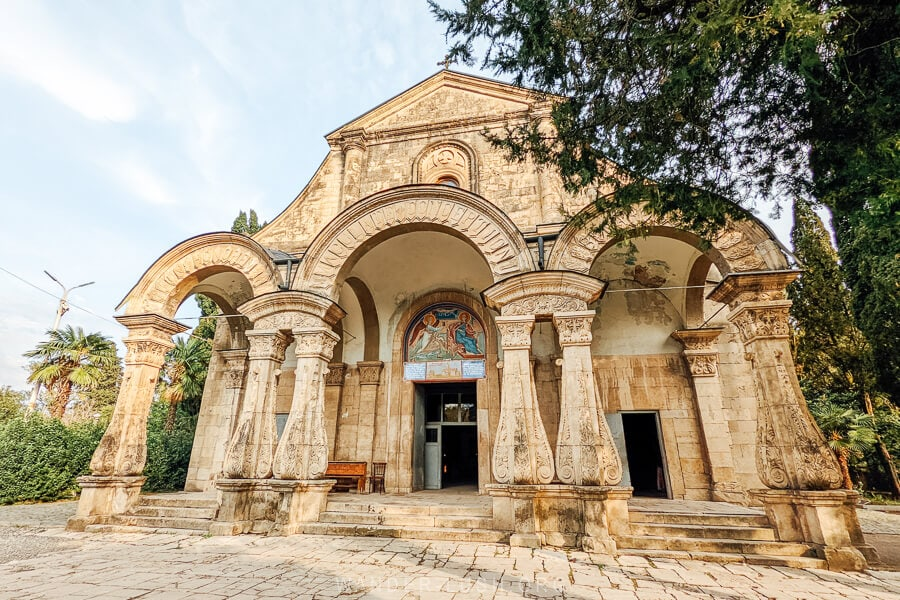
11. Holy Annunciation Temple
The Triple-Domed Brick Cathedral of Blue-Vaulted Sanctums
Situated along the historic cobblestone slopes of the old Catholic quarter on the way up to Ukimerioni Hill, this striking house of worship features an eye-catching architectural profile.
- What it is famous for: Its distinctive red-brick Neo-Gothic exterior and its beautiful, sky-blue interior vault paintings. Constructed in the late 19th century originally as a Roman Catholic church, the building was later transferred to the Georgian Orthodox Church. The interior is characterized by light-flooded transepts, clean pointed arches, and a series of serene blue frescoes that stand out in calm contrast to the golden, icon-heavy altars of traditional Orthodox architecture.