
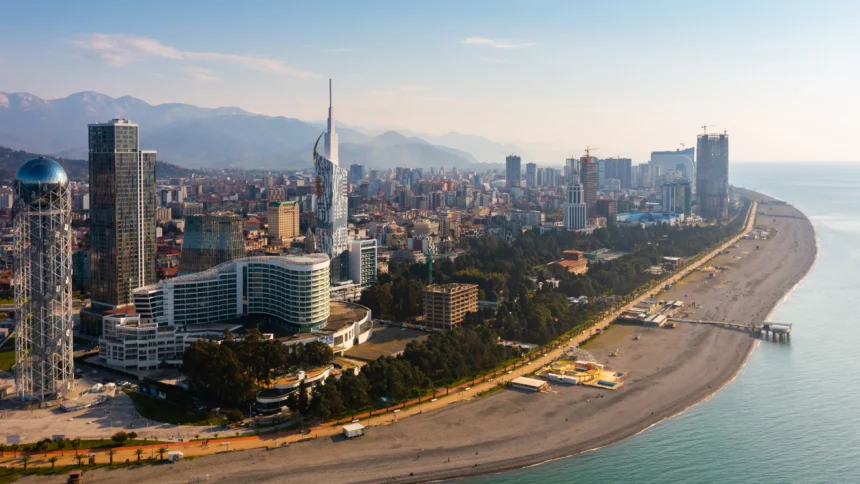
Batumi, hugging the curved, subtropical coastline of the Black Sea in southwestern Georgia, operates on a fascinating dual layout that fuses classic Belle Époque seaside charm with a flashy, futuristic architectural skyline.
Serving as the strategic maritime gateway and capital of the Autonomous Republic of Adjara, the city boomed in the late 19th century when it became the western terminus of the Baku-Batumi oil pipeline.
Wealthy European investors and Russian imperial architects flocked to the coast, carving out elegant plazas, lush botanical escapes, and grand residential blocks along the water.
Today, Batumi is Georgia’s ultimate summer playground and a premier destination for bold architectural experimentation.
The city seamlessly pairs the romantic, cobblestone charm of its old town with a jaw-dropping coastal strip of glittering casinos and hyper-modern towers that have earned it the nickname “The Las Vegas of the Black Sea’.
1. Batumi Boulevard
The Century-Old Palm Runway of Seaside Coasts and Dancing Fountains
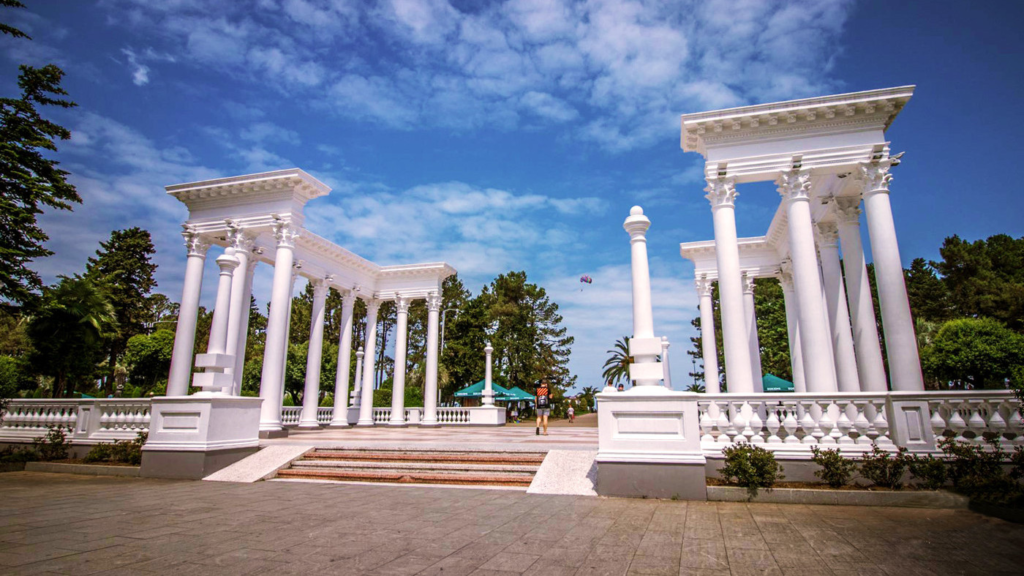
Stretching smoothly for over 7 kilometers along the city’s crescent-shaped Black Sea shoreline, this grand, multi-lane coastal parkland stands proud as the historic and social spine of Batumi.
- What it is famous for: Its century-old palm tree alleys, modern public art installations, and brilliant dancing fountains. Originally designed by French horticulturists in 1881, the boulevard is divided into distinct walking, cycling, and garden zones. Visitors can stroll beneath sub-tropical foliage, past historic open-air colonnades, to catch the nightly Laser and Fountain Show, where jets of water dance in synchronized harmony to classical and rock music against the sunset.
2. Ali and Nino Moving Sculpture
The Kinetic Steel Matrix of Eternal Love and Tragically Shifting Horizons
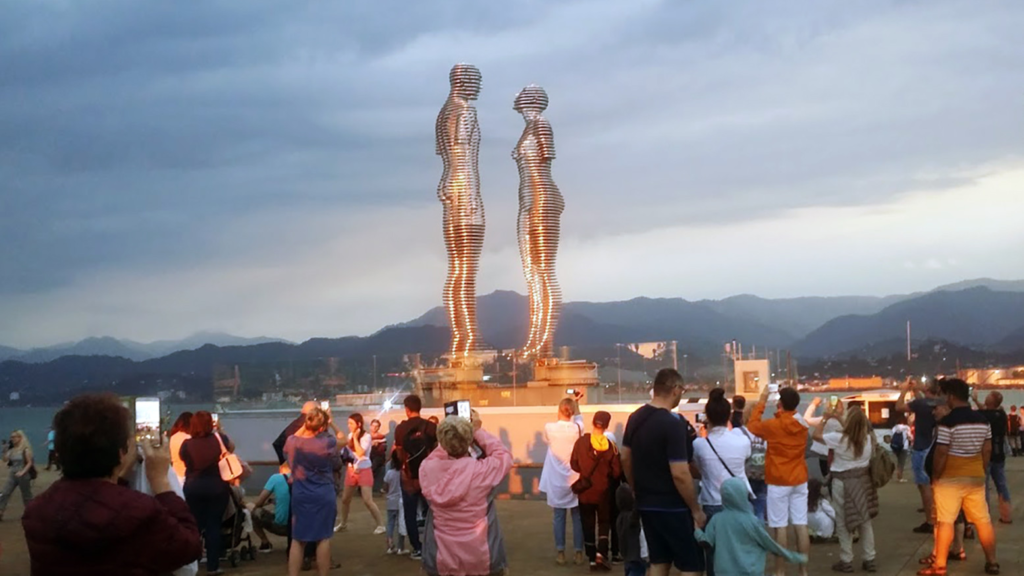
Commanding a prominent stone pier block at the northern tip of the boulevard near the active marine port, this world-famous kinetic installation is a masterpiece of contemporary engineering.
- What it is famous for: Its two 7-meter-tall steel figures that mechanically move toward and pass completely through each other. Designed by Georgian artist Tamara Kvesitadze and completed in 2010, the metallic statues represent a Muslim Azerbaijani boy and a Christian Georgian princess from Kurban Said’s famous 1937 novel. Every 10 minutes, the figures glide smoothly on circular tracks, embracing briefly before moving through one another to symbolize the tragic separation caused by war.
3. Piazza Square
The Italianate Mosaic Oasis of High-Boutique Elegance and Chime Orchestras
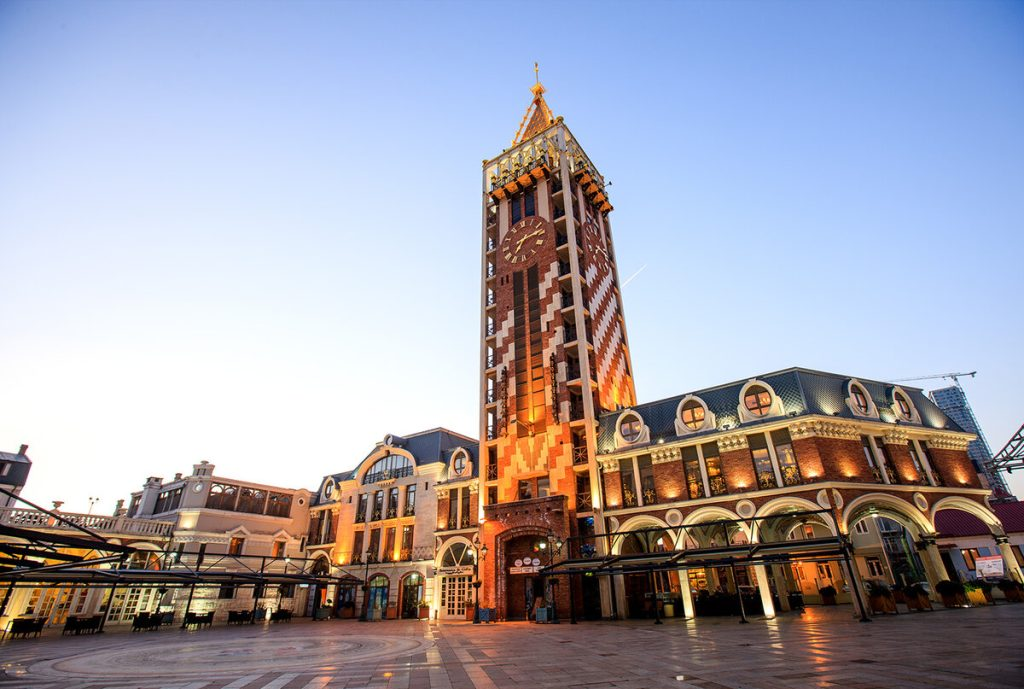
Tucked elegantly into the historic heart of the old town block networks, this beautifully detailed, 5,700-square-meter open plaza transports visitors straight to Renaissance Italy.
- What it is famous for: Its spectacular, 106-square-meter central floor mosaic and ornate Venetian-style architecture. Bounded by boutique hotels, open-air cafes, and grand arched colonnades, the square is an artistic marvel. The centerpiece is the towering Piazza Clock Tower, which features a mechanical puppet theater. At the strike of every hour, a small door opens and miniature musical figures emerge to play traditional melodies over the cobblestones.
4. Europe Square & The Medea Monument
The Belle Époque Civic Arena of Mythic Golden Fleeces
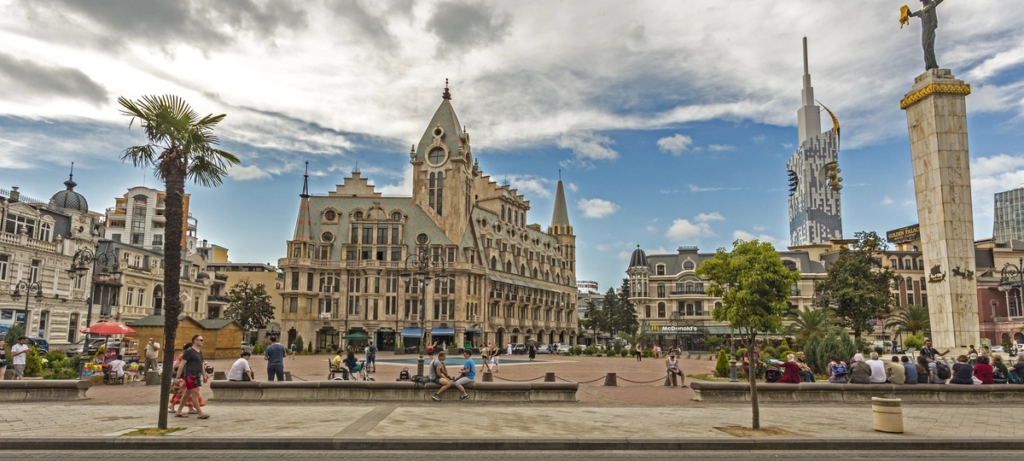
Dominating the central administrative zone of old Batumi, this wide, European-style public square is surrounded by beautifully restored 19th-century buildings featuring whimsical fairytale turrets.
- What it is famous for: Its musical step-fountains and the colossal, sky-scraping monument to Princess Medea. The square centers around a towering stone column holding a bronze statue of Medea, the legendary Colchian princess from Greek mythology. She stands looking out over the city holding a shimmering, solid-gold ram’s fleece, symbolizing Georgia’s ancient cultural ties to early European civilizations and its legendary metal-smithing heritage.
5. Alphabetic Tower
The Structural DNA Matrix of Ancient Georgian Typography
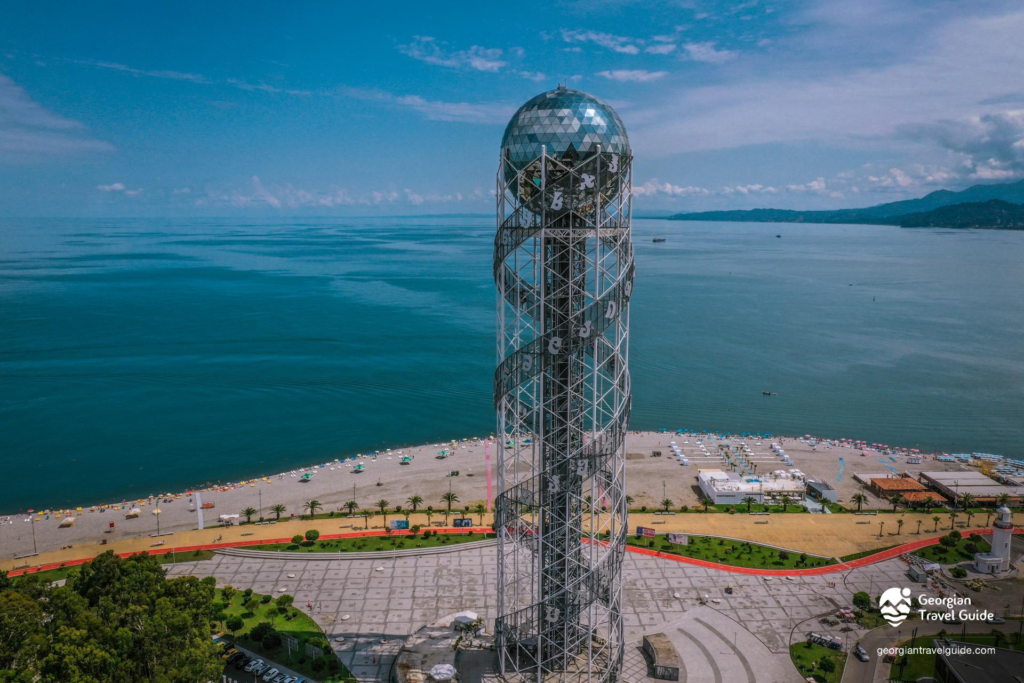
Rising sharply like a futuristic metallic spine 130 meters into the sky within the Miracle Park coastal district, this unique tower is a monument to national cultural identity.
- What it is famous for: Its distinctive double-helix design wrapped in the 33 unique letters of the Georgian alphabet. Designed by Spanish architect Alberto Domingo Cabo, the steel structure mimics the shape of a DNA strand, illustrating how the ancient, script-carved Georgian language forms the very genetic code of the nation. Visitors can ride a high-speed glass elevator up the central core to a massive, rotating silver sphere holding a panoramic viewing deck.
6. Batumi Botanical Garden
The Cliff-Hugging Green Matrix of Nine Global Phytogeographic Zones
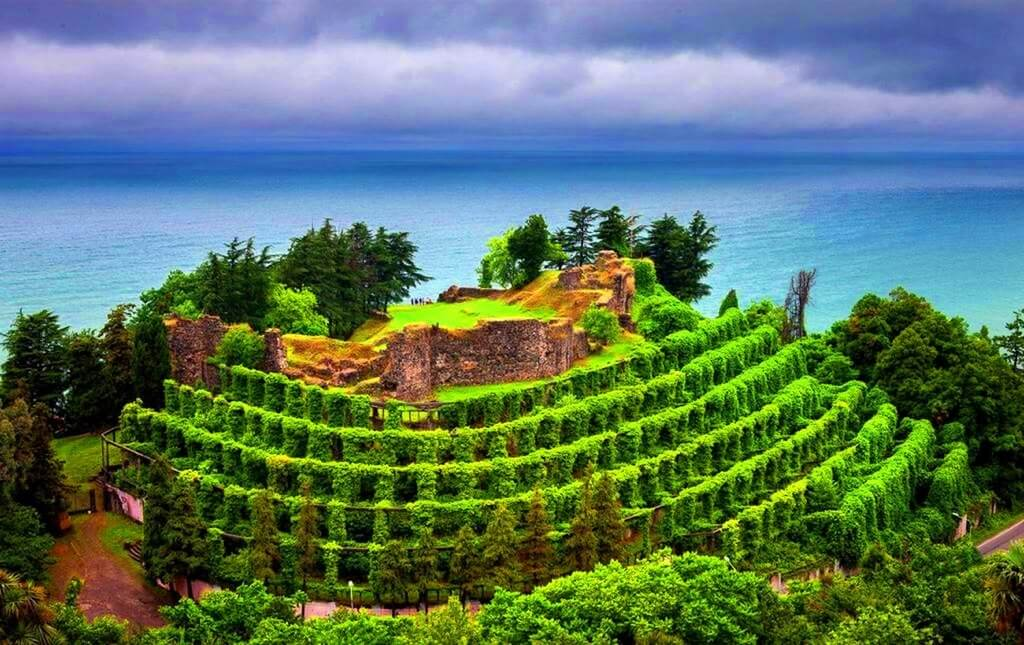
Perched dramatically on the steep, emerald slopes of the Mtsvane Kontskhi (Green Cape) bluffs roughly 9 kilometers north of the city center, this massive, 108-hectare paradise overlooks the sea.
- What it is famous for: Its unrivaled layout grouping distinct plant ecosystems from across the entire globe together on a single coastal cliff. Founded in 1912 by botanist Andrey Krasnov, the garden utilizes the region’s unique microclimate to cultivate everything from towering Himalayan cedars and Japanese sakura gardens to Australian eucalyptus trees and South American palms. Walking the winding paths treats travelers to views of exotic flora framing the blue waters of the Black Sea below.
7. Argo Cable Car & Anuria Mountain
The Panoramic Skyway Over the Subtropical City Basin
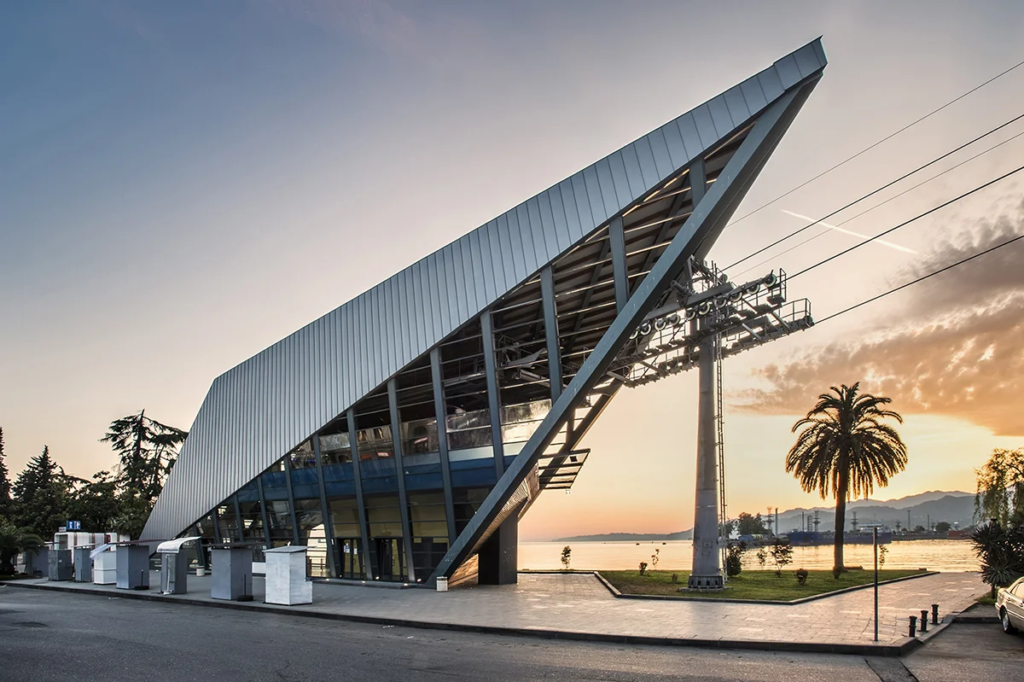
Starting from a sleek glass terminal station on the Gogebashvili waterfront promenade, this high-flying aerial cableway stretches for 2.5 kilometers over the city rooftops.
- What it is famous for: Its breathtaking, panoramic 15-minute cabin journey up to the peak of Anuria Mountain. The cable car rises smoothly over urban blocks and rolling green hills, climbing to an elevation of 250 meters. The spacious viewing platform at the summit features a complex designed to mimic sails, treating visitors to a spectacular look across the entire Batumi port, the skyscraper skyline, and the endless Black Sea horizon.
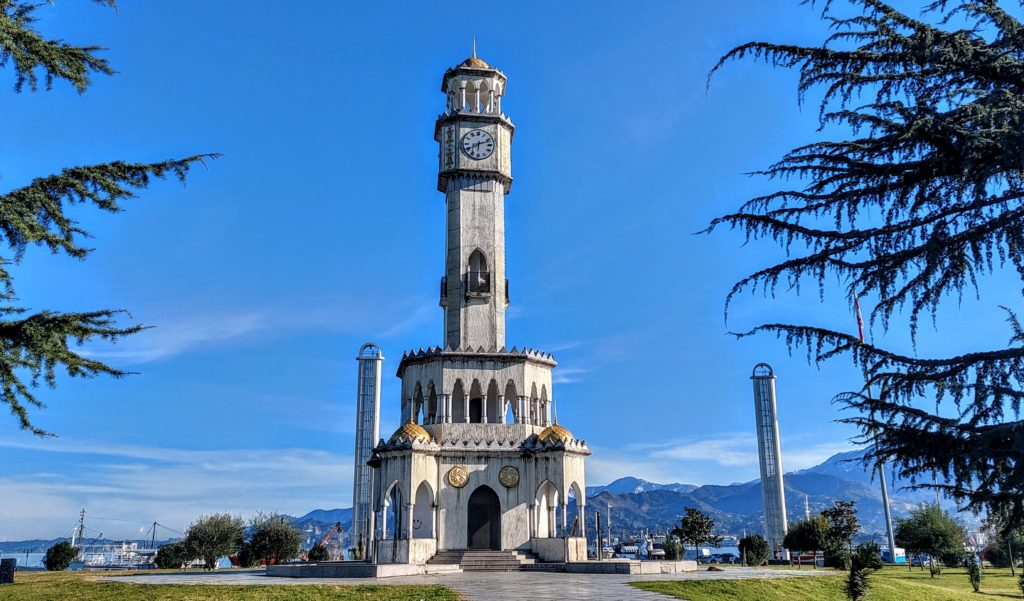
8. Chacha Tower
The Ottoman-Style Fountain of Gilded Clock Dials and Local Spirits
Positioned prominently near the waterfront Ferris wheel inside the Miracle Park zone, this striking, 25-meter-tall stone tower is an exact replica of a historic clock tower in Izmir, Turkey.
- What it is famous for: Its highly intricate Ottoman-Neoclassical design and its unique grape-brandy fountain system. The base of the tower is flanked by four distinct corner pools. Historically, instead of traditional water, the tower’s fountain system was engineered to pump out cold chacha—Georgia’s famous, high-proof traditional grape pomace brandy—for short periods once a week, drawing festive crowds to its carved stone columns.
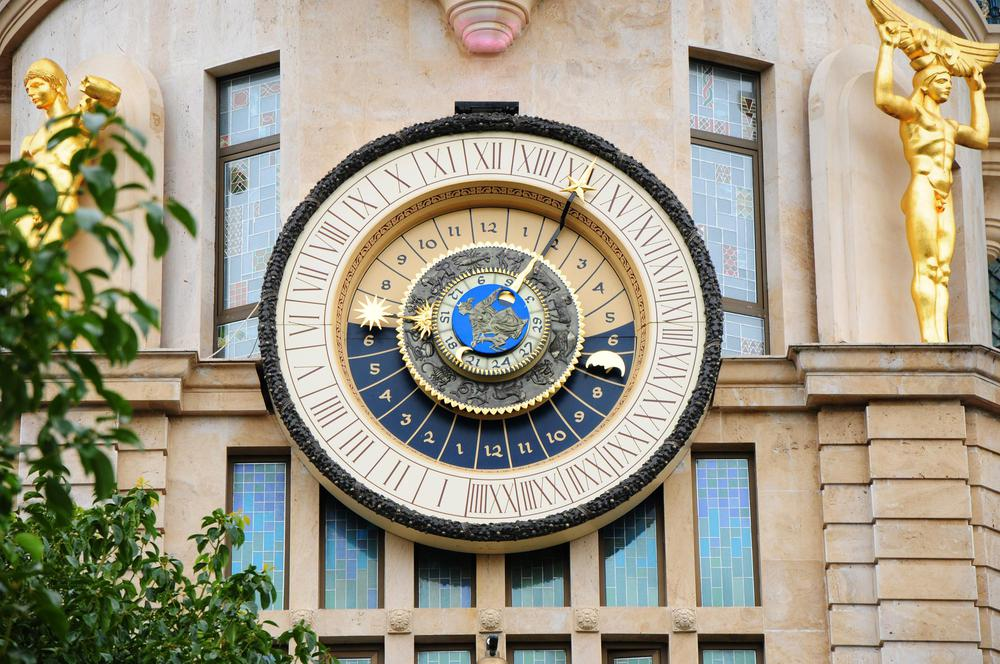
9. The Astronomical Clock
The Deep-Blue Gold Facade of Cosmic Tracking and Celestial Paths
Affixed beautifully onto the high, restored facade of the former National Bank of Georgia building on the corner of Europe Square, this ornate German-engineered timepiece is a marvel of horology.
- What it is famous for: Its complex astronomical dials that display real-time cosmic and planetary alignments. Modeled after Prague’s historic town clocks, the massive gold-and-blue dial does much more than tell time. By tracking the movements of detailed brass hands, visitors can calculate the exact phases of the moon, the positioning of the sun across the zodiac constellations, and the precise times of sunrise and sunset.
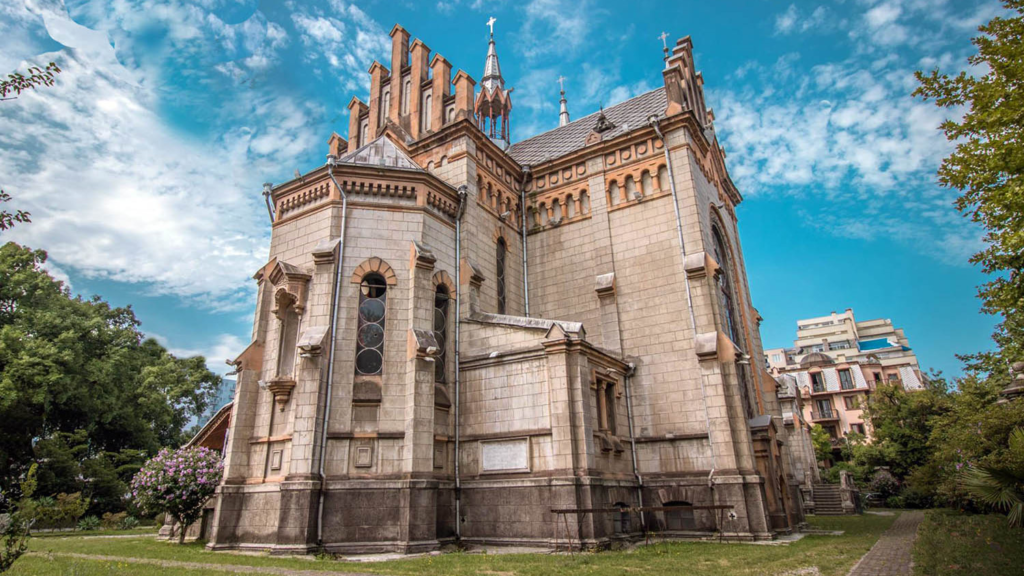
10. Holy Mother Virgin Nativity Cathedral
The Triple-Spire Gothic Sanctuary of Neo-Gothic Stone and Stained Glass
Commanding a prominent urban block on the eastern edges of the old town district, this majestic, red-brick house of worship stands proud as one of the finest architectural monuments in Adjara.
- What it is famous for: Its soaring, triple-spire Neo-Gothic design and vibrant interior wall frescoes. Built at the turn of the 20th century out of special high-grade stone that shifts color in the coastal rain, the cathedral was originally constructed as a Roman Catholic church before being converted into a Georgian Orthodox cathedral. The interior features tall pointed arches, rows of stained-glass window sequences, and large icons that create an atmosphere of serene spiritual majesty.
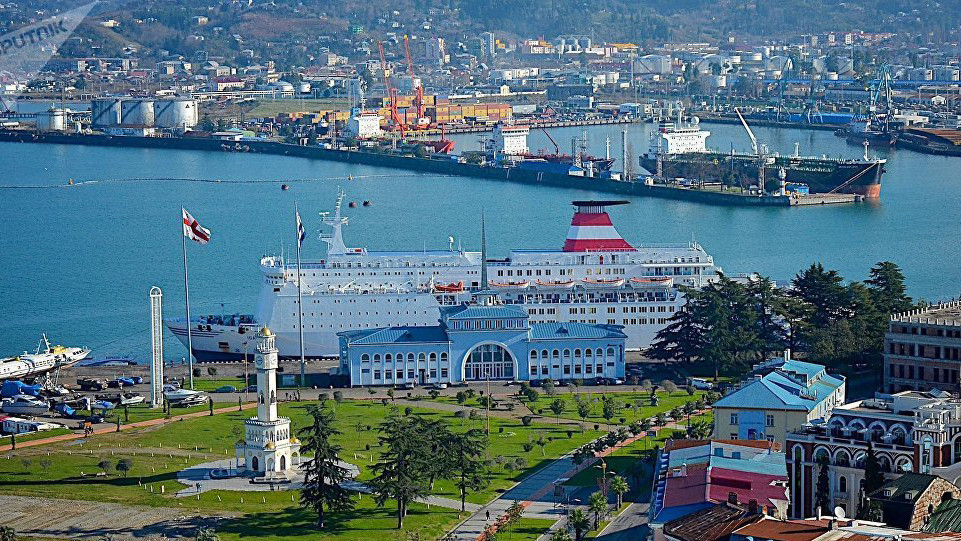
11. Batumi Sea Port & Marine Station
The Art Deco Maritime Gateway of Soviet Lineages and Deep Shipping
Anchoring the busy, industrial northeastern crook of the bay, this historic maritime complex serves as the beating commercial and nautical heart of the Adjarian coast.
- What it is famous for: Its monumental, Art Deco Marine Station building topped with a sharp metallic spire. Completed in 1962 during the Soviet era, the building features an elegant passenger pavilion that looks out over the active shipping docks. The surrounding harbor front is a hive of activity where sleek international yachts dock alongside rustic local fishing vessels, offering a look at Batumi’s deep maritime heritage.