
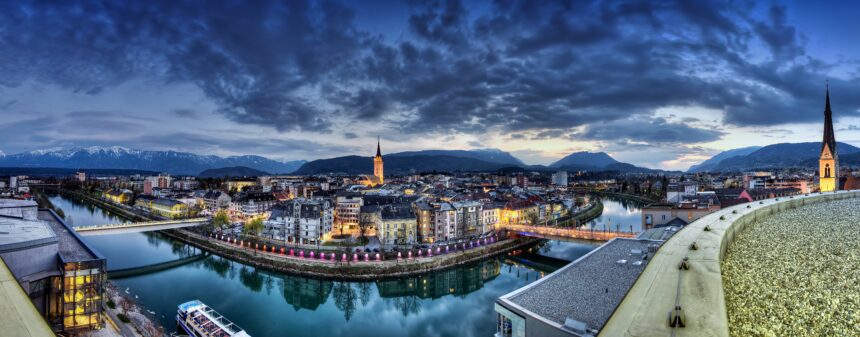
Villach, tucked dynamically into the heart of Carinthia in southern Austria, operates on a magnificent, water-defined layout where the Drau and Gail rivers meet. Positioned inside a sun-drenched alpine basin just miles from both the Italian and Slovenian borders, the city has functioned as a critical geographic crossroads since antiquity.
Its strategic river bridges were fortified by the Romans as the station Santicum, and during the Middle Ages, it evolved into a bustling trade capital operating under the sovereign rule of the Bishops of Bamberg.
Today, Villach is Carinthia’s second-largest city and a pulsing emblem of a relaxed, borderless lifestyle.
Known across Austria for its infectious, high-energy humor during the annual Villacher Fasching (Carnival) and its historic thermal spring culture, Villach effortlessly welds its pristine, pastel-tinted old town lanes with a breezy, active lake-and-mountain resort identity.
Famous for its hearty, sweet-spiced yeast cakes (Villacher Reindling), vibrant riverside lighting, and alpine cycling trails.
1. Hauptplatz & The Trinity Column
The Elongated Merchant Stage of Pastel Sovereigns
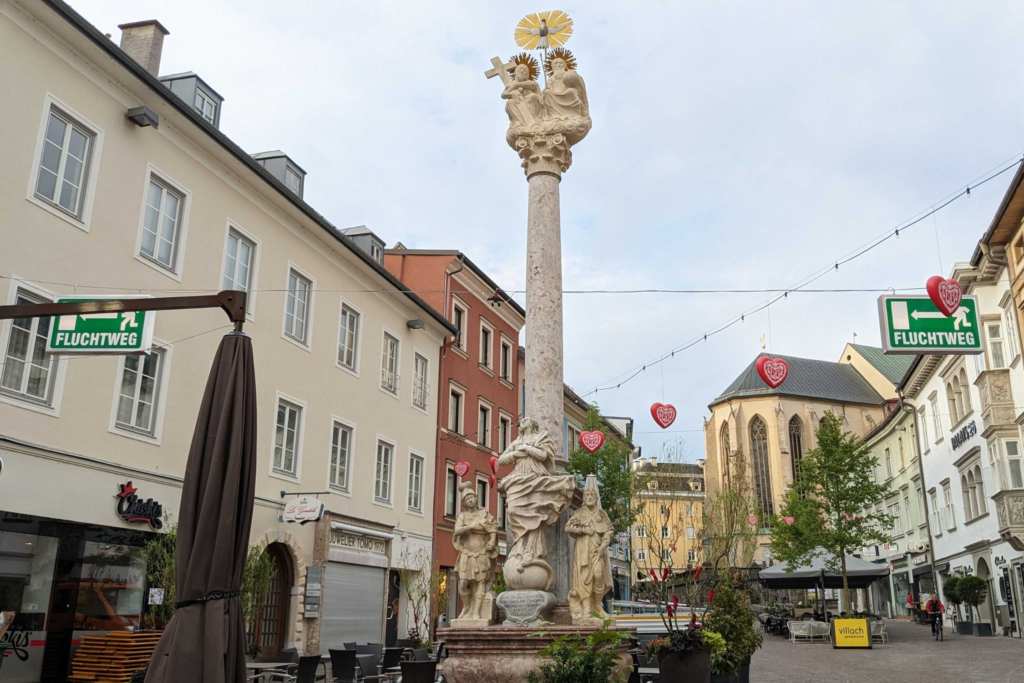
Slicing straight through the geometric center of Villach’s old town block network, this exceptionally long, gently curving pedestrian square has functioned as the civic, commercial, and festive baseline of the city since the 12th century.
- What it is famous for: Its magnificent, pastel-hued Baroque facades and the historic Trinity Column. The plaza is anchored by the Trinity Column (Dreifaltigkeitssäule), a beautifully carved stone monument dating back to 1739 that commemorates the city’s survival through devastating plagues and earthquakes. Lined with historic patrician townhouses featuring hidden arcaded courtyards, the square serves as the colorful, open-air arena for weekly farmers’ markets and grand Carnival parades.
2. The Drau River Promenade & Draupuls
The Fluid Liquid Runway of Cybernetic Light Symphonies
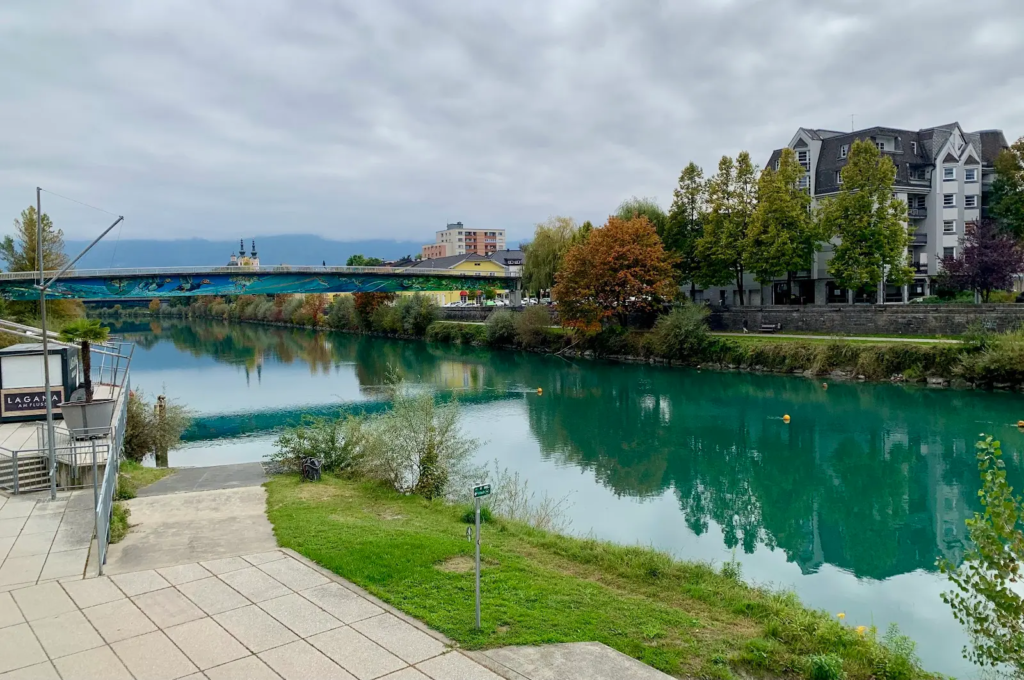
Tracing the wide, emerald-green currents of the Drau River as it cuts directly through the urban center, this elegantly landscaped waterfront promenade functions as Villach’s favorite social walking strip.
- What it is famous for: Its scenic, river-framing bicycle highways and the high-tech Draupuls water show. The promenade serves as a major node for the cross-border Drau Cycle Path. On summer evenings, the river basin transforms into a high-tech sensory theater via the Draupuls, a spectacular, synchronized public installation featuring illuminated multimedia water fountains, lasers, and acoustic soundtracks projected directly into the river currents.
3. St. Jakob’s Church (Stadtpfarrkirche St. Jakob)
The Towering Gothic Sentinel of Panoramic Alpine Spire Views
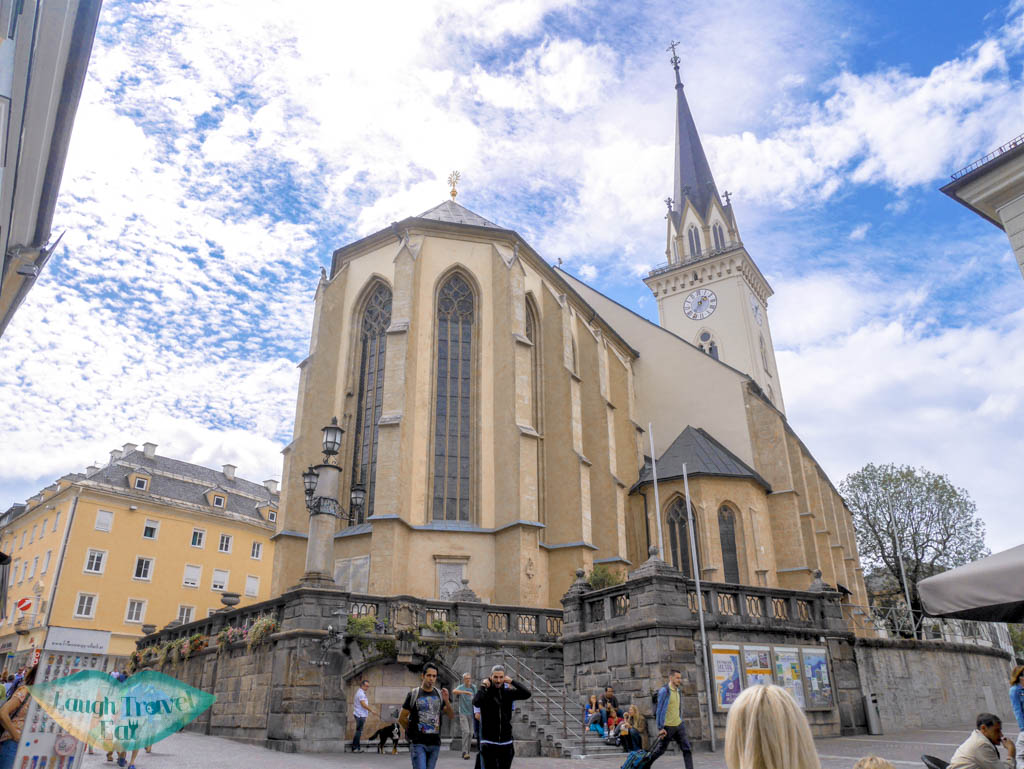
Commanding the elevated northern block of the Hauptplatz, this monumental, three-aisled Gothic hall church stands proudly over the foundations of older medieval structures destroyed by a massive earthquake in 1348.
- What it is famous for: Its soaring, 94-meter-high detached church tower, the tallest spire in Carinthia. Energetic travelers can climb the 239 stone steps of the interior stairs to the high belfry gallery, which treats visitors to an unobstructed, birds-eye panorama over the city rooftops, the looping path of the Drau River, and the jagged limestone crests of the Karawanken mountain chain along the Slovenian border.
4. KärntenTherme & Warmbad-Villach
The Futuristic Oasis of Ancient Thermal Thermal Springs
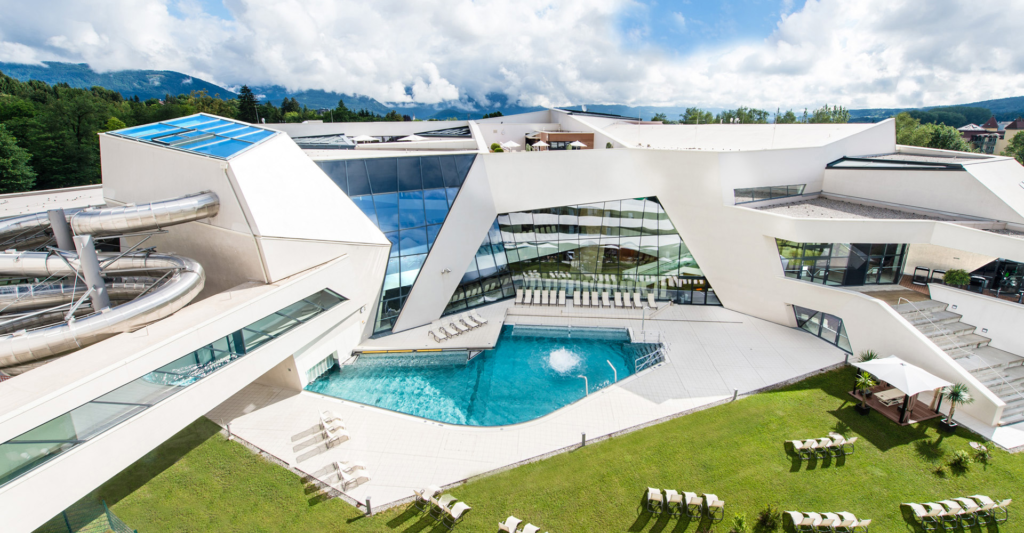
Located on the quiet southern fringes of the city limits within the historic spa district of Warmbad, this hyper-modern, multi-tiered thermal bath complex is built over natural mineral springs that have been active since Roman times.
- What it is famous for: Its daring, avant-garde architecture and therapeutic, natural thermal pool networks. The striking building features an array of folded silver panels and geometric glass walls meant to mimic the karst limestone caverns of the surrounding mountains. Inside, millions of liters of warm, mineral-rich water fill indoor and outdoor adventure pools, wild-river waterslides, and premium saunas, offering a world-class wellness escape fueled by pure subterranean warmth.
5. Dobratsch Mountain & The Villach Alpine Road
The High Limestone Citadel of Borderless Alpine Driving
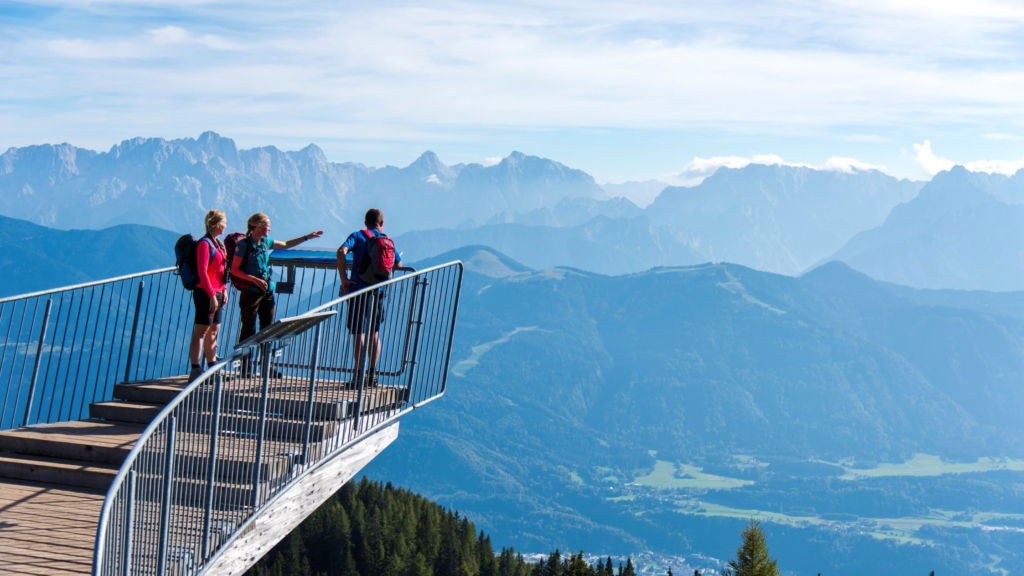
Rising like a monumental limestone shield directly west of the city streets, the Dobratsch mountain is a 2,166-meter-high protected nature park that serves as Villach’s primary high-altitude backyard playground.
- What it is famous for: The Villach Alpine Road, a world-class 16.5-kilometer scenic mountain highway. This engineering marvel features 7 hairpin turns and 11 panoramic lookouts. Driving the sweeping tarmac route treats travelers to vertiginous views across the Gail valley. The road ends at the Rosstratte parking area, where hiking trails lead up to Europe’s highest-altitude pilgrimage churches and a suspended viewing platform over a 400-meter drop.
6. Faaker See (Lake Faak)
The Turquoise Island Jewel of Alpine Waters and Moto-Culture
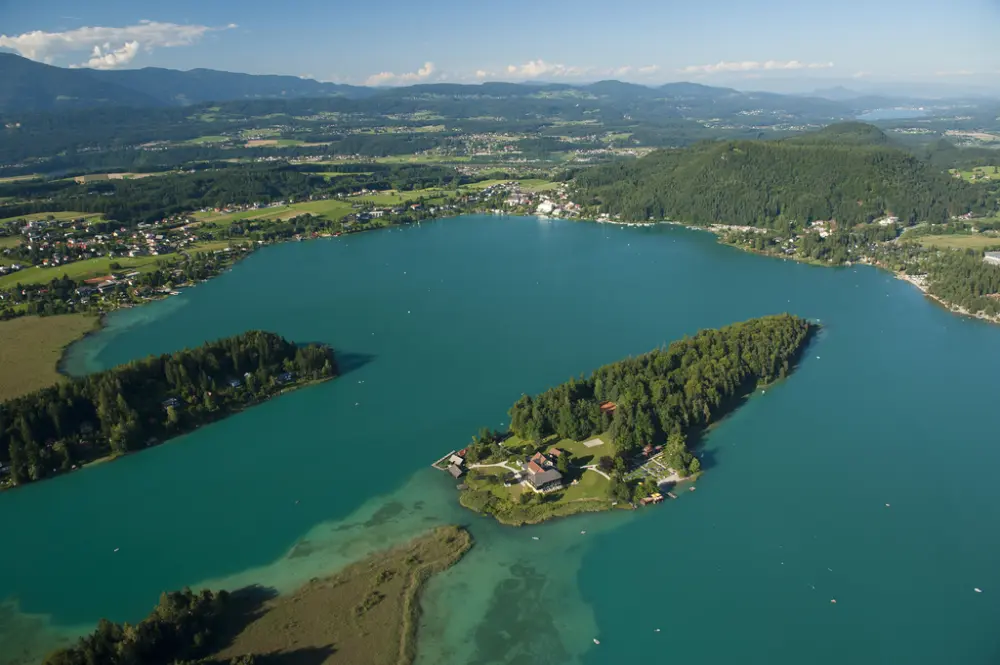
Situated just a short transit ride southeast of the city center, this picturesque, 2.2-square-kilometer alpine body of water sits framed by the towering rock walls of the Mittagskogel peak.
- What it is famous for: Its brilliant, glowing turquoise water and hosting European Bike Week. Because of fine limestone particles washed down from the mountains, the glacier-fed lake shifts to an incredibly vivid, Caribbean-like turquoise shade. It features a romantic, forest-covered island right in its center, and every September, its shoreline roads host European Bike Week, the largest Harley-Davidson and motorcycle festival in Europe.
7. Ossiacher See (Lake Ossiach) & Gerlitzen Mountain
The Fjord-Like Haven of Classical Operas and Paragliding Peaks
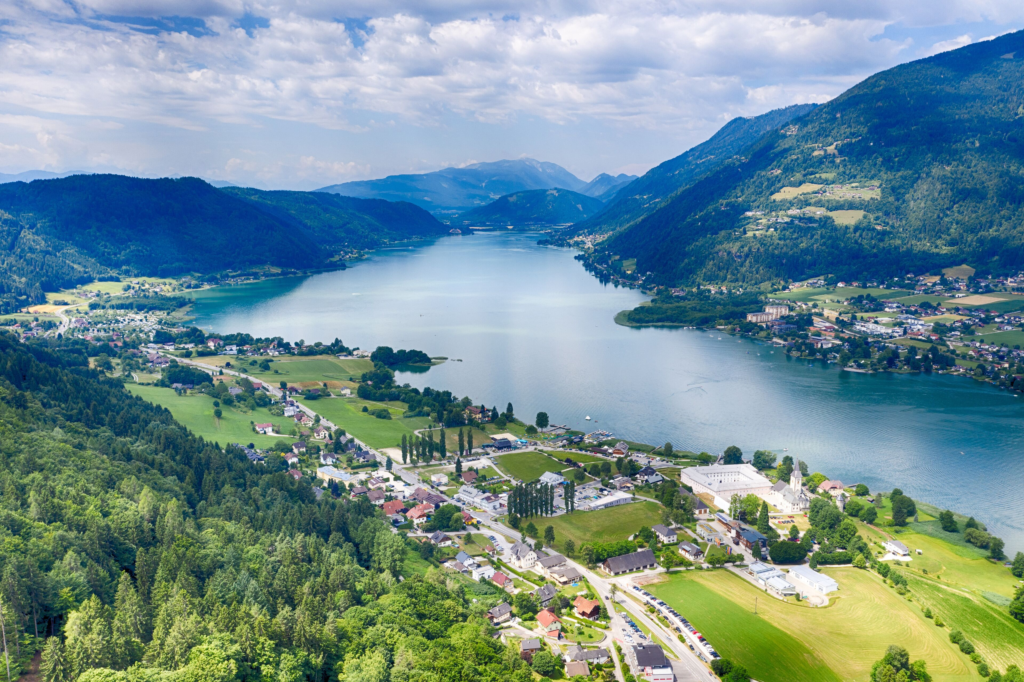
Located just a few kilometers northeast of Villach, this deep, 11-kilometer-long lake loops around the base of the massive Gerlitzen mountain ridge, forming a major year-round recreational arena.
- What it is famous for: The historic Ossiach Abbey, the Carinthian Summer Festival, and the Kanzelbahn cable car. The shoreline is anchored by an ancient 11th-century Benedictine monastery that acts as the grand stage for elite classical music productions. Directly behind the beaches, the high-speed Kanzelbahn cable car lifts hikers and skiers up to the summit of the Gerlitzen, a world-renowned launch pad for colorful paragliders.
8. Landskron Castle & The Monkey Mountain (Affenberg)
The Medieval Rocky Fortress of Flying Eagles and Macaque Troops
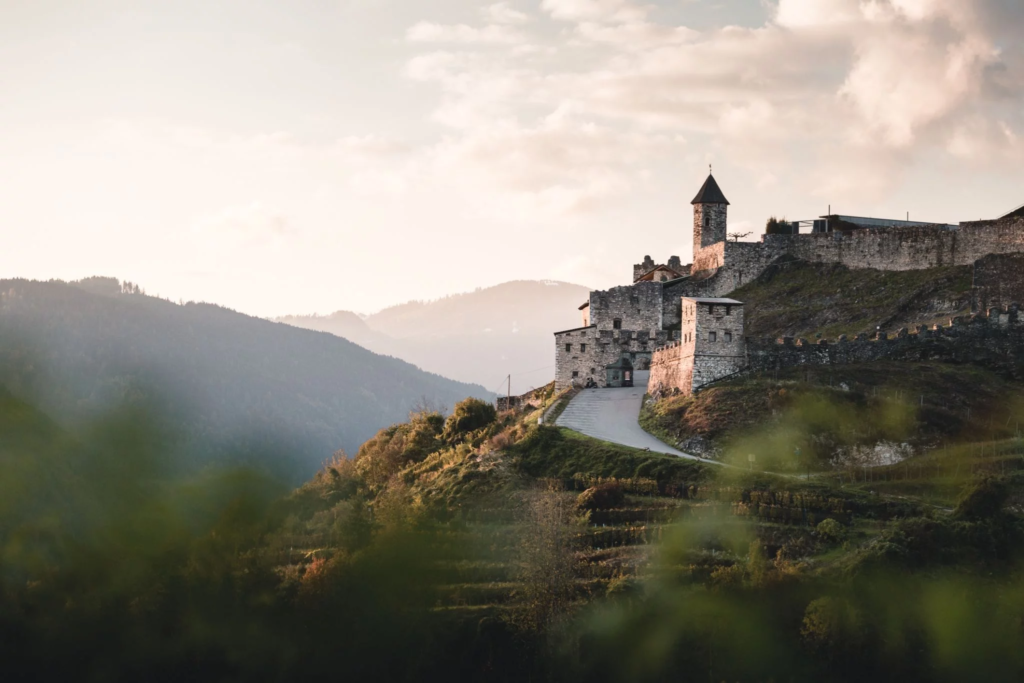
Crowning a steep, wooded rocky hill overlooking the northern exit of the Villach basin near the river bend, this imposing, 14th-century fortified castle palace stands as a premier regional landmark.
- What it is famous for: Its dramatic falconry flight shows and Austria’s largest open-air monkey sanctuary. While the historic castle walls hold a fine panoramic restaurant, the grounds are globally celebrated for the Affenberg (Monkey Mountain)—a specially designed, 4-hectare outdoor enclosure where 180 Japanese macaque monkeys roam completely free in natural forest conditions. Visitors can tour the colony and watch birds of prey soar from the castle ramparts.
9. Museum of the City of Villach (Stadtmuseum)
The Renaissance Courtyard Portal of Prehistoric and Earthquake History
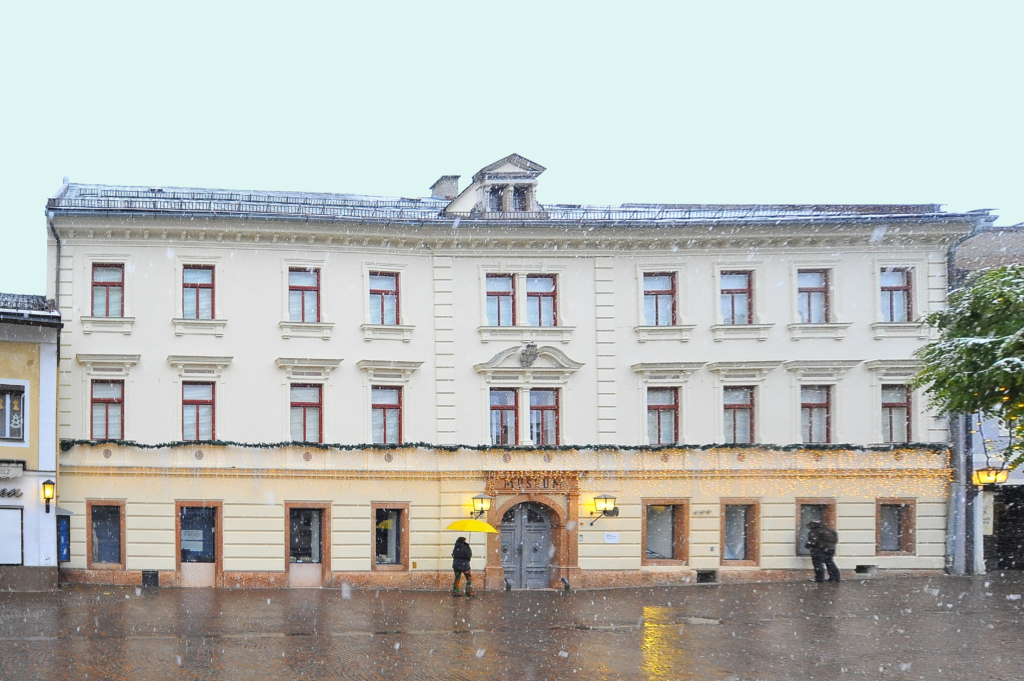
Housed inside an elegant, beautifully preserved 16th-century patrician palace townhouse just off the main Hauptplatz lanes, this rich civic museum protects over 7,000 years of regional human heritage.
- What it is famous for: Its stunning three-story arcaded courtyard and rare collections of medieval weaponry and Roman coins. The museum tracks Villach’s turbulent historical line, including its role as a vital minting hub and its survival through historical earthquakes. The centerpiece of the building is its romantic, plant-lined Renaissance loggia courtyard, which displays ancient Roman stone altars and early mining artifacts dug from the nearby mountains.
10. The Relief von Kärnten (Relief Map of Carinthia)
The Colossal Subterranean Matrix of Miniature Alpine Topography
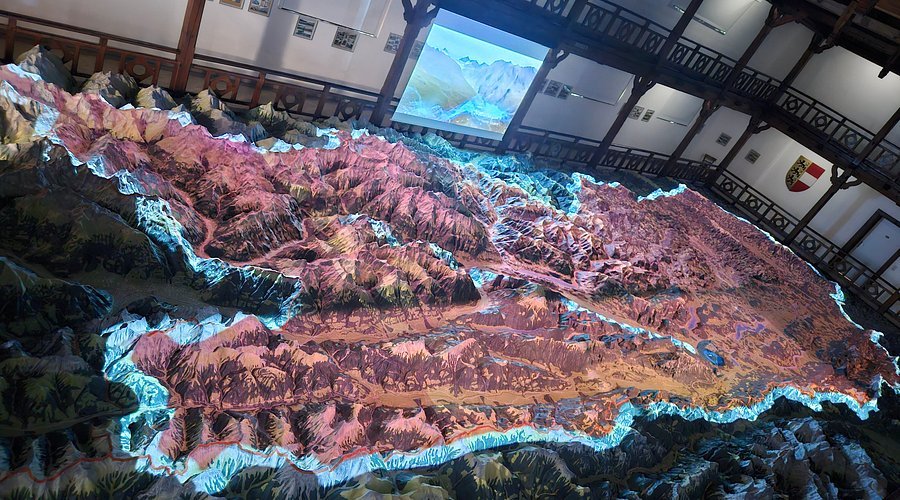
Tucked into a specialized, dedicated exhibition pavilion hall within the green corridors of the Schillerpark just south of the old town core, this unique cartographic monument is a marvel of spatial calculation.
- What it is famous for: Being Europe’s largest, most accurate plastic topographic landscape model. Spanning an indoor floor space of 182 square meters, this massive 1:10,000 scale reproduction captures every single mountain peak, river canyon, and valley layout of the entire state of Carinthia. Visitors walk along elevated interior viewing galleries while high-tech projection systems map out historic trade paths, weather patterns, and geological fault lines across the miniature alpine terrain.
11. Schillerpark & The Venice-Trieste Railway Axis
The Green Botanical Sanctuary of Imperial Train Paths
Bordering the busy traffic networks of the modern main railway station avenues, this historic, beautifully landscaped public parkland serves as a major green buffer zone for the inner city.
- What it is famous for: Its exotic botanical tree collections and its monument to historic southern European rail transport. Laid out in the late 19th century during the peak of the Austro-Hungarian Empire, the park was designed to show off Villach’s position as the primary transport junction linking Vienna and Venice. Lined with giant sequoias, shaded avenues, and stone sculptures of famous local poets, the park offers a peaceful, green retreat just steps from the active train platforms.