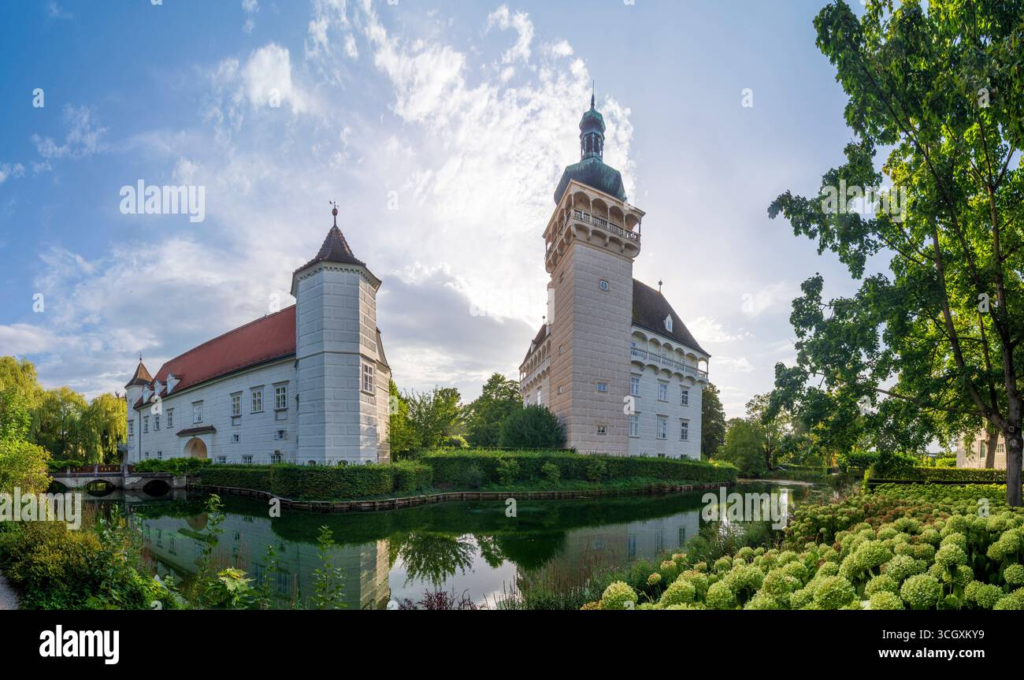


St. Pölten, unfurling along the banks of the Traisen River in Central Lower Austria, operates on a fascinating dual layout that bridges ancient European history with slick, late-20th-century political ambition.
Historically, it claims the proud crown of being Austria’s oldest documented city, built upon the foundations of the ancient Roman municipality Aelium Cetium.
For centuries, it functioned as a religious stronghold defined by the masterly brushstrokes of the high Baroque era, which filled its compact city center with elegant, pastel-hued townhouses and magnificent palatial facades.
However, the city’s modern identity underwent a radical transformation in 1986, when it was officially designated as the new capital of Lower Austria.
This spark ignited a massive construction boom, giving birth to the Landhausviertel—a futuristic government and cultural quarter that stands as a textbook example of daring, glass-and-steel contemporary architecture.
1. Rathausplatz & The Holy Trinity Column
The Grand Baroque Stage of Imperial Guild Traditions
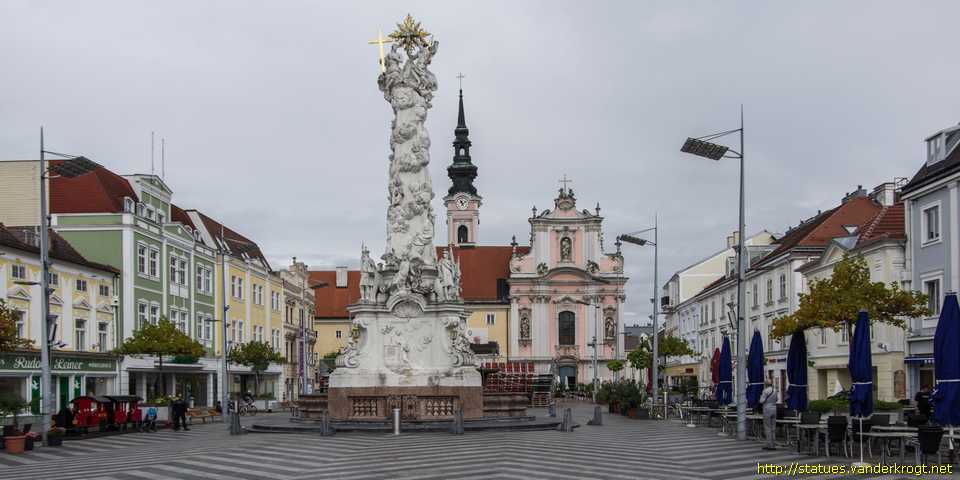
Spreading out as the monumental civic and social heart of the historic center, this wide, cobblestone market square is lined with a spectacular array of contrasting historicist and Baroque architectural styles.
- What it is famous for: Its iconic multi-styled Town Hall (Rathaus) and the towering Baroque marble column. The square is anchored by the breathtaking Holy Trinity Column (Dreifaltigkeitssäule), completed in 1782 to symbolize the city’s survival through plague and foreign siege. The square is dominated by the Rathaus itself, a structural marvel that effortlessly welds a Gothic core with a Renaissance octagonal tower and a sweeping, pastel-pink Baroque facade, today serving as a bustling hub of open-air markets and cafes.
2. The Landtagsschiff (Lower Austrian Parliament)
The Hyper-Modern Glass Vessel of Democratic Deliberation
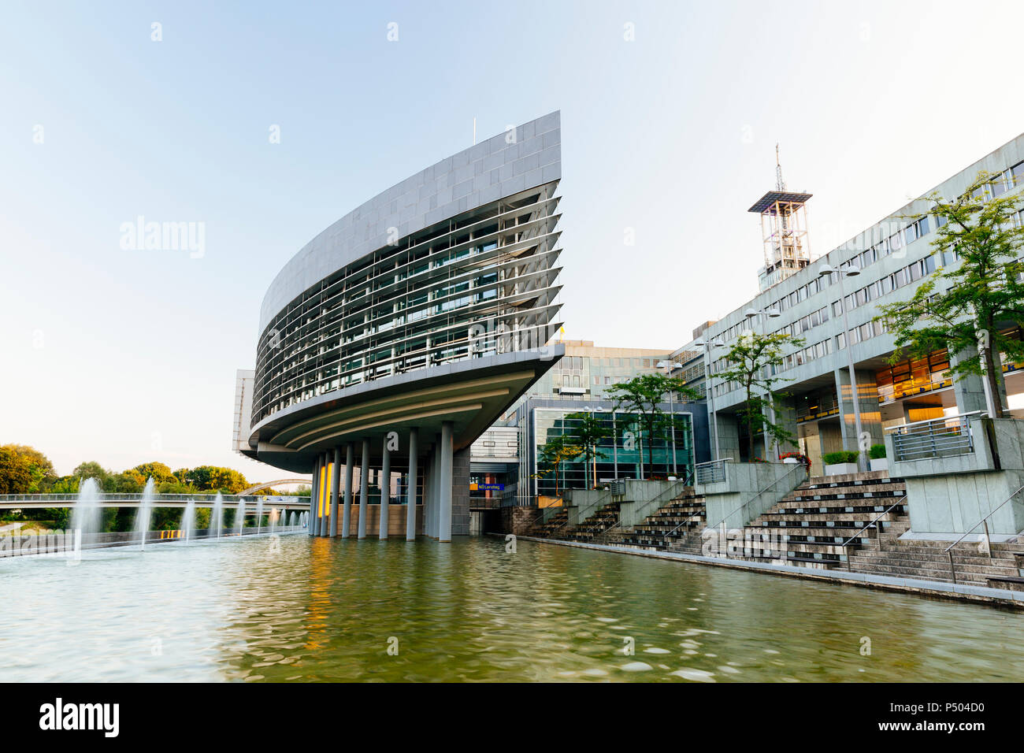
Dominating the futuristic northern sector of the modern Government Quarter (Landhausviertel), this striking, translucent architectural icon was engineered by architect Ernst Hoffmann and completed in 1997.
- What it is famous for: Its daring, ship-shaped glass design floating over a public water basin. Representing the transparent and democratic ideals of modern Lower Austria, the building is shaped exactly like the hull of a massive, futuristic vessel. The outer skin is composed entirely of high-tech acoustic glass and structural steel, suspended elegantly over a network of fountains that reflect the building’s geometric angles, making it a globally celebrated pilgrimage site for lovers of avant-garde public engineering.
3. The Klangturm (Tower of Sound)
The Futuristic Steel Matrix of Panoramic Acoustic Vistas
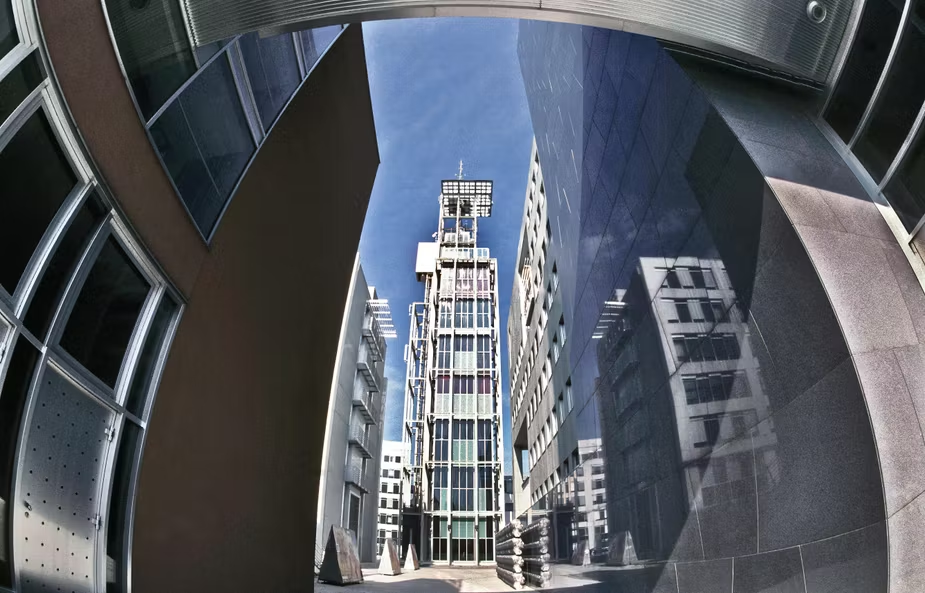
Rising 77 meters straight into the sky within the central plaza of the modern cultural district, this sleek, blue-lit steel and glass observation tower functions as the architectural anchor of the modern city layout.
- What it is famous for: Its interactive sound spheres and the open-air panoramic viewing deck. The tower features an innovative, transparent structure that houses an array of “sound spheres”—specialized acoustic rooms where visitors can manipulate interactive audio-visual installations. A high-speed glass elevator whisks passengers to an elevated, open-air viewing platform that offers an unobstructed, birds-eye view over the Traisen valley and the contrasting historic roof tiles of the old town.
4. St. Pölten Cathedral (Dom Mariä Himmelfahrt) & Domplatz
The Romanesque Sentinel of Illusionistic Gold Frescoes
Commanding the expansive, historic cobblestone courtyard of the Domplatz, this monumental twin-aisled cathedral church stands on the sacred site of an ancient 8th-century Benedictine monastery.
- What it is famous for: Its austere Romanesque exterior holding an absolute explosion of high Baroque gold interior drama. While the outer masonry features defensive medieval towers, stepping across the threshold treats visitors to a breathtaking interior designed by Baroque masters Jakob Prandtauer and Daniel Gran. The walls are completely blanketed in intricate stucco work, gold leafing, and massive, illusionistic ceiling frescoes that stand as some of the finest ecclesiastical art pieces in Central Europe.

5. Festspielhaus St. Pölten
The Fluid Architectural Waveform of Contemporary Performance
Positioned prominently along the cultural promenade of the Kulturbezirk, this world-class performance hall and opera house was designed by renowned Austrian architect Klaus Kada and opened its doors in 1997.
- What it is famous for: Its exceptional, dynamic acoustics and its striking translucent glass-skin design. The building is celebrated for its fluid, asymmetrical geometries that mimic the motion of sound waves. It serves as the primary home for the Tonkünstler Orchestra and operates as a premier international venue for contemporary dance, orchestral compositions, and musical theater, matching its high-art interior with a sun-drenched, glass-walled public foyer.
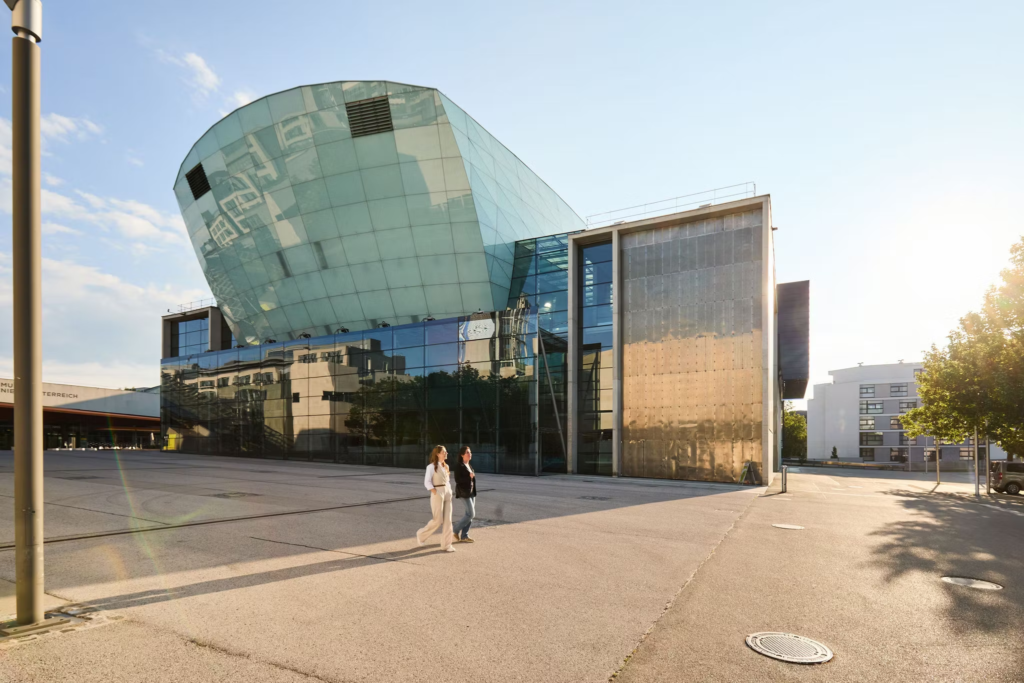
6. The Institut der Englischen Fräulein
The Masterpiece Facade of High Baroque Court Splendor
Stretching gracefully along the historic retail thoroughfare of Linzer Straße, this grand, multi-winged palace complex has operated as a historic convent school for the Institute of the Blessed Virgin Mary since 1706.
- What it is famous for: Having one of the most magnificent, detailed Baroque building facades in Austria. Engineered by master architect Jakob Prandtauer, the external walls are a display of rich ornamentation, featuring elegant window pediments, deep crimson stucco accents, and stone sculptures. The attached convent chapel houses a collection of priceless frescoes painted by Bartolomeo Altomonte, which remain an untouched monument to imperial monastic wealth.
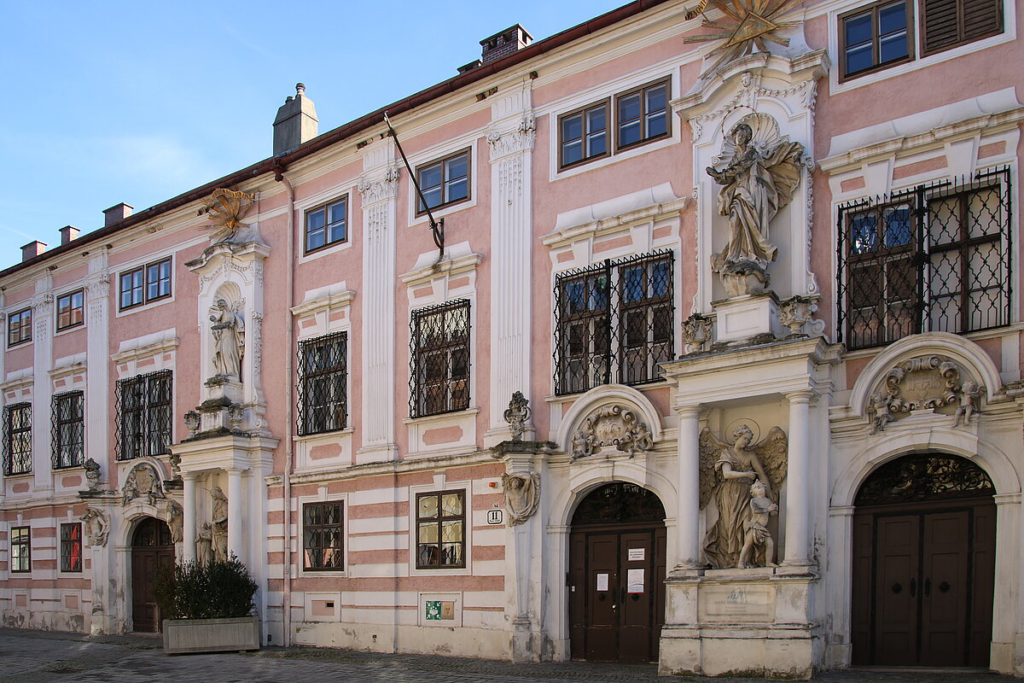
7. The Viehofner Seen & Ratzersdorfer See
The Twin Turquoise Oasis of Glacial Urban Escape
Located on the northern fringes of the city limits along the green corridors of the Traisen floodplains, this expansive network of natural, artificial lakes serves as St. Pölten’s primary aquatic playground.
- What it is famous for: Their crystal-clear swimming waters and pristine, lakeside bicycle highways. Spanning over dozens of hectares of protected parkland, the lakes feature wide gravel beaches, active windsurfing bays, and beach volleyball centers. A favorite local ritual is climbing the wooden observation tower nestled between the Viehofner lakes to spot rare migratory waterfowl, or cycling along the riverbank path straight from the government quarter.
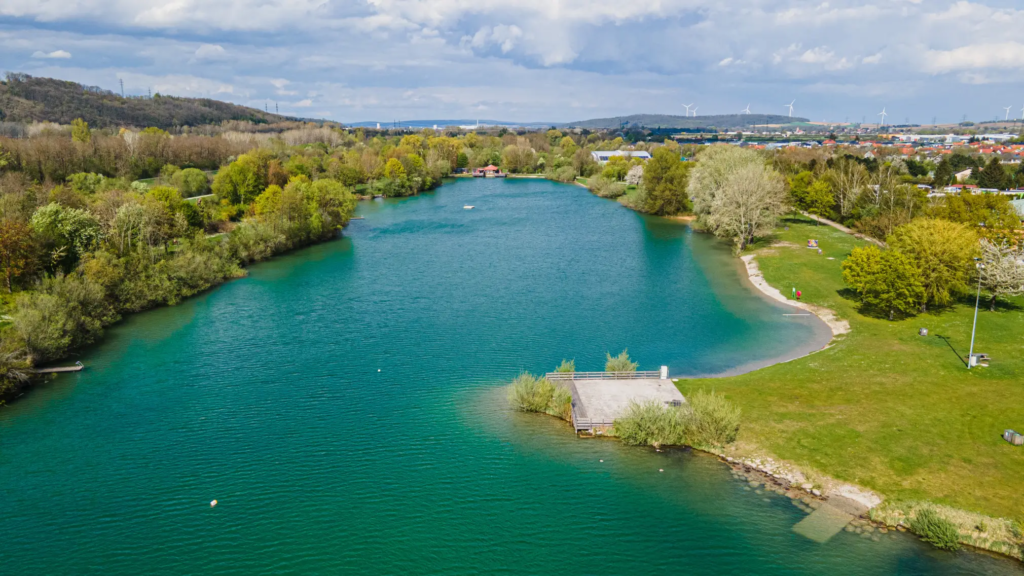
8. Museum Niederösterreich (The Lower Austria Museum)
The Eco-Architectural Portal of Living Nature and Human History
Integrated into the sleek, geometric layout of the Kulturbezirk, this cutting-edge regional museum offers an innovative, interactive approach to natural history and cultural research.
- What it is famous for: Its massive subterranean freshwater aquariums and living native wildlife enclosures. The museum splits into two major tracts: the House of History and the House of Nature. Visitors can walk through simulated Danube river biotopes containing live sturgeon, explore high-tech historical exhibits detailing the region’s transition through the World Wars, and step into an outdoor micro-zoo filled with regional reptiles and small mammals.
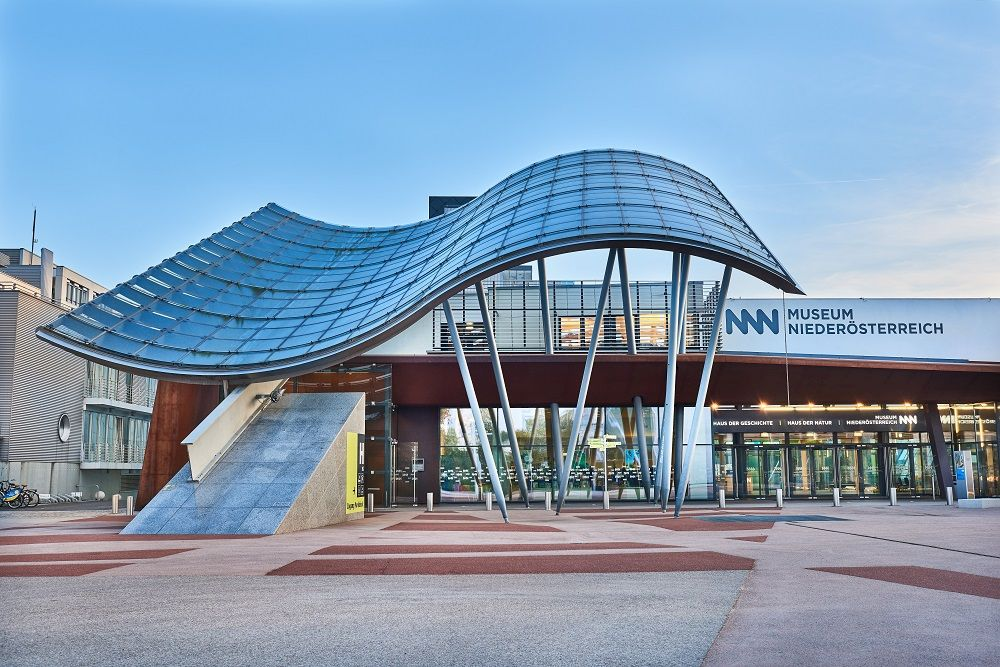
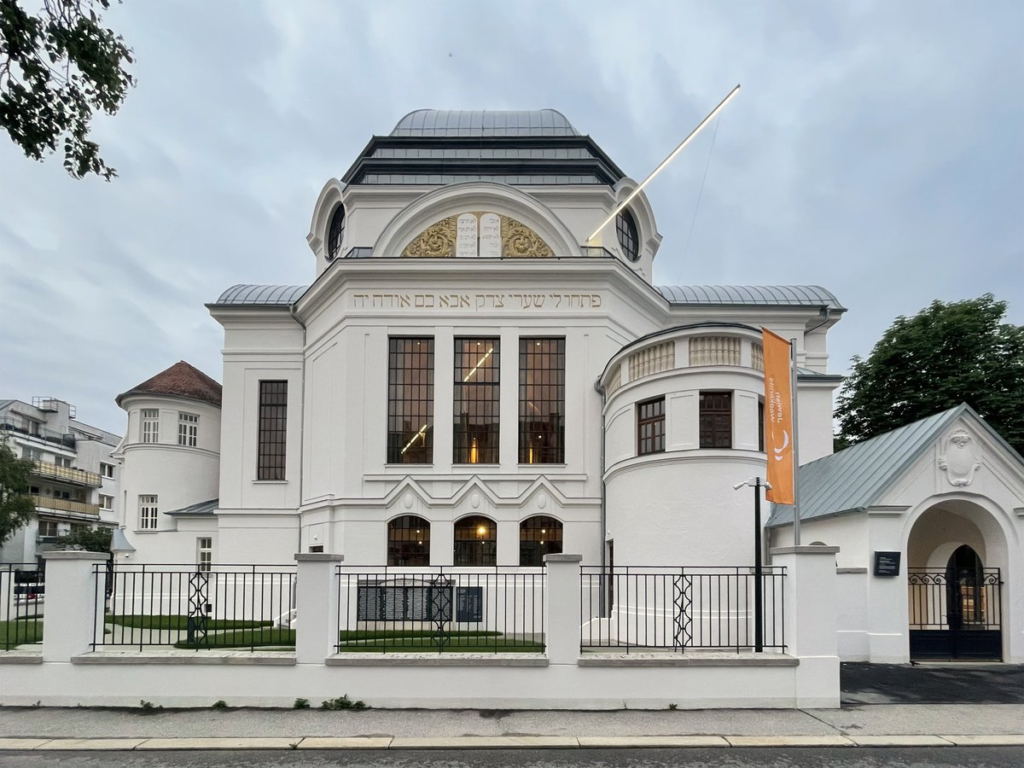
9. The Synagogue (Ehemalige Synagoge)
The Art Nouveau Sanctuary of Interlocking Floral Geometries
Tucked away in the quiet, historic neighborhood blocks of Dr.-Karl-Renner-Promenade, this beautifully restored, early-20th-century temple stands as one of the most artistically significant Jewish monuments in Lower Austria.
- What it is famous for: Its rare, striking Jugendstil (Art Nouveau) architecture and intricate geometric dome. Designed by the architectural duo Theodor Schreier and Viktor Postelberg in 1913, the building features an array of stylized floral patterns, deep blue tiles, and gilded ornaments. After being heavily damaged during the November Pogroms of 1938, the structure has been meticulously revived, today functioning as a cultural institute and space for solemn historical reflection.
10. Olbrich-Haus & Fuhrmannsgasse
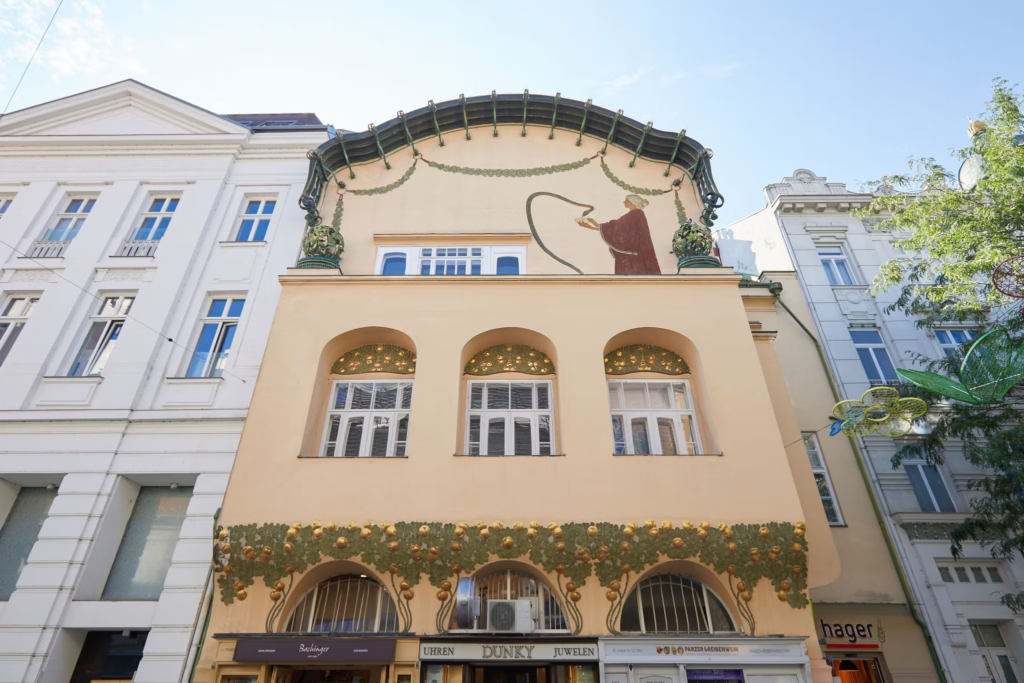
The Golden Stucco Runway of Vienna Secessionist Flair
Weaving its way through the historic heart of the pedestrian old town core, Fuhrmannsgasse is one of the oldest streets in St. Pölten, bordered by architectural treasures from across the centuries.
- What it is famous for: The magnificent Olbrich House showcasing pure Secessionist design. The streetscape is anchored by this residential masterpiece, designed by legendary architect Joseph Maria Olbrich (the mastermind behind the Secession building in Vienna). The house features a white plaster facade blanketed in delicate, gold-leafed relief carvings of vine leaves and classical figures, displaying the high-concept design movement that swept across imperial Austria at the turn of the century.
11. Pottenbrunn Castle (Schloss Pottenbrunn)
The Romantic Water Fortress of the Fairytale Moats
Perched gracefully on the northeastern outskirts of the municipality within the quiet suburban district of Pottenbrunn, this elegant, multi-winged moated castle dates back to the early 13th century.
- What it is famous for: Its pristine, water-filled defensive moats and a famous collection of historic children’s target paintings. The castle features a striking combination of a medieval residential keep and beautiful Renaissance residential wings. Bounded by a wide stone bridge over the reflective water, the castle grounds are surrounded by an English-style landscape park, presenting a classic picture of aristocratic country life that contrasts with the glass towers of the nearby capital complex.