

Innsbruck, nestled tightly in the broad Inn Valley where the rugged limestone walls of the Nordkette range shoot nearly vertically straight up from the northern city limits, is a destination where urban elegance collides directly with raw alpine nature.
For centuries, this strategic valley bottleneck was a favored power base for the ambitious Habsburg Empire. It reached its golden zenith under Emperor Maximilian I, who established his imperial court here in the late 15th century, leaving behind a wealth of opulent Gothic and Renaissance monuments.
To visit Innsbruck is to experience a constant, striking shift in scale. You can be walking past a centuries-old pastel Baroque townhouse, and when you look up between the rooftops, you are met with the overwhelming sight of snow-capped peaks looming directly overhead.
1. The Golden Roof (Goldenes Dachl)
The Shimmering Late-Gothic Balcony of Imperial Ambition
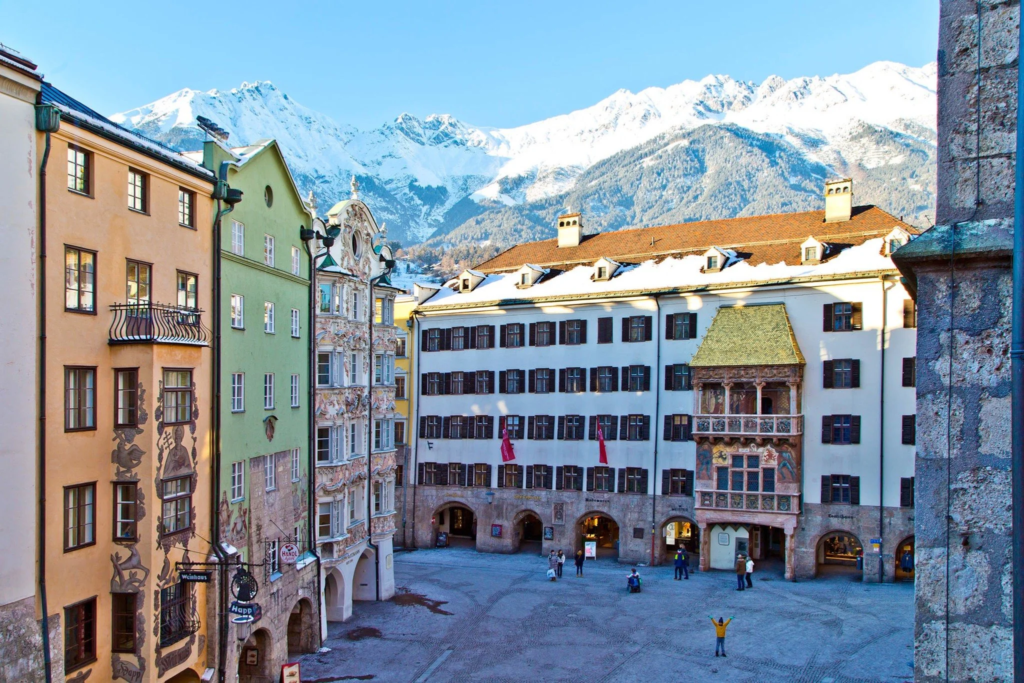
Dominating the primary pedestrian crossroads of the historic old town, this ornate, late-gothic residential balcony was built in 1500 by Emperor Maximilian I to celebrate his marriage to Bianca Maria Sforza of Milan.
- What it is famous for: Its 2,657 fire-gilded copper tiles and intricate allegorical reliefs. The shimmering roof functioned as a royal box from which the Emperor could sit back and watch tournaments, festivals, and theatrical performances down in the public square. The stone balustrade below the glittering shingles is covered in meticulously carved reliefs depicting the Emperor alongside his wives, court jesters, and exotic acrobats performing traditional dances.
2. The Nordkette Cable Car (Nordkettenbahnen)
The Futuristic Transit from Imperial Arcades to High Alpine Ridges
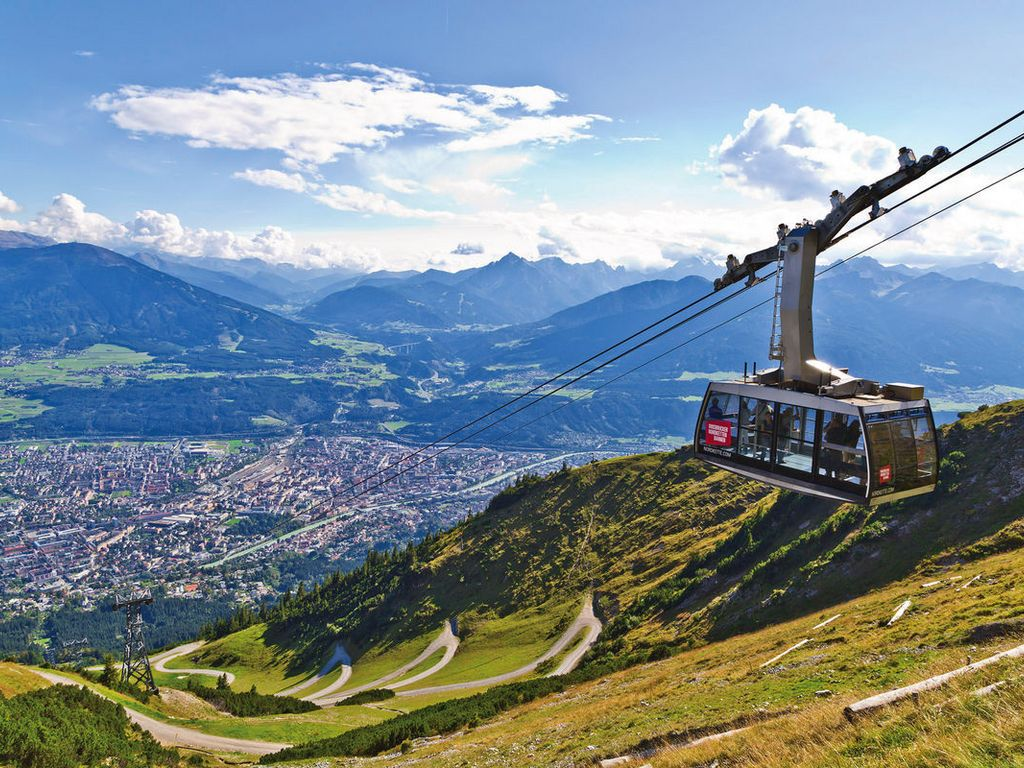
This state-of-the-art cable railway system transports passengers directly from the historic city center up to the high-alpine world of the Hafelekar ridge, sitting over 2,200 meters above sea level.
- What it is famous for: Its futuristic stations designed by Zaha Hadid and the breathtaking alpine views. The journey begins at the ground level with architect Zaha Hadid’s iconic, organic curves that mimic the natural flowing shapes of glaciers and frozen mountain ice. Within just 20 minutes, the sleek hybrid cars climb from the urban streets to the jagged mountain heights, offering a jaw-dropping look straight down into the city streets on one side and across the vast, untamed wilderness of the Karwendel Nature Park on the other.
3. Court Church (Hofkirche)
The Haunting Gothic Sanctuary of the Black Men
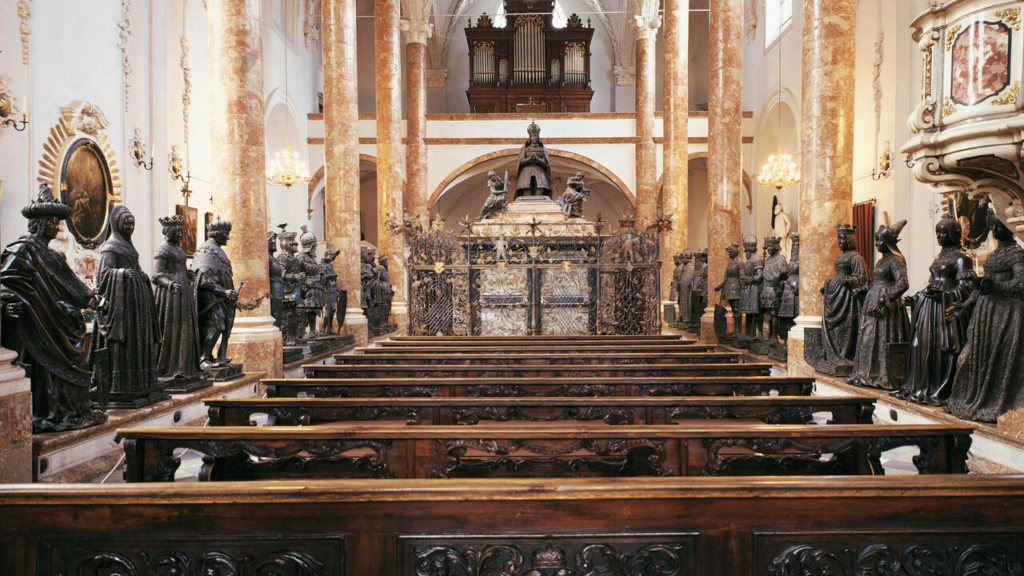
Located at the edge of the imperial palace grounds, this mid-16th-century Gothic church was commissioned by Emperor Ferdinand I to serve as a monumental memorial complex to honor his grandfather, Maximilian I.
- What it is famous for: Its forest of 28 monumental, life-sized bronze guardian statues. Known locally as the Schwarze Mander (Black Men), these dark, masterfully cast bronze figures stand in silent vigil along the central aisle. They represent the Emperor’s ancestors, real and mythical heroes, and contemporary rulers—including King Arthur of Britain and Godfrey of Bouillon. Ironically, the colossal, ornate black marble cenotaph at the center of the church is completely empty; Maximilian is actually buried in his birthplace of Wiener Neustadt.
4. Mariahilf District & Old Inn Bridge
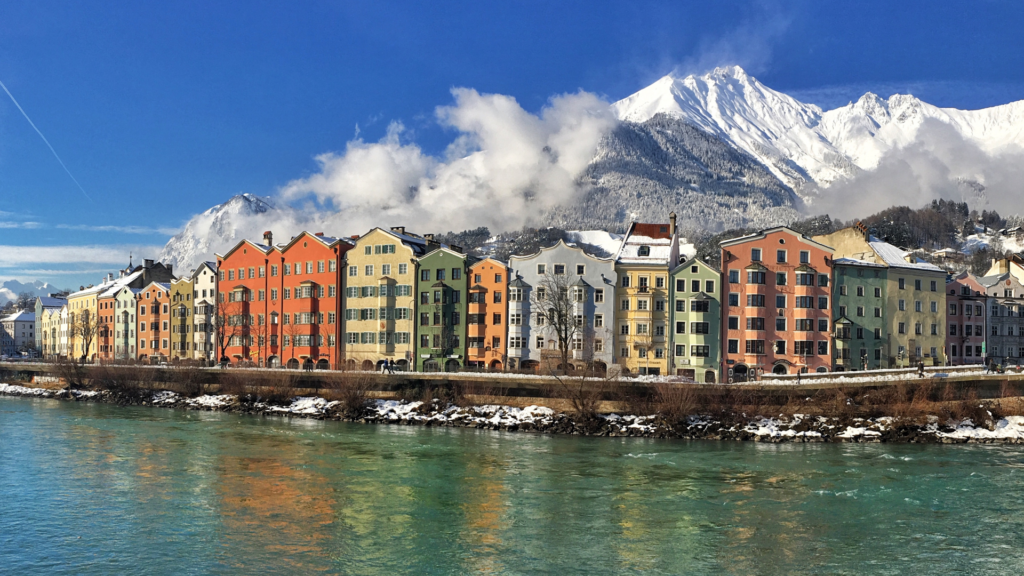
The Postcard-Perfect Runway of Colorful Riverfront Townhouses
Tracing the western banks of the rushing, glacier-fed Inn River just across the historic stone bridge from the old town center, this historic waterfront neighborhood is one of the oldest residential districts in Innsbruck.
- What it is famous for: Its iconic row of brightly painted, medieval houses backed by the towering Alps. The striking contrast between the pastel pinks, ochres, and mint-greens of the historic facades, the turquoise mountain water of the river below, and the monumental wall of rock and snow behind them forms the definitive, world-famous image of Innsbruck. This peaceful neighborhood is packed with indie woodcarving shops, cozy cafes, and historic parish churches.
5. Ambras Castle (Schloss Ambras)
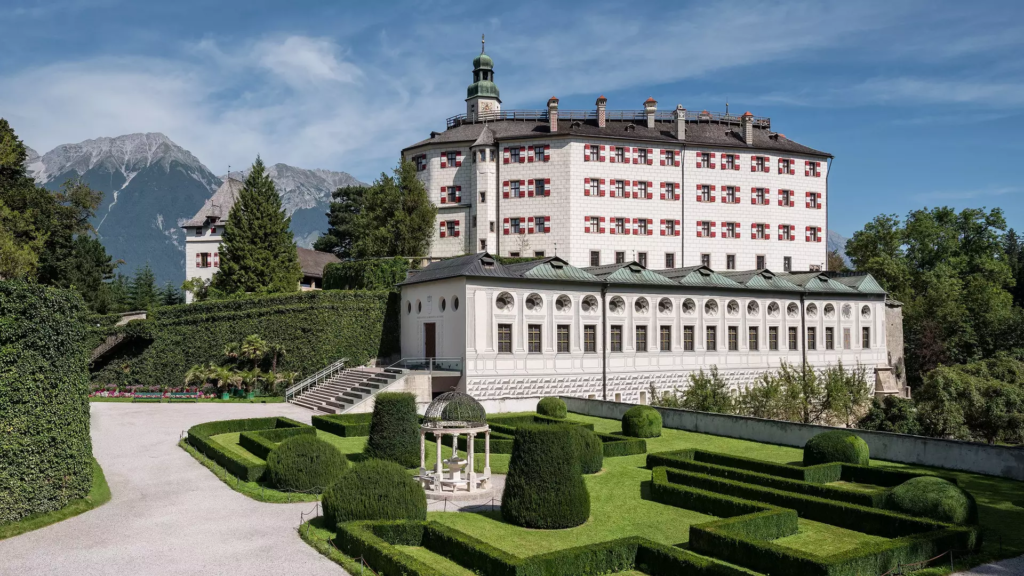
The Renaissance Palace of Curiosities and Courtly Splendor
Perched on a green hill rising above the southeastern edge of the city, this magnificent palace complex was transformed from a medieval fortress into a grand Renaissance residential castle by Archduke Ferdinand II in the 16th century.
- What it is famous for: The breathtaking Spanish Hall and the world’s oldest curated museum collection. Ferdinand II engineered a spectacular Chamber of Art and Wonders (Kunst- und Wunderkammer) to house rare suits of armor, scientific instruments, and bizarre, exotic curiosities from across the globe. The crowning jewel of the estate is the 43-meter-long Spanish Hall, which features a spectacular wood-truss ceiling, geometric stone floor tiling, and walls lined with portraits of Tyrolean rulers.
6. Altstadt (Innsbruck Old Town)
The Vaulted Medieval Marketplace of Gothic Arcades
Dating back over 800 years, Innsbruck’s compact historic core is a remarkably well-preserved network of tight cobblestone streets bounded by the defensive arcs of its original medieval layout.
- What it is famous for: Its heavy, stone-vaulted street arcades and beautifully decorated townhouses. Walking the main lanes feels like stepping back into a medieval trading post. The ground floors of the tall buildings feature deep, covered stone archways that shelter modern boutique shops and traditional taverns. The streetscapes are characterized by architectural treasures like the Helbling House (Helblinghaus), a Gothic structure that was later coated in an explosion of white and pink Rococo stucco ornaments resembling cake frosting.
7. Imperial Palace (Hofburg Innsbruck)
The Rococo Palace of Empress Maria Theresa
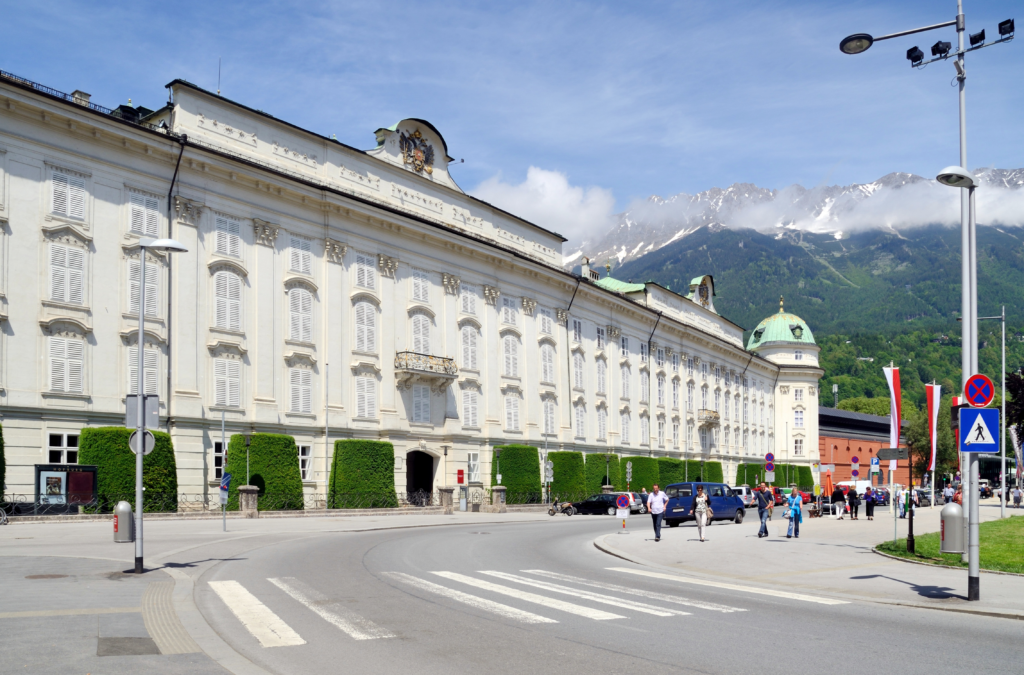
Originally built as a heavy medieval fortress by the local counts, this vast palace complex was systematically expanded and transformed into an elegant, white-and-gold Viennese-style Rococo residential palace by Empress Maria Theresa in the 18th century.
- What it is famous for: The magnificent Giant Hall (Riesensaal) and the imperial apartments. The palace is considered one of the three most important cultural buildings in Austria, alongside the Hofburg and Schönbrunn in Vienna. The Giant Hall is a display of courtly power, featuring marble floors, giant crystal chandeliers, and a ceiling fresco painted by Franz Anton Maulbertsch, all framed by large portraits of Maria Theresa’s children and her husband.
8. Bergisel Ski Jump
The Towering Modernist Beacon of Olympic History
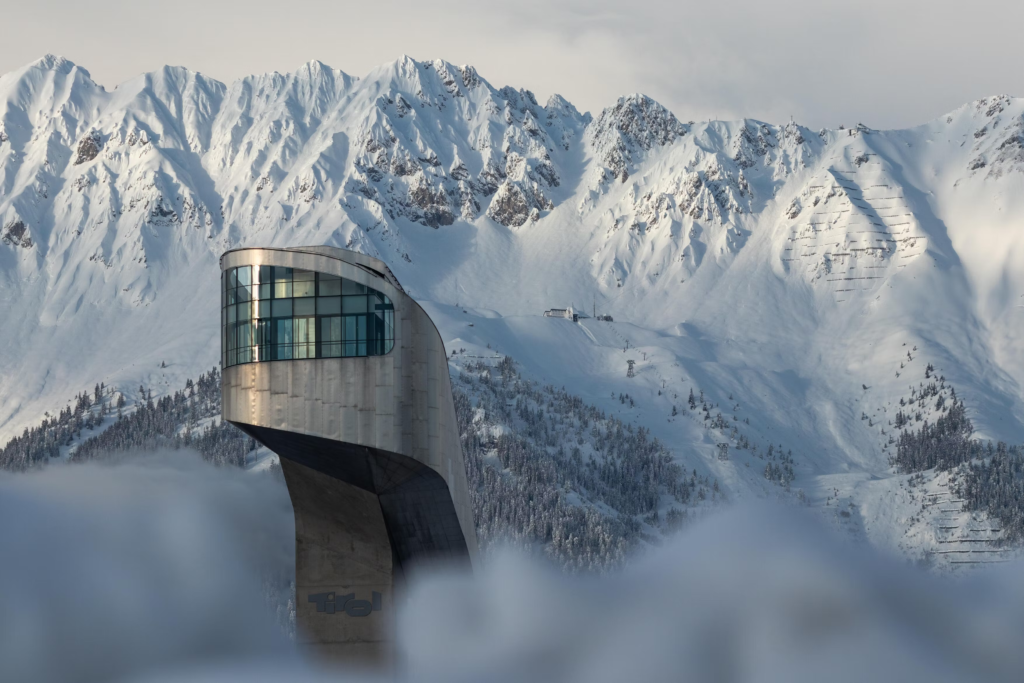
Rising high above the forested hill of Bergisel on the southern edge of the city, this sleek, 50-meter-tall concrete and glass ski-jumping tower was designed by world-renowned architect Zaha Hadid and completed in 2002.
- What it is famous for: Its avant-garde, sculptural architecture and its deep connection to Olympic sports. The venue held the Olympic flame during the Winter Games of 1964 and 1976. Hadid’s design combines the functionality of a high-performance sports ramp with a striking rooftop cafe and viewing platform. Visitors can take an elevator to the observation deck, standing right where elite ski jumpers launch themselves into space with an unobstructed view of the city directly below their skis.
9. Maria-Theresien-Straße & St. Anne’s Column
The Baroque Avenue of Parades and Mountain Vistas
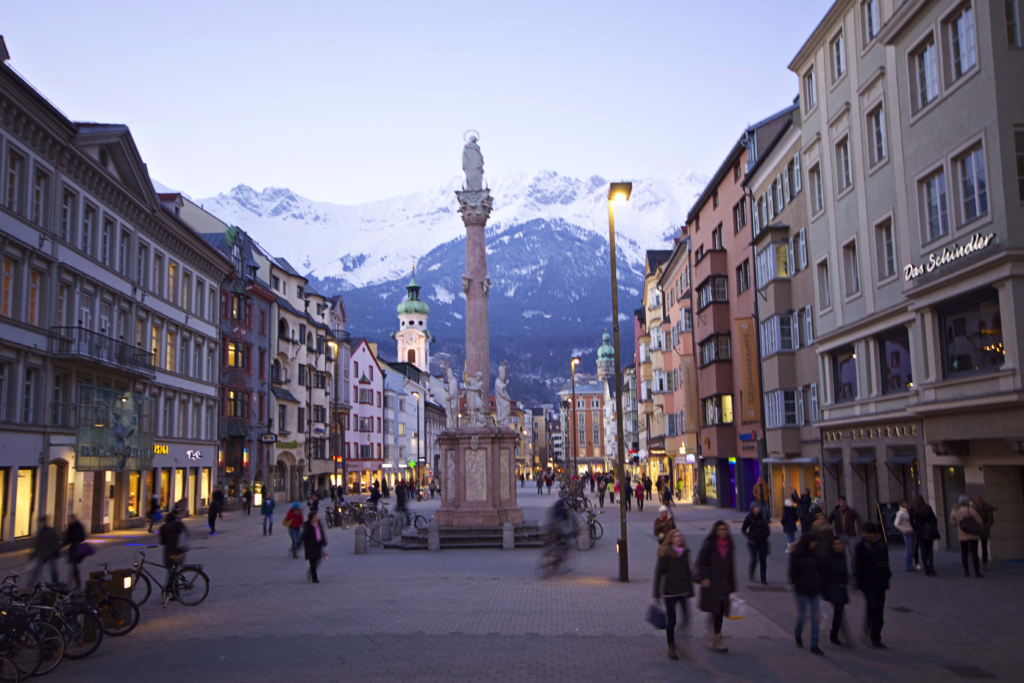
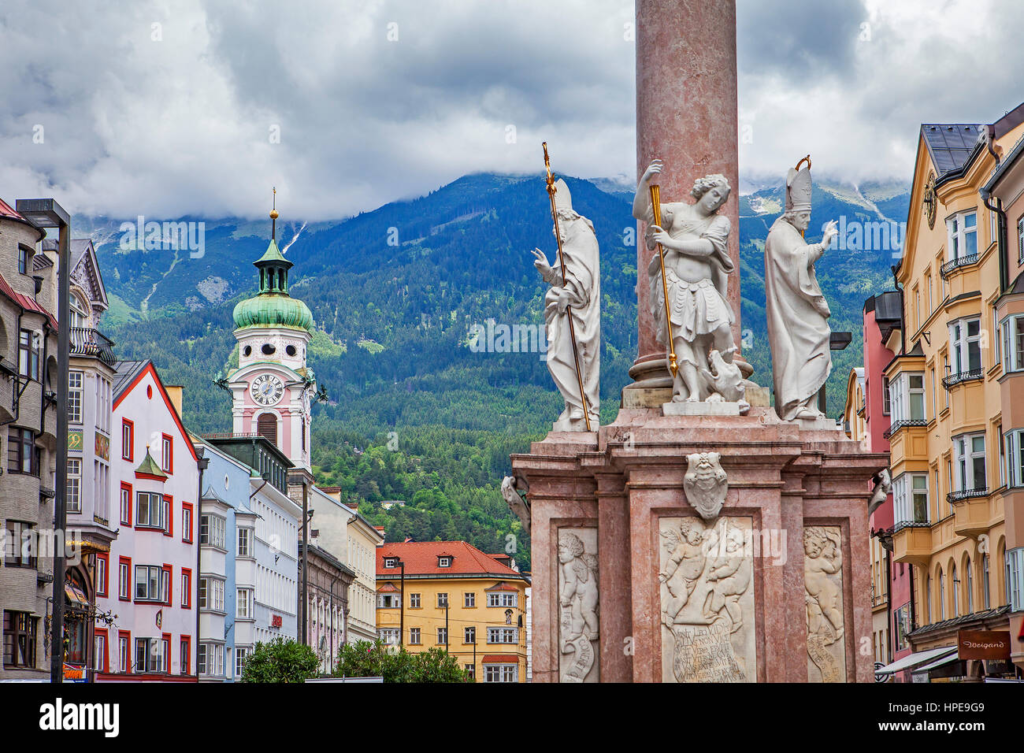
This wide, elegant boulevard is the primary commercial and social artery of Innsbruck, transitioning smoothly from the medieval old town into the wider Baroque districts built during the expansion of the city.
- What it is famous for: The landmark St. Anne’s Column (Annasäule) and luxury shopping palaces. Erected in 1706 to commemorate the liberation of the city from Bavarian troops during the War of the Spanish Succession, the slender red marble column stands centered in the street, topped by a statue of the Virgin Mary. Walking south to north down this grand avenue treats pedestrians to a view where the historic architecture frames the Nordkette mountain range rising up at the end of the road.
10. Cathedral of St. James (Dom zu St. Jakob)
The Vaulted Baroque Temple of Tyrolean Faith
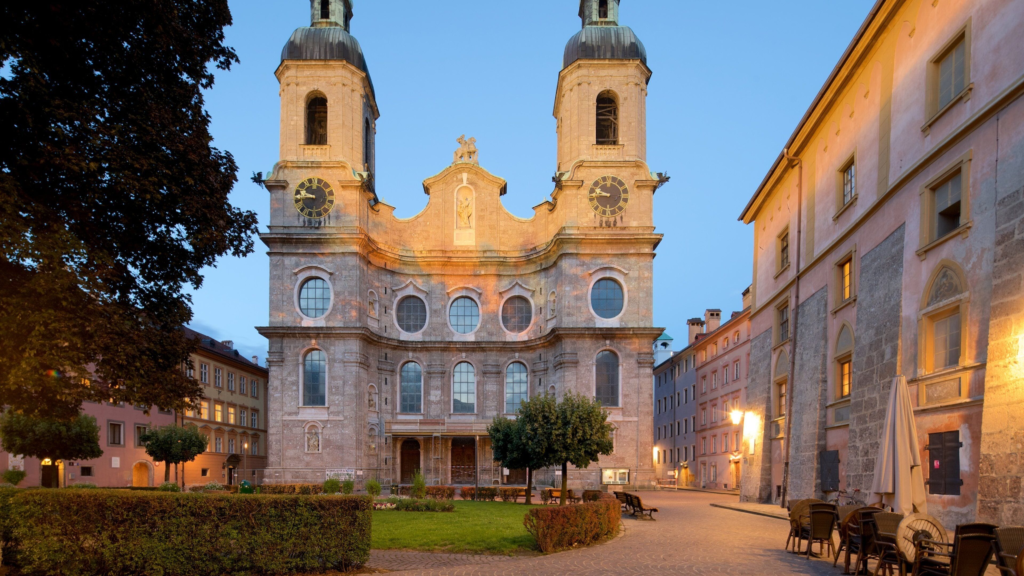
Rebuilt between 1717 and 1724 over the foundations of an older Gothic church, this striking, twin-towered cathedral stands tucked behind the old town squares, acting as the primary seat of the Catholic Diocese of Innsbruck.
- What it is famous for: Its monumental, illusionistic dome frescoes and Lucas Cranach the Elder’s masterwork painting. The interior is a showcase of high Baroque drama, featuring ceilings painted by the Asam brothers with complex, three-dimensional illusionistic perspective frescoes. Suspended above the grand main altar is the Maria Hilf (Mary of Succor) painting by Cranach, universally recognized as one of the most replicated and beloved images of the Madonna in the Alpine region.
11. Swarovski Crystal Worlds (Swarovski Kristallwelten)
The Mystical Underground Chambers of the Glittering Giant
Located just a short shuttle ride east of the city in the nearby suburb of Wattens, this whimsical, artistic theme park was opened in 1995 to celebrate the 100th anniversary of the world-famous Tyrolean crystal manufacturing company.
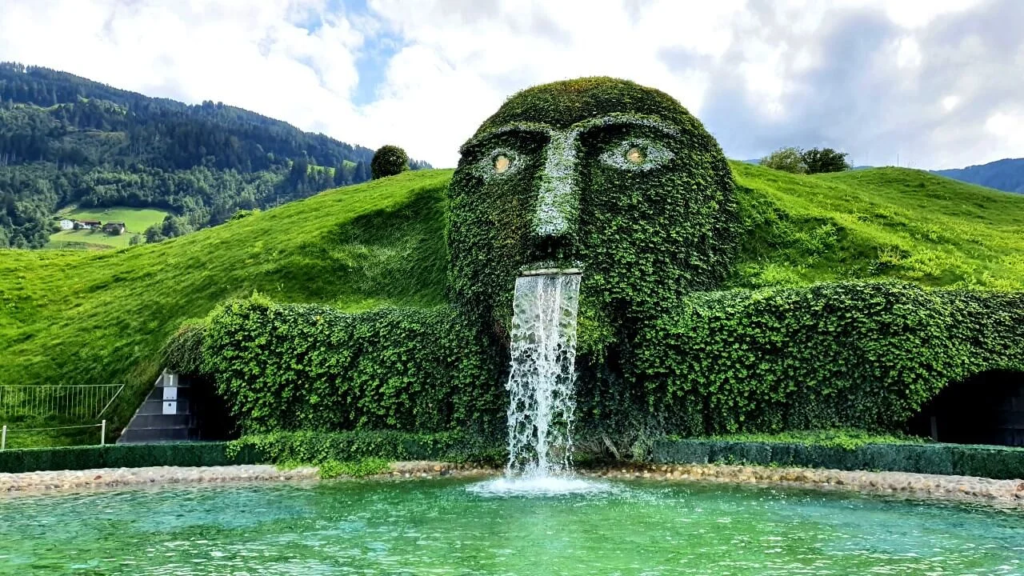
- What it is famous for: The iconic, grass-covered Giant’s Head fountain and the glittering underground Chambers of Wonder. Visitors enter the park through the mouth of a massive, grass-covered earthen giant whose eyes sparkle with crystals as water tumbles from his lips into a pond. Inside, the underground museum holds 17 surreal exhibition rooms designed by international avant-garde artists—including Salvador Dalí and Yayoi Kusama—each room using millions of cut crystals to create dazzling optical illusions, sparkling forests, and rotating geometric crystal clouds.