
Pécs, anchoring the absolute southwestern frontier of Hungary at the base of the sun-drenched Mecsek Mountains, operates on a spectacular, multi-tiered urban layout shaped by two millennia of overlapping empires.
Founded natively by the Romans in the 2nd century AD as Sopianae, the city’s sheltered geographic location protected it from harsh northern winds, yielding a warm microclimate unique to the country.
Over the generations, this cultural meeting ground seamlessly integrated Roman Christian roots, early medieval university prestige, decades of heavy Ottoman administration, and an industrial golden age of ceramic manufacturing, earning its permanent cultural title as the ultimate melting pot of southern Hungarian culture.
Today, Pécs presents a striking architectural matrix where ancient, UNESCO-listed underground catacombs sit directly beneath bustling, baroque public squares.
Famous for its wild garlic-infused mountain stews, rich Villány red wines, signature green-glazed porcelain fountains, and a relaxed, Mediterranean-style open-air lifestyle
1. Mosque of Pasha Qasim (Downtown Candlemas Church)
The Monumental Ottoman Sovereign of Copper Domes, Islamic Mihrabs, and Christian Altars
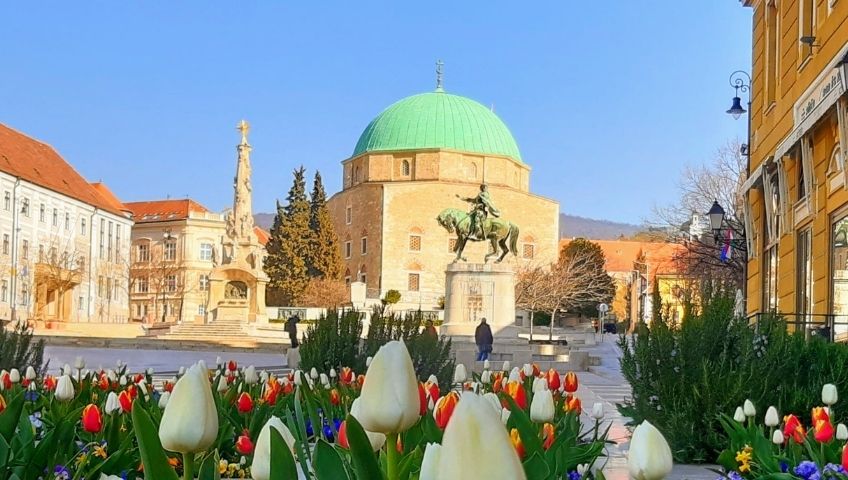
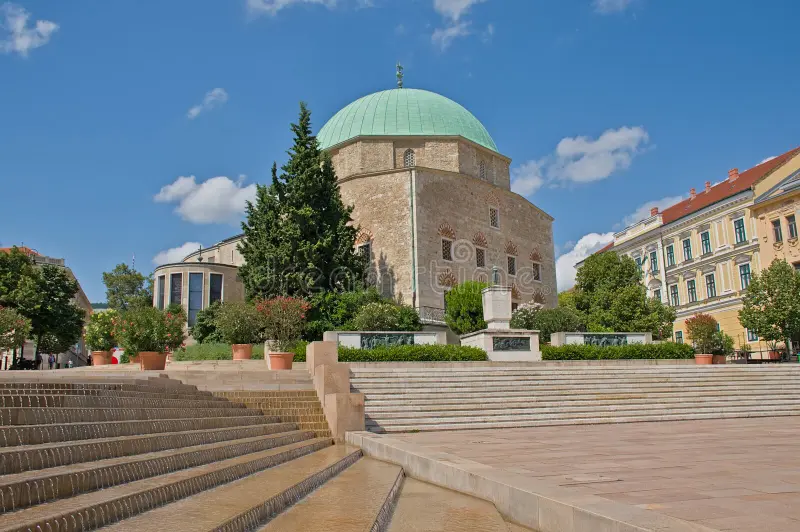
Dominating the absolute physical and visual peak of the sloping Széchenyi Square pedestrian plaza, this massive stone structure stands proud as the ultimate architectural icon of Pécs.
- What it is famous for: Being the largest intact example of Ottoman religious architecture remaining in Hungary, famously converted into a Roman Catholic church. Built in the 1540s by Pasha Qasim using the stones of a ruined Gothic cathedral, the structure retains its original Islamic elements, including elegant ogee-arched windows, ancient Turkish plasterwork, and a faded prayer niche (mihrab) pointing toward Mecca. Today, it operates as a unique place of worship where Christian crucifixes and altars rest beneath a grand, historic Islamic dome.
2. Pécs Cathedral (St. Peter and St. Paul Basilica)
The Neo-Romanesque Sovereign of Four Corner Towers and Lavish Golden Frescoes
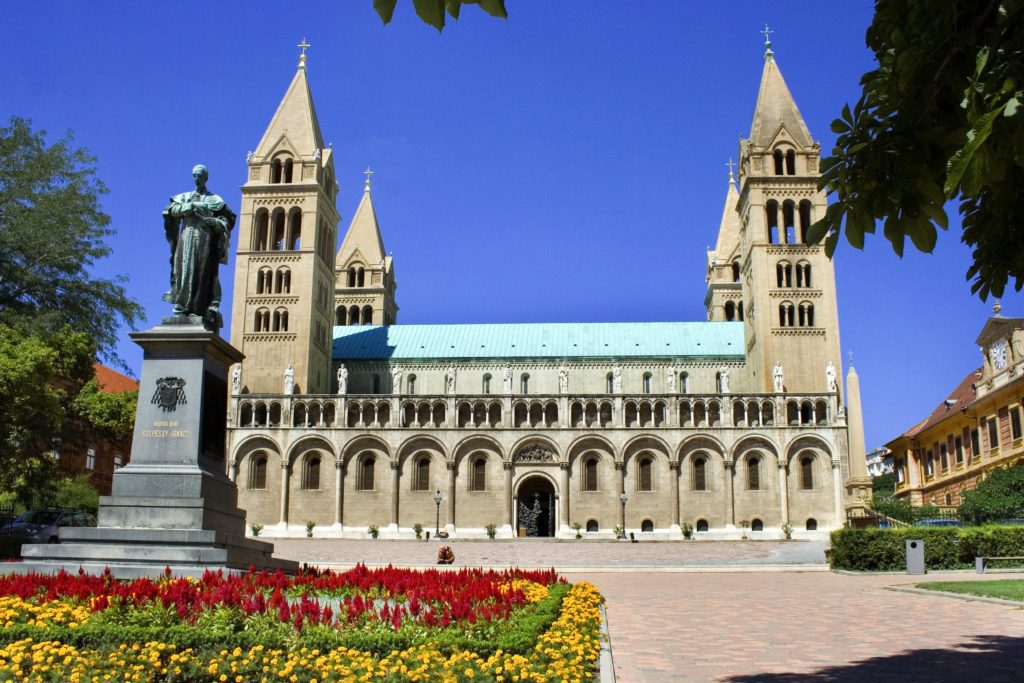
Commanding a majestic, elevated stone plaza within the historic northern castle district, this monumental cathedral dominates the northern skyline of the city.
- What it is famous for: Its iconic, fortress-like design featuring four soaring 60-meter-high corner towers and a jaw-dropping, entirely gilded interior. Originally founded in the 11th century by King Saint Stephen, the cathedral was heavily remodeled in the late 19th century into a high Neo-Romanesque masterwork. Its inner chapels are covered from floor to ceiling in intricate, vibrant blue-and-gold murals and starry vaults, while its deep crypts hold the historic stone tombs of early medieval bishops.
3. Early Christian Necropolis (Sopianae)
The Subterranean Matrix of Roman Crypts, Painted Burial Vaults, and Ancient Murals
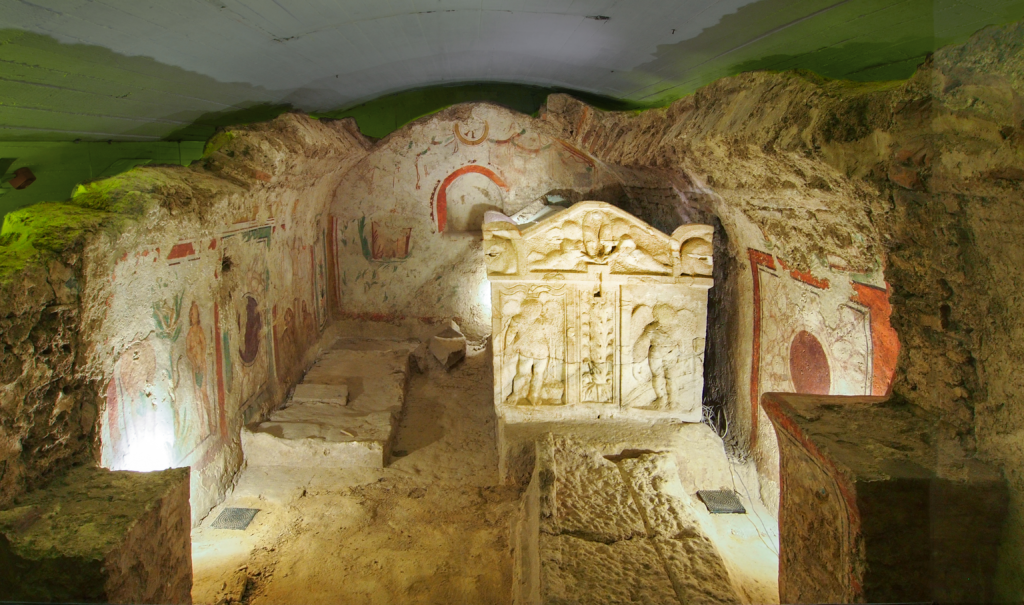
Buried quietly directly beneath the stone plaza surrounding the main cathedral, this extensive underground archaeological park is a designated UNESCO World Heritage site.
- What it is famous for: Being one of the world’s most important and well-preserved early Christian burial complexes outside of Italy, dating back to the 4th century. Visitors can walk along modern glass skywalks suspended inside deep, excavated stone chambers to peer down into ancient family tombs. The highlights include the famous Peter and Paul Tomb and the Wine Jug Christian Crypt, whose weathered plaster walls still showcase vivid fresco paintings of biblical figures, floral vines, and early Christian symbols.
4. Zsolnay Cultural Quarter
The Radiant Industrial Matrix of Iridescent Eosin Tile Factories and Art Galleries
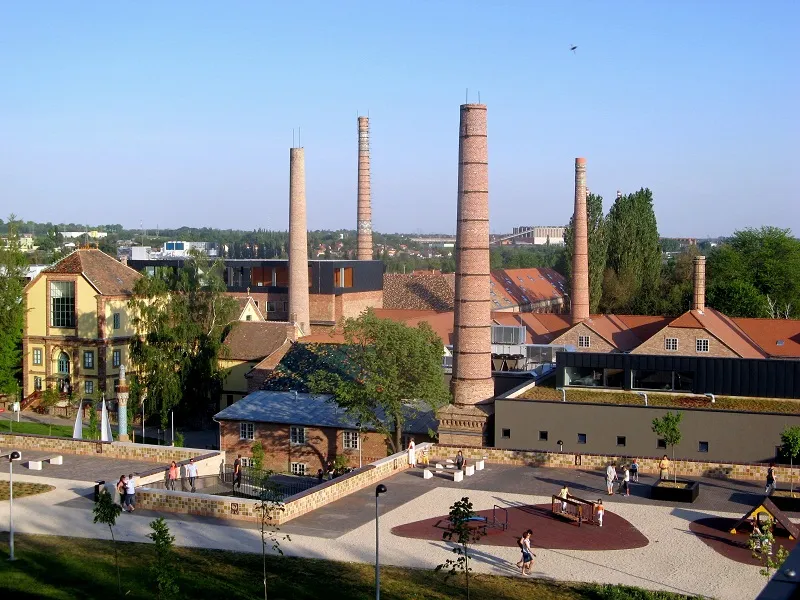
Spreading across a massive, 5-hectare historic industrial estate on the eastern edge of the city center, this creative neighborhood celebrating the Zsolnay porcelain legacy is a visual masterpiece.
- What it is famous for: Being the historic birthplace of world-renowned Zsolnay ceramics, fully restored into an immense cultural district covered in iridescent green-gold ‘eosin’ glaze. The quarter features beautifully converted brick factory buildings, monumental ceramic tile monuments, and elite galleries displaying rare porcelain treasures. Visitors can explore the golden-age collections of the family, watch live pottery artisans at work, and walk through pristine parklands decorated with weather-resistant pyrogranite sculptures.
5. Széchenyi Square
The Sloping Botanical Living Room of Trinity Pillars and Vibrant Café Promenades
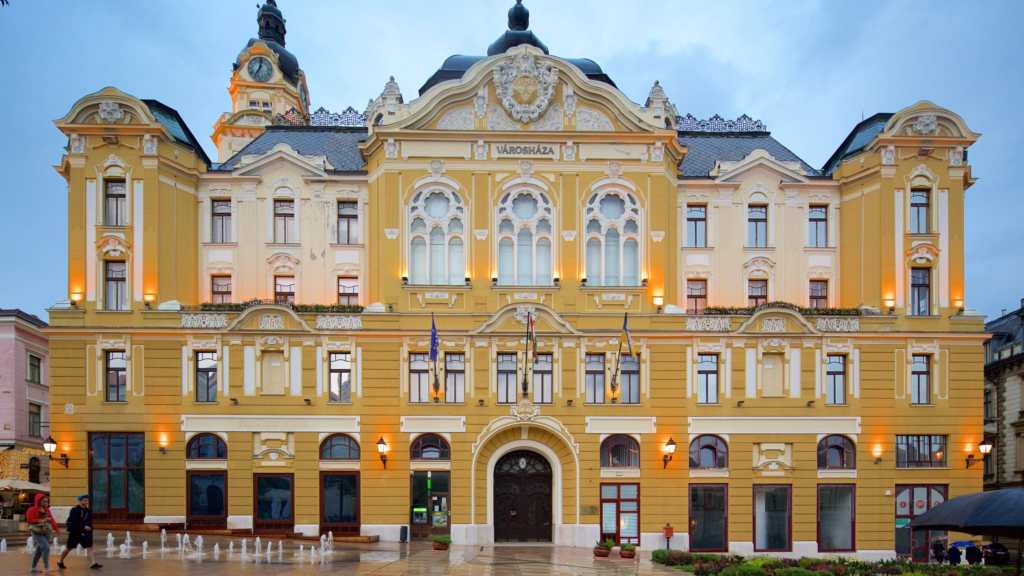
Forming the absolute administrative, social, and geographic heart of the municipality, this expansive, sloping central plaza functions as the main civic arena of Pécs.
- What it is famous for: Its beautiful Mediterranean atmosphere, historic equestrian monuments, and the monumental Baroque Trinity Column carved from local stone. Completely free from car traffic, the square gently slopes down the foothills of the Mecsek range, lined with pastel-hued grand hotels, the ornate City Hall, and a series of public fountains. It serves as the primary gathering spot where locals and university students sit at open-air café tables under the sun.
6. Király utca (King Street)
The Elegant Pedestrian Runway of Baroque Palaces and Open-Air Theater Terraces
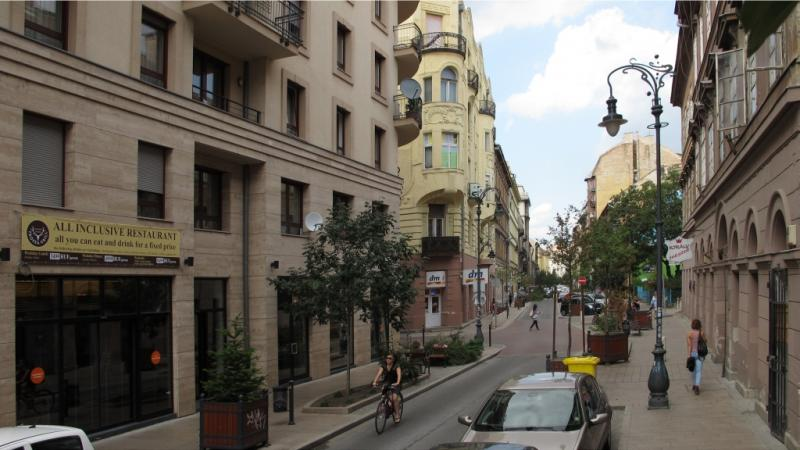
Slicing smoothly eastward directly from the main Széchenyi Square hub, this vibrant, cobblestone pedestrian avenue serves as the premier commercial and cultural artery of the old town.
- What it is famous for: Its perfectly preserved line of Baroque, Eclectic, and Art Nouveau palace facades housing trendy boutiques, restaurants, and the National Theatre. The avenue operates with a lively, theatrical energy, with its grand 19th-century theater building dominating the halfway mark. Walking down the street takes travelers past hidden inner courtyards converted into cozy wine bars and artisanal bakeries, offering an authentic taste of local city life.
7. Jakovali Hassan Pasha Mosque
The Graceful Historic Matrix of Isolated Stone Minarets and Ottoman Relics
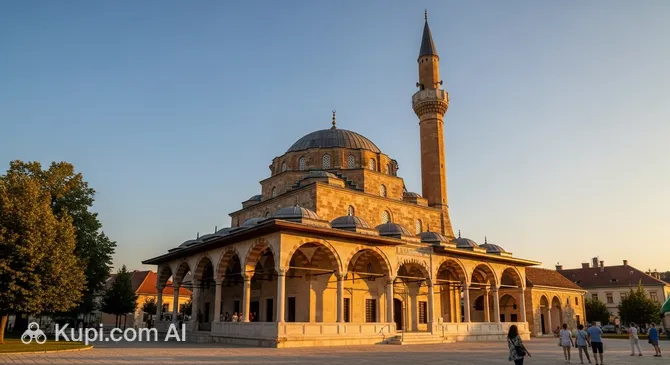
Tucked discreetly into a quiet hospital courtyard just outside the western perimeter of the ancient city walls, this secondary Islamic monument is a rare historical survival.
- What it is famous for: Being the only Ottoman mosque in Hungary that has survived the centuries completely intact with both its original dome and its soaring, slender stone minaret tower. Built in the late 16th century, the building features classic Turkish pointed archways and thick stone walls. Today, it houses a rich historical museum displaying authentic Ottoman-era garments, calligraphic scripts, and prayer rugs, offering a peaceful, educational look into the frontier days of the empire.
8. Zsolnay Porcelain Museum
The Opulent Domestic Vault of Gilded Vases and Imperial Ceramic Masterworks
Housed inside the oldest surviving residential building in Pécs, located along the historic Káptalan Street museum row, this institution holds the city’s finest artistic heritage.
- What it is famous for: Exhibiting the absolute finest, rarest, and most valuable chronological collection of Zsolnay porcelain in the world. The museum tracks the evolution of the factory from its early rustic folk pottery designs to the high-end, iridescent Art Nouveau masterworks that won grand prizes at World Fairs. The rooms are packed with massive gilded vases, delicate translucent dinnerware, and experimental ceramic pieces that shimmer with metallic jewel tones.
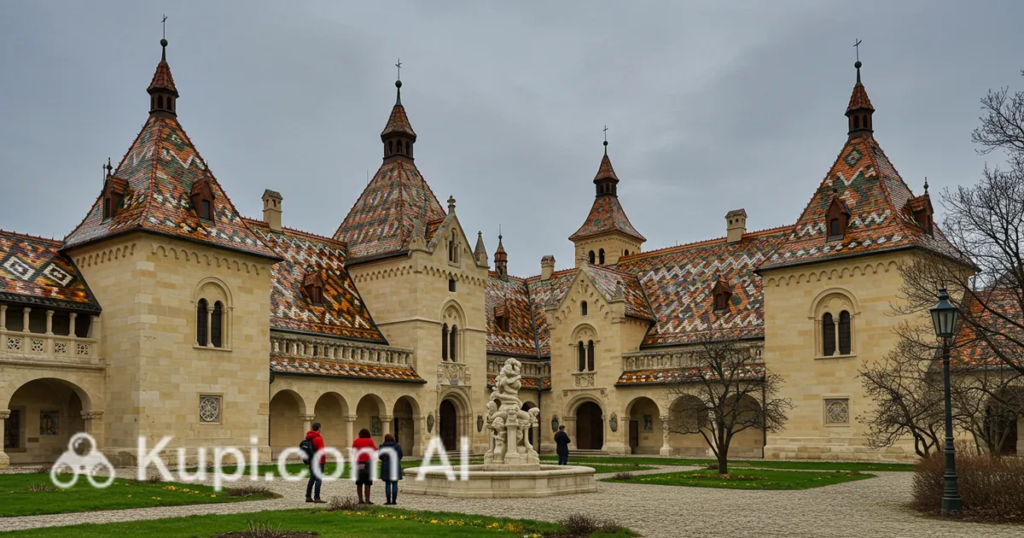
9. The Barbican (Barbavár)
The Circular Limestone Sentinel of Deep Moats and Medieval Castle Wall Battlements
Commanding a strategic, high-profile defensive corner on the northwestern edge of the old fortified town center, this stone bastion is a monument to medieval military engineering.
- What it is famous for: Being the only surviving circular gate-defense tower (barbican) of its kind in Hungary, built to guard the bishop’s palace against artillery attacks. Erected in the 15th century as the Ottoman threat drew near, the limestone tower features a drawbridge gate and a deep, dry moat cut out of the rock. Visitors can climb the dark interior wooden stairs to walk the top parapet walls, looking out over the old city ramparts and surrounding rose gardens.
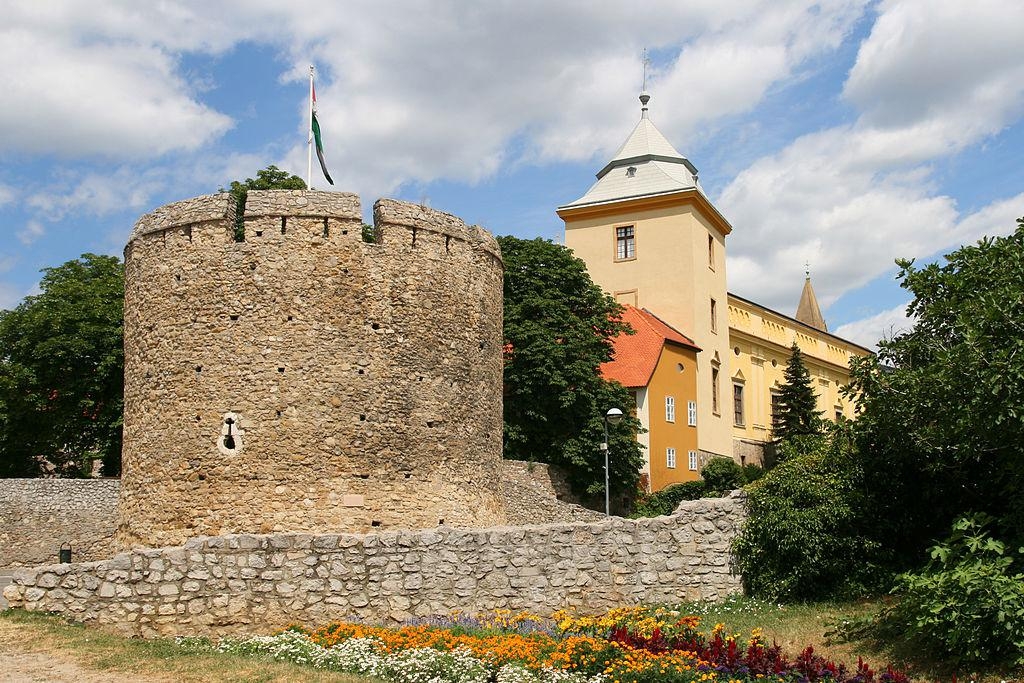
10. The Csontváry Museum
The Neo-Renaissance Temple of Colossal Avant-Garde Oil Murals and Mythical Landscapes
Situated inside a stately, columned Neo-Renaissance mansion just a few short steps away from the cathedral plaza, this museum celebrates an enigmatic national genius.
- What it is famous for: Housing the monumental, larger-than-life expressionist oil paintings of Tivadar Csontváry Kosztka, the visionary master praised by Picasso. The gallery showcases Csontváry’s massive, emotionally raw canvases painted during his travels across the Mediterranean and Middle East. The absolute centerpieces are his legendary The Lonely Cedar and the colossal Baalbek, which fills an entire grand wall with vibrant, mystical colors and symbolic power that draws art scholars globally.
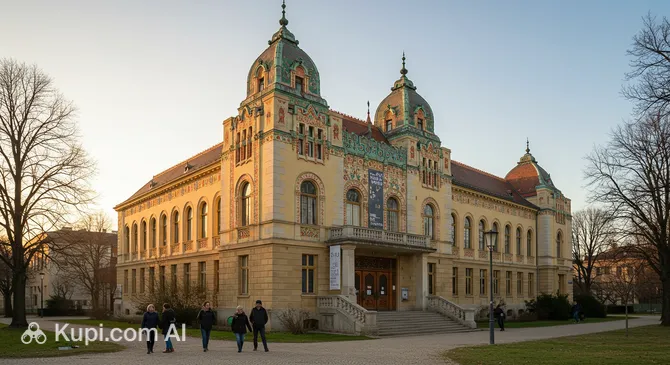
11. Pécs TV Tower & Mecsek Hillside
The Colossal Panoramic Needle of Alpine Ridges and Deep Dinosaurs Trails
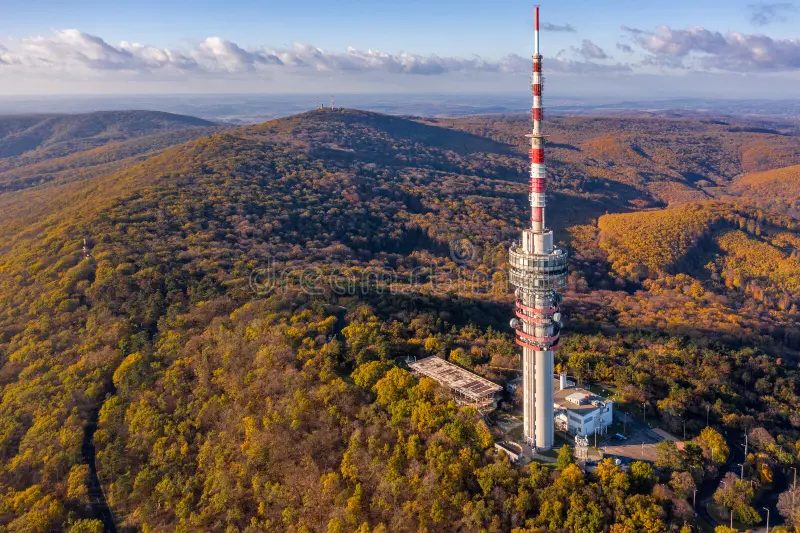
Sited dynamically at the absolute physical apex of Misina Peak rising directly behind the northern limits of the city grid, this concrete spire is a modern landmark.
- What it is famous for: Being the tallest building in Hungary, reaching 197 meters high and offering unparalleled panoramic views stretching all the way to the Croatian border. An express elevator whisks visitors up to an open-air observation deck and a revolving restaurant suspended high above the pine-covered slopes of the Mecsek Mountains. The surrounding mountain parklands feature miles of hiking trails, hidden limestone caves, and a local zoo, offering a refreshing nature escape just minutes from the city streets.