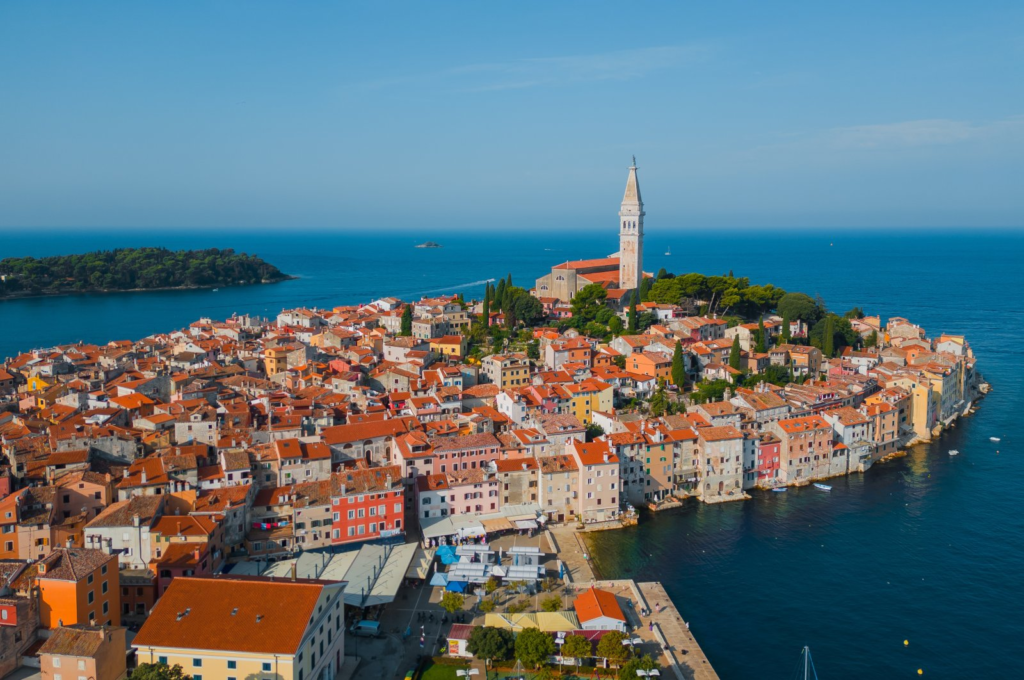

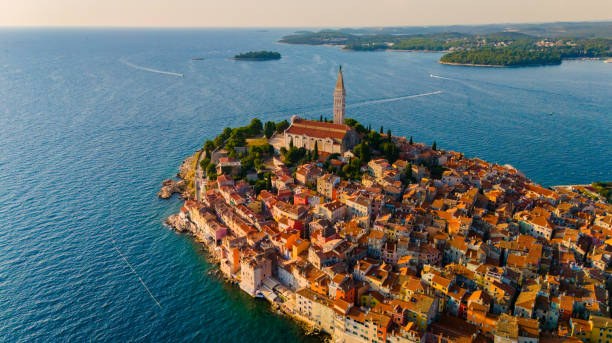
Rovinj, rising like a romantic limestone crown directly out of the deep turquoise waters of the northern Adriatic Sea, operates on a highly unique, tightly clustered island-turned-peninsula layout that marks it as Istria’s most photogenic coastal prize.
Originally established by the ancient Illyrians before flourishing as a fortified Roman settlement named Ruginium, the town sat entirely isolated on a rugged island for over a thousand years.
Squeezed into this secure marine stronghold, residents were forced to build vertically, creating an architectural masterpiece of tall, interconnected houses that plunge directly into the waves.
In 1763, the narrow sea channel separating the island from the mainland was filled in, turning the island fortress into a spectacular peninsula town.
Today, Rovinj presents a striking urban maze where a dense network of steep, polished limestone alleys twists continuously upward toward a single, crowning hilltop basilica.
1. Church of St. Euphemia
The Soaring Hilltop Basilica of Copper Angel Weathervanes and Venetian Campaniles
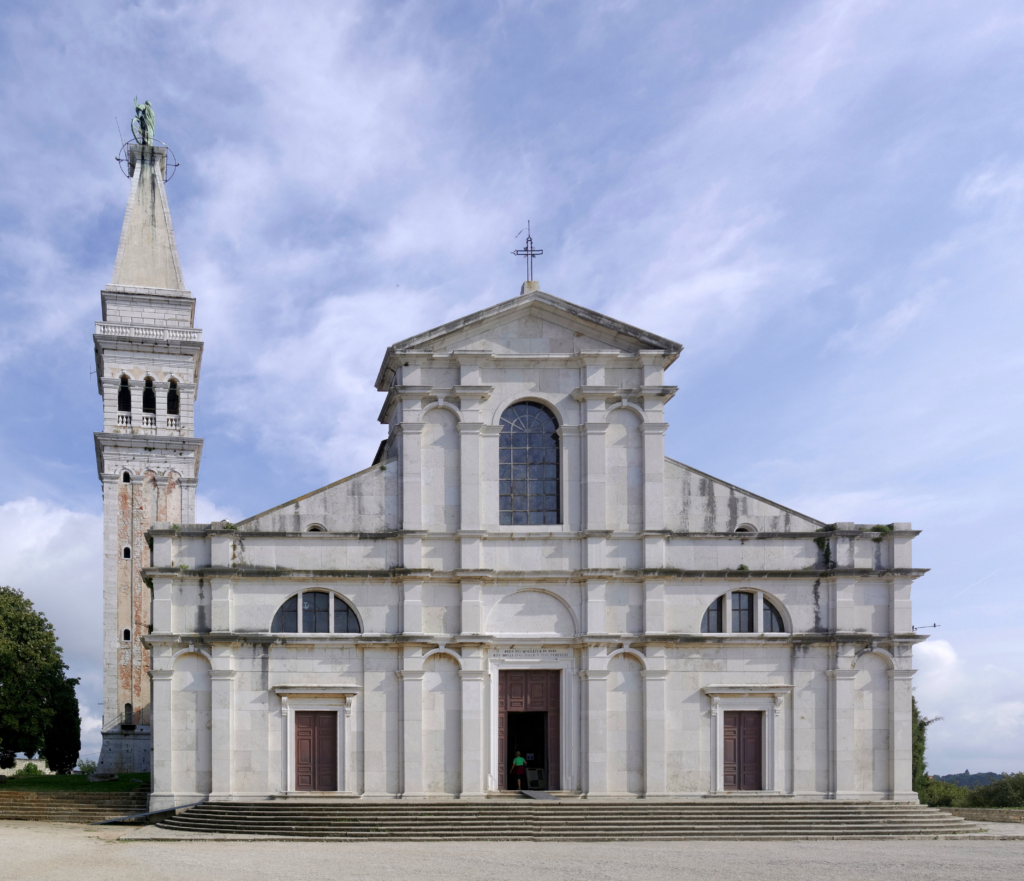
Commanding the absolute highest point of the old peninsula town, this monumental, 18th-century Baroque basilica dominates the regional skyline and serves as the definitive symbol of Rovinj.
- What it is famous for: Its massive 60-meter-tall Venetian campanile (bell tower) and housing the miraculous sarcophagus of Saint Euphemia. Modeled directly after the famous St. Mark’s Campanile in Venice, the tower is topped by a life-sized copper statue of the saint that spins with the wind, acting as a functional weather vane for local fishermen. Inside the cavernous Baroque interior rests a heavy white marble sarcophagus from the 3rd century AD, which, according to local maritime lore, miraculously washed ashore on Rovinj’s beaches in the year 800.
2. Grisia Street
The Steep Limestone Stairway of Open-Air Galleries and Polished Arches
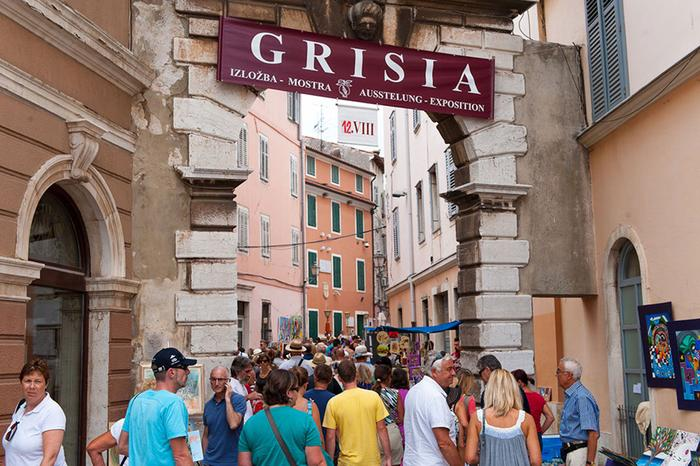
Climbing steeply from the bustling town squares up to the plateaus of St. Euphemia Basilica, this iconic, stone-paved pedestrian thoroughfare functions as the primary artistic spine of Rovinj.
- What it is famous for: Its smooth, gleaming limestone steps and its transformation into a vibrant, open-air fine arts exhibition. Lined with centuries-old stone archways, hidden interior courtyards, and colorful Venetian window boxes, Grisia is packed with independent artist ateliers, craft workshops, and jewelry boutiques. Every summer, the street hosts the legendary Grisia Open-Air Art Exhibition, a decades-old tradition where professional and amateur artists hang their paintings directly onto the weathered stone walls, turning the entire alley into an interactive public gallery.
3. The Rovinj Harbor & Riva
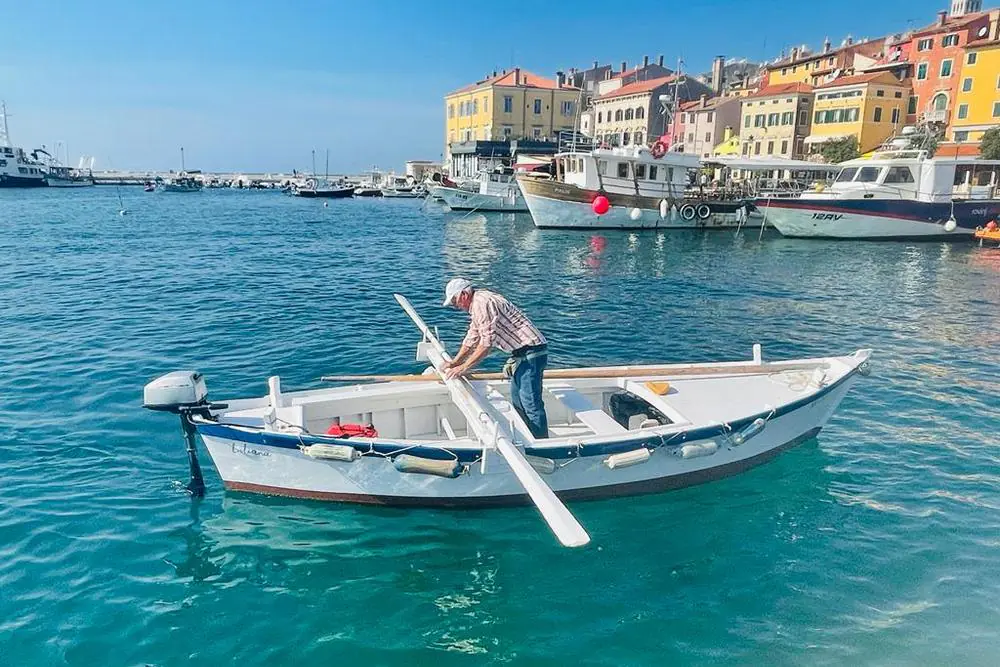
The Pastel-Hued Waterfront Runway of Traditional Wooden Batanas and Cafes
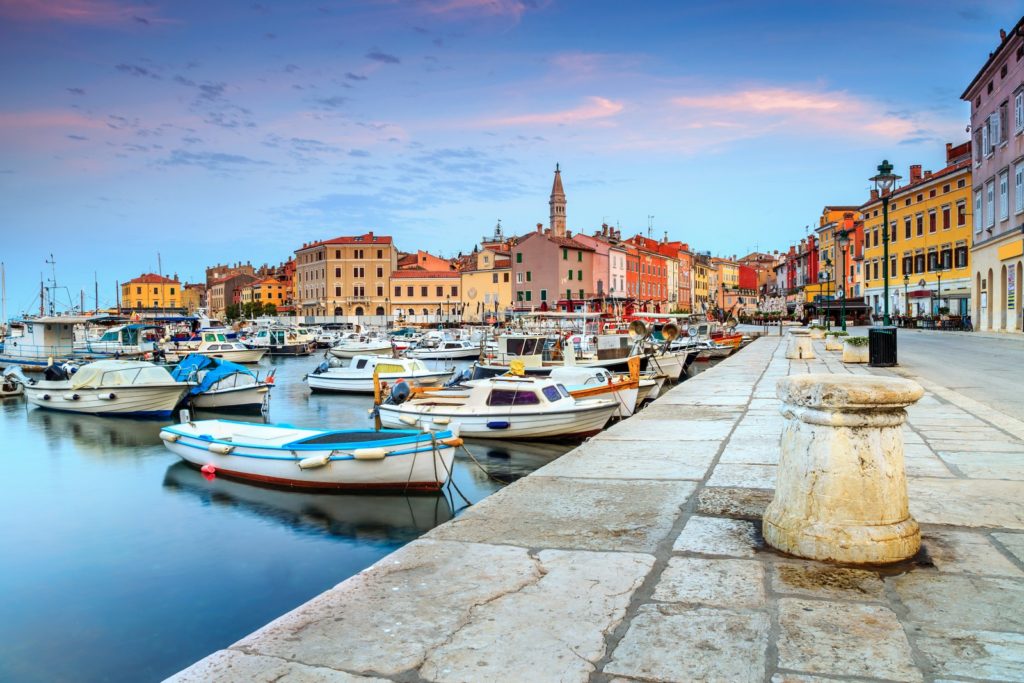
Sweeping smoothly along the southern and western edges of the historic core, this wide, crescent-shaped pedestrian avenue is the definitive living room and social stage of the city.
- What it is famous for: Its spectacular row of brightly painted pastel houses and being the home port for traditional flat-bottomed Batana fishing boats. Completely closed to automobile traffic, the Riva offers a classic Mediterranean postcard look where laundry lines dangle between high windows above. The harbor waters are packed with wooden vessels, modern yachts, and outdoor cafe terraces where locals sit for hours to gossip, sip espresso, and watch the fishing fleets unload their daily catch of sardines and crabs.
4. Golden Cape Forest Park (Zlatni Rt)
The Emerald Sea-View Oasis of Centennial Cedars and Hidden Limestone Quarries
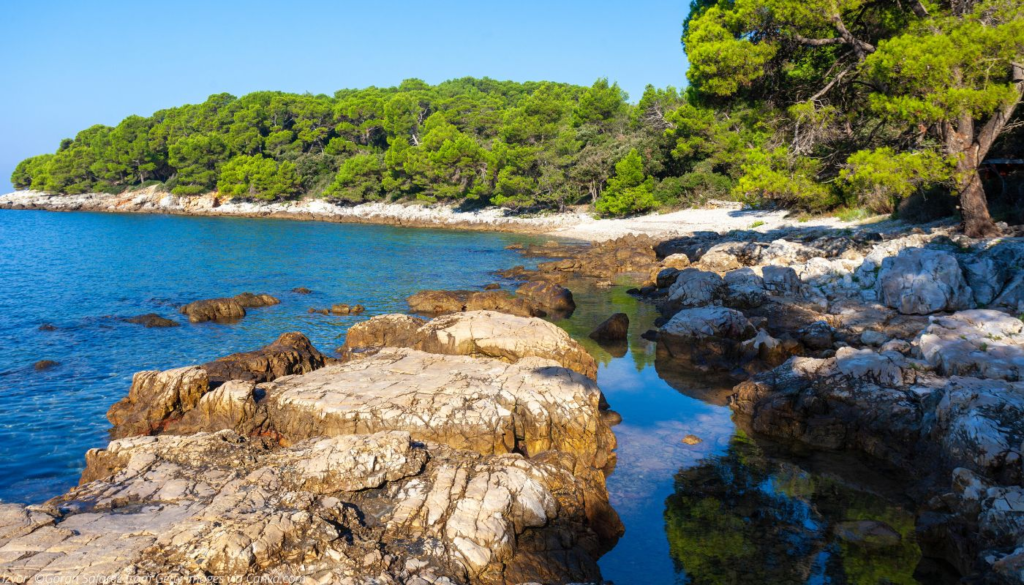
Spreading across a massive, rocky peninsula jutting westward roughly 2 kilometers south of the historic old town center, this 90-hectare nature reserve functions as Rovinj’s green lung.
- What it is famous for: Its dense forests of exotic Himalayan cedars, scenic coastal bike trails, and a vertical Roman quarry favored by rock climbers. Initiated in 1890 by wealthy Austrian industrialist Count Georg Hütterott, who planned to convert the area into an elite seaside health resort, the park features manicured paths bordered by towering pines and Douglas firs. The rugged coastline is lined with smooth stone slabs that serve as pristine sunbathing decks looking out over the open Adriatic Sea channels.
5. Balbi’s Arch (Balbijev Luk)
The Sculpted Renaissance Sentinel of Ottoman Turban Reliquaries and Venetian Lions
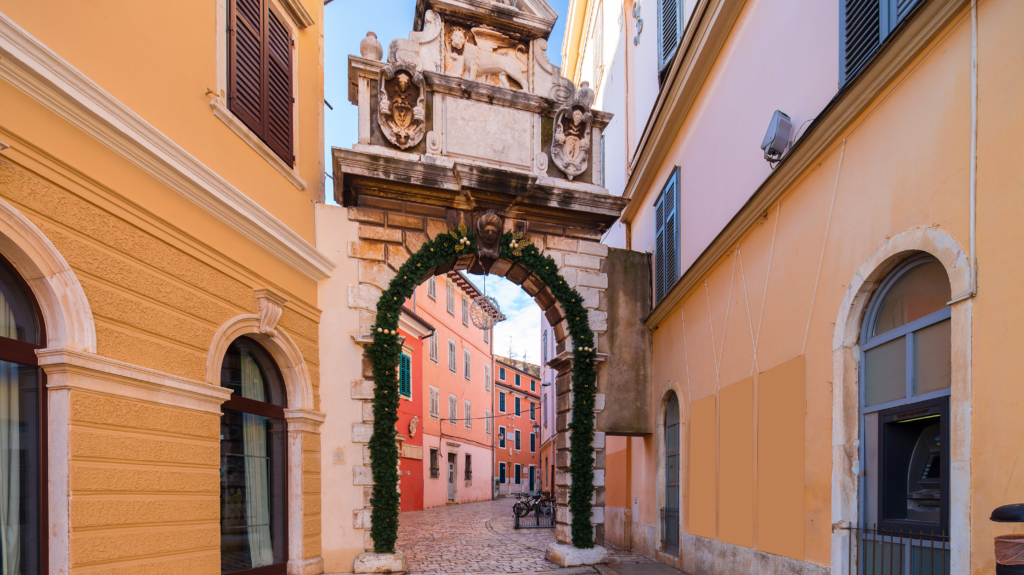
Commanding a prominent civic location at the entry checkpoint where the modern waterfront markets meet the ancient stone streets of the old town core, this elegant stone archway has a rich history.
- What it is famous for: Its clever double-sided stone reliefs featuring both a Venetian winged lion and a carved Ottoman Turk head. Erected in 1679 under the direction of town mayor Daniel Balbi to replace an old medieval city gate, the triumphal archway is a monument to regional political history. The side facing the main town square features a finely carved Venetian Lion of Saint Mark, while the inner facing arch contains a stone carving of an Ottoman head wearing a turban, symbolizing the town’s historical positioning between global empires.
6. Lone Bay (Uvala Lone)
The Sun-Drenched Pebble Crescent of Azure Coves and Pine-Shaded Shores
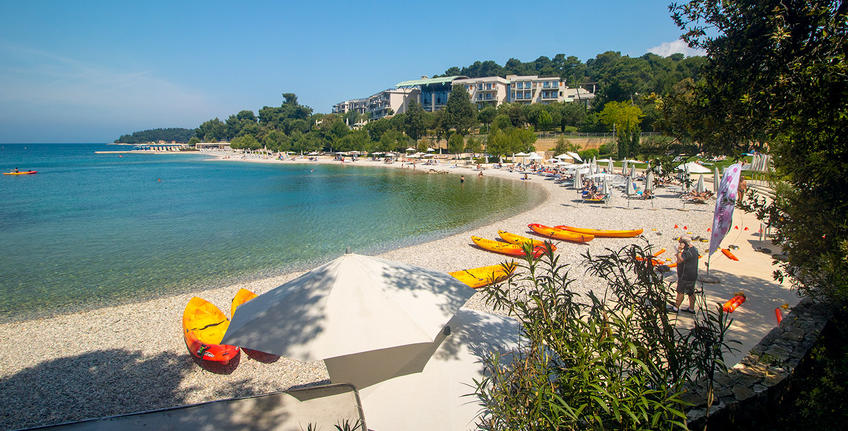
Nestled quietly into the northern protective crook of the Golden Cape Forest Park peninsula, this beautiful, crescent-shaped beach bay is Rovinj’s premier urban swimming destination.
- What it is famous for: Its calm, exceptionally clear azure waters and its dense borders of old pine trees that provide natural shade right down to the shoreline. Because the bay is completely sheltered from strong open-sea currents, its fine pebbled beaches are a favorite destination for families, swimmers, and paddleboarders. A scenic, traffic-free coastal promenade links Lone Bay directly back to Rovinj’s main harbor, allowing beachgoers to easily stroll to seaside cocktail bars and modern lounge decks.
7. The Batana Eco-Museum
The High-Tech Maritime Sanctuary of Flat-Bottomed Fishing Looms and Sea Shanties
Tucked into an authentic, 17th-century three-story stone town house just a short walk inland from the primary harbor docks, this unique institution is a globally celebrated cultural center.
- What it is famous for: Being inscribed on the UNESCO Register of Good Safeguarding Practices for preserving the traditional flat-bottomed Batana wooden boat building methods. The interactive museum tracks the deep maritime lifestyle of Rovinj through multimedia displays, historic fishing gear, and original tools. The experience expands out of the building to include the Spacio Matika—a historic stone wine cellar where visitors sit at communal wooden tables to enjoy local wines while listening to Bitinada, traditional multi-part Rovinj sea shanties sung by local fishermen.
8. Red Island (Crveni Otok)
The Twin-Island Forested Sanctuary of Franciscan Monasteries and Baronial Castles
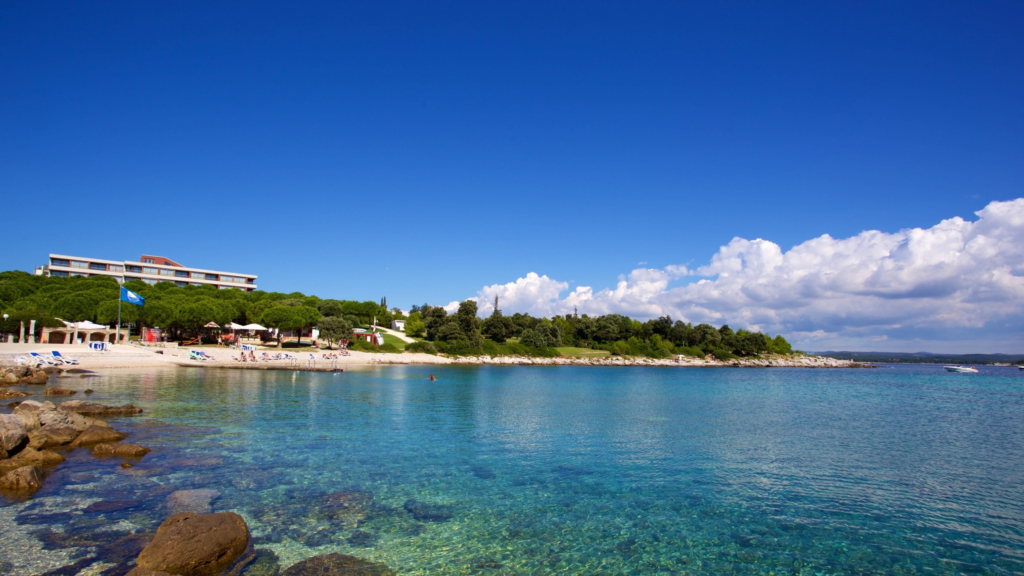
Situated a brief, 15-minute passenger boat ride roughly 2.5 kilometers offshore from the main downtown piers, this beautiful offshore destination is formed by two separate islands—Sveti Andrija and Maškin—linked together by an artificial stone causeway.
- What it is famous for: Its historic 6th-century Benedictine monastery complex converted into a grand family castle and its pristine clothing-optional beaches. In the late 19th century, the wealthy Huetterott family purchased the islands, transforming the old stone monastic cloister into an opulent maritime palace surrounded by subtropical botanical gardens. Today, visitors can walk the trails to view historic family mausoleums, explore dense pine groves, or swim in the deep rocky coves of the outer shores.
9. Lim Fjord (Limski Kanal)
The Deep Limestone Industrial Valley of Oyster Shucks and Viking Legends
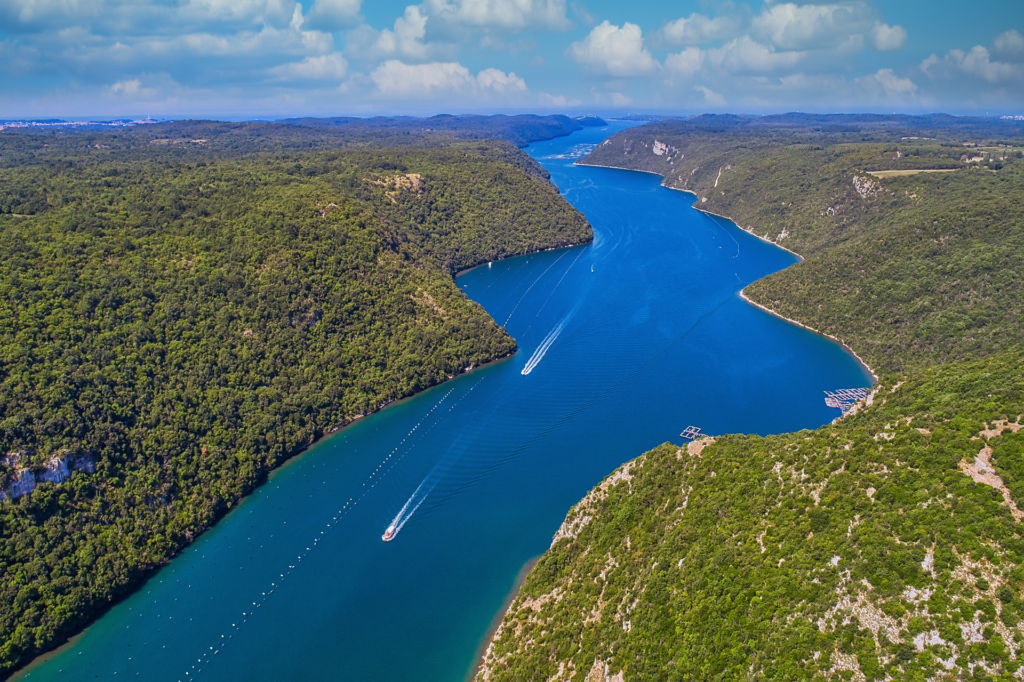
Slicing smoothly into the Istrian mainland roughly 6 kilometers north of Rovinj’s urban core, this spectacular, 10-kilometer-long narrow marine ditch is one of Croatia’s most breathtaking natural wonders.
- What it is famous for: Its sheer, 100-meter-high vertical green forest cliffs and being a world-class cultivation farm for high-end organic oysters and mussels. Often mistakenly called a fjord due to its dramatic layout (it is actually a submerged river canyon), the channel’s unique mix of fresh underwater springs and saltwater creates a perfect ecosystem for shellfish. Travelers can take excursion boats up the canyon to tour the historic Romuald’s Cave or sit at rustic waterfront taverns to sample freshly shucked oysters raw with a squeeze of lemon.
10. Town Clock Tower & Main Square (Trg Maršala Tita)
The Red-Stone Renaissance Hub of Venetian Reliefs and Public Fountains
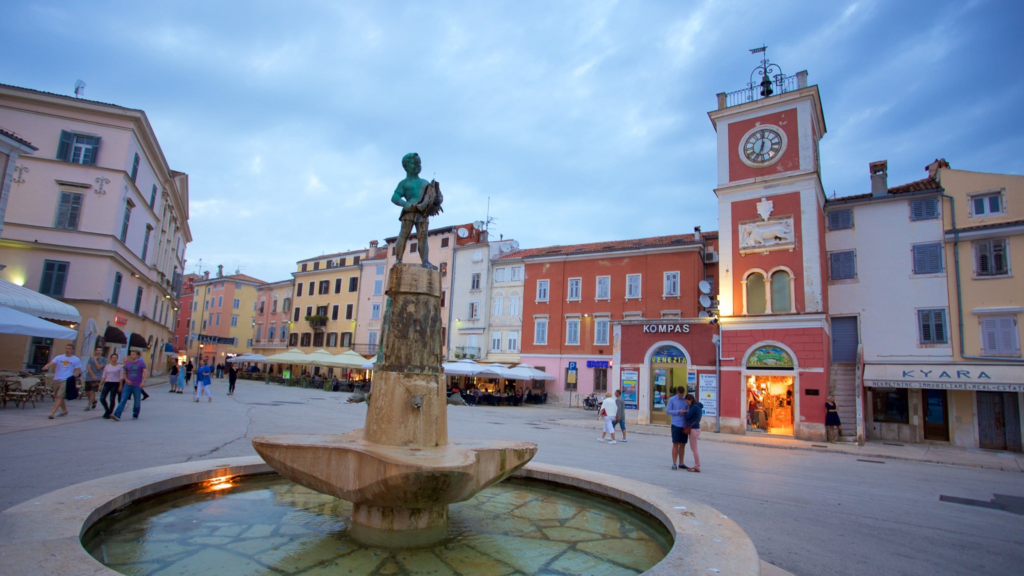
Dominating the sprawling, stone-paved main gathering plaza just outside the old town’s historic island boundaries, this architectural ensemble serves as the civic heart of Rovinj.
- What it is famous for: Its vibrant pinkish-red, 12th-century stone clock tower displaying a detailed stone carving of the Venetian Winged Lion. Originally constructed as a defensive watchtower for the town’s southern gate system, the tower was remodeled in the Renaissance style, featuring a detailed clock mechanism that has tracked town time for centuries. The surrounding square is anchored by the historic Califfi Palace and a public stone fountain, making it the premier spot for major festivals, open-air concerts, and evening walks.
11. Tre Visiti (St. Thomas Street & Coastal Alleys)
The Labyrinthine Matrix of Sea-Plunging Doorways and Venetian Chimneys
Winding through the dense residential quarters of the northern and western flanks of the old peninsula town, these tightly packed residential alleys preserve Rovinj’s architectural heritage.
- What it is famous for: Its bizarre, highly decorative external Venetian chimneys and its collection of stone doorways that open directly into the sea waves. Because space on the original island was limited, residents developed unique external cylinder chimneys to prevent house fires within the wooden roof grids. Walking these narrow, cobblestone alleys reveals stone thresholds where steps plunge straight down into the saltwater, allowing old fishermen to step directly from their kitchens into their wooden boats, a testament to a centuries-old maritime existence.