
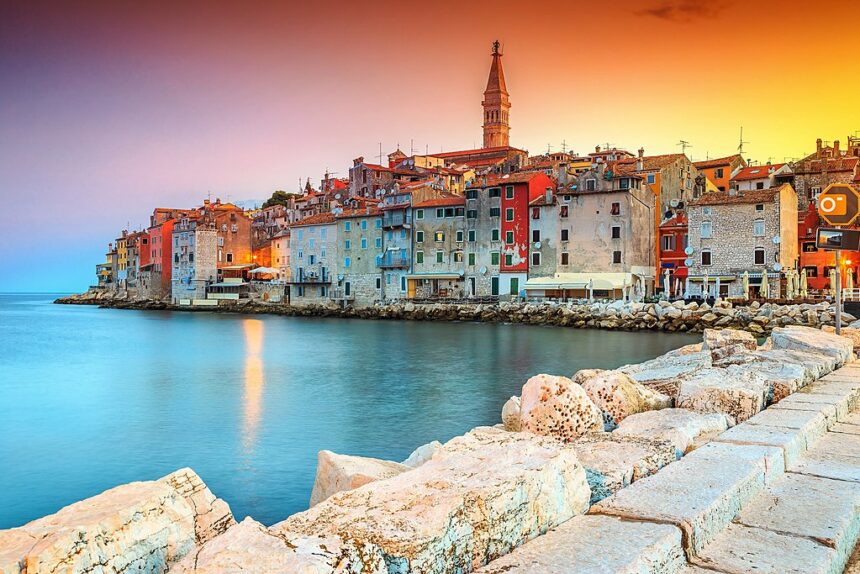
Pula, sweeping grandly across a sprawling, deeply indented natural bay on the southwestern tip of the Istrian peninsula in western Croatia, operates on a magnificent, layer-cake layout where 2,000-year-old Roman monuments stand shoulder-to-shoulder with modern industrial shipyard cranes.
Established by ancient Illyrian tribes before transforming into a highly favored Roman colonia under Julius Caesar, the city’s exceptionally secure, landlocked harbor made it an invaluable naval prize.
Over the centuries, it functioned as a powerful military shield, eventually evolving into the supreme, heavily fortified main naval base of the Austro-Hungarian Imperial Navy.
Today, Pula presents a striking urban grid where a dense collection of ancient temples and triumphal arches is woven directly into the fabrics of everyday neighborhoods.
The city effortlessly pairs its deep classical antiquity with a rugged, maritime blue-collar spirit and a booming summer festival culture. Famous for its olive-oil-drizzled Istrian truffles, freshly harvested Adriatic scallops, deep Malvazija white wines, and a sun-drenched, pine-shaded coastal lifestyle.
1. The Pula Arena
The Colossal Limestone Matrix of Gladiator Battlegrounds and Starlit Concert Skies
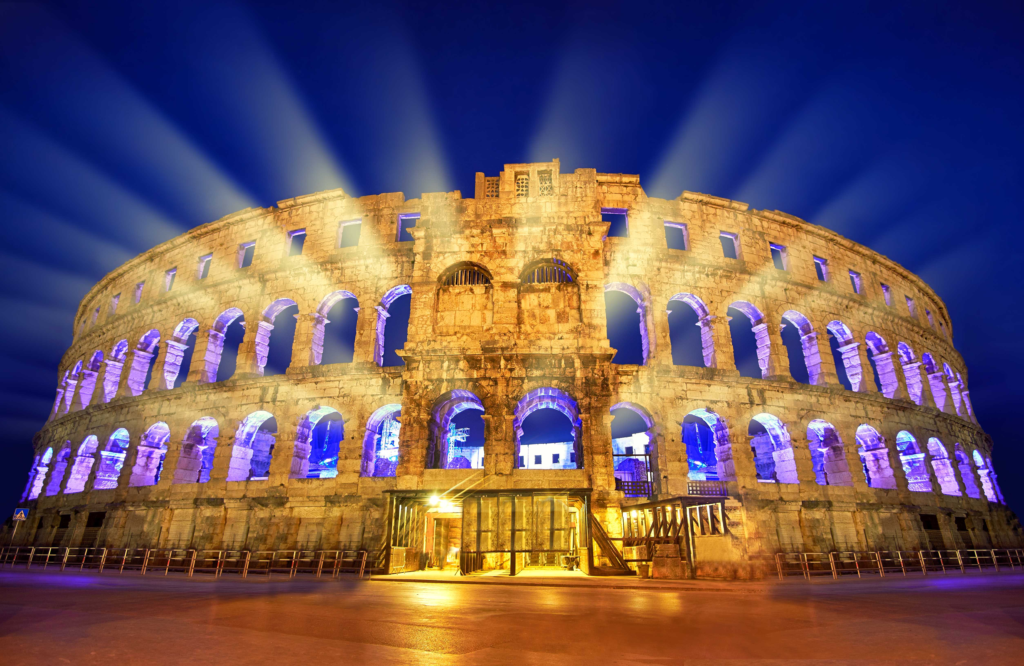
Dominating the coastal northern approach to the historic center, this monumental Roman amphitheater stands proud as the definitive architectural icon of Pula and one of the best-preserved ancient monuments in existence.
- What it is famous for: Being the only remaining Roman amphitheater in the world to have all four side towers and its entire three-story exterior wall layout completely intact. Built in the 1st century AD under Emperor Augustus and expanded by Emperor Vespasian, this massive limestone structure once held 23,000 roaring spectators for brutal gladiator combat. Today, the subterranean passages where wild beasts were kept house an archaeological museum, while the central arena floor functions as a world-class open-air concert venue and the home of the historic Pula Film Festival.
2. The Forum & Temple of Augustus
The Monumental Public Plain of Corinthian Pillars and Venetian Palaces
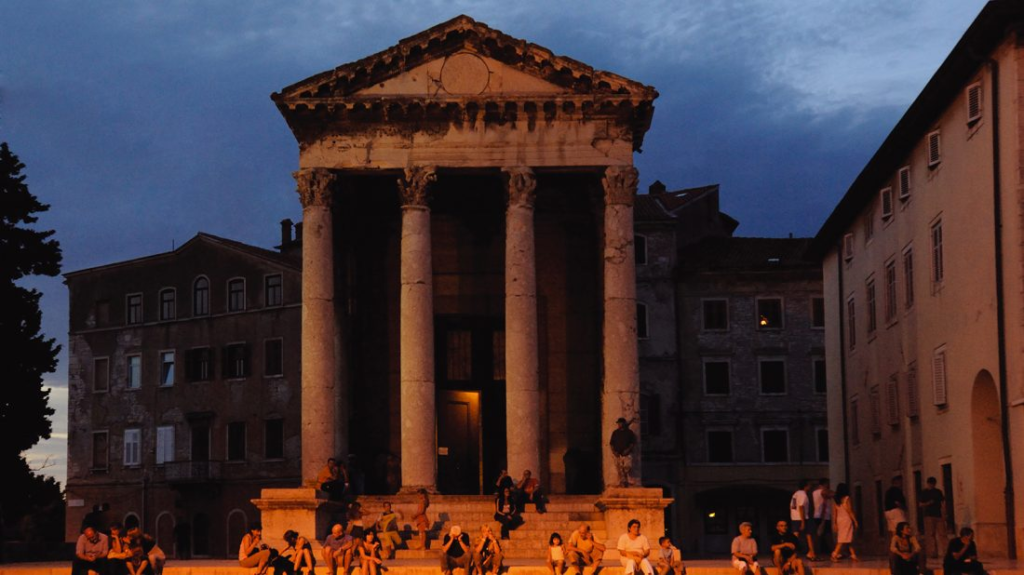
Forming the absolute physical and administrative center of the old town’s pedestrian grid, this wide, stone-paved public square has functioned as the primary civic core of Pula for over two millennia.
- What it is famous for: Its perfectly intact, 2,000-year-old Roman temple dedicated to Emperor Augustus and its Renaissance-era Communal Palace. Constructed during the lifetime of the first Roman emperor, the temple is a textbook masterpiece of classical architecture, featuring six soaring Corinthian columns. Right next to it stands the 13th-century town hall, which cleverly recycles the stone foundations of an ancient pagan temple directly into its Venetian-Gothic facade. The square remains a vibrant social hub, packed with outdoor cafe terraces.
3. Arch of the Sergii (The Golden Gate)
The Elegant Triumphal Sentinal of Hellenistic Carvings and Shopping Lanes
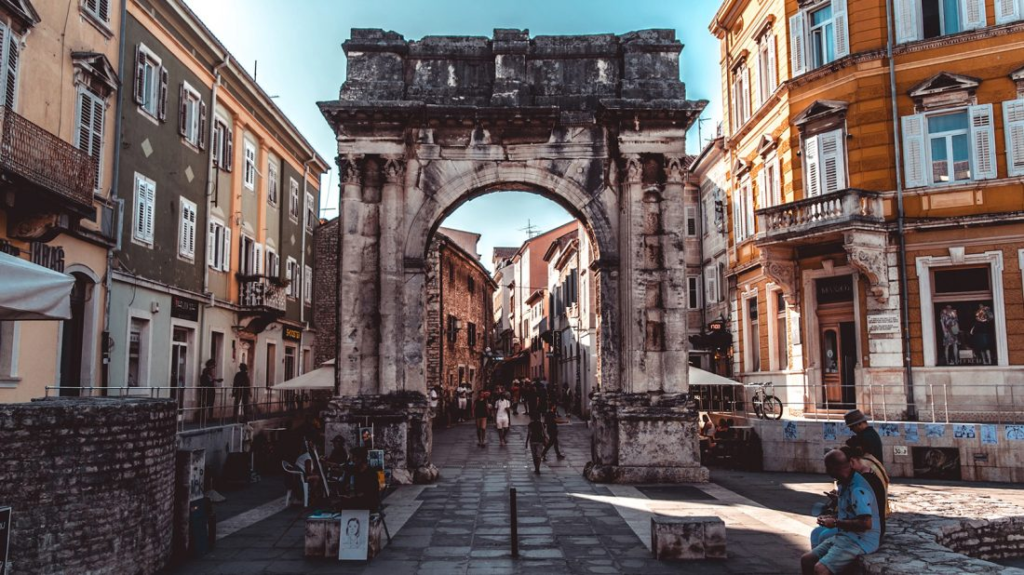
Slicing smoothly through the eastern pedestrian artery to connect the modern downtown avenues with the ancient old town streets, this magnificent Roman triumphal arch is an architectural gem.
- What it is famous for: Its highly detailed stone reliefs depicting winged victories and its role as the historic ceremonial gateway to the inner city. Erected between 29 and 27 BC by the wealthy Sergii family to honor brothers who fought in the historic Battle of Actium, the arch features stunning Hellenistic-influenced stone carvings. Originally, it stood directly behind a heavily fortified city gate known as the Golden Gate. Today, the arch serves as a dramatic entry point to a bustling shopping lane lined with cafes and boutiques.
4. The Lighting Giants (Svjetleći Divovi)
The Kinetic Industrial Matrix of Multi-Colored Shipyard Crane Spectaculars
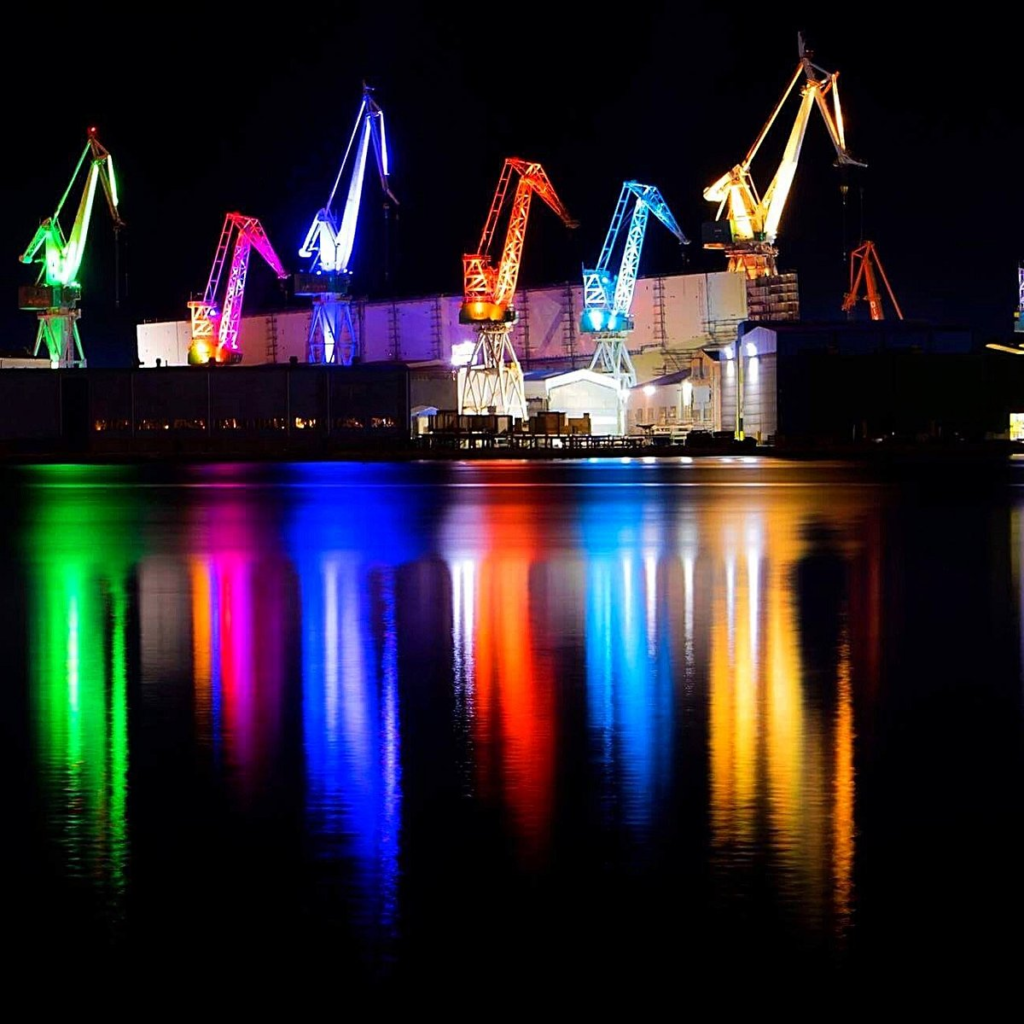
Commanding the skyline of Pula’s active inner harbor waters, these massive, modern industrial steel shipyard cranes provide an unforgettable contemporary public art experience.
- What it is famous for: Transforming a functional, 150-year-old active shipyard into a giant, nightly multi-colored laser light show. Designed by world-renowned lighting designer Dean Skira and activated in 2014, the installation outfits the towering cranes of the historic Uljanik shipyard with 16,000 wireless, color-changing LED lights. Precisely at dusk every single evening, the giant steel titans activate, performing an abstract, synchronized light dance that reflects across the dark waters of the harbor basin.
5. Pula Kastel (The Venetian Fortress)
The Star-Shaped Mountain Outpost of Cannon Bastions and Harbor Views
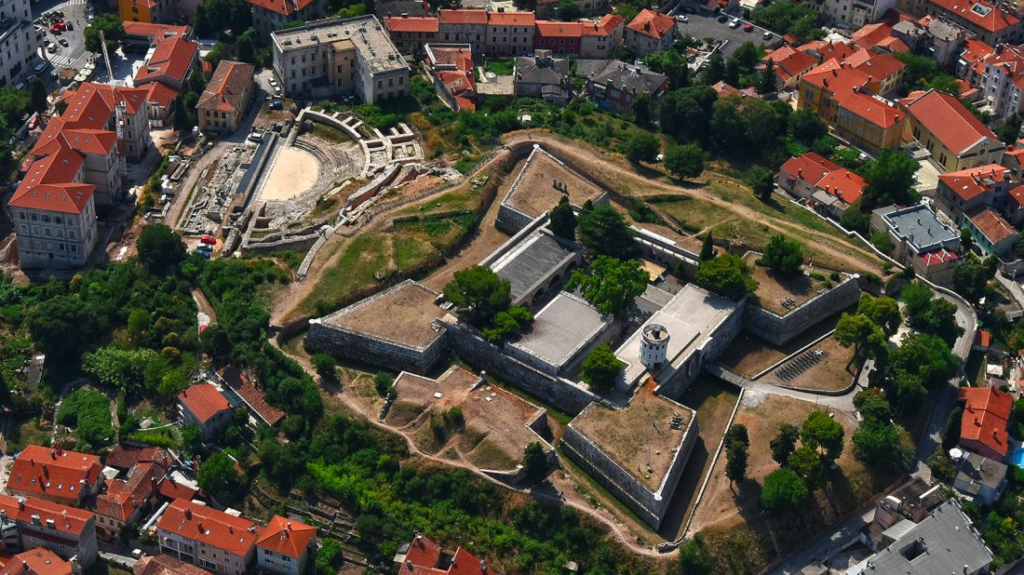
Perched dramatically on the absolute highest hill crest at the exact center of the old town peninsula layout, this stocky, star-shaped stone castle dominates the city’s topography.
- What it is famous for: Its impenetrable, 17th-century French-designed defensive layout and housing the Historical and Maritime Museum of Istria. Built by the Venetian Republic in the 1630s to shield their naval shipping lanes from pirate raids, the fortress features a classic military design with four projecting corner bastions. Visitors can walk the high grass-and-stone ramparts to view original iron cannons and take in an unobstructed, 360-degree panoramic look across the Roman Arena, the shipyards, and the open sea channels.
6. Cape Kamenjak Nature Park
The Rugged Cliff-Diving Oasis of Dinosaur Tracks and Safari Bars
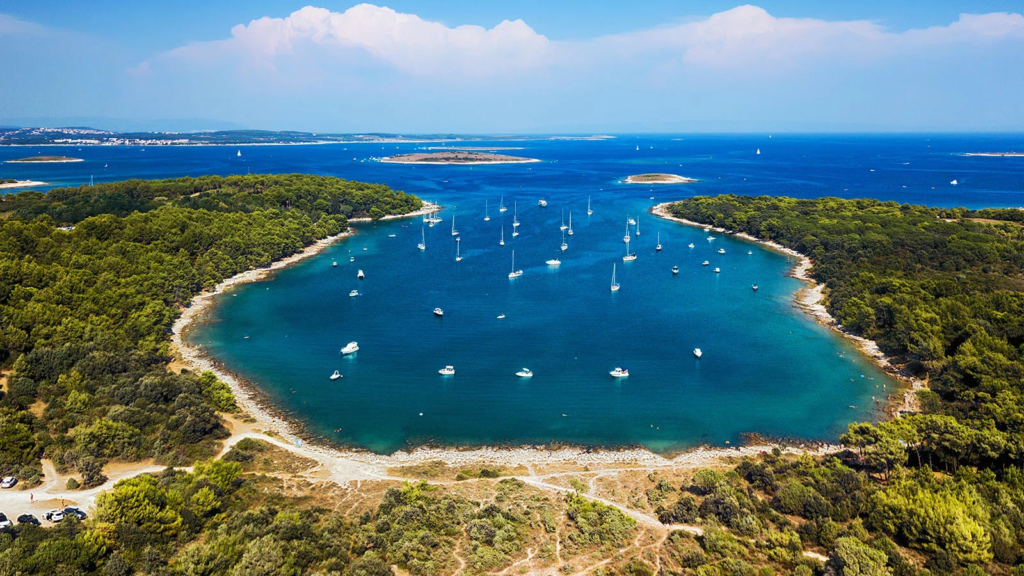
Situated on a narrow, wind-swept peninsula roughly 10 kilometers south of Pula’s immediate urban core, this pristine, 30-kilometer-long nature reserve is a wild coastal escape.
- What it is famous for: Its sheer, 15-meter-high limestone cliffs, crystal-clear azure waters favored by cliff-divers, and real prehistoric dinosaur footprints. Completely free of paved roads and major hotels, Kamenjak is a rugged Mediterranean paradise surrounded by hidden coves and sea caves. Visitors can hike the rocky coastlines to discover real fossilized dinosaur tracks embedded in the flat stone plates or navigate the dense pine groves to find the eccentric, eco-friendly Safari Bar hidden among the reeds.
7. Brijuni National Park
The Island Archipelago Sanctuary of Roman Villas and Safari Animals
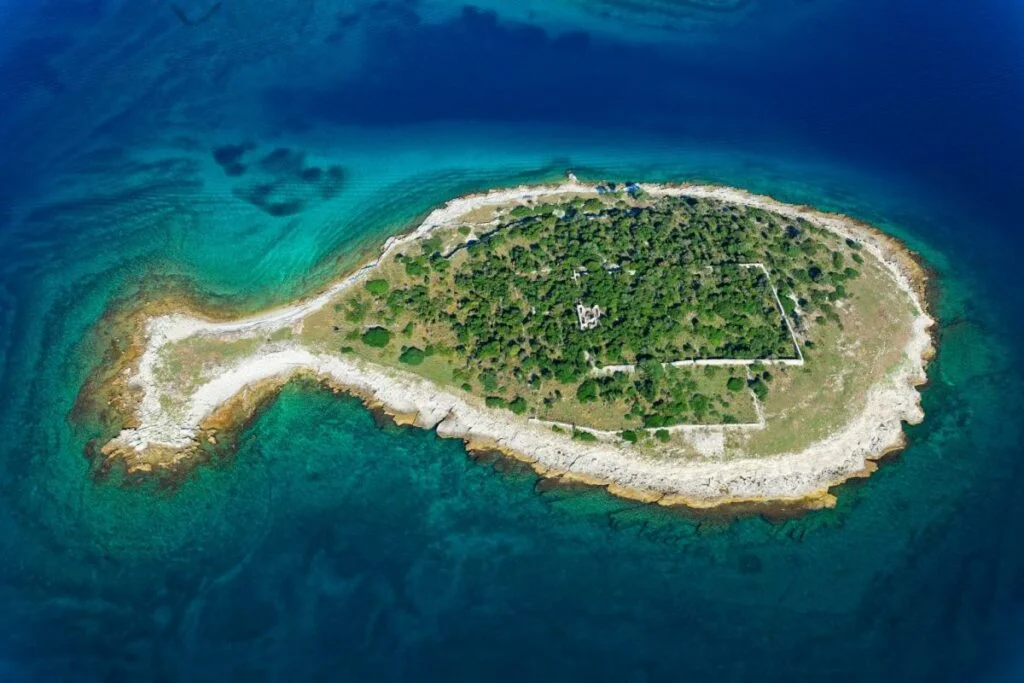
Spreading out across a scattering of 14 pristine green islands just a brief, 15-minute boat ride offshore from the neighboring fishing village of Fažana, this national park is a unique historical reserve.
- What it is famous for: Being the ultra-luxurious summer residence of Yugoslav President Tito, housing a safari park populated by exotic diplomatic gifts. Brijuni blends a diverse history, containing sprawling 1st-century BC Roman seaside villas, a Byzantine castrum, and early Christian basilicas. Visitors can rent golf carts to explore the islands, riding past a 1,600-year-old olive tree to see free-roaming zebras, llamas, and an elephant gifted by Indira Gandhi.
8. Verudela Peninsula & Canyon
The High-Cliff Marine Amphiheater of Sacred Church Ruins and Azure Coves
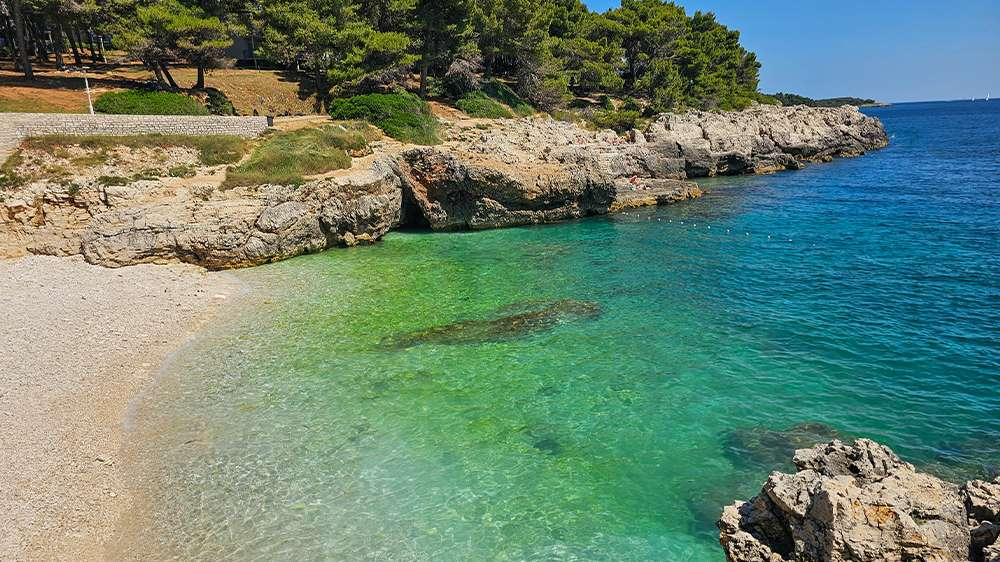
Perched spectacularly within Pula’s southern resort suburbs, this jagged, pine-forested coastal finger functions as the city’s primary beach lifestyle and adventure destination.
- What it is famous for: Its dramatic natural rock canyon, its pebbled white beaches, and the panoramic “Sacred Rock” viewpoint. The highlight of the peninsula is the Verudela Canyon, a vertical, 20-meter-high rock fissure carved by the sea that draws adventurous swimmers and cliff-jumpers. High on the cliffs opposite sits the remnants of an old stone church wall structure, representing one of the most romantic sunset gathering spots in Istria.
9. Twin Gates & Gate of Hercules (Dvojna i Herkulova Vrata)
The Ancient Stone Sentinels of Roman City Wall Boundaries
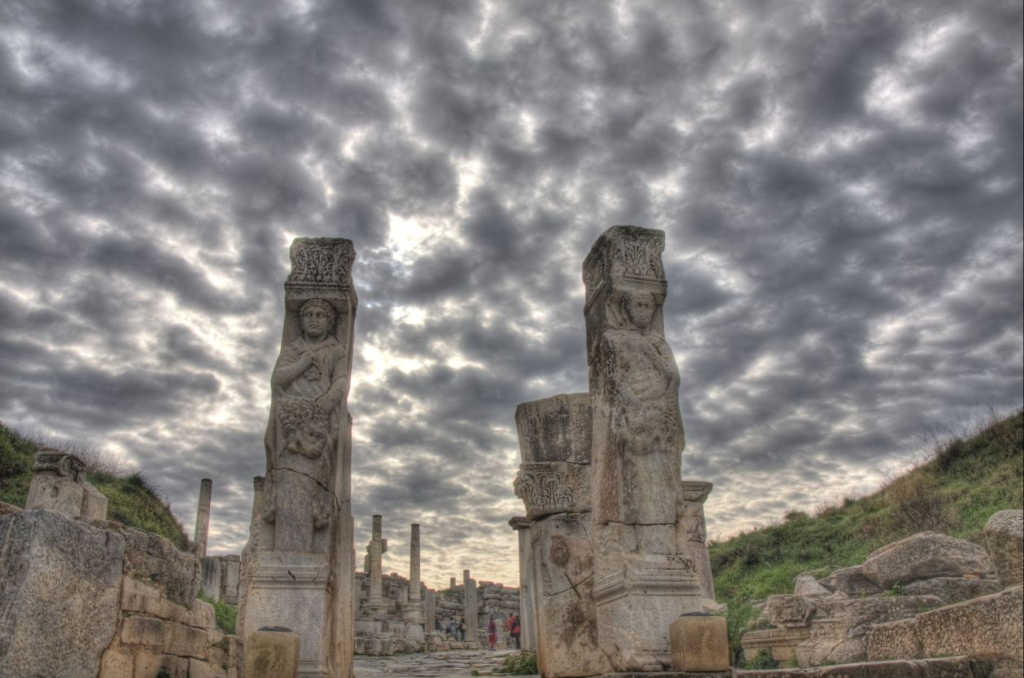
Tucked quietly into the lush, tree-shaded parkways running along the eastern base of the central fortress hill, these two separate ancient stone arches protect Pula’s oldest defensive perimeters.
- What it is famous for: Being the oldest remaining entry arches of Pula’s original Roman defensive ring walls. The Gate of Hercules, dating back to the 1st century BC, features a rugged, unpolished stone design etched with a weathered carving of Hercules’ club and head. A few steps away sits the elegant Twin Gates, a refined 2nd-century AD double-arched gateway decorated with classical columns that originally led to an ancient Roman theater layout up the hillside.
10. Underground Pula (Zerostrasse)
The Cavernous Subterranean Matrix of WWI Tunnel Networks and Bomb Shelters
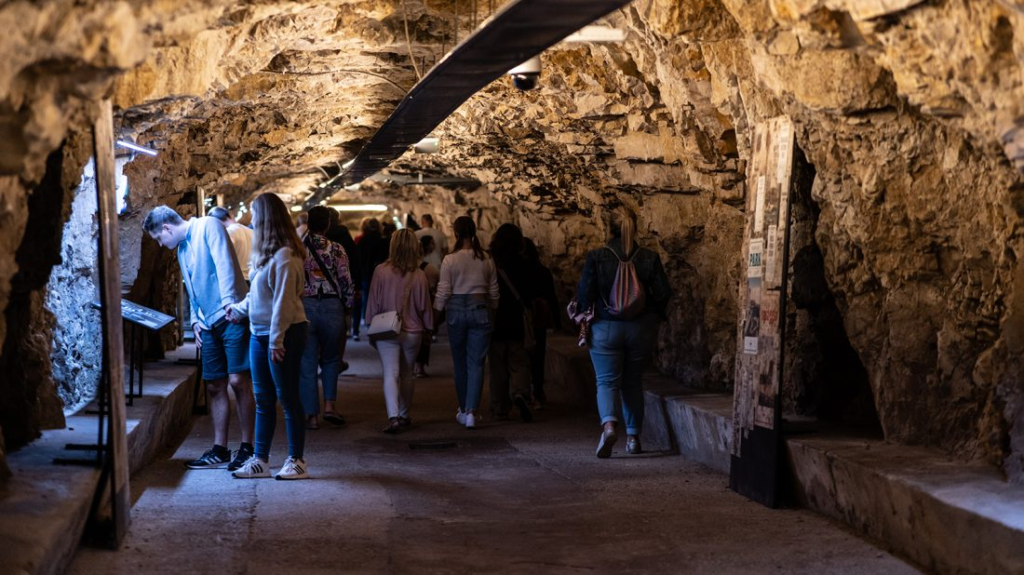
Accessed via an unassuming industrial stone doorway located directly at the absolute base of the central Kastel hill, this sprawling underground network is a subterranean marvel.
- What it is famous for: Its vast, maze-like network of military tunnels constructed to shield thousands of citizens from World War I air raids. Built by the Austro-Hungarian Empire when Pula served as a primary imperial naval fortress, the tunnels run completely beneath the central hill, featuring wide galleries, ammunition storage bays, and air-shaft corridors. Today, fully restored and illuminated, the cool subterranean spaces host historical exhibitions and photo galleries, while linking together directly with a modern central elevator that carries visitors straight up to the castle bastions above.
11. Pula Cathedral
The Red-Brick Renaissance Basilica of Roman Floor Mosaics and Imperial Sarcophagi
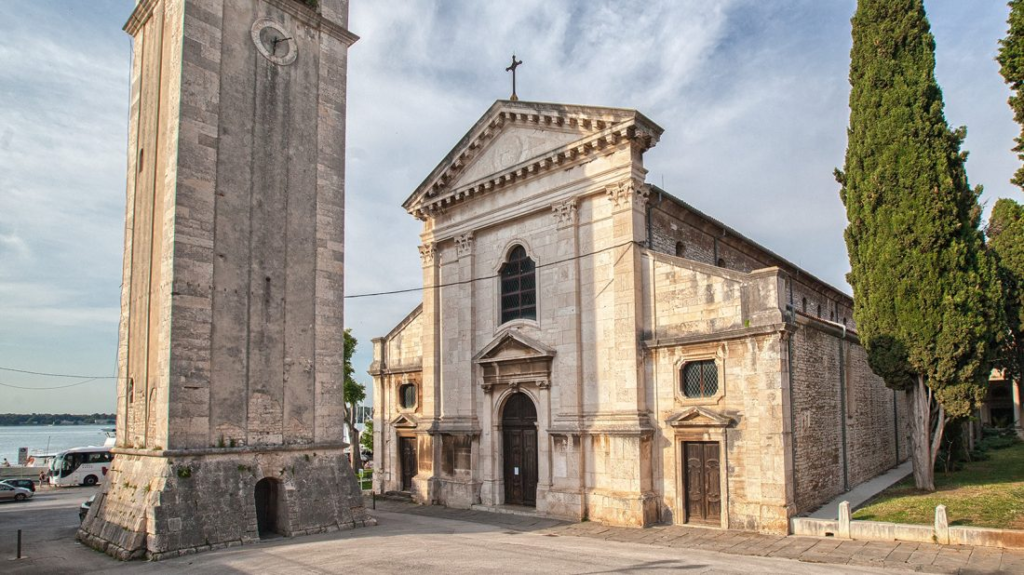
Commanding a majestic, block-long presence along the primary seaside avenue leading between the historic forum and the active harbor docks, this grand cathedral is a monument to resilience.
- What it is famous for: Its 5th-century Christian floor mosaics and a high-altar Roman sarcophagus rumored to hold the remains of a Hungarian king. Formed over centuries through continuous rebuilding campaigns following heavy damage from Venetian and Genoese naval raids, the Cathedral of the Assumption of Mary features a classical, clean Renaissance front facade. Inside, visitors can gaze down through glass floor viewing frames to inspect complex ancient Roman geometric mosaics hidden beneath the modern altar stones.