
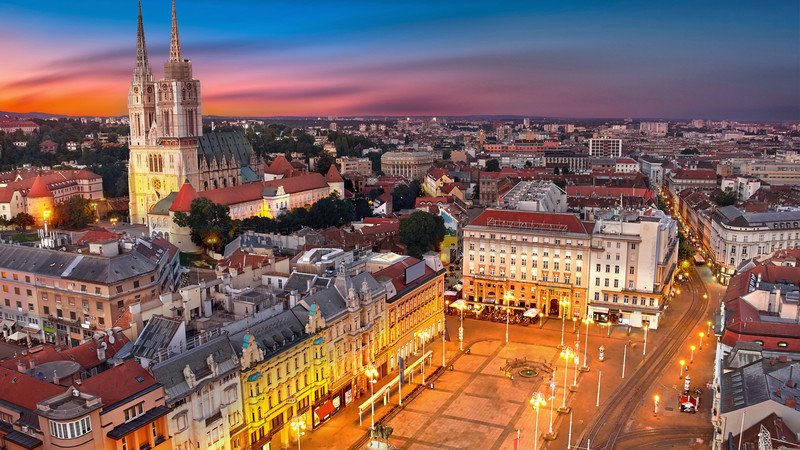
Zagreb, sloping gracefully from the southern foothills of the Medvednica Mountain down to the wide banks of the Sava River, operates on a magnificent, split-level layout that tells the tale of two historic rival hilltop towns.
To the north sits the fortified, cobblestoned Upper Town (Gornji Grad), formed by the medieval settlements of Gradec and Kaptol, which spent centuries locked in bitter administrative feuds.
To the south stretches the Lower Town (Donji Grad), a grand, 19th-century urban grid built to mimic the imperial scale of Vienna and Budapest during the height of the Austro-Hungarian Empire.
Today, as the vibrant capital of Croatia, Zagreb stands out as an exceptionally scannable city where a functional 1890s funicular railway serves as the literal and cultural bridge between its medieval past and modern European present.
The city effortlessly pairs its historic gas-lit alleyways with a legendary, hyper-active outdoor coffeehouse industry (Špica) and a quirky museum culture.
1. St. Mark’s Church
The Medieval Crown-Jewel of Vibrant Heraldic Tile Work and Royal Squares
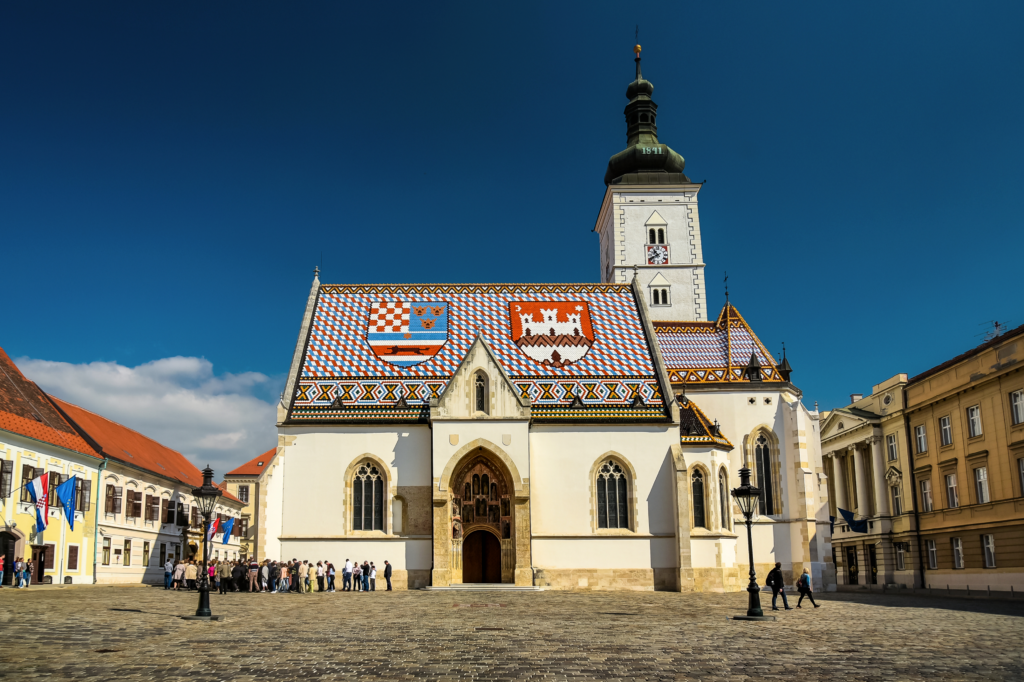
Dominating the absolute center of St. Mark’s Square—the historic political heart of the Upper Town—this late-Gothic parish church stands proud as the most iconic visual symbol of Zagreb.
- What it is famous for: Its spectacular, multi-colored tiled roof depicting the historical coats of arms of Croatia and the city of Zagreb. Constructed in the 14th century but outfitted with its famous roof mosaic in 1880, the church features bright red, white, and blue glazed tiles arranged in a geometric matrix. The square surrounding it is flanked by the country’s high parliament (Sabor) and governmental palaces, making it the supreme staging ground for ceremonial guard turn-overs.
2. Zagreb Cathedral
The Neo-Gothic Twin-Spired Sentinel of Sacred Ribbed Vaults
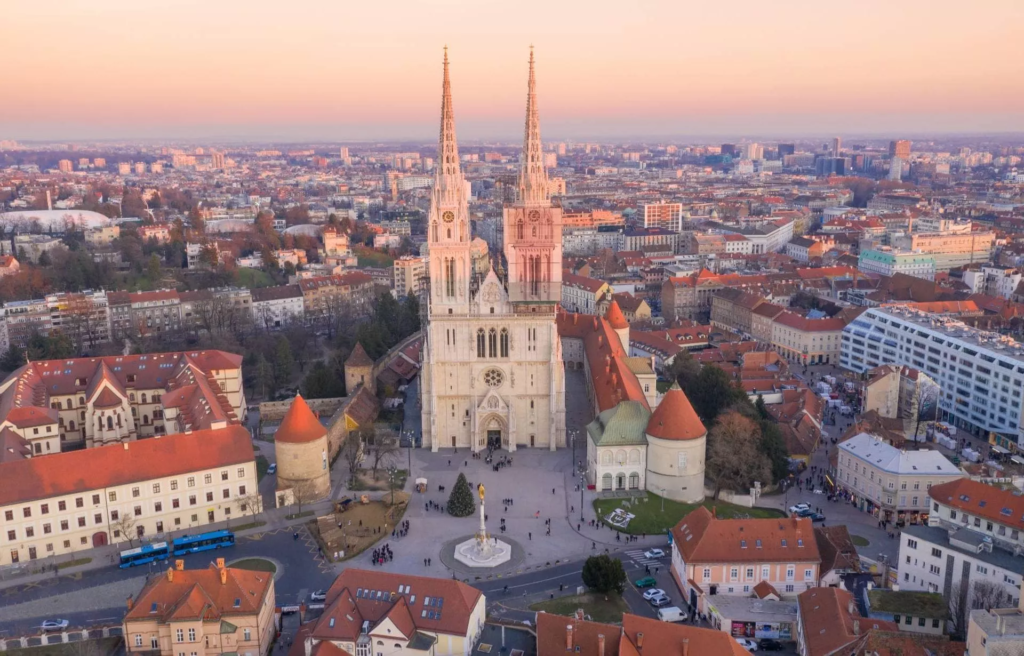
Rising majestically from the rolling terrain of Kaptol hill, this colossal Roman Catholic house of worship stands as the tallest structural monument in all of Croatia.
- What it is famous for: Its soaring twin open-work limestone spires and its collection of medieval treasury assets. Dedicated to the Assumption of Mary, the cathedral’s original foundation dates back to 1094, though its current Neo-Gothic facade was constructed by architect Hermann Bollé following a devastating 1880 earthquake. The interior houses magnificent ribbed stone vaults, the marble tomb of Blessed Aloysius Stepinac, and massive crystal chandeliers.
3. Ban Jelačić Square
The Kinetic Central Transit Hub of Gilded Fountains and Equestrian Statues
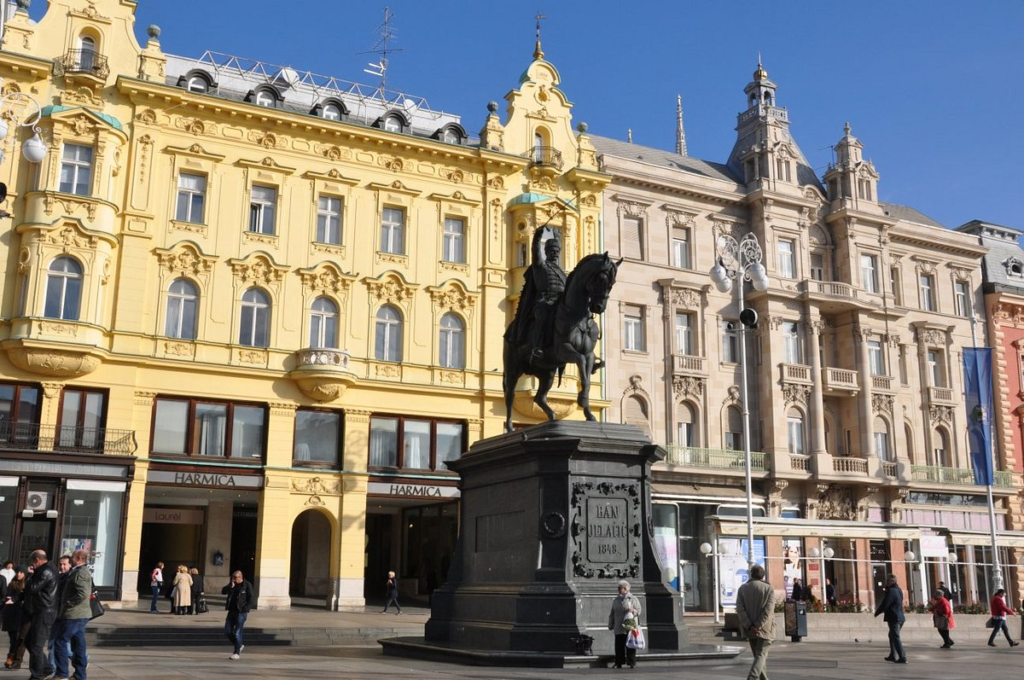
Serving as the definitive, geographic axis where the Upper and Lower Towns collide, this vast, pedestrian-only central square is the beating social heart of modern Zagreb.
- What it is famous for: Its colossal bronze equestrian statue of Count Josip Jelačić and acting as the primary meeting spot for all urban life. The square is instantly recognizable by its constant stream of iconic blue city trams slicing through its borders. Locals gather here by the thousands near the Manduševec Fountain—a historic spring site that gave Zagreb its name—before heading out into the surrounding shopping streets or outdoor dining avenues.
4. The Museum of Broken Relationships
The Bohemian Baroque Palace of Quirky Emotional Archives
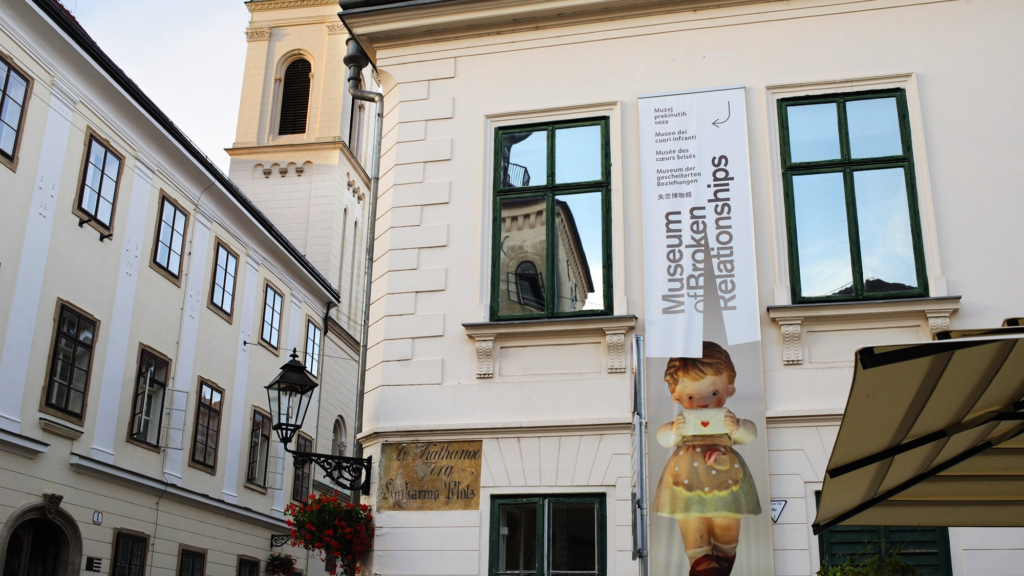
Housed inside the beautiful, elegant rooms of a 19th-century Baroque palace in the Upper Town, this internationally acclaimed, high-concept museum is a testament to human connection.
- What it is famous for: Turning crowdsourced physical tokens of failed romantic partnerships into a deeply moving global art exhibition. Founded by two local artists following their own breakup, the museum displays seemingly mundane objects ranging from an old axe used to smash furniture to a pair of fluffy fuzzy dice—sent in from people worldwide. Each object sits next to a raw, anonymous text detailing the specific story of heartbreak it represents, blending wit with melancholy.
5. Dolac Market
The Red-Umbrella Matrix of Open-Air Farm Treasures
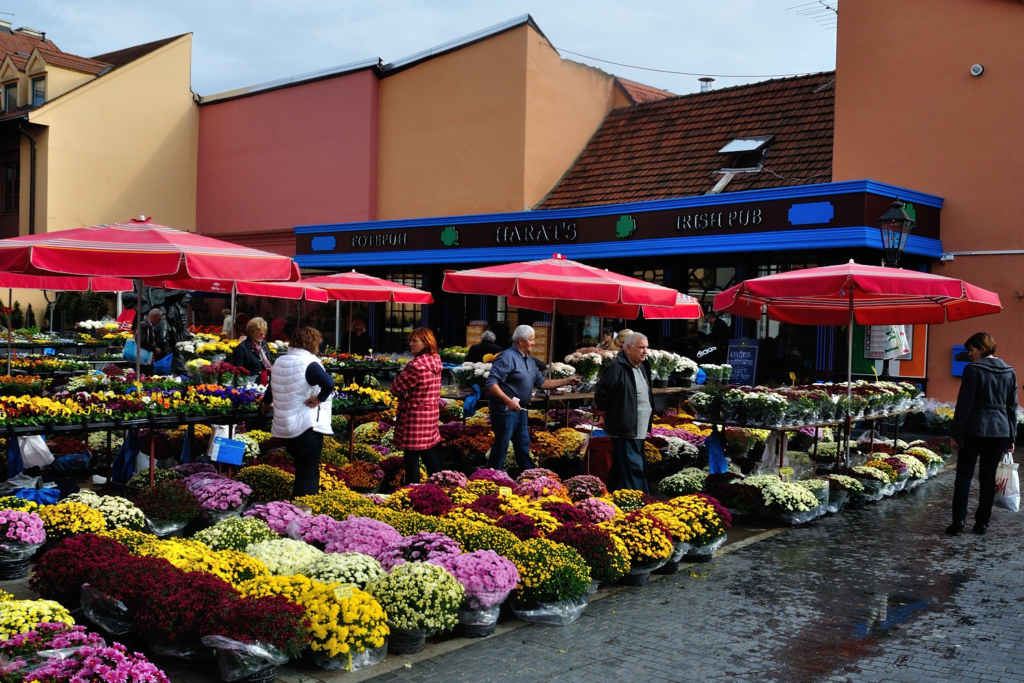
Perched on a high concrete terrace layout elevated just a few stone steps directly above the main central plaza, this bustling open-air market has functioned as the city’s belly since 1930.
- What it is famous for: Its sea of iconic, bright-red Šestine fringe umbrellas sheltering hundreds of traditional market tables. Every single morning, local farmers and producers (kumice) arrive from surrounding villages to fill Dolac with fresh local cheeses, heavy sour creams, wild berries, and cured meats. Below the open-air fruit and vegetable deck lies a massive indoor matrix of subterranean butcher shops, fish markets, and bakeries.
6. Lenuci’s Green Horseshoe (Zelena Potkova)
The Austro-Hungarian U-Shaped Ribbon of Horticultural Palaces
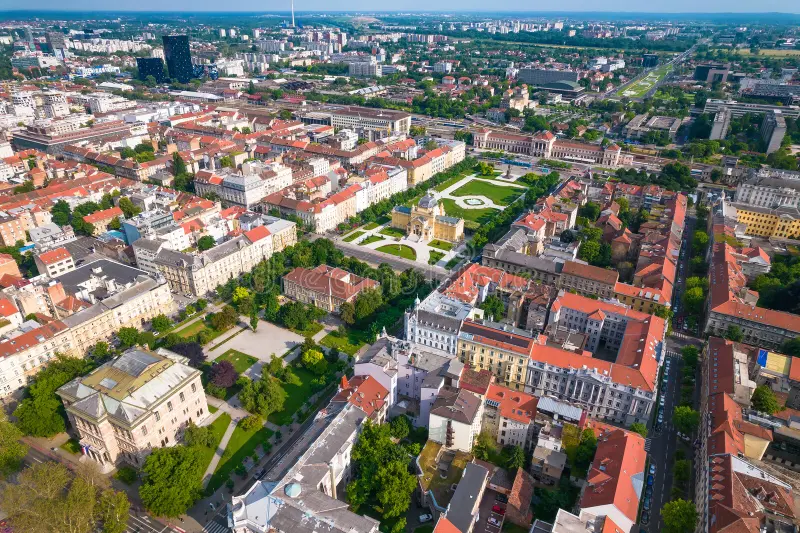
Slicing smoothly through the lower urban grid, this magnificent, high-concept landscape design features a U-shaped ribbon of interconnected parks, botanical gardens, and monumental public squares.
- What it is famous for: Blending grand Austro-Hungarian palace architecture seamlessly into a continuous, lush urban park network. Designed in the late 19th century by urban planner Milan Lenuci, the horseshoe project houses the city’s premier cultural landmarks. Visitors can walk the leafy avenues to view the canary-yellow Art Pavilion, the Neo-Renaissance Strossmayer Gallery, and the historic Zagreb Botanical Garden, capturing the refined European flair of the imperial era.
7. Lotrščak Tower & The Grič Cannon
The Romanesque Citadel Gate of Midday Thunder and Funicular Slopes
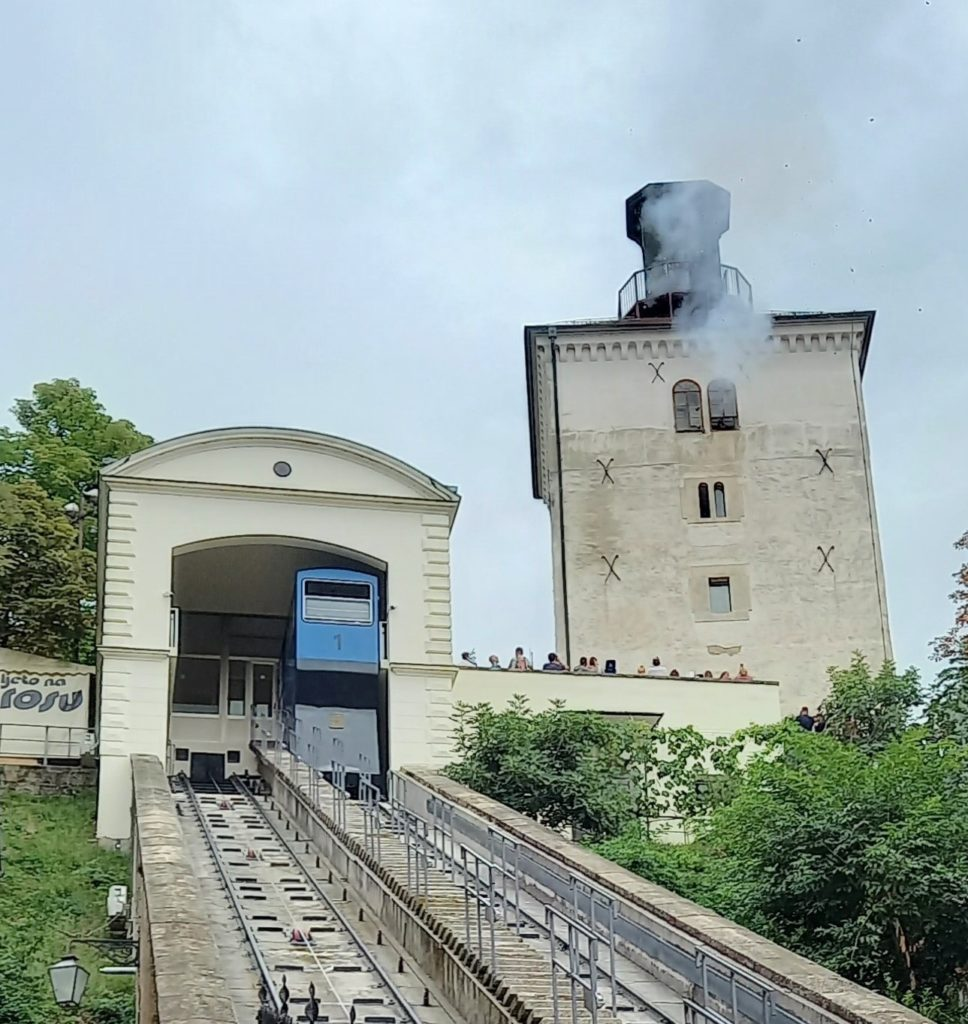
Guarding the southern entry ramparts of the old Gradec fortress wall, this stocky, 13th-century Romanesque stone tower overlooks the rooftops of the Lower Town.
- What it is famous for: Firing the historic Grič Cannon (Grički top) from its top windows precisely at noon every single day. Since 1877, the blast has shaken the city skies to signal midday for local bell-ringers and watch-repairers. Directly at the base of the stone tower sits the entry track for the Zagreb Funicular, which stands proud as one of the shortest and steepest funicular public transport cable lines in the world, running a brief 66-meter strip since 1891.
8. Tkalčićeva Street
The Bohemian Creek Valley of Gas-Lit Cafes and Colorful Facades
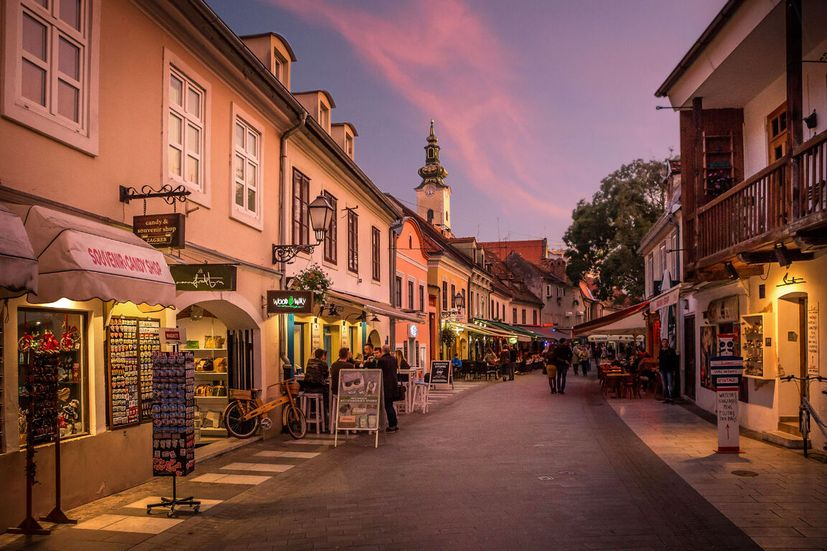
Winding lazily northward along the natural valley floor that once held a flowing border creek separating Gradec and Kaptol, this vibrant pedestrian lane is Zagreb’s primary nightlife artery.
- What it is famous for: Its endless row of historic, pastel-colored 18th-century houses converted into trendy microbreweries, bars, and cafes. “Tkalča,” as locals call it, perfectly showcases the local lifestyle philosophy of Kava (long, unhurried coffee socialization). At dusk, the street takes on a historic glow as municipal workers use long poles to manually light the traditional iron gas lamps that still line the walking pavements.
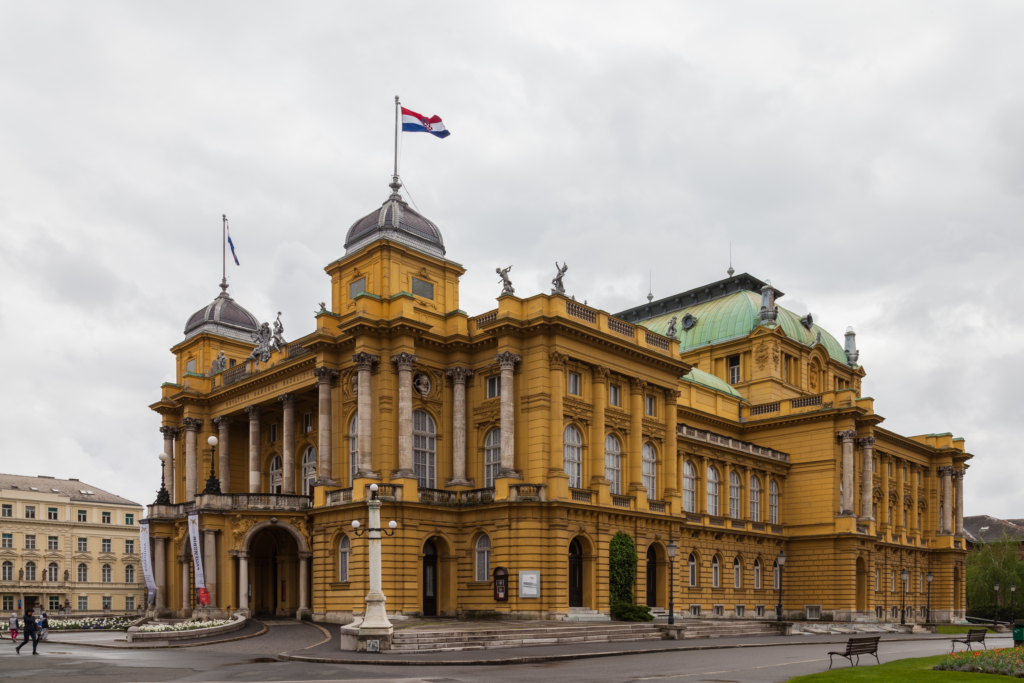
9. Croatian National Theatre (HNK)
The Neo-Baroque Canary-Yellow Palace of Opera Muses and Gilded Foyers
Commanding a grand, open-park plaza position on the western wing of the Green Horseshoe layout, this spectacular, vibrant yellow theater building is an architectural masterpiece.
- What it is famous for: Its masterful Neo-Baroque architecture designed by the legendary Viennese team of Helmer and Fellner. Opened in 1895 by Emperor Franz Joseph I, the building features an exterior topped with copper domes and elegant stone balustrades. The interior is a world of gilded balconies, heavy crimson velvet drapery, and detailed ceiling frescoes, fronted outside by the Well of Life, a famous bronze water sculpture crafted by Croatian master Ivan Meštrović.
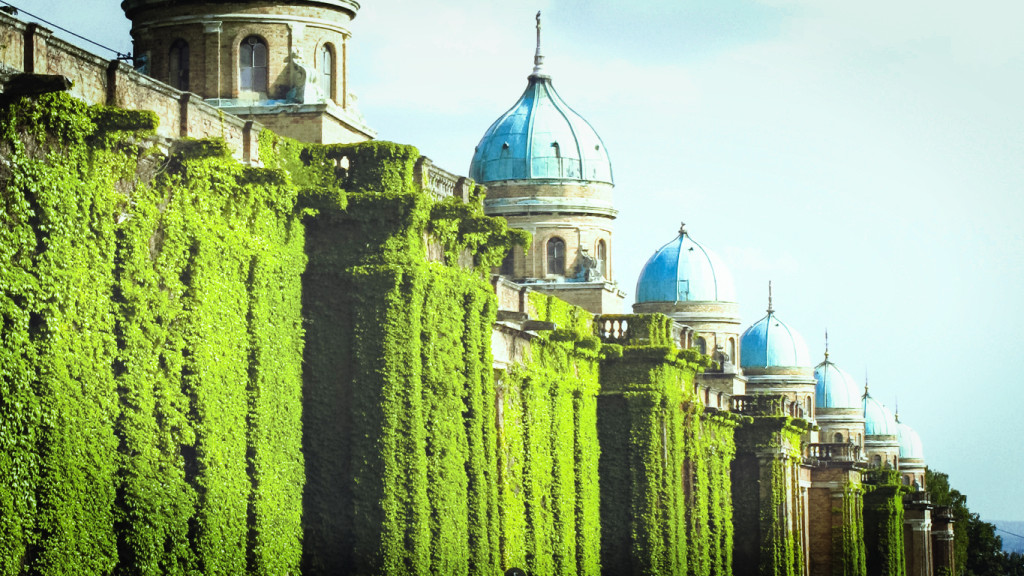
10. Mirogoj Cemetery
The Arcaded Emerald Sanctuary of Cupolas and Ivy-Draped Pantheons
Situated on the gentle, green northern hillsides roughly 3 kilometers from the immediate downtown core, this vast, park-like cemetery functions as a premier national pantheon.
- What it is famous for: Its monumental, 500-meter-long external brick wall arcade system topped with 20 separate copper cupolas. Designed by architect Hermann Bollé as a resting place open to all religious denominations, Mirogoj feels more like an open-air art gallery or romantic park than a traditional graveyard. The monumental outer walls are completely blanketed in thick creeping ivy that changes color with the seasons, sheltering the graves of the nation’s greatest writers, politicians, and artists.
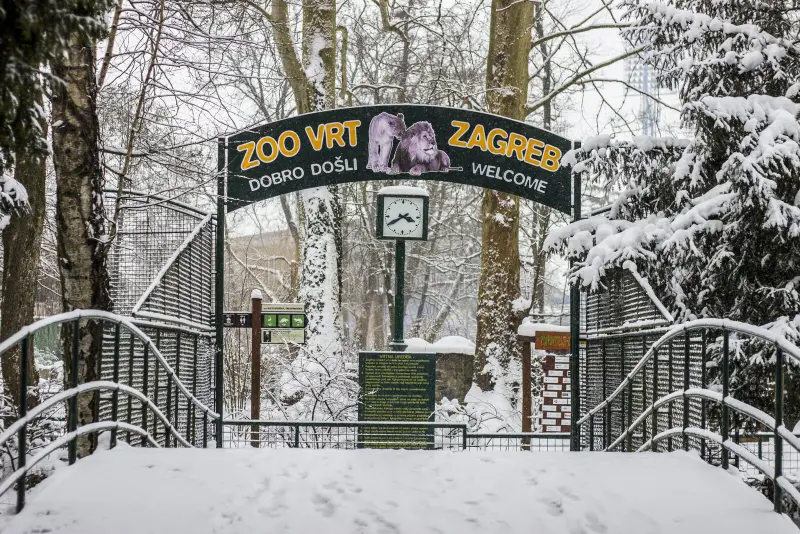
11. Maksimir Park & Zagreb Zoo
The English-Style Oak Forest Oasis of Glacial Lakes and Swiss Pavilions
Spreading out across a massive, 316-hectare natural plot on the eastern edge of the urban transit lines, this historic public parkland is a pristine slice of wilderness within the city.
- What it is famous for: Being one of the oldest public landscape parks in Europe, designed in 1794 in the classic English landscape garden style. Maksimir features centennial oak forests, peaceful walking trails, and five artificial glacial lakes linked by streams. Tucked neatly into an island sector within the southern lakes is the Zagreb Zoo, allowing families to stroll past historic Swiss timber chalets and stone belvedere viewpoints while observing diverse wildlife enclosures.