
Seville (Sevilla), the sun-drenched capital of Andalusia, is a city where Christian and Moorish history are permanently intertwined.
Located along the banks of the Guadalquivir River, this ancient metropolis is the passionate heart of southern Spain—famous for its dramatic flamenco, fragrant orange trees, and massive monumental architecture.
As the gateway to the New World during Spain’s Golden Age, Seville amassed unbelievable wealth, leaving behind a sprawling historic center packed with UNESCO World Heritage sites.
Yet, the real magic of Seville lies in its sensory rhythm: the clatter of horse-drawn carriages, the aroma of sizzling tapas, and the warm, open-air socializing that fills its winding, hidden alleys well into the night.
Here are the top 11 famous places to visit in Seville and why they are unforgettable.
1. Real Alcázar of Seville
The Crown Jewel of Mudéjar Royal Grandeur
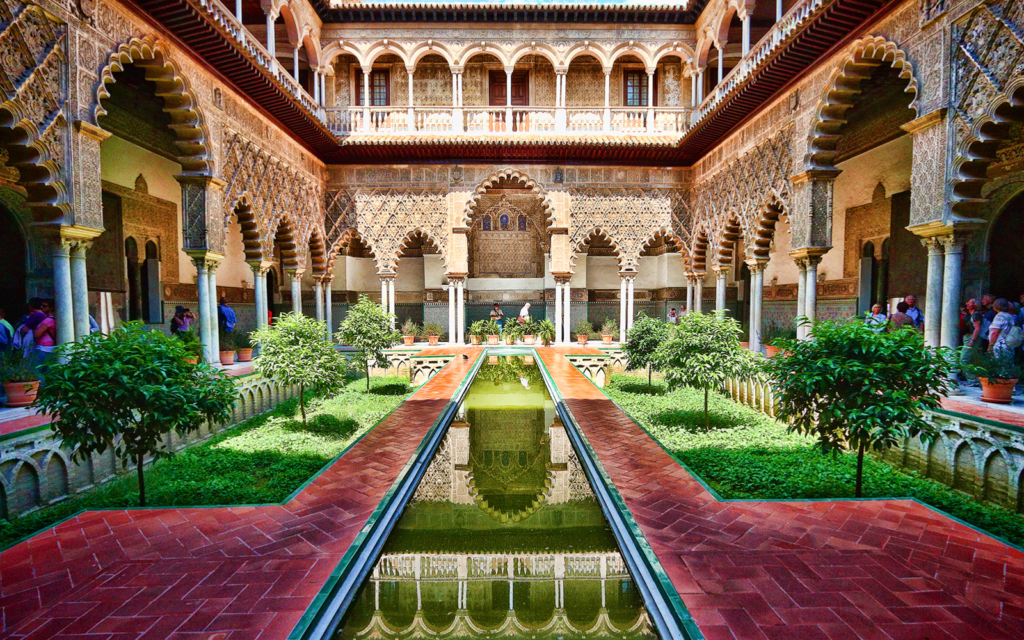
Dating back to the 10th century as a Moorish fort, the Real Alcázar is the oldest royal palace complex still in active use in Europe, serving as the Seville residence for the Spanish royal family.
- What it is famous for: Its spectacular Mudéjar architecture (Moorish-style design built under Christian rule). Visitors walk through the jaw-dropping Courtyard of the Maidens (Patio de las Doncellas), marvel at the intricately carved gold dome of the Ambassadors’ Hall, and wander across acres of lush, terraced royal gardens filled with fountains, pavilions, and roaming peacocks.
2. Seville Cathedral & La Giralda
The Colossal Epicenter of Imperial Faith
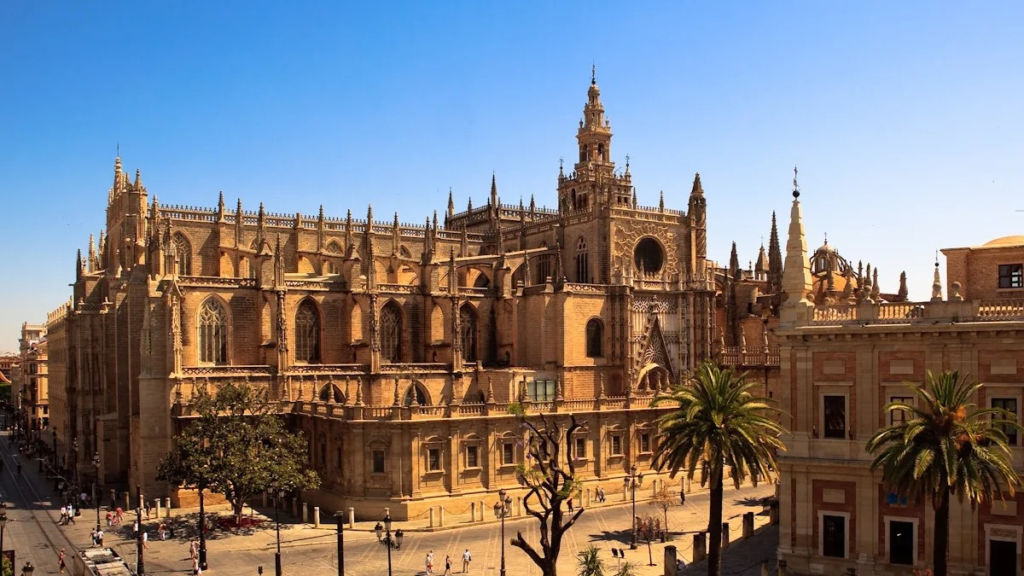
Constructed during the 15th and 16th centuries to demonstrate the city’s immense wealth, this breathtaking monument is officially the largest Gothic cathedral in the world.
- What it is famous for: The iconic La Giralda bell tower and the Tomb of Christopher Columbus. La Giralda was originally built as the minaret for the great Almohad Mosque that once stood here; instead of stairs, visitors walk up a series of 34 interior ramps designed so the muezzin could ride a horse to the top for the call to prayer.
3. Plaza de España
A Renaissance Masterpiece of Tile and Stone
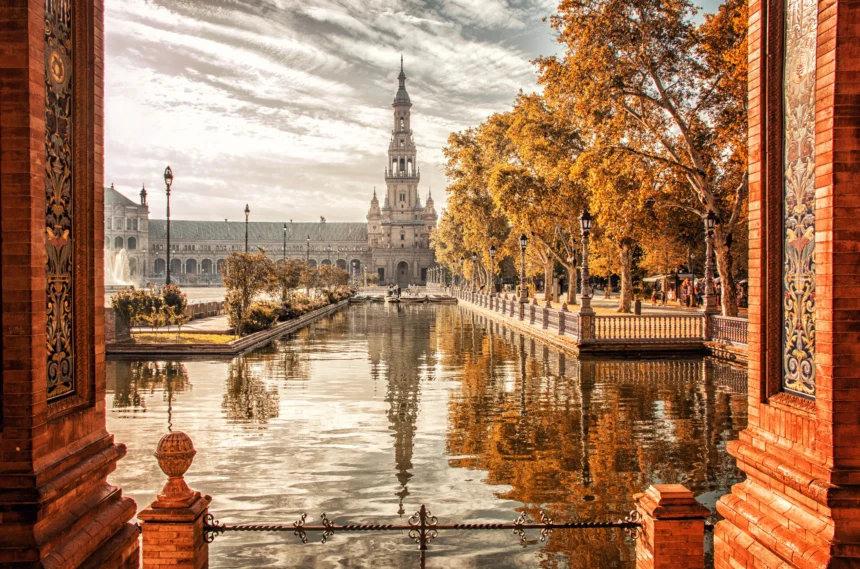
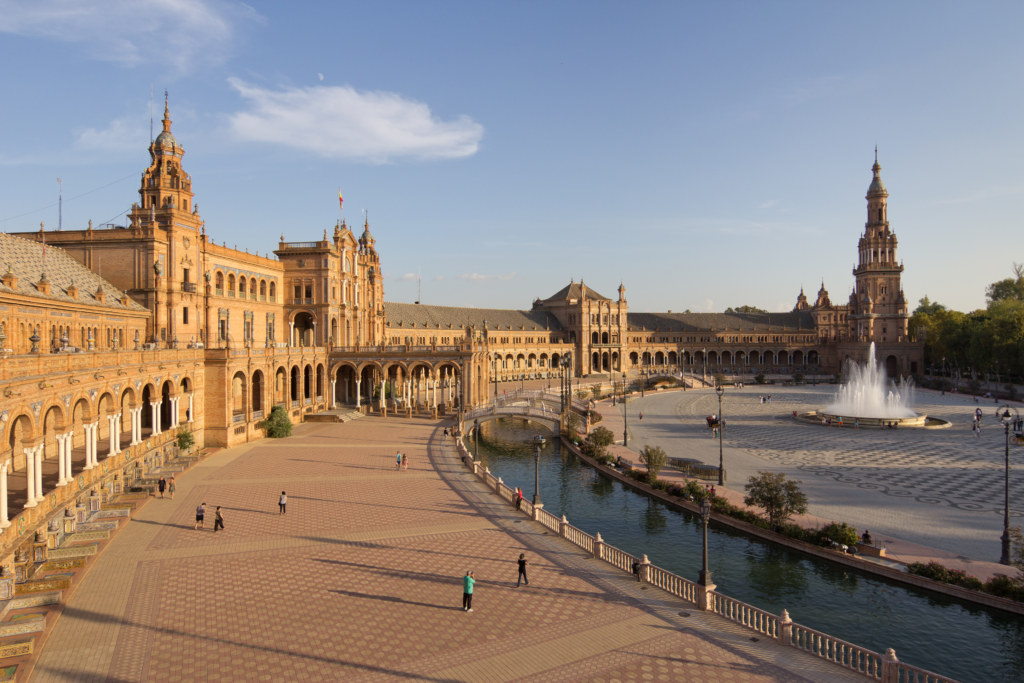
Built in the southern edge of the city for the Ibero-American Exposition of 1929, this colossal, semi-circular brick pavilion wraps around a vast public plaza, blending Renaissance Revival and Neo-Mudéjar architectural styles.
- What it is famous for: Its 51 vibrant, tiled alcoves representing the provinces of Spain. Each alcove features detailed, painted ceramic tilework (azulejos) showing historic scenes and maps. A beautiful 500-meter canal flows smoothly through the plaza, allowing visitors to rent small rowboats to glide under ornate footbridges.
4. Barrio Santa Cruz
The Enchanting Maze of the Old Jewish Quarter
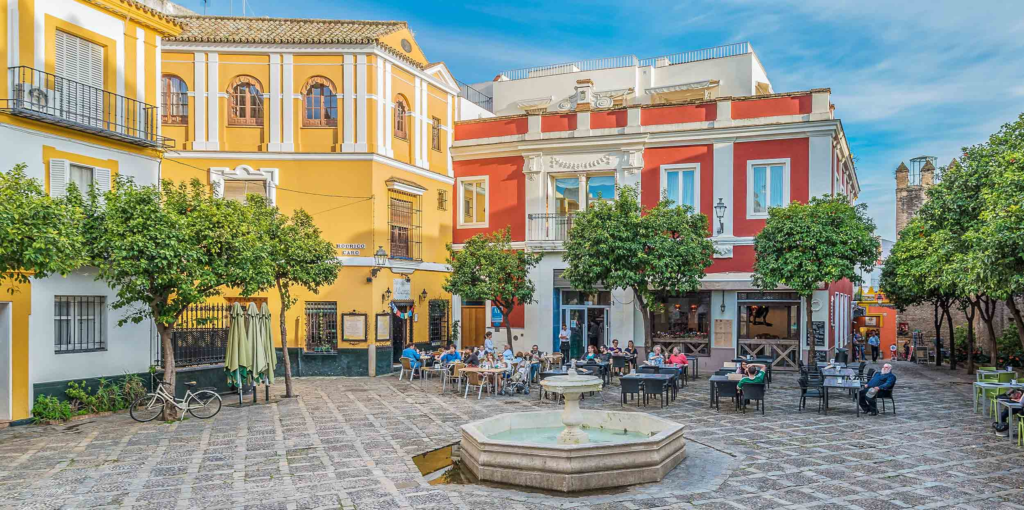
Bordering the eastern walls of the Alcázar, this dense, atmospheric neighborhood is Seville’s historic historic Jewish quarter, defining the quintessential image of old Andalusia.
- What it is famous for: Its whitewashed alleys, hidden plazas, and flower-filled courtyards. The streets are purposefully narrow and twisting to provide natural shade against the intense Andalusian summer heat. Visitors gather under the orange trees of Plaza de Doña Elvira or explore the iron gates of hidden residential patios dripping with bright pink bougainvillea.
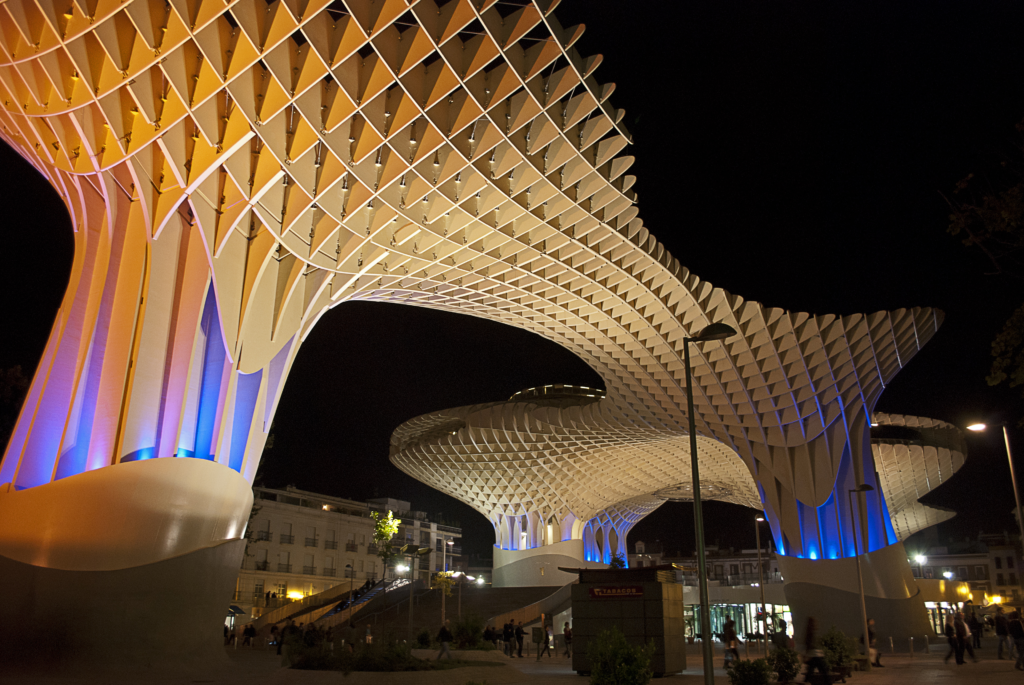
5. Setas de Sevilla (Metropol Parasol)
The Futuristic Wooden Canopy of the Old Square
Rising boldly over the historic Plaza de la Encarnación, this controversial architectural landmark, completed in 2011 by German architect Jürgen Mayer, stands as the largest wooden structure on earth.
- What it is famous for: Its waffle-like, organic design resembling giant mushrooms (Setas). Built from thousands of interlocking timber beams, the structure features an elevated panoramic walkway winding across its roof, offering spectacular, undulating views of the city skyline, alongside an underground museum protecting ancient Roman ruins found during construction.
6. Triana Neighborhood
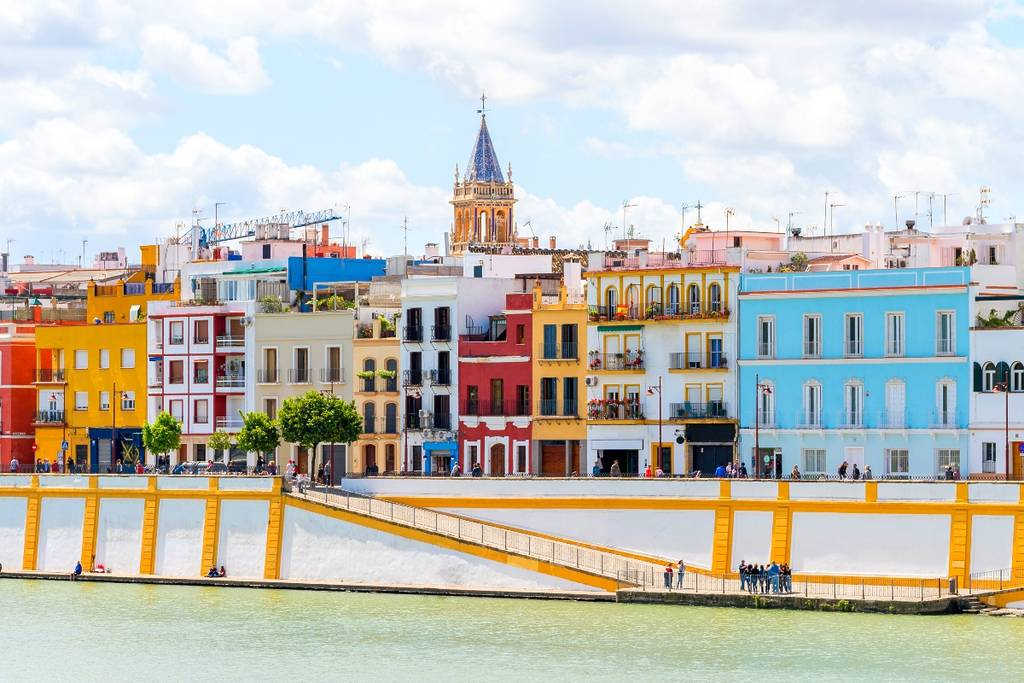
The Fierce, Independent Cradle of Flamenco
Located directly across the Guadalquivir River via the historic Isabel II Bridge, Triana is a vibrant, colorful barrio historically isolated from the main city, fostering a fiercely independent cultural identity.
- What it is famous for: Being the traditional home of Seville’s legendary gitano (gypsy) community, flamenco artists, and ceramicists. The neighborhood features the vibrant waterfront street Calle Betis, filled with lively seafood bars, and tiny, authentic flamenco venues (tablaos) where the art form is performed with raw, uncommercialized passion.
7. Plaza de Toros de la Maestranza
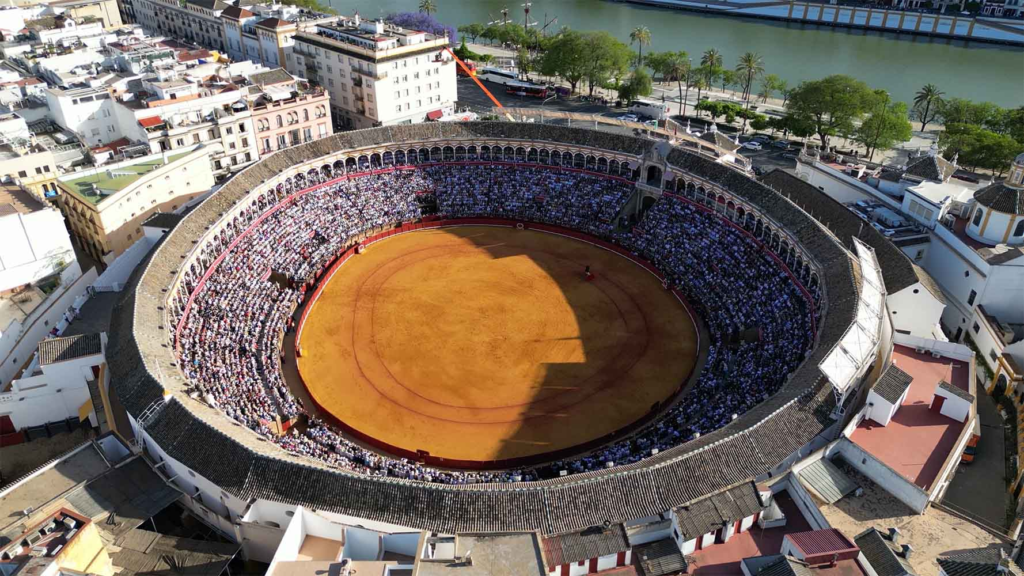
The Historic Cathedral of Spanish Bullfighting
Constructed over a span of 120 years beginning in 1761, this beautiful white-and-ocher arena is one of the oldest, most prestigious, and architecturally significant bullrings in Spain.
- What it is famous for: Its stunning Baroque facade and profound sporting history. Even for those who do not watch the events, the stadium offers an excellent museum exploring the deep-seated cultural history, evolution, and art surrounding bullfighting in Spanish identity, including an elegant chapel where matadors pray before entering the ring.
8. Torre del Oro (Tower of Gold)
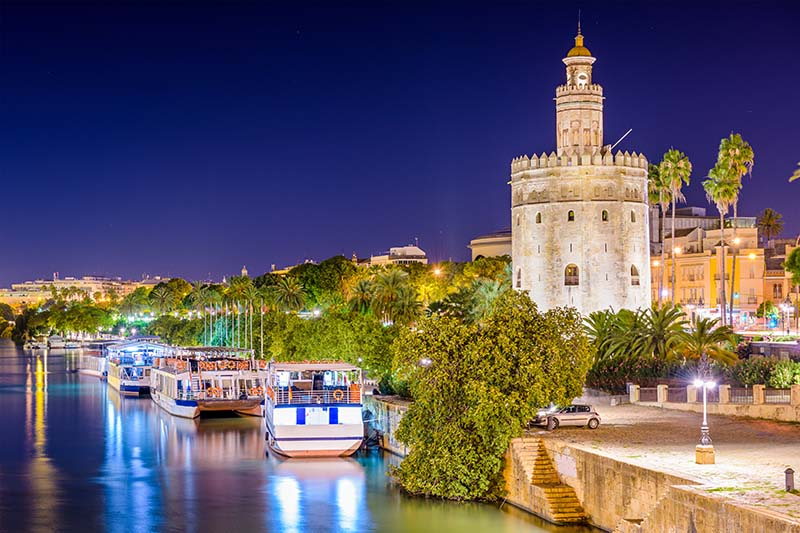
The Ancient Riverside Sentinel of the Port
This dodecagonal (12-sided) military watchtower rises beautifully right along the banks of the Guadalquivir River, originally built by the Almohad dynasty in the early 13th century to control access to the city’s bustling port.
- What it is famous for: Its historic defensive role and unique architectural layers. A heavy iron chain was once stretched across the river from the base of this tower to a twin tower on the opposite bank to stop enemy ships. Today, it houses a charming naval museum detailing Seville’s rich maritime history and offers panoramic river views from its top terrace.
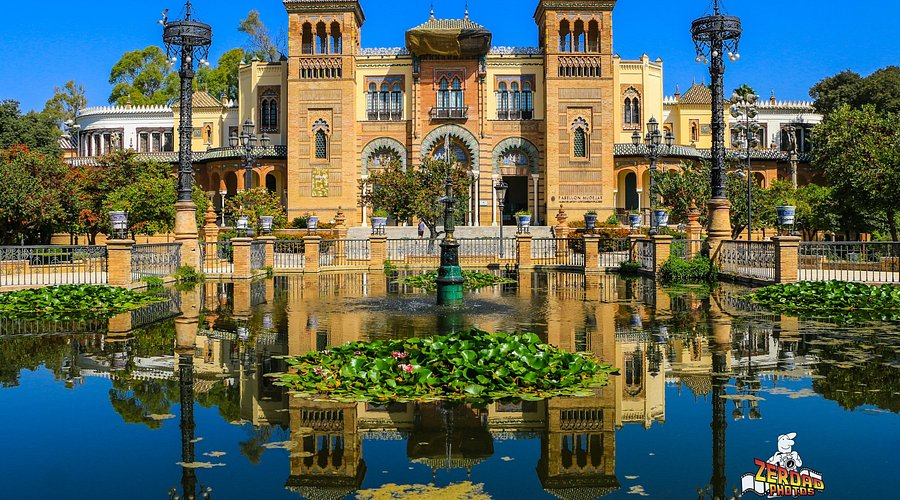
9. Maria Luisa Park (Parque de María Luisa)
The Exotic Botanical Sanctuary of Seville
Forming the principal green lung of the city, this sprawling, 100-acre public park was originally part of the private gardens of the Palace of San Telmo before being donated to the city in 1893.
- What it is famous for: Its romantic layout filled with Moorish-style fountains, ceramic benches, and exotic plants. Redesigned for the 1929 world fair, the park is a shaded paradise of Mediterranean pines, palms, and orange groves, interspersed with hidden lily ponds and tiled monuments dedicated to famous Spanish writers.
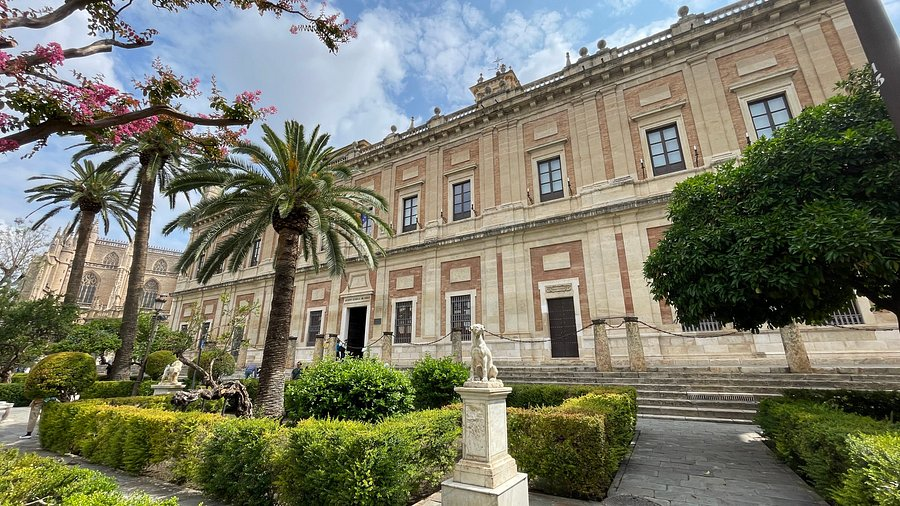
10. General Archive of the Indies (Archivo General de Indias)
The Treasure House of New World Discovery
Housed inside a remarkably clean, Renaissance building designed by Juan de Herrera right next to the cathedral, this UNESCO World Heritage institution was established in 1785 by King Charles III.
- What it is famous for: Preserving the complete, official administrative history of the Spanish Empire in the Americas. The archive holds roughly 43,000 archival volumes, including original diaries, maps, and letters hand-written by Christopher Columbus, Ferdinand Magellan, and Hernán Cortés, making it the most important repository of New World history on earth.
11. Casa de Pilatos
The Quintessential Andalusian Aristocratic Palace
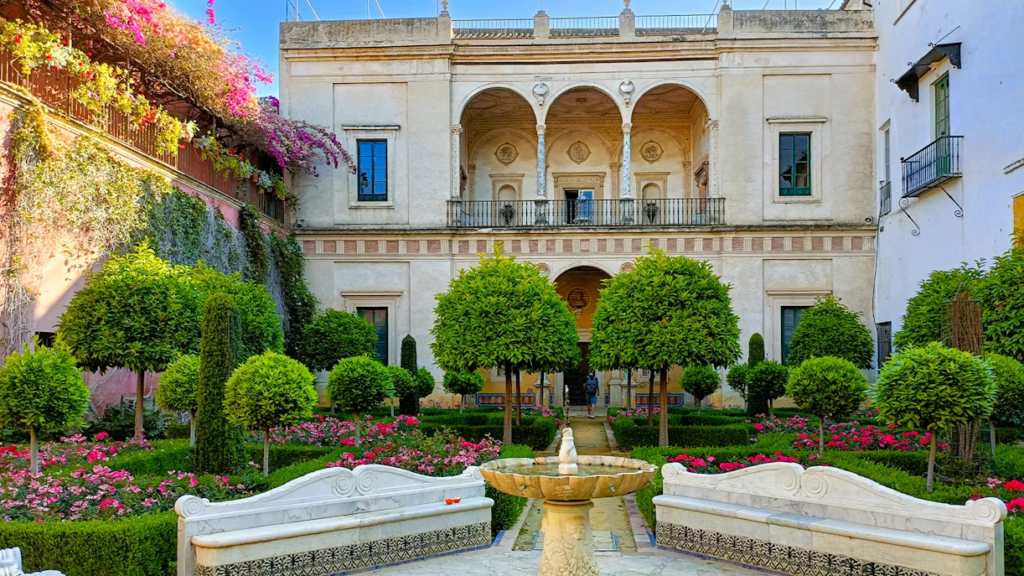
Located in the eastern half of the historic center, this stunning 16th-century palace is the permanent residence of the Dukes of Medinaceli, serving as the premier example of an Andalusian noble estate.
- What it is famous for: A masterful blend of Italian Renaissance architecture and Spanish Mudéjar style. The palace features a breathtaking central courtyard surrounded by marble columns and classic Roman statues, wrapped in some of the finest, most intricate 16th-century tile mosaics found anywhere in Spain.