
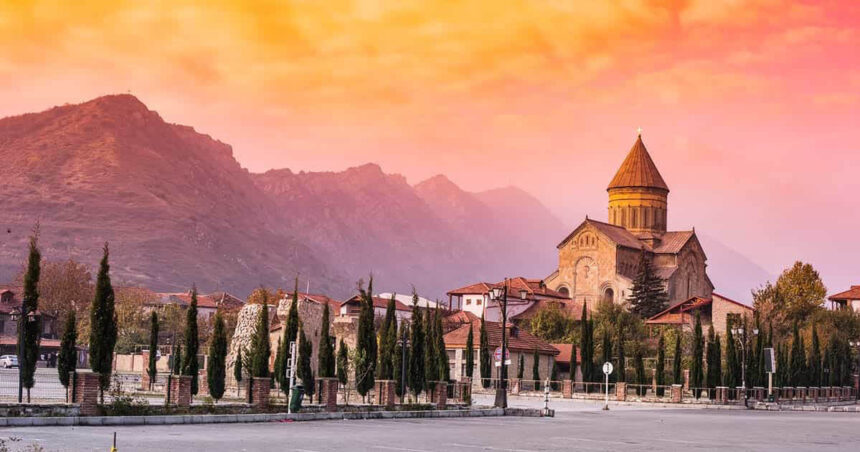
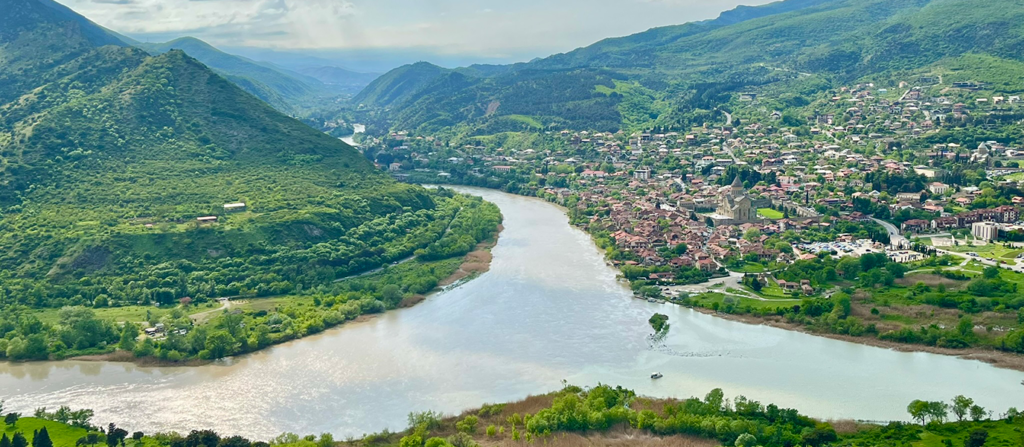
Mtskheta, sitting majestically at the scenic confluence of the rushing Mtkvari and Aragvi rivers in eastern Georgia, operates on a deeply spiritual, mountain-wrapped layout that marks it as the undisputed religious cradle of the nation.
Founded in the late 2nd millennium BC, it served as the ancient capital of the early Georgian Kingdom of Iberia from the 3rd century BC to the 5th century AD.
Today, located just 20 kilometers north of Tbilisi, the entire historic town is protected as a UNESCO World Heritage site.
Effortlessly matching its monumental, sand-colored medieval stone cathedrals with a quiet, red-roofed riverside village charm, Mtskheta acts as a living museum of Georgia’s soul.
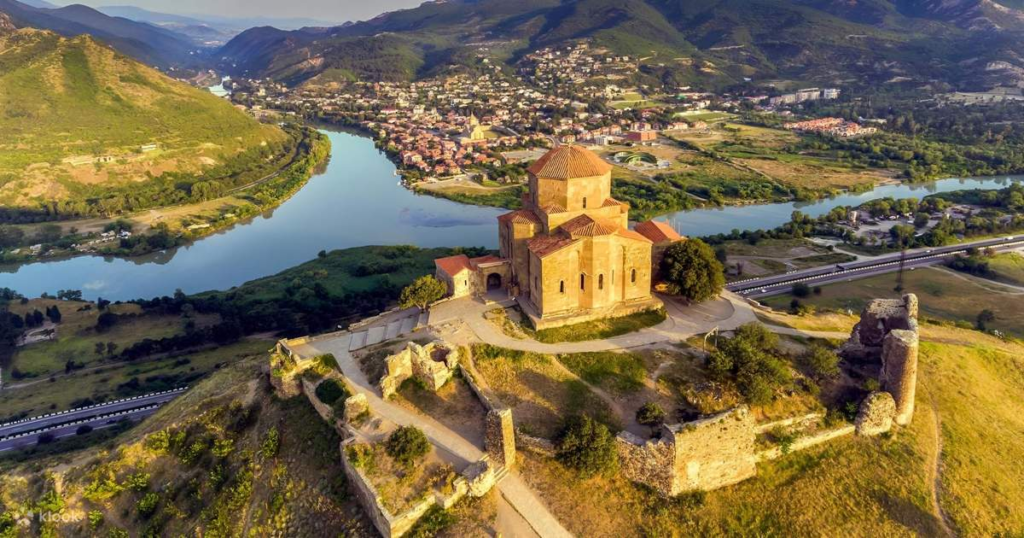
1. Jvari Monastery
The Mountaintop Stone Sentinel of Holy Cross Horizons
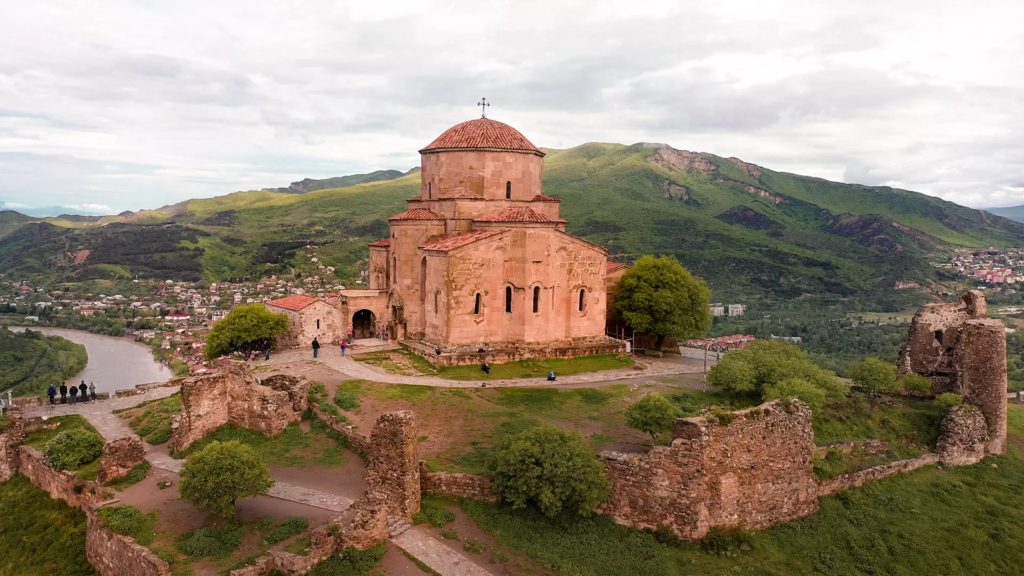
Perched spectacularly on the sheer rocky crest of a mountain directly overlooking the dramatic meeting of Mtskheta’s two rivers, this 6th-century monastery dominates the entire valley skyline.
- What it is famous for: Being the ultimate architectural masterpiece of the early medieval Caucasus and a symbol of national faith. Built between 590 and 605 AD on the exact spot where Saint Nino erected a massive wooden cross to symbolize the triumph of Christianity over paganism, its unique “tetraconch” (four-apsed) design influenced church building across the region. Visitors stand on the wind-swept cliff edges to marvel at the weathered stone reliefs and look down at the two contrasting blue-and-green river currents merging below.
2. Svetitskhoveli Cathedral
The Monumental Sandstone Vault of Christ’s Sacred Tunic
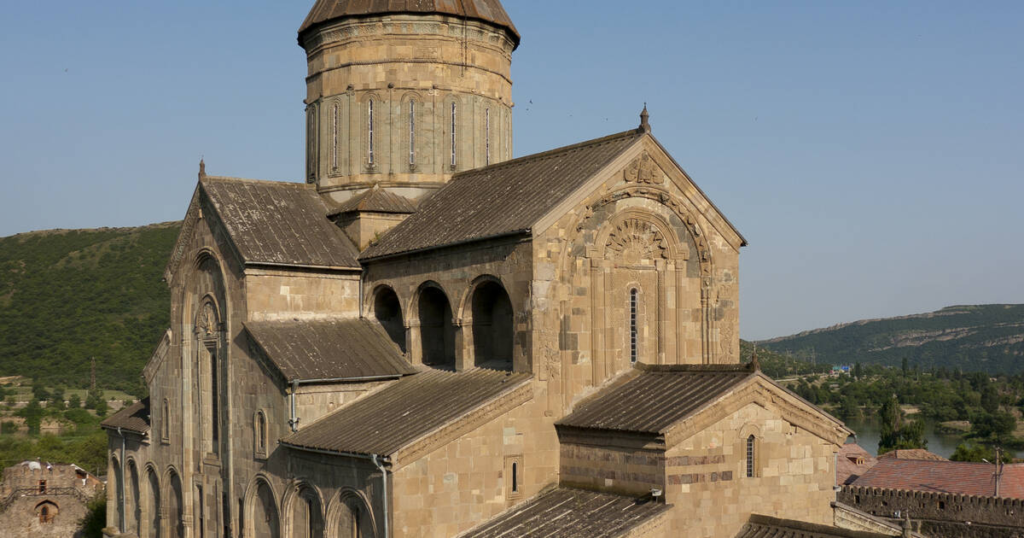
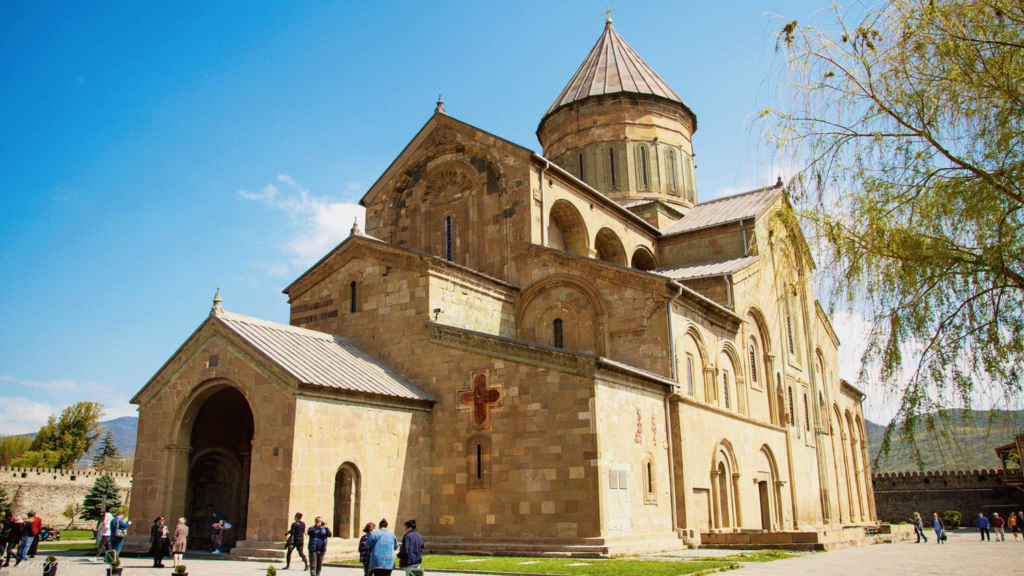
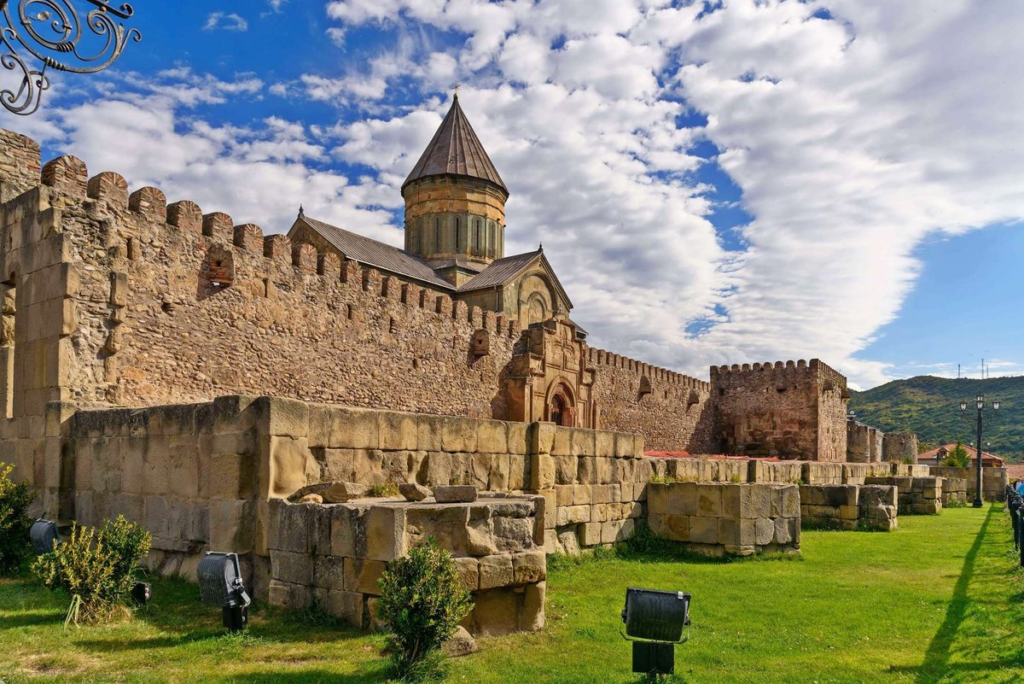
Dominating the walled civic heart of the historic town grid, this colossal 11th-century cathedral stands proud as the second-largest church building in Georgia and its most sacred site.
- What it is famous for: Being the final resting place of Christ’s Robe (Holy Tunic) and the burial site of Georgia’s greatest kings. Built by architect Arsukisdze between 1010 and 1029, the cathedral’s name translates to “The Living Pillar,” referencing a miraculous wooden column that aided its foundation. The soaring interior holds centuries of royal history, featuring a replica of Jerusalem’s Chapel of the Holy Sepulchre, dynamic frescoes of the Zodiac, and the royal tombstones of King Vakhtang Gorgasali and Heraclius II.
3. Samtavro Monastery Complex
The Royal Bramble Sanctuary of Saint Nino and Mirian Kings
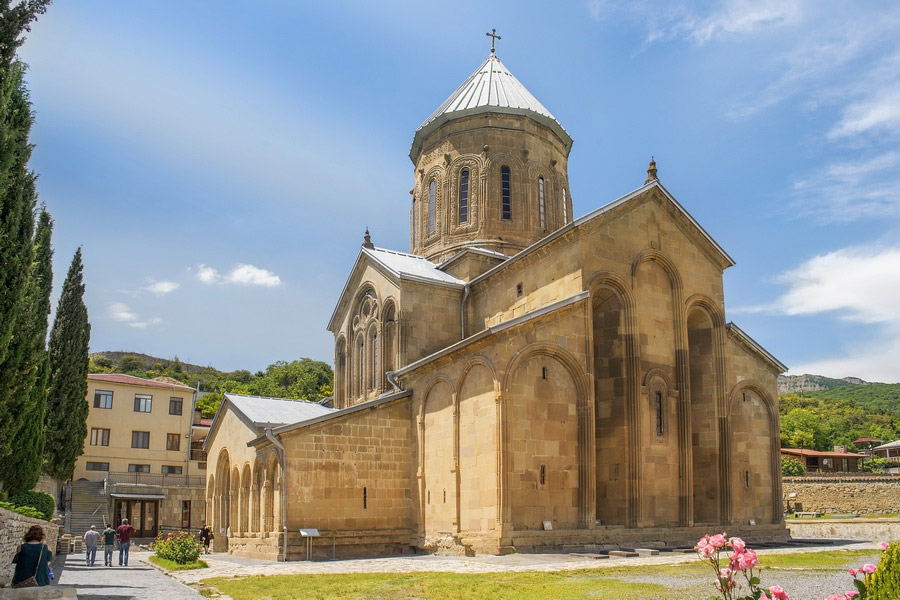
Tucked quietly into a large, peaceful courtyard grid just a short, cobblestone walk north of Svetitskhoveli, this active convent dates back to the early 4th century.
- What it is famous for: Housing the original tombs of King Mirian III and Queen Nana, the first Christian monarchs of Georgia. The complex features a beautifully detailed 11th-century domed church, a historic step-bell tower, and a tiny, ancient stone chapel built directly next to a wild blackberry bush. According to local lore, this exact bramble patch served as the humble home and prayer sanctuary of Saint Nino during her initial years converting the city.
4. Bebris Tsikhe (The Elder’s Fortress)
The Rocky Crag Gateway of Northern Pass Outposts
Perched prominently on a narrow, rocky ridge overlooking the northern highway bottleneck where the Aragvi River slices through the mountain valley, this ancient fortress guards the city’s borders.
- What it is famous for: Its weathered, semi-ruined defensive towers and its strategic role as an imperial gatekeeper. Originally constructed in the early centuries AD to protect Mtskheta from invading nomadic tribes descending from the northern Caucasus mountains, the fortress features thick, multi-tiered stone walls that blend smoothly into the natural crags. Visitors can scale the high stone ruins to get a look back down across the river valley.
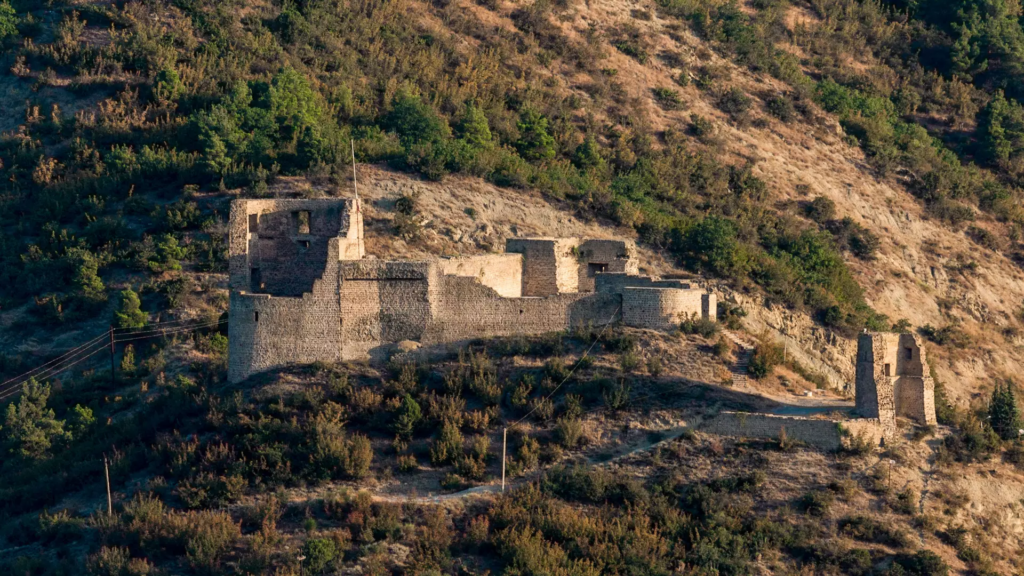
5. Armazi Fortress (Armaztsikhe)
The Forested Citadel Ruins of Pre-Christian Pagan Sun Kings
Hidden deep within the dense, rocky oak forests on the southern slopes of the Mtkvari River valley, these ancient archaeological ruins mark the original, pre-Christian seat of Iberian power.
- What it is famous for: Being the ancient acropolis dedicated to the pagan supreme idol Armazi, the god of fire and sun. Dating back to the 3rd century BC, this vast complex once held royal palaces, stone bathhouses, and thick defensive towers before it was razed by Arab invaders in the 8th century. Today, hikers can explore the stone foundations of the pagan citadel scattered across the ridges, offering a look into Georgia’s pre-Christian past.
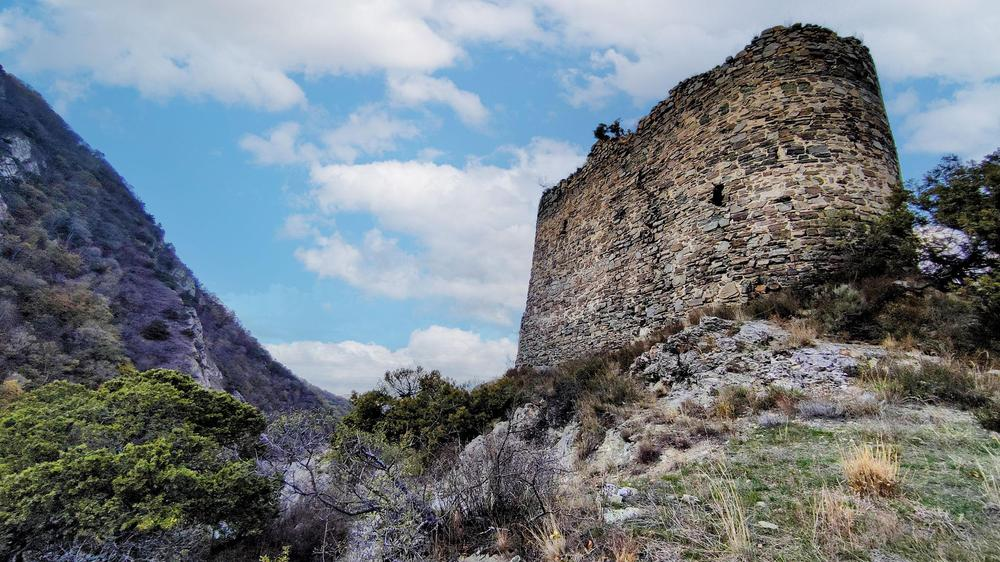
6. Shio-Mgvime Monastery
The Limestone Canyon Sanctuary of Cave-Dwelling Monks
Tucked away inside a deep, dramatic limestone karst canyon roughly 12 kilometers west of Mtskheta, this isolated monastic retreat looks like it was carved straight out of the desert cliffs.
- What it is famous for: Its dark, 6th-century underground cave cells and the historic dome church of Saint Shio. Founded by the Assyrian Father Shio, who spent his final years living in a deep, 12-meter-deep cave hole, the monastery became a massive spiritual center housing hundreds of monks. The complex features a unique layout where individual cave openings can be seen dotted across the sheer limestone cliffs, while the central stone chapels house early Christian cave art.
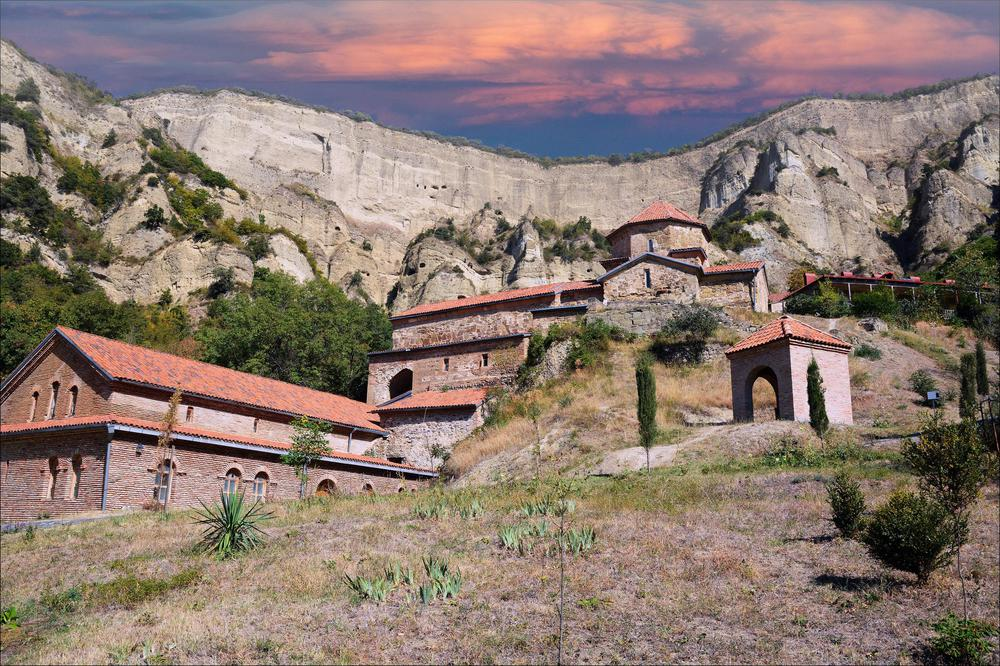
7. The Pompey Bridge Ruins
The Submerged Roman Blocks of Imperial Legion Paths
Slicing silently beneath the moving currents of the Mtkvari River near the southern entrance of the town limits, these hidden stone blocks carry a heavy imperial lineage.
- What it is famous for: Being the ancient stone bridge built by Roman general Pompey the Great during his Caucasian campaign in 65 BC. For nearly two millennia, this vital river crossing served as the primary trade gateway for merchants traveling the Silk Road. Though a modern dam submerged the bridge in 1926, its ancient stone arches and foundations still dramatically emerge from the water level during dry seasons when the river drops.
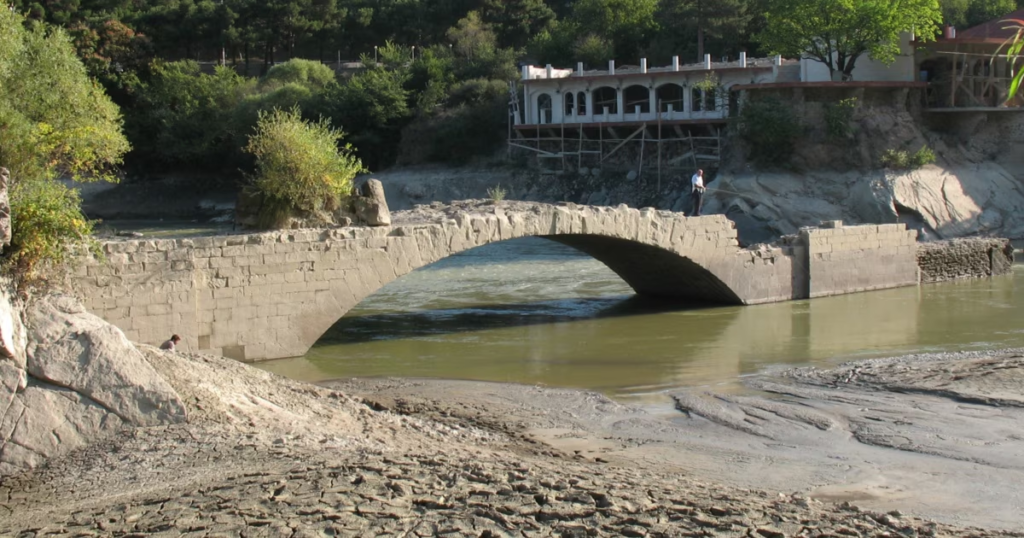
8. Antioche Church
The Intimate Riverside Stone Hall of the First Christian Baptisms
Sitting quietly at the exact, green point of land where the Aragvi River empties straight into the wider Mtkvari currents, this modest, single-nave stone hall is a hidden gem.
- What it is famous for: Being one of the oldest stone structures in Mtskheta, commemorating the site of early mass baptisms. Built in the late 4th to early 5th century out of golden limestone blocks to celebrate the city’s conversion, it was partly burned by Persians before being restored. The intimate, dark interior features beautifully preserved fragments of early medieval wall murals and offers a peaceful, crowd-free sanctuary overlooking the moving waters.
9. Armazi Valley & Salobie
The Gastronomic Clay-Pot Sanctuary of Traditional Imeretian Beans
Spreading out along the scenic, tree-shaded riverbanks just south of the historic center, this active culinary valley corridor is famous across Georgia as a premier foodie stop.
- What it is famous for: Being the legendary birthplace of Lobio—Georgia’s iconic spiced bean stew baked in traditional clay pots. For generations, travelers making the journey from Tbilisi to Mtskheta have pulled over in this valley to feast at rustic, open-air riverfront taverns like Salobie. The rich, savory beans are slow-cooked with coriander, garlic, and walnuts, and are traditionally served piping hot alongside crispy cornbread cakes (Mchadi) and local pickled vegetables.
10. The Archaeological Museum-Reserve of Mtskheta
The Glass Showcase Matrix of Antique Gold and Iberian Wealth
Housed inside a sleek, modern architectural pavilion complex in the heart of the town blocks, this state-of-the-art museum protects the priceless underground discoveries of the region.
- What it is famous for: Its stunning collection of ancient Iberian gold jewelry, Roman coins, and antique burial assets. Because Mtskheta was a primary trading nexus, its soil has yielded rich treasures. Visitors can walk through climate-controlled galleries to view hyper-detailed gold earrings, filigree rings, ceremonial daggers, and intact glass perfume jars dating back over 2,500 years, charting the city’s evolution from a pagan trading powerhouse to a Christian capital.
11. Ghvtismshobeli Church of Elia
The Wind-Swept Ridge Hermitage of Solitary Mountain Paths
Perched high on a steep, isolated mountain peak rising sharply on the eastern banks of the Aragvi River, this tiny stone church looks out over the landscape like a silent watchman.
- What it is famous for: Its isolated, high-altitude location and its panoramic looks across Jvari and Mtskheta. Accessible via a winding dirt hiking trail up the ridge, this small, single-nave chapel provides a quiet, meditative escape far above the tourist buses. The wind-swept stone grounds offer a unique perspective on the region’s topography, allowing travelers to look straight across the valley at Jvari Monastery standing on its matching peak opposite.