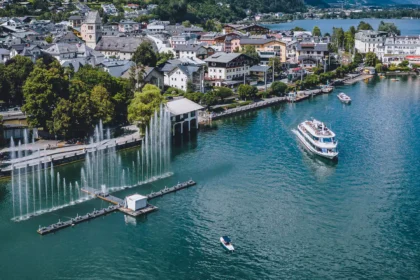

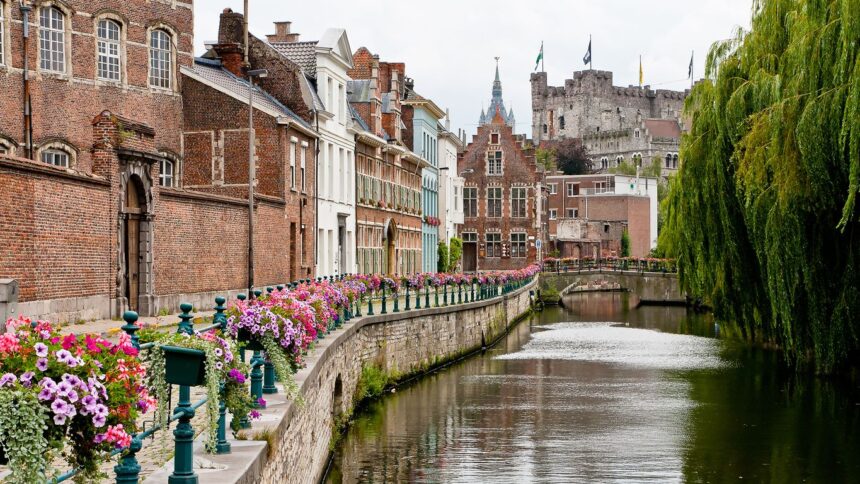
Ghent, sitting dynamically at the scenic confluence of the Lys and Scheldt rivers in northwestern Belgium, operates on a sweeping, water-woven layout that fuses raw medieval power with a fierce, independent spirit.
Its immense wealth was built on a booming, continent-spanning textile trade, driven by a powerful merchant class that frequently rebelled against royal overlords to protect their hard-won civil liberties and municipal rights.
Today, Ghent is East Flanders’ largest city, effortlessly matching its meticulously preserved historic stone architecture with a pulsing, bicycle-friendly university population.
Famous for its mustard-spiced stews (Gentse Waterzooi), purple cuberdon candies, roaring student-filled canal docks, and a magical nighttime illumination scheme that sets the stone facades aglow.
1. Graslei & Korenlei
The Mirroring Quays of Renaissance Guild Pride and Canal Culture
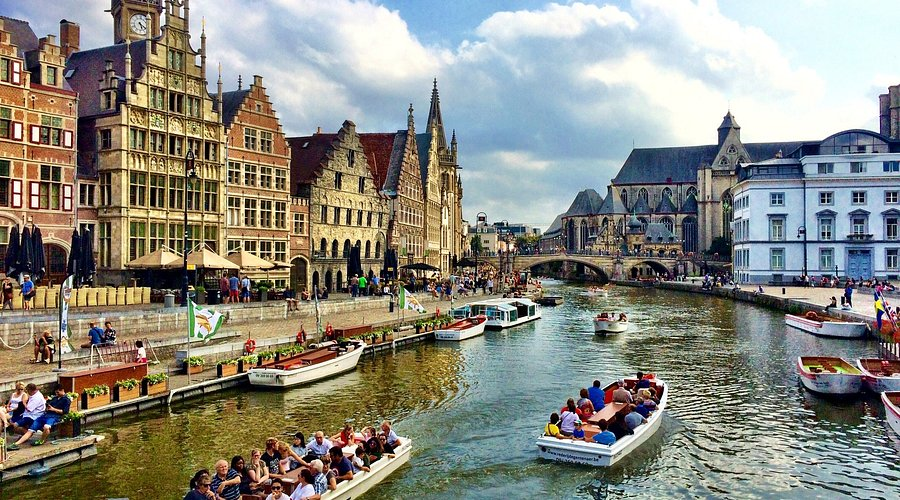
Slicing directly through the historic core along the banks of the Lys River, these two opposing pedestrian quays function as Ghent’s premier open-air social arena.
- What it is famous for: Their spectacular row of preserved medieval, Gothic, and Renaissance gabled guildhouses. Facing each other across the moving water, the Graslei (Vegetable Quay) and Korenlei (Corn Quay) hold structures that date back to the 12th century, including the historic Free Boatmen’s Hall and the tiny Toll House. At sunset, hundreds of locals and travelers gather on the stone steps to drink Belgian beers, while the brilliantly illuminated stone facades cast shimmering, historic reflections onto the river.
2. Gravensteen (The Castle of the Counts)
The Moated Stone Fortress of Defensive Turrets and Crusader Might
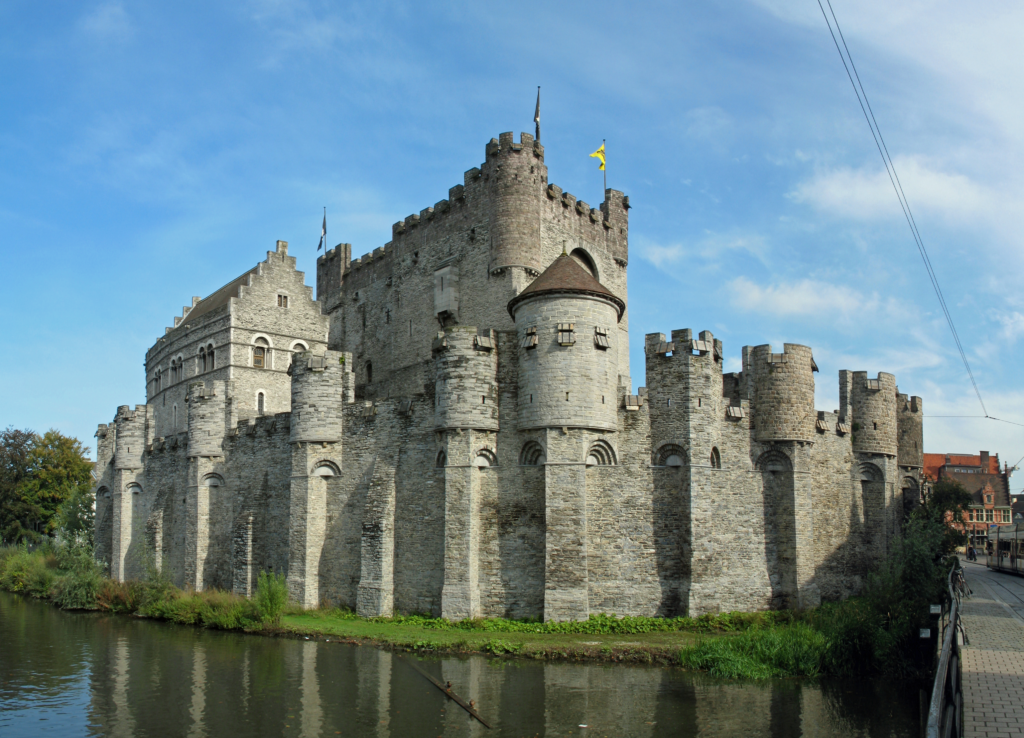
Rising like a monumental gray stone island directly out of the city’s central canal junctions, this imposing, heavily fortified 12th-century castle stands as the only surviving medieval fortress in Flanders with an intact defense system.
- What it is famous for: Its intact defensive moat, soaring battlements, and a chilling historical museum of torture instruments. Commissioned by Count Philip of Alsace in 1180, the castle was designed to project absolute royal dominance over the unruly city merchants. Visitors can cross the stone drawbridge to climb the massive keep tower, walk along the crenellated parapets for sweeping urban views, and explore vaulted chambers holding medieval crossbows and execution weapons.
3. Saint Bavo’s Cathedral (Sint-Baafskathedraal)
The Soaring Gothic Vault of Van Eyck’s Mystic Lamb Altar
Commanding the eastern boundary of the city’s central square network, this monumental cathedral features a striking mix of heavy Romanesque foundations and soaring, 89-meter-high late-Gothic brick masonry.
- What it is famous for: Housing The Adoration of the Mystic Lamb (The Ghent Altarpiece) by Jan and Hubert van Eyck. Completed in 1432, this multi-panel masterpiece is globally recognized as one of the most influential and frequently stolen artworks in human history. Displayed inside a high-security visitor capsule, the painting is celebrated for its revolutionary use of oil glazes, hyper-detailed botanical renderings, and deep spiritual symbols. The cathedral also protects a grand Rococo oak pulpit and a masterpiece painting by Peter Paul Rubens.
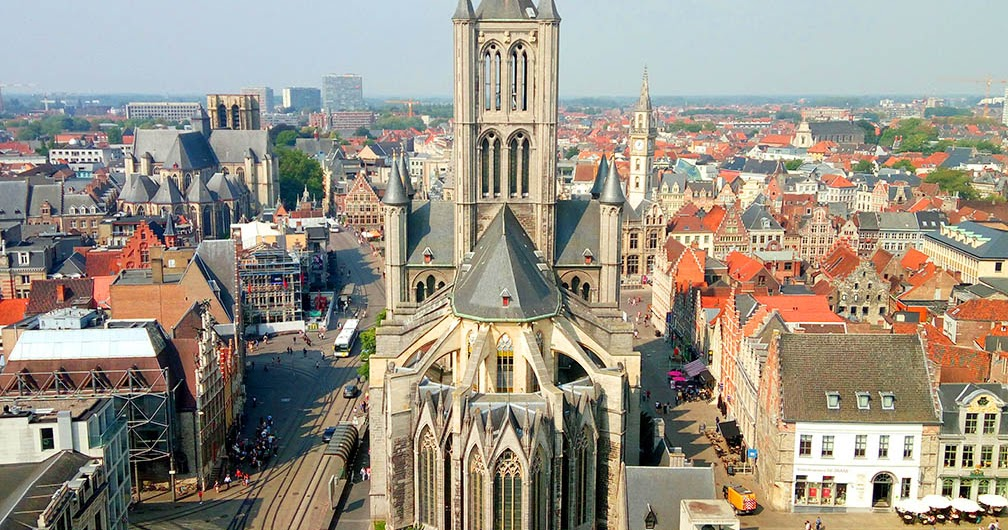
4. The Ghent Belfry (Belfort)
The Mighty Stone Watchtower of Civic Liberty and Fiery Dragons
Soaring 91 meters into the clouds between Saint Bavo’s Cathedral and Saint Nicholas’ Church, this elegant limestone tower stands as the middle spire in Ghent’s iconic three-tower skyline.
- What it is famous for: Being the ultimate UNESCO-listed symbol of the city’s medieval independence and housing a massive 54-bell carillon. Built in the 14th century, the Belfry served as a watchtower and a safe repository for the town’s charters of privilege. The tower is crowned by a legendary copper dragon weather vane that has kept watch over the town since 1377. Visitors can ride a lift to the belfry gallery to see the giant copper drums of the automated music carillon spin while enjoying a panorama over the old town roofs.
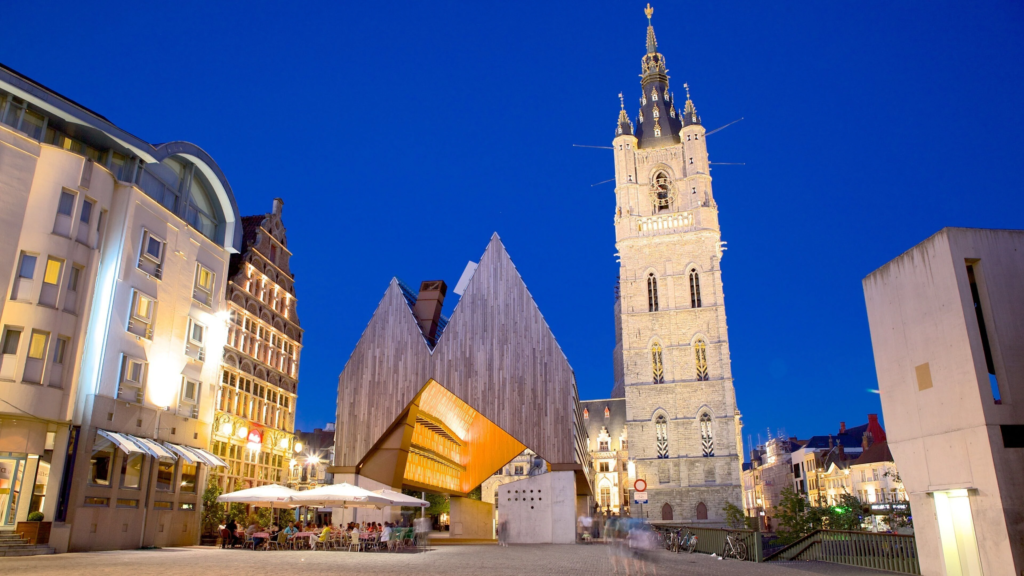
5. Saint Michael’s Bridge (Sint-Michielsbrug)
The Panoramic Stone Postcard of the Three Spire Skyline
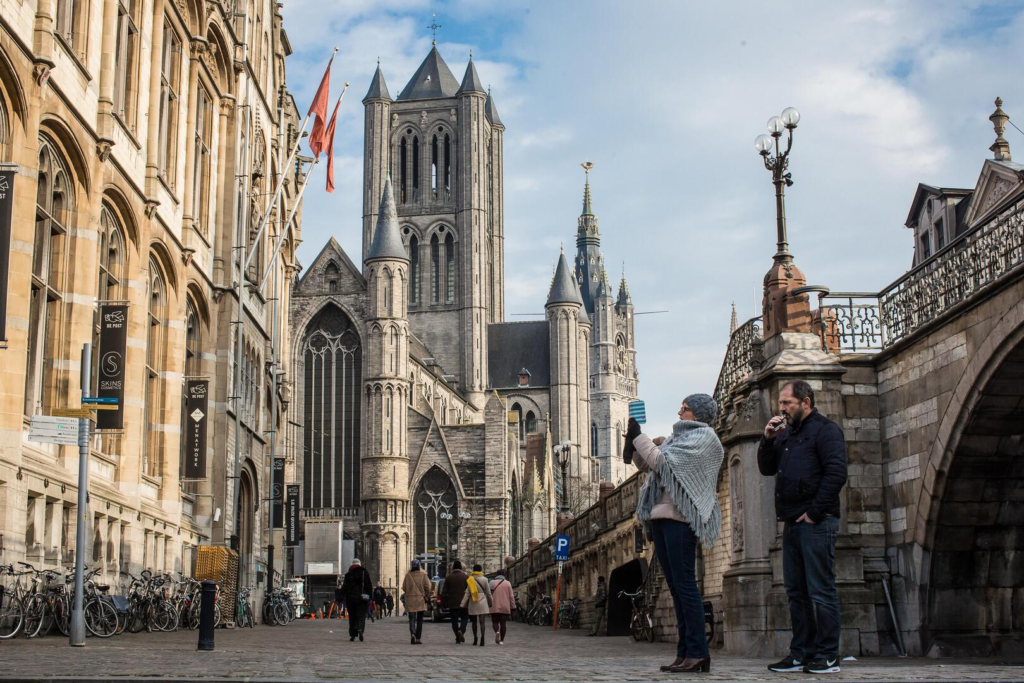
Arching gracefully across the Lys River just a few yards south of the guild quays, this stone architectural bridge serves as Ghent’s definitive panoramic viewing platform.
- What it is famous for: Offering the only viewpoint in the city where you can see all three iconic medieval spires lined up in a single row. Standing on the crest of the bridge treats travelers to a postcard view: looking east, the spires of Saint Nicholas’ Church, the Belfry, and Saint Bavo’s Cathedral step out in perfect geometric alignment. The bridge also offers looks down at the boat moorings of the Graslei, making it the most coveted photography spot in East Flanders.
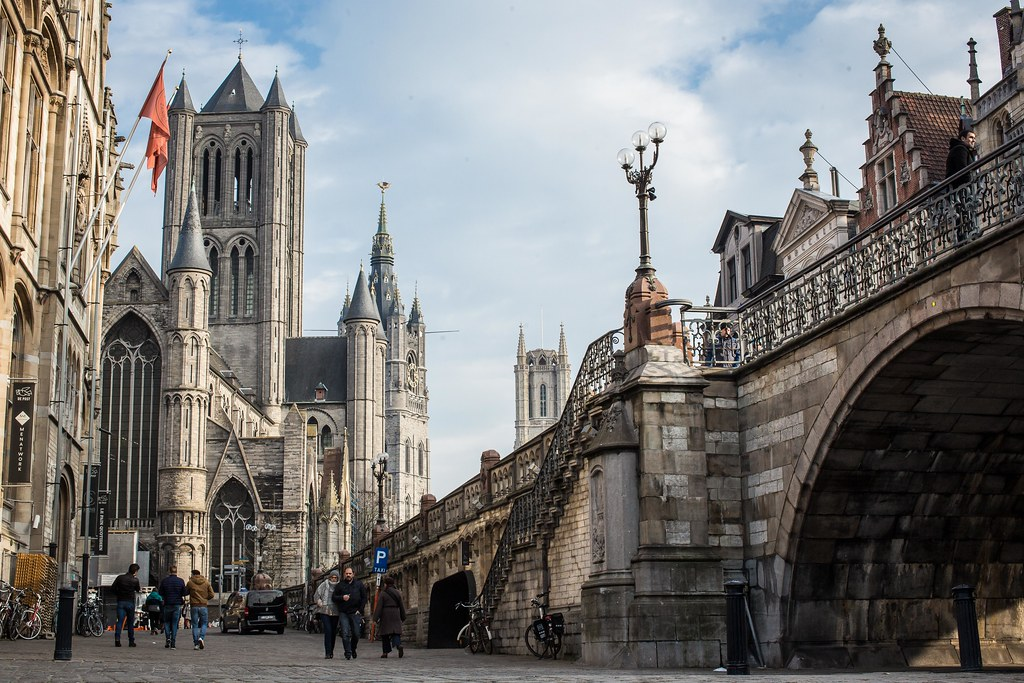
6. Patershol
The Labyrinthine Culinary Sanctuary of Cobblestone Lanes
Tucked quietly beneath the northern defensive walls of the Gravensteen castle, this ancient, ultra-compact residential neighborhood is built on an unchanged 14th-century street grid.
- What it is famous for: Its narrow, winding cobblestone alleys lined with brick artisan homes and world-class restaurants. Once a thriving district for medieval lawyers and weavers, Patershol has transformed into the gastronomic beating heart of Ghent. The historic brick facades hide a dense collection of cozy culinary spots, ranging from traditional Flemish taverns serving sweet Stoverij (beef beer stew) to avant-garde contemporary tasting rooms.
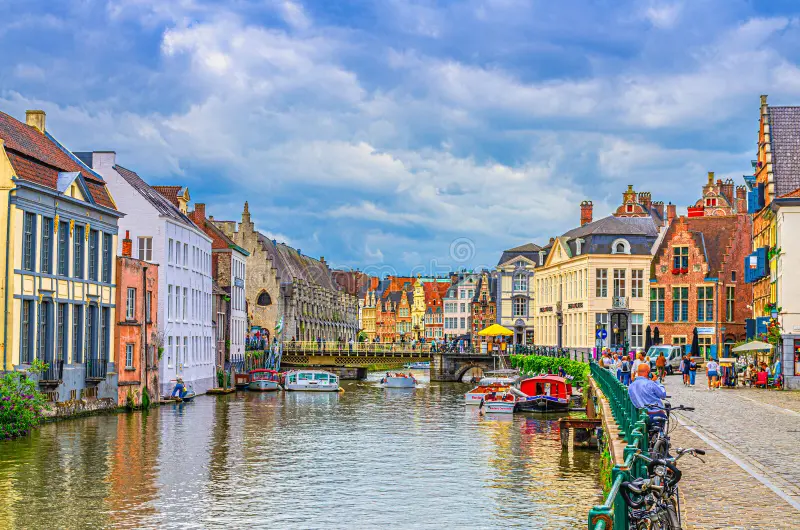
7. The City Pavilion (Stadshal)
The Bold Geometric Canopy of Slotted Timber and Structural Steel
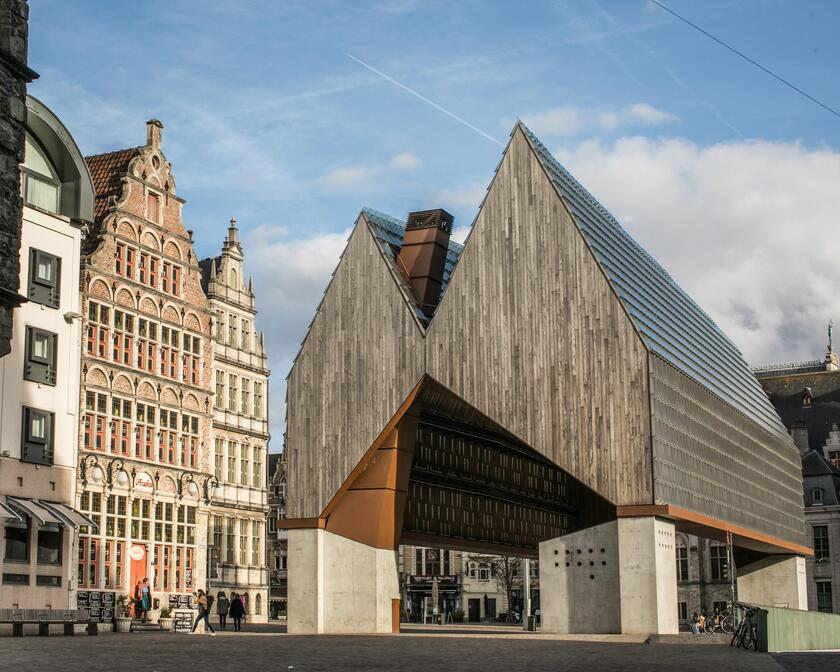
Dominating the open public space of the Poeljemarkt square between the historic Belfry and the Town Hall, this striking, 40-meter-long contemporary canopy stands as a bold statement of 21st-century architectural engineering.
- What it is famous for: Its controversial avant-garde design featuring a dual-pitched wooden roof slashed by 1,400 small glass window slots. Designed by Robbrecht en Daem and Marie-José Van Hee (completed in 2012), the structure references traditional gabled roofs but executes them via a structural steel core wrapped in warm, protective wood panels. The open-air hall below hosts public concerts, weekly dance events, and street markets, effortlessly bridging old stone heritage with a new design edge.
8. Saint Nicholas’ Church (Sint-Niklaaskerk)
The Blue-Stone Sentinel of Scheldt Gothic Architectural Grace
Anchoring the bustling commercial hub of the Korenmarkt square, this monumental 13th-century house of worship stands as an outstanding example of the regional Scheldt Gothic style.
- What it is famous for: Its unique central lantern tower and historic construction out of deep blue-gray Tournai stone. Unlike traditional churches where the bell tower sits over the main entry doors, this structure positions its massive tower directly over the central transept crossing, allowing natural light to flood straight down into the nave. The interior is also celebrated for holding a world-class, romantic pipe organ built by the legendary French master Aristide Cavaillé-Coll.
9. Ghent Town Hall (Stadhuis)
The High-Contrast Architectural Matrix of Gothic and Renaissance Styles
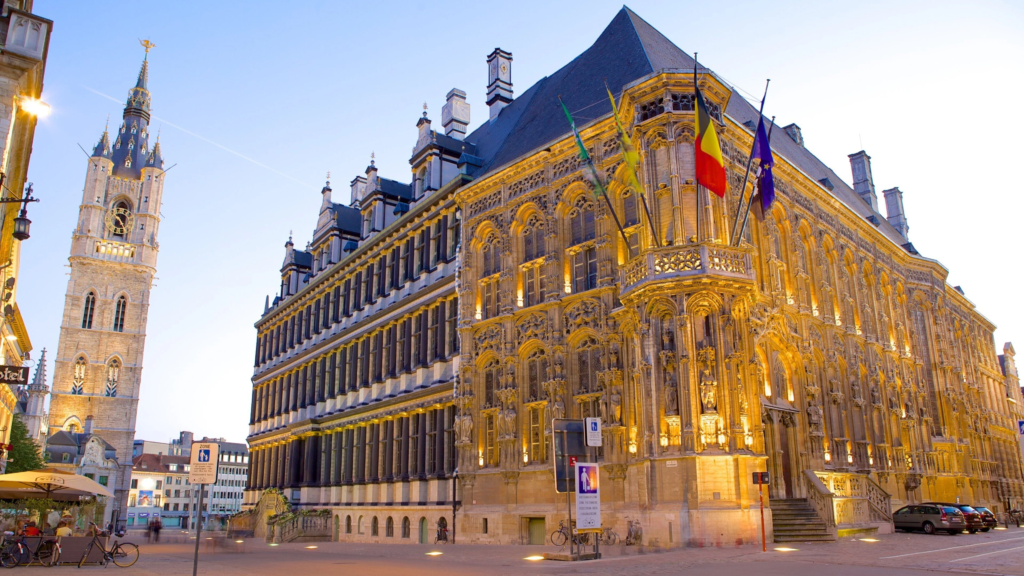
Occupying a massive, commanding corner block at the intersection of the Botermarkt and Hoogpoort lanes, this grand civic palace is a striking exercise in architectural schizophrenia.
- What it is famous for: Its bizarre, high-contrast split design dividing an ornate late-Gothic wing from a rigid Italianate Renaissance wing. Because construction was halted by religious wars in the 16th century, the building shows off two completely different design eras side-by-side. The older facade is covered in elaborate stone carvings, niches, and pointed arches, while the later tract features clean, classical columns and rows of uniform marble window frames that display the evolving tastes of the city’s rulers.
10. The Werregarenstraat (Graffiti Street)
The Ever-Changing Urban Canvas of Neon Spray-Art Manifestos
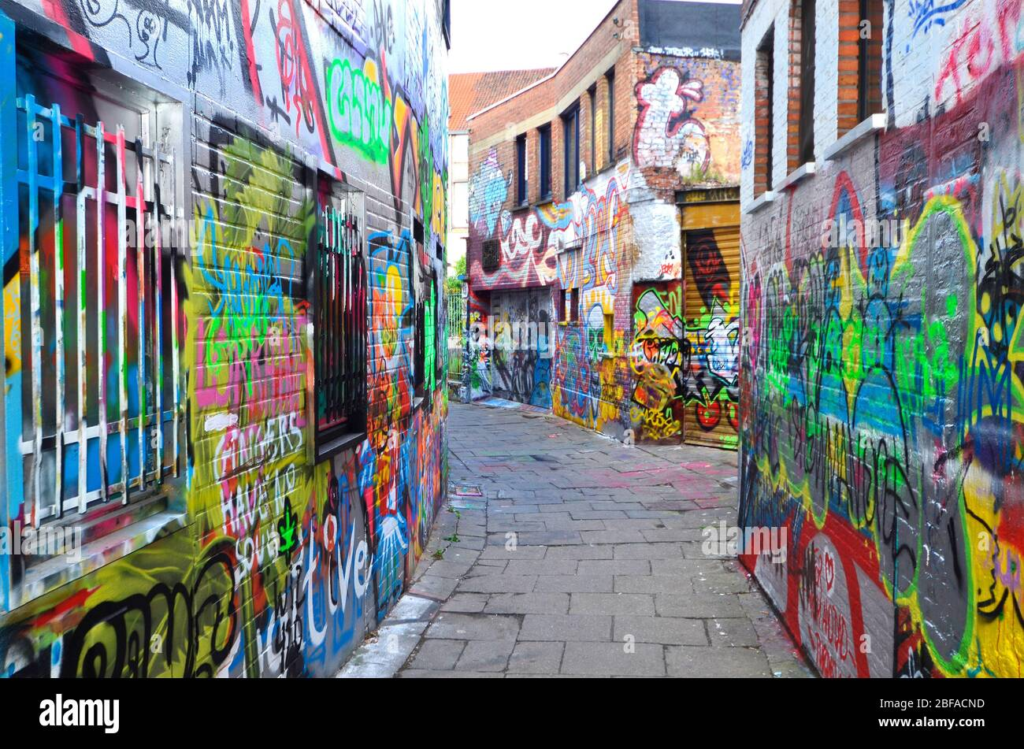
Slicing through a narrow block gap between the busy commercial thoroughfares of the Onderstraat and the Hoogpoort, this tight, pedestrian-only alley functions as a public sanctuary for urban art.
- What it is famous for: Being a completely legal, constantly changing open-air graffiti gallery street. Initiated as a temporary project during the 1995 Ghent Festivities, the alley walls were turned over to the public to curb illegal tagging. Today, the brick corridor is covered in layers of bright spray paint, neon stencils, and large aerosol murals. Because local artists are free to spray over existing works daily, the lane offers a shifting look at the city’s contemporary underground art scene.
11. Vrijdagmarkt (Friday Market)
The Colossal Urban Arena of Fabric Kings and Public Rebellion
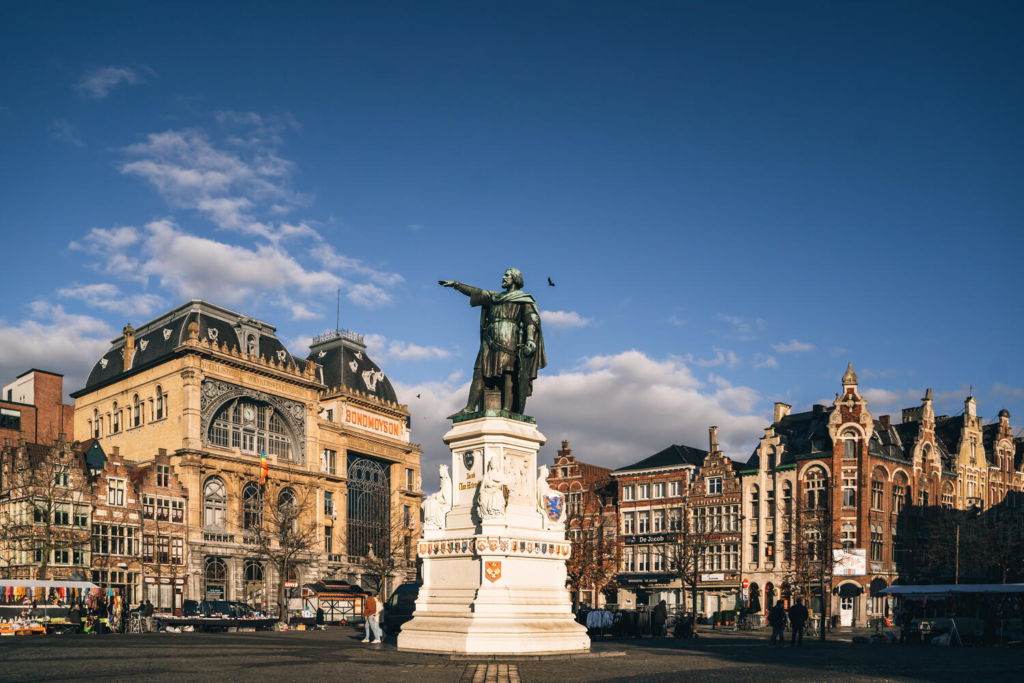
Spreading out as a massive, one-hectare public square lined with grand Art Nouveau and traditional stepped-gabled meeting halls, this historic plaza has served as Ghent’s political center since the 12th century.
- What it is famous for: Its historic weekly Friday markets and the central bronze monument to Jacob van Artevelde. The square is dominated by the tall statue of Van Artevelde, the 14th-century “Wise Man of Ghent” who successfully challenged French authority to keep English wool flowing to the city’s weavers. The square has hosted everything from imperial royal welcomes to public executions and fierce battles between rival trade guilds, and today remains a lively hub of open-air market stalls and terrace cafes.