
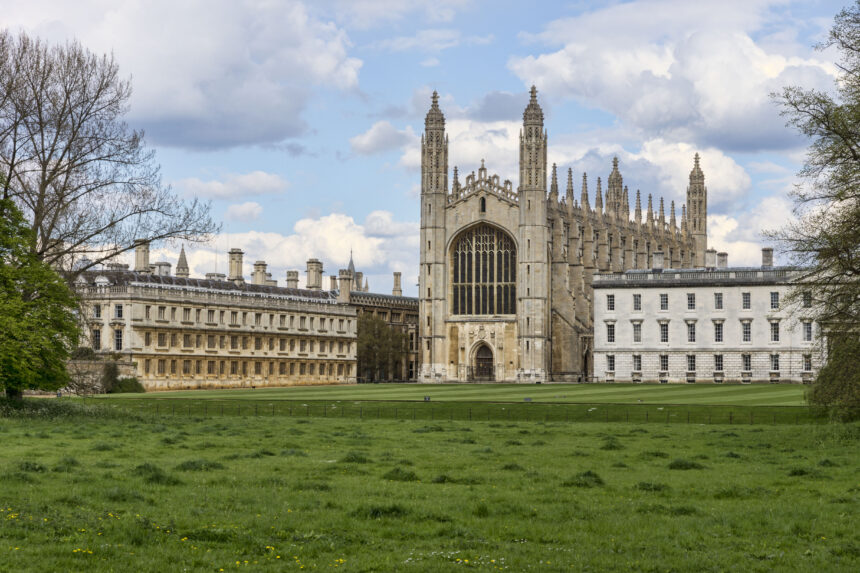
Famed worldwide for its legendary, centuries-old university, Cambridge is a breathtaking city where towering Gothic architecture meets tranquil, weeping willow-lined waterways.
Located in eastern England along the River Cam, this historic academic haven has been a crucible of discovery, producing some of the greatest minds in human history—from Isaac Newton to Stephen Hawking.
Beyond its world-class lecture halls, Cambridge is a wonderfully walkable and bike-friendly escape. It effortlessly charms travelers with its pristine college courtyards, cobblestone lanes, secret gardens, and the quintessentially British tradition of boating on the river.
Here are the top 12 famous places to visit in Cambridge, what they are known for, and why they belong on your travel checklist.
1. King’s College Chapel
The Gothic Sovereign of the Skyline
Dominating the heart of the city center, King’s College Chapel is an absolute masterpiece of late medieval English architecture.
Commissioned by King Henry VI in 1446, this magnificent structure took a century to complete and stands as the definitive icon of Cambridge.
- What it is famous for: Housing the world’s largest fan-vaulted ceiling and an incredible collection of 16th-century Renaissance stained glass. It is globally renowned for its world-famous Chapel Choir and houses Peter Paul Rubens’ masterpiece painting, The Adoration of the Magi, right above the altar.
2. The Backs
Postcard Views of Academic Splendor
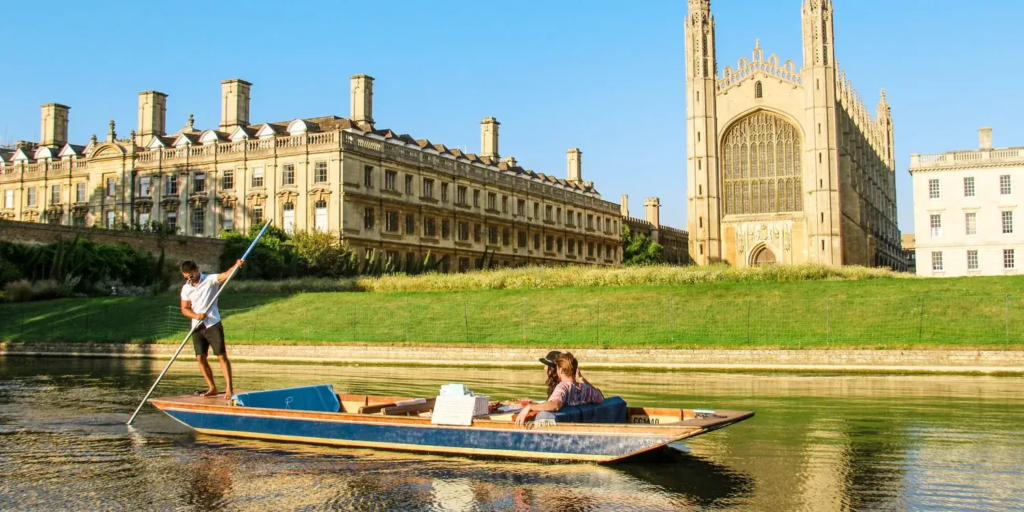
“The Backs” refers to the stunningly picturesque, manicured parklands and lawns that flank the rear of several of Cambridge’s most prestigious colleges, where the elegant campus grounds meet the banks of the River Cam.
- What it is famous for: Offering the absolute best scenic views of the colleges. This lush green corridor is the premier backdrop for punting—navigating the river in a traditional flat-bottomed wooden boat using a long metal pole. In the spring, the banks transform into a breathtaking carpet of yellow daffodils and purple crocuses.

3. Trinity College & The Wren Library
The Playground of Scientific Giants
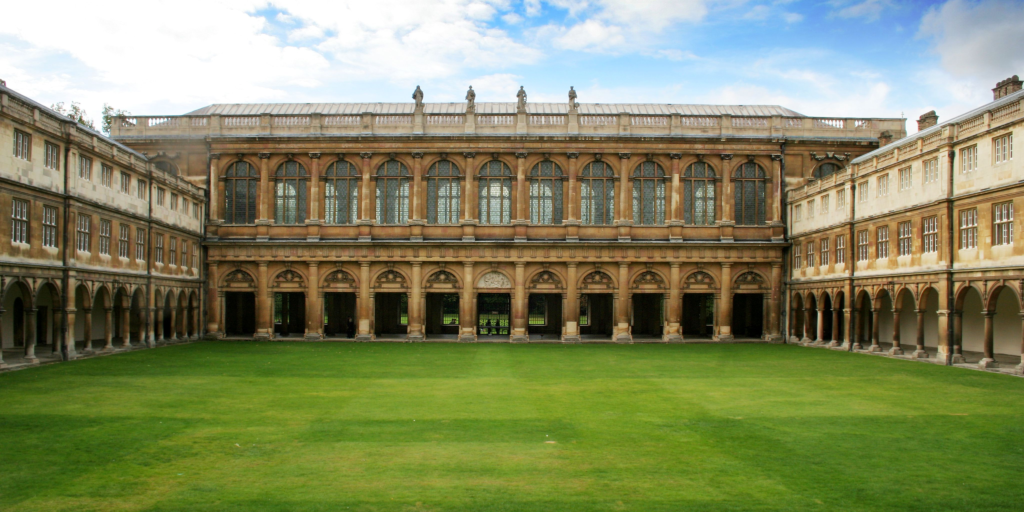
Founded by King Henry VIII in 1546, Trinity is the wealthiest and largest individual college in Cambridge. It boasts an unrivaled academic pedigree, claiming 34 Nobel Laureates and legendary historical figures among its former students.
- What it is famous for: The majestic Great Court, which is the largest enclosed courtyard in Europe. Visitors flock here to view the famous Newton’s Apple Tree growing just outside the main gate (propagated from the original tree that inspired his theory of gravity) and to explore the magnificent 17th-century Wren Library, which preserves A.A. Milne’s original Winnie-the-Pooh manuscripts.
4. Mathematical Bridge
A Wooden Geometrical Wonder
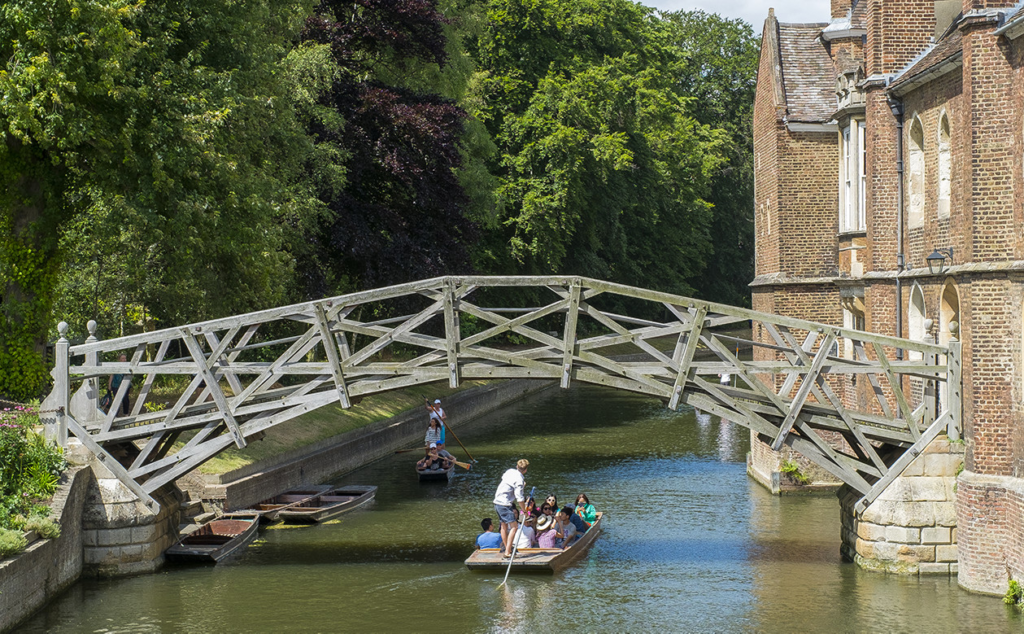
Tucked away at the rear of Queens’ College, this striking timber footbridge spans the River Cam, connecting the medieval older half of the college with the modern buildings on the opposite bank.
- What it is famous for: Its ingenious geometric timber design. Built in 1749 by James Essex the Younger, the bridge forms a rigid arch using entirely straight timbers. A popular local urban legend falsely claims that Sir Isaac Newton built it without any nuts or bolts, and that subsequent engineers took it apart but couldn’t figure out how to put it back together without using iron pins!
5. Fitzwilliam Museum
A Neoclassical Treasure Palace
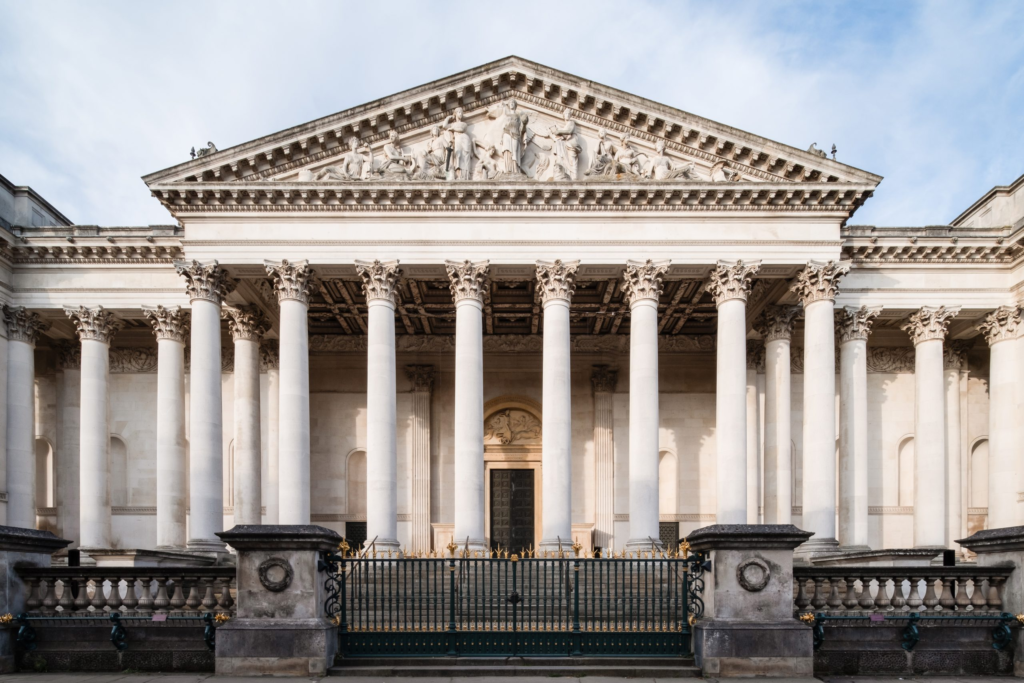
Housed inside a monumental, column-fronted neoclassical palace, the Fitzwilliam Museum is the primary art and antiquities museum of the University of Cambridge, opening its doors to the public for free since 1848.
- What it is famous for: Its world-class collection of global art and historic relics. The museum holds everything from monumental ancient Egyptian coffins and Greek sculptures to rare masterpieces by Titian, Monet, Picasso, and Rembrandt, all displayed beneath jaw-dropping, gold-leafed mosaic ceilings.
6. Bridge of Sighs
Gothic Romance Above the Cam
Built in 1831, this highly ornate, covered stone bridge belongs to St. John’s College. It features highly decorative neo-Gothic window tracery that encloses pedestrians as they cross high above the river.
- What it is famous for: Its architectural beauty and its legendary name, which pays homage to the iconic bridge in Venice. Supposedly named because students would nervously “sigh” as they crossed it on their way to academic examinations, it was noted by Queen Victoria as her favorite spot in the entire city.

7. Cambridge University Botanic Garden
A Living Scientific Oasis
Spanning 40 acres of beautifully landscaped grounds just south of the city center, this stunning botanical sanctuary was opened in 1846 by John Stevens Henslow—the mentor to Charles Darwin.
- What it is famous for: Holding a vast, curated collection of over 8,000 plant species from around the globe. Visitors love exploring the majestic systemic beds, the tranquil rock gardens, and a grand network of historic Victorian glasshouses that recreate tropical rainforests, mountain alpine zones, and arid desert climates.

8. The Corpus Clock
A Chilling Monument to Time
Unveiled in 2008 by legendary physicist Stephen Hawking, this mesmerizing, gold-plated public clock is mounted on the exterior wall of the Taylor Library at Corpus Christi College.
- What it is famous for: Its eccentric, mechanical “Chronophage” (Time-Eater) sculpture—a terrifying, metallic grasshopper-like creature that walks along the top of the clock, visually devouring every passing second. The clock has no hands or digital numbers, utilizing shifting blue LED lights to show the time, and is intentionally engineered to only be perfectly accurate once every five minutes.

9. Great St. Mary’s Church
The Historic Academic Centerpiece
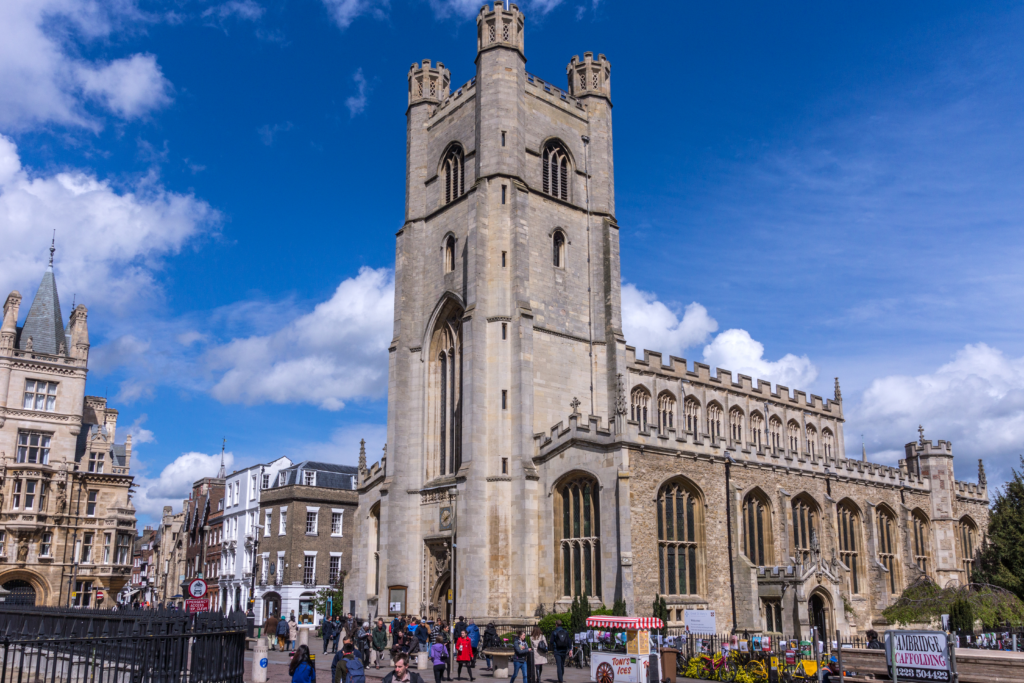
Standing directly opposite the Senate House in the city center, Great St. Mary’s serves as the official University Church. It has stood at the physical and spiritual center of Cambridge life since the 13th century.
- What it is famous for: Its spectacular historic viewing tower. Visitors can climb up a narrow stone spiral staircase of 123 steps to the open-air roof platform, which grants the absolute finest panoramic bird’s-eye views down over the Market Square and the intricate rooftops of King’s College.
10. Ely Cathedral
The Ship of the Fens
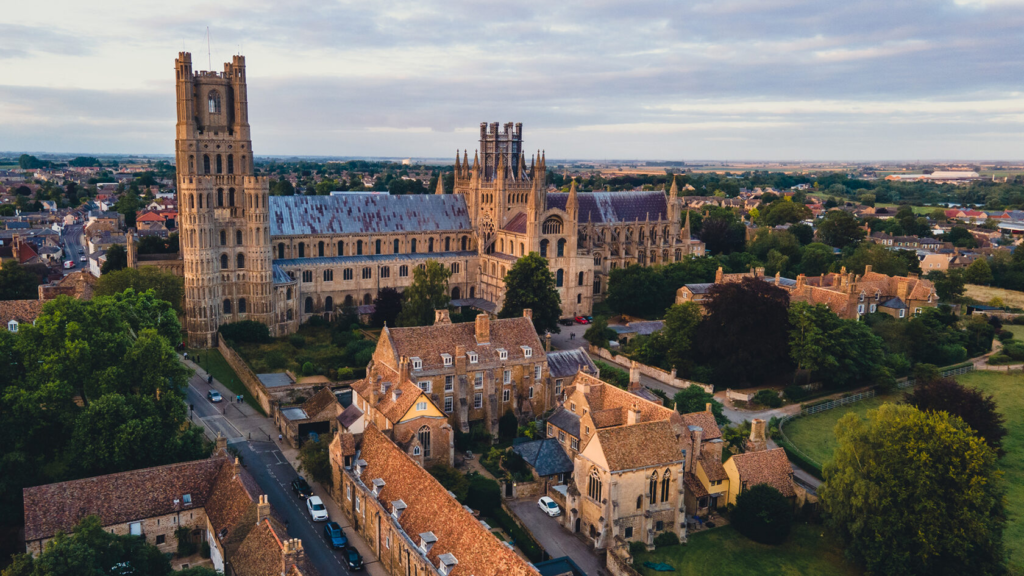
Located just a short, scenic 15-minute train ride north of Cambridge in the historic nearby city of Ely, this colossal Anglo-Norman cathedral rises dramatically out of the flat, low-lying Cambridgeshire countryside.
- What it is famous for: Its unique, world-famous Octagon Lantern Tower, an engineering miracle of the medieval world that bathes the interior crossing in glorious natural light. This architectural giant is a favorite filming location for historical Hollywood dramas, standing in for Westminster Abbey in The Crown and The King’s Speech.
11. Kettle’s Yard
A Harmonious Union of Art and Home
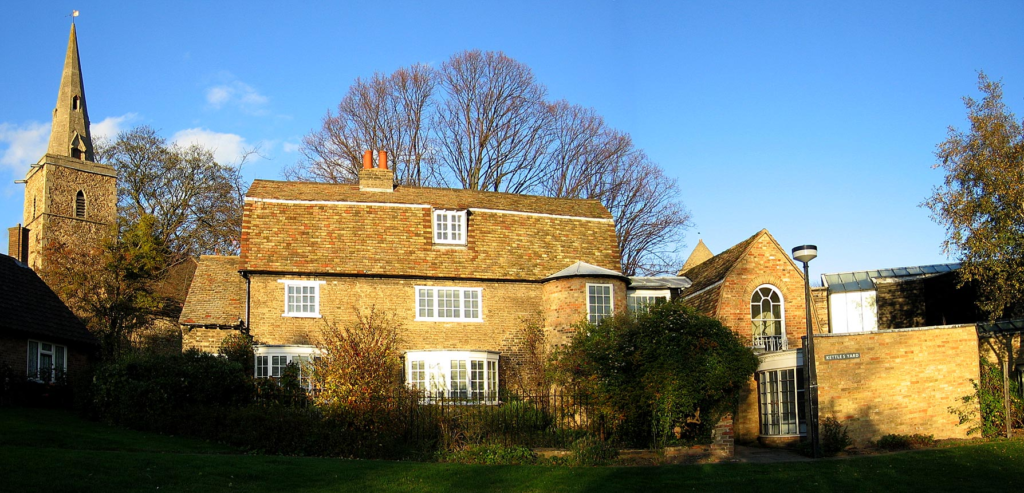
Tucked away in a quiet northern corner of the city, Kettle’s Yard is a unique art gallery set inside a beautiful, interconnected row of historic, whitewashed converted slum cottages.
- What it is famous for: Its highly intimate “art in a home” philosophy. Created by Jim Ede, a former curator at the Tate Gallery, the house displays a world-class collection of early 20th-century avant-garde art mixed casually alongside natural stones, seashells, and antique furniture, creating an incredibly peaceful, domestic viewing experience.
12. Museum of Archaeology and Anthropology (MAA)
A Journey Through Human History
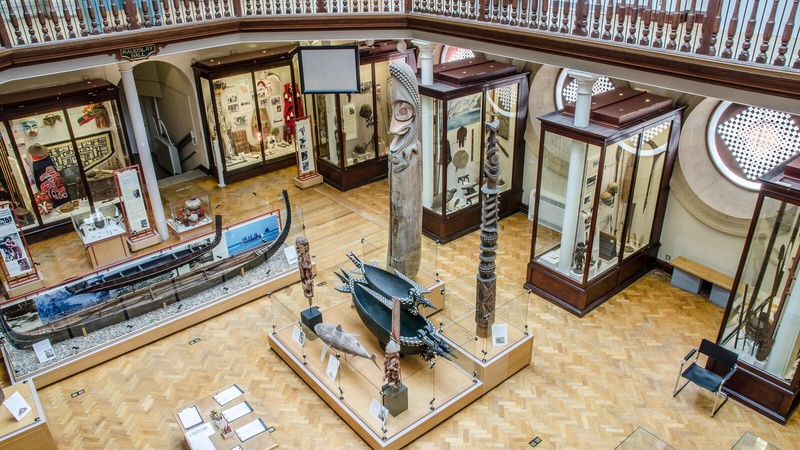
Situated along Downing Street, this university-run museum houses an extraordinary, world-renowned archive of cultural artifacts, photographic collections, and historic remnants spanning millions of years.
- What it is famous for: Displaying monumental global treasures, including a massive, 14-meter-tall carved wooden totem pole from Canada. It is highly celebrated for housing the priceless historic artifacts collected by Captain James Cook during his legendary 18th-century voyages of discovery across the Pacific Ocean.